

An office should do more than look polished in photos. It needs to support focus, comfort, movement, storage, meetings, privacy, and the kind of work that happens there every day. A beautiful office that feels uncomfortable after two hours is not a good design. A stylish desk area with no storage will become messy quickly. A reception space that looks impressive but feels cold may not give visitors the right first impression.
That is why the best office interior design ideas start with how the space will actually be used. A home office needs focus and comfort. A small office needs smart storage and flexible furniture. A corporate office needs a professional layout. A medical, dental, or law office needs trust, privacy, and calm. A creative office may need more energy, color, and collaboration space.
Whether you are planning a home office, small business office, corporate workspace, office reception area, or private office room, these office interior design ideas will help you create a workspace that feels professional, practical, and comfortable.
1. Start With a Smart Office Layout
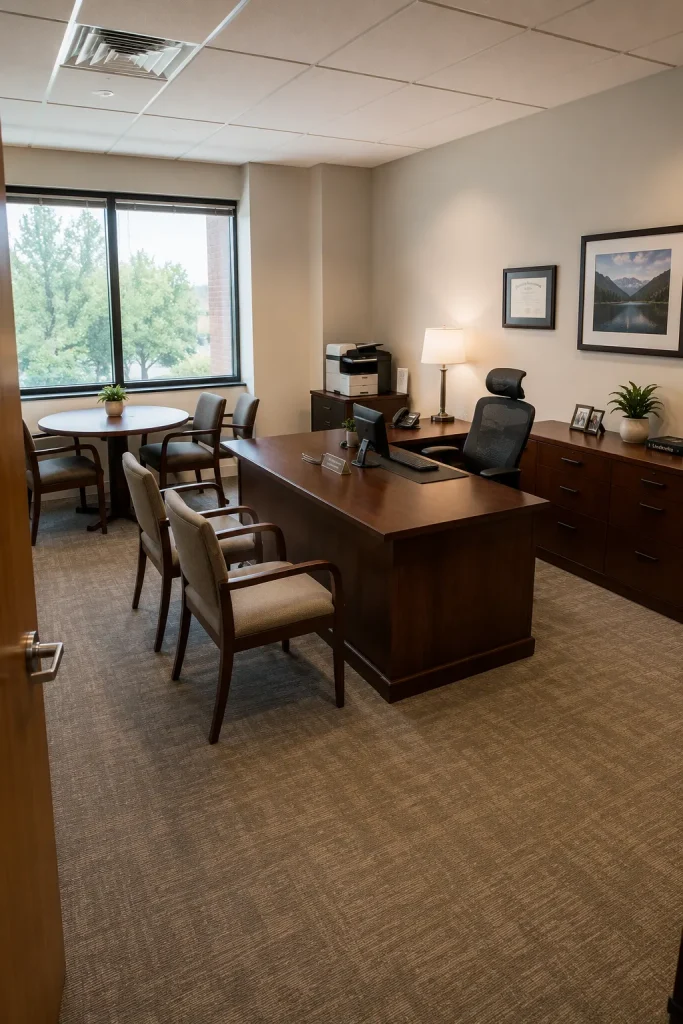
Every good office begins with layout. Before choosing wall colors, furniture, decor, or lighting, decide how people will move through the room and what tasks need to happen there.
A simple office layout should answer a few questions. Where will the main desk go? Is there enough room to walk behind the chair? Where will files, supplies, printers, or equipment sit? Will visitors need a seat? Does the space need a meeting zone, storage wall, or video call background?
For broader workplace planning inspiration, Steelcase shares helpful workplace design and office layout ideas that show how different work zones can support comfort, productivity, and better office flow.
For small office interior design ideas, layout matters even more because every inch counts. Avoid pushing furniture into the room without a plan. A desk that blocks a walkway or a cabinet that makes a corner hard to use will make the office feel smaller than it is.
The best layout gives each area a purpose. Work zone, storage zone, meeting zone, and display zone should feel clear, even in a small office.
2. Use Small Office Interior Design Ideas That Save Space
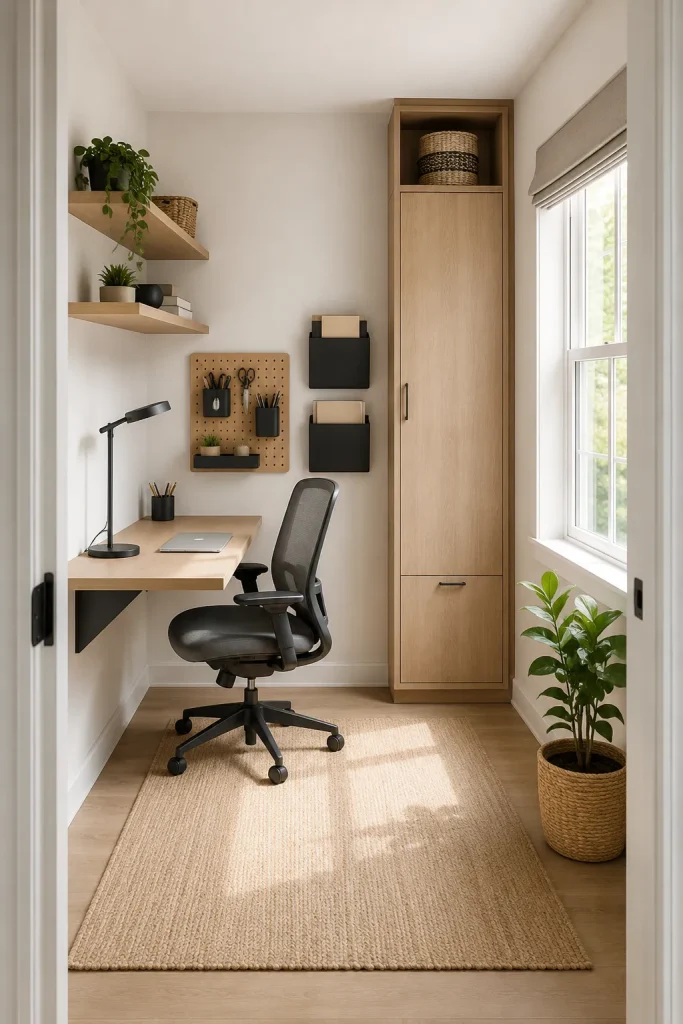
Small office interior design ideas should focus on function, storage, and visual calm. A small office can still look beautiful, but it needs fewer bulky pieces and more intentional choices.
Use a slim desk, wall-mounted shelves, vertical storage, floating cabinets, or a compact filing unit. Choose furniture that fits the room instead of forcing large executive pieces into a tight space.
Interior small office design ideas work best when the floor stays open. If the office feels cramped, move storage upward. Shelves, pegboards, wall cabinets, and tall bookcases can hold supplies without taking over the room.
Keep decor controlled. One piece of wall art, one plant, and one textured rug may be enough. Too many decorative pieces can make a small office feel busy and distracting.
3. Create a Focused Home Office
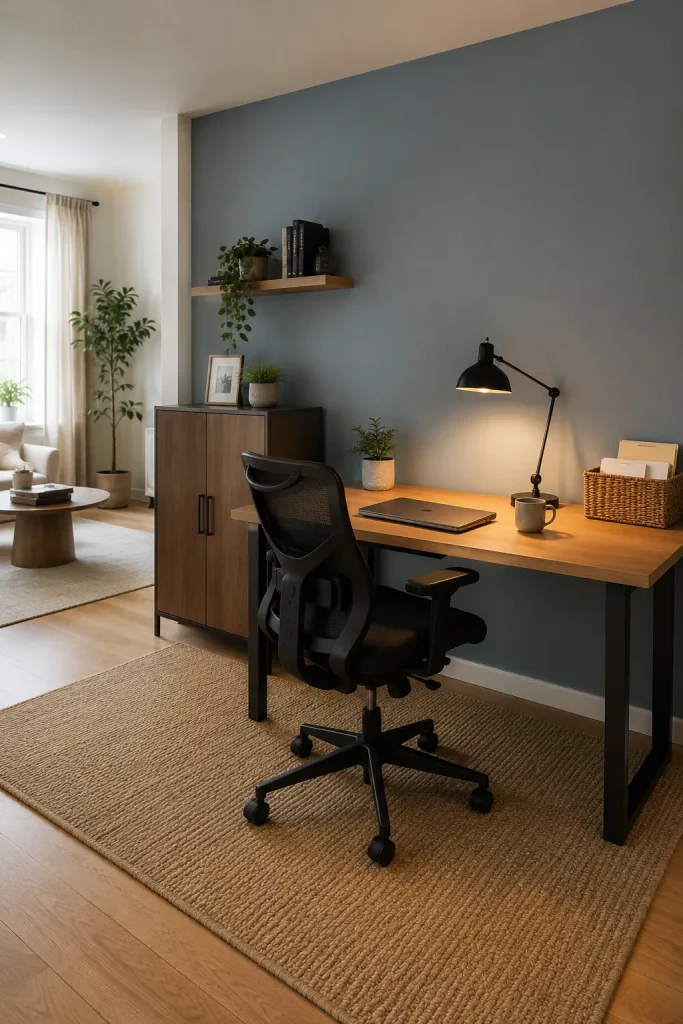
Home office interior design ideas should help separate work from the rest of the home. Even if the office is in a bedroom, living room, hallway, or small corner, it should feel like a dedicated work zone.
Start with a comfortable desk and chair. Then add task lighting, a storage basket, a shelf, and a clean background for video calls. If the office is in a shared room, use a rug, cabinet, screen, or wall color to visually define the area.
Small home office interior design ideas should avoid clutter because home offices often collect papers, chargers, books, and random household items. Use closed storage where possible so the room still feels calm after work.
A good home office should feel comfortable but not too relaxed. If the space feels like a cozy lounge, focus may suffer. If it feels too cold, you may avoid using it. Balance is the goal.
4. Choose Modern Office Interior Design Ideas for a Clean Look
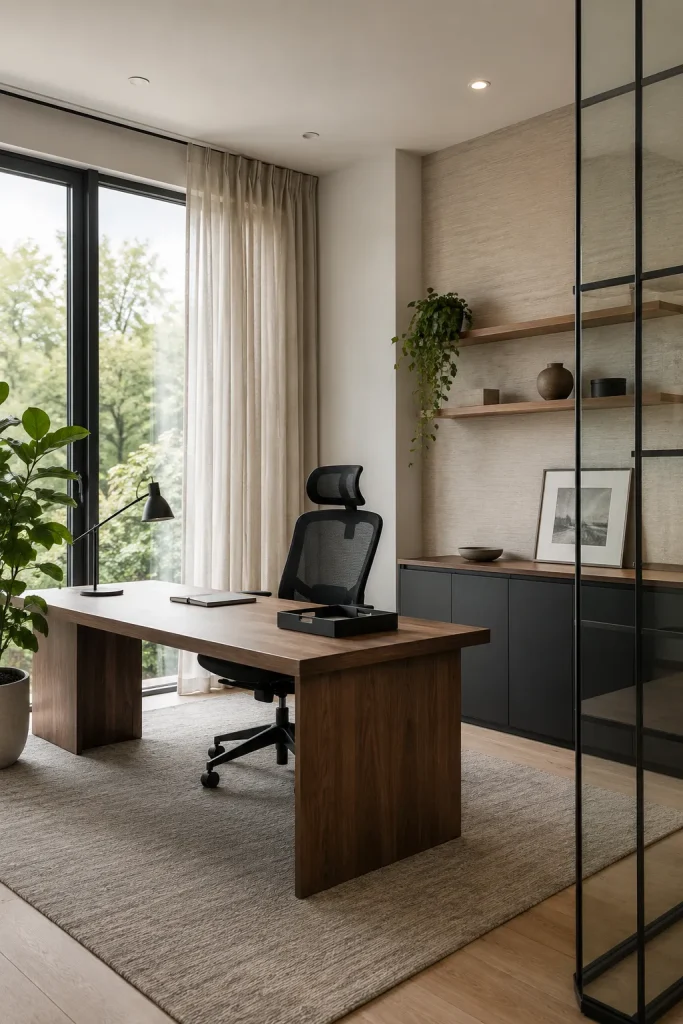
Modern office interior design ideas usually focus on clean lines, simple materials, good lighting, and uncluttered surfaces. This style works well for home offices, corporate offices, studios, and small business spaces.
Use simple desks, ergonomic chairs, glass or wood surfaces, matte finishes, and a controlled color palette. Black, white, beige, gray, wood, and soft green can make an office feel clean without looking sterile.
Modern home office interior design ideas should still feel warm. Add texture through curtains, rugs, woven baskets, wood shelves, or soft seating. A modern office with no texture can feel cold and unfinished.
The mistake to avoid is making the office look too empty. Minimal design should still support real work. Storage, lighting, and comfort are not optional.
5. Plan Office Furniture Around Real Work Habits
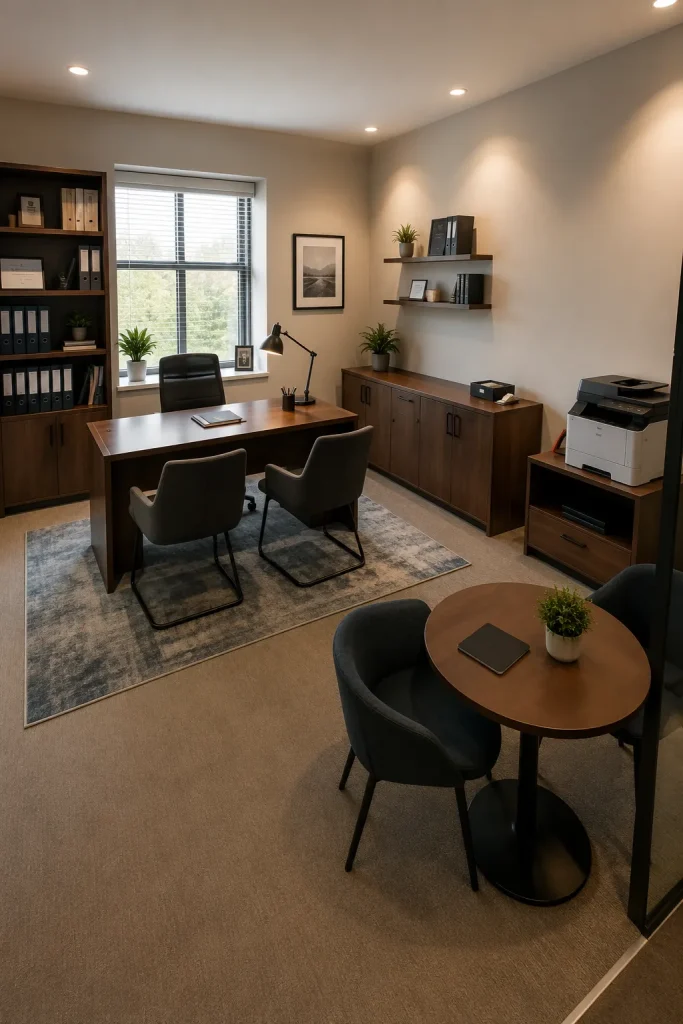
Office furniture should match the kind of work done in the room. A laptop-based home office may need only a desk, chair, lamp, and shelf. A corporate office may need workstations, meeting tables, private cabins, and storage. A law or medical office may need visitor seating, document storage, and privacy.
Room interior design office furniture ideas should start with size. A desk that is too large can dominate the room. A desk that is too small can make work feel cramped. The chair should support long sitting hours, not just match the decor.
For office cabin interior design ideas, use furniture that feels professional but not oversized. A clean desk, visitor chairs, side cabinet, and good lighting can feel more polished than a room packed with heavy furniture.
Furniture should make the office easier to use. If a piece looks stylish but blocks movement or lacks storage, it may not be the right choice.
6. Use Office Interior Design Color Ideas Carefully
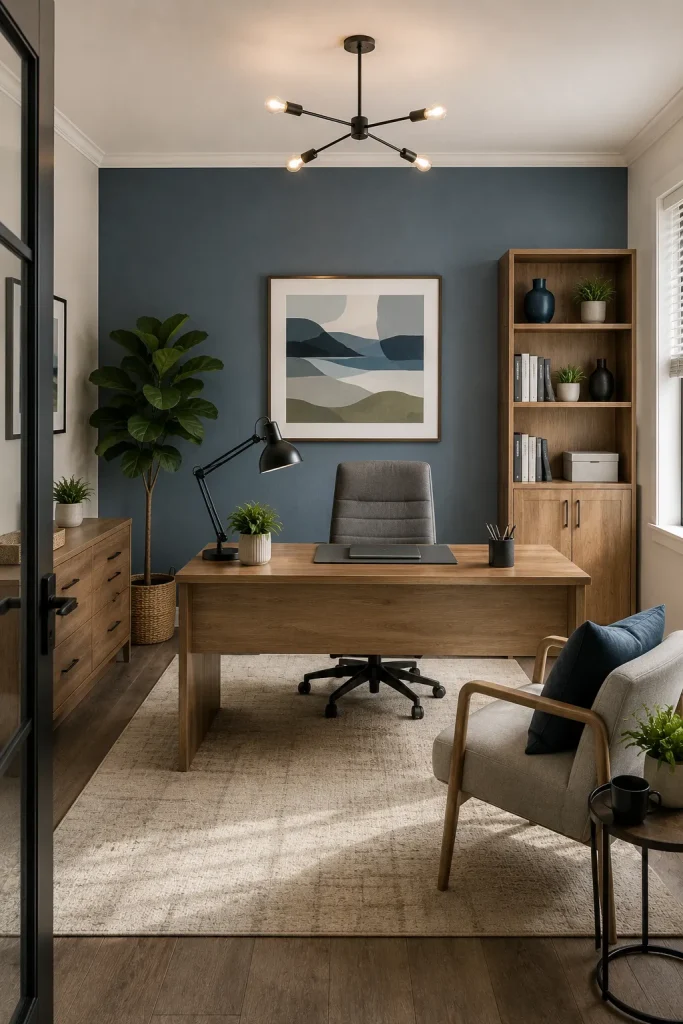
Color changes the mood of an office quickly. The right office interior design color ideas can make a workspace feel calm, creative, professional, or energetic.
Soft neutrals like white, cream, beige, taupe, and warm gray work well for focused offices. Blue office interior design ideas can feel calm and professional, especially in corporate, law, or executive spaces. Green office interior design ideas can make a room feel fresh and balanced. Black can look modern when used carefully, but too much dark color may make a small office feel heavy.
For creative office interior design ideas, small accents of yellow, orange, red, or bold blue can add energy. Use strong colors on one wall, furniture piece, rug, or artwork instead of covering the entire office.
The best office color palette supports the type of work being done. Calm work needs softer colors. Creative work can handle more contrast. Client-facing spaces should feel trustworthy and clean.
7. Improve the Office With Better Lighting
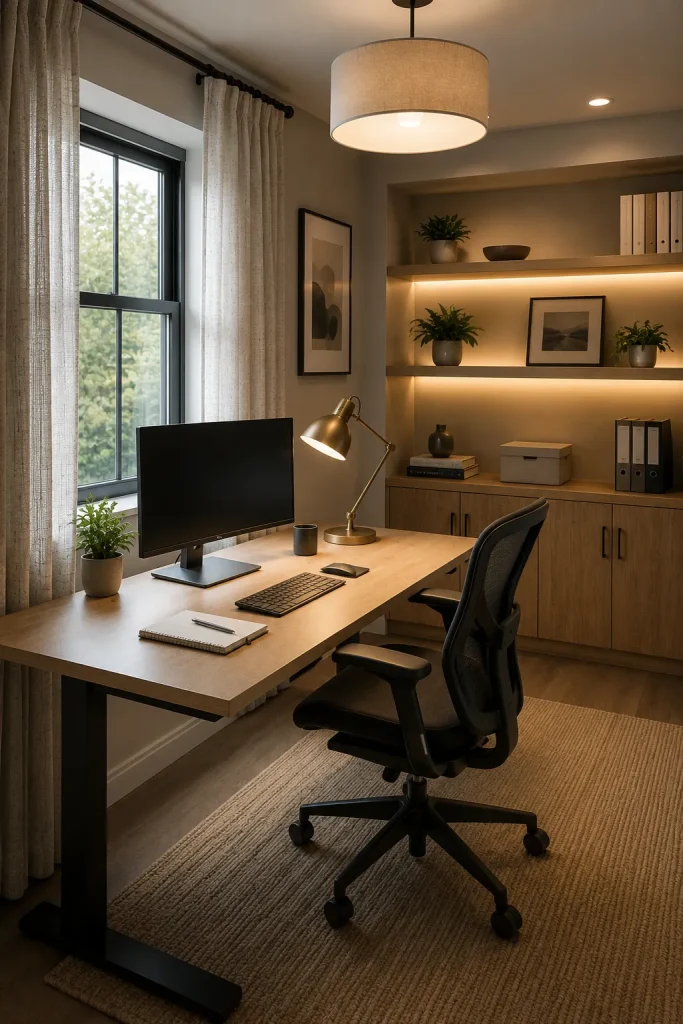
Lighting is one of the most important office interior design ideas because it affects focus, comfort, and mood. Poor lighting can make even a beautiful office feel tiring.
Use layers of light. Natural light is ideal when available. Task lighting helps at the desk. Overhead lighting fills the room. Accent lighting can make shelves, artwork, or reception areas feel more polished.
For a home office, place the desk near natural light if possible, but avoid glare on the screen. For corporate office interior design ideas, use even lighting across work areas so the space feels professional and comfortable.
Warm white lighting often feels better than harsh cool light in private offices. In task-heavy spaces, choose lighting that is bright enough for work but not so sharp that it feels clinical.
8. Add Office Wall Design That Feels Professional
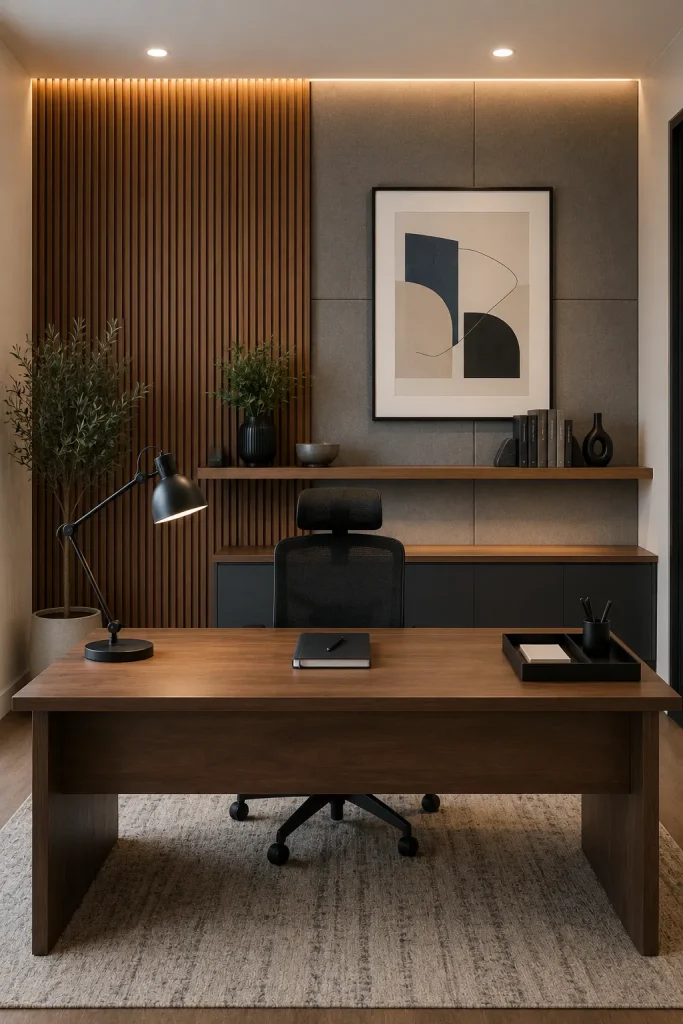
Office interior wall design ideas can make a workspace feel more finished without taking up floor space. Walls can hold art, shelving, branding, acoustic panels, whiteboards, or storage.
For a professional office, use framed artwork, textured panels, wood slats, painted accent walls, or simple shelving. For a creative office, use mood boards, pinboards, bold artwork, or color-blocked walls.
Office wall interior design ideas should support the room’s purpose. A video call wall should look clean and not distracting. A reception wall can include branding or a statement material. A private office wall can include bookshelves, artwork, or certificates.
Avoid covering every wall. One strong wall feature usually looks better than too many competing details.
9. Design a Professional Reception or Lobby Area
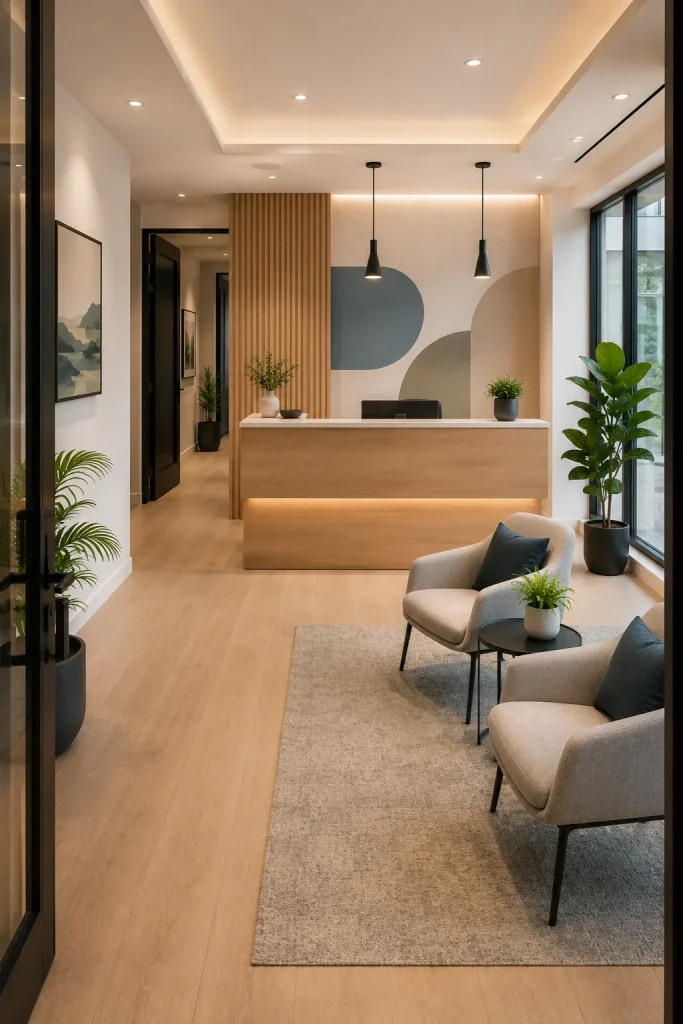
Office reception interior design ideas are important because the reception area is often the first thing visitors see. It should feel welcoming, organized, and aligned with the business.
A reception area needs a clear desk, comfortable seating, good lighting, and easy movement. The visitor should know where to go without feeling confused. Keep signage simple and visible.
Office lobby interior design ideas can include soft seating, plants, wall art, branded colors, a rug, or a feature wall. For small reception spaces, avoid oversized furniture. A slim reception desk and two comfortable chairs may be enough.
The goal is trust. A reception area does not need to be luxurious, but it should feel clean, calm, and cared for.
10. Make Corporate Office Interior Design Feel Human
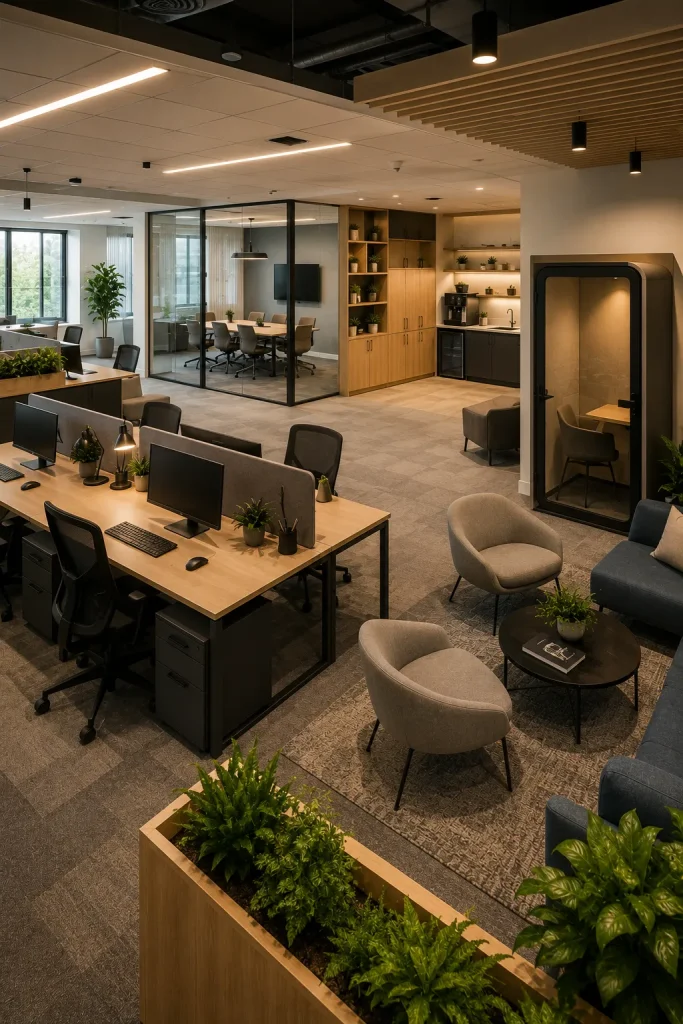
Corporate office interior design ideas often focus on professionalism, but the best offices also feel human. Employees need comfortable seating, good lighting, quiet zones, storage, and spaces for collaboration.
Use a mix of workstations, meeting rooms, lounge areas, and private spaces. Not every task needs the same setting. Focus work needs quiet. Team discussions need open space. Calls need privacy.
A small refreshment area can also make the workplace feel more welcoming. These coffee station ideas can help you create a neat coffee corner for employees, clients, or shared office spaces.
Commercial office interior design ideas should also consider durability. Choose materials that can handle daily use, especially in shared spaces. Furniture, flooring, and surfaces should be easy to maintain.
A corporate office should not feel like a showroom. It should support the people who work there every day.
11. Use Industry-Specific Design for Medical, Dental, and Law Offices
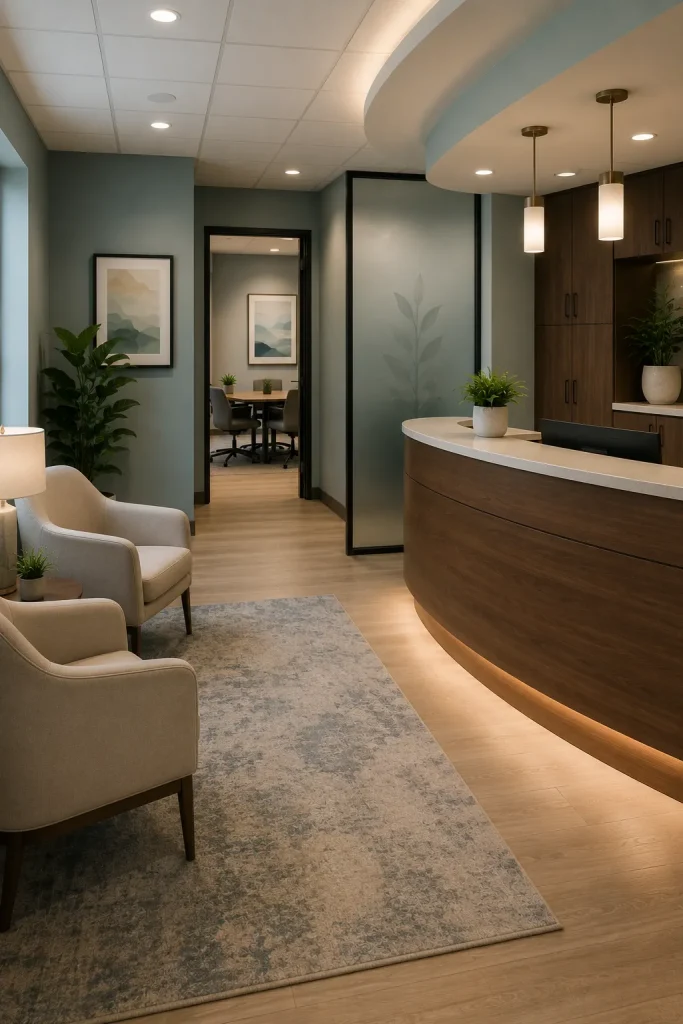
Some office interior design ideas need to match the profession. A medical office, dental office, or law office should feel different from a creative studio or casual home office.
Medical office interior design ideas should feel clean, calm, and easy to navigate. Soft colors, clear signage, comfortable waiting chairs, and good lighting can reduce stress.
Dental office interior design ideas should feel hygienic but not cold. Warm wood, soft blue or green tones, simple artwork, and comfortable seating can make patients feel more relaxed.
Law office interior design ideas should feel professional, private, and trustworthy. Use quality furniture, organized storage, calm colors, and a clean meeting area. Avoid overly trendy decor that may distract from the serious nature of the space.
12. Add Storage That Keeps the Office Calm
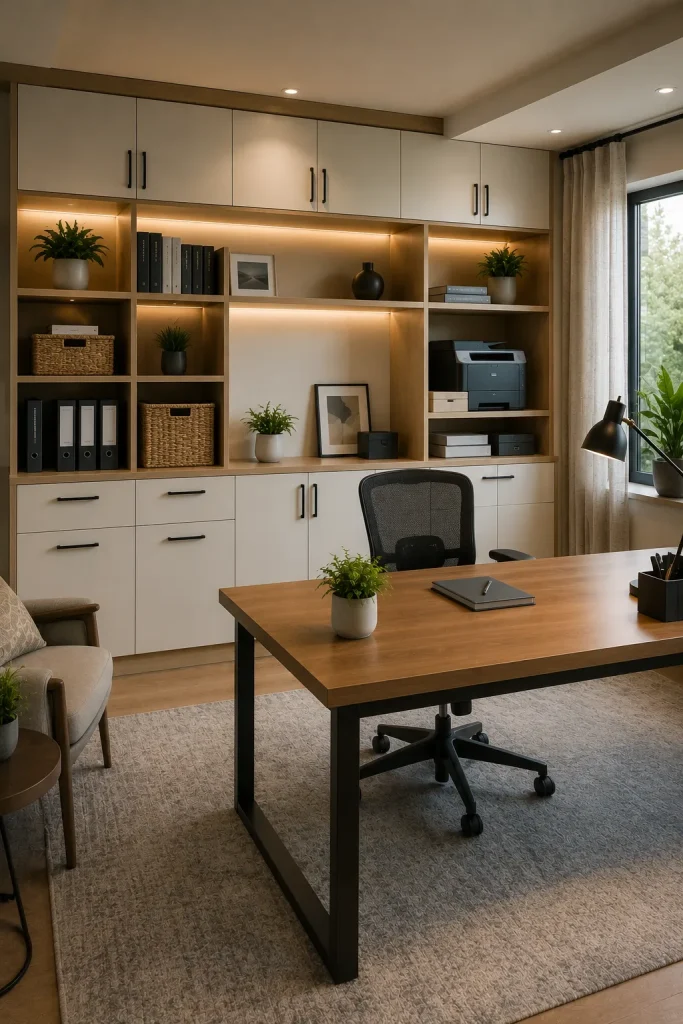
Storage is what keeps an office interior looking good after the first week. Without storage, papers, chargers, files, bags, samples, and supplies quickly take over.
Use cabinets, drawers, shelves, file units, baskets, and wall storage. Closed storage is best for messy items. Open shelves are better for books, decor, and a few attractive supplies.
Small office room interior design ideas should use vertical storage whenever possible. Tall cabinets and wall shelves free up floor space while still keeping supplies nearby.
The best storage is close to where it is used. If files are across the room, they may pile up on the desk. If printer paper is hidden too far away, the printer area becomes messy.
13. Bring in Plants and Natural Materials
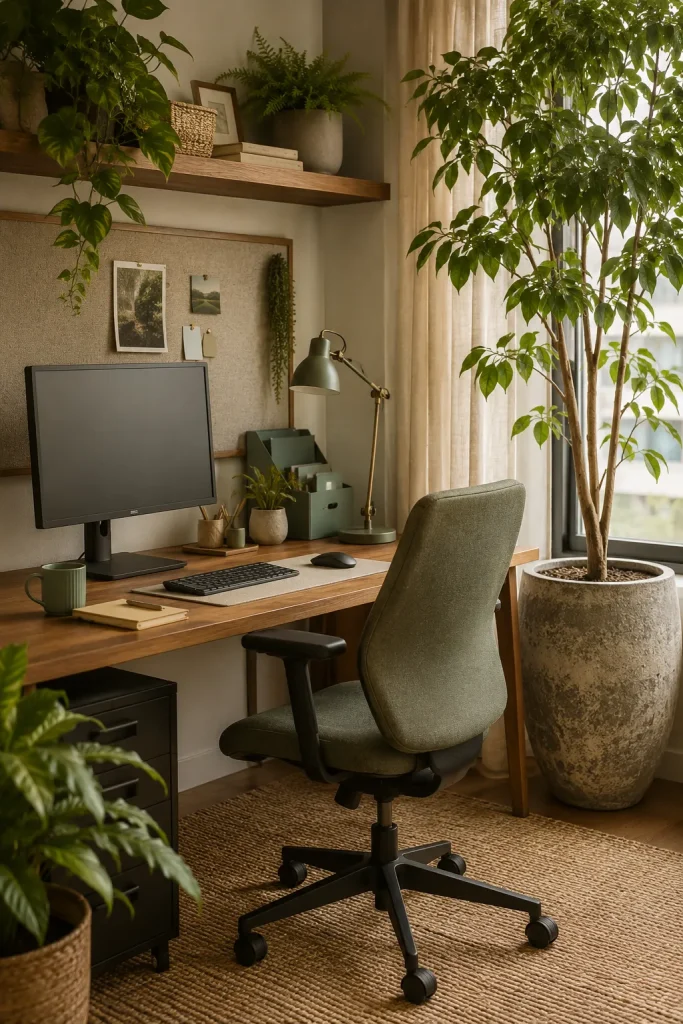
Plants and natural materials can make an office feel less harsh. Wood, stone, woven textures, linen, and greenery all help soften screens, desks, and office equipment.
Green office interior design ideas do not need to be complicated. A desk plant, tall floor plant, shelf plant, or plant near the reception area can change the mood of the room.
If the office has little light, choose low-maintenance plants or high-quality artificial greenery. The goal is to add softness, not create another maintenance problem.
Natural materials also help a workspace feel warmer. A wood desk, textured rug, woven basket, or fabric chair can make a modern office feel more comfortable.
14. Create an Executive or CEO Office That Feels Balanced
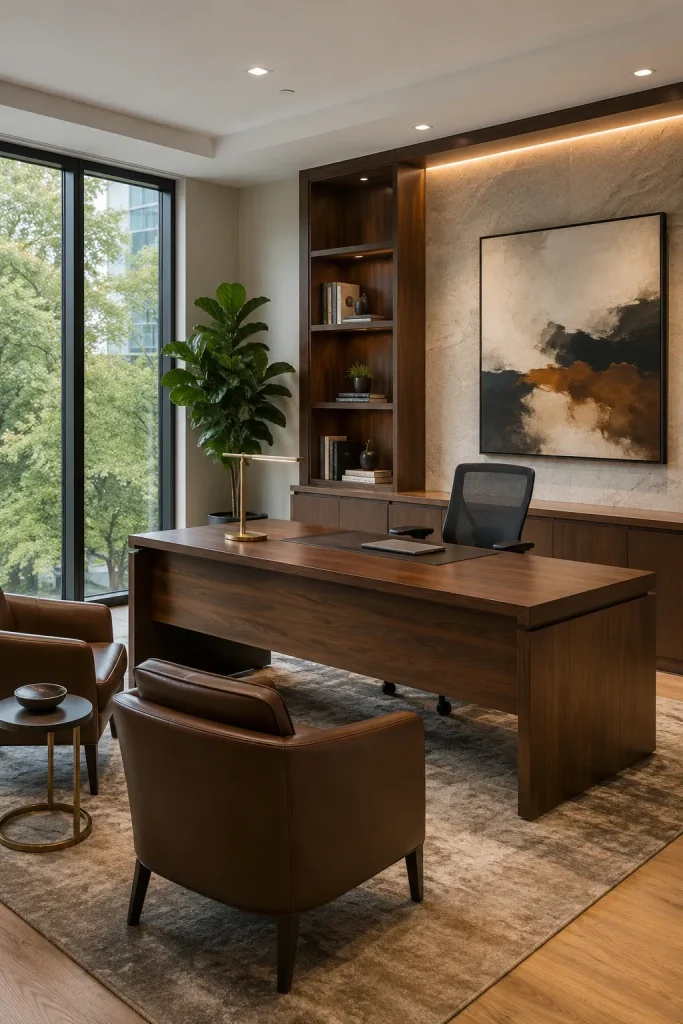
Executive office interior design ideas should feel confident, organized, and comfortable. The room should support decision-making, private meetings, and focused work.
A CEO office or executive office does not need oversized furniture to feel important. A well-scaled desk, quality chair, visitor seating, storage wall, and good lighting can look more refined than a room filled with heavy pieces.
Use strong but calm materials such as wood, leather, stone, glass, or metal. Keep the desk surface clear. Add artwork, books, or a plant to make the space feel personal without becoming cluttered.
The best executive offices feel professional and approachable at the same time.
15. Keep the Office Flexible for Future Needs
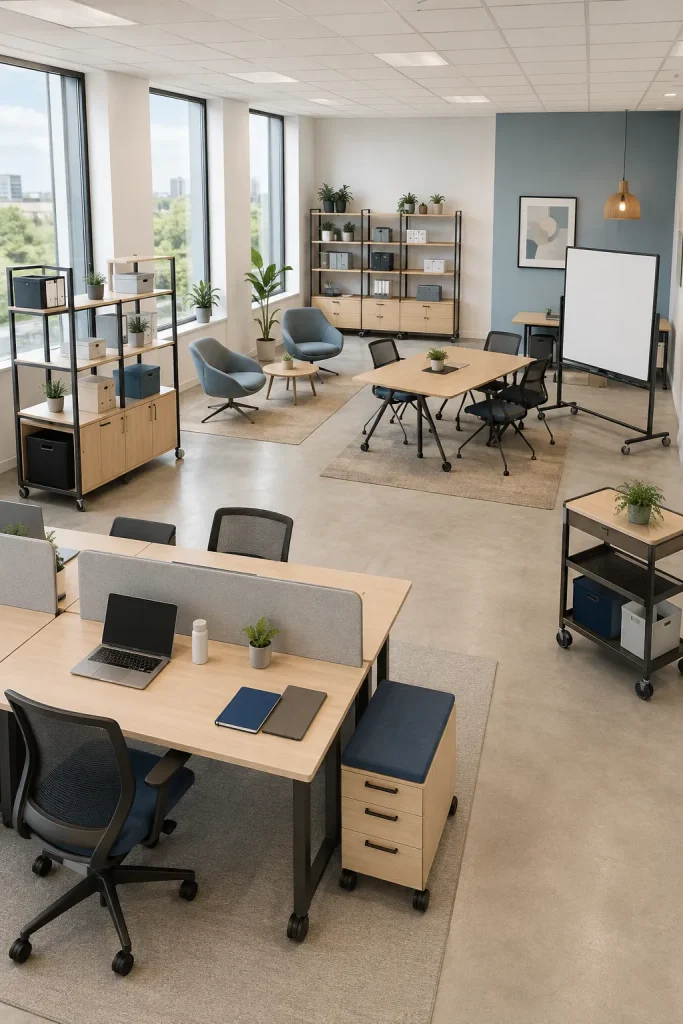
Good office interior design ideas should leave room for change. Work habits shift. Teams grow. Remote work changes schedules. Storage needs increase. A flexible office can adjust without a full redesign.
Use modular furniture, movable chairs, open shelving, rolling storage, and multi-purpose tables. In a home office, choose furniture that can work for writing, video calls, planning, or creative projects. In a small business office, choose pieces that can move when the layout changes.
Avoid building every detail around one temporary need. A flexible design lasts longer and saves money over time.
An office should feel finished, but not frozen. The best spaces can grow with the people using them.
Common Office Interior Design Mistakes to Avoid
One common mistake is designing for appearance before function. A beautiful office still needs storage, lighting, comfort, and clear movement.
Another mistake is choosing furniture that is too large. Oversized desks, heavy chairs, and bulky cabinets can make a small office feel tight.
Poor lighting is another issue. If the room has glare, dark corners, or harsh overhead light, people will feel tired faster.
Too much decor can also become distracting. Office decor should support focus, not compete with it. Choose fewer pieces with more purpose.
Finally, avoid ignoring daily mess. Every office needs a plan for papers, cables, chargers, supplies, bags, and trash. If these items do not have a place, the design will not stay clean.
Final Thoughts
The best office interior design ideas combine beauty with real function. A good office should look professional, but it should also help people work better. It should support focus, movement, comfort, storage, privacy, and the type of work that happens there.
Start with layout. Then choose furniture, lighting, colors, storage, and wall design based on how the room will be used. A home office needs comfort and focus. A small office needs smart storage. A corporate office needs zones for different work styles. A reception area needs clarity and trust. A medical, dental, or law office needs calm and professionalism.
When every design choice has a reason, the office feels better, works better, and stays organized longer.
FAQs About Office Interior Design Ideas
What makes a good office interior design?
A good office interior design supports focus, comfort, storage, movement, and the type of work being done. It should look professional but also work well for daily use.
How can I design a small office interior?
Use compact furniture, vertical storage, light colors, wall shelves, and fewer decorative items. Keep the floor open and choose furniture that fits the room scale.
What colors are best for office interior design?
Neutral colors, soft blues, greens, warm grays, and natural wood tones work well in offices. Brighter colors can be used as accents in creative spaces.
How do I make an office look professional?
Choose clean furniture, good lighting, organized storage, simple wall decor, and a clear layout. Avoid clutter and make sure visitor areas feel comfortable
What should be included in a home office?
A home office should include a comfortable desk, ergonomic chair, task lighting, storage, power access, and a clean background for focus or video calls.
How can I make an office feel more comfortable?
Add better lighting, supportive seating, plants, warm textures, organized storage, and enough open space to move comfortably.
.