

Old furniture does not always need to be replaced. Sometimes the shape is right, the wood is worth saving, or the piece simply needs a finish that suits your home better.
That is where upcycling becomes more interesting than a basic furniture makeover. Instead of making an old piece look brand new, you can change its color, surface, hardware, upholstery, or even its purpose to create something that feels much more personal.
The best gorgeous upcycled furniture ideas also start with the piece itself. A solid wood dresser may only need refinishing, while an outdated cabinet might become a bar, bathroom vanity, or stylish storage piece. A damaged table can sometimes become more useful with a new top, and an ordinary shelving unit can take on a completely different character with paint, trim, or wallpaper.
The goal is not to make every old piece look expensive. It is to make the right piece look intentional.
1. Refinish a Tired Wooden Dresser
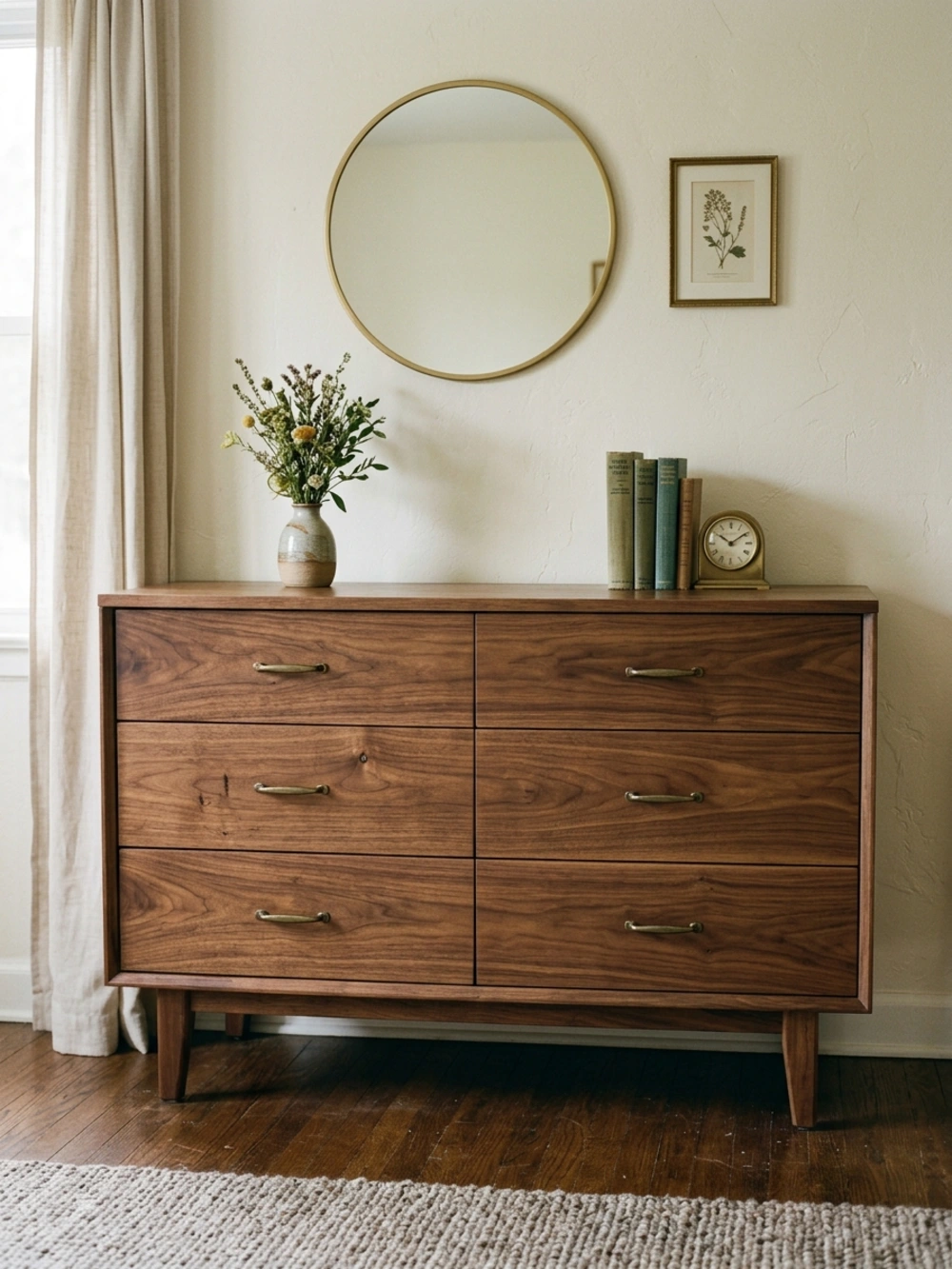
A solid wooden dresser with scratches, faded stain, or an outdated finish can often become one of the most convincing upcycled pieces in a room.
Start by checking the condition of the furniture before deciding how much work it needs. If the wood has a good grain and the damage is mostly surface-level, sanding and refinishing may be enough.
A medium or deep wood tone can give an older dresser a richer appearance, while a clear matte finish can work when you want the natural grain to remain the focus.
Replace damaged hardware only after deciding what style you want. Simple brass, aged bronze, or understated black pulls can change the character without making the dresser look overworked.
Best for: Solid wood pieces with attractive construction and repairable surface damage.
Avoid: Covering beautiful natural wood with paint simply because the existing finish looks dated.
2. Turn an Old Dresser Into a Bathroom Vanity
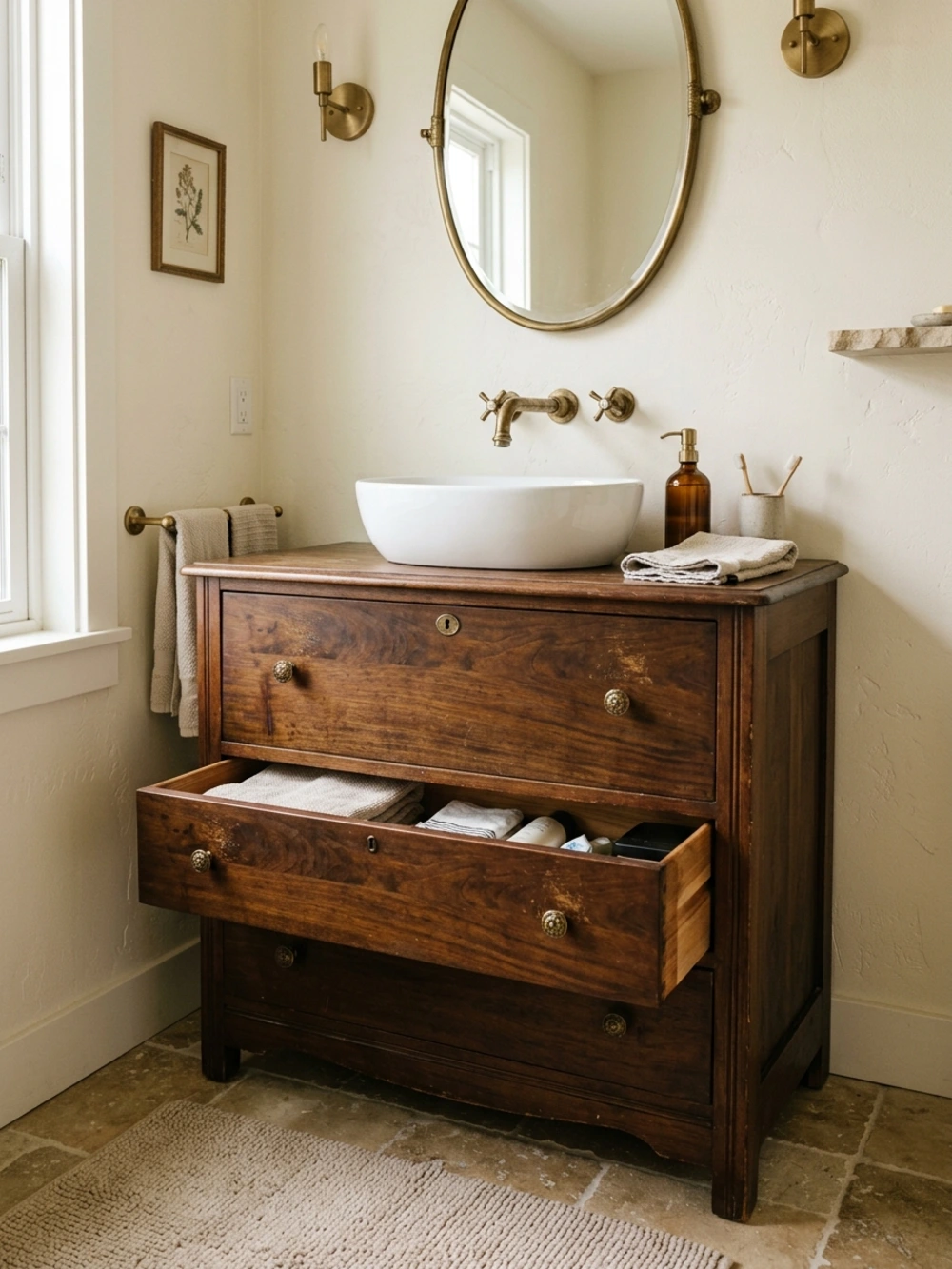
An unwanted dresser can become a much more distinctive bathroom vanity than a standard cabinet.
Choose a piece that is wide enough for the sink and deep enough to provide useful counter space. The drawers can still provide valuable bathroom storage, although the top drawer may need modification around the plumbing.
A wood dresser works especially well when the bathroom has warm finishes, aged brass, natural stone, or earthy colors.
If you’re building a warm, natural bathroom around the piece, these [earthy bathroom ideas] can help you coordinate the surrounding palette and materials.
The important part is waterproofing. The furniture needs a finish appropriate for a bathroom, and the plumbing modifications should be planned before cutting the cabinet.
Why it works: You get storage, character, and a furniture-like appearance instead of a generic vanity.
3. Give a Basic Side Table a Two-Tone Finish
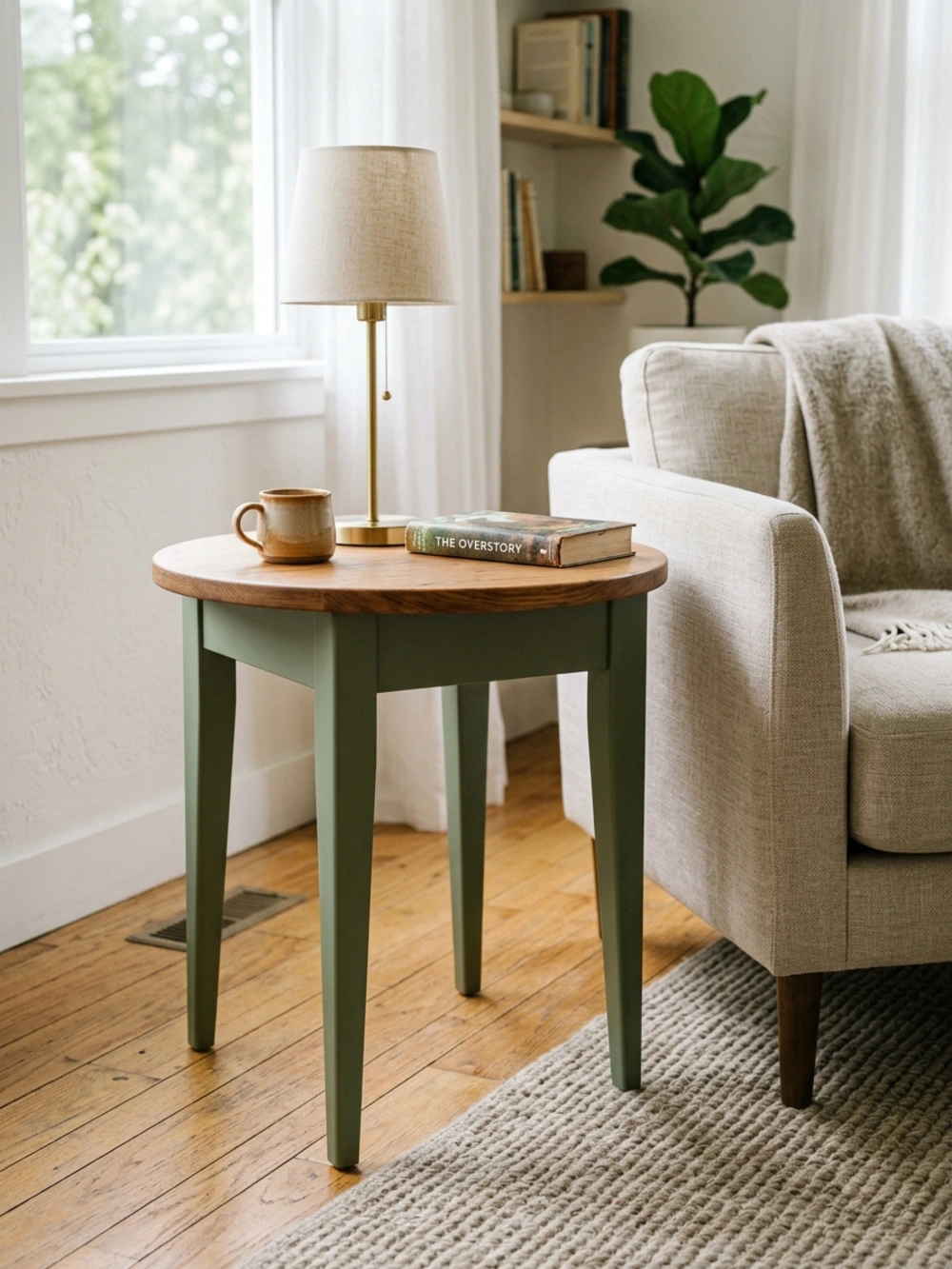
A small side table is a low-risk piece to experiment with because you can change its appearance without committing to a large project.
Try leaving the tabletop in natural wood while painting the base a contrasting color.
Warm white with oak, muted green with walnut, or soft charcoal with light wood can create a more considered result than painting the entire piece one flat color.
This approach works particularly well when the furniture already has an interesting silhouette.
Tip: Let the shape of the furniture determine the finish. If the legs are decorative, a contrasting base can emphasize them.
4. Reupholster an Outdated Dining Chair
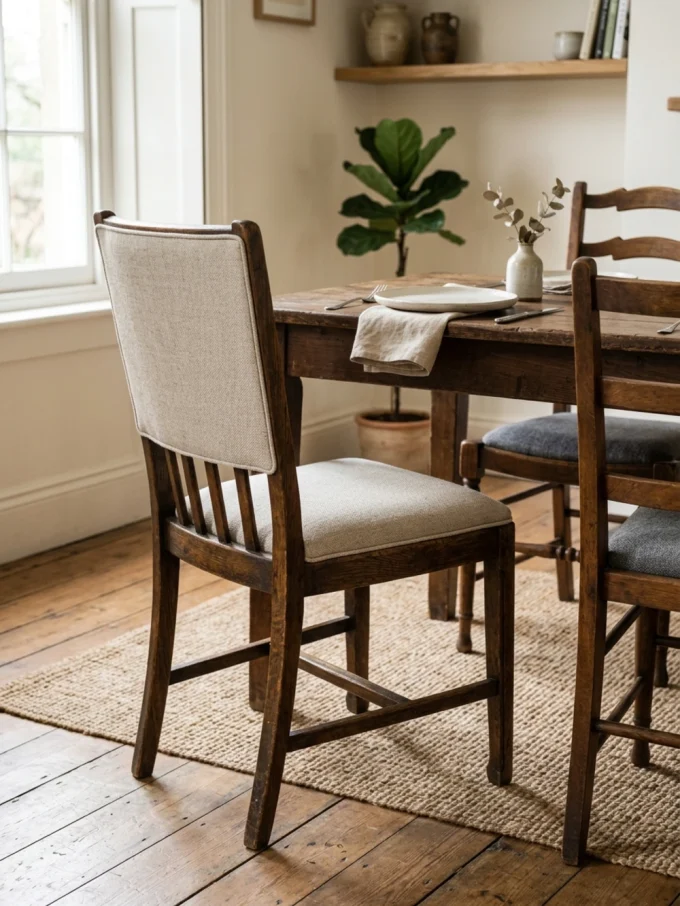
Sometimes the frame of a chair is perfectly good even when the fabric looks decades out of date.
Reupholstering lets you keep the original structure while changing the entire visual character.
Choose a fabric that suits the room rather than simply selecting the most dramatic pattern available. A textured neutral can make a vintage chair feel contemporary, while a small-scale pattern can preserve some of its traditional character.
If several chairs are involved, you don’t necessarily need identical fabrics. Coordinating tones can make mismatched secondhand chairs feel intentionally collected.
For a warmer dining setting, these [rustic dining room ideas] can help you think about how an older chair might fit into the larger room.
5. Let the Original Character Show
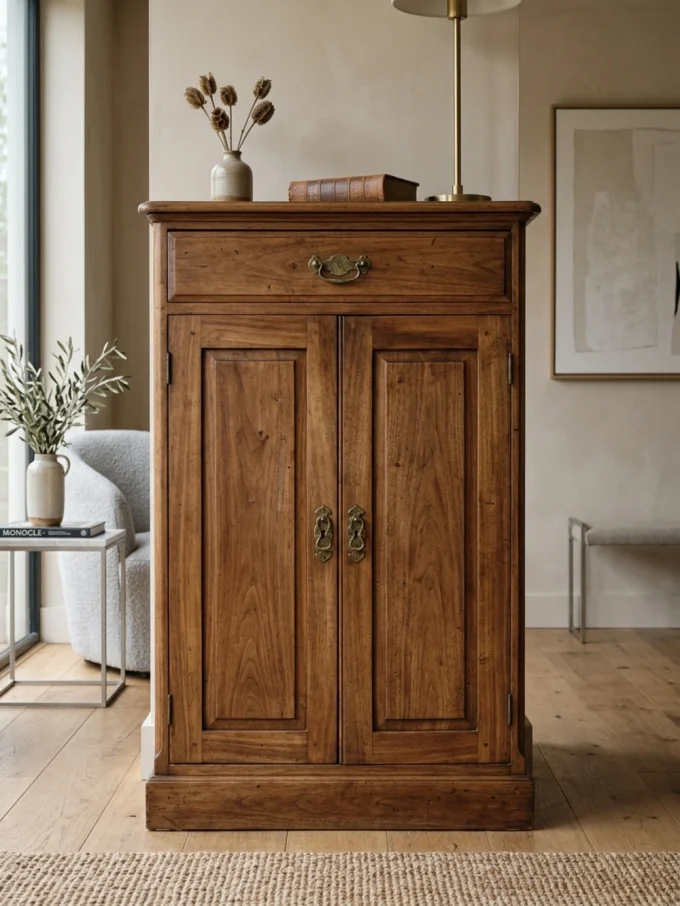
Not every upcycled piece needs to look completely transformed.
Sometimes the most beautiful result comes from repairing the furniture while keeping evidence of its history.
Preserve visible wood grain, small variations in tone, original handles, subtle wear, or traditional joinery when those details add character.
Clean the piece thoroughly, repair what affects function, and improve the finish where necessary.
Then let the original material remain visible.
Why it works: The furniture feels collected rather than manufactured to look vintage.
The goal of upcycling isn’t always to hide the fact that something is old. Sometimes that is exactly what makes it worth keeping.
6. Paint an Old Bookcase and Add a Contrasting Back
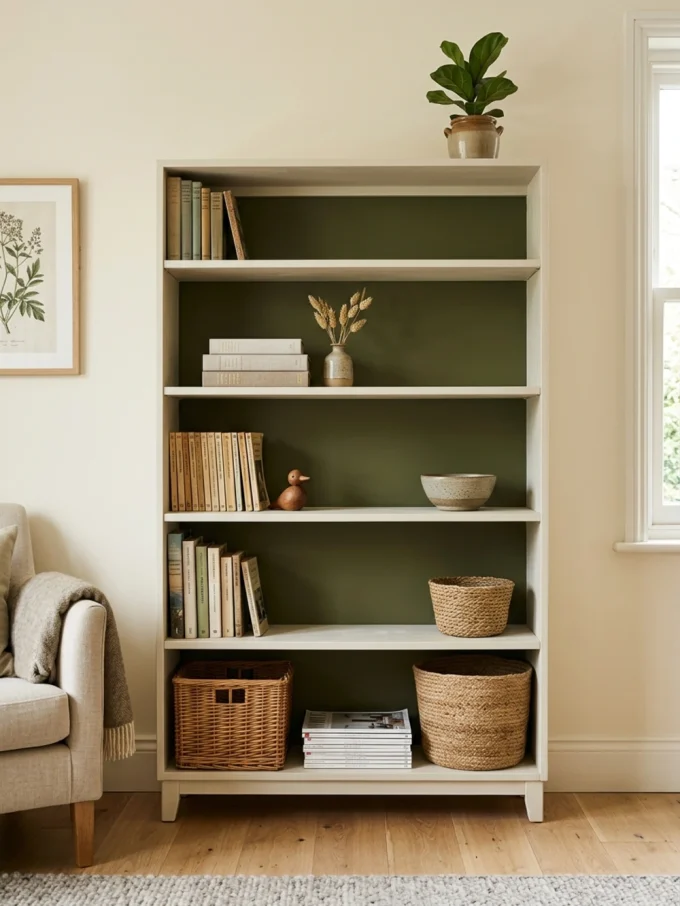
An ordinary bookcase can become a much stronger furniture piece with two simple changes: paint and a contrasting back panel.
Paint the exterior in a muted neutral, deep green, navy, or another color that relates to the room. Then add wallpaper, beadboard, wood veneer, or a contrasting paint color to the back.
The back panel creates depth without changing the bookcase’s structure.
Keep the shelves edited. Books, baskets, ceramics, framed photographs, and a few plants are enough.
Avoid: Filling every shelf immediately after the makeover. Empty space helps the new finish remain visible.
7. Turn an Old Door Into a Dining Table
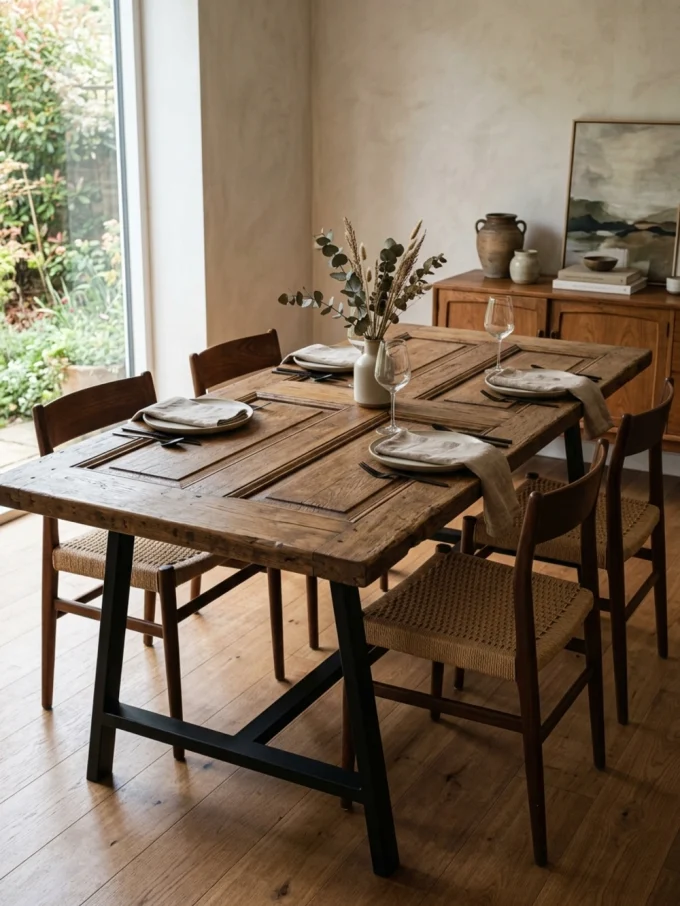
A salvaged wooden door can become an impressive dining table when its proportions and condition are right.
The door itself provides the tabletop, while a simple base can support it without competing with the character of the wood.
Sand away loose or damaged finishes, repair structural problems, and seal the surface appropriately for regular use.
This works particularly well when you want a dining table that feels architectural rather than mass-produced.
Important: Check the door for lead-based paint or other hazardous coatings before sanding an older painted piece. If the coating is uncertain, use appropriate testing and professional guidance rather than disturbing it casually.
8. Convert a Vintage Sewing Cabinet Into a Side Table
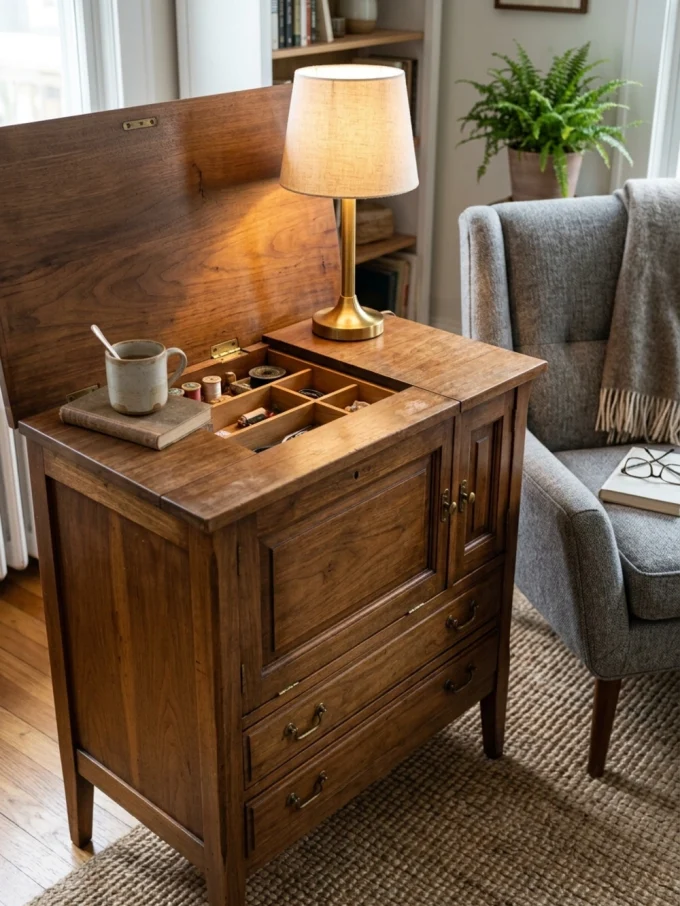
Old sewing cabinets have useful proportions and built-in compartments, which makes them surprisingly practical for modern homes.
Instead of stripping away all signs of age, consider preserving some of the original character.
Clean the cabinet, repair damaged sections, and replace only hardware that is missing or unusable.
The storage compartments can hold books, remotes, craft supplies, or everyday objects.
Place it beside a sofa or reading chair where the smaller footprint is useful.
A piece like this works particularly well in interiors that mix modern furniture with vintage accents.
9. Turn an Old Ladder Into Functional Shelving
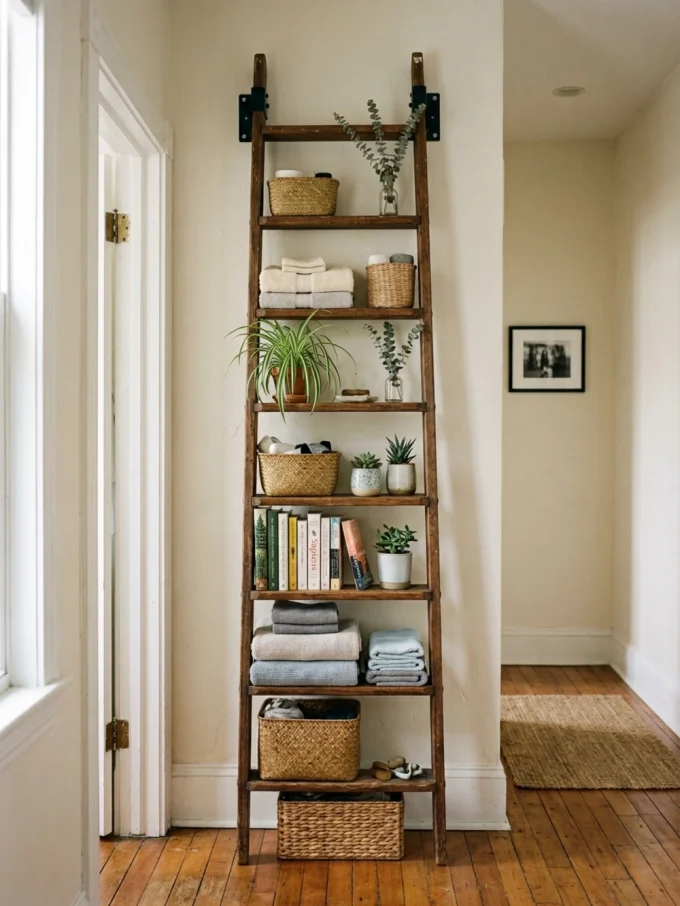
A wooden ladder can become vertical storage when floor space is limited.
Lean it securely against a wall and use appropriately sized shelves or baskets between the rungs. This can work for towels, blankets, books, plants, or lightweight decorative objects.
The vertical structure is naturally useful because it takes up less floor area than a wide shelving unit.
For smaller apartments, the same principle can complement the space-saving approach used in these studio apartment decor ideas
Safety first: A decorative ladder shelf should be properly secured and should not be treated as a climbing ladder.
10. Give a Plain Coffee Table a More Custom Finish
A dated coffee table can often be transformed without rebuilding it.
One approach is to refinish the existing top and repaint the base. Another is to replace a damaged tabletop with a better-suited wood surface.
You can also add subtle trim around the edge if the original shape feels too plain.
The best makeover depends on the table’s proportions. A chunky table may benefit from a simple finish, while a slim table can handle a stronger color or more decorative treatment.
Once finished, style it intentionally rather than covering the entire surface. These [coffee table styling ideas] can help you keep the final result useful as well as attractive.
11. Turn an Old Cabinet Into an Entryway Console
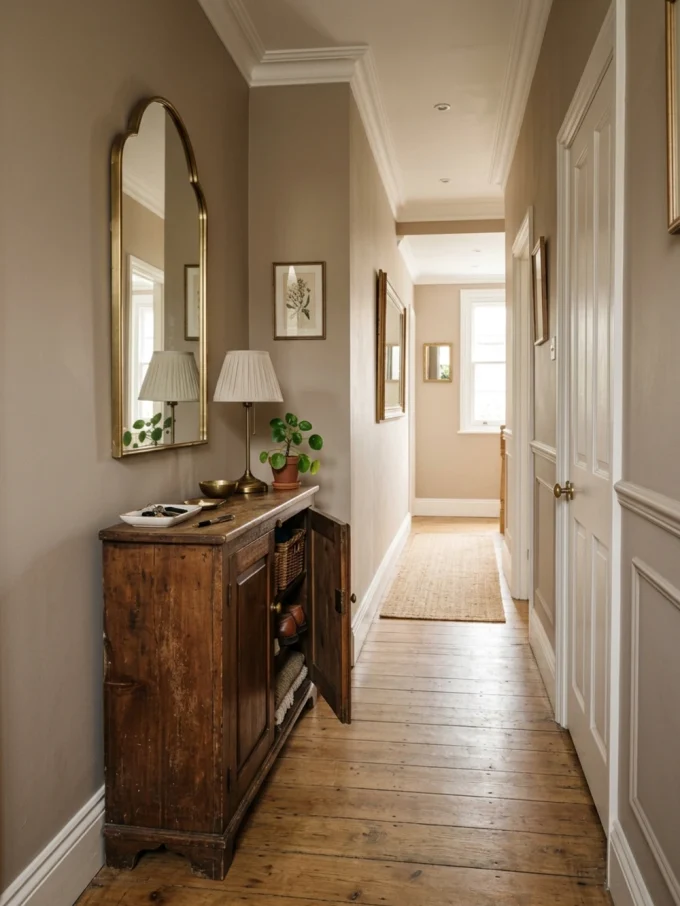
A small cabinet can become a useful entryway piece when its depth works with the available hallway space.
Paint it a sophisticated color, replace the hardware, and use the top for a mirror, tray, lamp, or small vase.
The key is choosing a cabinet that doesn’t obstruct the walking path.
If the piece is too deep, it may look beautiful but become frustrating in daily use.
For more ideas about creating a functional arrival zone, see these [chic narrow hallway ideas].
Best for: Short hallways, entry corners, and walls that need both storage and personality.
12. Create a Statement Dresser With New Hardware
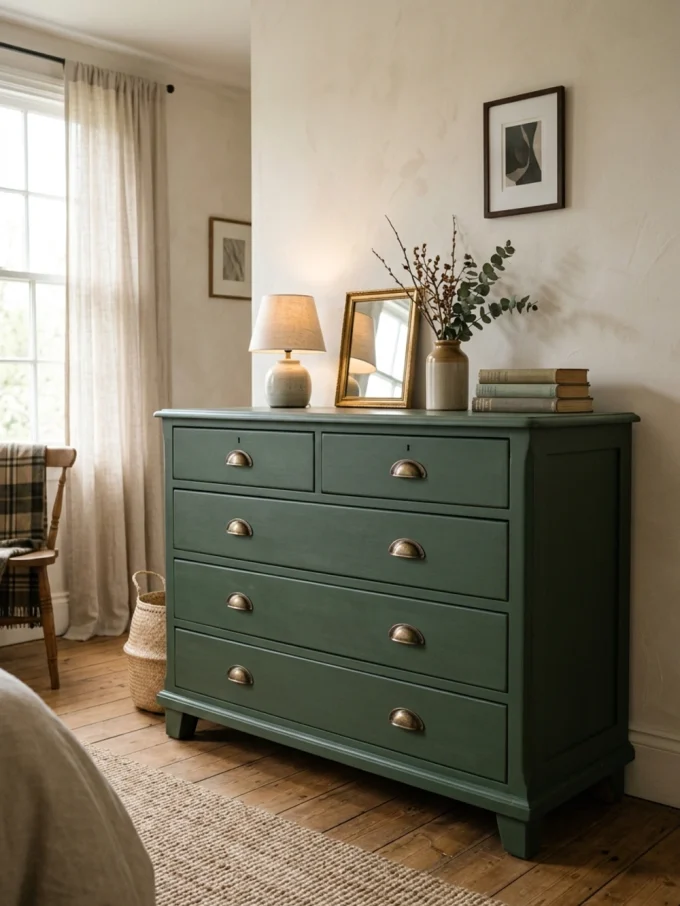
Sometimes the easiest way to upcycle furniture is to leave the construction alone and change the visual details.
A dresser can look completely different with a carefully chosen paint color and new pulls.
Try warm cream with aged brass, muted blue with antique bronze, or deep green with simple black hardware.
The finish should relate to the surrounding room.
If you’re using the dresser in a bedroom, keep the rest of the furniture relatively quiet so the piece becomes the focal point.
For smaller bedrooms where every piece has to earn its footprint, these [tiny bedroom ideas] offer useful layout inspiration.
13. Turn an Old Cabinet Into a Kitchen Storage Piece
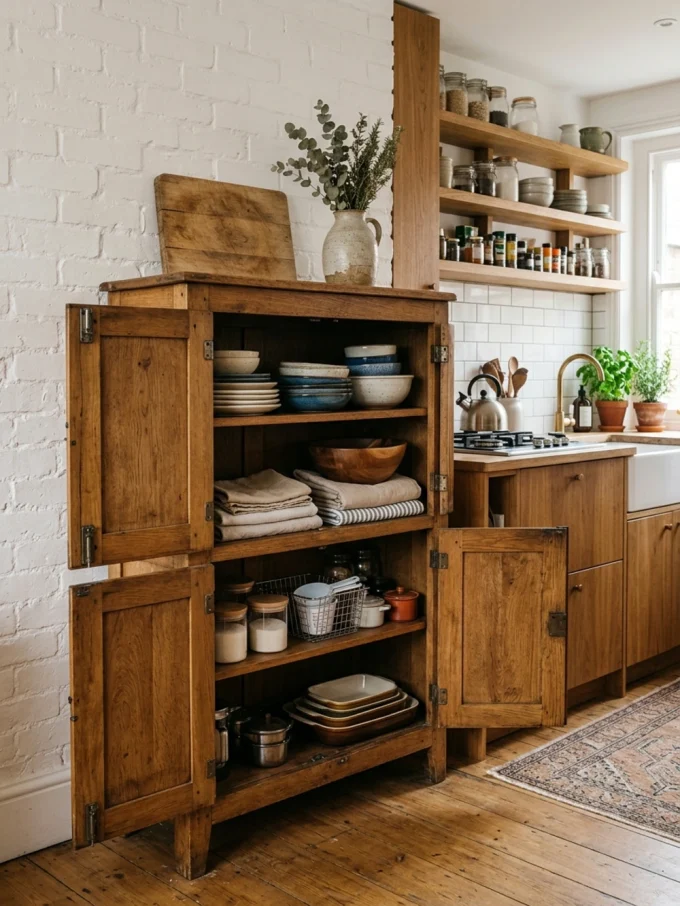
A freestanding cabinet can provide storage without requiring a full kitchen renovation.
Use it for dishes, small appliances, pantry items, or serving pieces.
Paint the exterior to coordinate with the kitchen, or leave the wood exposed if it adds warmth to a mostly painted space.
You can also replace solid cabinet doors with glass or open shelving if the interior is attractive enough to display.
This works particularly well in an open-plan home because freestanding furniture can visually connect the kitchen with the adjoining living space.
These [open kitchen design ideas] can help you think about that connection.
14. Add Cane or Rattan to a Dated Cabinet
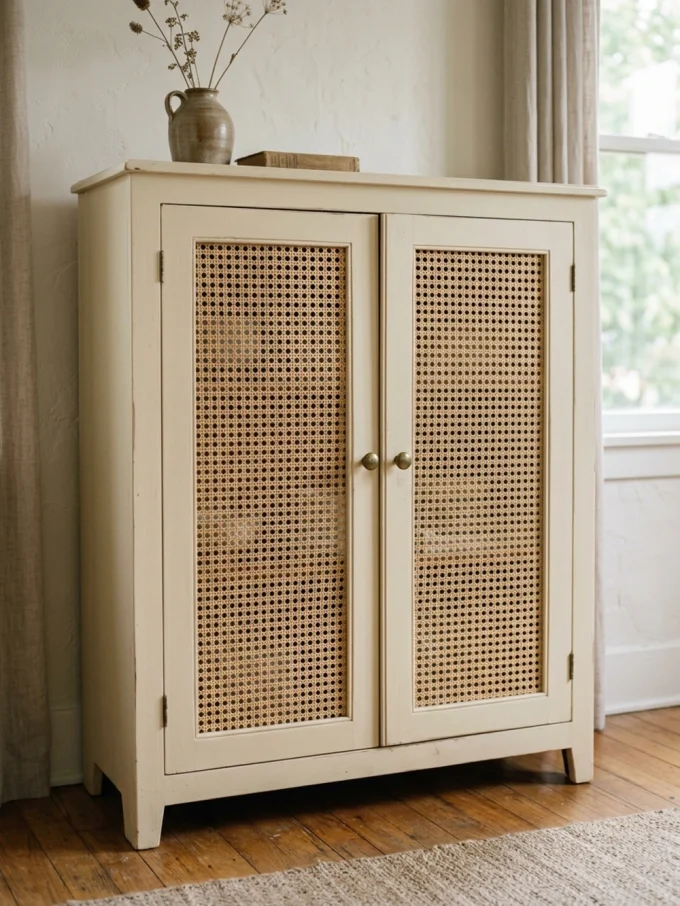
Cane inserts can transform a heavy cabinet without requiring a completely new design.
Replace selected solid door panels with cane or rattan so the piece gains texture and visual lightness.
This is especially effective on cabinets with simple rectangular doors.
Pair the natural woven material with a muted painted frame, natural wood, or warm neutral walls.
Why it works: The solid cabinet becomes visually lighter while still providing concealed storage.
Don’t add cane simply because it is fashionable. It works best when the cabinet’s proportions and the surrounding room already support a relaxed natural texture.
15. Transform an Old Desk Into a Compact Dressing Table
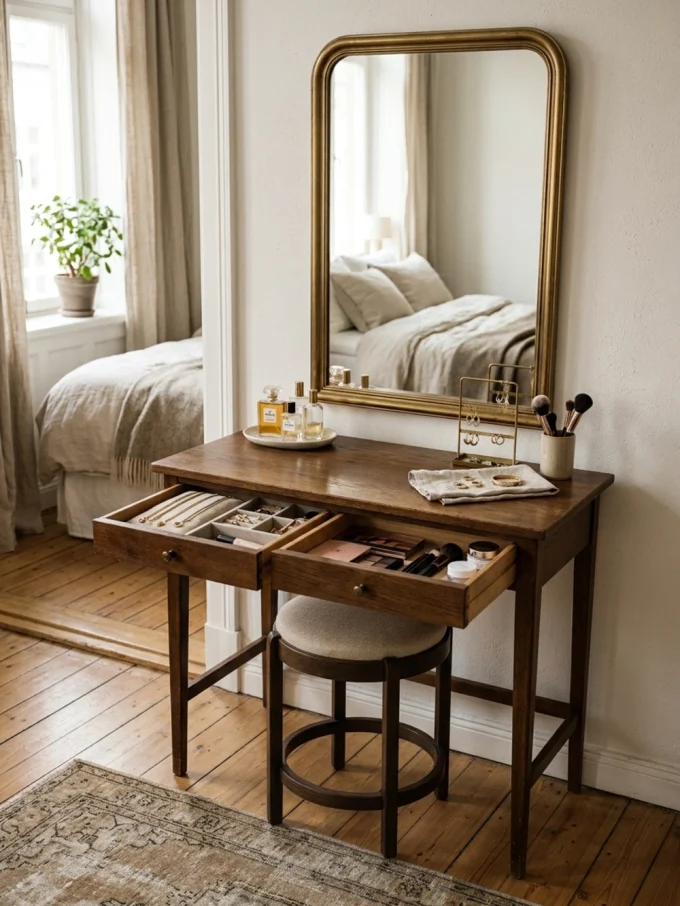
A small vintage desk can become a dressing table with very little structural work.
The existing drawers are already useful for makeup, brushes, jewelry, and personal items.
Add a mirror above it and choose a chair that fits comfortably underneath.
If the room is small, keep the desk visually light and avoid oversized mirrors or bulky seating.
For more inspiration around this type of furniture arrangement, explore these [amazing dressing table ideas].
16. Give an Old Wardrobe a Built-In Look
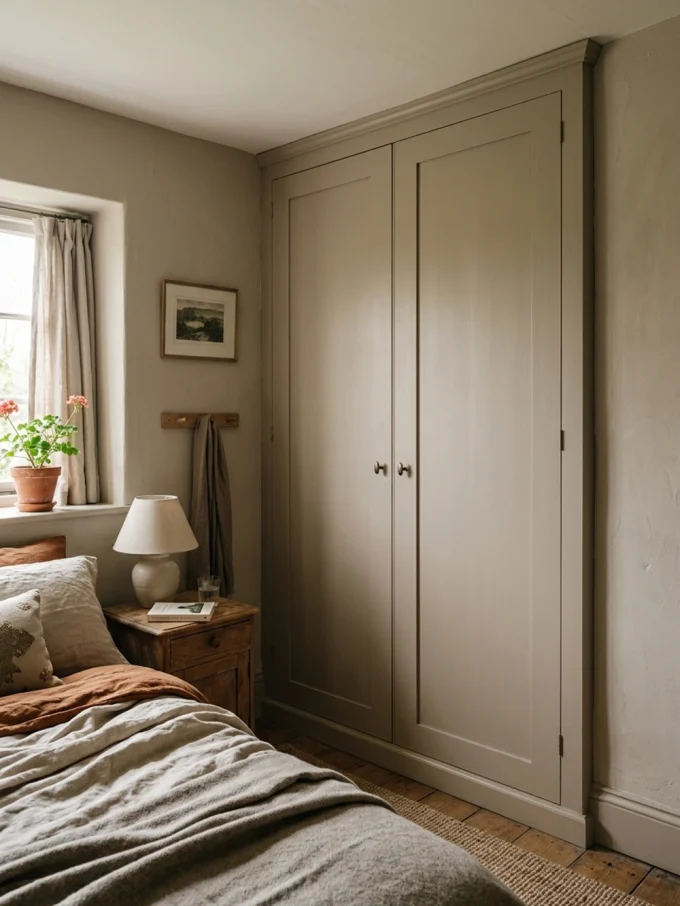
A freestanding wardrobe can look more intentional when its exterior is treated like part of the architecture.
Paint it the same or a closely related color as the wall so the edges visually disappear.
Replace generic handles with simple hardware that matches other finishes in the room.
You can also add trim around the top and sides when appropriate to create a more built-in appearance.
This works particularly well when the wardrobe itself is structurally sound but visually dated.
For additional ideas on making storage feel architectural, see these [modern wardrobe design ideas].
17. Turn Drawers Into Wall-Mounted Storage
Damaged furniture doesn’t always need to be saved as a whole.
Old drawers can become shallow wall-mounted storage boxes, especially when their proportions are suitable for small objects.
Paint them, leave the wood exposed, or line the interior with wallpaper.
Use them for books, small plants, framed objects, or entryway essentials.
The result feels more original than simply buying another small shelf because the drawer’s original function remains visible in the new design.
Avoid: Mounting heavy drawers or overloaded storage without proper wall anchors.
18. Mix Modern and Vintage Pieces Instead of Making Everything Match
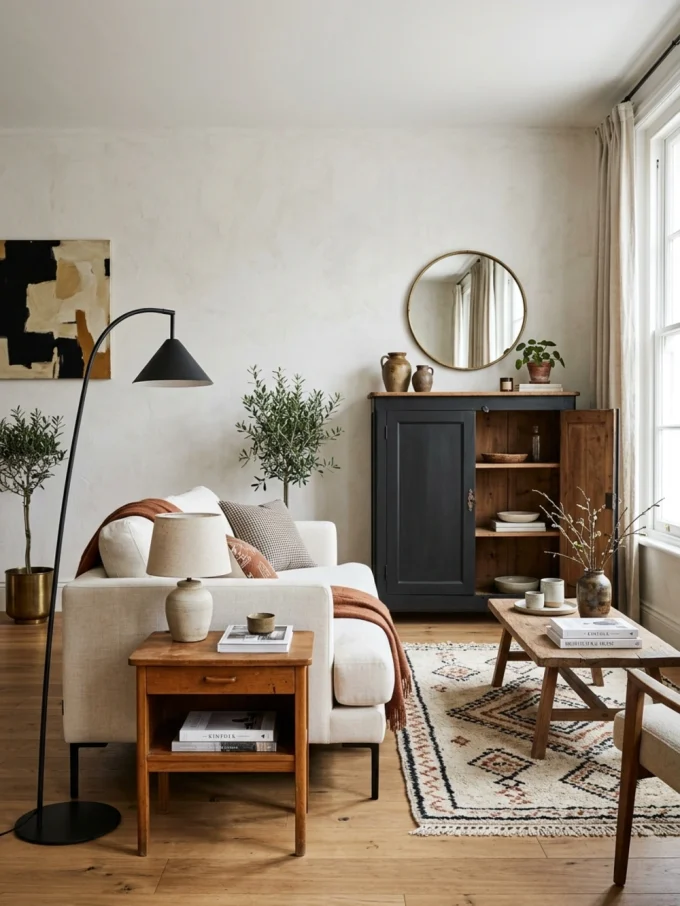
Upcycling doesn’t mean your entire home needs to look rustic.
An old wooden cabinet can work beautifully alongside a contemporary sofa. A vintage side table can sit beside a modern bed. An older dining chair can add warmth to an otherwise clean-lined room.
The contrast is often what makes the room interesting.
If you want to create a more refined version of this mix, these [old money living room ideas] can help you understand how traditional materials and furniture can feel sophisticated without looking dated.
The trick: Repeat at least one element—wood tone, metal finish, color, or shape—so the old and new pieces still feel connected.
19. Turn an Old Furniture Piece Into a Plant Stand
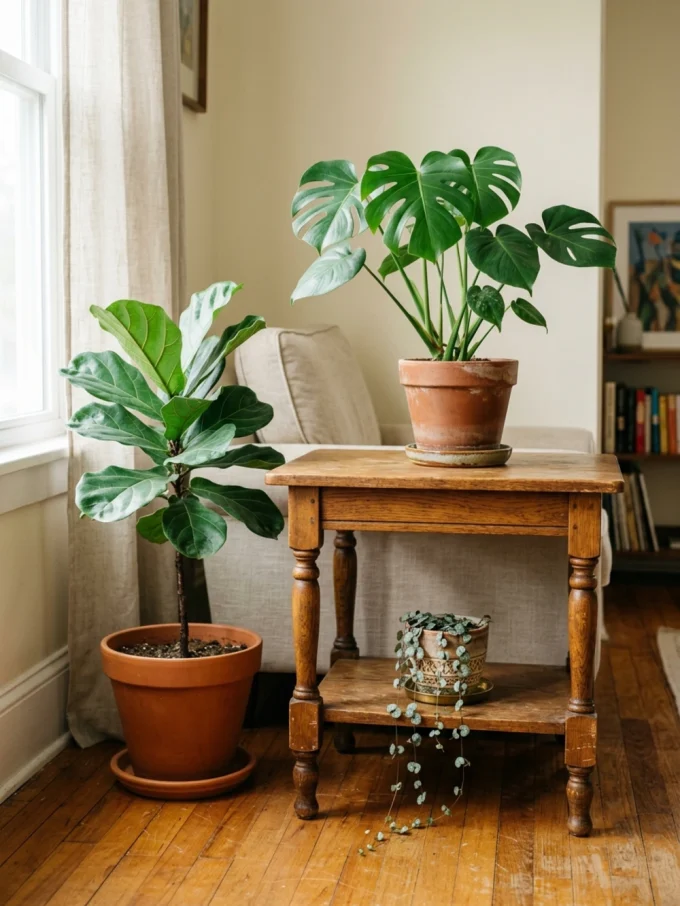
A small stool, cabinet, side table, or narrow shelving unit can become a dedicated plant stand.
Choose a piece that has enough stability for the weight of the pots and water.
Paint it if the original finish clashes with your room, or keep aged wood visible if it adds character.
Use plants of different heights rather than filling every surface with greenery.
This works especially well when an otherwise ordinary piece has an interesting silhouette.
For more ways to use greenery as part of a room’s decor, see these [flower home decor ideas].
20. Give a Thrifted Mirror a Furniture-Style Frame
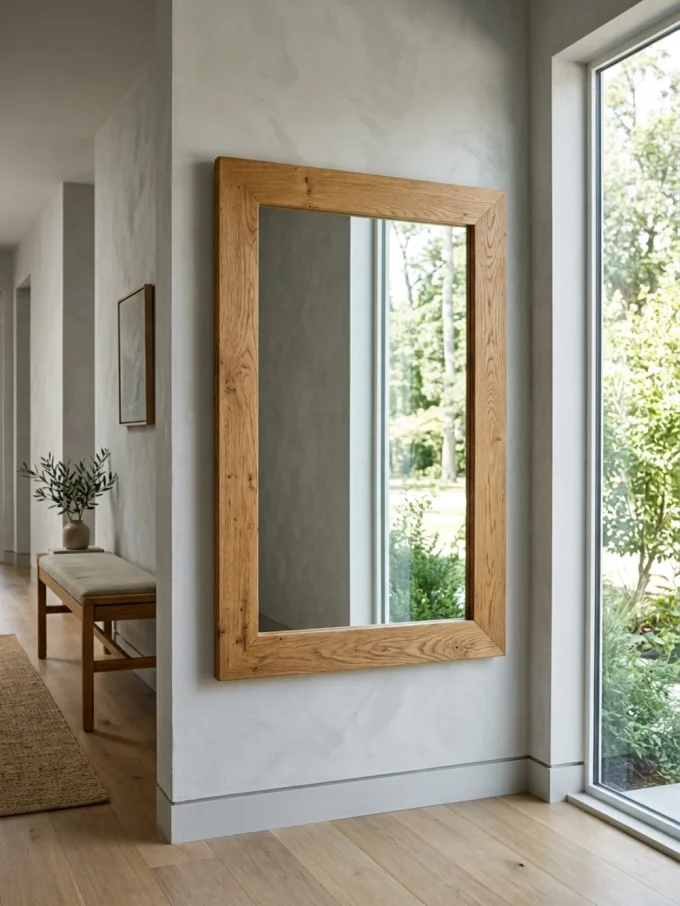
An old mirror can become much more distinctive when the frame is upgraded.
Instead of replacing the mirror itself, repaint the frame, add wood trim, or use a carefully selected finish to change its character.
A simple rectangular mirror can become warmer with a wood frame, while an ornate frame can be simplified with a restrained paint color.
Place the finished mirror where it can contribute both function and visual depth.
For more ways to use mirrors as intentional decor, explore these [beautiful arch mirror ideas].
How to Choose Furniture Worth Upcycling
The most important decision happens before the sanding, painting, or cutting starts.
Look beyond the current finish.
A badly colored dresser may have excellent construction underneath. An ugly cabinet may have unusually useful dimensions. An old table may have solid wood legs that would be expensive to reproduce today.
Before buying a project piece, check:
- Is the frame structurally sound?
- Is the furniture made from solid wood, veneer, MDF, or particleboard?
- Are drawers and doors repairable?
- Is the piece proportioned correctly for your room?
- Will the finished furniture have a useful purpose?
- Can the surface be safely refinished?
- Will the materials and labor cost less than a comparable new piece?
Upcycling is not automatically cheaper. A poor-quality piece that requires extensive repairs can become more expensive than buying something suitable in the first place.
The best projects usually start with good bones and a clear purpose.
Paint or Refinish? Choose Based on the Furniture
Paint is useful when the existing surface is damaged, mismatched, or visually uninteresting.
Refinishing is usually more worthwhile when the wood itself is attractive.
If you have a solid oak, walnut, or similar piece with good grain, stripping everything away just to cover it with paint can remove some of its strongest character.
On the other hand, a laminate cabinet with an unattractive finish may benefit more from a carefully prepared paint treatment.
Don’t choose the technique because it is trending.
Choose it based on what the furniture already gives you.
Mistakes That Can Ruin an Upcycled Furniture Project
Starting With the Wrong Piece
A beautiful transformation cannot compensate for furniture that is structurally weak or badly proportioned.
Skipping Surface Preparation
Paint can make an old piece look better temporarily, but poor preparation often leads to peeling, chipping, or an uneven finish.
Using Too Many Finishes
Paint, stain, decorative trim, new hardware, wallpaper, cane, and contrasting colors can all work individually. Together, they can overwhelm the furniture.
Ignoring Function
A beautiful cabinet that cannot open properly or a table that is uncomfortable to use isn’t a successful upcycle.
Making Everything Look Artificially New
Not every old mark needs to disappear. Some signs of age are part of what makes vintage furniture appealing.
Forgetting the Room Around the Furniture
A statement upcycled piece still needs to work with the surrounding space. These [best home decor tips] can help when you are deciding how much character to introduce without making the room feel disconnected.
Frequently Asked Questions About Upcycled Furniture
What Is the Difference Between Upcycling and Refinishing Furniture?
Refinishing usually focuses on improving the existing furniture’s surface through sanding, staining, painting, or sealing. Upcycling can include refinishing but goes further by changing the furniture’s appearance, construction, or purpose.
What Furniture Is Easiest to Upcycle?
Small tables, side tables, stools, simple dressers, chairs, and bookcases are generally approachable because they require less material and are easier to handle than large wardrobes or complex cabinets.
Is Upcycling Furniture Worth It?
It can be worthwhile when the furniture has good construction, suits your space, and doesn’t require excessive repair. A strong secondhand piece can also give you a more distinctive result than an inexpensive mass-produced alternative.
What Should I Look for When Buying Furniture to Upcycle?
Look for solid construction, useful proportions, repairable damage, good drawer movement, attractive shapes, and materials that can be safely refinished. Don’t focus only on the existing color or finish.
Can You Upcycle Furniture Without Painting It?
Yes. Sanding and refinishing wood, replacing hardware, reupholstering fabric, adding cane, changing legs, modifying storage, or giving the piece a completely new function can transform furniture without paint.
How Do I Make Upcycled Furniture Look Expensive?
Focus on preparation, proportion, hardware, finish quality, and restraint. A smooth finish, properly aligned doors, well-fitted hardware, and a cohesive color palette usually look more sophisticated than adding lots of decorative details.
What Can I Do With Old Furniture I No Longer Need?
If the piece is structurally useful, consider changing its function before discarding it. Dressers can become vanities, cabinets can become bars or storage, drawers can become wall shelves, and tables can be modified into new functional pieces.
Is Upcycled Furniture Sustainable?
Upcycling can extend the useful life of existing furniture and reduce the need to replace a usable piece, but the environmental benefit depends on the materials, finishes, transport, and amount of new material required for the project.
Final Thoughts
The most gorgeous upcycled furniture ideas don’t make old furniture look like something it isn’t.
They reveal what was already worth saving.
A solid dresser can become a refined vanity. An ordinary cabinet can become a bar. A tired dining chair can gain a completely new personality through upholstery. Even individual drawers can find a second purpose when the original furniture is beyond repair.
Start with the piece’s shape, material, condition, and potential function. Then choose the smallest transformation that will make the biggest difference.
Sometimes that means paint.
Sometimes it means new hardware.
And sometimes the smartest upcycle is simply sanding away an outdated finish and letting beautiful wood speak for itself.