

A front yard vegetable garden can be beautiful, useful, and welcoming when it is planned with care. In the Northeast, the goal is not just to grow food. The garden also needs to handle cooler seasons, changing frost dates, deer pressure, partial shade, rain, snow, and the fact that everyone can see it from the street.
That is why the best northeast front yard vegetable garden ideas balance two things at the same time: food production and curb appeal. A backyard vegetable garden can be more relaxed and hidden. A front yard vegetable garden needs cleaner lines, better edges, attractive materials, and plants that look intentional even when some crops are being harvested.
Raised beds, edible landscaping, compact vegetables, herbs, pollinator flowers, tidy paths, and decorative borders can all help a front yard vegetable garden feel like part of the landscape. The right design can make a small front yard more productive without making the home look messy.
Before building anything, think about sunlight, soil safety, local rules, water access, deer, walkways, and how the garden will look from the sidewalk. A beautiful front yard edible garden starts with planning, not just planting.
1. Start With a Front Yard Garden Plan That Looks Intentional
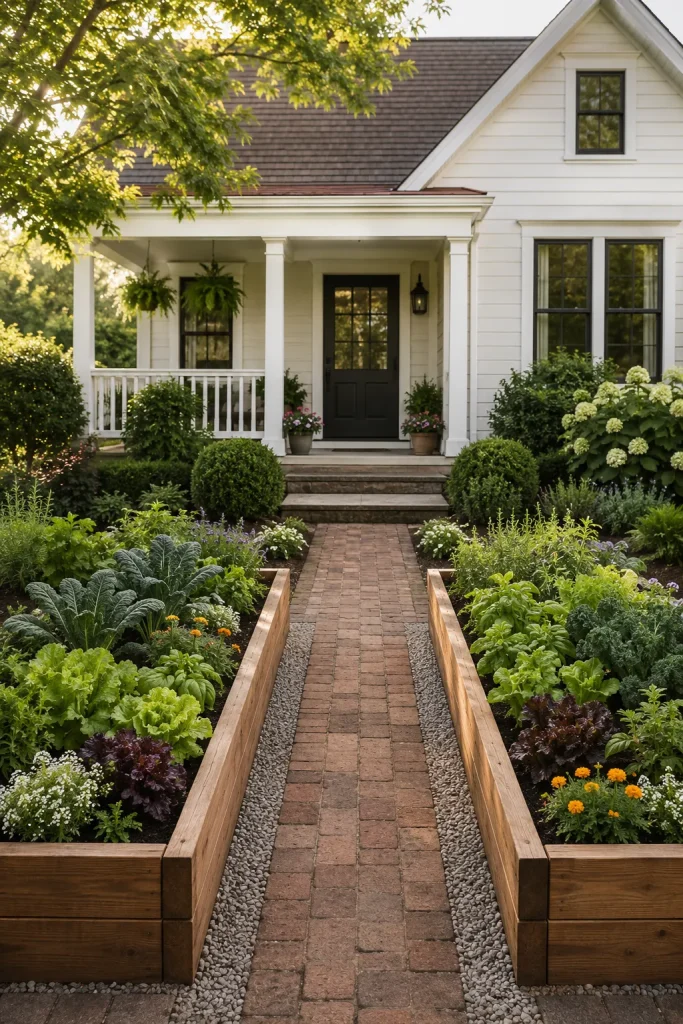
The first rule of a front yard vegetable garden is that it should look planned. Even if the garden is small, it should feel like part of the home’s exterior design.
Start by looking at the front yard from the street. Notice the front door, walkway, porch, windows, driveway, fence, and existing shrubs. Your vegetable beds should support those features instead of fighting them.
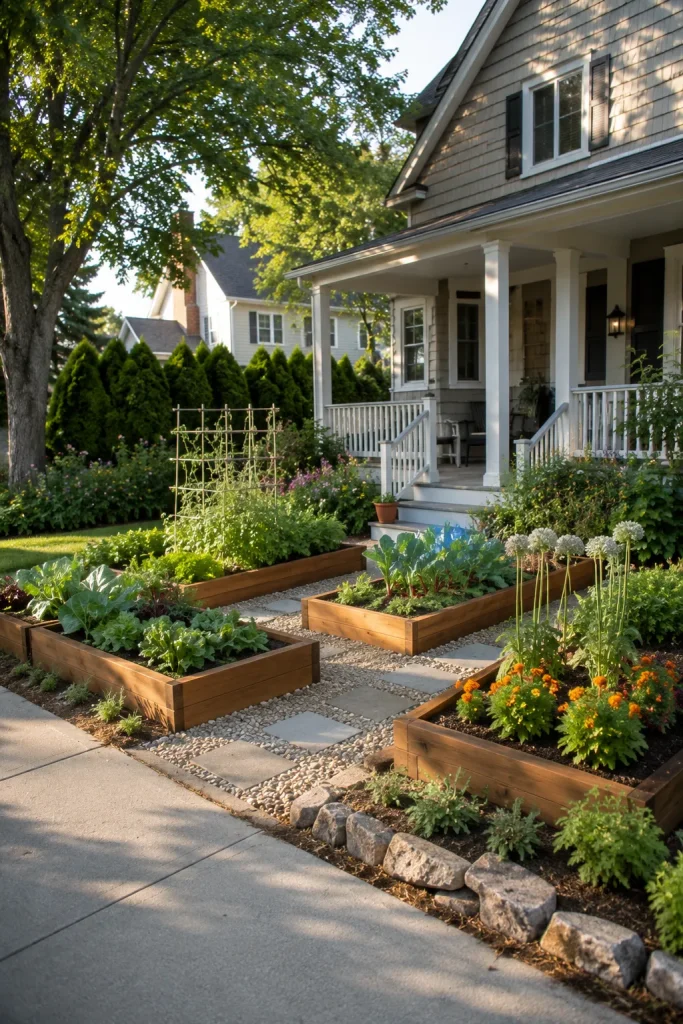
For example, a pair of matching raised beds along a walkway can look clean and balanced. A curved edible border near the front path can feel softer and more cottage-inspired. A compact rectangular bed near a porch can make herbs and greens easy to reach. A few decorative pots with lettuce, kale, herbs, or peppers can work when there is not enough room for full raised beds.
The biggest mistake is placing a vegetable bed randomly in the middle of the lawn with no border, no path, and no design connection to the house. That can look unfinished. Instead, use clear edges, repeated materials, and plants that create rhythm.
A front yard vegetable garden should answer three questions:
- Where will people walk?
- Where will the garden look best from the street?
- How will the beds stay neat during harvest season?
If those three questions are solved first, the garden will feel much more intentional.
2. Check Rules, Sunlight, and Soil Before Building Beds
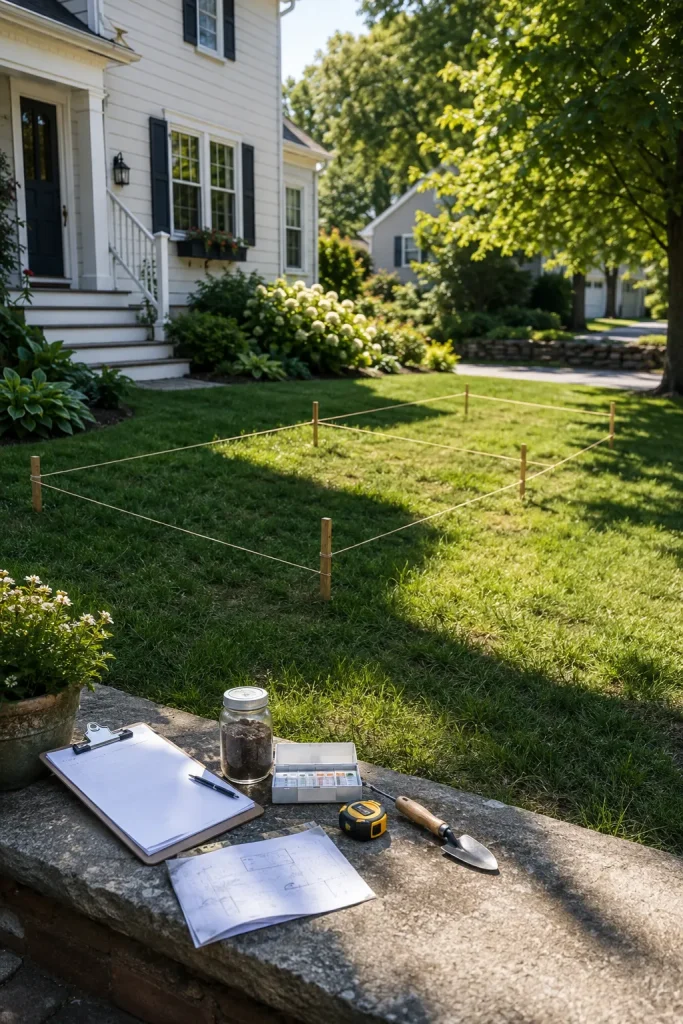
Before installing raised beds in a front yard, check local rules, HOA guidelines, utility locations, and any restrictions about front yard food gardens. Some neighborhoods allow front yard vegetable gardens, but may have rules about bed height, fences, structures, or visibility.
Next, check sunlight. Most fruiting vegetables such as tomatoes, peppers, cucumbers, squash, and beans need strong sun to produce well. Raised bed guidance commonly recommends a sunny, flat location for vegetables, and many edible crops perform best with long daily sun exposure.
Then think about soil safety. Front yards can have soil concerns because they may be near old painted homes, roads, sidewalks, driveways, or past landscaping chemicals. If you are growing food near an older house, busy road, or unknown soil history, a soil test is a smart step before planting directly in the ground. Raised beds can help because you control the growing mix, but testing still matters if roots may reach native soil.
The USDA Plant Hardiness Zone Map is also useful for checking your specific location. It lets gardeners search by ZIP code and is based on average annual extreme minimum winter temperature. For Northeast gardeners, that matters because coastal, urban, inland, and higher-elevation areas can have very different winter conditions.
Do not skip this planning step. It is easier to move a garden idea on paper than to move a filled raised bed after it is built.
3. Use Raised Beds for a Cleaner Front Yard Vegetable Garden
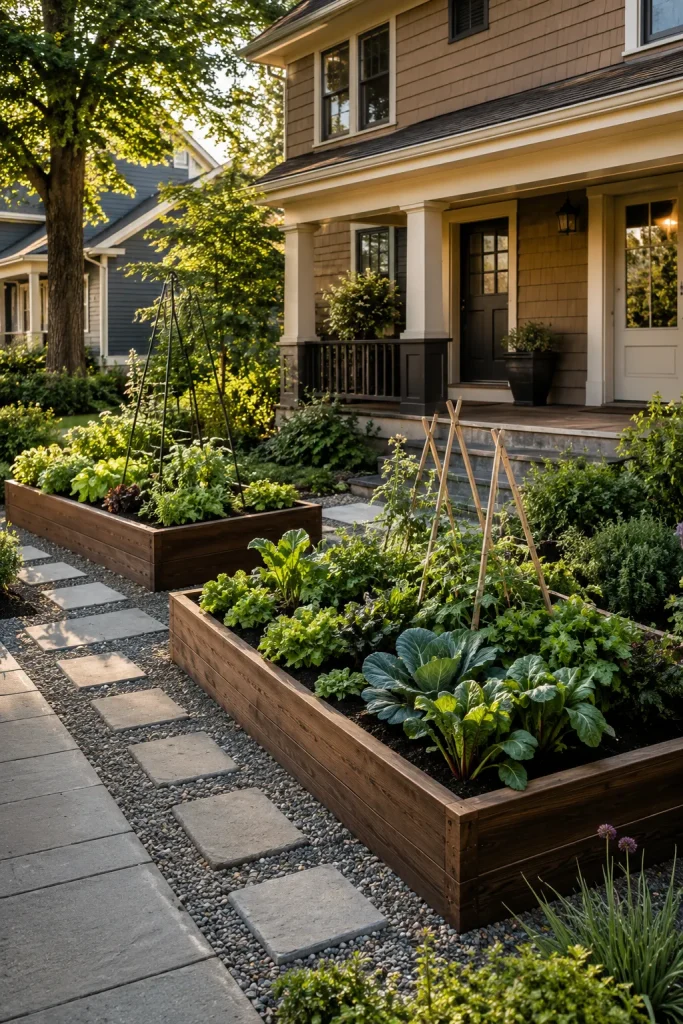
Raised beds are one of the best options for a front yard vegetable garden because they look structured. They create clean edges, make the garden easier to maintain, and help the vegetable area feel like part of the landscape instead of a temporary patch.
For small spaces, choose raised beds that match the scale of the yard. A narrow front yard may look better with one long bed along the walkway. A wider front yard may handle two matching beds with a path between them. A porch-side garden may work well with a compact 2-by-4-foot or 3-by-6-foot bed.
A raised bed should be narrow enough to reach into without stepping on the soil. Many gardeners like beds around 4 feet wide when they can access both sides. If the bed sits against a wall, fence, porch, or hedge, keep it narrower so the back is still reachable.
For curb appeal, repeat materials already used on the home. Wood beds can match porch railings or natural trim. Metal beds can look modern near black windows or dark exterior accents. Stone or brick beds can connect with walkways, steps, or retaining walls.
Avoid making the front yard look like a temporary construction zone. Uneven boards, mismatched containers, torn plastic, and scattered tools can make a vegetable garden look messy even when the plants are healthy.
4. Choose Durable Materials That Look Good From the Street
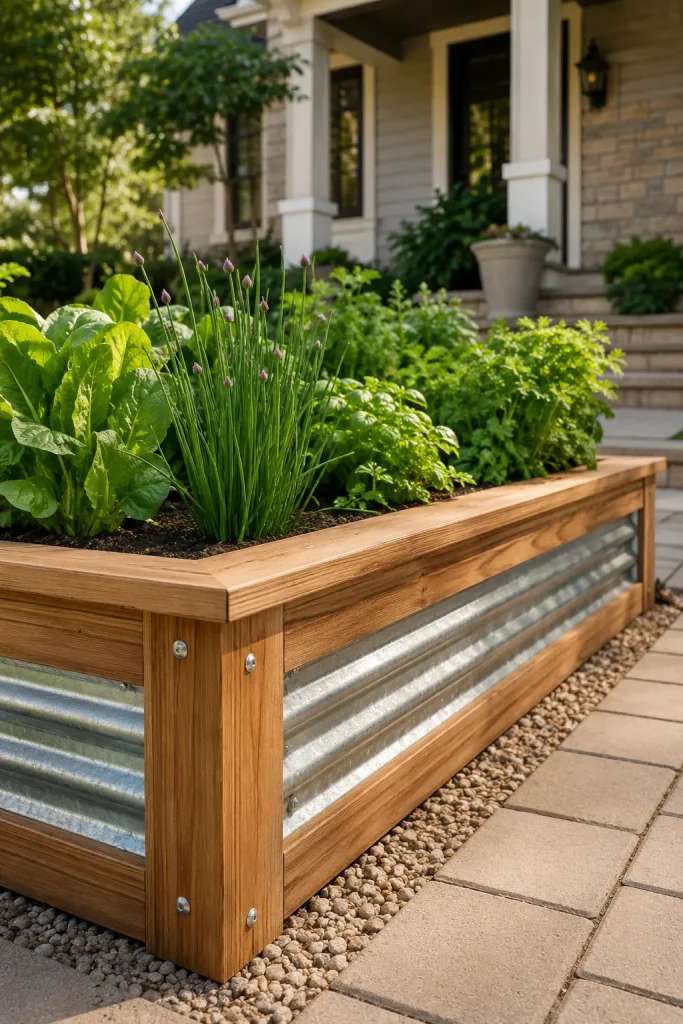
Durable materials matter more in the front yard because the garden is visible all year. Even after the growing season ends, the raised beds, paths, edges, and supports will still be seen.
Good front yard raised bed materials include cedar, rot-resistant wood, galvanized metal, stone, brick, composite lumber, and high-quality modular kits. Cedar and other rot-resistant woods are often used because they look warm and natural. Metal beds can look clean and modern. Stone and brick feel permanent and upscale.
When growing food, choose materials carefully. Avoid questionable reclaimed wood, old railroad ties, utility poles, or materials that may leach unsafe substances into edible soil. Raised bed guidance also recommends safe materials and soil testing when growing edibles.
Garden bed liners can help separate soil from some bed materials, reduce soil loss through gaps, and keep the bed neater. However, liners should not block drainage. In a vegetable bed, drainage is essential because soggy soil can damage roots.
If you buy pre-made front yard garden bed kits, choose kits that look finished even when empty. Clean corners, matching hardware, and stable frames matter. A cheap bed that warps after one season may hurt curb appeal more than it helps.
5. Create Front Yard Edible Garden Designs That Enhance Curb Appeal
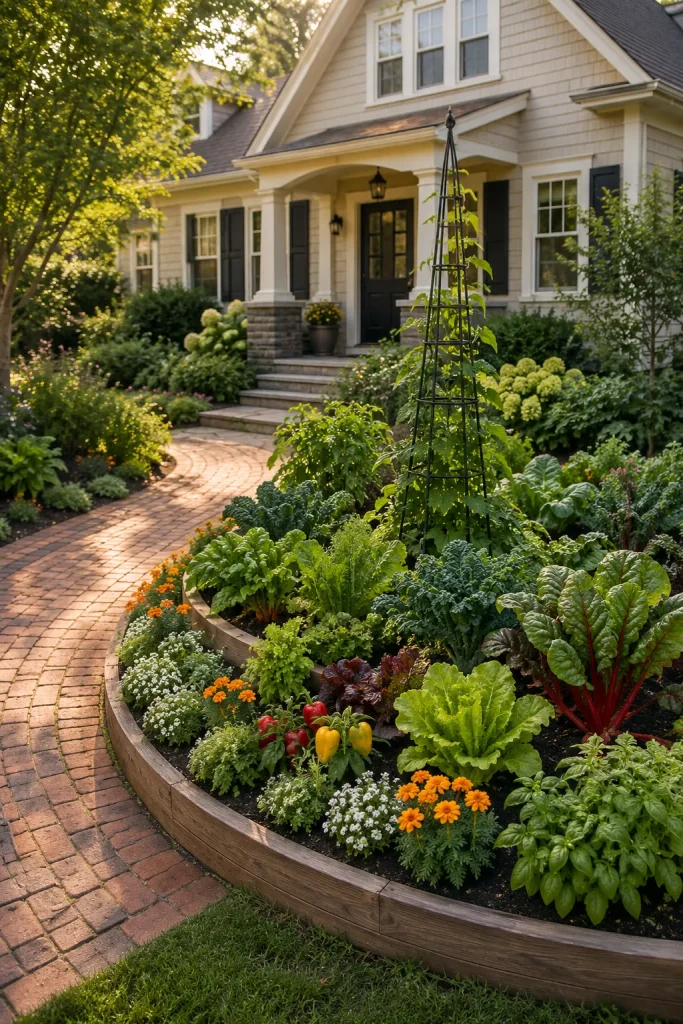
Front yard edible garden designs work best when vegetables are mixed with attractive structure. A vegetable garden can be productive and still look decorative.
Use neat rows, geometric beds, low edging, repeated pots, paths, trellises, herbs, flowers, and compact crops. This turns the garden into an edible landscape rather than a random vegetable patch.
Some attractive front yard combinations include:
- lettuce, kale, parsley, chives, and pansies in a cool-season border
- tomatoes on a neat trellis with basil and marigolds below
- Swiss chard, purple basil, thyme, and calendula for color
- compact peppers with oregano and low flowers
- cabbage, kale, and rosemary for a structured fall look
- strawberries along the edge of a raised bed
- dwarf beans, carrots, and lettuce in a small bed near the walkway
Flowers are not just decorative. They can soften the look of vegetable beds and make the front yard feel more welcoming. Calendula, alyssum, nasturtium, marigolds, violas, and edible flowers can make raised beds look fuller and less utilitarian.
If you enjoy natural styling, these flower home decor ideas can also inspire how you use color, texture, and seasonal flowers around the home, even though the garden setting is outdoors.
Avoid planting only short crops in one flat bed if curb appeal matters. Add height with trellises, herbs, dwarf shrubs, or vertical supports so the garden has layers.
6. Pick Vegetables That Grow Well in the Northeast
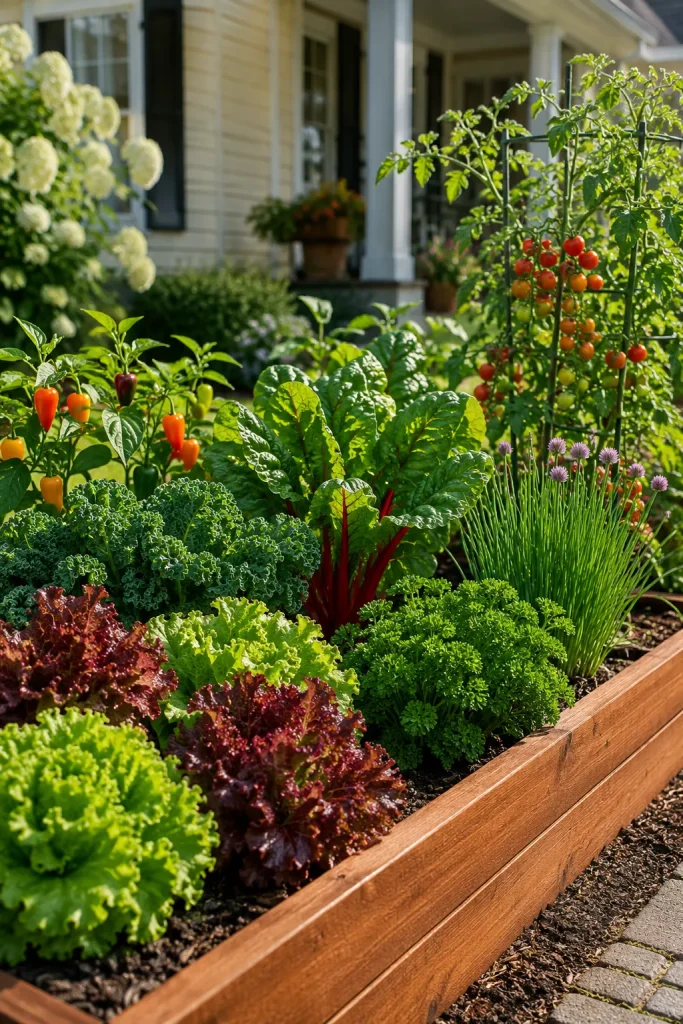
The Northeast is a strong region for cool-season vegetables. Many gardeners can grow spring greens, early peas, radishes, carrots, herbs, summer tomatoes, beans, peppers, cucumbers, squash, and fall crops with the right timing.
Some of the easiest vegetables to grow in Northeast front yards include:
- lettuce
- kale
- spinach
- Swiss chard
- radishes
- carrots
- beets
- peas
- bush beans
- cherry tomatoes
- herbs like parsley, chives, thyme, basil, and oregano
For a high-visibility front yard garden, choose vegetables that look tidy and attractive for much of the season. Leaf lettuce, kale, Swiss chard, compact herbs, cherry tomatoes on clean supports, peppers, and strawberries can look beautiful when maintained.
Warm-season vegetables like tomatoes, peppers, cucumbers, and squash need warmer weather and more sun. Cool-season vegetables like lettuce, spinach, kale, radishes, peas, carrots, and beets are often better for spring and fall. Many cool-season crops can be planted earlier or later than heat-loving crops, while warm-season vegetables generally need frost-free conditions.
For a front yard, avoid letting large vining crops sprawl across walkways. Pumpkins, melons, and full-size squash can be productive, but they usually need more space than most front yards can comfortably offer.
7. Plan for a Northeast-Facing or North-Facing Front Yard
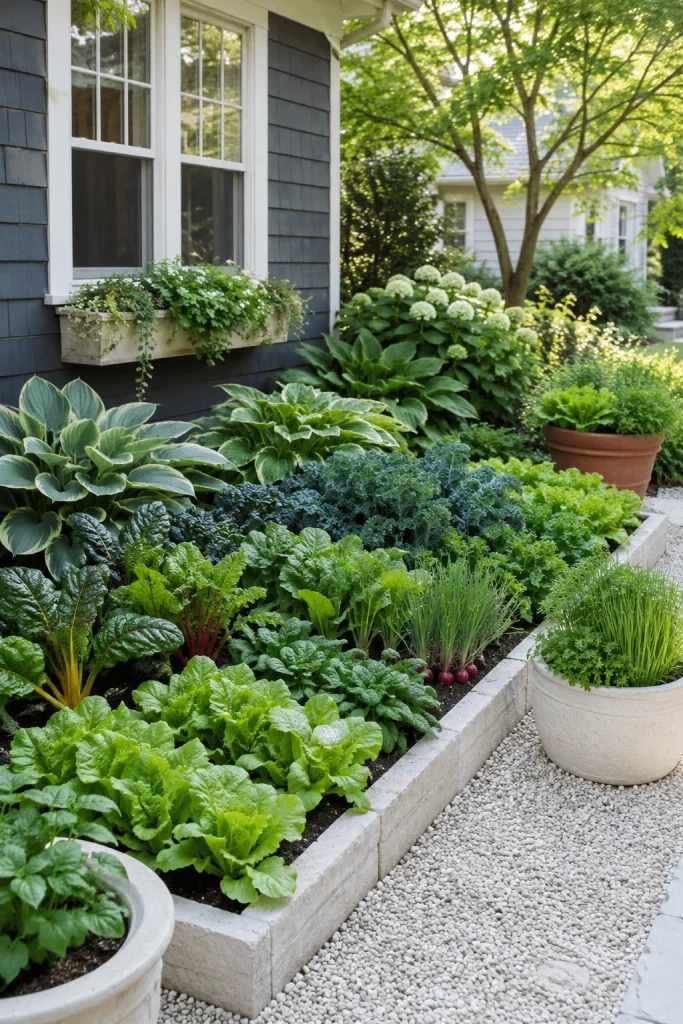
A north-facing front yard can still be beautiful, but vegetable choices need to match the light. Most vegetables do not grow well in deep shade, but some leafy greens and herbs can handle less sun than fruiting crops.
Leafy vegetables and some root crops are usually better choices for partial shade than tomatoes, peppers, cucumbers, or squash. Shade-tolerant vegetable guidance commonly points to leafy greens such as lettuce, spinach, kale, chard, and mustard greens, with some root crops growing more slowly in partial shade.
For a north-facing front yard, try:
- lettuce
- spinach
- kale
- Swiss chard
- arugula
- parsley
- chives
- mint in containers
- radishes
- beets
- carrots, if there is enough light and loose soil
To brighten a north-facing garden, use light-colored gravel, pale stone edging, white or cream planters, reflective house trim, and light mulch. Keep the planting design clean so the garden does not feel dark or crowded.
If the front yard gets only a few hours of morning light, focus on greens, herbs, and decorative edible plants. If it gets 6 or more hours of sun, you can add more fruiting vegetables.
Avoid forcing tomatoes into a shady front yard just because they are popular. If the sun is weak, the plant may grow tall and leafy but produce poorly.
8. Use Soil Mix and Amendments That Support Healthy Vegetables
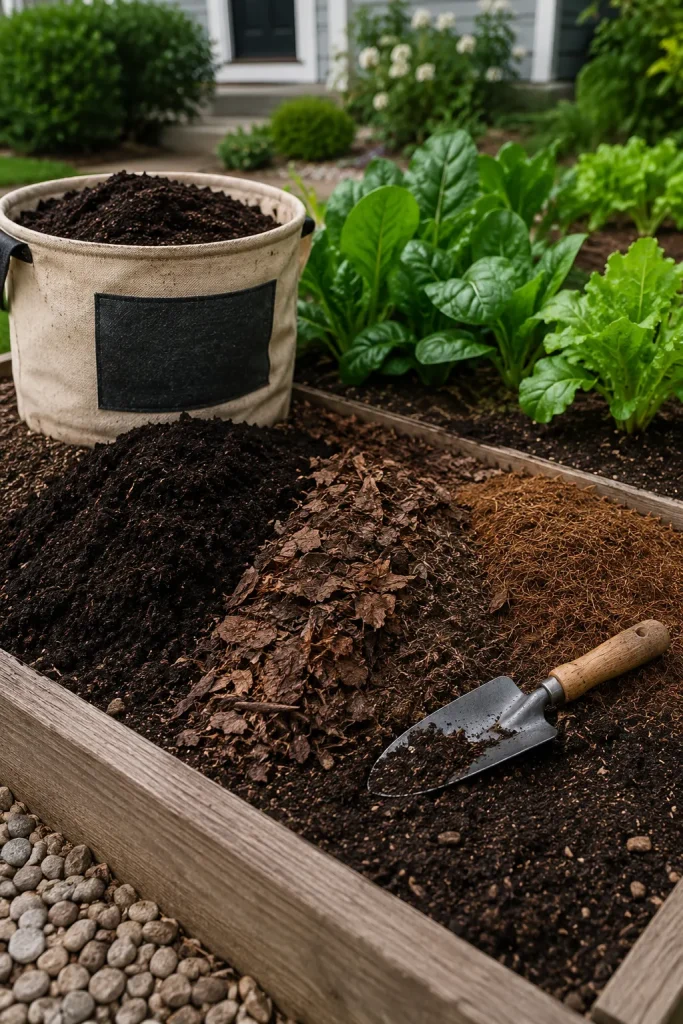
A front yard vegetable garden depends on good soil. Raised beds give you more control, but they still need the right mix.
A useful raised bed mix usually includes topsoil, compost, and organic matter that holds moisture while draining well. Compost improves soil structure and adds nutrients. Finished compost is especially helpful in Northeast gardens where clay, rocky soil, or compacted soil can be common.
A soil test is important because it can show pH, nutrient levels, and possible concerns before you add amendments. Raised bed guidance notes that soil tests can identify soil texture, acidity, nutrient issues, and contaminants such as lead or heavy metals.
For a northeast-facing vegetable garden, soil amendments may include:
- finished compost
- leaf mold
- aged manure from a safe source
- organic granular fertilizer
- lime only if recommended by a soil test
- mulch to protect soil moisture
- organic matter to improve compacted soil
Do not guess with heavy fertilizer. Too much nitrogen can create lush leaves but weak harvests, especially with tomatoes and peppers. A soil test gives better direction.
Also avoid filling a raised bed only with potting mix if the bed is large. Potting mix can be expensive and may dry quickly. A balanced raised bed blend is usually more practical.
9. Make the Garden Low-Maintenance for Cooler Climates
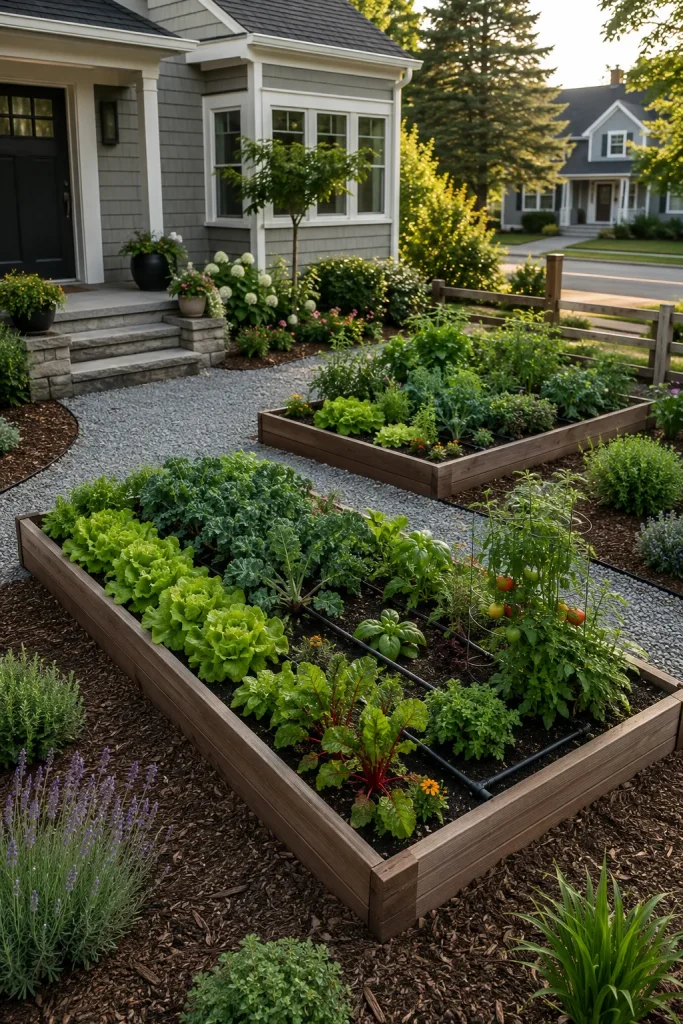
Low-maintenance front yard vegetable garden plans are especially useful in cooler climates because the growing season can feel short and busy. The garden should be easy to water, weed, harvest, and clean up.
Start small. One or two raised beds are better than six beds that become overwhelming. Use mulch around plants to reduce weeds and keep soil moisture more stable. Install a simple drip line or soaker hose if possible. Keep paths wide enough to walk, carry compost, and harvest without stepping into beds.
Choose reliable crops. Lettuce, kale, chard, herbs, radishes, peas, bush beans, cherry tomatoes, and compact peppers are often easier than large sprawling crops. Use trellises for climbing plants so they stay vertical and tidy.
For front yard visibility, plan what happens after harvest. When lettuce bolts or radishes are pulled, add another crop, herbs, flowers, or mulch so the bed does not look empty and messy.
The 70/30 rule can help here. Use about 70% of the front garden design for structure and reliable plants, and 30% for seasonal color, experiments, or quick crops. Garden design articles describe this kind of 70/30 approach as a way to create a more balanced, lower-stress garden with a stable backbone and seasonal interest.
10. Protect the Garden From Deer Without Ruining the Look
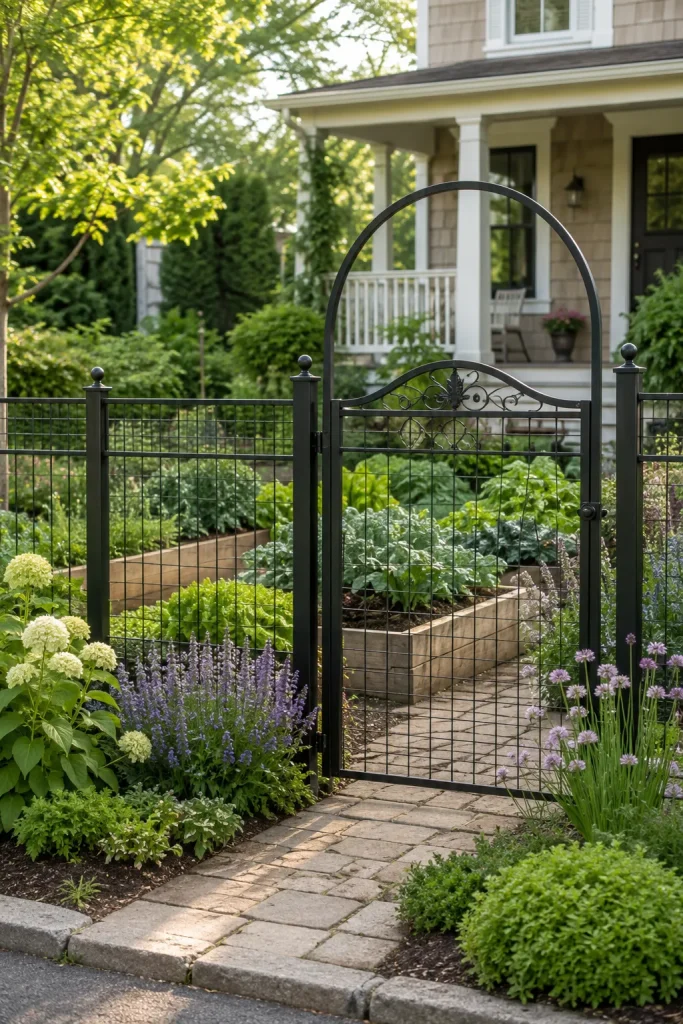
Deer can be a real problem in many Northeast front yards. The challenge is protecting vegetables without making the front yard look like a cage.
No plant is completely deer-proof. Deer pressure changes with season, food availability, and local population. Recent deer-resistant gardening advice still emphasizes that no plant is truly deer-proof, especially when deer are hungry.
For a front yard vegetable garden, combine several strategies:
- use low, attractive fencing if allowed
- add deer netting only where it looks neat
- grow aromatic herbs around beds
- use raised beds close to the house or walkway
- avoid placing favorite deer foods at the outer edge
- rotate repellents if you use them
- harvest leafy crops before they get overly exposed
Aromatic herbs like chives, thyme, oregano, sage, lavender, mint in containers, and rosemary in seasonal pots can make the garden more decorative and may be less appealing than tender greens. They are not a guaranteed barrier, but they add beauty and function.
If deer are severe in your area, design the garden with protection from the start. A beautiful low fence, black metal border, or tidy mesh system looks better than emergency netting thrown over plants later.
11. Use Containers and Pots for Flexible Front Yard Vegetables
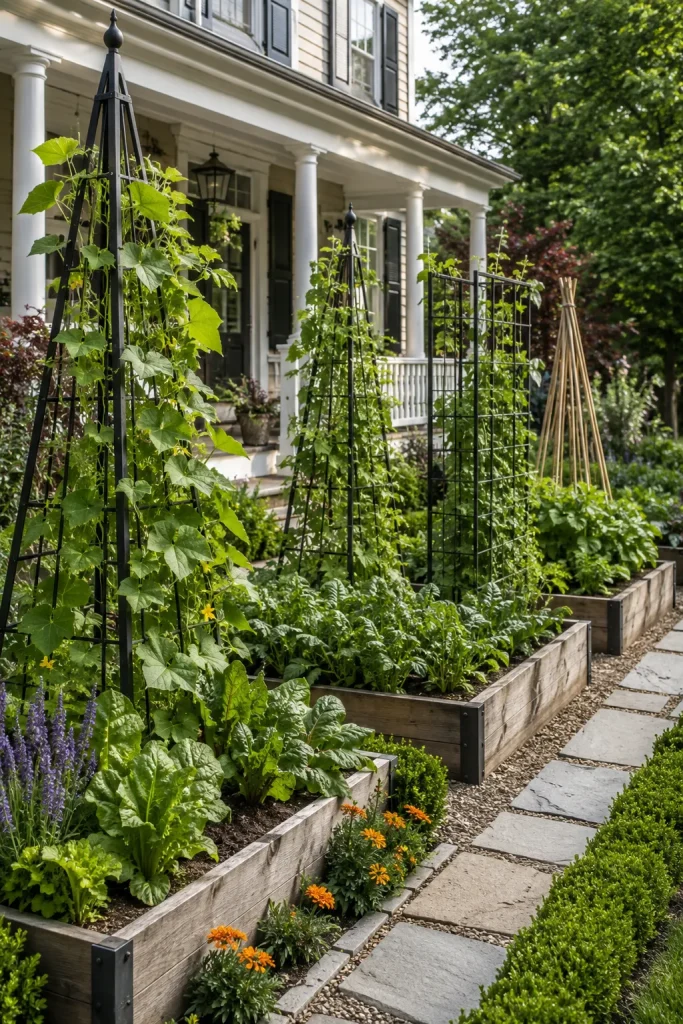
Not every front yard needs permanent raised beds. Containers can be a better choice for renters, small yards, porches, steps, narrow paths, or north-facing spaces where you need to move plants for light.
Good container vegetables include:
- lettuce
- herbs
- radishes
- spinach
- compact kale
- dwarf tomatoes
- peppers
- strawberries
- chard
- green onions
Use containers that match the home’s exterior. Terracotta pots, black planters, galvanized tubs, wood boxes, and stone-look containers can all work. The key is repetition. A group of matching pots looks more intentional than a random collection.
For October pots in the Northeast, use cool-season plants like kale, lettuce, parsley, chives, pansies, violas, and ornamental cabbage. In colder areas, growth slows as temperatures drop, but containers can still add seasonal curb appeal.
Make sure containers have drainage. A pretty pot without drainage can drown vegetables after heavy rain.
12. Add Lighting and Front Yard Details Carefully
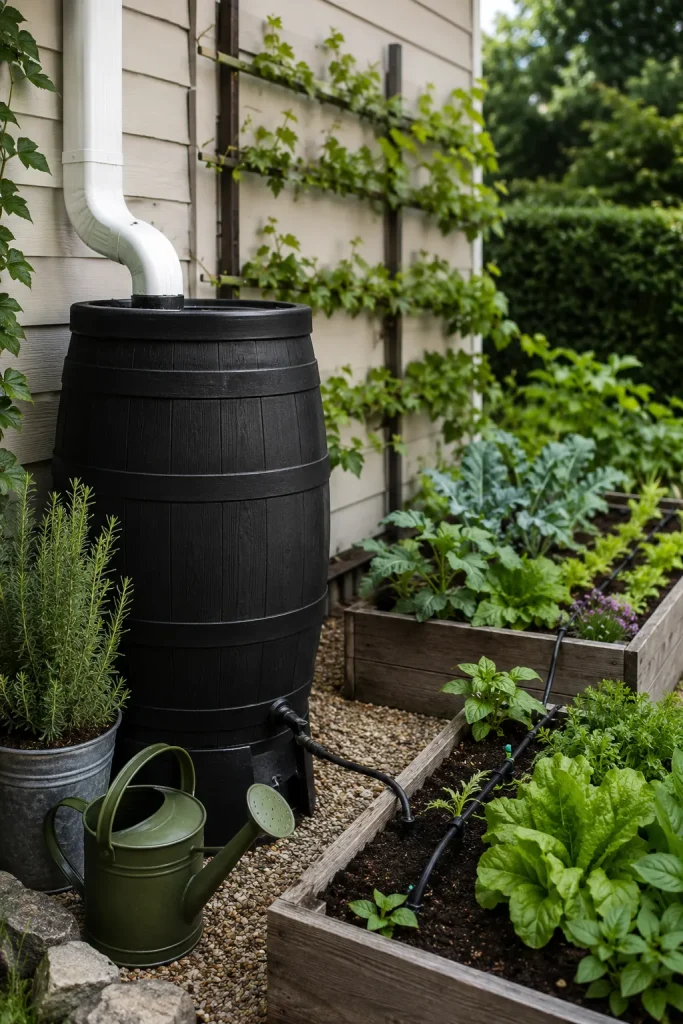
Lighting can make a front yard vegetable garden feel more integrated with the home, especially near the porch, walkway, or gate. You do not need to light the vegetables directly. Instead, light the path, front door, or nearby wall so the whole entry area feels intentional.
If the garden sits near the porch or front door, these outdoor wall mounted light fixtures can help you think about exterior lighting that improves safety, visibility, and curb appeal.
Keep lighting warm and subtle. Harsh bright light can make the front yard feel uncomfortable and may disturb the evening atmosphere. Small path lights, porch sconces, or low-voltage garden lights can be enough.
Other details can help too:
- a tidy path
- a clean border
- a small bench
- matching pots
- a simple trellis
- a decorative gate
- seasonal flowers near vegetables
For inspiration on making transition spaces feel finished, these stunning hallway ideas show how lighting, focal points, and clear design choices can make a passage feel intentional. The same principle works outside: a front yard garden looks better when it guides the eye toward the entry.
13. Use Front Yard Garden Kits Without Making the Yard Look Generic
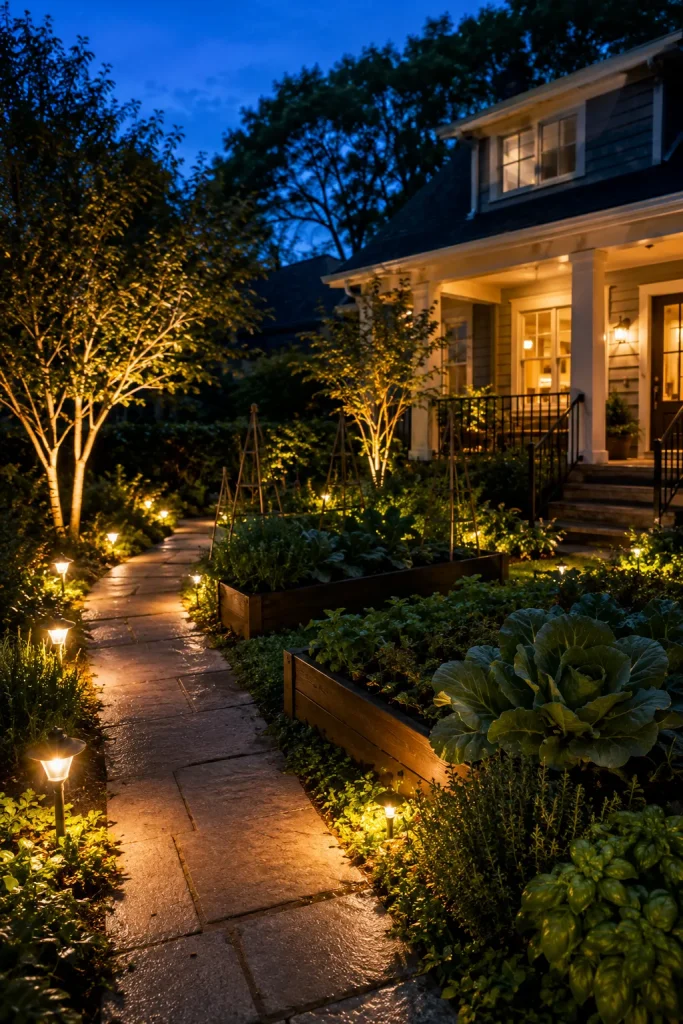
Pre-made front yard garden bed kits are helpful if you want a fast, clean setup. They can save time, reduce measuring mistakes, and give the garden a more finished look.
When choosing the best vegetable garden kits for a northeast front yard, look for:
- durable materials
- stable corners
- weather-resistant finishes
- enough depth for vegetables
- safe materials for edible growing
- a style that matches your house
- easy access from all sides
- drainage that does not flood walkways
Wood kits feel natural and classic. Metal kits feel clean and modern. Composite kits can look neat and last longer. Stone or masonry beds feel more permanent but usually cost more.
Do not buy only by size. A bed that looks good online may feel too tall, too wide, or too industrial in front of your house. Think about the home’s exterior style first.
If the front yard is highly visible, choose fewer, better-looking beds instead of many mismatched kits.
14. Use the 5-4-3-2-1 Method as a Simple Design Shortcut
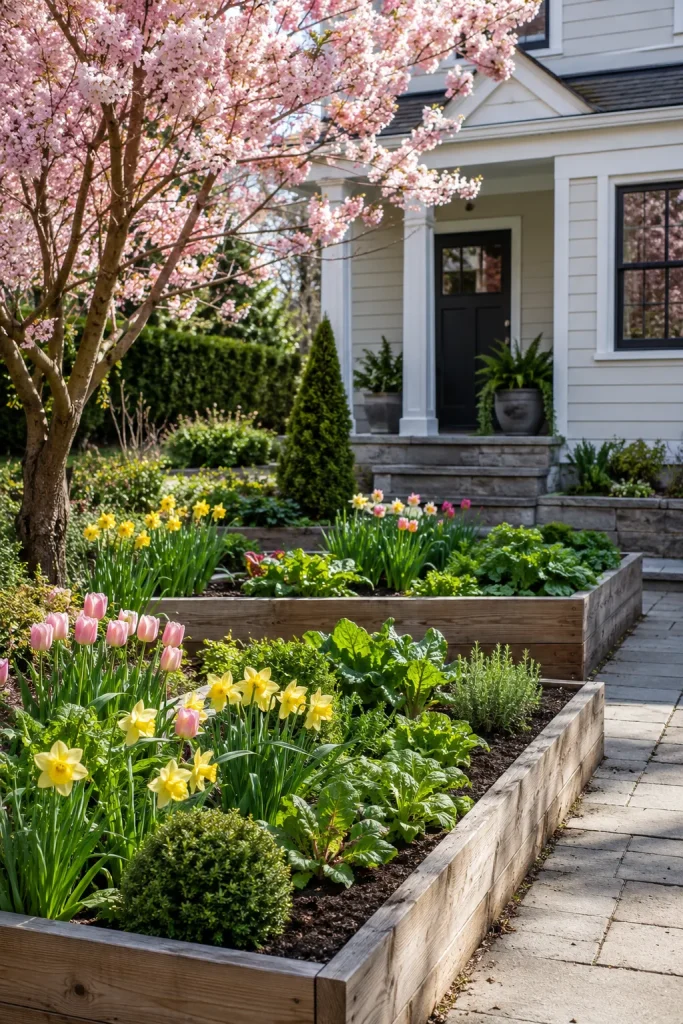
The 5-4-3-2-1 gardening method is not one universal official rule, but it can work as a simple planning shortcut for a front yard edible garden.
For example, you can use:
- 5 edible plants you use often
- 4 herbs or leafy greens
- 3 flowers for color and pollinators
- 2 structural elements like raised beds or trellises
- 1 focal point near the entry
This keeps the garden from becoming too random. It also helps beginners avoid buying too many seeds, too many kits, or too many decorative pieces at once.
For a Northeast front yard, a simple 5-4-3-2-1 plan could look like this:
- 5 vegetables: lettuce, kale, cherry tomatoes, beans, carrots
- 4 herbs: parsley, chives, thyme, basil
- 3 flowers: calendula, alyssum, marigolds
- 2 structures: raised bed and trellis
- 1 focal point: a beautiful pot, small obelisk, or front path bed
This method is especially helpful for small spaces because it gives you variety without clutter.
15. Use the 80/20 Rule for Easier Maintenance
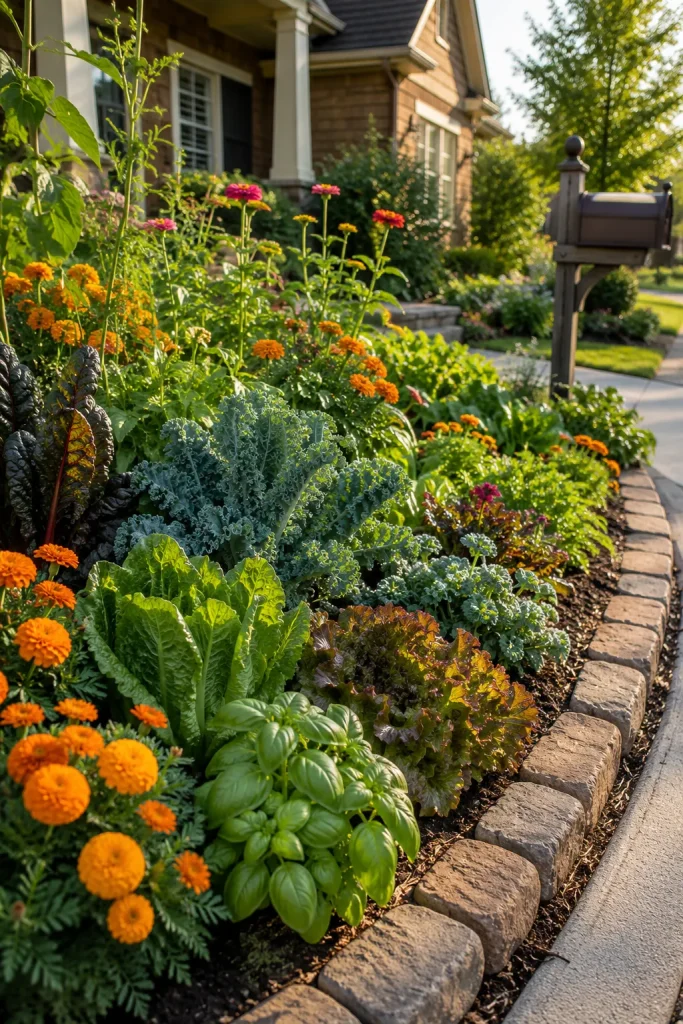
The 80/20 rule in gardening means focusing on the few choices that create most of the result. In a front yard vegetable garden, that usually means sunlight, soil, water, plant selection, and neat edges.
Instead of buying many tools and plants, focus on the basics:
- good sunlight
- safe soil
- compost
- easy watering
- compact vegetables
- mulch
- clean borders
- regular harvesting
Those few habits will do more for the garden than adding more decorations. A front yard vegetable garden can become stressful if you chase every idea at once.
Use 80% of your effort on the things that keep plants healthy and the garden tidy. Use the remaining 20% for style details like pots, trellises, labels, flowers, and seasonal accents.
16. Know What Not to Put in a Raised Garden Bed
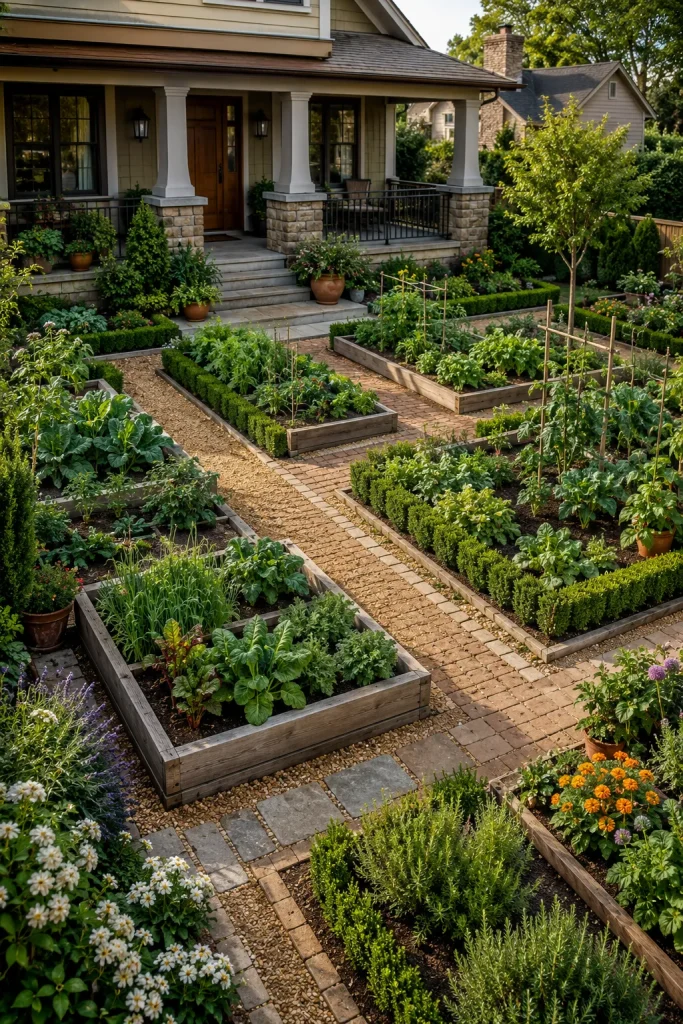
A raised garden bed for vegetables should be safe, well-draining, and easy to maintain. Do not fill it with random yard debris, fresh manure, treated wood scraps, invasive roots, diseased plant material, glossy printed paper, pet waste, or soil from an unknown contaminated area.
Also avoid putting large rocks at the bottom as a “drainage layer.” In many cases, this does not solve drainage problems and can reduce useful soil depth. It is better to use a proper soil mix and make sure the bed drains from the bottom.
Avoid fresh wood chips mixed directly into the growing soil because they can tie up nitrogen while breaking down. Wood chips are better used as path mulch or surface mulch around established plants.
For a front yard, also avoid messy supports, broken containers, torn fabric, and exposed plastic. Even if the plants grow well, the garden can hurt curb appeal if the materials look neglected.
17. Plan for Fall and October Planting in the Northeast
October planting in the Northeast depends heavily on your exact zone, frost dates, and whether you are planting seeds, transplants, bulbs, or containers.
For vegetables, many October plantings are better as transplants, protected greens, garlic, or overwintering crops rather than warm-season vegetables. Lettuce, spinach, kale, arugula, parsley, chives, and some hardy greens can work in containers or protected beds depending on the weather. Garlic is commonly planted in fall for harvest the next year.
Vegetables that grow quickly, such as radishes, baby lettuce, and some greens, can mature in around 3 months or less if planted early enough and given the right conditions. But in October, daylight is shorter and growth slows, so timing matters.
In outdoor pots in October, try:
- kale
- parsley
- chives
- lettuce
- pansies
- violas
- ornamental cabbage
- small evergreen herbs where hardy
It is usually too late for tomatoes, peppers, cucumbers, squash, beans, and basil outdoors in most Northeast front yards by October unless you are using protection or simply treating them as short-term decor.
18. Avoid Common Front Yard Vegetable Garden Mistakes
The biggest front yard vegetable garden mistakes are usually design mistakes, not plant mistakes.
Avoid these:
- building too many beds at once
- ignoring sunlight
- skipping soil testing
- using unsafe materials
- planting tall crops where they block windows
- letting vines sprawl over paths
- mixing too many bed styles
- using temporary-looking containers in a high-visibility spot
- forgetting deer protection
- not planning what the bed looks like after harvest
- placing beds too close to the house foundation
- blocking walkways, mailboxes, doors, or driveway views
A front yard vegetable garden should feel safe, attractive, and easy to care for. If it looks messy from the start, it will be harder to maintain and harder to enjoy.
The best northeast front yard vegetable garden ideas are simple, structured, and realistic. Start with a small bed, choose crops that fit your light, keep the edges clean, and add flowers or herbs for beauty.
Final Thoughts
A Northeast front yard vegetable garden can be practical and beautiful when it is designed like part of the landscape. Raised beds, compact vegetables, herbs, flowers, clean paths, and durable materials can turn a front yard into an edible garden that still improves curb appeal.
Start with sunlight, soil, rules, and deer pressure. Then choose a layout that looks tidy from the street. Add vegetables that match the season and the light. Use flowers, herbs, and paths to make the garden feel intentional.
You do not need a large yard to grow food. You need a clear plan, the right plants, and a front yard design that looks good even between harvests.
FAQs About Northeast Front Yard Vegetable Garden Ideas
Can you put a vegetable garden in the front yard?
Yes, you can put a vegetable garden in the front yard if local rules, HOA guidelines, and city codes allow it. The key is to make it look intentional with clean raised beds, paths, edging, attractive plants, and regular maintenance.
Can I have a vegetable garden in my front yard?
Yes, many homeowners can have a vegetable garden in the front yard. Before building, check neighborhood rules and think about sunlight, soil safety, water access, deer, curb appeal, and how visible the garden will be from the street.
How to plan a garden bed in front of a house?
Plan a garden bed in front of a house by checking sunlight, leaving space away from the foundation, choosing safe soil, matching the bed style to the home, and keeping walkways clear. Use compact vegetables, herbs, flowers, and neat edging for a polished look.
Which side of the house is best for a vegetable garden?
The best side of the house for a vegetable garden is usually the side with the most sun. South-facing and west-facing areas often get stronger light, while north-facing areas are usually better for leafy greens, herbs, and shade-tolerant vegetables.
What is the 70 30 rule in gardening?
The 70/30 rule in gardening usually means using about 70% of the space for structure, reliable plants, or managed areas, and 30% for seasonal color, experiments, or wilder planting. In a front yard vegetable garden, it can help keep the space tidy and lower maintenance.
What is the 70 30 rule for gardening?
For a front yard edible garden, the 70/30 rule can mean keeping 70% of the design clean, structured, and easy to maintain, while using 30% for seasonal vegetables, flowers, or decorative changes.
What is the 3-hour gardening rule?
There is no single universal 3-hour gardening rule. For sunlight, some leafy greens and herbs may tolerate around 3 to 4 hours of sun, but fruiting vegetables usually need more. For garden work, 3 hours can also be used as a practical limit so beginners do not overwork themselves.
What are the four common mistakes landscapers make when planting?
Four common planting mistakes are ignoring mature plant size, planting too close to the house, choosing plants that do not match the light, and failing to improve or test the soil. In a front yard vegetable garden, these mistakes can lead to crowding, poor growth, and messy curb appeal.
What are common landscaping mistakes to avoid in my front yard?
Avoid blocking walkways, planting too close to the foundation, using too many unrelated materials, ignoring scale, skipping soil prep, and choosing plants that do not match the light. In a vegetable garden, also avoid messy supports and sprawling crops near high-traffic areas.
What is the 5 4 3 2 1 gardening method?
The 5-4-3-2-1 gardening method can be used as a simple planning shortcut. For example, choose 5 vegetables, 4 herbs, 3 flowers, 2 structures, and 1 focal point. It helps keep a small front yard garden organized instead of cluttered.
What not to put in a raised garden bed?
Do not put pet waste, diseased plants, treated wood scraps, glossy paper, unknown contaminated soil, fresh manure, invasive roots, or random yard debris in a vegetable raised bed. Use safe soil, compost, and amendments meant for edible gardening.
What vegetables only need 4 hours of sun?
Leafy greens and some herbs are best for lower light. Lettuce, spinach, kale, Swiss chard, arugula, parsley, chives, and some root crops may grow with about 4 hours of sun, though growth may be slower than in full sun.
What veggies can I plant in October?
In many Northeast gardens, October is better for garlic, hardy greens, protected lettuce, spinach, kale, arugula, and container herbs than warm-season crops. Exact timing depends on your frost date and whether you use row covers or cold frames.
What should you not plant in the fall?
In the Northeast, avoid planting warm-season vegetables like tomatoes, peppers, cucumbers, squash, beans, and basil outdoors in fall unless you are using protection or treating them as short-term plants. They do not handle frost well.
What vegetables grow in 3 months?
Radishes, lettuce, spinach, arugula, bush beans, baby carrots, beets, kale, and some compact greens can often produce within about 3 months, depending on variety, weather, and planting time.
What to plant in outdoor pots in October?
For outdoor pots in October, use kale, parsley, chives, lettuce, pansies, violas, ornamental cabbage, and cold-tolerant herbs. In colder Northeast areas, containers may need protection as temperatures drop.
Is it too late to plant in October?
It depends on your location and the crop. In many Northeast areas, October is too late for warm-season vegetables but may still work for garlic, hardy greens, fall containers, or protected plantings.
How late is too late to plant in the fall?
It is usually too late when the soil is too cold for roots or seeds to establish before hard freezes. For vegetables, check your first frost date, seed packet days-to-maturity, and whether you can protect the crop.
What are the easiest vegetables to grow in the northeast?
Some of the easiest vegetables to grow in the Northeast are lettuce, kale, spinach, radishes, peas, bush beans, cherry tomatoes, carrots, beets, and herbs like parsley and chives.
What are the best vegetables to grow in New England?
Good vegetables for New England include lettuce, spinach, kale, chard, peas, radishes, carrots, beets, beans, cherry tomatoes, peppers, cucumbers, and herbs. Cool-season crops are especially useful in spring and fall.
What is the absolute easiest vegetable to grow?
Radishes are often one of the easiest vegetables for beginners because they grow quickly and do not need much space. Lettuce, bush beans, and kale are also easy choices for many Northeast gardens.
What are the most low maintenance vegetables?
Low-maintenance vegetables include lettuce, kale, chard, radishes, bush beans, herbs, and cherry tomatoes on a sturdy support. They are easier when grown in good soil with mulch and consistent watering.
What is the 80 20 rule in gardening?
The 80/20 rule in gardening means focusing on the few actions that create most of the results. In a vegetable garden, that usually means good sunlight, healthy soil, watering, mulch, and choosing the right plants.
What are the three enemies of the garden?
Three common garden enemies are poor soil, inconsistent watering, and pests. In the Northeast, deer, rabbits, slugs, weeds, and fungal diseases can also become major problems depending on the site.
What plants should never be planted together?
Avoid planting crops together when they compete heavily, share diseases, or crowd each other. For example, tomatoes and potatoes can share disease issues, while sprawling squash can overwhelm small greens. Keep aggressive spreaders like mint in containers.
What to plant in a north facing front yard?
In a north-facing front yard, try shade-tolerant vegetables and herbs such as lettuce, spinach, kale, chard, arugula, parsley, chives, mint in pots, radishes, beets, and carrots if there is enough light.
What to plant in front of a north facing house?
In front of a north-facing house, use a mix of shade-tolerant edibles and ornamental plants. Leafy greens, herbs, hostas, ferns, heuchera, shade flowers, and light-colored containers can make the space look brighter.
What plants like north-facing shade?
Plants that often handle north-facing shade include leafy greens, parsley, chives, mint in containers, ferns, hostas, heuchera, astilbe, and shade-tolerant annuals. For vegetables, focus on leaves more than fruit.
Which plants are good for north facing?
Good north-facing plants include lettuce, spinach, kale, Swiss chard, parsley, chives, ferns, hostas, heuchera, astilbe, and shade-tolerant flowers. If there are 4 to 6 hours of sun, you can try more root crops and herbs.
How to brighten up a north facing garden?
Brighten a north-facing garden with light gravel, pale planters, white flowers, silver foliage, clean edging, reflective surfaces, and fewer dark materials. Keep the layout open so the space does not feel heavy.
How to brighten a north facing garden?
Use light-colored mulch or gravel, cream or terracotta pots, white flowers, pale stone edging, and glossy-leaved plants. Avoid overcrowding the bed because dense planting can make a north-facing garden feel darker.