

Hallways are easy to overlook because they are usually narrow, practical spaces used for moving from one room to another. But a hallway can change the entire feeling of a home. It can make the entrance feel welcoming, help rooms feel connected, brighten a dark passage, or turn a blank wall into a beautiful design moment.
The best stunning hallway ideas are not about adding random decor. A hallway needs to feel stylish, but it also needs to stay easy to walk through. It should look finished without becoming cluttered. It should feel connected to the rest of the home, not like a forgotten corridor.
A hallway can be improved with paint, lighting, wallpaper, mirrors, artwork, runners, paneling, doors, storage, ceiling details, or one strong focal point. The right choice depends on the hallway’s size, shape, light, and purpose. A narrow hallway needs different ideas than a long hallway. A dark hallway needs different styling than a bright entry hall. A modern hallway needs clean details, while a traditional hallway may look better with molding, framed art, and warm finishes.
These hallway ideas will help you decorate small hallways, narrow hallways, long hallways, dark hallways, entry hallways, upstairs hallways, and hallway-and-stairs areas in a way that feels stylish, useful, and complete.
1. Start With Hallway Decor Ideas That Have a Clear Purpose
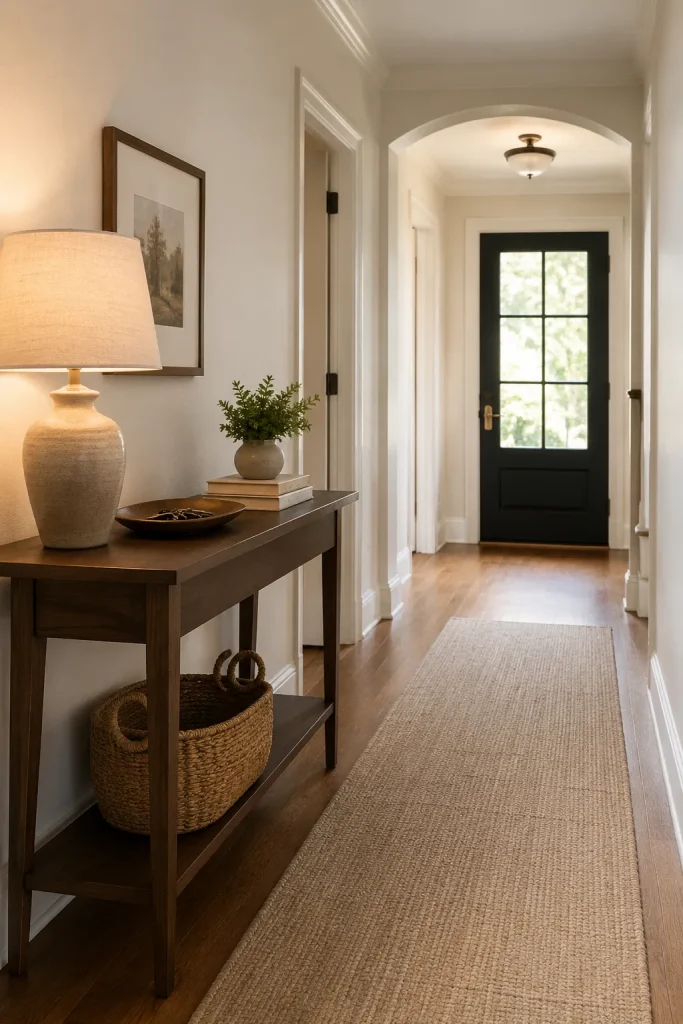
Before choosing paint, furniture, lighting, or wall art, look at what your hallway actually needs. Some hallways feel dark. Some feel empty. Some feel too narrow. Some become cluttered with shoes, coats, bags, or mail. A good hallway makeover starts with the real problem, not just the prettiest idea.
If the hallway feels plain, add one focal point. If it feels dark, improve the lighting or use a mirror. If it feels long, add rhythm with art, runners, or repeated lights. If it feels cluttered, use hidden storage instead of more decoration. If it feels cold, add texture with a rug, wood, flowers, baskets, or warm paint.
The best hallway decor ideas usually include a mix of beauty and function. A runner can soften the floor and guide the eye. A mirror can reflect light. A wall sconce can add glow. A slim table can hold keys. Framed art can make a blank wall feel finished. A basket can hide everyday clutter.
For broader styling inspiration, these home decor items can help you choose useful pieces like mirrors, trays, baskets, flowers, lighting, wall decor, and small accents without making the hallway feel crowded.
Avoid decorating a hallway like a living room. A hallway is a passage space, so it needs clear walking room. Choose fewer pieces that solve a real design problem.
2. Choose Modern Hallway Ideas for a Clean, Stylish Look
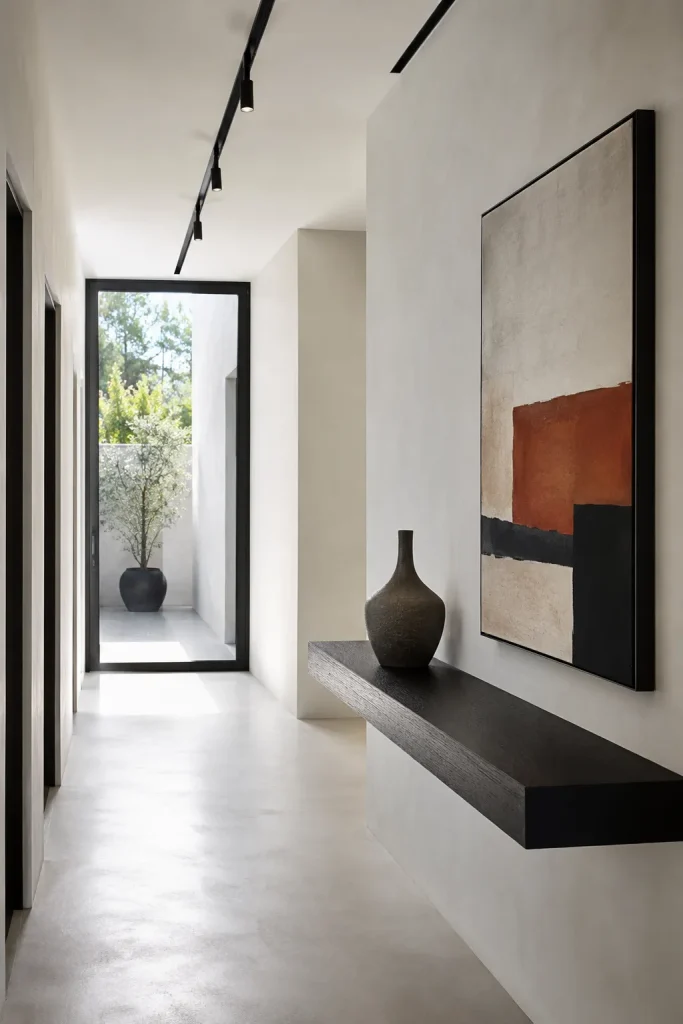
Modern hallway ideas work best when the space feels clean, bright, and intentional. This does not mean the hallway should feel empty. A modern hallway still needs warmth, texture, and personality.
Use simple shapes, clean lines, and a limited color palette. A modern hallway can include a slim black console table, a large mirror, abstract wall art, warm wall lights, a neutral runner, and one vase or sculptural object. The goal is to make the hallway feel edited, not bare.
Modern hallway decor ideas often work well with black, white, warm beige, soft gray, natural wood, stone, brass, and matte finishes. If the hallway is narrow, keep furniture slim and use wall-mounted lighting instead of bulky floor pieces. If the hallway is long, repeat modern lights or framed artwork to create a clean rhythm.
Contemporary hallway ideas can also include curved mirrors, oversized artwork, textured walls, fluted wood, simple paneling, or a bold door color. These details make the hallway feel current without overcrowding it.
Avoid making a modern hallway too cold. A hallway with only white walls, gray floors, and no texture can feel flat. Add warmth through wood, fabric, lighting, art, or a rug.
3. Make Small, Narrow, and Dark Hallways Look Bigger
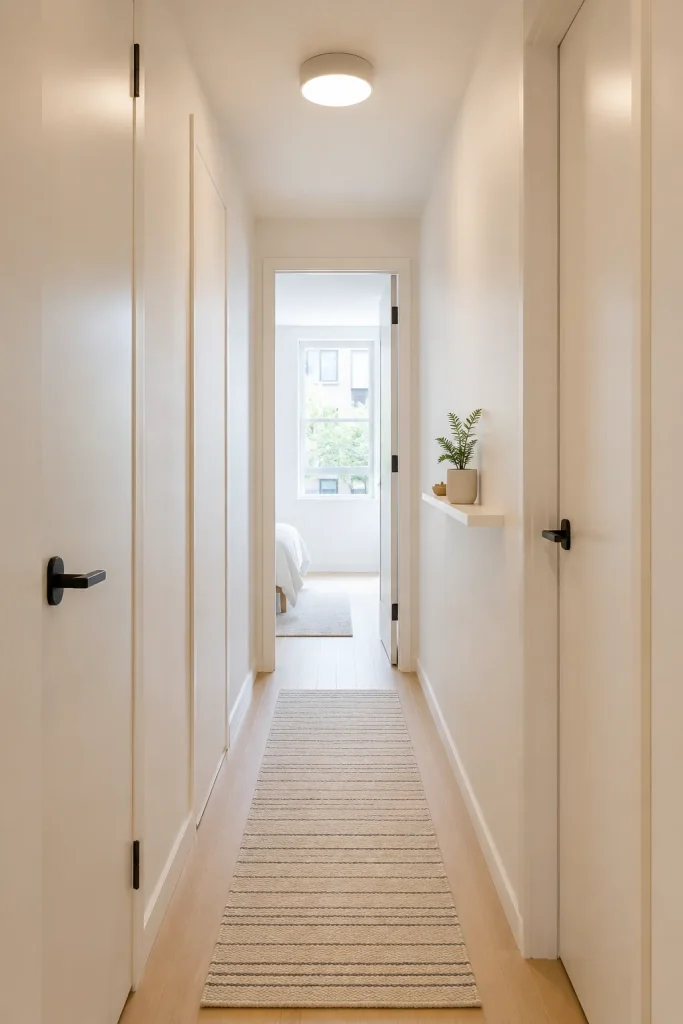
Small hallway decorating ideas should focus on brightness, scale, and clear movement. A small hallway can look beautiful, but it becomes uncomfortable quickly if the decor is too large or too busy.
For a narrow hallway, use light paint colors, slim runners, flat wall decor, mirrors, and low-profile lighting. Wall-mounted sconces can work if they do not stick out too far. Flush mount ceiling lights are useful when the ceiling is low. A narrow console can work only if there is still enough walking space.
Small dark hallway ideas should start with lighting. A mirror helps, but only if there is something useful to reflect, such as a window, lamp, open doorway, or soft wall light. If the hallway has no natural light, choose warm white lighting and avoid very cool bulbs that make the space feel harsh.
Decorating a narrow hallway works best when the walls stay calm. One long runner, one row of slim frames, one mirror, or one feature wall is usually enough. Too many small pieces can make the hallway feel even tighter.
For a short narrow hallway, keep the end wall simple and strong. A single piece of art, a small mirror, or a painted door can create a finished look without adding clutter. Tiny hallway ideas should always protect walking space first.
The biggest mistake is adding bulky storage or heavy furniture. A narrow hallway needs breathing room more than it needs extra decoration.
4. Style a Long Hallway With Rhythm and Focal Points
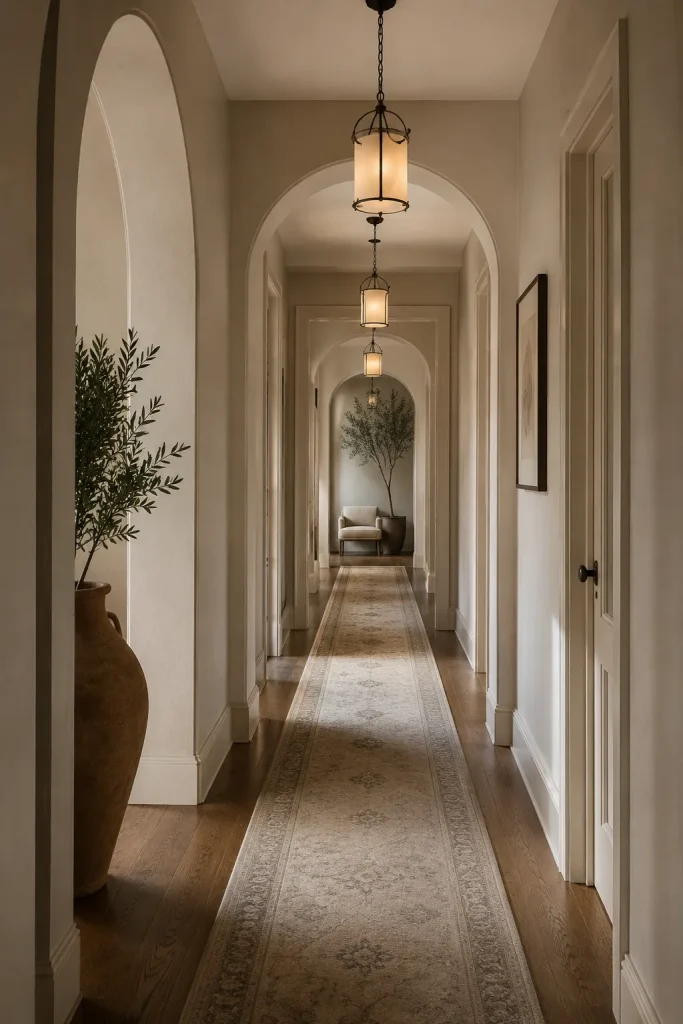
Long hallway decor ideas need rhythm. Without rhythm, a long hallway can feel empty, stretched, or tunnel-like. The best way to fix this is to repeat design elements along the hallway and create a strong focal point at the end.
A runner rug is one of the easiest ways to ground a long hallway. It draws the eye forward and makes the space feel softer. Repeated wall sconces, ceiling lights, framed prints, or picture lights can also break up the length.
Long hallway wall decorating ideas work well when the wall treatment follows the hallway’s shape. You can use a gallery wall, a row of matching frames, tall artwork, paneling, or wallpaper. The key is spacing. If the pieces are too close together, the hallway will feel busy. If they are too far apart, it may still feel unfinished.
Long entry hallway decor ideas can include a bench, slim table, large mirror, or plant near one end, but the walking path should stay open. A long hallway should feel guided, not crowded.
Long hallway storage ideas should be shallow and controlled. Built-in cabinets, narrow shoe storage, closed wall cabinets, or slim floating shelves can work, but anything too deep can make the hallway feel smaller.
Avoid placing random decor along the floor. Floor baskets, plant stands, and small stools can become obstacles in a narrow or high-traffic hallway.
5. Use Hallway Lighting Ideas to Change the Mood
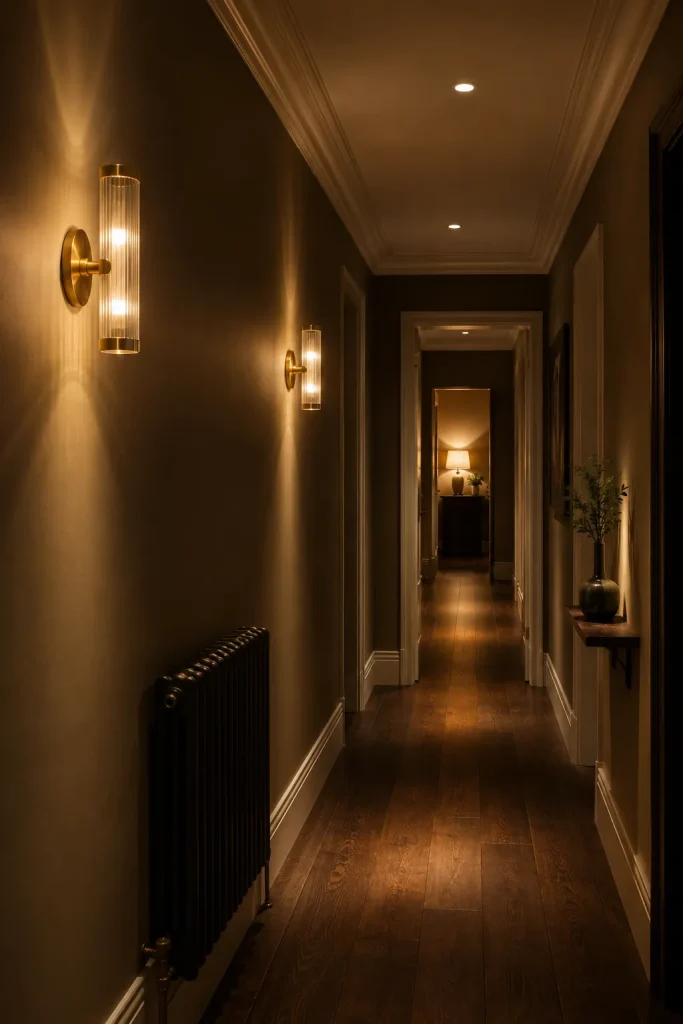
Hallway lighting ideas can completely change how a hallway feels. A hallway with poor lighting may look narrow, dull, or unfinished. A hallway with warm layered lighting can feel welcoming, elegant, and more expensive.
Use lighting based on the hallway’s shape. A short hallway may only need one good ceiling fixture. A long hallway may need multiple flush mounts, pendants, recessed lights, or wall sconces. A narrow hallway may need low-profile fixtures that do not crowd the walls. A low ceiling hallway usually looks better with flush mount lighting instead of hanging pendants.
Wall sconces are especially useful because they bring light to eye level. They can make a hallway feel warmer and more designed. For style options, these wall sconce light fixtures can help you compare modern, vintage, plug-in, LED, rustic, brass, black, rattan, and Japandi wall light styles.
For more practical placement ideas, these indoor wall mounted light fixture ideas show how wall lights work in hallways, bedrooms, bathrooms, kitchens, dining rooms, and entry areas.
Hallway ceiling light ideas can include flush mounts, semi-flush fixtures, small pendants, recessed lights, or a simple chandelier if the ceiling height allows it. Hallway pendant light ideas are best for taller entry halls, while hallway flush mount lighting ideas work better in low ceilings and narrow spaces.
Avoid relying on one weak ceiling light in a long hallway. It can leave the ends dark and make the space feel smaller. Use warm, even lighting that makes the whole hallway feel safe and comfortable.
6. Use Hallway Paint, Color, or Wallpaper to Change the Walls
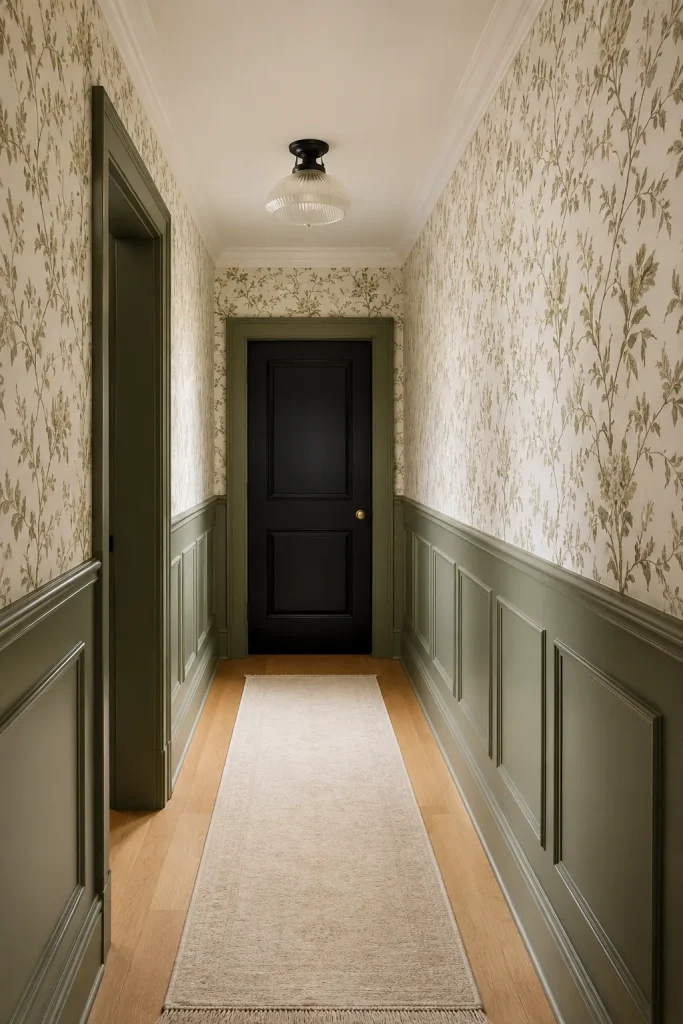
Hallway paint ideas are powerful because walls usually take up most of the visual space. The right color can make a hallway feel brighter, warmer, taller, calmer, or more dramatic.
For a small hallway, soft white, warm cream, pale greige, light taupe, muted sage, soft beige, and gentle blue-gray can make the space feel more open. Narrow hallway paint ideas should avoid heavy contrast unless the lighting is strong. A very dark wall in a poorly lit hallway can feel tight.
For a long hallway, color can help control the mood. A soft neutral keeps it calm. A darker end wall can create a focal point. A painted ceiling can make the hallway feel more designed. A tone-on-tone trim color can make the space feel more custom.
Hallway color ideas should also connect with nearby rooms. If the living room is warm and neutral, a cool gray hallway may feel disconnected. If the entryway has black, brass, or wood accents, repeat those tones in small ways.
Wallpaper can also transform a hallway. Hallway wallpaper ideas work especially well when the hallway needs character but does not have room for furniture. Small hallway wallpaper ideas should usually use soft patterns, vertical movement, or gentle texture. Narrow hallway wallpaper ideas can look beautiful when the pattern is not too busy.
Avoid using loud wallpaper on every wall if the hallway is already narrow, dark, or full of doors. A feature wall, upper wall, or end wall may be better than covering the whole space.
7. Create a Hallway Wall Moment With Art or a Gallery Wall
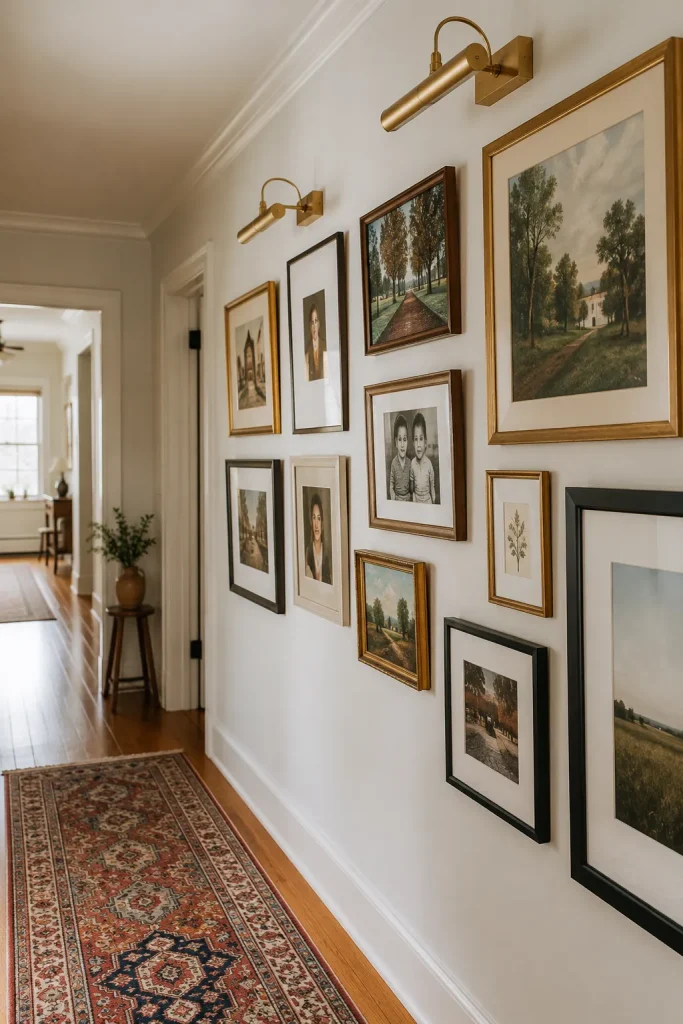
Hallway wall decor ideas are important because hallway walls often look empty. A blank hallway wall can make the home feel unfinished, but a planned wall moment can make the space feel personal and complete.
Good hallway art ideas include framed prints, black-and-white photography, abstract art, landscapes, vintage art, textile pieces, sculptural wall decor, or a mural. The best option depends on the style of the home and the length of the wall.
Hallway gallery wall ideas work well in long hallways, upstairs hallways, and stair hallways. You can use family photos, travel photos, children’s art, vintage prints, or a mix of personal pieces. A family picture wall can feel warm and meaningful, but it should be arranged with consistent spacing so it does not feel messy.
Picture frame ideas for hallway walls should consider scale. Too many tiny frames can look scattered. Larger frames, matching mats, or a balanced mix of sizes usually feels more polished.
A hallway mural can also work if the rest of the hallway is simple. Murals are best when they create atmosphere, not visual chaos.
Avoid hanging art too far into the walking path or too low where it can be bumped. Hallway art should make the wall feel finished without making the passage feel crowded.
8. Use Hallway Mirror Ideas to Add Light and Depth
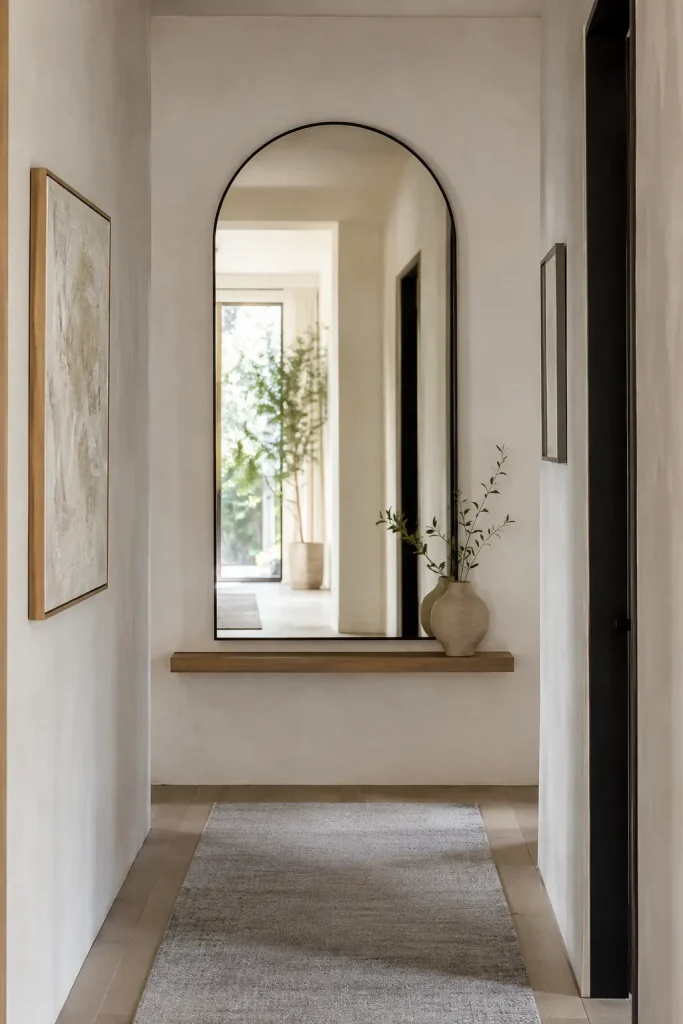
Hallway mirror ideas are useful because mirrors can brighten and visually expand a tight space. A mirror can reflect light, create a focal point, and make an empty wall feel styled.
In a narrow hallway, use a slim mirror, round mirror, arched mirror, or long vertical mirror. A mirror at the end of a hallway can create depth, but it should reflect something pleasant. If it reflects clutter, a blank wall, or a dark corner, it may not help.
End of hallway mirror ideas work best when the mirror becomes part of a focal point. Add a small table, wall light, framed art, or vase nearby if there is enough room. A mirror above a narrow console table can make an entry hallway feel more complete.
For more mirror styling principles, these contemporary bedroom mirror decor ideas can help with placement, scale, reflection, lighting, and surrounding decor. The room may be different, but the mirror rules are still useful.
Avoid using too many mirrors in one hallway. One well-placed mirror usually looks more intentional than several small mirrors competing with each other.
9. Style the End of the Hallway as a Focal Point
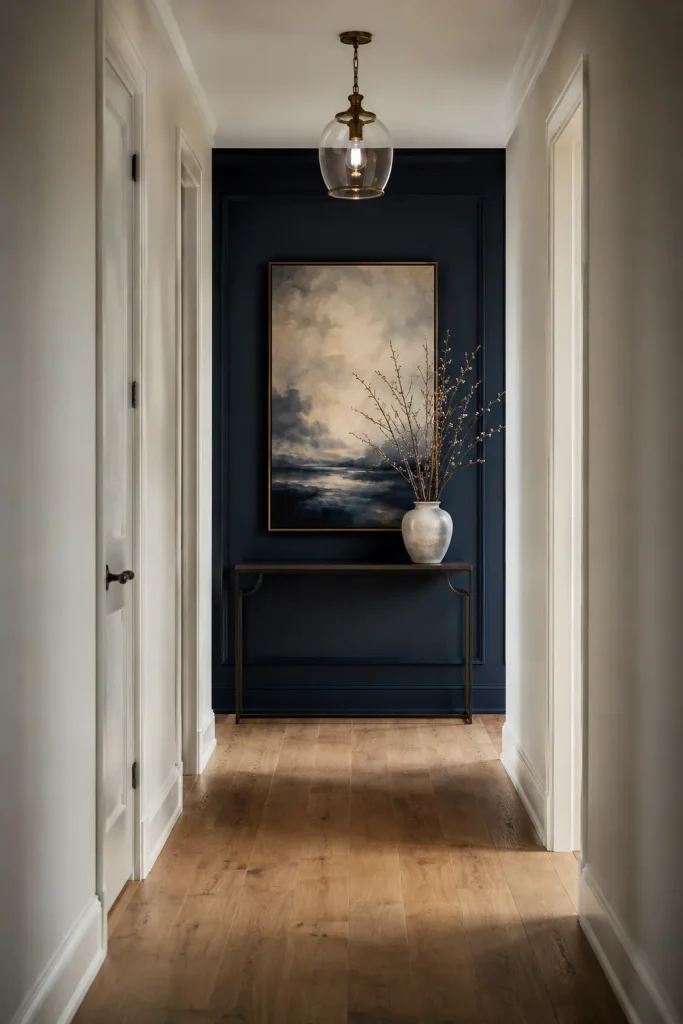
End of hallway ideas are important because the end wall is what people naturally see first when they look down the hallway. If that wall is blank, the hallway can feel unfinished. If it is styled well, the whole hallway feels more intentional.
End of hallway decor ideas can include a large artwork, a mirror, a small console, a plant, a wall sconce, wallpaper, paneling, or a painted accent color. The goal is to create a destination for the eye.
End of hallway wall decor ideas are especially useful in long hallways. A darker paint color, framed artwork, or tall mirror can stop the hallway from feeling endless. If the hallway ends at a door, consider painting the door a rich color or updating the hardware.
Hallway corner decorating ideas can include a small chair, narrow bench, plant stand, pedestal, or built-in shelf if there is enough room. Hallway nook ideas can work well for books, baskets, a small reading moment, or closed storage.
A vase or branches can soften a hallway focal point. These flower home decor ideas can help you style flowers, stems, vases, and natural accents without making the space feel crowded.
Avoid creating a focal point that blocks movement. The end of the hallway can be beautiful, but it still needs to stay practical.
10. Add Hallway Paneling, Molding, Trim, or Wainscoting
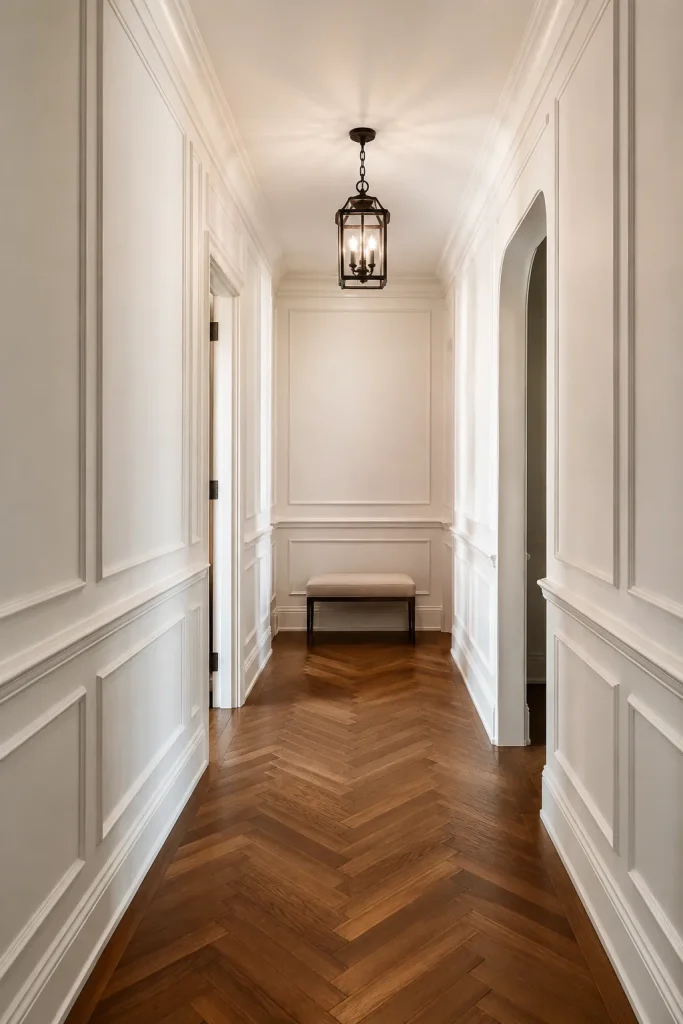
Hallway paneling ideas can make plain walls look more architectural and expensive. This is one of the best ways to make a hallway feel custom without needing much furniture.
Modern hallway paneling ideas can include slim vertical panels, fluted wood, painted wall panels, board and batten, or simple box molding. Traditional homes may look better with wainscoting, chair rail, beadboard, or classic picture-frame molding.
Hallway molding ideas work well when the walls need detail but the floor space is limited. Trim adds structure without blocking the walking path. A hallway with white walls and white molding can feel elegant, while a hallway with painted trim and walls in the same color can feel modern and seamless.
Hallway wainscoting ideas are useful in high-traffic spaces because they protect the lower wall and add design detail. Board and batten hallway ideas can make a narrow hallway feel taller when the lines are vertical.
Avoid overcomplicating the trim. If the hallway is short or narrow, heavy molding can feel busy. Simple, well-spaced trim usually looks more expensive than too many details.
11. Ground the Hallway With Flooring, Tile, Rugs, or a Runner
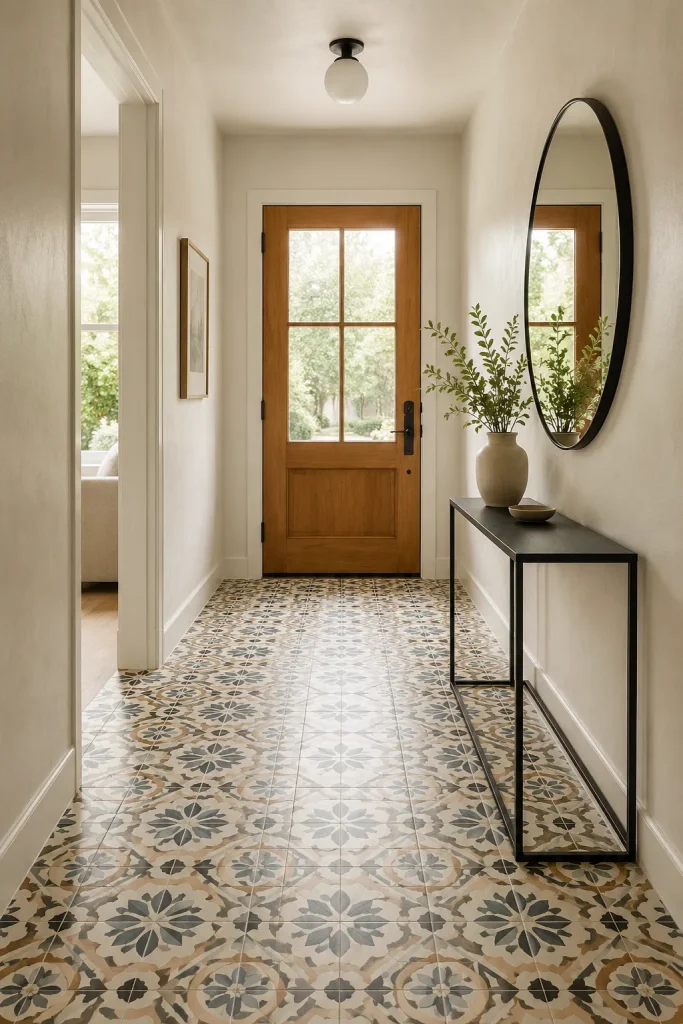
Hallway flooring ideas matter because the floor guides the whole space. A hallway floor needs to be durable, easy to clean, and visually connected to the rest of the home.
Hallway tile ideas work well in entry halls, mudroom hallways, and homes where dirt or moisture comes in from outside. Patterned tile can make a hallway feel special, while simple stone, porcelain, or checkerboard tile can look timeless.
A hallway runner is one of the easiest ways to soften a hard floor. Hallway runner ideas work especially well in long hallways because they add rhythm and warmth. A long hallway runner can make the space feel less empty and more finished.
Entry hallway runner ideas should consider durability. Choose a runner that can handle shoes, pets, children, and daily traffic. In a narrow hallway, the runner should leave some floor visible on both sides so the hallway does not feel cramped.
Avoid rugs that slide. A hallway runner should have a proper rug pad or secure backing. A beautiful runner is not worth it if it becomes a tripping hazard.
12. Use Hallway Tables, Furniture, and Storage Carefully
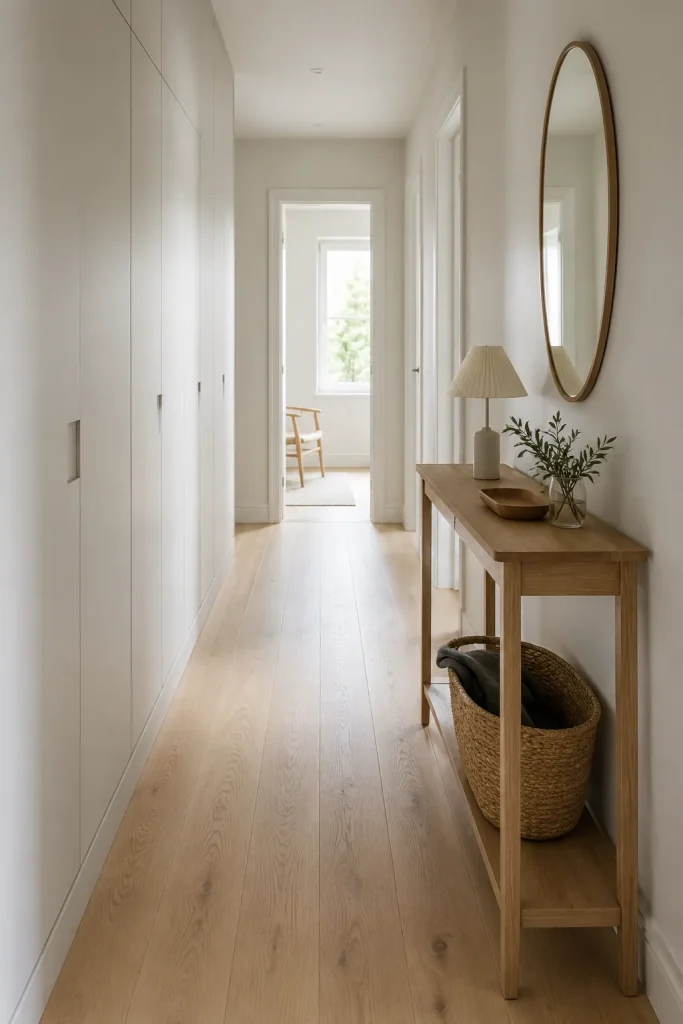
Hallway furniture ideas should always start with space. A hallway is not the place for bulky furniture unless it is wide enough. The best hallway furniture is slim, useful, and proportional.
Hallway table decor ideas can include a narrow console table, a lamp, a tray, a small bowl, a mirror, framed art, or a vase. If your hallway is part of the entry, these entryway console table ideas can help you style a console without making the space feel crowded.
Hallway storage ideas can include closed cabinets, built-in cabinets, shoe storage, coat racks, wall hooks, baskets, slim shelves, or a hallway tree. In narrow hallways, closed storage usually looks cleaner than open piles of shoes, bags, and coats.
Hallway bookcase ideas and hallway bookshelf ideas can work in wider hallways or upstairs landings. A shallow bookcase can add character, but it should not block movement. Built-in cabinets can make the hallway feel more custom and organized.
Avoid turning hallway storage into a dumping zone. If the storage is open, keep it edited. If daily clutter is a problem, choose closed cabinets, baskets, or drawers.
13. Upgrade Hallway Doors and Door Colors
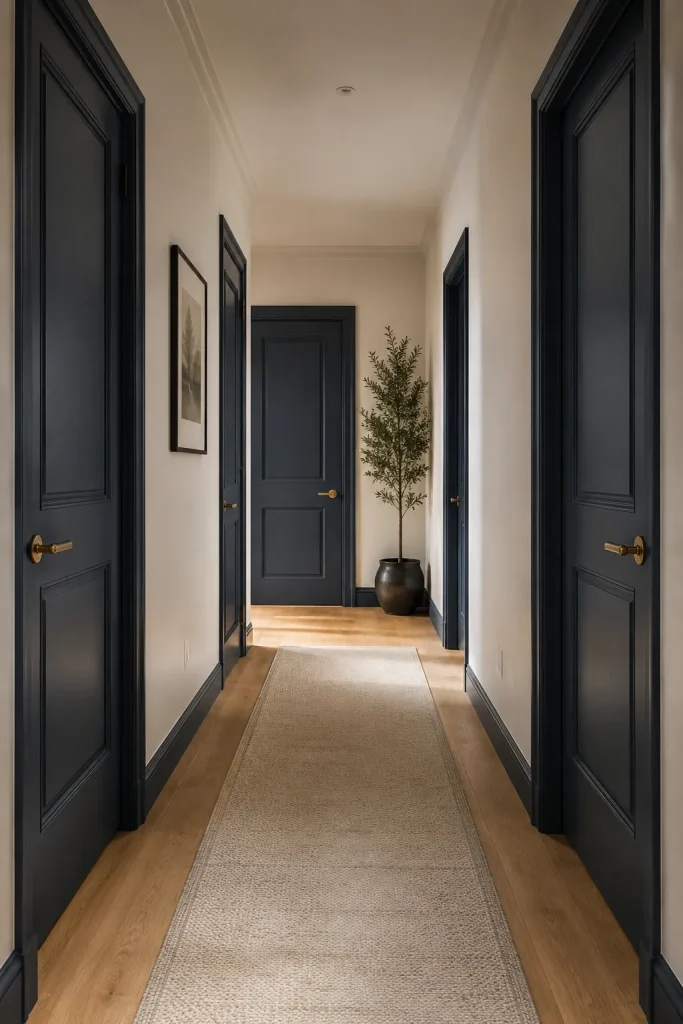
Hallway door ideas can make a big difference because many hallways are lined with doors. If every door looks flat, damaged, or mismatched, the hallway can feel unfinished.
Hallway door color ideas can include soft white, warm taupe, charcoal, black, muted green, navy, mushroom, or wood stain. Black doors in hallway spaces can look dramatic and modern, especially when paired with white or warm neutral walls. But black hallway door ideas work best when there is enough light and the rest of the hallway is not too dark.
Closet door ideas for hallway spaces can include updated hardware, painted doors, paneled doors, mirrored doors, reeded glass, or simple trim. Even changing old knobs to a cleaner finish can make the hallway feel more polished.
If the hallway has many doors, keep the overall palette controlled. Too many door colors can make the hallway feel chaotic.
Avoid painting doors a very bold color unless it connects with the rest of the home. A hallway should feel intentional, not random.
14. Connect Hallways and Stairs With One Design Story
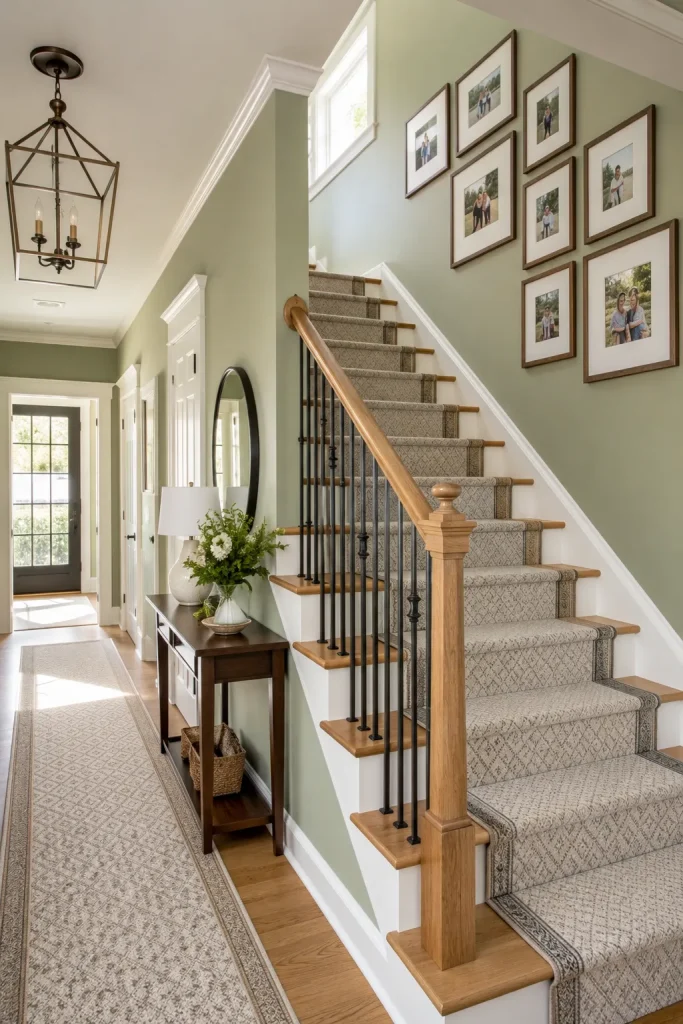
Hallway stairs ideas are important because stair halls often connect multiple levels of the home. A hallway and stairs area can feel beautiful when the paint, railing, lighting, runner, and wall decor work together.
Hallway stairs decor ideas can include framed art along the stair wall, a runner that continues from the hallway, matching wall sconces, painted trim, or a landing mirror. Decorating ideas for stairs and hallways should create flow, not separate design moments that compete.
Upstairs hallway decor ideas can be softer and quieter. A narrow runner, family photo wall, small console, linen cabinet, or warm wall color can make an upstairs hallway feel finished without making it feel busy.
If your hallway connects to basement stairs, these basement staircase ideas can help you style the stairway with better railing, lighting, wall decor, paint, storage, and landing ideas.
Hallway and stairs paint ideas should connect both areas. If the hallway is warm white, the stair wall can use the same color with slightly darker trim. If the stairs have black railings, repeat black in lighting or frames.
Avoid treating the hallway and stairs as completely separate spaces. They usually look better when they share a color, material, lighting finish, or wall decor style.
15. Use Hallway Ceiling Ideas for a More Designed Look
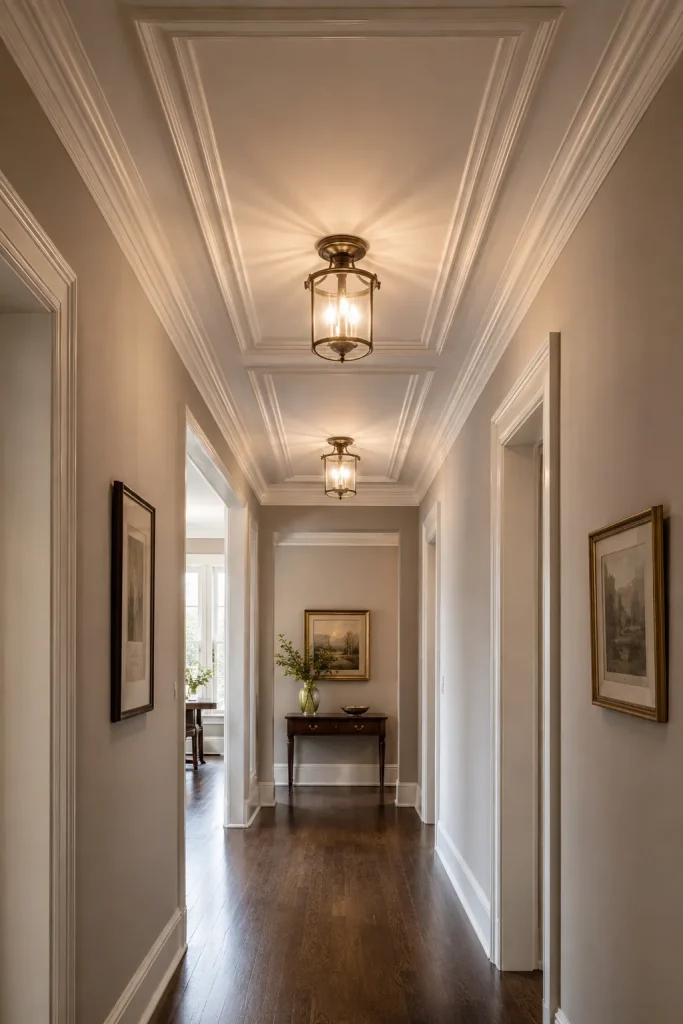
Hallway ceiling ideas are often ignored, but the ceiling can make a hallway feel more finished. This is especially true in long hallways, entry halls, and homes with high ceilings.
Simple options include a better ceiling light, flush mount fixtures, recessed lighting, ceiling beams, painted ceilings, subtle wallpaper, ceiling trim, or a small chandelier in a taller entry hall.
Hallway ceiling light ideas should match the height of the space. Low ceiling hallway lighting ideas usually need flush mounts or recessed lights. Taller hallways can handle pendant lights, small chandeliers, or lantern-style fixtures.
Ceiling lighting ideas for hallway spaces can also help create rhythm. In a long hallway, repeated ceiling lights can guide the eye forward. In a small hallway, one beautiful flush mount can make the space feel polished.
Avoid choosing a hanging light that drops too low. A hallway needs comfortable clearance, especially when people carry bags, laundry, or furniture through the space.
16. Hallway Makeover Ideas That Feel Timeless
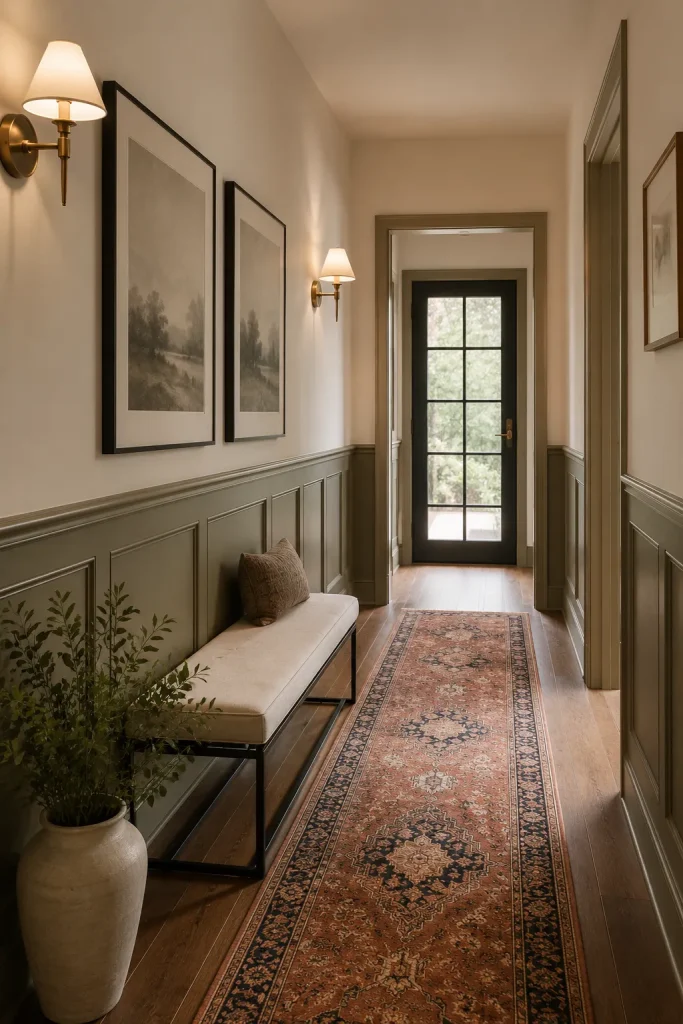
Hallway makeover ideas should improve both style and function. A hallway can look better with small changes, but the best updates solve the real problem.
If the hallway is dark, start with lighting and paint. If it is narrow, keep decor slim and use mirrors carefully. If it is long, add rhythm with runners, art, or repeated fixtures. If it is cluttered, add closed storage. If it feels plain, add paneling, wallpaper, art, or a strong end-of-hall focal point.
Hallway remodel ideas may include replacing flooring, adding trim, updating doors, changing lighting, building storage, or opening a closed area. But not every hallway needs a remodel. Sometimes paint, lighting, a runner, and better wall decor are enough.
The best hallway ideas are the ones that make the space feel more useful, more welcoming, and more connected to the rest of the home.
Avoid copying a trend exactly if it does not fit your hallway. A stunning hallway is not just trendy. It is practical, balanced, and personal.
Final Thoughts
Stunning hallway ideas work best when they respect the hallway’s purpose. A hallway should be easy to walk through, but it does not have to feel boring. With the right lighting, paint, art, mirror, runner, storage, paneling, or focal point, even a small hallway can feel beautiful and finished.
Start with the problem you need to solve. A dark hallway needs lighting. A narrow hallway needs simplicity. A long hallway needs rhythm. A plain hallway needs one strong design idea. A cluttered hallway needs storage.
When every choice has a reason, the hallway stops feeling like a leftover space and starts feeling like part of the home.
FAQs About Stunning Hallway Ideas
Is a curtain in a hallway a good idea?
A curtain in a hallway can be a good idea if it solves a real problem. It can soften a doorway, hide storage, add texture, create privacy, or separate a drafty area. It works best when the fabric is simple, easy to move, and not blocking the walking path. Avoid heavy curtains in narrow hallways because they can make the space feel smaller or messy.
How do I make my hallway look luxurious?
To make a hallway look luxurious, focus on lighting, scale, texture, and editing. Use warm wall sconces, a quality runner, a large mirror, framed art, paneling, beautiful trim, or a slim console table with one strong vase or lamp. Luxury hallway ideas usually look better when there are fewer pieces, better materials, and no visible clutter.
What are some unique hallway ideas?
Unique hallway ideas include a mural wall, painted ceiling, arched mirror, picture lights, vintage gallery wall, patterned runner, fluted wood paneling, bold door color, built-in bookcase, hallway nook, or an end-of-hall focal point. The best unique idea is one that fits your home instead of feeling random.
What color looks nice in a hallway?
Warm white, cream, greige, soft taupe, sage green, pale blue-gray, muted beige, mushroom, and warm gray can all look nice in a hallway. The best color depends on the hallway’s light, flooring, trim, and nearby rooms. In dark hallways, lighter warm colors usually feel more welcoming.
What’s on trend for hallways?
Hallways are trending toward warmer colors, layered lighting, personal wall art, runners, paneling, vintage mirrors, natural materials, and more character. Instead of cold minimal hallways, many homes now use texture, meaningful art, warm neutrals, rich browns, greens, and soft decorative details.
What color makes a hallway look bigger?
Light warm colors usually make a hallway look bigger. Soft white, cream, pale greige, light beige, warm gray, and gentle blue-gray can help reflect light and open the space. A mirror and good lighting can make the color work even better.
What color makes a house look expensive?
Rich but controlled colors can make a house look expensive. For hallways, warm white, mushroom, taupe, sage green, charcoal, soft black, deep brown, and muted olive can look polished when paired with good lighting and trim. The color should feel intentional, not overly bright or harsh.
What are the three paint colors that will never go out of style?
Three paint colors that rarely go out of style are warm white, soft beige or greige, and muted sage green. These colors work well because they are flexible, calm, and easy to pair with wood, black accents, brass, natural textures, and many decor styles.
What two paint colors look good together?
Warm white and soft taupe look good together for a calm hallway. Cream and sage green feel fresh and natural. Greige and charcoal can look modern. Beige and muted olive can feel warm and earthy. For hallways, the best two-color combination usually pairs a lighter wall color with a slightly deeper trim, door, or accent color.
What color not to paint a hallway?
Avoid colors that make the hallway feel smaller, harsher, or disconnected from the rest of the home. Very dark colors can be risky in a hallway with poor lighting. Bright red, strong orange, muddy yellow, and overly cold gray can also be difficult unless they are used carefully. If you love a bold color, try it on one door, one end wall, or a small accent area instead of the entire hallway.