

Basement stairs are often treated like a hidden part of the home, but they can completely change how finished a basement feels. A plain basement staircase with dark walls, worn steps, weak lighting, or unfinished railings can make the lower level feel separate from the rest of the house. A thoughtful staircase, on the other hand, can make the walk downstairs feel safer, brighter, warmer, and more intentional.
The best basement staircase ideas are not only about decoration. Basement stairs need to feel safe, easy to use, well lit, and connected to the rooms above and below. Railings, wall decor, paint colors, doors, landing areas, storage, lighting, and stair finishes all work together.
Whether you are looking for open staircase to basement ideas, basement staircase wall ideas, basement staircase railing ideas, basement staircase lighting ideas, or under basement staircase ideas, the goal is the same: make the stairway feel like a finished part of your home instead of an afterthought.
1. Basement Staircase Design Ideas for a Finished Lower Level
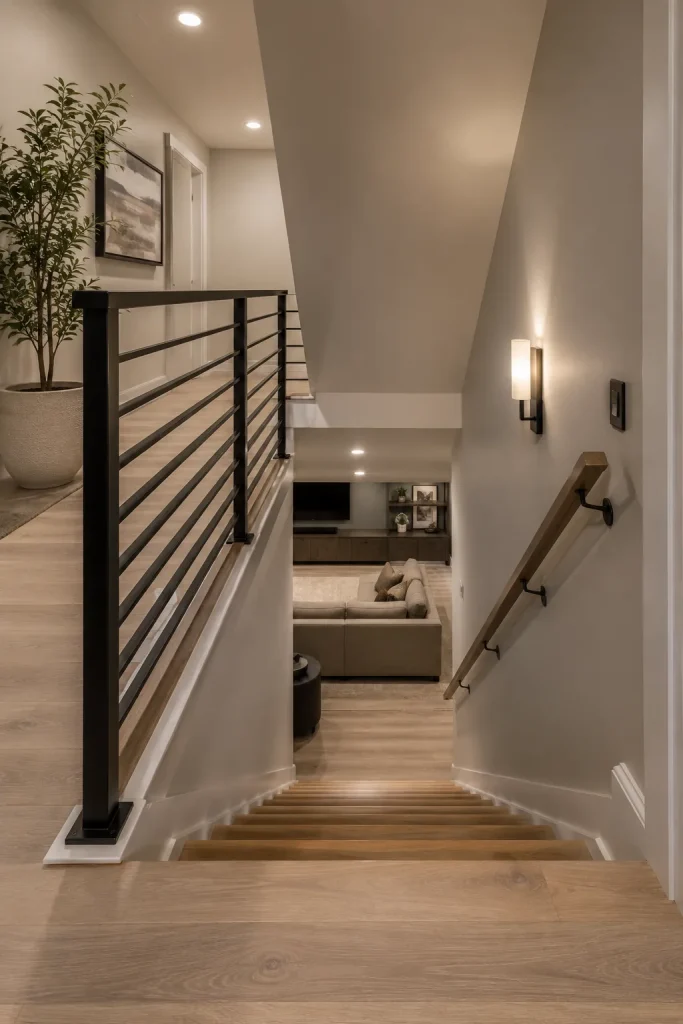
Good basement staircase design ideas start with the full stairway, not just the steps. A basement staircase includes the railing, walls, landing, door, lighting, trim, stair treads, paint color, and the view into the basement.
Before choosing decor, ask three questions. Does the staircase feel safe? Does it feel dark? Does it match the rest of the home? These questions will help you decide whether your first update should be lighting, paint, railing, wall decor, or stair finishes.
If the main floor has warm wood, black hardware, soft white walls, or modern trim, repeat one or two of those details on the basement stairs. This makes the staircase to basement spaces feel more connected instead of separate.
For extra safety and planning, check stair code requirements before changing railing height, stair width, tread depth, riser height, landings, or headroom.
Avoid decorating before fixing basic problems. Loose handrails, slippery treads, uneven steps, poor lighting, or damaged trim should be handled before style updates.
2. Basement Staircase Railing Ideas That Add Safety and Style
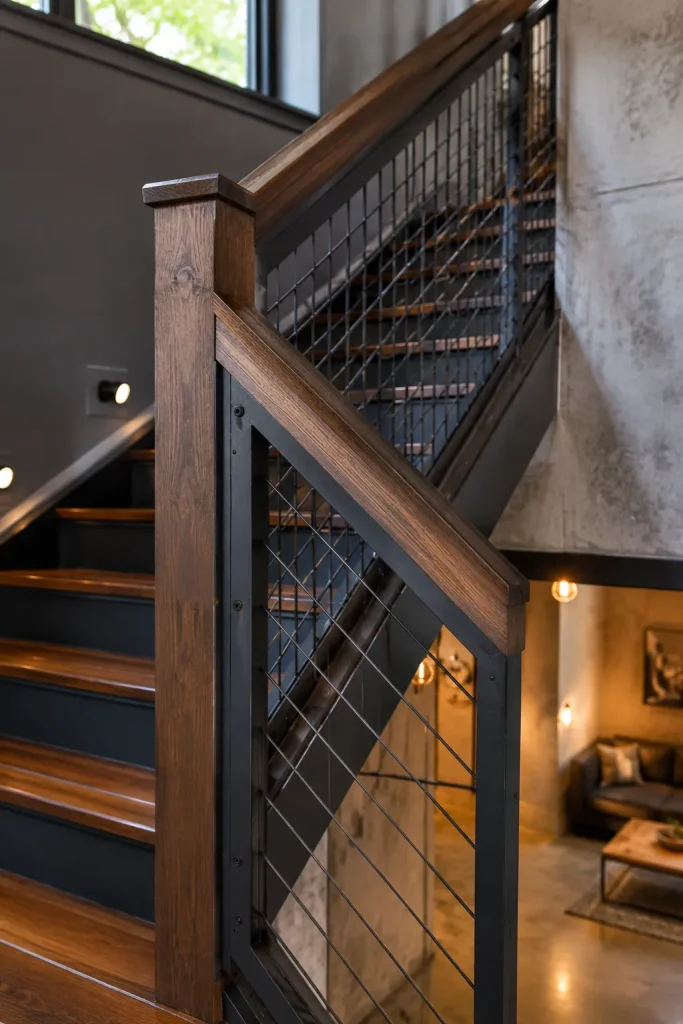
Basement staircase railing ideas can change the entire look of the stairway. Railings are practical, but they are also one of the most visible design features in a basement staircase.
For a modern basement staircase, black metal railings feel clean and structured. For a warmer home, wood handrails add softness. A black metal railing with a natural wood handrail is a strong choice because it feels updated without looking too trendy.
Traditional wood railings work well in classic homes, farmhouse basements, and spaces with warm floors or detailed trim. Slim metal railings work better for open staircase to basement layouts because they keep the view lighter.
Hog wire railing can work for a rustic, industrial, or modern farmhouse basement staircase, but spacing, strength, and installation still need to be safe and code-friendly. Rope railing can look cool in a themed basement staircase, but it should only be used as a decorative idea unless it meets proper handrail safety requirements.
Avoid choosing a basement staircase railing only because it looks good online. The railing should feel secure, comfortable to grip, and appropriate for daily use.
3. Open Staircase to Basement Ideas for a Brighter Feel
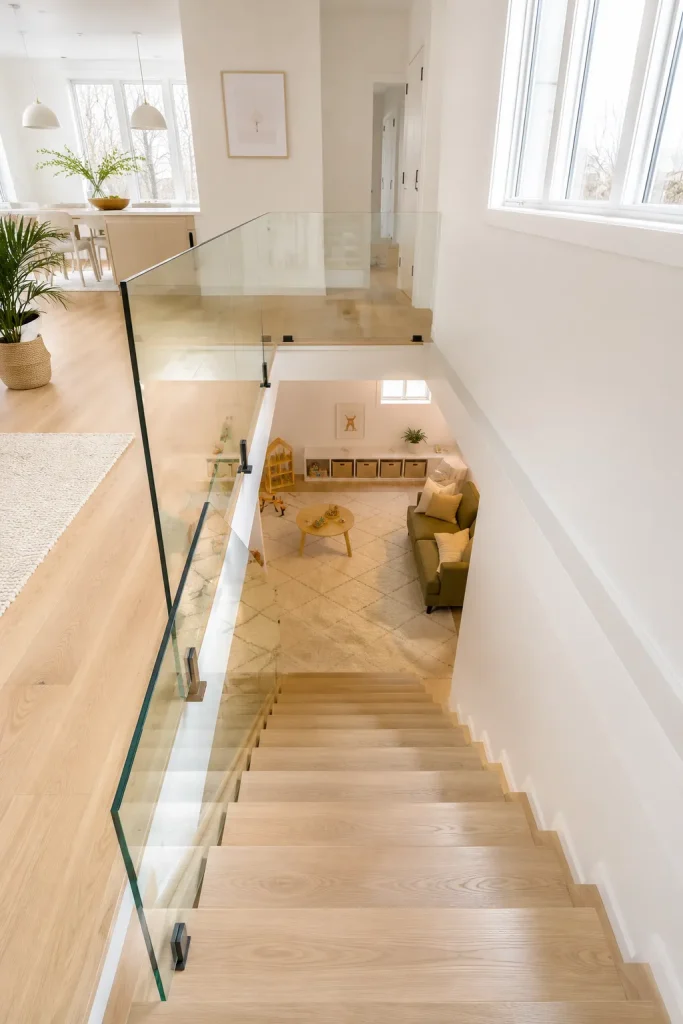
Open staircase to basement ideas are useful when you want the lower level to feel connected to the main floor. An open basement staircase can bring more light downstairs and make the basement feel less hidden.
Open railings, lighter wall colors, glass panels, slim metal balusters, and warm wood treads can all help the staircase feel brighter. If your current stairway feels boxed in, replacing a solid half wall with railing can make a big difference.
A partial open staircase in a basement can also work well if you do not want the whole stairwell exposed. Opening up only one side, replacing a half wall with railing, or removing part of a closed wall can make the staircase to basement spaces feel brighter while still keeping some separation.
Open staircase ideas to basement rooms work best when the view downstairs is also finished. If the open staircase shows storage boxes, clutter, exposed utility areas, or unfinished walls, it may highlight the wrong thing.
Before opening up a basement staircase, think about structure, privacy, noise, safety, and local rules. Some walls may be structural, so this is not always a simple decor update.
4. Open Staircase Railing to the Basement Ideas
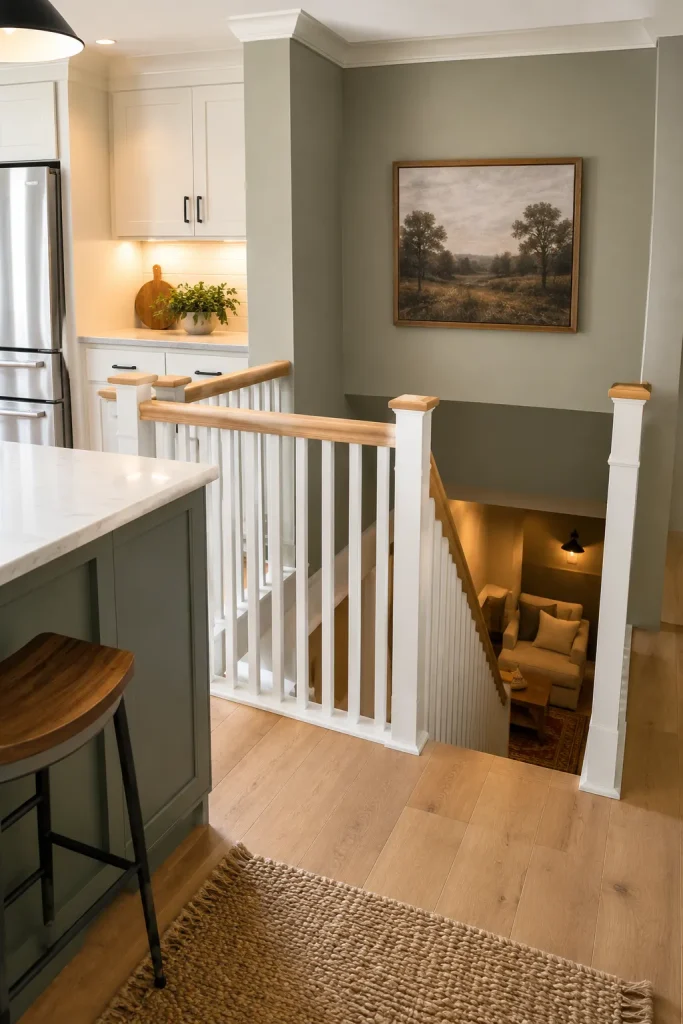
Open staircase railing to the basement ideas are especially important when the stairway is visible from the kitchen, living room, hallway, or entryway. In this case, the railing becomes part of the main floor design.
A black railing can connect with black door hardware, black light fixtures, or black cabinet pulls. A wood handrail can connect with flooring, furniture, or ceiling beams. Vertical balusters feel classic, while horizontal railings feel more contemporary.
Open staircase railing to the basement ideas should still feel simple enough to age well. A clean railing design usually looks better for longer than something overly decorative.
If you want the stairs to feel more open but not too exposed, choose a railing that gives visibility while still defining the stair edge. This can help the basement staircase feel brighter without losing structure.
Avoid railings that make the stairs feel too busy. If the stair wall already has art, paneling, or strong paint color, the railing should be simpler.
5. Basement Staircase Wall Ideas and Wall Decorating Ideas
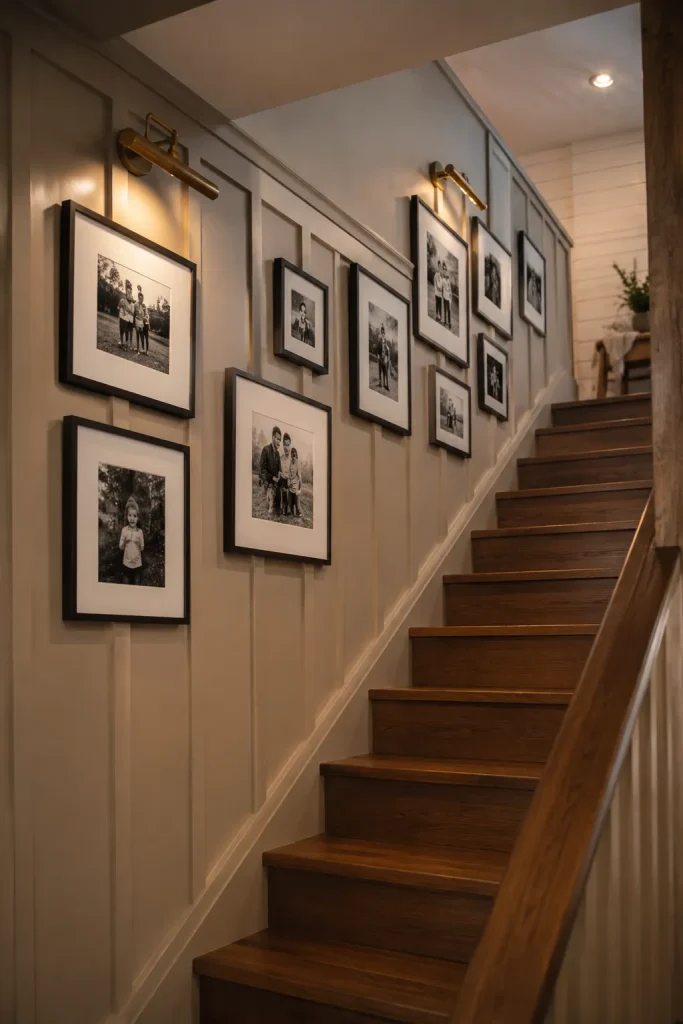
Basement staircase wall ideas are one of the easiest ways to make a stairway feel finished. Many basement stairs look plain because the walls are blank, marked, narrow, or poorly lit.
Good basement staircase wall decorating ideas include framed art, picture lights, wall sconces, board and batten, vertical paneling, wallpaper, textured paint, limewash, gallery walls, or simple trim. For narrow stairs, choose flat wall decor that does not stick out into the walking path.
A long stair wall can look better with a series of framed prints or one strong vertical feature. A small stair wall may only need warm paint, clean trim, and one framed piece.
If you want to decorate the stair wall with lighting, these wall sconce light fixtures can help you compare modern, vintage, plug-in, LED, rustic, rattan, black, brass, and Japandi-style wall lights.
Avoid overcrowding the wall. Basement stairways are movement spaces, so the wall decor should feel calm, safe, and intentional.
6. Basement Staircase Decorating Ideas That Do Not Feel Cluttered
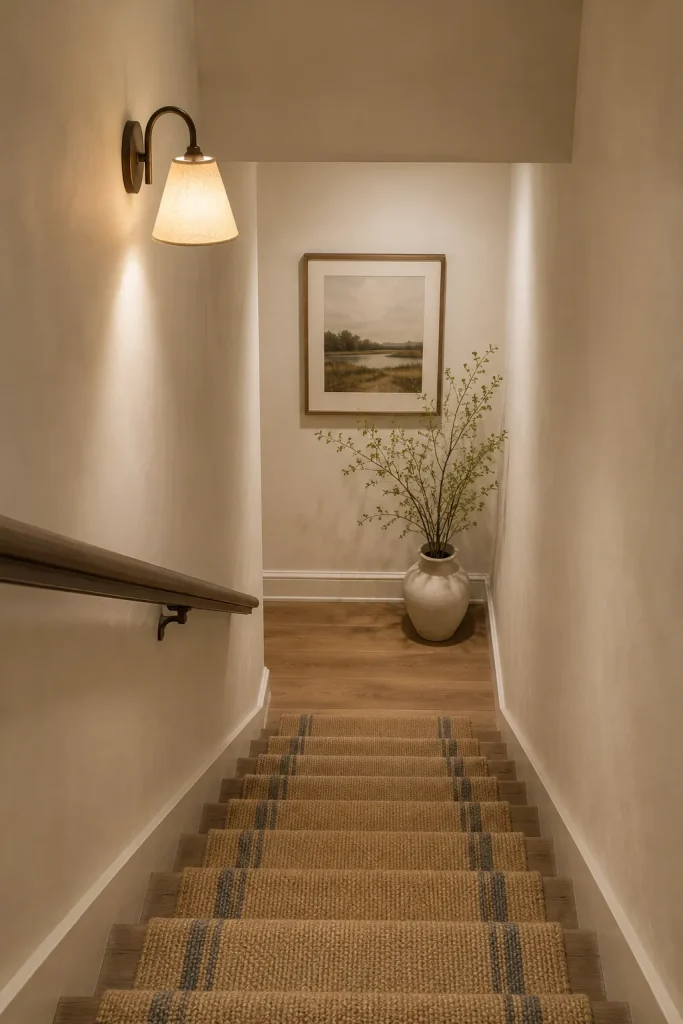
Basement staircase decorating ideas should be simple because stairs are not shelves or display areas. The best decor usually comes from the walls, railing, lighting, landing, door, or stair runner.
Good ideas include framed art, slim wall lights, a stair runner, painted risers, a clean handrail, a small landing rug, or one plant at the bottom if there is enough space. These details make the stairway feel decorated without blocking movement.
If you want more general styling ideas, these home decor items can help you choose pieces like mirrors, trays, baskets, lamps, flowers, and wall decor without making the home feel cluttered.
Avoid bulky signs, hanging baskets, thick frames, loose objects on steps, or anything that can catch clothing or bags. Decor should make the staircase feel better, not harder to use.
7. Basement Staircase Lighting Ideas and Light Ideas for Safety
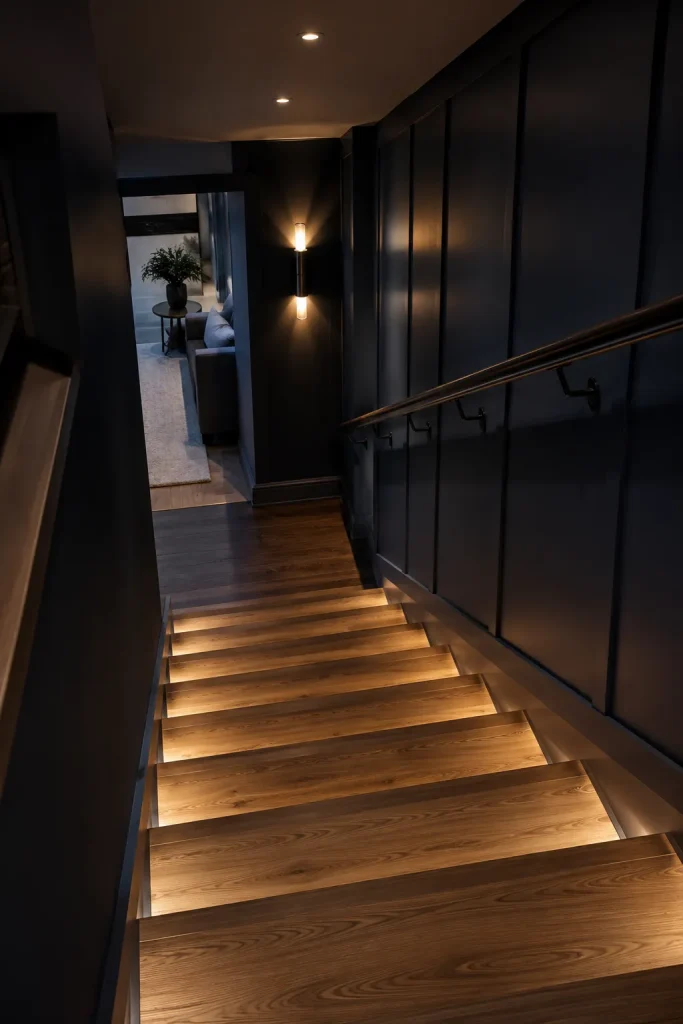
Basement staircase lighting ideas are one of the most important parts of the design. A basement staircase often has less natural light than other areas, so the lighting needs to make every step easy to see.
Good basement staircase light ideas include recessed ceiling lights, wall sconces, step lights, picture lights, LED strip lighting under the handrail, and warm landing lights. Step lights can make the stairs easier to use at night. Wall sconces can add warmth. Recessed lights keep the ceiling simple.
For more room-by-room inspiration, these indoor wall mounted light fixture ideas show how wall lights can work in hallways, stairways, bedrooms, bathrooms, kitchens, dining rooms, and entry areas.
If the stair wall is long, repeat small lights along the path. If the stairway is narrow, use low-profile fixtures that do not stick out too far. If the basement stairs connect to a finished family room, choose warm lighting so the transition feels cozy.
Avoid harsh blue-white lighting. It may brighten the stairway, but it can make the basement feel cold and unfinished.
8. Basement Staircase Paint Ideas for a Clean Update
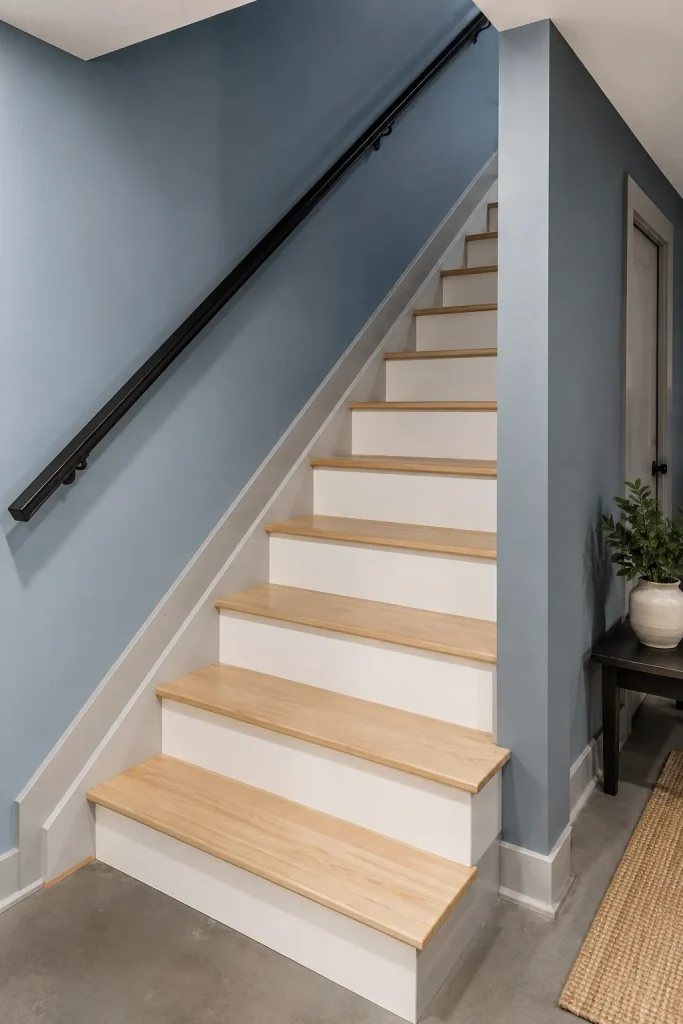
Basement staircase paint ideas can make an old stairway feel fresher without a major remodel. Paint is useful for walls, risers, railings, doors, trim, stair skirts, and sometimes treads.
Warm white walls can make a dark stairway feel brighter. Greige, taupe, beige, or soft gray can make the space feel calm. Deep green, charcoal, navy, or black can look dramatic when the lighting is strong enough.
Painted risers with wood treads are a classic basement staircase idea. A black-painted railing can feel modern. White trim can make the stairway feel clean. A painted basement door can make the entrance feel intentional.
Avoid using dark paint on both the stairs and walls if the lighting is weak. Dark colors can look beautiful, but basement stairways still need clear visibility.
9. Basement Staircase Color Ideas That Connect Both Levels
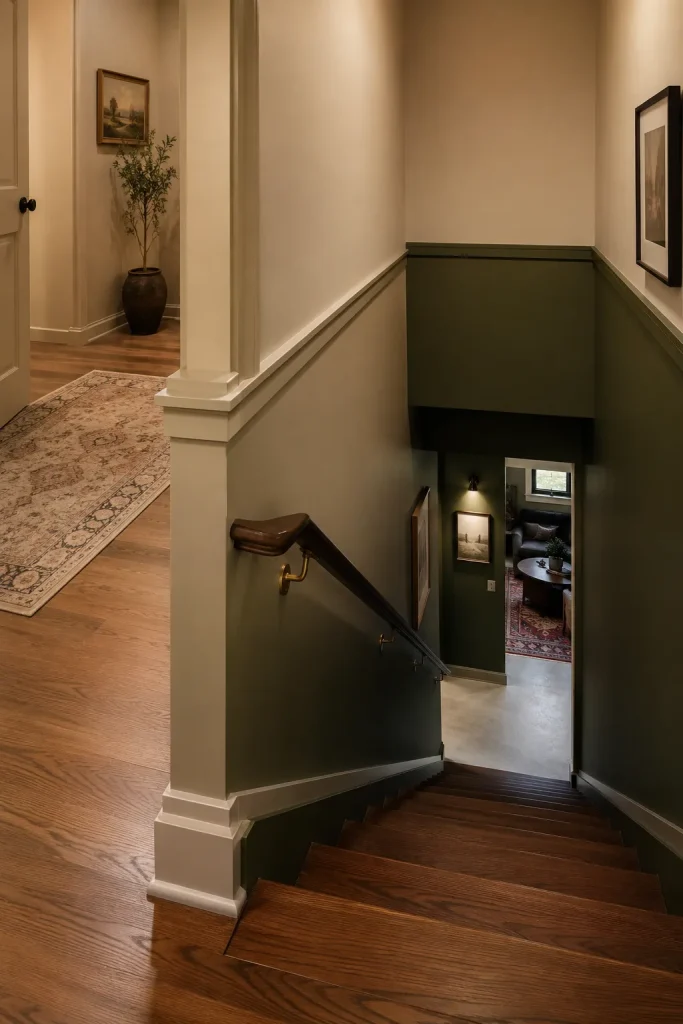
Basement staircase color ideas should connect the main floor with the basement. A staircase is a transition space, so the colors should not feel random.
If the main level is light and neutral, continue that feeling with warm white, cream, beige, or soft gray walls. If the basement has darker colors, use the staircase as a gradual transition with medium-toned paint, wood treads, or black accents.
A simple formula is light walls, warm wood steps, black or brass hardware, and one accent color. This makes the basement staircase feel styled without looking chaotic.
For unfinished warm color ideas, try creamy white walls, soft greige trim, warm wood treads, muted olive, taupe, beige, or a natural runner. These basement staircase ideas for unfinished warm colors can make the stairs feel more comfortable without making the stairway too dark.
Avoid using too many colors on one staircase. Painted risers, colored walls, patterned runners, dark railings, and busy artwork can compete with each other.
10. Basement Staircase Ideas With Landing Areas
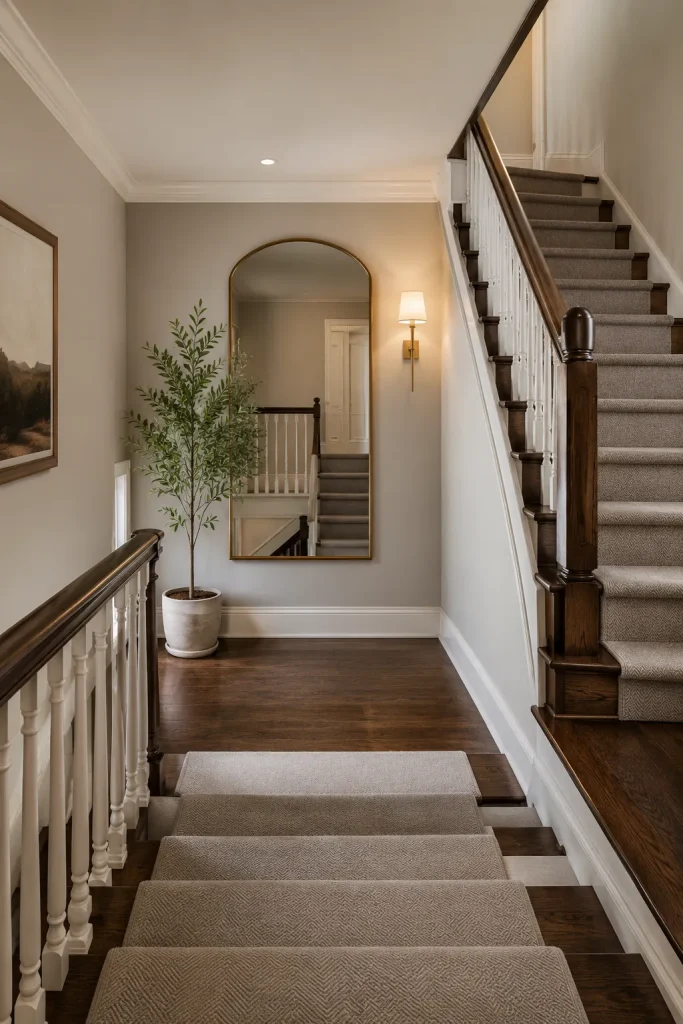
Basement staircase ideas with landing areas give you more design options. A landing breaks up the stair run, creates a pause, and gives you a small space to add style.
Basement staircase landing ideas can include a small rug, framed art, a wall sconce, a mirror, a narrow bench, a plant, or a small table if there is enough room. If the landing is tight, keep it simple with paint, lighting, and one flat wall feature.
A landing can also help connect the upper floor and basement. Repeat the same railing finish, trim color, or art style from the rest of the home.
If you use a vase, stems, or greenery on a wide landing, these flower home decor ideas can help you style natural accents without making the area feel crowded.
Avoid placing anything on a landing that blocks movement. A landing needs clear walking space, especially when people are carrying laundry, storage bins, or furniture.
11. Basement Door Off of Staircase Ideas
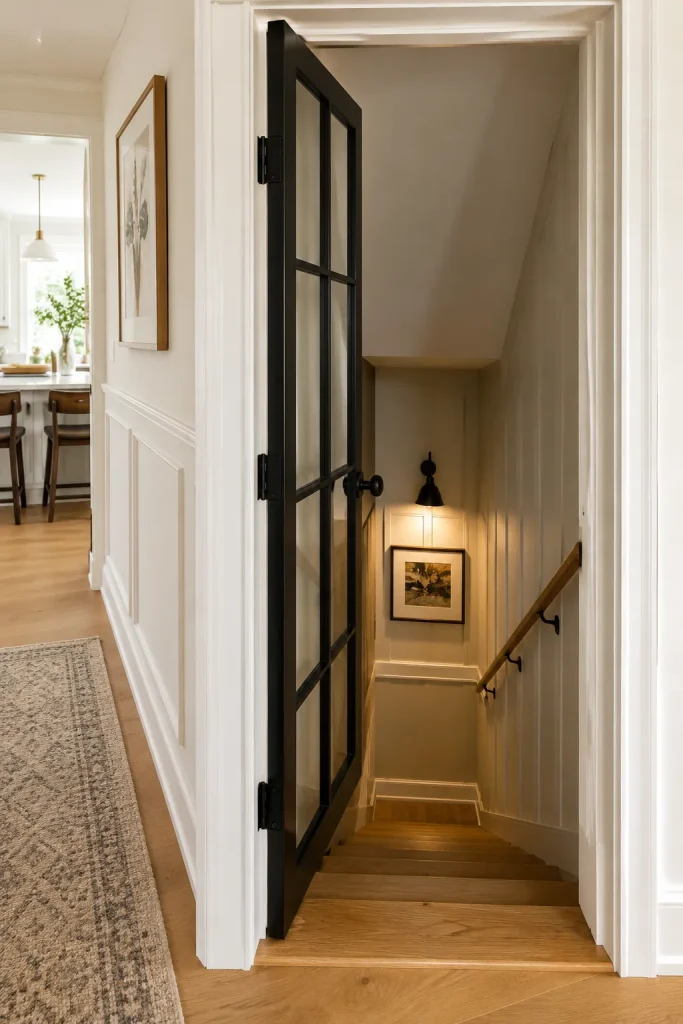
Basement door off of staircase ideas are important when the stairway begins near a hallway, kitchen, mudroom, entryway, or main living area. A plain basement door can make the lower level feel hidden, while a better door can make the transition feel intentional.
A glass-panel basement door can bring borrowed light into the stairway and make the basement feel more connected. A solid painted door can look clean and simple. A black door can feel modern and dramatic. A wood door can add warmth.
Door ideas for basement off of staircase spaces should match the rest of the hallway. If the main level has black hardware, use black basement door hardware. If the hallway has wood tones, a warm wood door can feel more natural.
If the basement stair door is near an entry-style area, these entryway console table ideas can help you style the nearby transition zone with a mirror, tray, lamp, vase, or basket.
Avoid using a basement door that looks like a forgotten utility door. The door should feel like part of the home.
12. Under Basement Staircase Ideas for Hidden Function
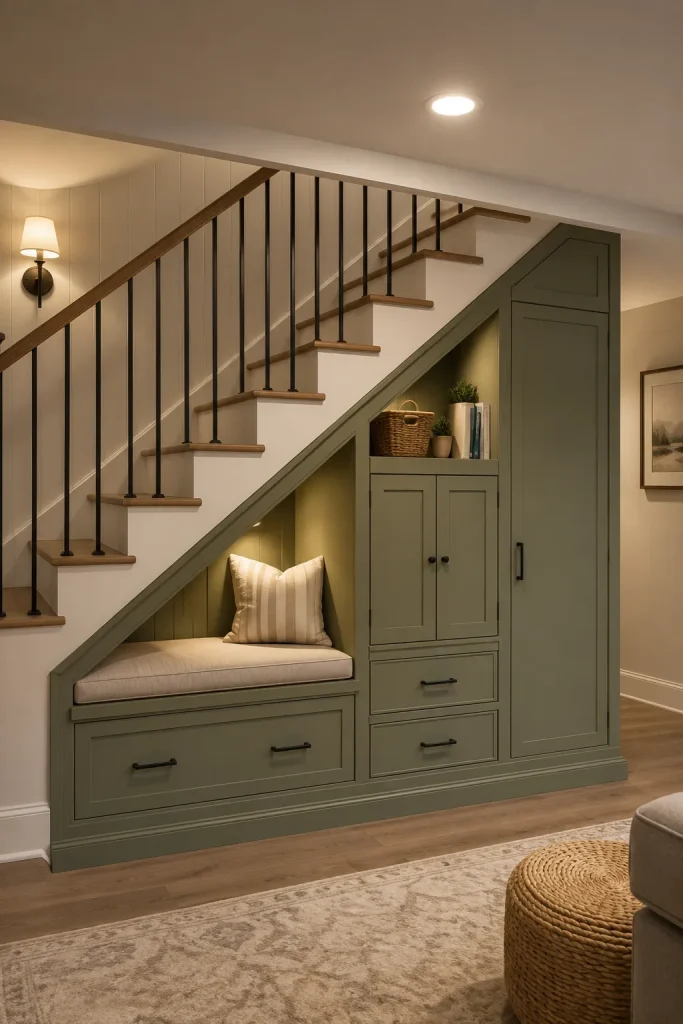
Under basement staircase ideas can turn wasted space into useful storage or a small design feature. This area is often ignored, but it can become one of the most practical parts of the basement.
Good ideas include built-in drawers, closed cabinets, open shelves, baskets, a reading nook, toy storage, a mini bar, a pet area, a utility closet, or seasonal storage. Closed storage is usually best if the area tends to collect clutter.
If the basement includes a work area or small desk nook, these office interior design ideas can help you plan better lighting, storage, shelves, and workspace flow.
If the under-stair area is near a basement kitchenette, wet bar, or drink station, these coffee station ideas can help you organize mugs, trays, jars, shelves, and small appliances in a styled but practical way.
Avoid leaving the under-stair space half-finished. Open studs, random boxes, and exposed clutter can make the whole basement staircase area feel incomplete.
13. Basement Staircase Storage Ideas for Small Basements
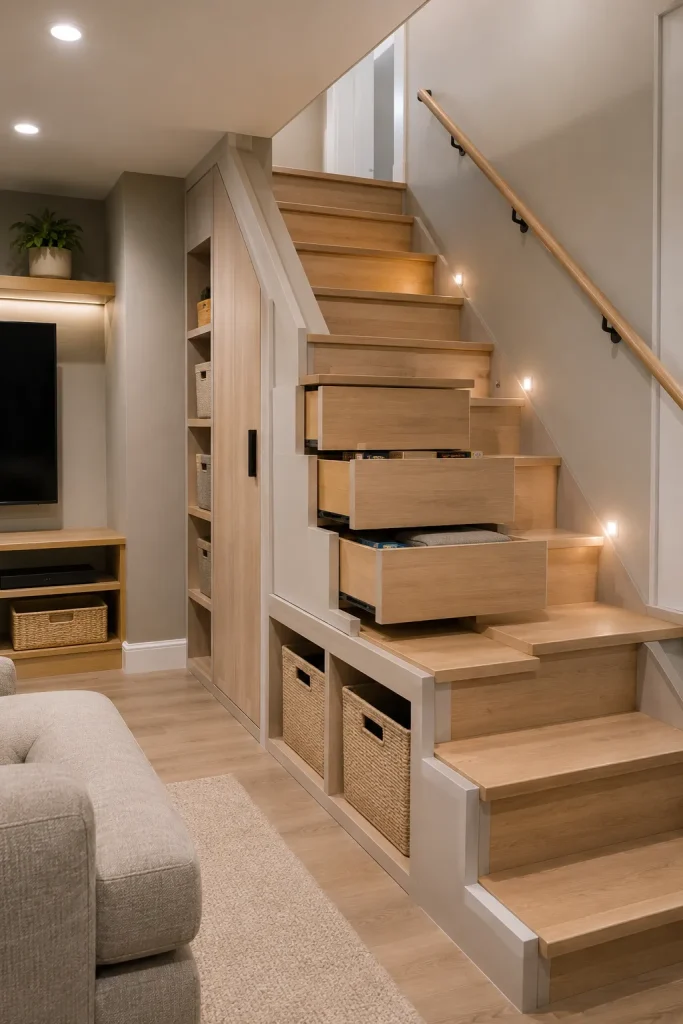
Basement staircase storage ideas are especially helpful in small homes. Stairs take up space, so the nearby wall, landing, or under-stair area can add useful function.
Built-in drawers under the steps look clean and polished. Tall cabinets under the stair slope can hide larger items. Open shelves can work if they are styled neatly. Baskets can soften shelves and hide small objects.
New basement staircase storage ideas can also include hidden doors, pull-out bins, vertical cabinets, book storage, toy storage, blanket storage, or a compact mudroom-style setup at the bottom of the stairs.
For narrow staircases, avoid adding storage that sticks out into the path. If the stairs open into a family room, match the storage finish to nearby furniture so it feels built in.
Avoid turning stair storage into a visible dumping zone. Hidden storage usually looks better than open storage in a basement stairway.
14. Basement Staircase Ideas for Unfinished Stairs and Warm Colors
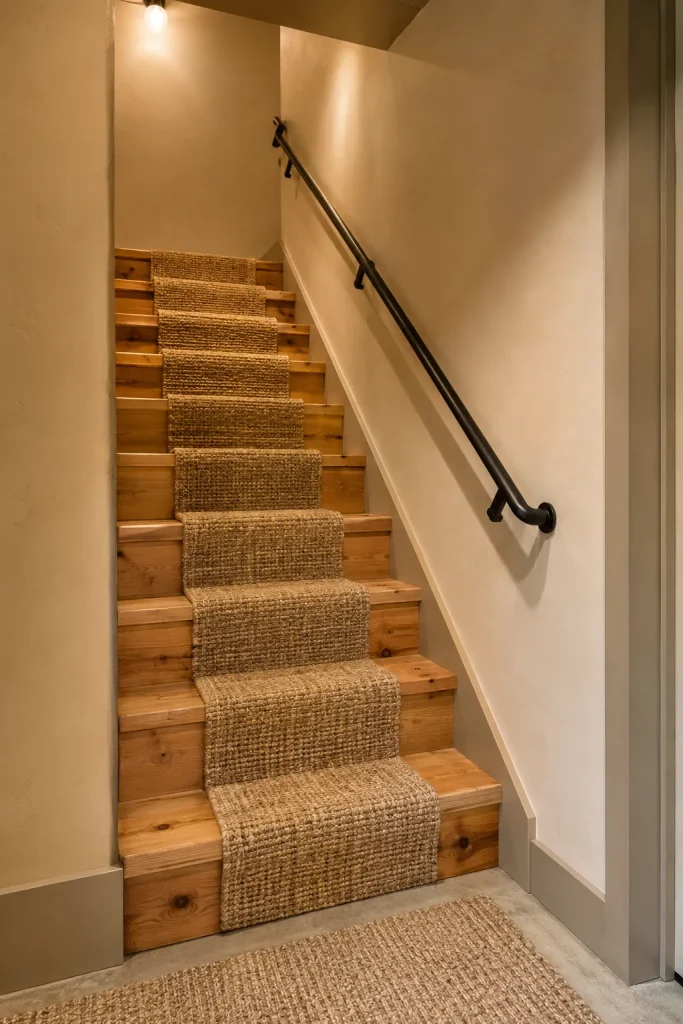
Basement staircase ideas for unfinished stairs should start with the condition of the steps, walls, lighting, and railing. Unfinished stairs can often be improved without replacing everything.
Simple updates include painting the risers, staining or sealing wood treads, adding a runner, covering stair treads, painting the walls, installing trim, replacing the handrail, and adding better lighting.
Basement staircase ideas unfinished warm colors can make a big difference. Try warm white walls, soft beige, muted olive, taupe, greige, warm wood, black accents, or a natural woven runner. These colors can help unfinished basement stairs feel less cold.
If the stairs are rough plywood or old wood, paint can help, but durability matters. Use finishes made for floors or stairs, and choose a surface that is not slippery.
The cheapest way to finish basement stairs is usually paint, trim repair, better lighting, and a simple runner or tread cover. If the stairs are damaged, uneven, or unsafe, cosmetic updates are not enough.
15. Basement Staircase Makeover and Renovation Ideas on a Budget
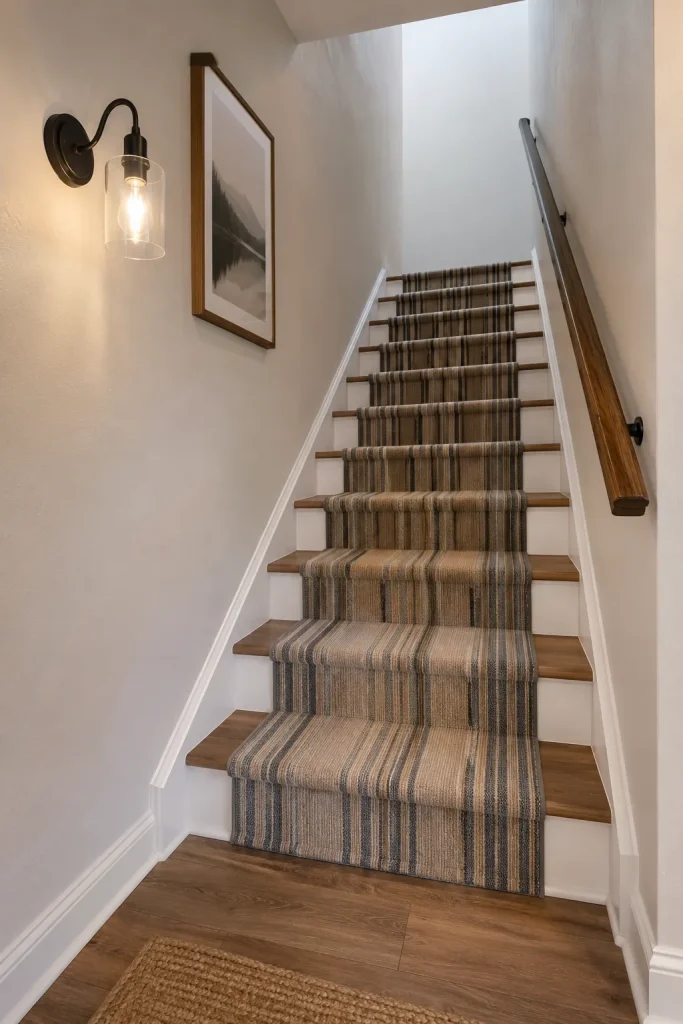
A basement staircase makeover does not always need a full rebuild. Many stairways can look much better with paint, lighting, railing repair, trim updates, stair treads, and wall decor.
For a basement staircase remodel or renovation on a budget, focus on high-impact updates first. Paint the walls. Improve the lighting. Repair loose trim. Update the handrail. Add a runner or stair tread covers. Style the landing. Add simple framed art.
If you are asking how to make basement stairs look nicer without spending too much, start with the biggest visual problem. If the stairs are dark, start with lighting. If they look worn, start with paint or treads. If they feel unsafe, start with railing repair.
Avoid spending money on small decor before fixing the stairway’s main problem. A decorative sign will not solve poor lighting, worn steps, or a loose handrail.
16. Spiral Staircase to Basement Ideas for Small Spaces
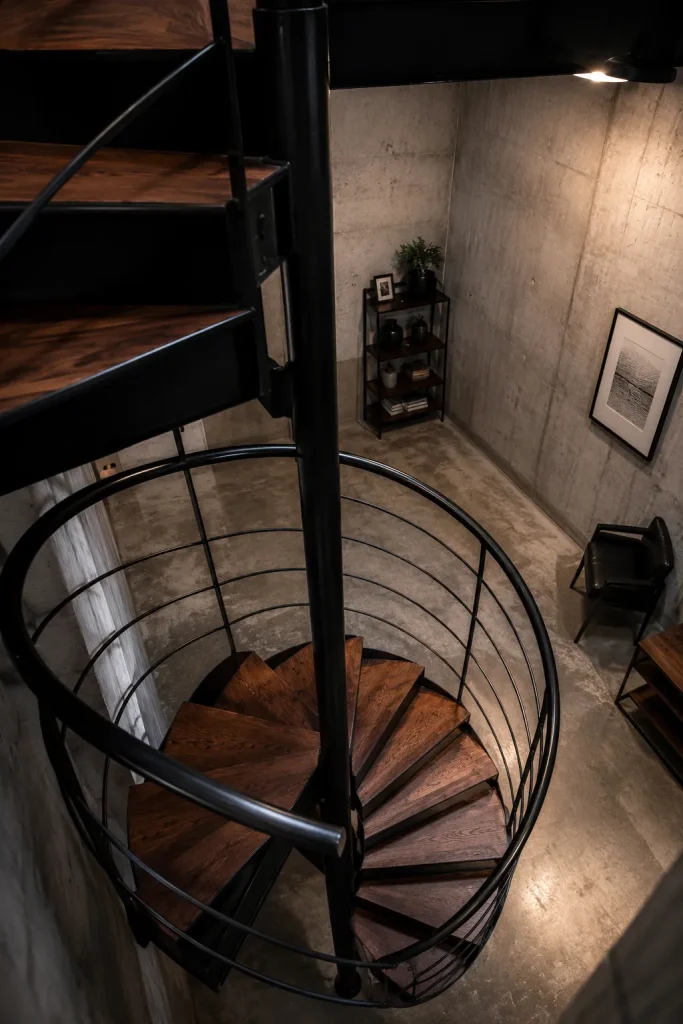
Spiral staircase to basement ideas are useful when floor space is limited, but they are not right for every home. A basement spiral staircase can save space and create a strong design feature.
Wood treads with a black metal spiral frame can feel modern and warm. A full metal spiral staircase can feel industrial. A white spiral staircase can look lighter in a small area. A hidden spiral staircase to basement spaces can also work when the stair is not meant to be the main visual feature.
The tradeoff is comfort. Spiral stairs can be harder to use when carrying laundry, storage bins, furniture, or large items. They may also feel less comfortable for children, guests, or anyone with mobility concerns.
Before choosing a spiral staircase for basement access, think about daily use, safety, code, headroom, tread size, and whether it will be the main route downstairs.
17. Staircase to Basement Ideas for a Family Room
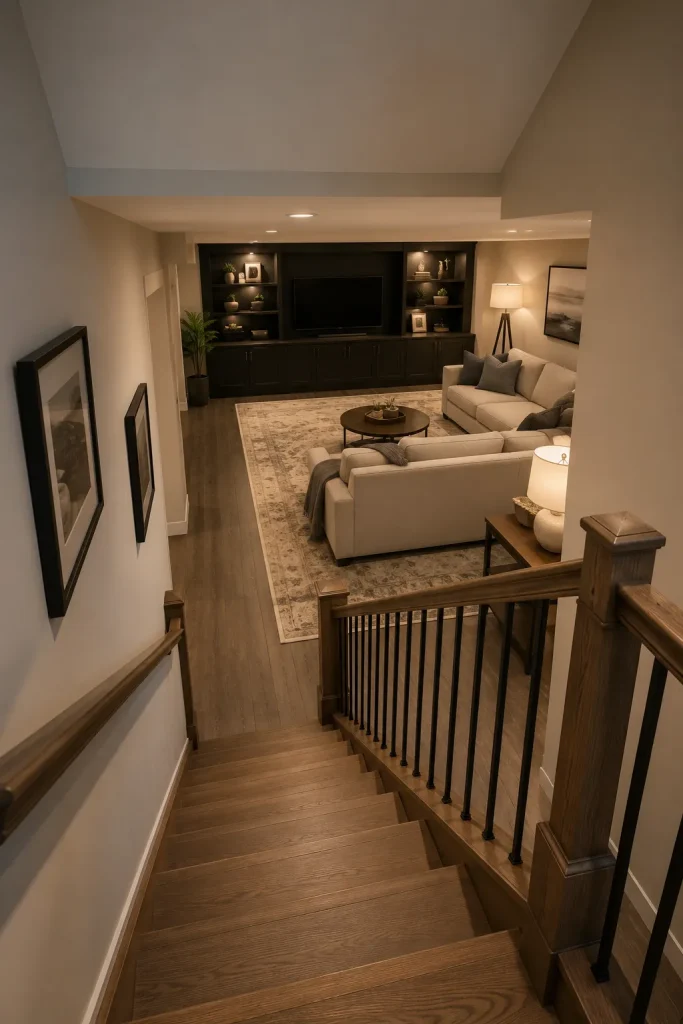
Staircase to basement ideas should consider what you see at the bottom of the stairs. If the staircase opens into a family room, the first view into the basement matters.
Use warm lighting, clean walls, a safe railing, finished treads, and a simple landing area. If the basement has a cozy sofa area, repeat one or two materials from that room on the stairs. For example, a black railing can connect with black lighting, or wood treads can connect with a wood media console.
If you want a mirror at the bottom of the stairs or on a landing, these contemporary bedroom mirror decor ideas can still help with mirror placement, reflection, scale, and styling principles.
Avoid letting the stairs open directly into clutter. The first view into the basement should feel calm, finished, and useful.
18. Basement Staircase Wall Decor With Art and Photos
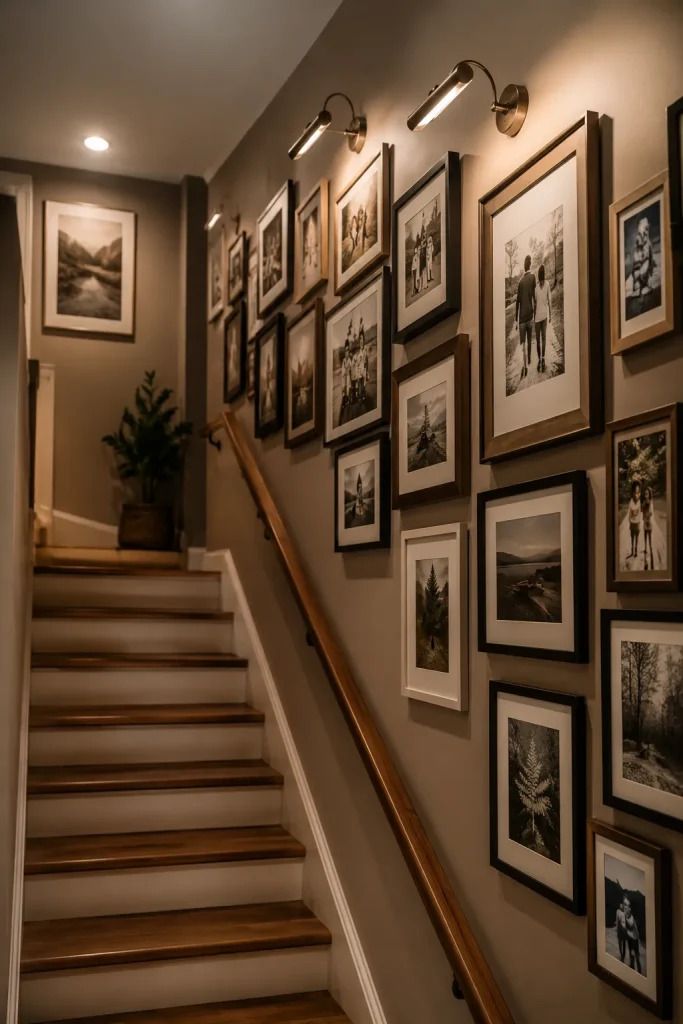
Basement staircase wall decor can make the walk downstairs feel more personal. Family photos, landscape prints, abstract art, black-and-white photography, or simple framed pieces can all work.
For a narrow staircase, choose slim frames and avoid thick decor that sticks out. For a tall stair wall, use vertical spacing that follows the stair angle. For a modern look, use matching frames. For a collected look, mix sizes but keep the frame colors related.
Basement staircase steps and wall ideas can also work together. For example, wood steps, white risers, black frames, and warm wall lights can make the whole stairway feel intentional.
Avoid hanging frames too low where they can be bumped. The goal is to make the stair wall feel finished, not crowded.
19. Basement Staircase Ideas for Small Houses and Low Headroom
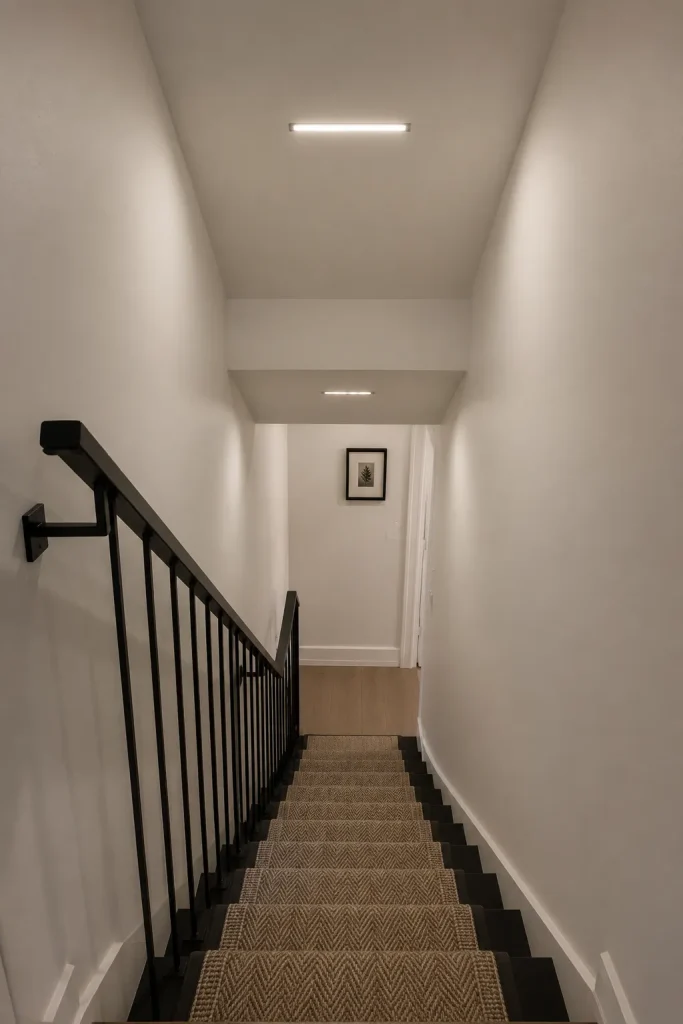
Basement staircase ideas for small house layouts should focus on light, simplicity, and clear walking space. A small stairway can feel tight quickly if the decor, railing, or lighting is too bulky.
Use slim railings, light paint, simple wall decor, low-profile lighting, clean storage, and narrow runners. If the basement staircase has low headroom, avoid pendant lights, oversized fixtures, heavy trim, and dark paint overhead.
Ideas for basement staircase with low headroom should keep the ceiling and upper walls simple. Draw attention to the steps, railing, or side wall instead of adding visual weight above the head.
If the stairway feels narrow, keep the wall decor flat and use brighter lighting. A clean runner or painted risers can add style without taking up space.
Avoid anything that hangs into the walking path or makes people duck.
20. Basement Walkout and Exterior Staircase Ideas
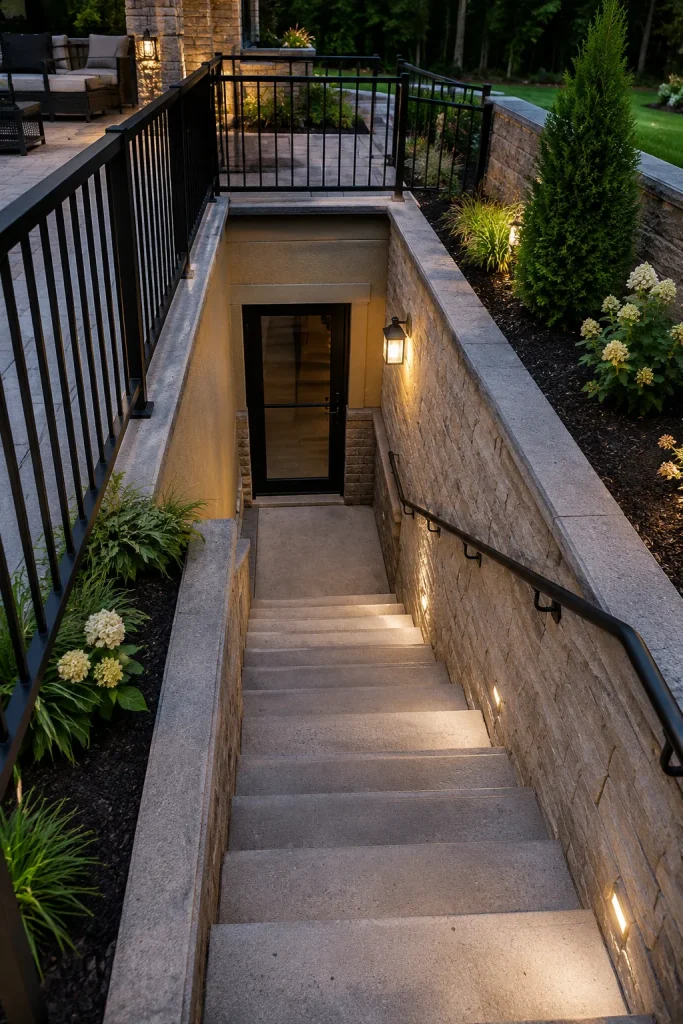
Some homes have a walkout basement staircase or an exterior stairway leading down to the basement. This type of basement staircase needs different planning because it deals with weather, drainage, lighting, and curb appeal.
Good exterior basement staircase ideas include outdoor wall lights, slip-resistant steps, planters, railings, clean house numbers, drainage-friendly materials, and a clear door area. The stairway should feel safe at night and easy to use in different weather.
For exterior lighting near a basement walkout or outside stair door, these outdoor wall mounted light fixtures can help you choose lighting for outdoor walls, doors, patios, porches, gates, and entry areas.
Avoid using indoor-only lights, rugs, or decor outside. Outdoor basement stairs need materials that can handle moisture, temperature changes, and dirt.
21. Basement Staircase Ideas to Avoid
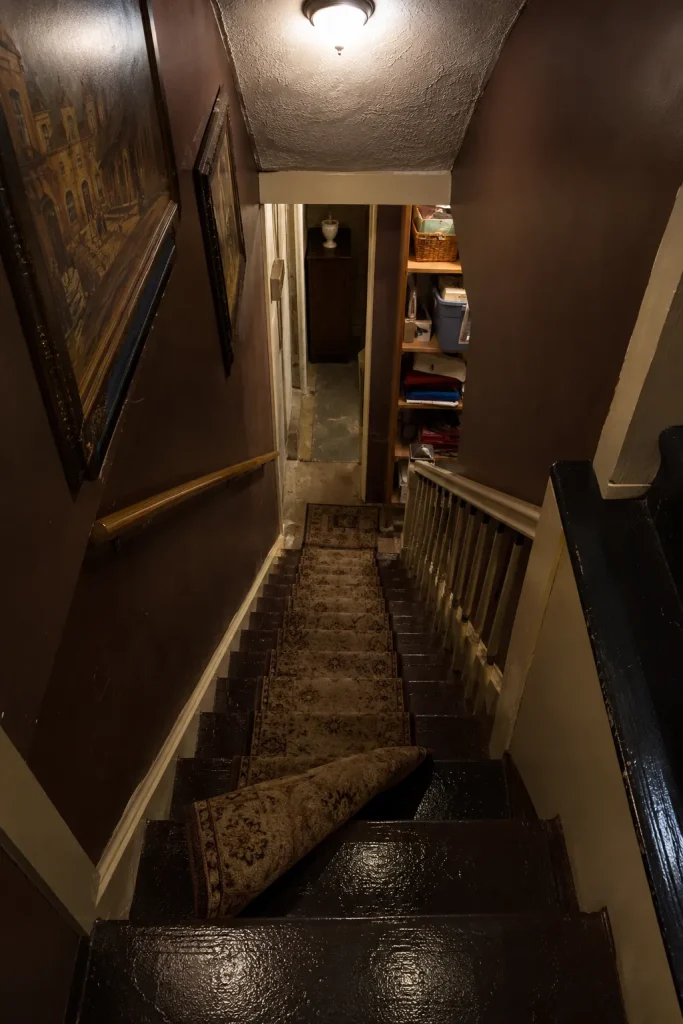
Not every basement staircase idea is worth using. Some updates look good in photos but do not work well in real homes.
Avoid slippery glossy paint on stair treads. Avoid dark paint in a stairway with weak lighting. Avoid bulky wall decor in narrow stairs. Avoid loose rugs or mats on steps. Avoid open storage that makes the stair area look messy. Avoid removing railings just to make the staircase look cleaner.
Also be careful with very trendy designs. A bold runner, dramatic wall color, rope railing, or unusual railing can look interesting, but it should still fit the rest of the home and feel safe.
A basement staircase should feel safe first, finished second, and stylish third.
Final Thoughts
Basement staircase ideas can make a huge difference in how the basement feels. A finished staircase helps the lower level feel like part of the home instead of a separate hidden space.
Start with safety, lighting, and condition. Then think about railing style, wall decor, paint colors, door style, landing design, under-stair storage, open stair layouts, and the view into the basement.
The best basement staircase is not always the most expensive one. It is the one that feels safe, bright, finished, and connected to the rest of the home.
FAQs About Basement Staircase Ideas
How can I make my basement stairs look good?
You can make basement stairs look good by improving lighting, painting the walls or risers, updating the railing, adding a runner, styling the landing, and making the bottom of the stairs feel finished. Start with the area that looks the most unfinished.
How can I make basement stairs look nicer on a budget?
The cheapest way to make basement stairs look nicer is usually paint, better lighting, trim repair, simple framed art, and a stair runner or tread cover. These updates can make the stairs feel cleaner without rebuilding them.
What is the best thing to put on basement stairs?
The best thing to put on basement stairs depends on your needs. A runner adds softness and traction, wood treads feel clean and classic, carpet feels cozy, and stair tread covers can be useful for worn steps. Avoid loose covers that can slip.
What can I use to cover my basement stairs?
You can cover basement stairs with carpet, a runner, stair tread covers, painted stair finishes, stained wood, or durable flooring materials made for stair use. Choose something secure, easy to clean, and suitable for basement conditions.
What should I put on unfinished basement stairs?
For unfinished basement stairs, consider paint, stain, sealed wood, trim, riser paint, a runner, tread covers, and better lighting. If the stairs are damaged or uneven, repair them before adding decorative finishes.
What are the different types of basement stairs?
Common basement stair types include straight stairs, stairs with a landing, open basement stairs, enclosed basement stairs, L-shaped stairs, U-shaped stairs, winder stairs, and spiral basement stairs. The best type depends on space, safety, budget, and how often the basement is used.
Are open basement staircase ideas a good choice?
Open basement staircase ideas are good when you want more light and a stronger connection between floors. They work best when the basement view is finished and organized. They may not be ideal if you need more privacy, sound control, or hidden storage.
Are basement spiral staircase ideas practical?
Basement spiral staircase ideas can work in small spaces, but they are not always practical as the main basement access. They can be harder to use when carrying furniture, laundry, or storage bins. Always consider comfort, safety, and local code.
What are good basement staircase lighting ideas?
Good basement staircase lighting ideas include recessed lights, wall sconces, step lights, LED strip lighting, landing lights, and picture lights. The goal is to make every step easy to see while keeping the stairway warm and comfortable.
What are good basement staircase wall ideas?
Good basement staircase wall ideas include framed art, gallery walls, board and batten, wall sconces, picture lights, wallpaper, painted trim, and simple textured walls. Keep decor slim so it does not block the walking path.
What are good basement staircase paint ideas?
Good basement staircase paint ideas include warm white walls, soft gray walls, greige walls, dark green accents, charcoal railings, white risers, black handrails, and painted stair skirts. Use darker colors only when lighting is strong enough.
What is the 7-11 stair rule?
The 7-11 stair rule usually refers to a comfortable stair idea with about a 7-inch rise and an 11-inch tread. It is not a replacement for local building code, so always check local requirements before building or changing stairs.
What is the 27 stair rule?
The 27-inch stair rule usually refers to clear walking width between two handrails in some stair code discussions. Because codes vary by location and project type, do not rely on one online rule alone. Check local building rules or ask a qualified contractor.
How much does it cost to finish basement stairs?
The cost to finish basement stairs depends on condition, materials, labor, lighting, railing work, stair coverings, and whether the update is cosmetic or structural. Paint and lighting updates are usually smaller projects, while new stairs, new railings, or major reconstruction cost more.
Can you buy prebuilt basement steps?
Prebuilt steps may be available for some simple projects, but basement stairs often need to fit exact floor height, available space, headroom, landing requirements, and local code. For main basement access, custom planning or professional installation is often safer.