

Peach Fuzz can make a kitchen feel warm, cheerful, and surprisingly sophisticated, but the color needs the right supporting elements.
Used without a plan, peach can quickly become too sweet or visually flat. Used with warm whites, natural wood, stone, brass, green, or deeper contrasting colors, it can create a kitchen that feels layered rather than overly colorful.
That is what makes Peach Fuzz kitchen ideas so interesting. You do not have to repaint every cabinet to bring this soft peach tone into your space. It can become the main cabinet color, a backsplash accent, an island feature, a wall treatment, or simply a subtle thread running through accessories and textiles.
Pantone’s Peach Fuzz, officially PANTONE 13-1023, is a soft peach shade with warm undertones. Kitchen designers and manufacturers have shown it across cabinetry, walls, accessories, and contrasting material combinations.
The key is deciding where the color should lead and where it should simply support the rest of the kitchen.
Here are 19 ways to make it work.
19 Peach Fuzz Kitchen Ideas
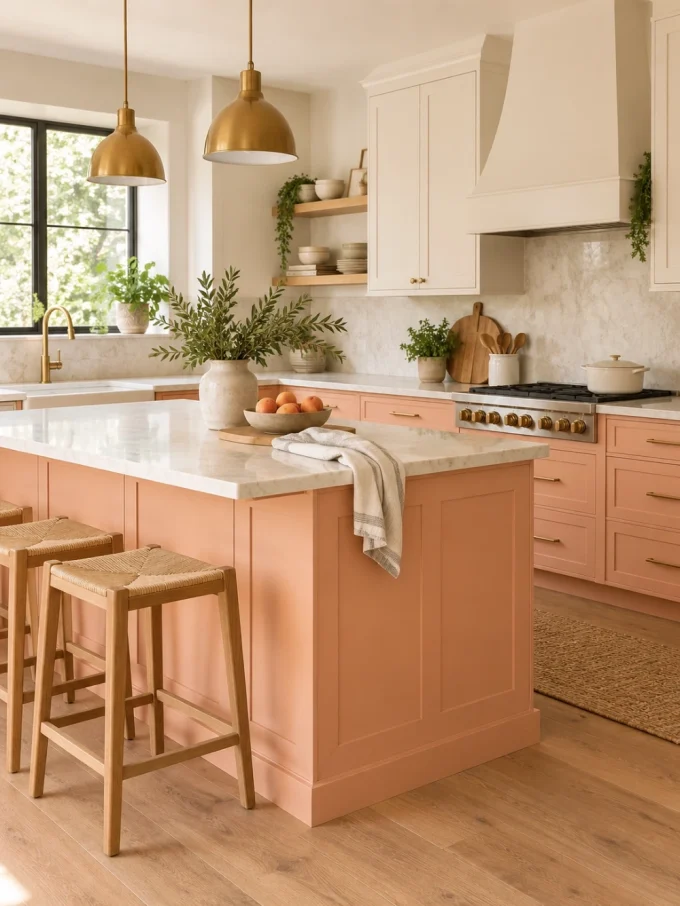
1. Paint the Lower Cabinets Peach Fuzz
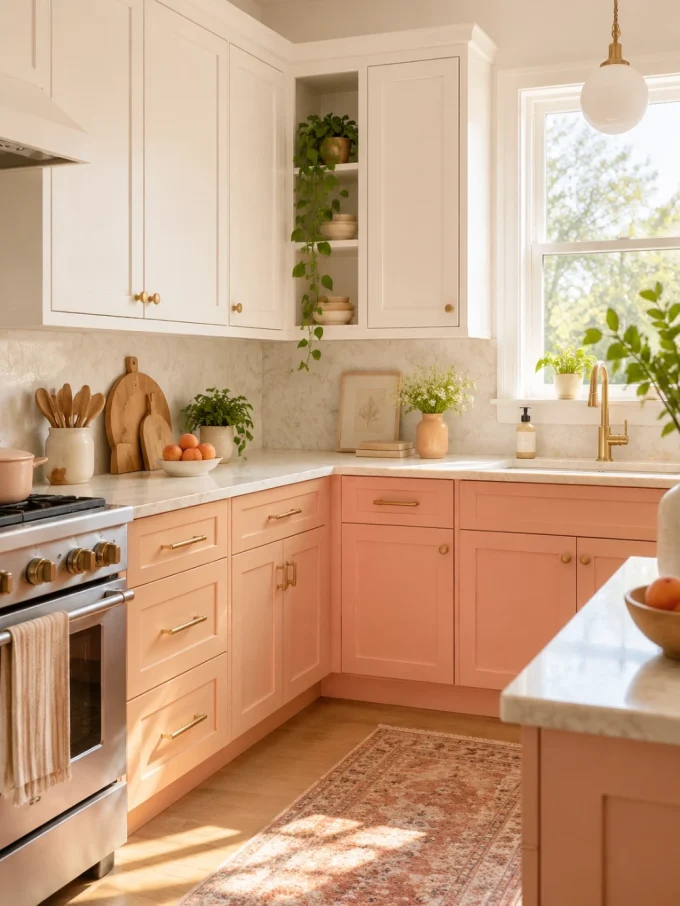
One of the easiest ways to introduce Peach Fuzz without overwhelming the kitchen is to use it on the lower cabinets only.
Keep the upper cabinets warm white, ivory, or another quiet neutral. This gives the peach color enough presence to become part of the kitchen’s identity while keeping the upper half visually light.
A pale stone or creamy quartz countertop can bridge the two colors.
This approach is especially effective when you want a colorful kitchen but still want the room to feel open.
Best for: Small kitchens, two-tone kitchens, and homeowners testing peach for the first time.
2. Create a Full Peach Fuzz Cabinet Kitchen
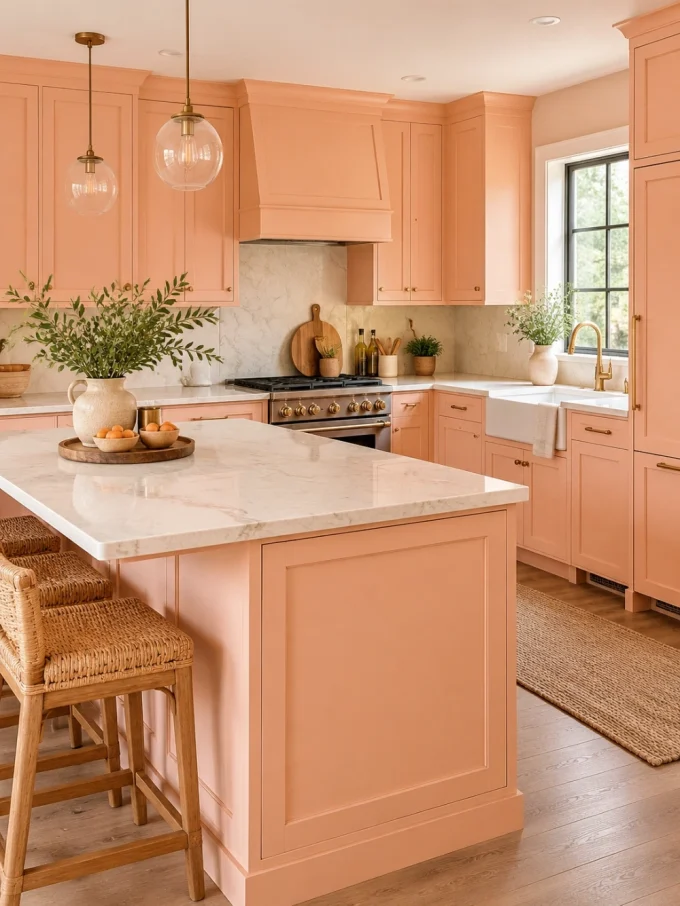
If you love the color, commit to it with full Peach Fuzz cabinetry.
The secret to making an all-peach kitchen look sophisticated is to give the color breathing room. Use quieter countertops, simple backsplash materials, and restrained hardware rather than introducing several competing colors.
Creamy white stone and warm wood are particularly useful for preventing the cabinetry from feeling one-dimensional.
For a more contemporary result, choose flat-front or simple Shaker cabinetry instead of heavily decorative doors.
Peach cabinetry can create a warm, welcoming kitchen while still feeling modern when the surrounding finishes are controlled.
Best for: Color-confident homeowners, cottage kitchens, and modern transitional spaces.
3. Make the Kitchen Island the Peach Fuzz Feature
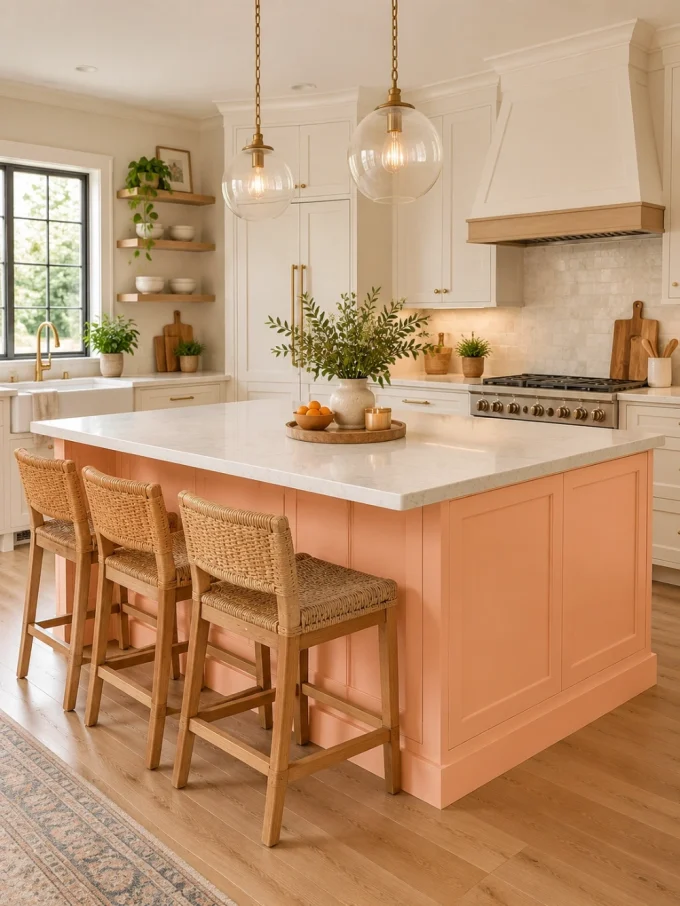
You do not need to change the entire kitchen to create a strong color statement.
Paint the island Peach Fuzz while keeping the perimeter cabinetry white, cream, or natural wood.
This gives the kitchen a clear focal point and makes the color easier to live with than full-room cabinetry.
Choose a countertop that connects the island to the surrounding cabinets. A light quartz or marble-look surface can create that visual bridge.
If your island is large, use Peach Fuzz as the base and keep stools, lighting, and countertop accessories relatively simple.
Best for: Open-plan kitchens and kitchens with large islands.
4. Use a Peach Fuzz Backsplash
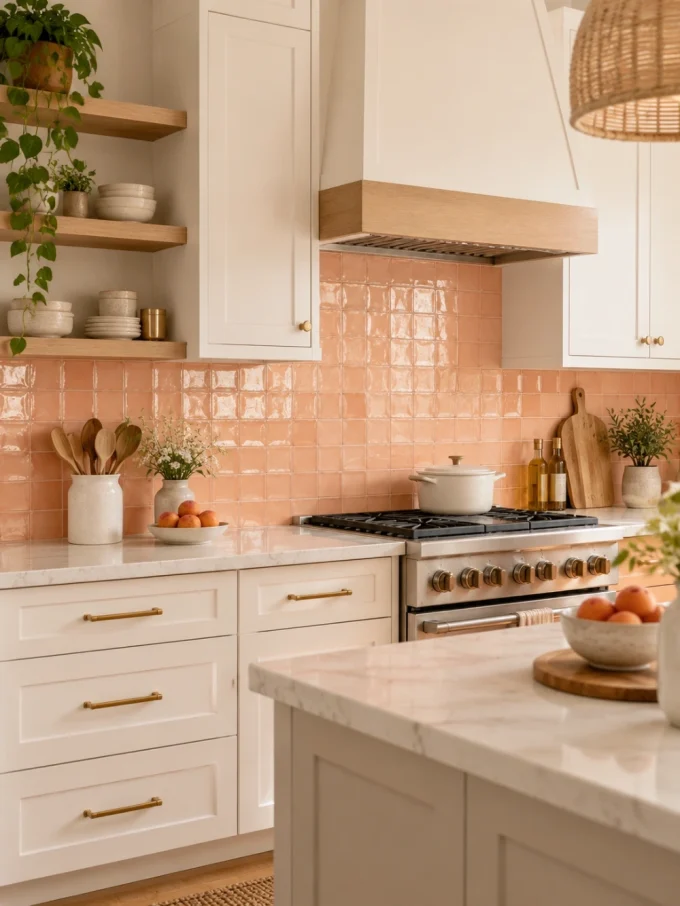
A backsplash is one of the best places to experiment with peach because it introduces color without committing an entire wall of cabinetry.
Try soft peach ceramic tile, handmade-look tile, or a subtle glazed finish.
The texture matters. A slightly irregular tile can make the color feel more sophisticated because changing light creates variation across the surface.
Pair it with white, cream, or natural wood cabinets for a warm but balanced kitchen.
Best for: Renovations where you want a permanent but controlled color statement.
5. Pair Peach Fuzz With Natural Wood
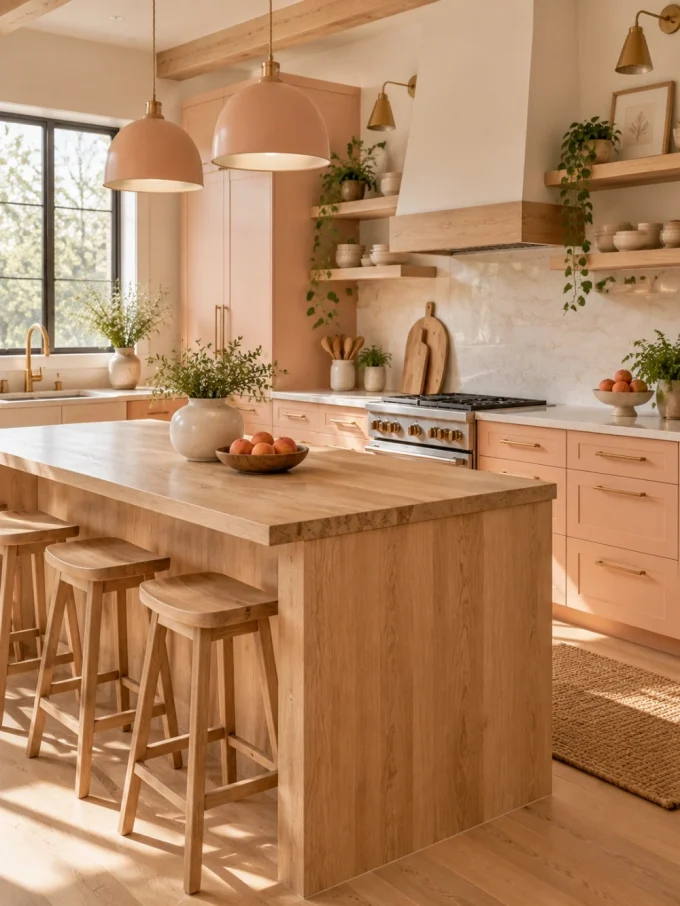
Natural wood is one of the easiest materials to use with Peach Fuzz because it reinforces the warmth without competing with the color.
Think pale oak shelves, a wood island, timber stools, or exposed wood beams.
Keep the wood tone relatively consistent throughout the kitchen. Too many different wood colors can make a peach kitchen feel visually busy.
For a modern organic appearance, combine Peach Fuzz cabinetry with light oak and creamy stone.
Natural materials such as wood and stone are frequently recommended alongside peach because they temper its sweetness and give the kitchen a more grounded character.
Best for: Organic-modern, Scandinavian, Japandi-inspired, and warm minimalist kitchens.
6. Combine Peach Fuzz With Warm White
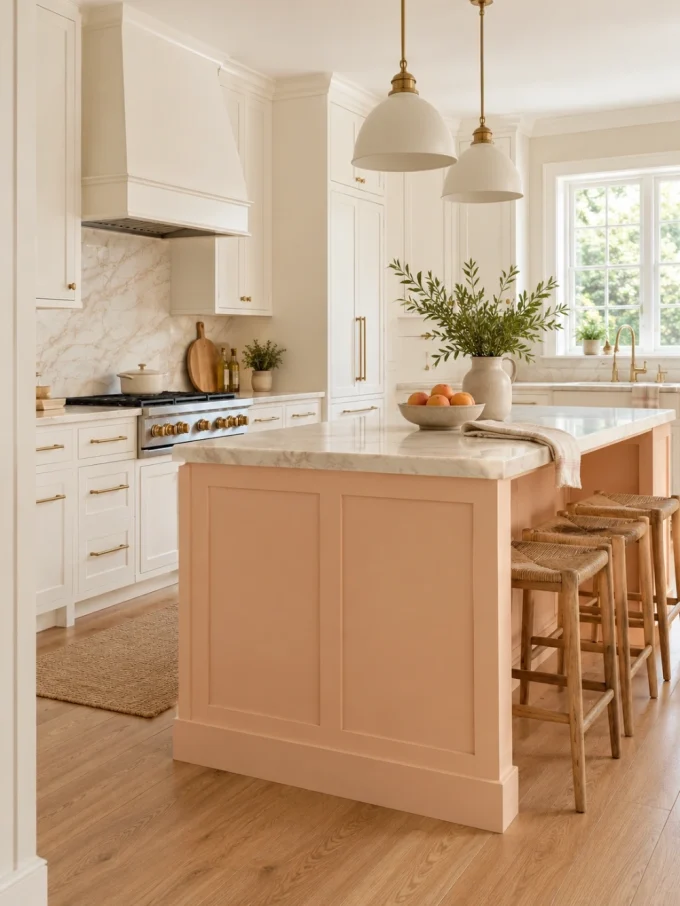
Peach and warm white create one of the safest combinations for a sophisticated kitchen.
Instead of pairing peach with an extremely cool white, choose ivory, cream, or another warm neutral.
The result feels softer and more cohesive, particularly when the kitchen also contains wood floors or natural stone.
You can use warm white on the cabinets and Peach Fuzz on the island, backsplash, walls, or lower cabinets.
Best for: Bright kitchens and anyone who wants a soft, timeless palette.
7. Add Aged Brass Hardware
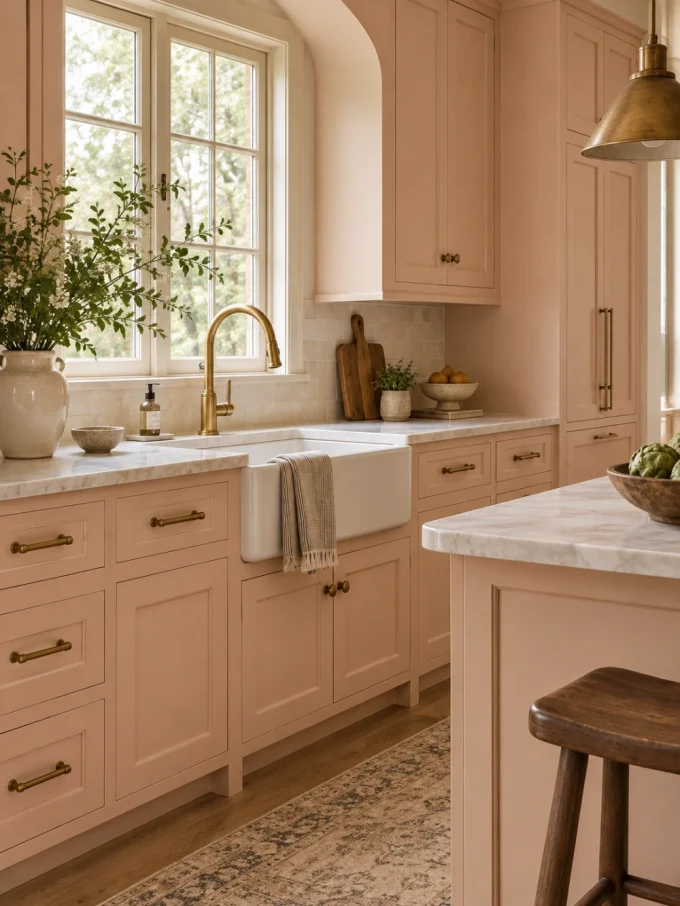
Brass can bring a refined edge to Peach Fuzz cabinetry.
Choose aged, brushed, or softer brass finishes when you want a warm, collected appearance. Highly shiny gold can make the combination feel more glamorous and less relaxed.
Repeat the finish across cabinet pulls, the faucet, and perhaps pendant lighting.
Do not add brass everywhere simply because it matches. A few repeated details are enough to make the palette feel intentional.
Gold and brass accents are specifically highlighted as effective companions to Peach Fuzz in kitchen design.
Best for: Traditional, transitional, vintage, and elegant kitchens.
8. Use Peach Fuzz on the Kitchen Walls
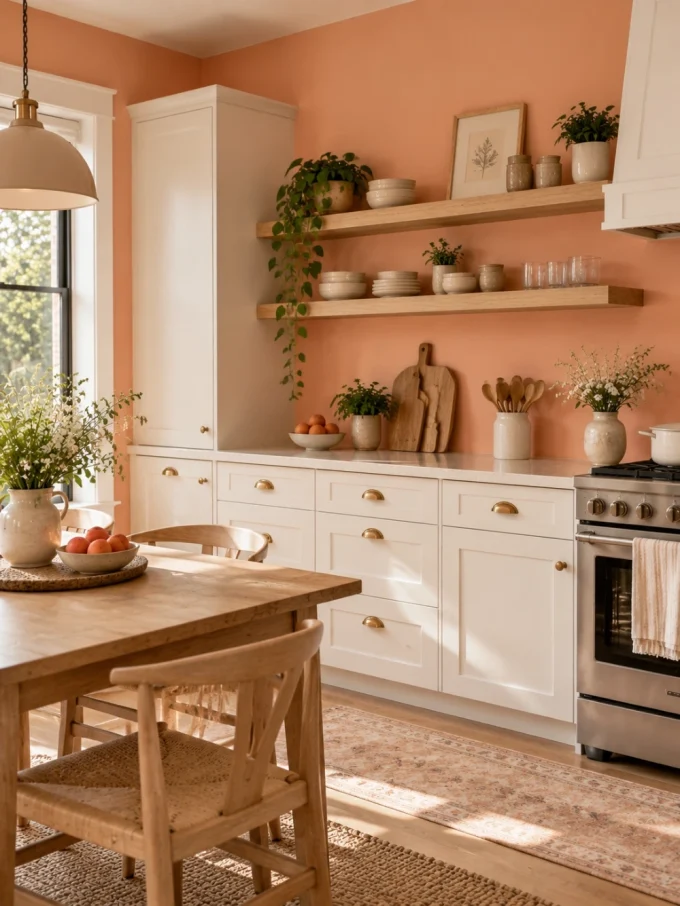
If replacing or repainting cabinets is not practical, let the walls carry the color.
A Peach Fuzz wall can warm up an otherwise neutral kitchen while leaving the cabinetry untouched.
This works particularly well with white cabinets, natural wood shelving, or cream-colored countertops.
For a subtle effect, paint only the main wall behind open shelving or the dining side of an open kitchen rather than every wall.
Best for: Budget refreshes, rental-friendly inspiration, and kitchens with existing neutral cabinetry.
9. Bring in Sage Green for an Earthy Contrast
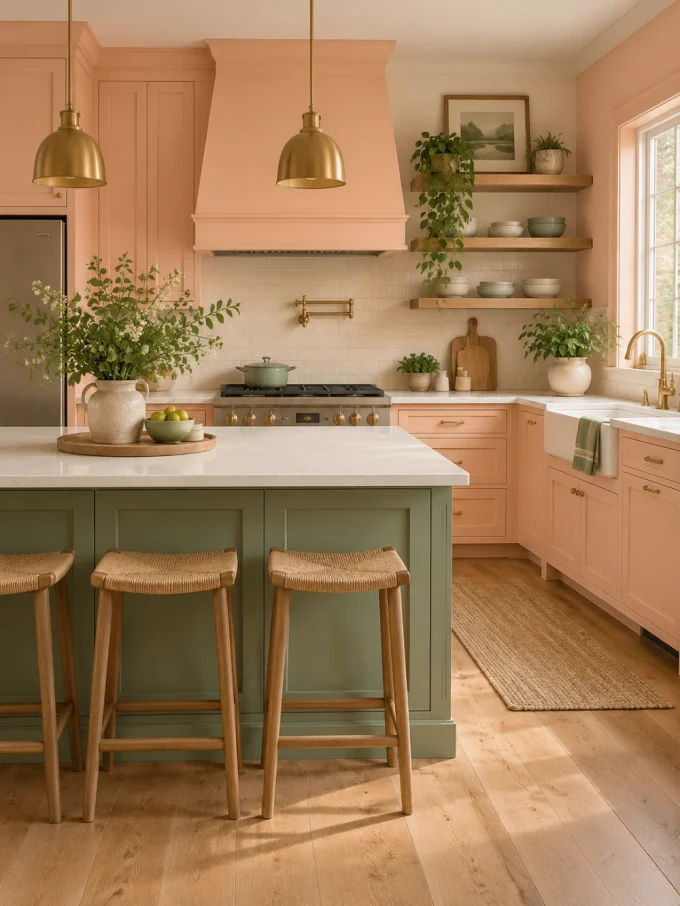
Peach and sage green can create a surprisingly natural combination.
Use Peach Fuzz as the main cabinet or wall color and introduce sage through an island, stools, artwork, textiles, or nearby cabinetry.
Because both colors have a softened quality, they can work together without creating the harsh contrast you might get from highly saturated colors.
Add natural wood and warm white to keep the palette grounded.
Best for: Cottage, vintage, organic, and colorful kitchens.
10. Add Navy for a Deeper Contrast
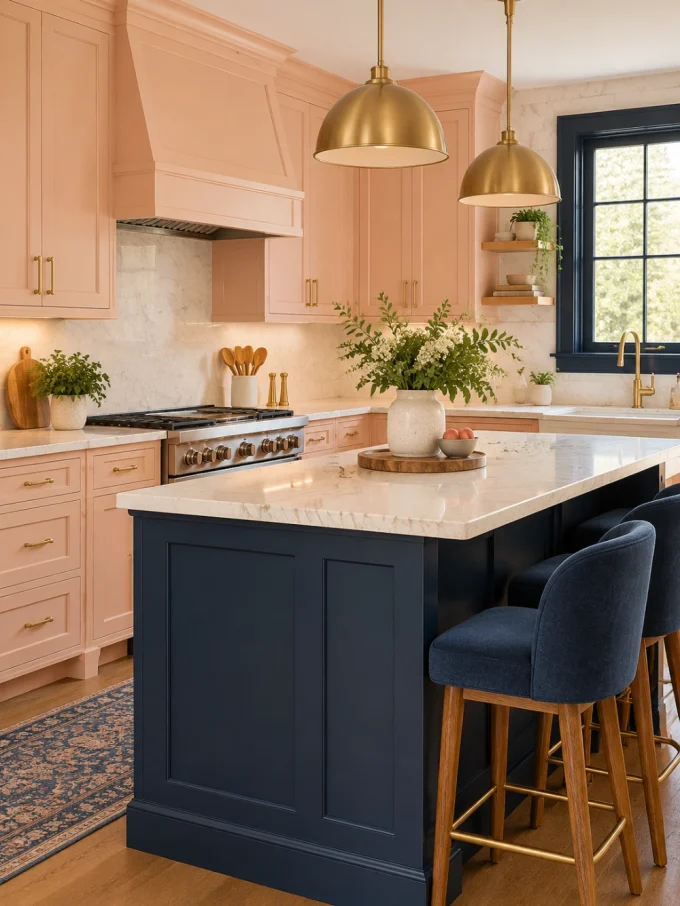
For a stronger and more sophisticated contrast, combine Peach Fuzz with navy.
You could use navy on the island while Peach Fuzz covers the perimeter cabinets, or use navy through stools, window treatments, artwork, or a smaller accent wall.
Keep the remaining finishes restrained. Cream countertops and natural wood can soften the contrast between the two colors.
Navy and Peach Fuzz are also identified as a bold complementary direction for kitchens.
Best for: Transitional, contemporary, and statement kitchens.
11. Try a Peach Fuzz and Wood Two-Tone Kitchen
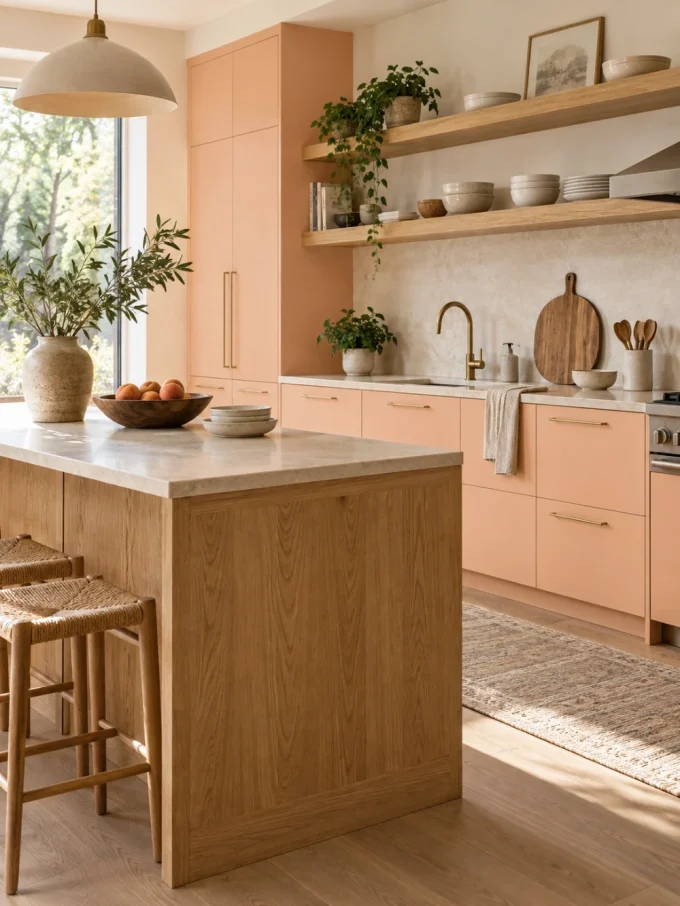
Instead of pairing Peach Fuzz with another painted cabinet color, use wood as the second half of the palette.
For example, Peach Fuzz lower cabinets can sit beneath natural oak shelving, or peach perimeter cabinets can surround a wood island.
This creates contrast through material as well as color.
The combination is particularly effective if you want the kitchen to feel colorful without losing an organic quality.
Best for: Warm minimalist and modern organic interiors.
12. Use Peach Fuzz on Open Shelving
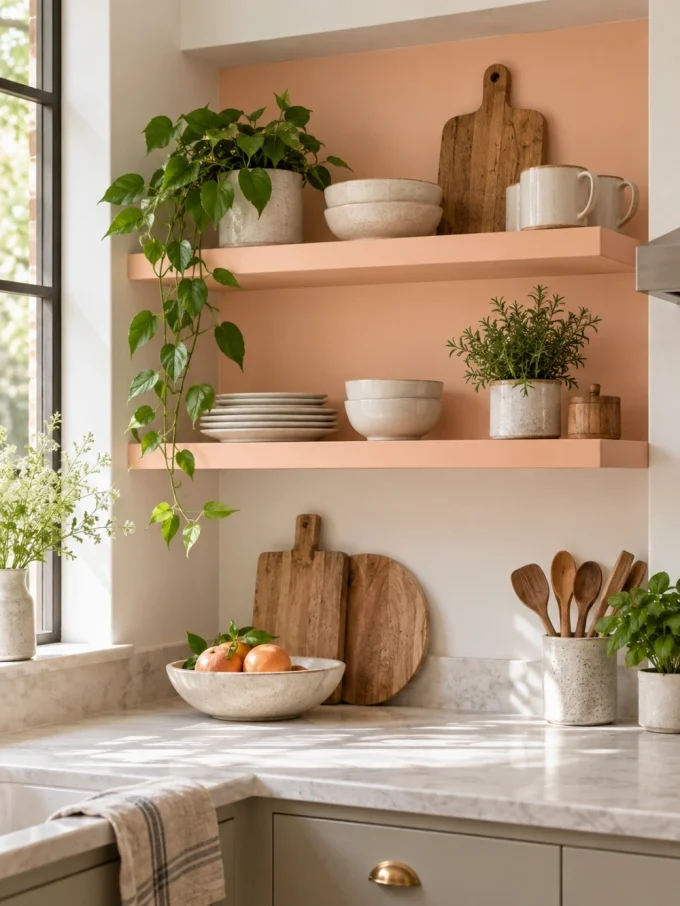
Open shelving gives you another way to introduce Peach Fuzz without committing to full cabinetry.
Paint the shelves or their backing in a soft peach shade, then use neutral ceramics, wood boards, and a few green plants to create contrast.
This works especially well when the shelves are positioned against a white or cream wall.
Keep the displayed objects edited. Peach already provides visual interest, so the shelf does not need to become a collection of every decorative item you own.
Best for: Small kitchens, open shelving, and subtle color updates.
13. Make a Small Kitchen Feel Warmer With Peach
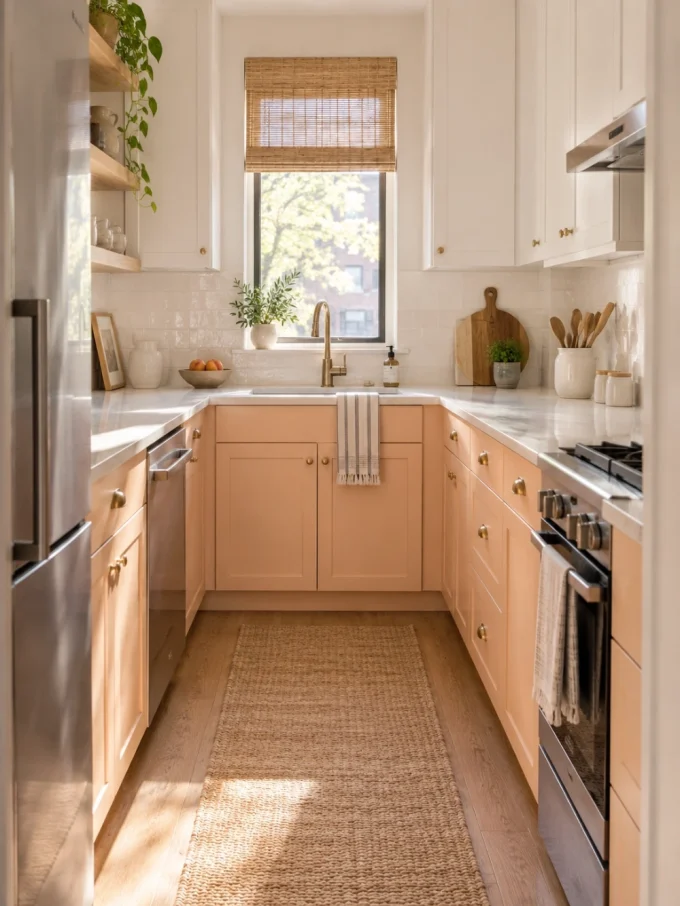
Peach can work particularly well in a small kitchen when you use it strategically.
Instead of covering every surface, choose one major application: lower cabinets, the backsplash, or one wall.
Keep the remaining surfaces light and reflective so the kitchen does not become visually compressed.
Warm white cabinets, pale counters, light wood, and carefully placed peach accents can create a cozy space without making it feel crowded.
Current small-kitchen design coverage also emphasizes peach with warm whites, brass, natural wood, and controlled backsplash applications.
Best for: Galley kitchens, apartment kitchens, and compact layouts.
14. Create a Vintage Peach Kitchen
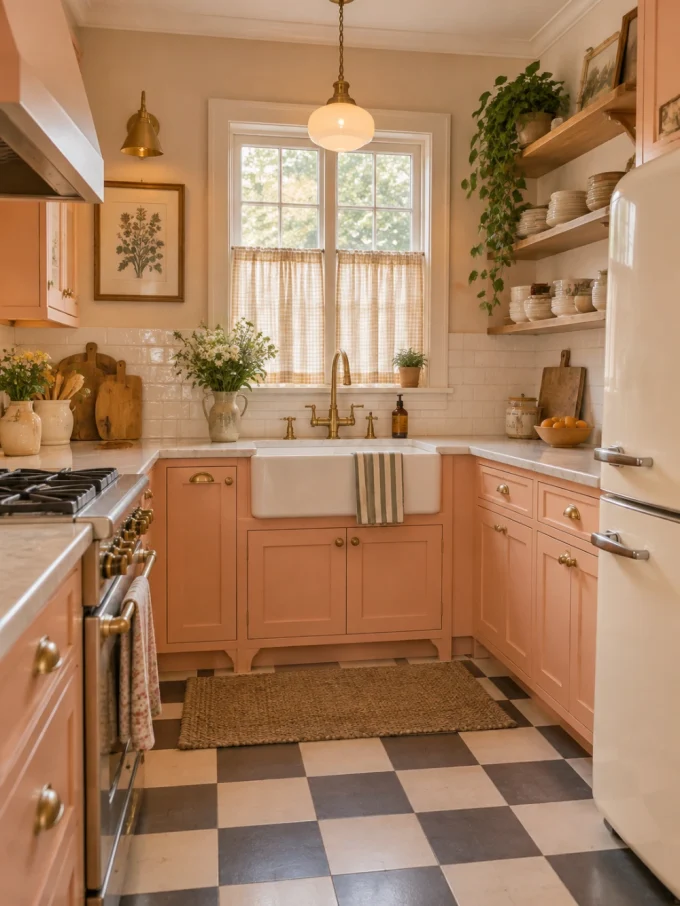
Peach has enough warmth to work beautifully in vintage-inspired kitchens.
Pair it with Shaker or framed cabinetry, traditional hardware, checkerboard flooring, café curtains, vintage-inspired lighting, or retro appliances.
The trick is avoiding a room that looks like a themed reproduction.
Mix one or two vintage elements with cleaner contemporary surfaces so the kitchen feels collected rather than staged.
Best for: Cottage, retro, traditional, and eclectic homes.
15. Keep Peach Fuzz Minimal and Modern
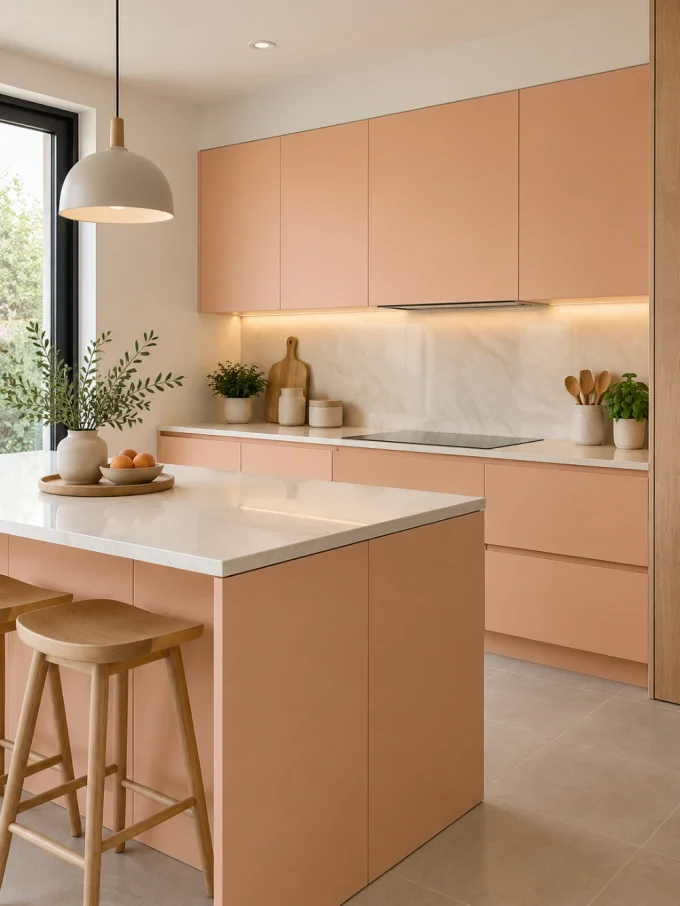
Peach does not have to create a playful or vintage kitchen.
Use it with flat-front cabinetry, simple hardware, clean countertops, and minimal decoration for a more architectural interpretation.
A matte finish can make the color feel quieter, while a smooth stone countertop adds contrast.
Keep the palette narrow: Peach Fuzz, one warm neutral, and one natural material are enough.
Best for: Contemporary, minimalist, and modern apartments.
16. Pair Peach Fuzz With Marble or Light Quartz
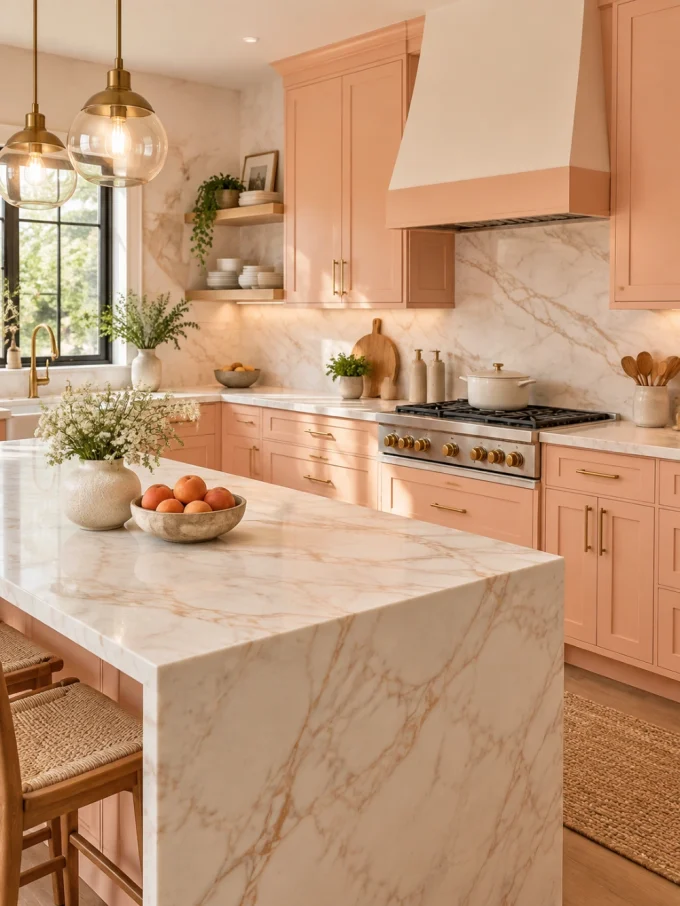
Light stone can give a Peach Fuzz kitchen a more refined finish.
White marble or marble-look quartz introduces subtle veining that breaks up the solid color of the cabinetry.
If your peach is warm, choose stone with warm or neutral veining rather than a strongly blue-gray surface.
The same principle applies to backsplash materials: let the stone add movement while the cabinetry provides the color.
Neutral marble and quartz are commonly suggested as balancing materials for peach cabinetry.
Best for: Elegant, transitional, and upscale kitchens.
17. Use Matte Black for a Modern Edge
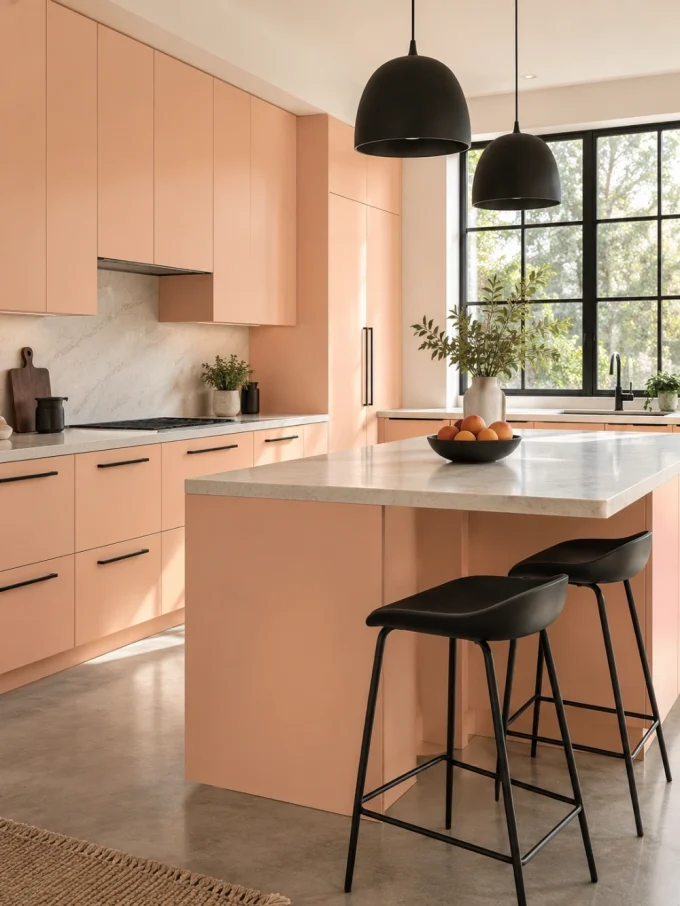
If brass feels too warm for your taste, try matte black.
Black cabinet pulls, lighting, stools, window frames, or appliances can sharpen the softness of Peach Fuzz.
Use black selectively rather than spreading it across every element.
A few strong black details can create enough contrast to make the peach look cleaner and more contemporary.
Best for: Modern, industrial, and contemporary kitchens.
18. Introduce Peach Fuzz Through Accessories
You do not need to renovate anything to create a Peach Fuzz kitchen.
Introduce the color through dish towels, ceramics, vases, storage containers, small appliances, artwork, placemats, or a kitchen runner.
This is the best approach if you are unsure whether you want to live with peach long term.
Keep three or four peach accents distributed around the room rather than grouping everything in one corner.
This creates repetition without making the kitchen look themed. Designers have also recommended small kitchen accessories as an easy way to introduce Peach Fuzz.
Best for: Renters, budget updates, and seasonal decorating.
19. Make the Range Hood the Statement
For something more distinctive, use Peach Fuzz on the range hood while keeping the cabinetry neutral.
A plaster-style hood painted in a soft peach can become the architectural focal point of the kitchen.
Pair it with cream cabinets, natural wood, or subtle stone so the hood remains the star.
This is particularly effective in kitchens with large ranges because the hood naturally occupies an important visual position.
Best for: Custom kitchens, Mediterranean-inspired spaces, and statement interiors.
How to Choose the Right Peach Fuzz Kitchen Idea
The best approach depends on how permanent you want the color to be.
For a Subtle Update
Start with accessories, open shelving, a small backsplash, or one wall.
For a Medium Commitment
Try Peach Fuzz on the island, lower cabinets, or range hood.
For a Dramatic Transformation
Use Peach Fuzz across the main cabinetry or combine it with another cabinet color.
For a Small Kitchen
Keep Peach Fuzz concentrated in one area and let warm whites and light materials dominate the rest of the room.
For a Luxury Look
Combine Peach Fuzz with natural stone, restrained brass, warm wood, and simple cabinetry.
For a Modern Look
Use flat-front cabinetry, matte finishes, clean lines, and small amounts of black.
What Colors Go With Peach Fuzz in a Kitchen?
Peach Fuzz is flexible, but the best pairing depends on the mood you want.
Warm white and cream: Soft, bright, and timeless.
Natural wood: Warm, organic, and relaxed.
Sage green: Earthy and slightly vintage.
Navy: Stronger contrast with a sophisticated feel.
Brass: Warm and elegant.
Matte black: Crisp and contemporary.
Light stone: Refined and neutral.
The important thing is not simply finding colors that technically match. Think about the temperature and proportion of each color.
A kitchen with 60 percent peach, 30 percent green, and 10 percent black will feel very different from one with 10 percent peach, 80 percent cream, and 10 percent brass.
How to Keep a Peach Kitchen From Looking Too Sweet
The biggest mistake is treating Peach Fuzz as the only interesting element in the room.
Balance it with materials that have visual weight.
Natural wood adds grain.
Stone adds movement.
Black adds contrast.
Brass adds warmth.
Green adds an organic counterpoint.
Texture also matters. A handmade tile, veined stone, brushed metal, or natural wood surface can prevent a flat color scheme from feeling overly uniform.
If the entire kitchen is peach, introduce tonal variation rather than adding five unrelated accent colors.
Peach Fuzz Kitchen Mistakes to Avoid
Using Peach on Every Surface
More color does not automatically create a stronger design. Choose a hierarchy.
Pairing Warm Peach With Too Many Cool Grays
Cool gray can sometimes make Peach Fuzz feel disconnected. If you want gray, test the combination in your actual kitchen lighting first.
Choosing Overly Bright Accents
Peach is already noticeable. Adding several saturated colors can quickly make the room chaotic.
Ignoring Natural Light
Peach can change significantly throughout the day. Test a sample before committing to cabinetry or walls.
Forgetting the Countertop
The countertop occupies a large visual area. Make sure it works with the warmth of the peach rather than fighting it.
Matching Everything Exactly
A Peach Fuzz kitchen does not need peach appliances, peach accessories, peach textiles, and peach artwork. Repetition is useful; duplication is not.
For more guidance on avoiding decorating problems, see home decor mistakes to avoid.
Final Thoughts
Peach Fuzz can give a kitchen warmth without requiring the boldness of a highly saturated color.
The most successful Peach Fuzz kitchen ideas usually give the color a clear role. It might anchor the lower cabinets, define the island, soften the backsplash, warm up the walls, or simply appear through a handful of carefully chosen accessories.
From there, the supporting materials determine the personality of the room.
Natural wood creates an organic feel. Cream makes peach softer. Brass adds polish. Green creates an earthy contrast. Navy gives it depth, while black makes the palette more contemporary.
So before reaching for a paintbrush, decide how much Peach Fuzz your kitchen actually needs.
Sometimes the most beautiful result is not an entirely peach kitchen. It is a neutral kitchen with just enough peach to make the whole space feel warmer.