

A bathroom can look beautiful and still feel cold, cluttered, or overly designed. Too much white makes it feel clinical, too many decorative details create visual noise, and poorly chosen wood or lighting can quickly take away from the calm atmosphere you wanted.
That is why Japandi works so well in bathrooms.
The style combines the warmth and practicality associated with Scandinavian interiors with the simplicity, natural materials, and intentional restraint found in Japanese design. The result is a bathroom that feels quiet, functional, and connected to nature rather than simply minimalist.
The best serene Japandi bathroom ideas are not about filling the room with bamboo, beige, and expensive stone. They are about creating balance between warm and cool materials, open space and useful storage, texture and simplicity.
Whether you’re planning a complete renovation or making smaller changes, these 19 ideas can help you create a Japandi bathroom that feels genuinely relaxing and practical every day.
1. Warm Oak Vanity With Soft Neutral Walls
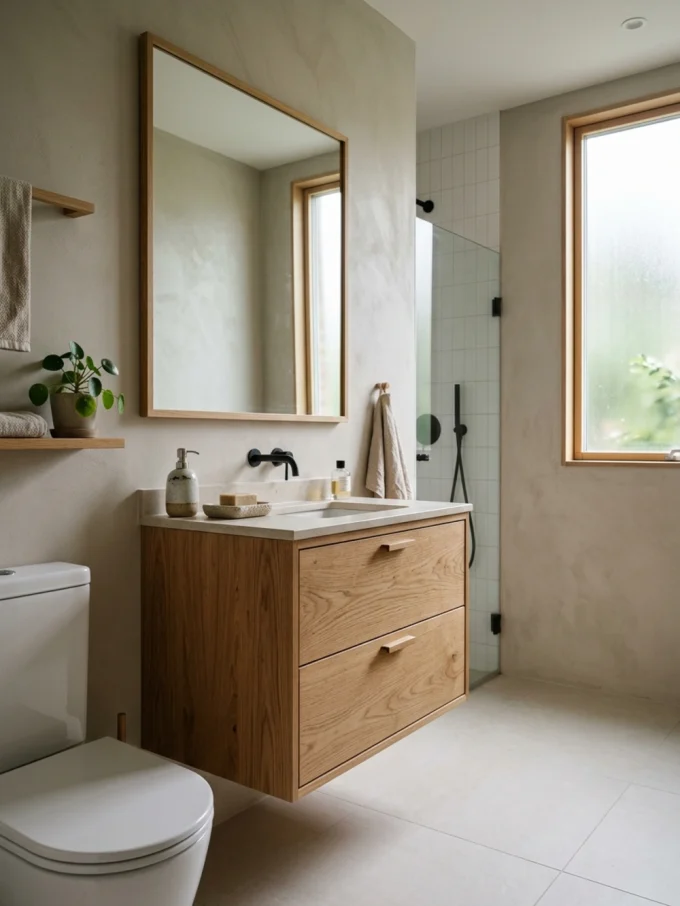
A warm wood vanity is one of the easiest ways to introduce the Scandinavian side of Japandi without making the bathroom feel rustic.
Choose a vanity with simple slab fronts, minimal hardware, and visible but restrained wood grain. Oak works especially well because its light-to-medium tone adds warmth without becoming visually heavy.
Pair it with warm white, cream, beige, or pale greige walls. Avoid pairing pale wood with an extremely cool white, because the contrast can make the room feel harsher than intended.
For the countertop, a simple stone or stone-look surface keeps the composition clean.
If you already have a plain white vanity, you don’t necessarily need to replace it. Adding a wood-framed mirror, oak stool, bamboo accessories, or a natural wood bath mat can introduce enough warmth to shift the overall mood.
The goal is not to make the vanity the only interesting feature. It should quietly anchor the room.
2. Bring in Natural Stone for an Organic Foundation
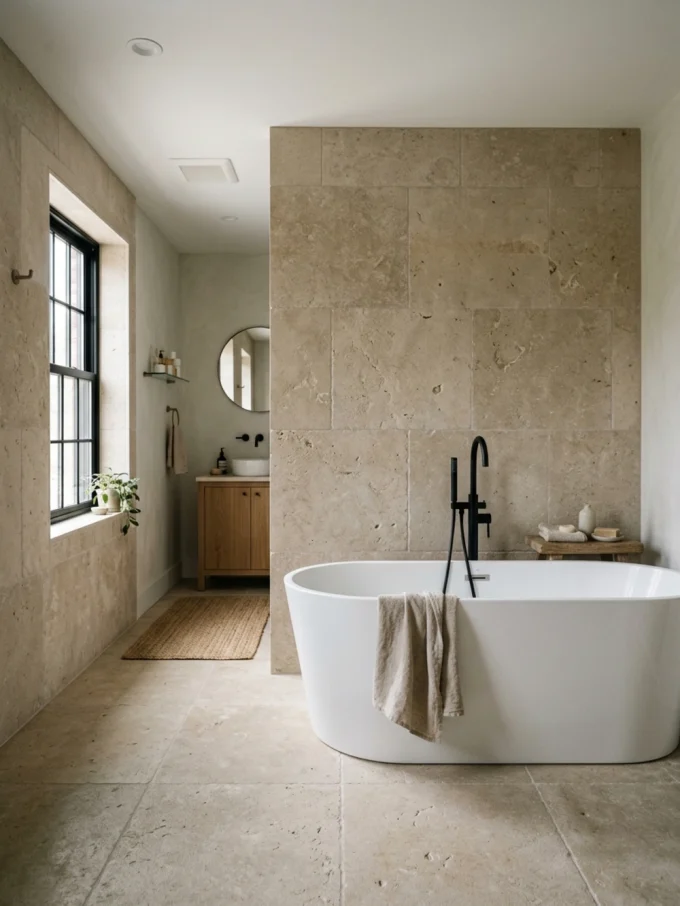
Natural stone gives a Japandi bathroom the grounded quality that many purely minimalist bathrooms lack.
Think limestone, travertine, slate, or softly patterned stone rather than highly polished marble with dramatic veining. Large-format stone-look porcelain can also create a similar effect while being easier to maintain and often more accessible.
Honed or matte finishes are particularly effective because they allow texture to become part of the design without introducing excessive shine.
Use stone on the floor, shower walls, countertop, or even around a freestanding tub. You don’t need to cover every surface. One substantial stone element can be enough.
For another earthy direction, combine this approach with DecoralCove’s earthy bathroom ideas for additional inspiration on natural colors and materials.
3. Let Microcement Create a Seamless Backdrop
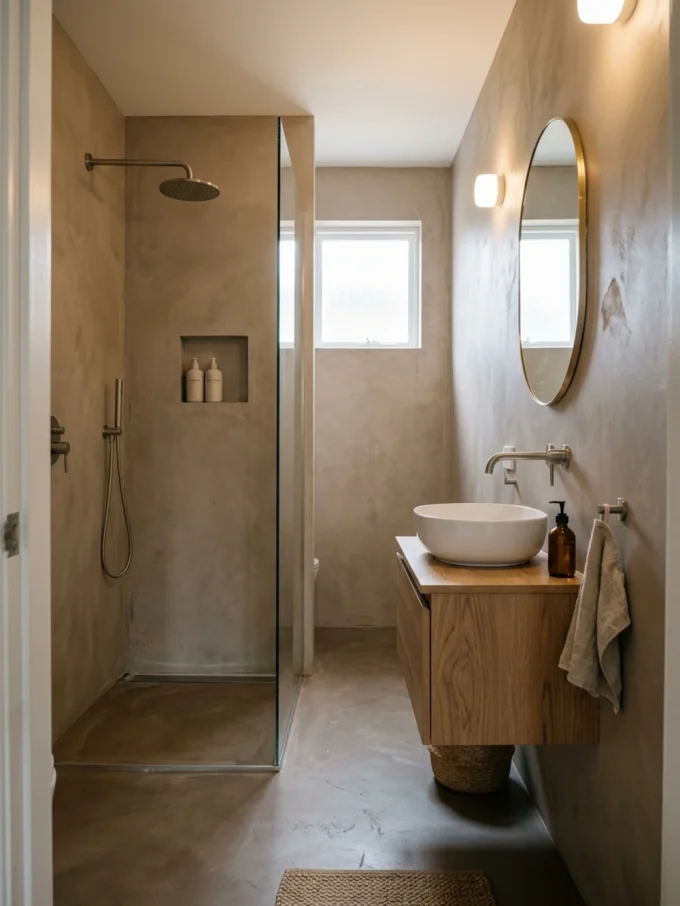
If you want a more contemporary interpretation of Japandi, consider microcement or a similar seamless-look wall finish.
Its uninterrupted appearance reduces visual breaks and gives the bathroom a quiet architectural quality. Warm gray, taupe, mushroom, beige, and soft concrete tones work particularly well.
The important part is choosing the right temperature.
A cold industrial gray can make the room feel stark. A warmer greige or taupe keeps the concrete-like finish connected to the wood and natural textiles commonly used in Japandi interiors.
Microcement can also be visually useful in smaller bathrooms because fewer obvious surface transitions can make the room feel less busy.
For a lower-cost alternative, look for large-format porcelain tiles with a matte concrete or plaster appearance.
4. Build the Palette Around Sand, Beige, and Warm White
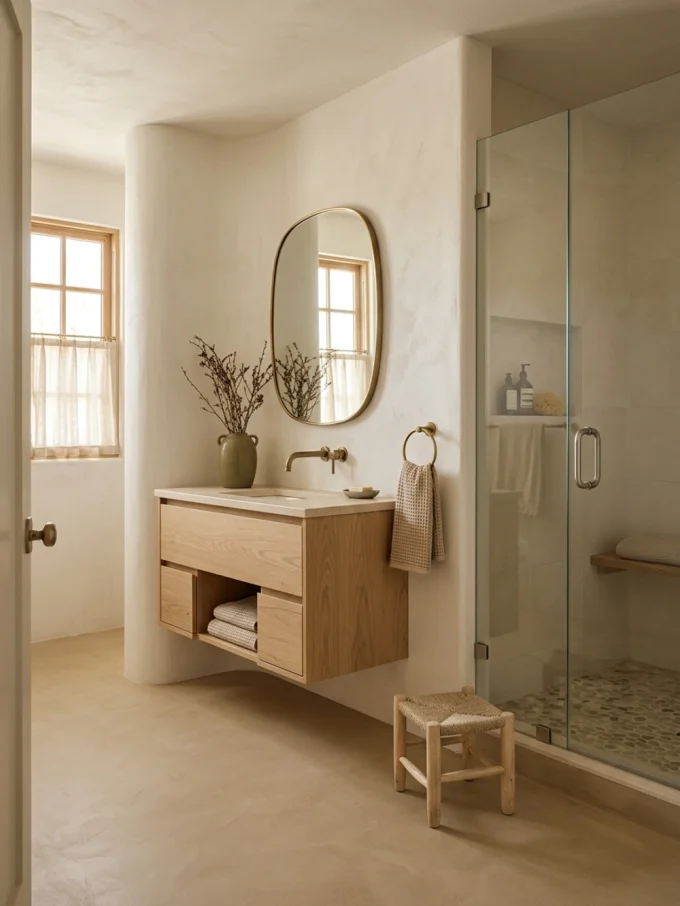
Color should create a quiet background rather than compete for attention.
A reliable Japandi bathroom palette might include:
- Warm white or creamy off-white
- Sand
- Beige
- Taupe
- Light greige
- Warm natural wood
- Muted olive or sage
- Occasional charcoal or black accents
Warm whites are especially useful when you want the room to remain bright without looking sterile. Sherwin-Williams, for example, describes Alabaster SW 7008 as a soft, warm balanced white designed to provide brightness with coziness.
Sherwin-Williams Alabaster SW 7008
Always test paint samples in your actual bathroom. Natural and artificial light can significantly change how beige, white, and greige appear throughout the day.
The simplest rule is to keep the palette restrained and let material variation provide the visual interest.
5. Make a Freestanding Soaking Tub the Focal Point
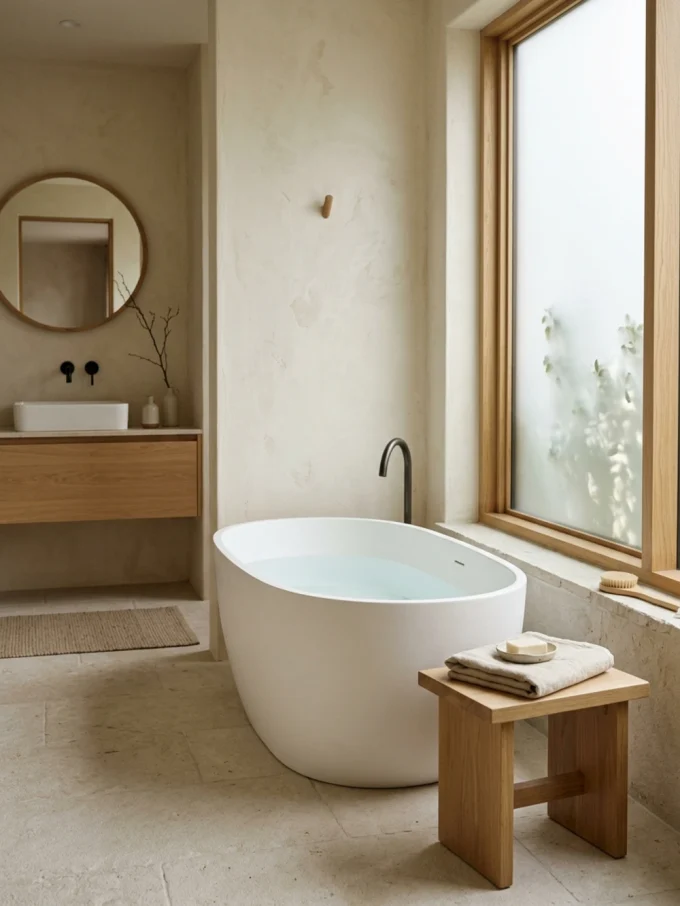
A freestanding tub can transform a spacious bathroom into a genuine retreat.
For a Japandi look, avoid overly ornate silhouettes. Look instead for a simple oval, gently curved, or sculptural tub with a calm visual presence.
Position it where the surrounding space can breathe. Don’t crowd it with excessive accessories.
A small wooden stool beside the tub can hold a towel or bath essentials, while a single plant or simple ceramic vessel adds an organic touch.
If you have a large bathroom, a freestanding tub can become the main focal point while the vanity and shower remain visually quiet.
If you have a smaller room, don’t force a freestanding tub into the layout simply because it appears in luxury Japandi inspiration. Good Japandi design is intentional. A well-designed shower can create just as much serenity.
6. Add a Slatted Wood Screen for Gentle Privacy
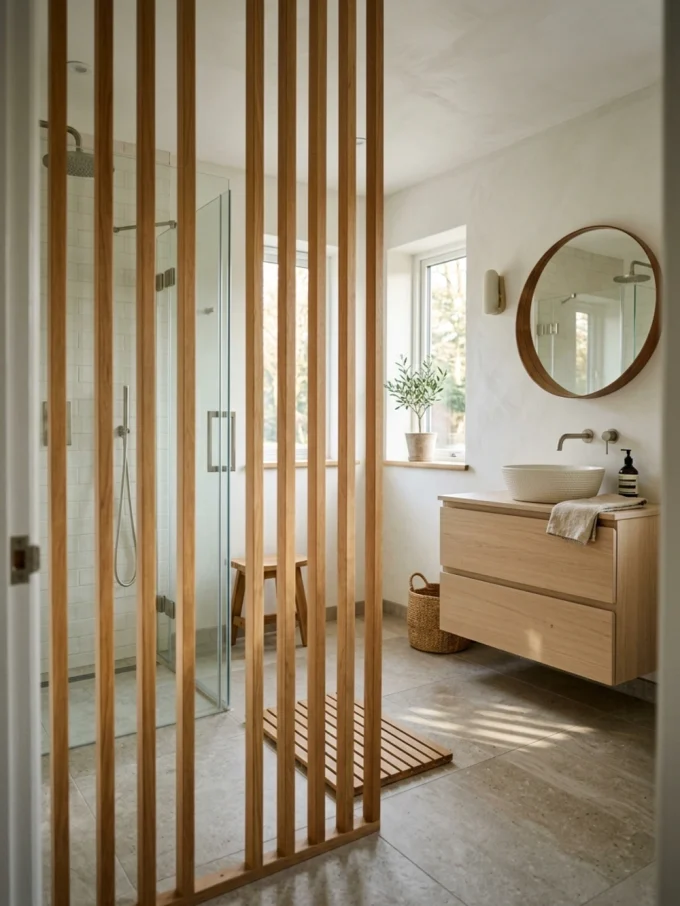
Vertical wood slats can introduce Japanese-inspired architectural character without overwhelming the bathroom.
Use them as a partial divider between a shower and vanity, beside a freestanding tub, or near the entrance to create a sense of separation.
The key is moderation.
A full wall of dark wood slats can make a small bathroom feel visually heavy. A partial screen with plenty of open space maintains the lightness that makes Japandi work.
Choose moisture-appropriate materials and finishes for the bathroom environment, and keep untreated wood away from areas exposed to constant direct water unless the specific material and installation are designed for that use.
For renters, a freestanding bamboo or wood-look privacy screen can provide a similar visual effect without permanent construction.
7. Keep the Vanity Floating and Visually Light
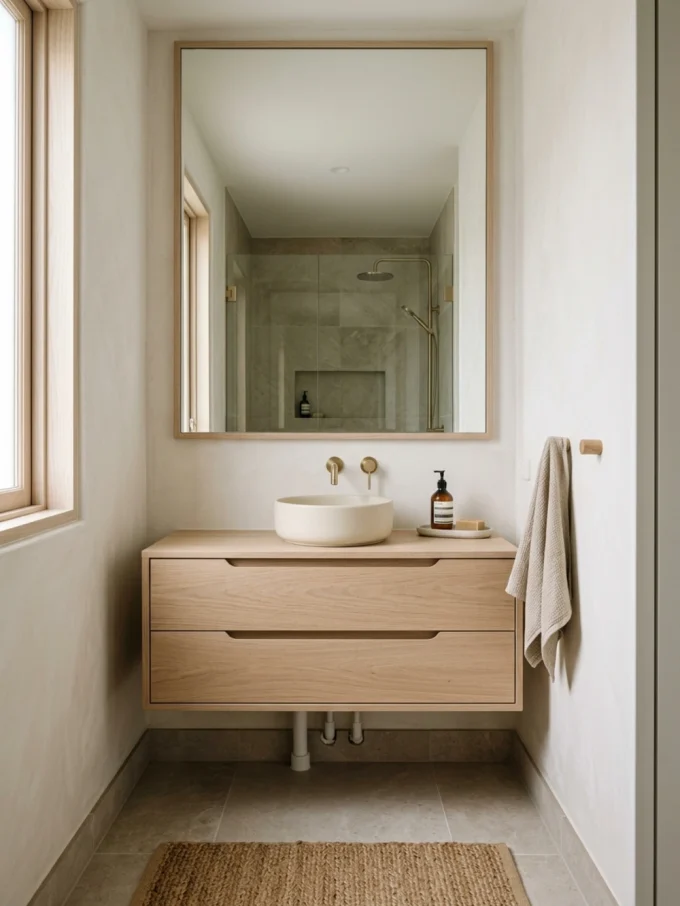
A floating vanity is especially useful when you want the bathroom to feel spacious and uncluttered.
Because the floor remains visible underneath, the vanity takes up less visual weight. This can be particularly effective in compact bathrooms.
Choose simple drawers rather than numerous open shelves. Japandi is minimalist, but it isn’t supposed to be impractical.
Use the drawers for everyday products and leave the countertop mostly clear. One soap dispenser, a small ceramic tray, or a single natural object is usually enough.
The combination of clean lines, concealed storage, and visible floor space creates the kind of visual order that makes a bathroom feel calmer.
8. Turn the Walk-In Shower Into a Quiet Retreat
A walk-in shower is a natural fit for Japandi because its open layout supports the style’s emphasis on simplicity.
Use large-format matte tiles, natural stone, microcement-look surfaces, or warm neutral porcelain to minimize visual interruption.
A recessed shower niche can keep bottles organized without adding shelves to the walls.
For the shower hardware, choose a restrained finish such as matte black, brushed nickel, brushed brass, or another finish that complements the room’s palette.
A simple rainfall showerhead can also reinforce the spa-like atmosphere without adding decorative clutter.
For more shower-focused inspiration, see DecoralCove’s luxury rain shower ideas and rustic walk-in shower ideas.
9. Choose a Sculptural Basin Instead of Extra Decor
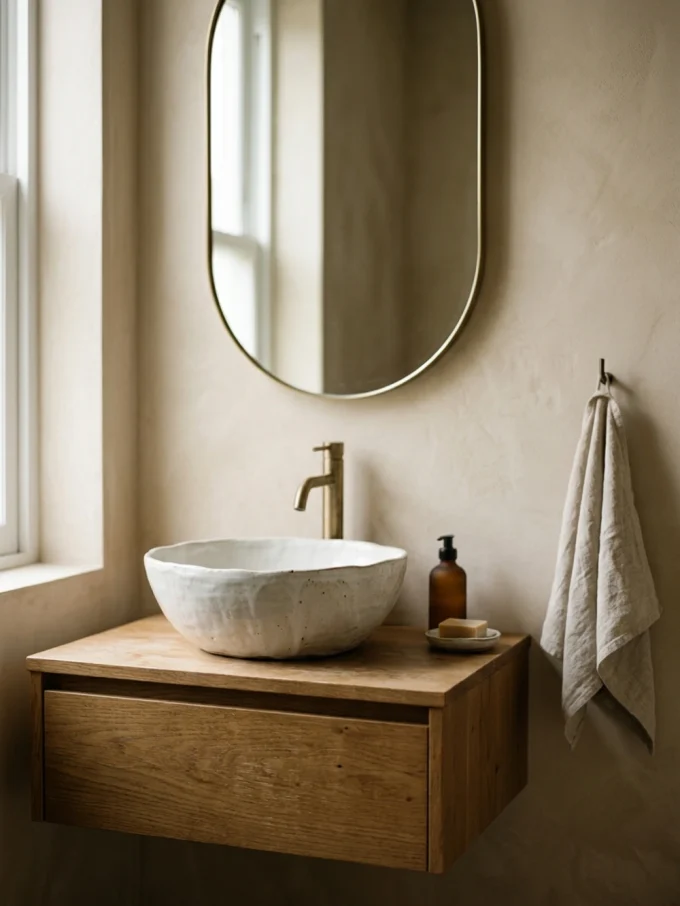
Japandi bathrooms don’t need lots of decorative objects to feel special.
Instead, make one functional object visually interesting.
A rounded vessel sink, softly curved ceramic basin, or hand-finished stone basin can become a subtle focal point without making the bathroom feel decorated.
Pair an organic basin with a simple vanity rather than placing it against a heavily patterned wall.
This creates a useful design principle: let the shape of the functional pieces provide character.
A curved basin, rounded mirror, wooden vanity, and soft lighting can create plenty of visual interest without artwork, shelves, baskets, and accessories competing for attention.
10. Layer Warm Lighting Instead of Relying on One Ceiling Fixture
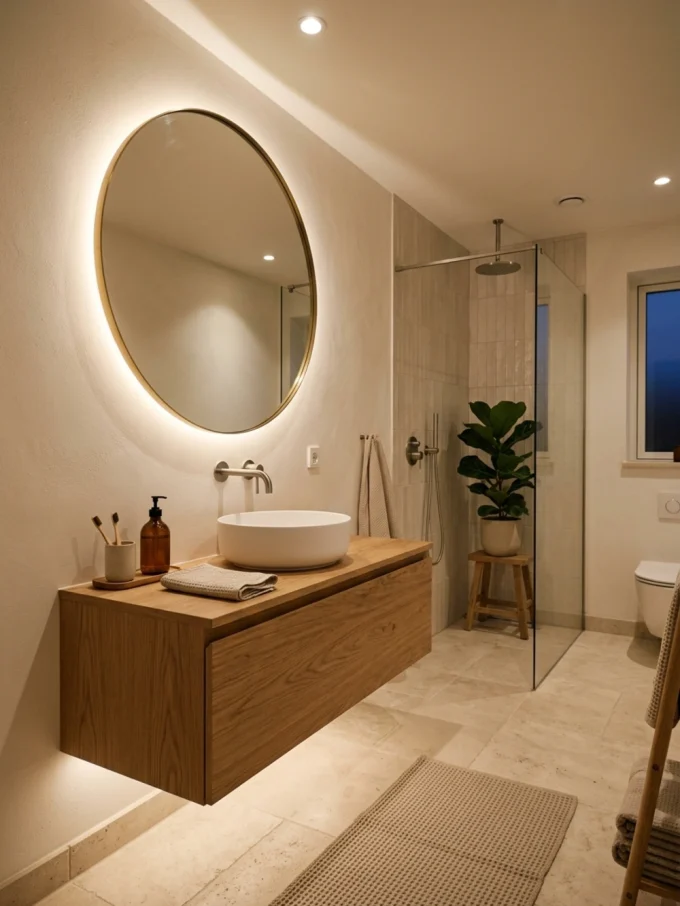
Lighting can completely change how serene a Japandi bathroom feels.
Don’t depend on a single bright overhead light. Instead, create layers.
Use general illumination for the whole room, softer lighting around the vanity, and accent lighting where appropriate.
Warm light can help wood, beige, stone, and plaster finishes feel more inviting. Around 2700–3000K is a useful range to explore for a warm ambient atmosphere, while mirror lighting should still provide enough clarity for everyday grooming.
If possible, install dimmers so the bathroom can transition from bright morning functionality to a softer evening atmosphere.
Natural daylight is particularly valuable in Japandi spaces because it strengthens the connection with nature. Designers frequently emphasize natural light, warm neutrals, and diffused lighting as important parts of calming Japandi bathroom schemes.
11. Make a Small Bathroom Feel Calm With Built-In Storage
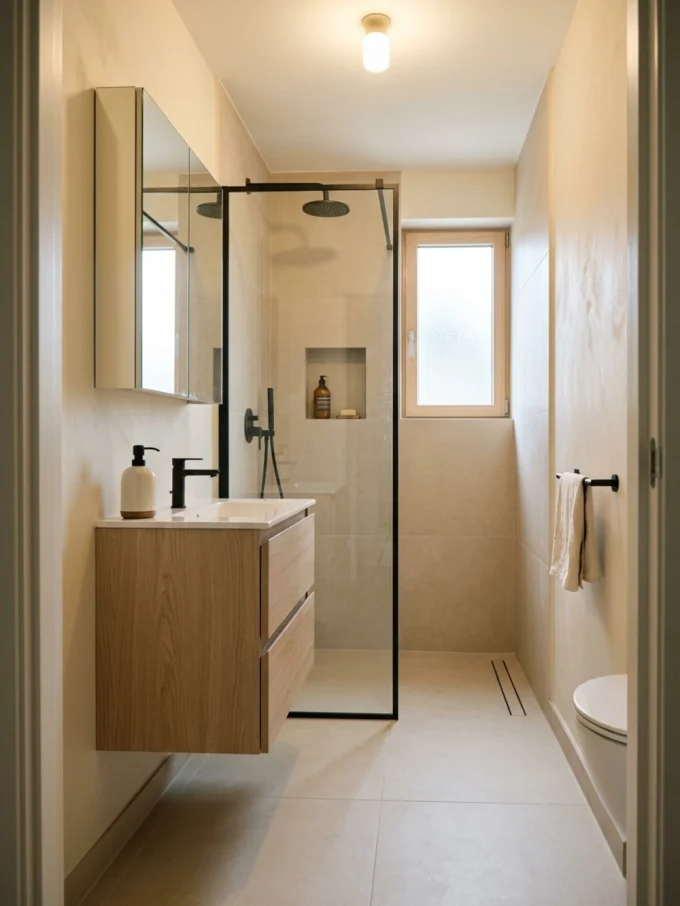
A small bathroom doesn’t need lots of decorative styling to look finished.
It needs fewer things in sight.
Use a mirrored medicine cabinet, recessed shower niche, floating vanity drawers, or tall storage cabinet to keep everyday products hidden.
Large-format tiles can also reduce visual fragmentation, while a light warm palette helps prevent the room from feeling enclosed.
If space is extremely limited, prioritize storage that uses vertical or otherwise unused areas instead of adding bulky freestanding furniture.
Japandi works particularly well in small bathrooms because its emphasis on function and visual restraint naturally discourages unnecessary objects.
12. Make a Windowless Bathroom Feel Bright and Relaxing
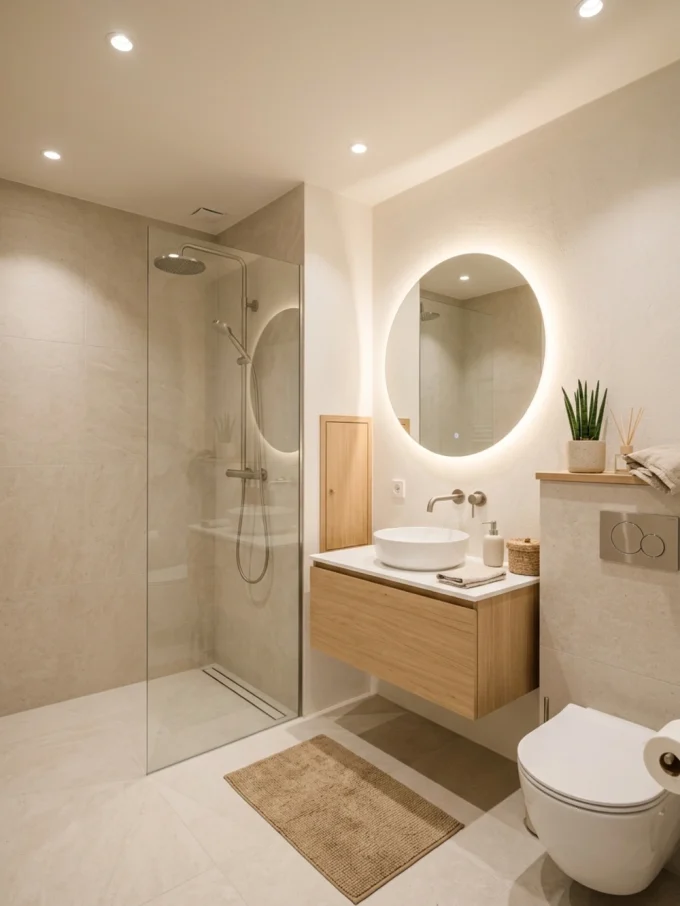
A lack of windows doesn’t mean you have to abandon the Japandi look.
The solution is to recreate some of the qualities that natural light would normally provide.
Start with a warm but light wall color. Then use multiple light sources rather than one harsh ceiling fixture.
A backlit mirror can provide gentle illumination around the vanity, while concealed or recessed lighting can brighten darker areas.
Choose finishes with subtle variation rather than very dark surfaces that absorb most of the available light.
A pale stone-look floor, warm white walls, light oak vanity, and softly illuminated mirror can make a windowless bathroom feel much more inviting.
Avoid using very cool blue-white bulbs if the goal is a warm spa-like atmosphere. The wrong color temperature can make beige and wood look dull or gray.
13. Use Bathroom Wood Carefully Around Water
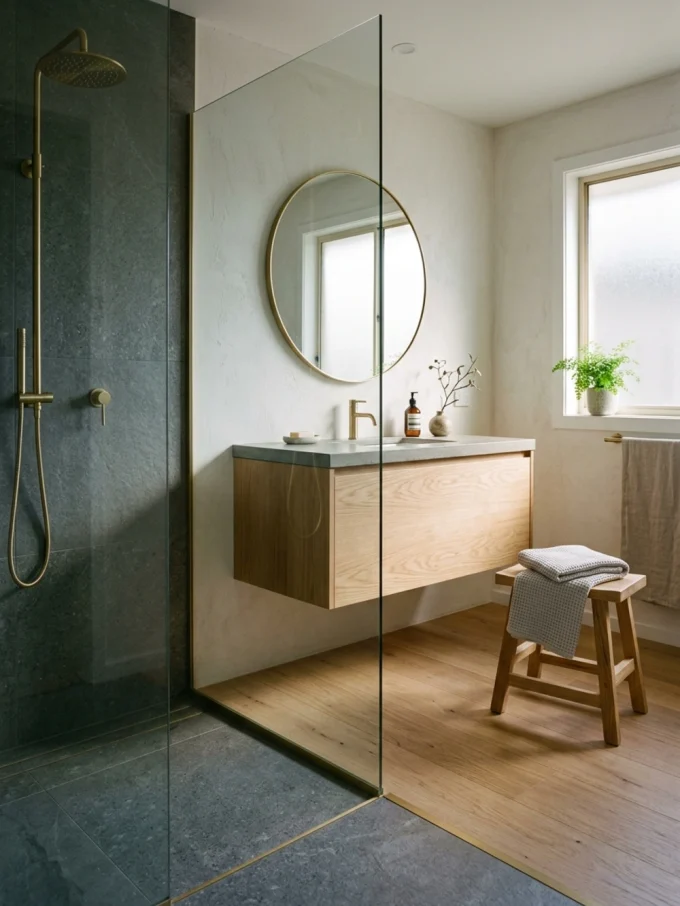
Wood is one of the defining materials associated with Japandi, but bathrooms require a more practical approach.
Not every wood product is suitable for prolonged moisture.
For vanity furniture and decorative accents, use materials and finishes specifically appropriate for bathroom conditions. Keep splash-prone surfaces protected, provide good ventilation, and wipe standing water rather than allowing it to sit.
Wood elements inside or immediately beside wet areas need particular attention. Always follow the manufacturer’s installation and finishing requirements, as well as applicable local building requirements.
You can also get the visual warmth of wood without using real wood everywhere.
Wood-look porcelain tile, waterproof wood-effect panels designed for bathrooms, bamboo accessories, and teak-style bath mats can provide similar warmth with less maintenance.
The best Japandi bathroom is not one where wood is everywhere. It is one where wood appears in the right places.
14. Add Matte Black Fixtures as Controlled Contrast
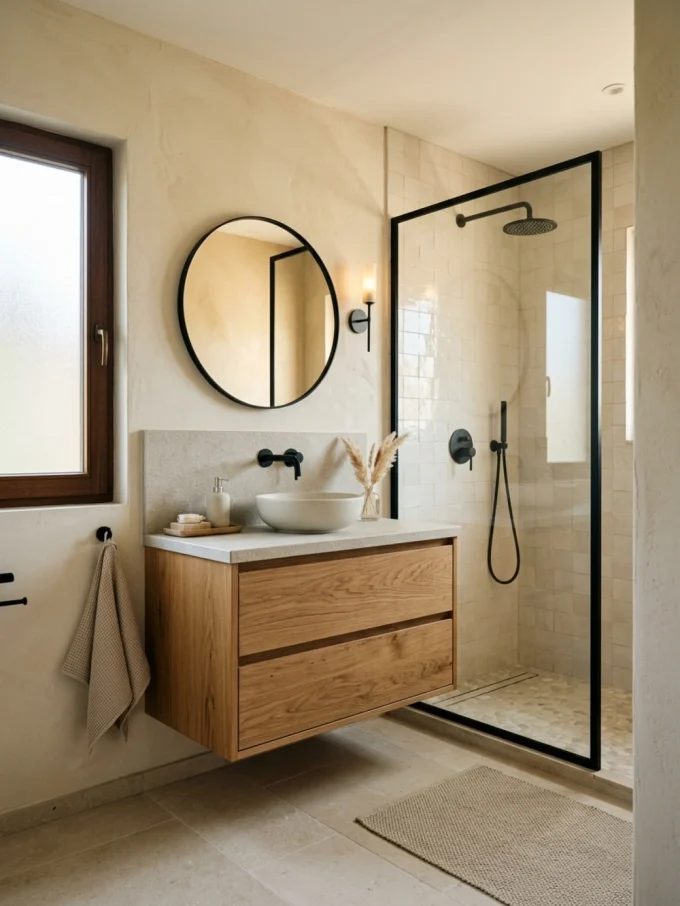
Black fixtures can give an otherwise soft Japandi bathroom enough definition to prevent it from looking washed out.
Use them selectively.
A black faucet, shower frame, mirror frame, or cabinet pull can create a crisp contrast against beige, warm white, or light wood.
The mistake is repeating black on every available surface.
If the faucet, shower, vanity hardware, mirror, lighting, towel hooks, shelves, and accessories are all black, the room can quickly become more contemporary-industrial than serene Japandi.
Choose two or three black elements and let the rest of the room remain quiet.
If you prefer something softer, brushed brass or muted bronze can introduce warmth without the sharper contrast of black.
15. Bring in Wabi-Sabi Texture Through Imperfection
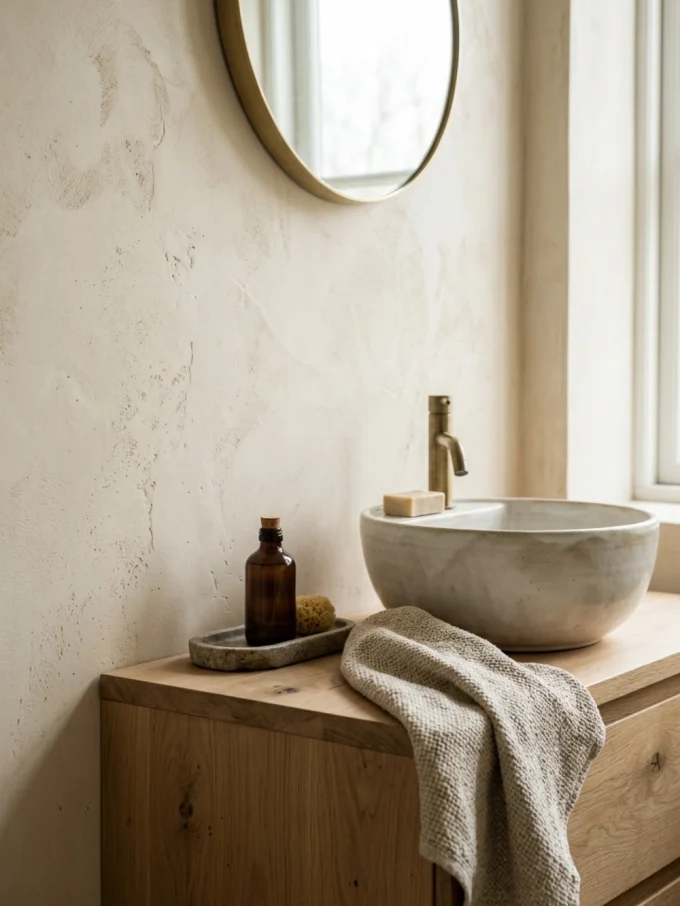
Perfectly smooth surfaces can sometimes make a minimalist bathroom feel sterile.
This is where subtle irregularity becomes valuable.
Consider handmade-look tiles, lightly textured plaster, natural stone variation, uneven ceramic vessels, woven baskets, linen towels, or wood with visible grain.
These imperfections give the room character without adding clutter.
The key is to distinguish intentional texture from visual mess. A handmade ceramic soap dish is different from having ten decorative objects scattered around the countertop.
Keep the number of elements low and let their natural variations do the work.
This is one reason Japandi bathrooms can feel sophisticated without relying on ornate decoration: texture replaces ornament.
16. Create the Look With Budget-Friendly Swaps
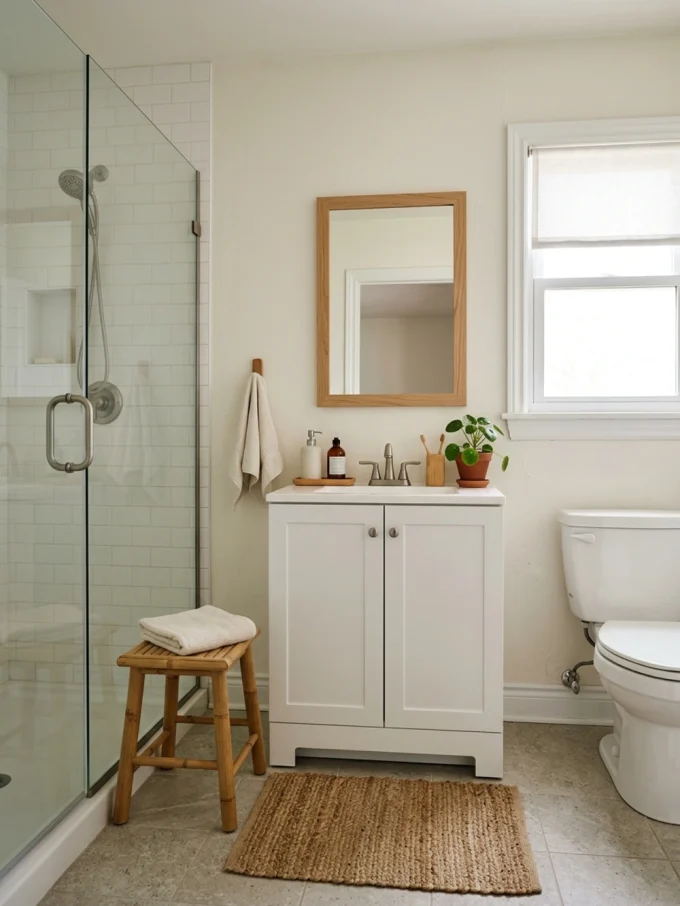
You don’t need a luxury renovation to introduce Japandi principles.
Start with the elements that have the biggest visual impact.
For example:
Instead of a custom stone vanity:
Use a simple existing vanity and add a wood-toned mirror or natural accessories.
Instead of expensive natural stone:
Choose large-format porcelain with a limestone, travertine, or concrete appearance.
Instead of a custom wood-slat wall:
Use a freestanding bamboo screen or a smaller decorative slatted panel.
Instead of replacing every fixture:
Change the most visible hardware first, such as cabinet pulls, faucet, or mirror frame.
Instead of remodeling the entire room:
Edit the countertop, improve lighting, add warm textiles, and remove unnecessary products.
This approach follows the basic Japandi principle of intentionality: spend money where it changes the experience rather than simply adding more things.
17. Try Renter-Friendly Japandi Updates
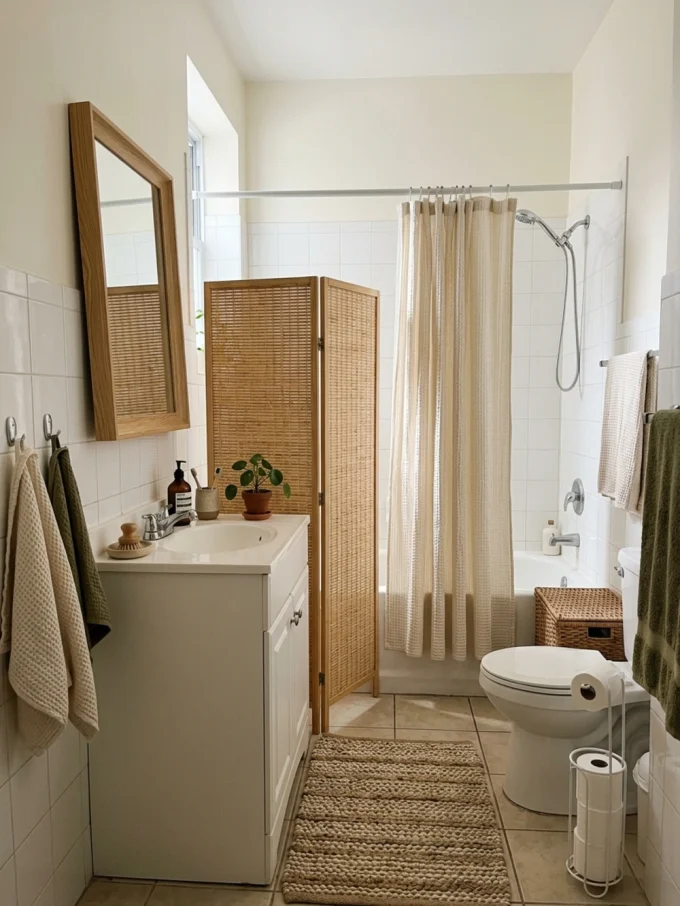
Japandi can work in a rental because many of its strongest features are easy to introduce without construction.
Start by reducing visual clutter.
Then consider:
- Swapping cabinet pulls with removable hardware
- Adding a freestanding bamboo privacy screen
- Using removable hooks for towels
- Introducing a wood-framed or adhesive-mounted mirror where appropriate
- Adding a teak-style bath mat
- Using neutral shower curtains with natural texture
- Bringing in a small bathroom-friendly plant
- Replacing harsh bulbs with warmer lighting where fixtures allow
- Adding removable storage trays and organizers
For more reversible decorating strategies, DecoralCove’s rental apartment decorating ideas can help you think beyond permanent renovations.
The goal is to make the bathroom feel intentional without creating damage that could become a problem when you move.
18. Finish the Room With Plants and Organic Details
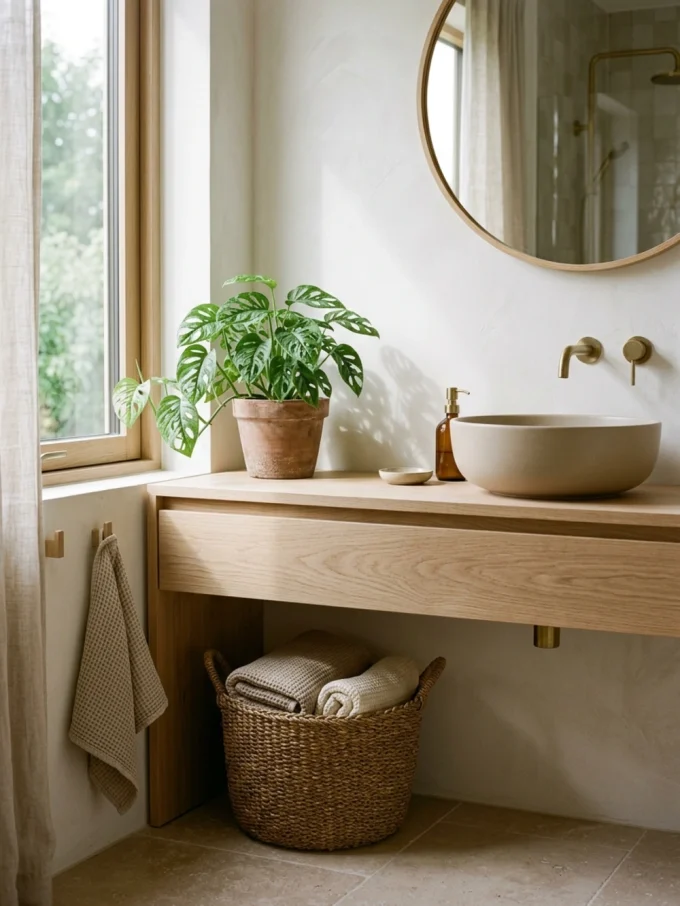
A small amount of greenery can soften the hard surfaces found in most bathrooms.
Choose plants according to the actual conditions in your room. A humid bathroom with indirect light is very different from a dry, windowless room.
If natural light is limited, don’t add a plant simply because every Japandi photograph contains one. A beautiful artificial botanical or another natural element may be more practical.
Beyond plants, introduce organic materials through:
- Linen or cotton towels
- Woven baskets
- Wooden stools
- Stone trays
- Ceramic containers
- Bamboo accessories
- Natural-fiber bath mats
Keep the collection edited.
For more ways to introduce greenery without creating clutter, see DecoralCove’s bathroom plant decor ideas.
19. Layer the Whole Bathroom Into One Calm Retreat
The most successful serene Japandi bathroom ideas don’t rely on one trendy feature.
They combine several quiet decisions that support each other.
Imagine warm white walls, a light oak floating vanity, a honed stone-look floor, a softly curved basin, brushed hardware, a walk-in shower, concealed storage, warm layered lighting, and one carefully chosen plant.
Nothing is competing for attention.
This is the difference between copying a Japandi bathroom aesthetic and actually designing a Japandi bathroom.
Every element should have a purpose. The vanity provides storage and warmth. The stone adds texture and grounding. The lighting changes the mood. The storage removes visual noise. The plant connects the space to nature.
When those decisions work together, the room begins to feel like a retreat rather than a collection of Japandi-inspired products.
What Makes a Bathroom Japandi?
Japandi is less about a strict checklist and more about balance.
At its simplest, the style combines Scandinavian warmth and practicality with Japanese simplicity and appreciation for natural materials. In bathroom design, this commonly appears through warm neutrals, wood, stone, uncluttered surfaces, organic shapes, and restrained fixtures.
A successful Japandi bathroom usually has:
- A restrained color palette
- Natural-looking materials
- Minimal visual clutter
- Functional storage
- Simple furniture and fixtures
- Warm, layered lighting
- Organic textures
- A connection to nature
- A deliberate balance between soft and hard surfaces
It should feel calm without feeling empty.
How to Choose a Japandi Bathroom Color Palette
Start with the largest surfaces first.
Choose your floor and wall colors before selecting accessories. Warm white, sand, beige, taupe, and light greige provide versatile foundations.
Then add one wood tone.
After that, introduce a small amount of contrast through black, charcoal, muted bronze, or brushed brass.
If you want color, keep it nature-inspired. Muted sage, olive, clay, dusty green, and soft brown can work without disturbing the calm atmosphere.
Avoid building the room around several competing accent colors. Japandi depends on visual restraint.
Best Materials for a Serene Japandi Bathroom
The most useful materials for this style include:
Wood: Use it for vanities, stools, screens, mirrors, and accessories where appropriate.
Stone: Limestone, travertine, slate, and subtle stone-look porcelain add grounding texture.
Ceramic: Handmade-look ceramic basins and tiles provide controlled imperfection.
Microcement or plaster-look finishes: These create a seamless architectural backdrop.
Bamboo: Useful for accessories, screens, and certain furniture pieces when suited to the bathroom environment.
Linen and cotton: These soften hard bathroom surfaces through towels, curtains, and textiles.
The strongest combinations usually pair something warm and tactile with something cool and mineral-based.
For example:
Oak + limestone
Bamboo + matte porcelain
Warm white + stone
Wood + microcement
Ceramic + woven texture
That contrast gives a Japandi bathroom depth without requiring lots of decoration.
How to Use Wood Safely in a Bathroom
Wood can work beautifully in a bathroom, but moisture management matters.
Use bathroom-suitable materials and finishes, provide adequate ventilation, and avoid allowing water to remain on wood surfaces.
For areas exposed to regular splashing, use materials specifically rated for that environment. If you’re installing wood near a shower or tub, follow the product manufacturer’s requirements rather than assuming any sealed wood is automatically waterproof.
For homeowners who want the appearance without the maintenance, wood-look porcelain is one of the easiest alternatives.
Good ventilation is also important because reducing prolonged humidity helps protect finishes, cabinetry, and other materials.
How to Make a Small Bathroom Feel More Japandi
Don’t try to squeeze every Japandi feature into a small room.
Instead, prioritize:
- A warm neutral base
- One consistent wood tone
- Floating or wall-mounted storage
- A large mirror
- Minimal countertop items
- Large-format or visually quiet tile
- Layered lighting
Keep the floor as visually open as possible.
A wall-mounted vanity, concealed storage, and simple glass shower enclosure can make the room feel less crowded while maintaining the functional side of Japandi.
The smaller the bathroom, the more important editing becomes.
How to Create a Japandi Bathroom Without Making It Look Boring
The solution isn’t more decoration.
It’s better texture.
If everything is flat beige, the room can feel lifeless. Instead, use different textures within the same restrained palette.
For example, combine:
- Smooth ceramic
- Grainy oak
- Matte stone
- Woven fabric
- Ribbed glass
- Lightly textured tile
Because the colors remain related, the bathroom stays calm while the textures provide depth.
This is also where curved forms help. A rounded mirror or basin can soften an otherwise linear bathroom without adding visual clutter.
Common Japandi Bathroom Mistakes to Avoid
The minimalist appearance of Japandi can be surprisingly difficult to achieve because every unnecessary choice becomes more noticeable.
Avoid these common mistakes:
Making everything stark white:
Use warmer whites and natural materials to prevent a clinical appearance.
Using too much wood:
Wood should add warmth, not turn the bathroom into a cabin.
Adding excessive black:
A few dark accents create definition. Too many can overpower the softer palette.
Leaving products everywhere:
Use concealed or organized storage to protect the clean visual structure.
Choosing only smooth surfaces:
Natural texture prevents minimalism from becoming sterile.
Ignoring maintenance:
Beautiful natural materials still need appropriate cleaning, sealing, ventilation, and care.
Copying luxury bathrooms without considering your layout:
A freestanding tub or giant wet room may look impressive online but may not make sense in your actual space.
For a broader look at decorating mistakes that can affect the entire home, see DecoralCove’s home decor mistakes to avoid.
FAQs About Serene Japandi Bathroom Ideas
What colors work best in a Japandi bathroom?
Warm white, cream, beige, sand, taupe, light greige, and muted earth tones are reliable choices. Small amounts of sage, olive, charcoal, or black can add contrast without disrupting the calm atmosphere.
Can a small bathroom have a Japandi style?
Yes. In fact, the emphasis on simplicity, storage, natural materials, and visual restraint makes Japandi particularly suitable for smaller bathrooms. Prioritize a warm palette, concealed storage, a floating vanity, and uncluttered surfaces.
What wood is best for a Japandi bathroom?
The right choice depends on where the wood will be installed and how much moisture it will encounter. For bathroom furniture and accents, choose materials and finishes specifically suited to humid environments. In high-splash areas, consider bathroom-rated alternatives such as wood-look porcelain.
Can Japandi bathrooms use black fixtures?
Yes. Matte black fixtures can provide useful contrast against warm neutrals and light wood. Use black selectively rather than repeating it throughout every element.
How do I make a windowless bathroom feel more serene?
Use warm layered lighting, a light neutral palette, reflective surfaces in moderation, and natural-looking textures. A backlit mirror and multiple softer light sources can help avoid the harsh feeling created by one bright overhead fixture.
Is Japandi expensive?
It can be, but it doesn’t have to be. Japandi is more about editing and material balance than expensive finishes. You can achieve much of the look by changing lighting, reducing clutter, introducing warm wood tones, using affordable stone-look tile, and choosing a few high-impact pieces carefully.
Final Thoughts
The most serene Japandi bathroom isn’t necessarily the largest, most luxurious, or most expensive one.
It is the bathroom where every decision feels intentional.
Warm wood balances cool stone. Soft neutrals keep the room peaceful. Hidden storage removes visual noise. Natural textures provide character. Thoughtful lighting changes the atmosphere without demanding attention.
Start with the biggest elements first, then layer in texture and warmth gradually.
Whether you’re planning a complete renovation or making a few renter-friendly changes, the goal remains the same: create a bathroom that feels simpler, calmer, and easier to live with.
That’s what makes Japandi more than a trend. It turns the bathroom into a space where function and serenity can exist together.