

A trellis may look like a simple garden structure, but choosing the right design requires more thought than copying an attractive image online. Many homeowners search for DIY trellis ideas because they want to grow climbing plants, create privacy, hide an empty wall, or add more character to their outdoor space.
The challenge is that most inspiration articles focus on appearance alone. They show finished gardens but rarely explain whether a trellis can support mature plants, whether the material will survive outdoors, or whether the design actually fits a homeowner’s space.
A successful DIY trellis should solve a specific problem. It might create a vertical vegetable garden in a small yard, provide privacy around a patio, or add architectural interest to a plain fence. The best choice depends on your plants, available space, climate, budget, and how much maintenance you want.
This guide explores 21 DIY trellis ideas that balance outdoor design with practical function, helping you choose a structure that looks good today and continues working as your garden grows.
Before Building a DIY Trellis, Decide What You Need It to Do
A trellis can serve several purposes, and identifying your goal first will help you avoid choosing the wrong design.
Support climbing plants
Different plants create different demands.
Light climbers such as sweet peas may only need a simple frame, while heavier plants like grapevines or mature climbing roses require stronger materials and secure anchoring.
Ask yourself:
- What plant will grow on this trellis?
- How heavy will it become when mature?
- Does the structure need to last one season or many years?
Create outdoor privacy
A trellis can soften views between neighboring properties or create a more comfortable seating area.
However, remember that the frame itself is only part of the solution. The plants provide the privacy.
Consider:
- How quickly the plant grows
- Whether it stays green year-round
- Which direction people can see from
- How much sunlight the area receives
Add structure to your garden design
A trellis can make an outdoor space feel more intentional by:
- Adding height to flat gardens
- Breaking up large walls or fences
- Creating garden zones
- Framing entrances and pathways
For homeowners planning a larger backyard upgrade, trellis designs can also complement outdoor features such as Modern gazebo ideas to create a more complete outdoor living area.
21 DIY Trellis Ideas for Gardens, Privacy Screens & Climbing Plants
1. Build a Classic Wooden Lattice Trellis
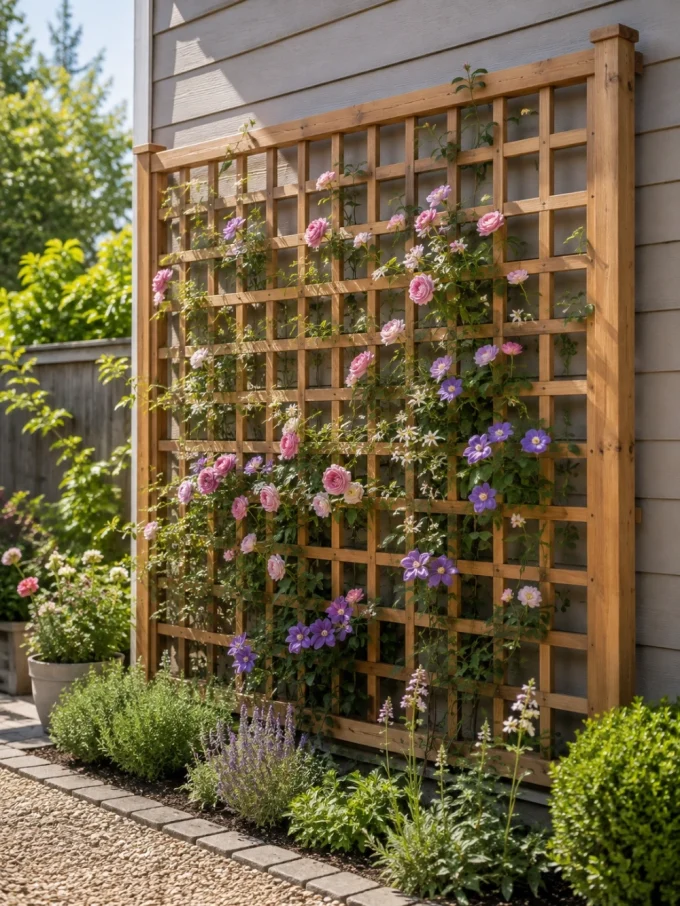
The classic wooden lattice trellis remains popular because it works with almost every garden style. Its simple grid pattern provides climbing plants with plenty of support points while allowing sunlight and airflow.
This design suits homeowners who want a timeless structure that blends into the garden rather than becoming the main feature.
Best fit:
- Climbing roses
- Clematis
- Jasmine
- Decorative flowering vines
Why it works:
The open grid encourages plants to spread naturally while keeping the structure visually light.
Important consideration:
Outdoor wood needs protection. Choose weather-resistant timber or apply a suitable exterior finish to reduce damage from moisture and sunlight.
Avoid this option if:
You plan to support extremely heavy vines without strengthening the frame.
2. Turn Scrap Wood Into a Ladder Trellis
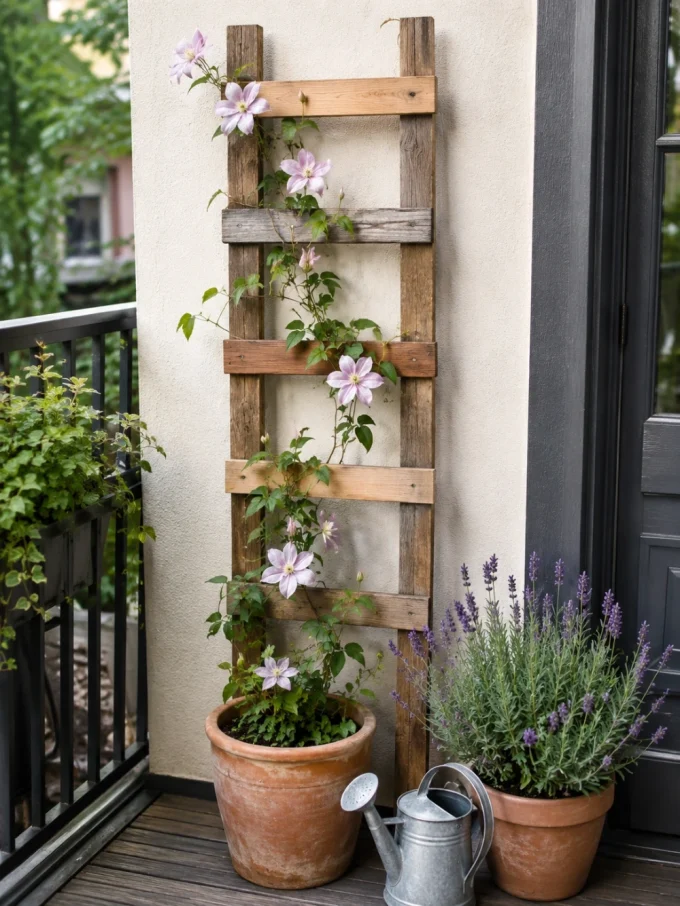
A ladder trellis offers one of the easiest DIY builds for beginners. Instead of creating a complicated frame, you can assemble vertical boards with horizontal supports to guide plants upward.
This approach works especially well when you want a functional project using leftover materials.
Best fit:
- Small gardens
- Container plants
- Lightweight climbing flowers
Why homeowners like it:
The design is easy to customize. You can make it narrow for a balcony or taller for a garden corner.
Before building:
Match the spacing between supports to the plant. Smaller vines need closer climbing points, while larger plants need stronger sections.
Avoid this option if:
You need a permanent structure for aggressive climbers.
3. Create a Bamboo Teepee Trellis
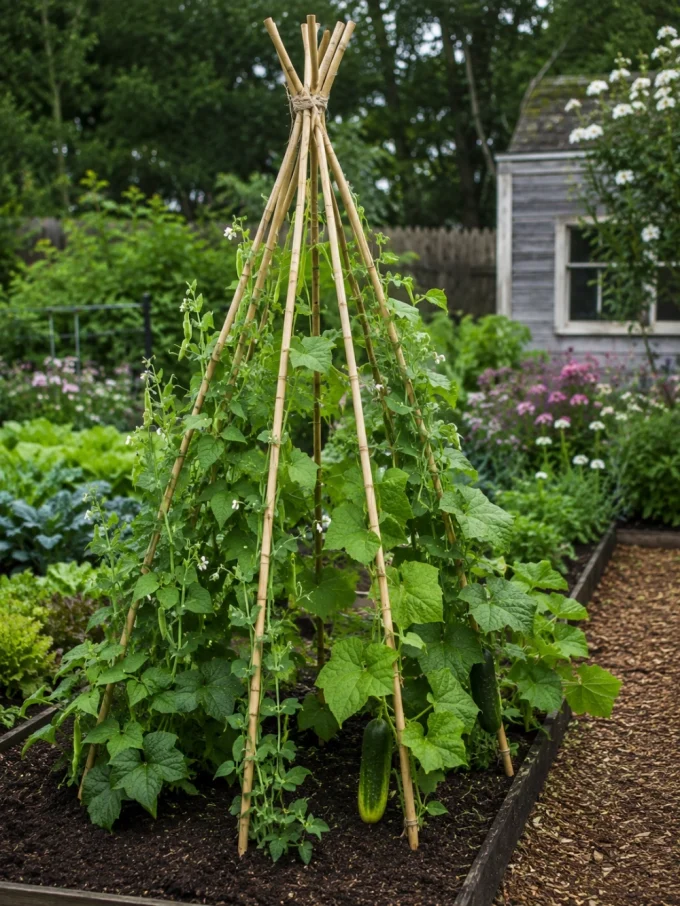
A bamboo teepee brings a natural, informal look to vegetable gardens and cottage-style landscapes.
The angled design allows plants to climb from multiple directions while keeping harvesting simple.
Best fit:
- Beans
- Peas
- Cucumbers
- Seasonal vegetable gardens
Why it works:
Bamboo provides a lightweight framework that is quick to build and easy to replace.
Important consideration:
Bamboo does not usually last as long as treated wood or metal, especially in wet climates.
Choose this when:
You want an affordable seasonal solution rather than a permanent garden feature.
4. Use a Wall-Mounted Trellis for Small Outdoor Spaces
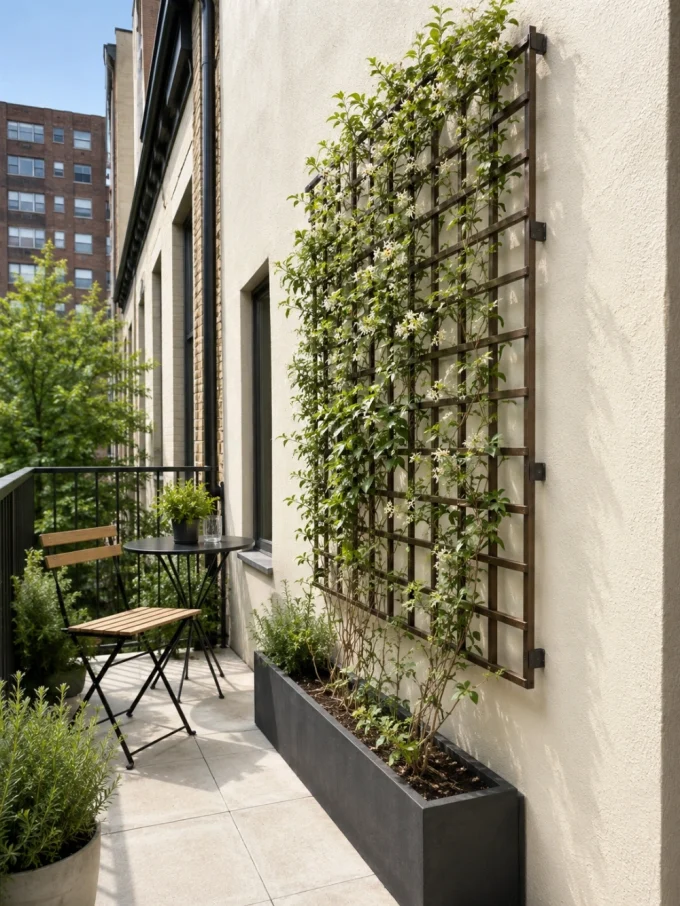
When floor space is limited, move your garden upward.
A wall-mounted trellis helps homeowners create greenery on patios, balconies, and narrow outdoor areas without taking away valuable walking space.
Best fit:
- Apartments
- Small patios
- Narrow gardens
- Courtyards
Why it works:
It uses unused vertical space while keeping the ground area open for furniture or movement.
Before installation:
Check the wall structure and leave enough space between the trellis and wall for airflow. Poor ventilation can create moisture problems.
Avoid this option if:
The wall receives little sunlight or cannot safely support mounting hardware.
5. Combine a Planter Box With a Trellis
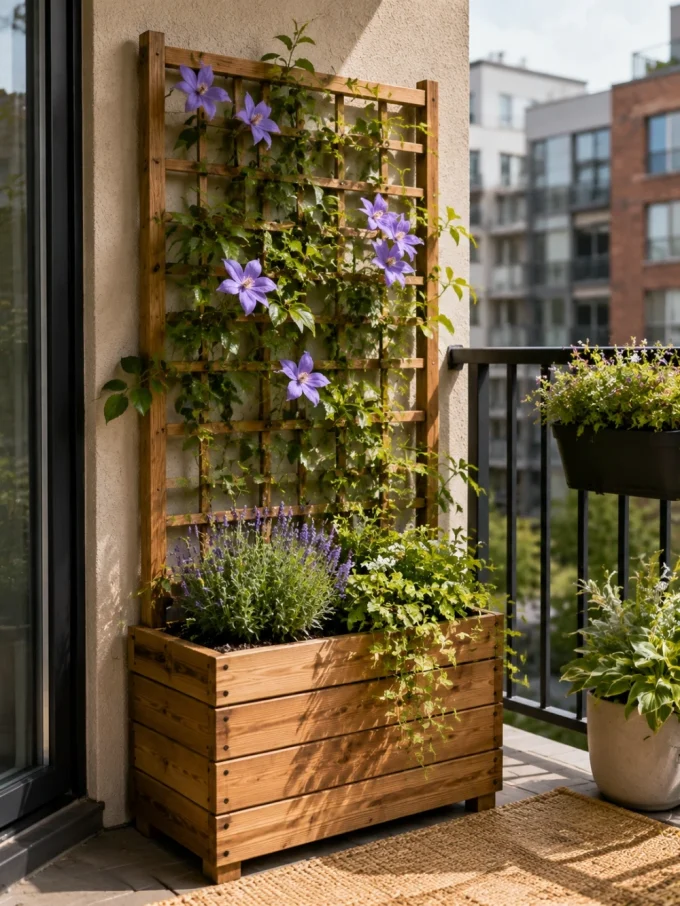
A planter trellis combines growing space and vertical support in one compact solution.
This option works especially well for renters and apartment owners who want greenery without permanent changes to their outdoor space.
Best fit:
- Balconies
- Small patios
- Rental homes
- Container gardens
Why it works:
The planter provides the growing base while the attached trellis guides plants upward instead of allowing them to spread across limited floor space.
Before building:
Consider the final weight. Wet soil, water, containers, and mature plants can become much heavier than expected.
Avoid this option if:
Your balcony has strict weight limits or limited sunlight.
6. Create a Narrow Side-Yard Vertical Garden
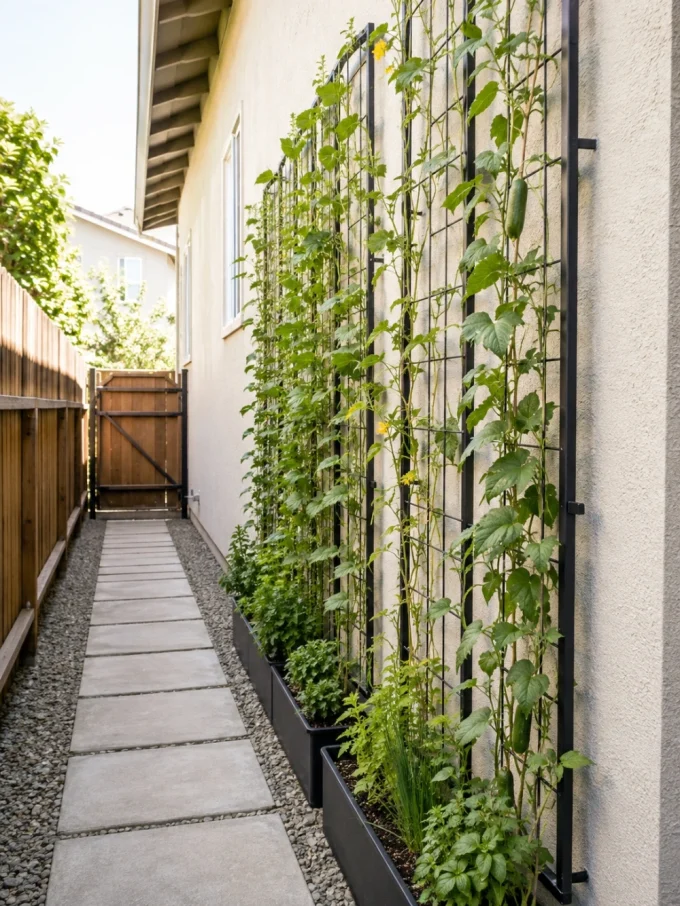
Many side yards become unused spaces because they are too narrow for traditional landscaping. A slim trellis can turn these areas into productive vertical gardens.
Best fit:
- Side passages
- Small urban gardens
- Narrow spaces beside homes
Why it works:
It adds greenery without reducing the available walking area.
Before installing:
Measure the mature plant spread, not only the trellis width. A narrow pathway can quickly become difficult to use once plants grow.
Avoid this option if:
The area has poor sunlight or frequent foot traffic.
7. Build a Privacy Screen Trellis
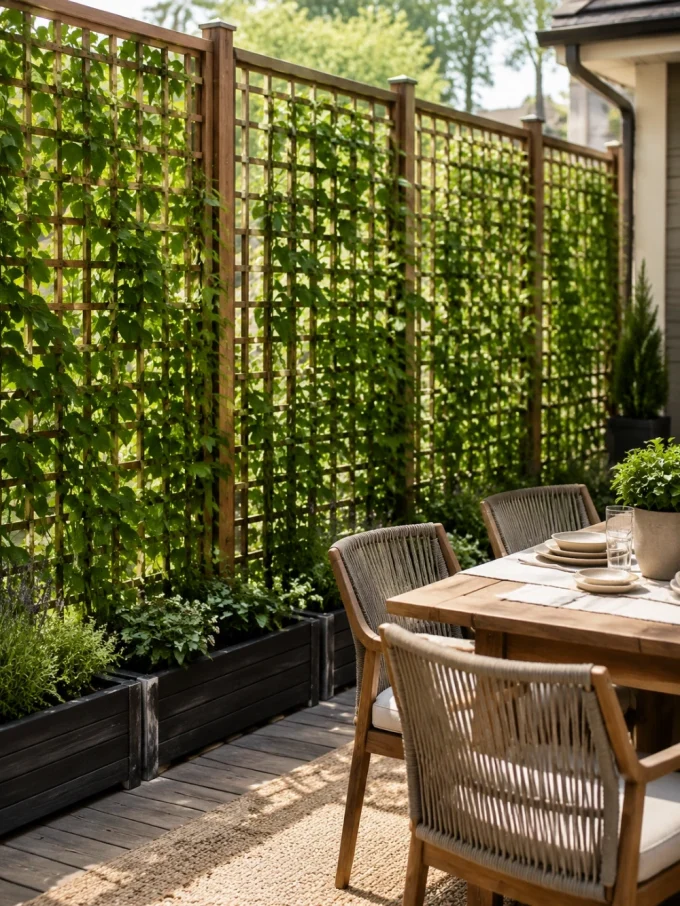
A privacy trellis creates separation while maintaining airflow and natural light.
Unlike solid fencing, it allows homeowners to introduce greenery gradually while keeping outdoor spaces connected.
Best fit:
- Patios
- Decks
- Outdoor dining areas
- Neighbor-facing gardens
Why it works:
It combines privacy with planting, creating a softer boundary than a traditional wall.
Important consideration:
A trellis does not provide instant privacy. The plants need time to mature and fill the structure.
Choose plants carefully:
Fast-growing plants may provide quicker coverage but often require more pruning and maintenance.
8. Create a Freestanding Garden Divider Trellis
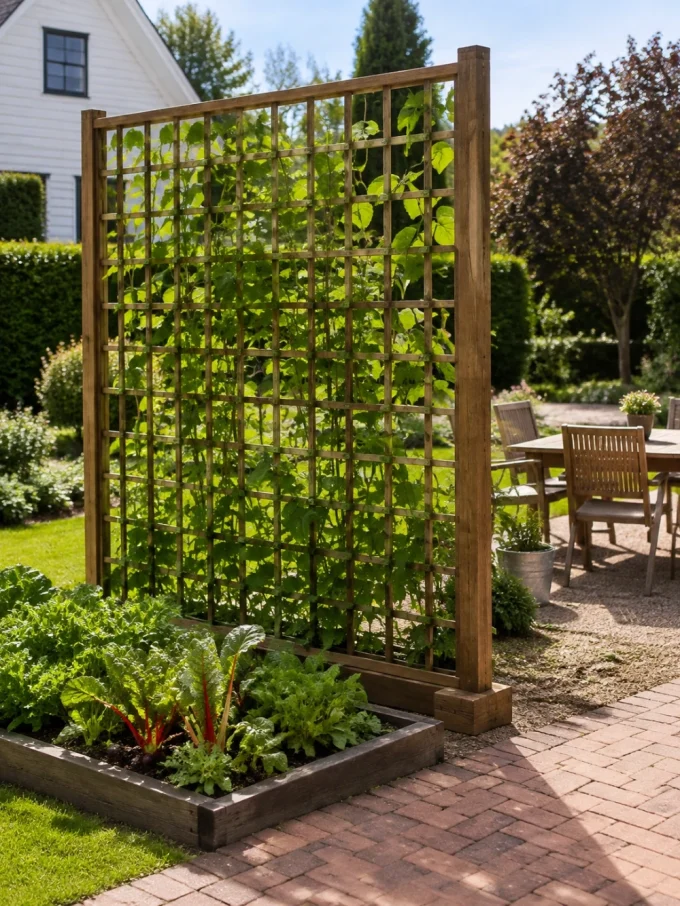
A freestanding trellis helps divide an open garden without building permanent walls. It works well when you want to create separate outdoor zones while keeping the space visually connected.
Instead of blocking the view completely, the structure adds a sense of separation through plants, texture, and height.
Best fit:
- Large gardens
- Outdoor seating areas
- Garden rooms
- Open landscapes
Why it works:
Use it to define spaces such as:
- Dining area
- Relaxation corner
- Vegetable garden
- Flower section
The trellis creates structure without making the garden feel smaller.
Before building:
Secure the base properly. Freestanding structures experience more wind pressure, especially after plants create a dense green surface.
Avoid this option if:
Your location has strong winds and you cannot provide stable anchoring.
9. Extend a Fence With a Trellis
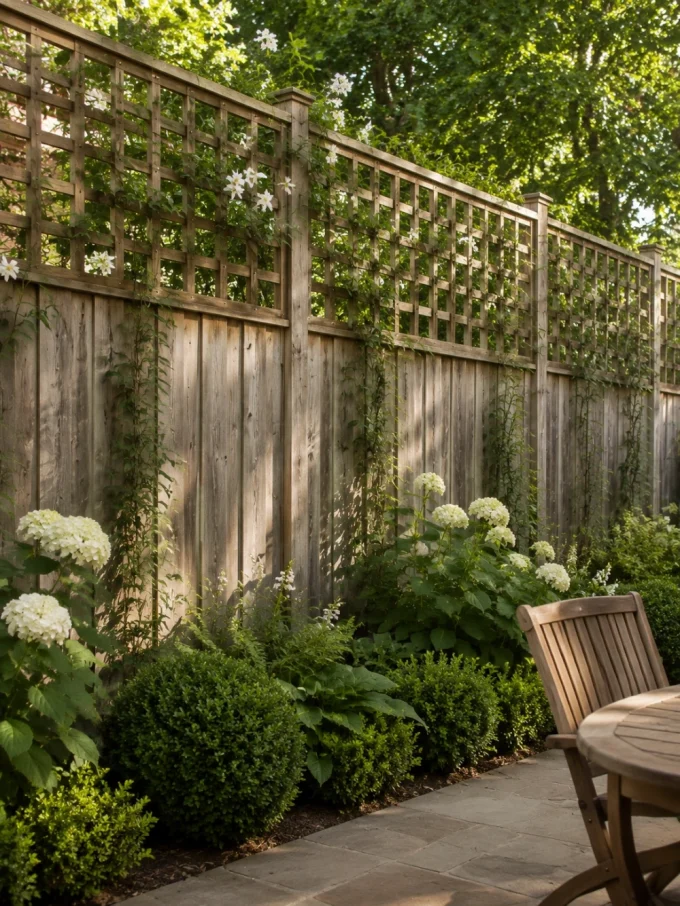
A plain fence can become a living garden feature by adding a trellis extension above it.
This approach improves privacy and introduces greenery without replacing the entire boundary.
Best fit:
- Backyard fences
- Older garden boundaries
- Privacy improvements
Why it works:
It solves two problems at once:
- Adds height
- Creates a growing surface for plants
Before installing:
Check the existing fence condition. A weak fence may not support extra weight from climbing plants or increased wind resistance.
Choose this when:
You want a noticeable upgrade without the cost and effort of rebuilding the entire fence.
10. Install a Cattle Panel Trellis for Heavy Climbers
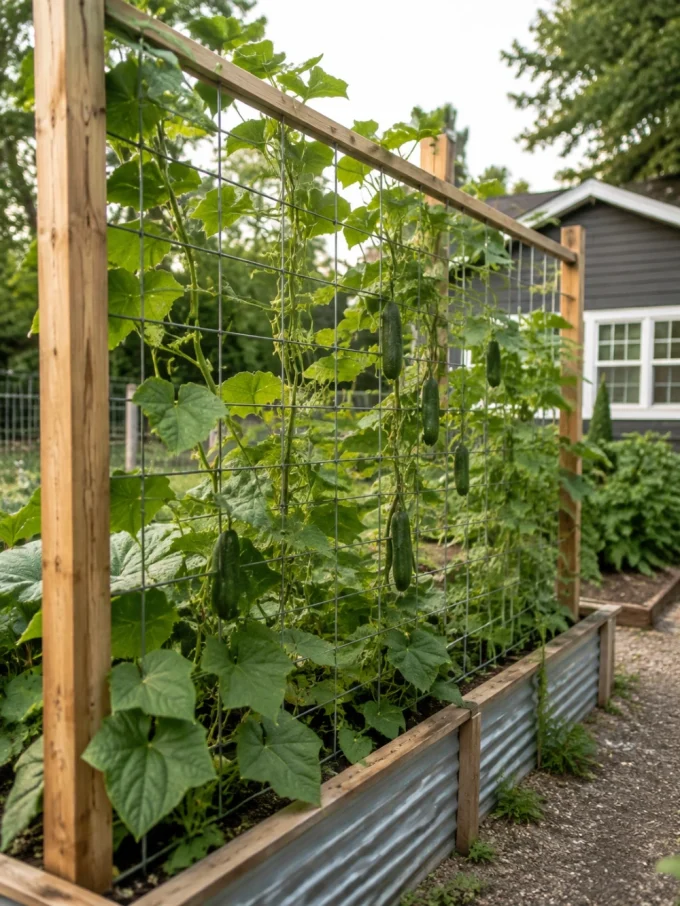
If your priority is growing productive plants, few DIY options provide the strength of a cattle panel trellis.
Originally designed for agricultural use, these rigid metal panels create a strong framework for plants that become heavy over time.
Best fit:
- Cucumbers
- Squash
- Grapevines
- Large climbing plants
Why it works:
The wide grid allows plants to spread while the metal structure handles more weight than many decorative garden trellises.
Important consideration:
The industrial appearance does not suit every outdoor style. Framing the panel with wood can make it feel more intentional in a residential garden.
Avoid this option if:
You want a delicate decorative feature rather than a functional growing system.
11. Build an A-Frame Vegetable Garden Trellis
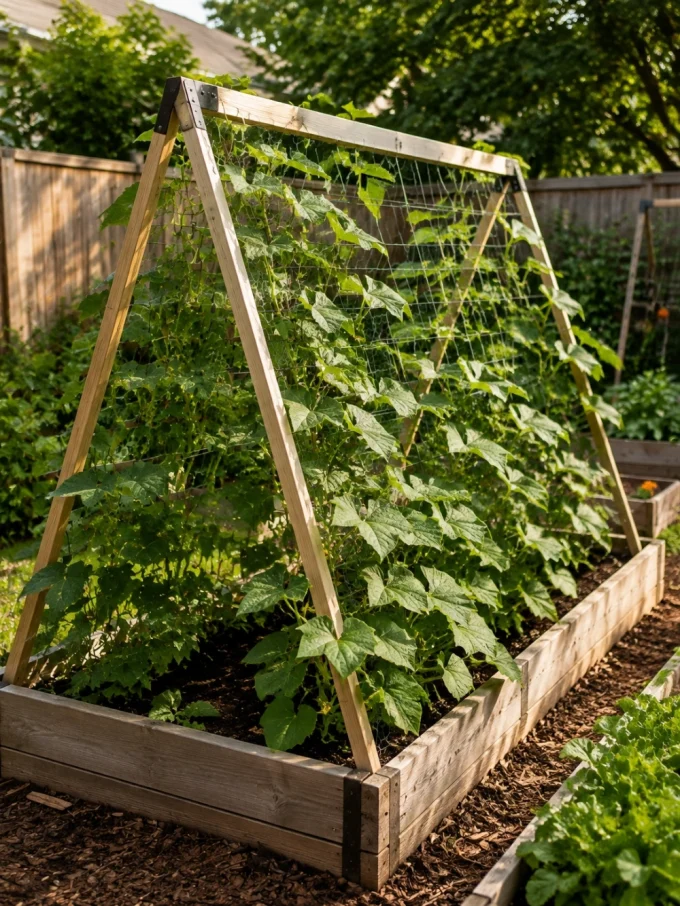
An A-frame trellis creates a tunnel-like growing structure that works especially well in productive gardens.
Instead of letting vegetables spread across the ground, it encourages upward growth and keeps harvesting areas easier to access.
Best fit:
- Raised beds
- Vegetable gardens
- Backyard food gardens
Why it works:
It increases growing space without expanding the garden footprint.
Works well for:
- Beans
- Peas
- Cucumbers
Before building:
Think about the mature plant size. A lightweight frame may support seedlings but fail once plants become heavy with fruit.
Avoid this option if:
Your garden has very limited floor space.
12. Create a Simple Wire and String Trellis
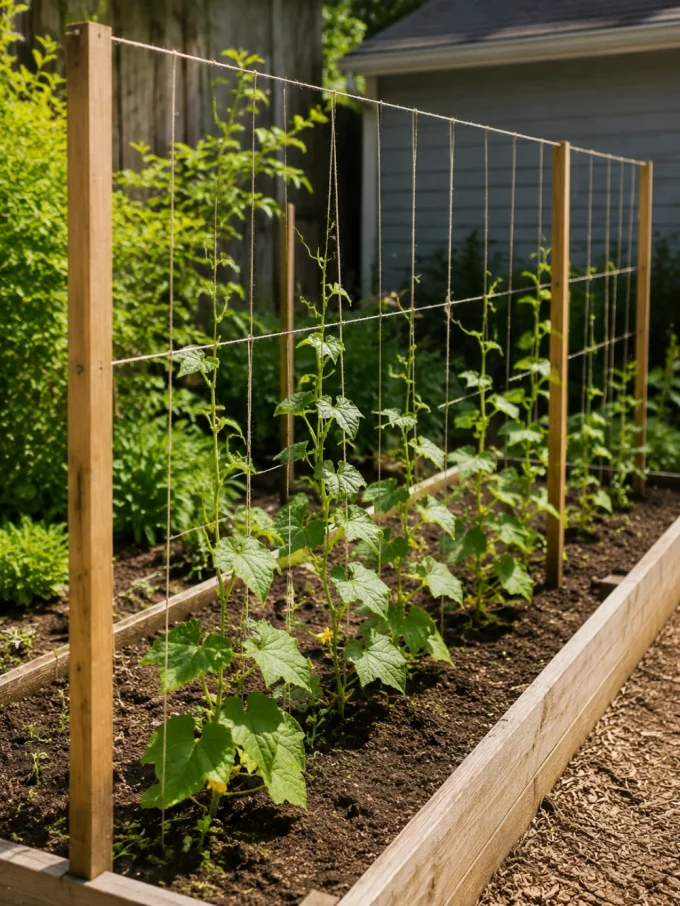
A wire or string trellis proves that effective garden solutions do not always require expensive materials.
This simple system guides plants upward while keeping the structure visually minimal.
Best fit:
- Seasonal vegetables
- Small gardens
- Budget DIY projects
Why it works:
It provides support without adding a large permanent structure.
Before choosing this design:
Understand that it requires more maintenance. Strings may need replacement, and seasonal plants often require adjustments as they grow.
Best value for:
Gardeners who want practical results with minimal spending.
13. Add a Modern Metal Grid Trellis
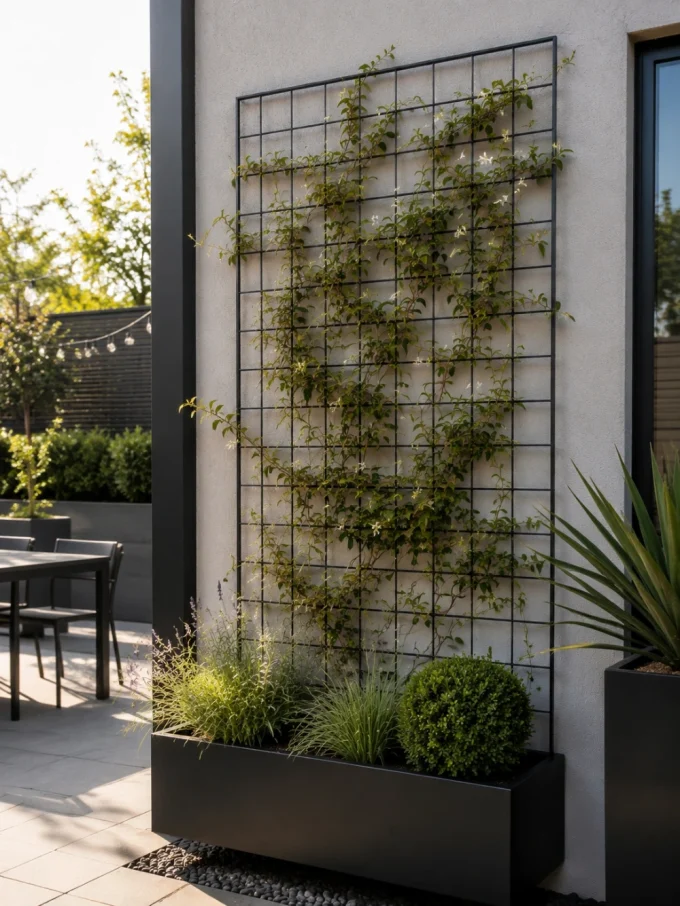
A metal grid trellis brings a cleaner architectural look to outdoor spaces. The straight lines work especially well with contemporary homes and minimalist gardens.
Best fit:
- Modern backyards
- Patio walls
- Outdoor feature areas
Why it works:
The contrast between structured metal and organic plants creates a balanced design.
Material tip:
Choose weather-resistant finishes. Powder-coated metal usually performs better outdoors than untreated surfaces.
Avoid this option if:
Your garden style depends heavily on rustic warmth unless you combine it with natural materials.
14. Design a Geometric Wooden Trellis
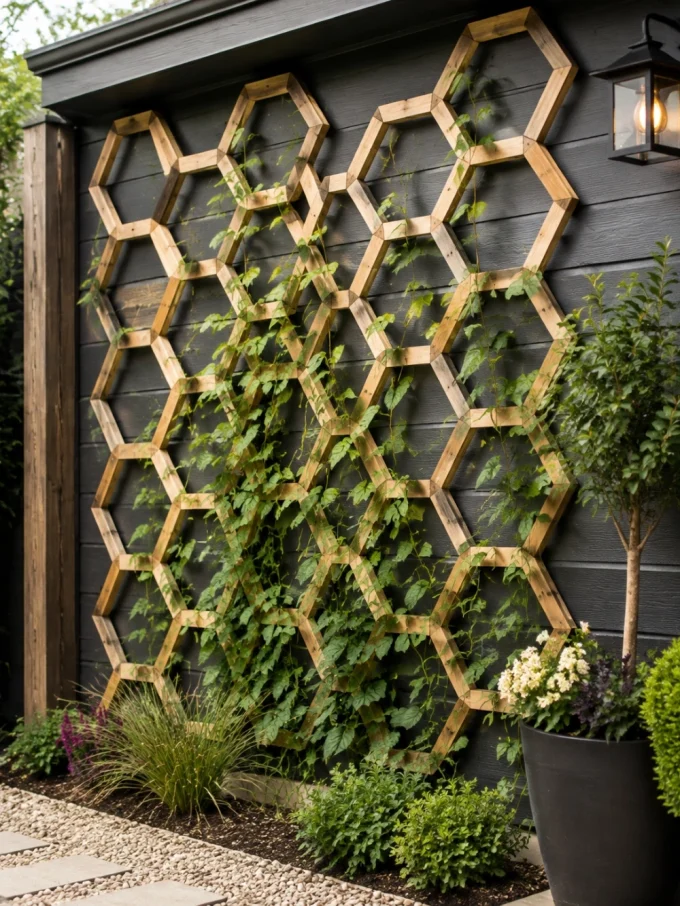
A geometric wooden trellis turns plant support into a decorative feature. Instead of traditional square grids, you can create patterns using diamonds, hexagons, or custom layouts.
Best fit:
- Feature walls
- Modern gardens
- Decorative outdoor spaces
Why it works:
The pattern creates visual interest even before plants cover the structure.
Before building:
Do not sacrifice strength for appearance. Complex designs require accurate cuts and strong connections.
Choose this when:
You want the trellis itself to contribute to the garden design.
15. Frame a Garden Entrance With an Arch Trellis
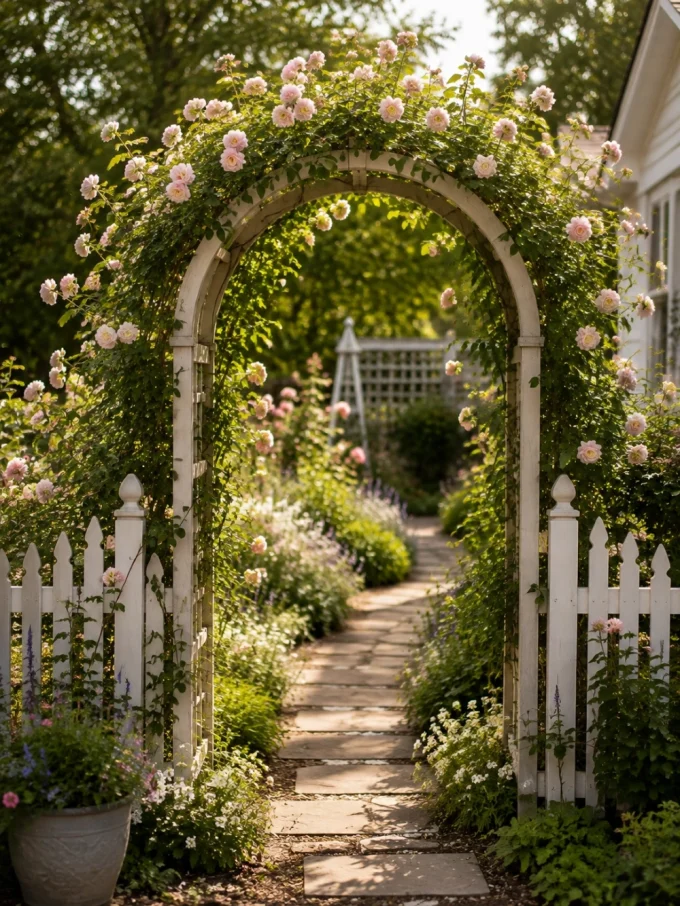
A garden arch trellis creates a transition point between outdoor areas and gives pathways a stronger sense of arrival.
Instead of simply connecting two spaces, it creates a visual moment.
Best fit:
- Cottage gardens
- Flower paths
- Garden entrances
Why it works:
The height draws attention upward and gives climbing plants a natural place to create a living frame.
Before installing:
Consider plant weight. Some climbers become much heavier as they mature and require stronger structures.
Avoid this option if:
The pathway is narrow and plant growth could interfere with movement.
16. Repurpose Reclaimed Wood Into a Trellis
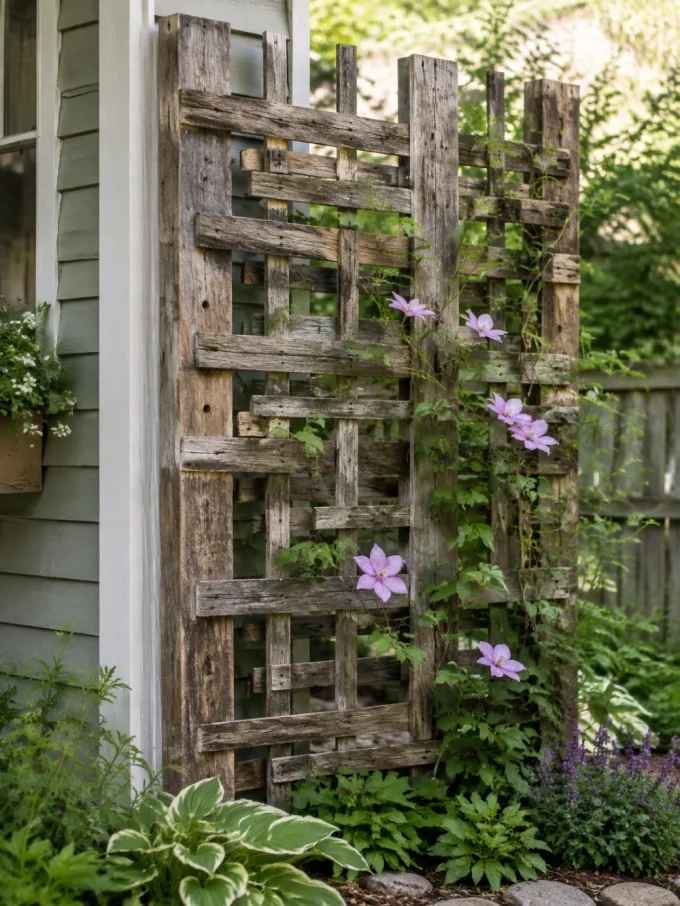
Reclaimed wood brings warmth, texture, and character to outdoor spaces. Instead of buying new materials, you can transform old boards into a trellis with a more natural, handcrafted appearance.
Best fit:
- Rustic gardens
- Cottage-style landscapes
- Sustainable DIY projects
Why it works:
The imperfections in reclaimed wood create visual interest that fits well with informal gardens and natural planting styles.
Before building:
Inspect every piece carefully. Avoid wood with severe rot, structural weakness, or unknown chemical treatments.
Choose this option when:
You want a unique garden feature with personality rather than a perfectly uniform finish.
17. Turn an Old Ladder Into a Vertical Plant Display
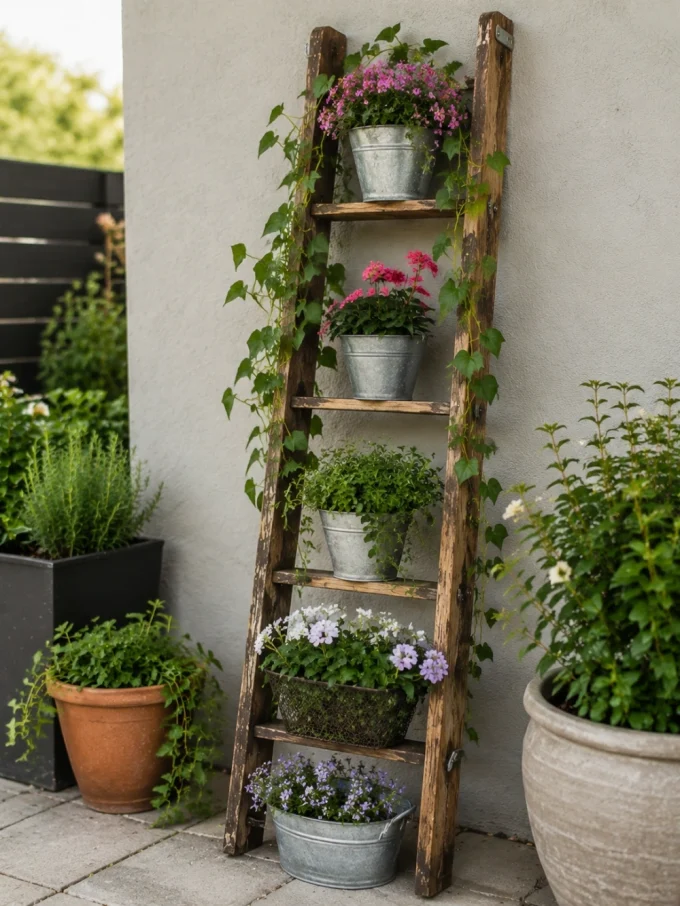
An unused wooden ladder can become a simple trellis alternative with very little modification.
Instead of building a structure from scratch, the ladder already provides multiple levels for climbing plants, hanging containers, and decorative greenery.
Best fit:
- Small gardens
- Patios
- Container plant displays
- Creative DIY projects
Why it works:
The vertical shape makes it useful in areas where floor space is limited.
Before using it:
Secure the ladder properly. Wind, uneven ground, and plant weight can make an unsecured ladder unstable.
Avoid this option if:
You need support for large, heavy climbing plants.
18. Build a Natural Branch Trellis
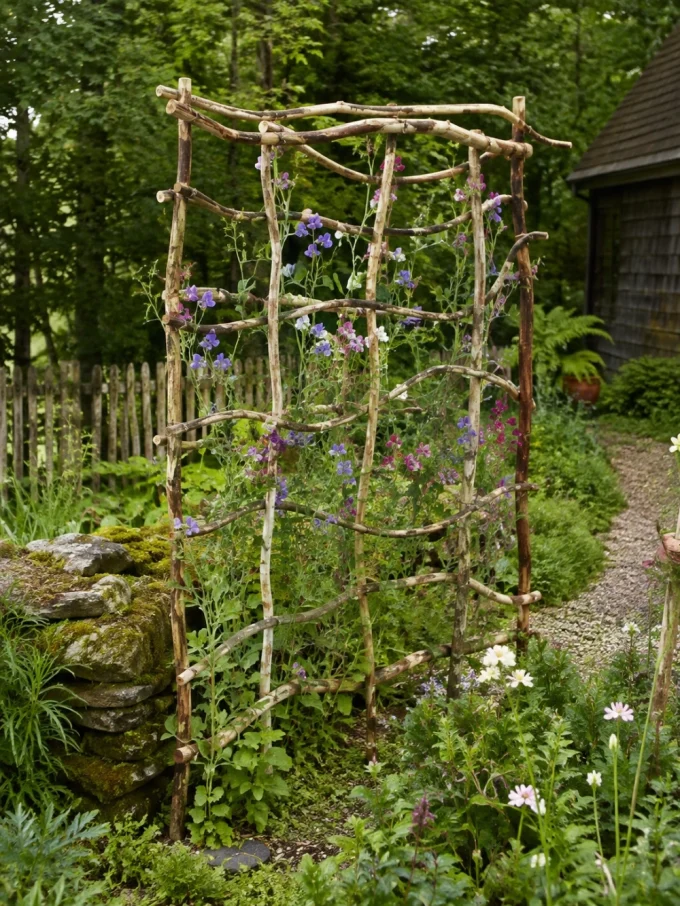
Branches collected from suitable sources can create an organic trellis that blends naturally into garden settings.
This style works especially well when you want your outdoor space to feel less structured and more connected to nature.
Best fit:
- Woodland gardens
- Cottage landscapes
- Natural outdoor designs
Why it works:
The irregular shapes create a handmade appearance that manufactured materials often cannot replicate.
Before building:
Choose strong, healthy branches and understand that natural materials usually have a shorter lifespan than treated wood or metal.
Choose this option when:
You prefer character and natural texture over long-term durability.
19. Create a Pergola-Style Trellis Feature
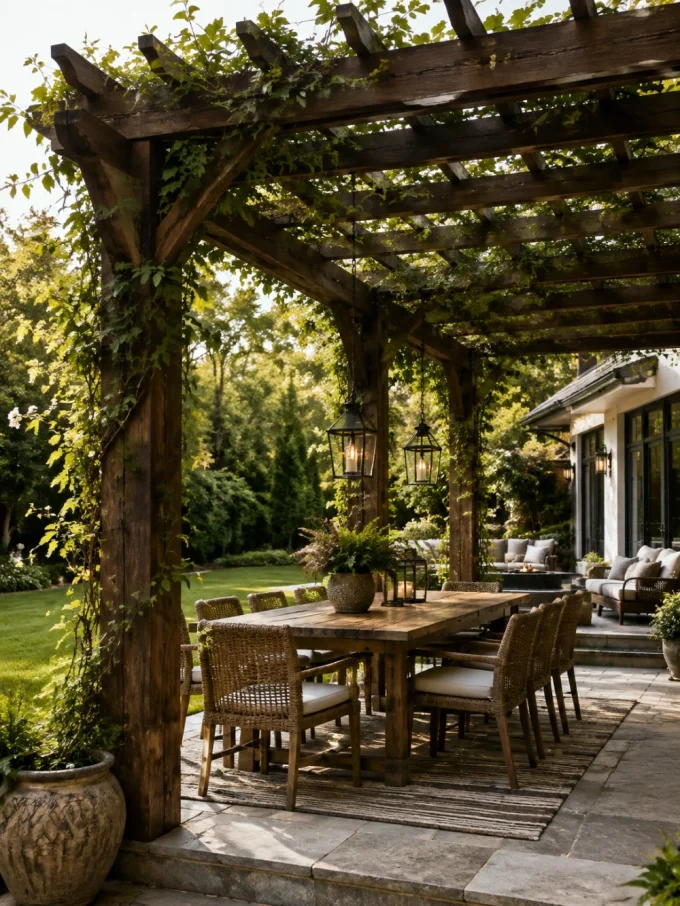
A pergola-style trellis works when you want your climbing plants to become part of an outdoor living space.
Instead of only supporting greenery, it helps define an area for relaxing, dining, or entertaining.
Best fit:
- Large backyards
- Outdoor seating areas
- Dining spaces
Why it works:
The overhead and vertical structure creates a stronger connection between architecture and landscape.
Before building:
Plan the size carefully. Large structures need to match the scale of the home and outdoor area. Consider:
- Sun exposure
- Drainage
- Plant growth
- Structural strength
Avoid this option if:
Your outdoor space is small and the structure would overwhelm the area.
20. Add a Privacy Trellis Around Outdoor Seating
A seating-area trellis can make patios and decks feel more comfortable by creating a sense of enclosure without completely blocking the surroundings.
Best fit:
- Decks
- Patios
- Outdoor lounges
Why it works:
It balances privacy and openness. Plants soften the boundary while maintaining airflow and natural light.
Before installing:
Study the actual sightlines around the seating area. Privacy depends on where people view the space from, not just trellis height.
Works especially well with:
- Climbing flowers
- Evergreen plants suitable for your climate
- Decorative vines
21. Design an Architectural Trellis Wall
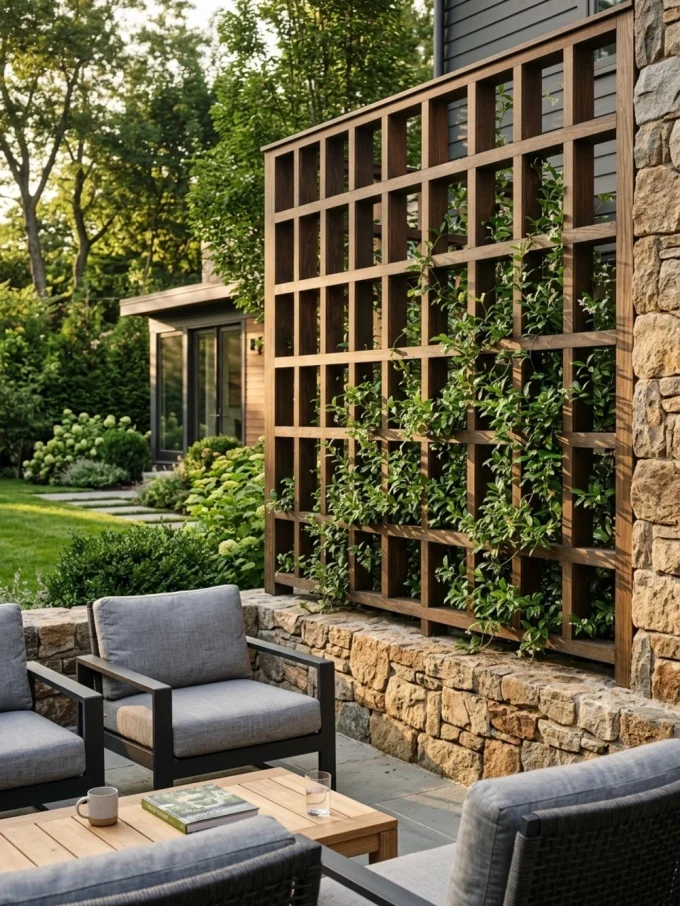
An architectural trellis wall turns a simple garden structure into a major outdoor design feature.
This approach works best when the trellis becomes part of the overall landscape rather than a temporary plant support.
Best fit:
- Contemporary homes
- Large gardens
- Outdoor entertainment areas
Why it works:
It creates a strong visual anchor and gives climbing plants a permanent framework.
Before building:
Think long term. Consider whether the material, placement, and style will still suit your home several years from now.
Avoid this option if:
You prefer changing your garden layout frequently.
Choosing the Right Trellis Material
The material affects appearance, durability, maintenance, and cost.
Wood
Best for:
- Warm garden styles
- Cottage landscapes
- Traditional homes
Advantages:
- Natural appearance
- Easy to customize
- Beginner-friendly
Watch for:
- Moisture damage
- Rot
- Regular maintenance
Metal
Best for:
- Modern designs
- Strong plant support
- Long-term structures
Advantages:
- High strength
- Clean appearance
- Good for heavy climbers
Watch for:
- Rust protection
- Higher upfront cost
Bamboo
Best for:
- Natural gardens
- Seasonal projects
Advantages:
- Affordable
- Easy to build with
- Organic appearance
Watch for:
- Shorter lifespan
- Weather exposure
Wire Systems
Best for:
- Vegetable gardens
- Low-cost solutions
Advantages:
- Minimal cost
- Easy installation
Watch for:
- Less decorative appeal
- Regular adjustments
DIY Trellis Cost Guide
Your budget should match the role of the trellis.
| Type | Cost Level | Best Use |
|---|---|---|
| String/wire system | Low | Seasonal plants and vegetables |
| Bamboo structure | Low | Natural garden projects |
| Wooden lattice | Medium | Decorative climbing plants |
| Metal grid | Medium–High | Modern and durable designs |
| Large architectural trellis | High | Permanent outdoor features |
Spend more when the trellis needs to support heavy plants, handle difficult weather, or become a permanent part of your landscape.
Save money when you need a seasonal growing solution or a simple support system.
Best Plants for DIY Trellises
The plant you choose should match the strength and purpose of your trellis.
Lightweight Flowering Climbers
Choose lighter climbers for decorative structures.
Good options include:
- Clematis
- Sweet peas
- Morning glory
These work well with:
- Wooden lattice
- Decorative metal frames
- Small garden trellises
Heavy Climbers
Large plants require stronger support.
Examples:
- Grapevines
- Wisteria
- Mature climbing roses
Use:
- Strong wood frames
- Metal structures
- Deep anchoring systems
A lightweight decorative trellis may look suitable at first but fail once the plant reaches maturity.
Vegetable Climbers
Productive gardens benefit from strong but practical designs.
Good choices:
- Cucumbers
- Beans
- Peas
- Some squash varieties
Suitable trellis types:
- A-frame structures
- Cattle panels
- Wire systems
Privacy-Focused Plants
If your goal is screening, choose plants based on:
- Growth speed
- Mature size
- Seasonal coverage
- Climate suitability
Fast-growing plants provide quicker coverage but often require more pruning.
Before You Build: Test Your Trellis Location
A common mistake is choosing the trellis design first and the location second.
Before installation, check:
1. Sunlight
Most climbing plants need enough light to grow well.
Observe the area during different times of the day before committing.
2. Available Space
Mark the planned trellis footprint with tape or temporary markers.
Check:
- Walking clearance
- Furniture placement
- Plant spread
A structure that fits today may become crowded after plants mature.
3. Support and Anchoring
Ask:
- Is the wall strong enough?
- Can the posts handle wind?
- Will the base remain stable?
Plant growth adds weight and wind resistance over time.
4. Maintenance Access
Leave enough space for:
- Pruning
- Watering
- Cleaning
- Repairs
A beautiful trellis becomes frustrating if you cannot reach the plants easily.
Common DIY Trellis Mistakes to Avoid
Choosing Appearance Over Function
The most attractive design is not always the best choice.
A decorative trellis may fail if it cannot support your chosen plant.
Underestimating Plant Weight
Small plants become large structures over time.
Always plan for mature growth, not the size of the plant when you first install it.
Using Materials Without Considering Weather
Outdoor materials face:
- Rain
- Sun exposure
- Temperature changes
- Humidity
Choose materials based on your local conditions.
Installing Without Proper Anchoring
A weak foundation can ruin an otherwise good design.
Secure installation matters, especially for tall structures and privacy screens.
Final Thoughts
The best DIY trellis ideas do more than add greenery. They help outdoor spaces become more functional, comfortable, and visually connected to the home.
Whether you need a simple vegetable support, a privacy solution, or an architectural garden feature, choose the design based on what your space actually needs.
Think about the plant, the location, the material, and the maintenance before building. A well-planned trellis will not only look better when it is installed—it will continue working as your garden grows.