
A rustic walk-in shower should feel warm, grounded, and natural. Not fake cabin-themed. Not dark and heavy. Not like someone covered every surface in rough stone and hoped for the best.
The best rustic walk in shower ideas use texture carefully. Stone, wood-look tile, warm metal, handmade-looking tile, pebble floors, and simple glass can all work beautifully, but only when the shower still feels clean, safe, and easy to live with.
That is the balance.
A rustic shower should remind you of natural materials without becoming difficult to maintain. It should feel relaxed, but not unfinished. Cozy, but not cramped. Characterful, but still practical for everyday use.
These rustic walk in shower ideas are designed for real bathrooms: small bathrooms, farmhouse bathrooms, master baths, cabin-style spaces, and remodels where the shower needs to look beautiful and function well.
1. Start With Stone, But Do Not Overload the Shower
Stone is one of the strongest rustic shower materials. It adds texture immediately.
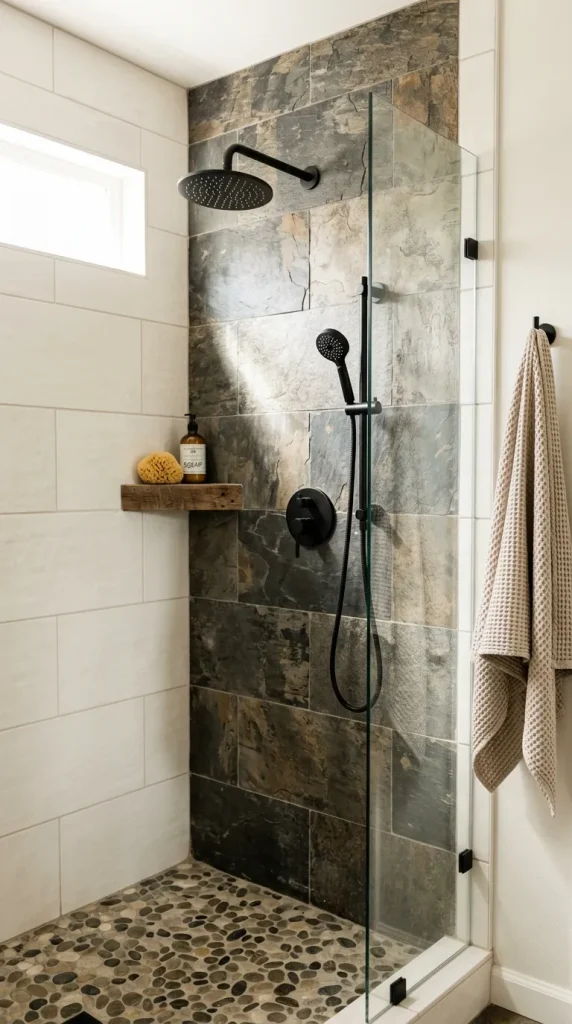
A stone accent wall behind the shower head can make the whole walk-in shower feel more grounded. Slate, travertine, limestone-look tile, stacked stone, or textured porcelain can all create a natural look.
But too much stone can make the shower feel dark and cave-like, especially in a small bathroom. If the walls, floor, bench, and niche are all heavy stone, the space may feel crowded instead of cozy.
A better approach is to use stone as the feature and keep the surrounding tile simpler. For example, use a stone-look back wall with warm white side walls, a simple shower floor, and matte black or oil-rubbed bronze fixtures.
That gives you rustic charm without visual weight.
2. Use Wood-Look Tile Instead of Real Wood
Real wood inside a shower is usually a problem. Water, steam, soap, and daily cleaning are not kind to it.
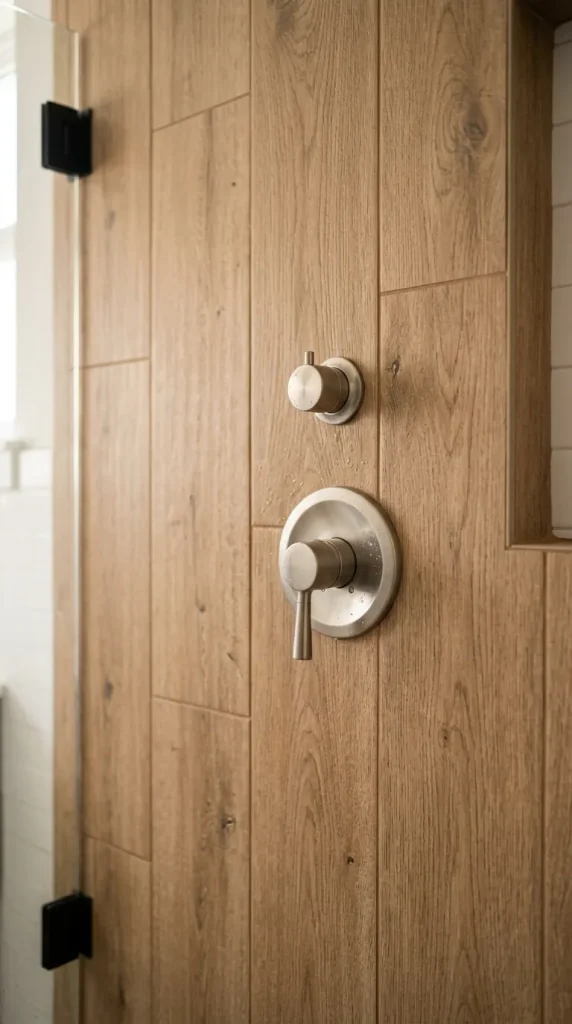
Wood-look porcelain tile is a much better choice. It can give the warmth of timber without the same moisture concerns. Use it on one wall, inside a niche, on a bench face, or as a vertical accent behind the shower controls.
The trick is choosing a realistic tone. Avoid orange fake-wood tile or overly glossy planks. Look for soft oak, weathered brown, driftwood, or warm walnut tones with a matte finish.
Wood-look tile works especially well in modern farmhouse walk in shower ideas because it softens white tile, black fixtures, and glass panels.
Keep the grout color close to the tile color so it feels more natural and less striped.
3. Try a Pebble Floor for Texture and Warmth
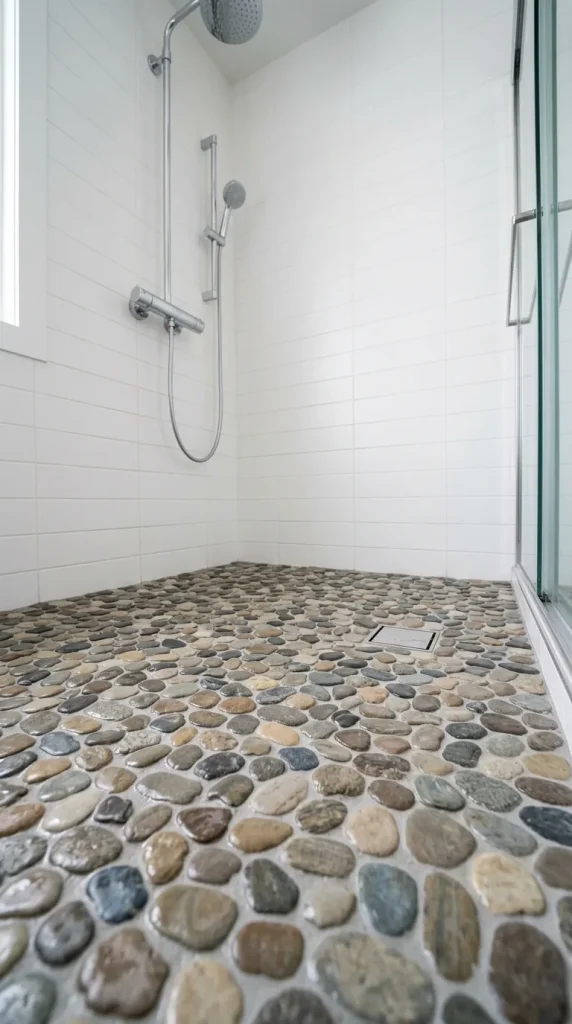
A pebble floor can make a rustic walk-in shower feel more natural underfoot.
River rock, flat pebble mosaic, and stone-look pebble tiles all bring texture to the shower floor. They pair well with white walls, warm wood-look tile, slate, travertine, and bronze fixtures.
But pebble floors need careful installation. Too much grout can be harder to clean. Uneven stones can feel uncomfortable. Small rounded pebbles may also collect soap residue if the slope and drainage are not right.
Choose flatter pebble mosaics if comfort matters. Use a skilled installer. And keep the rest of the shower calmer so the floor can be the feature.
A pebble floor is beautiful, but it should not be chosen only for looks.
4. Add a Built-In Bench That Feels Rustic, Not Bulky
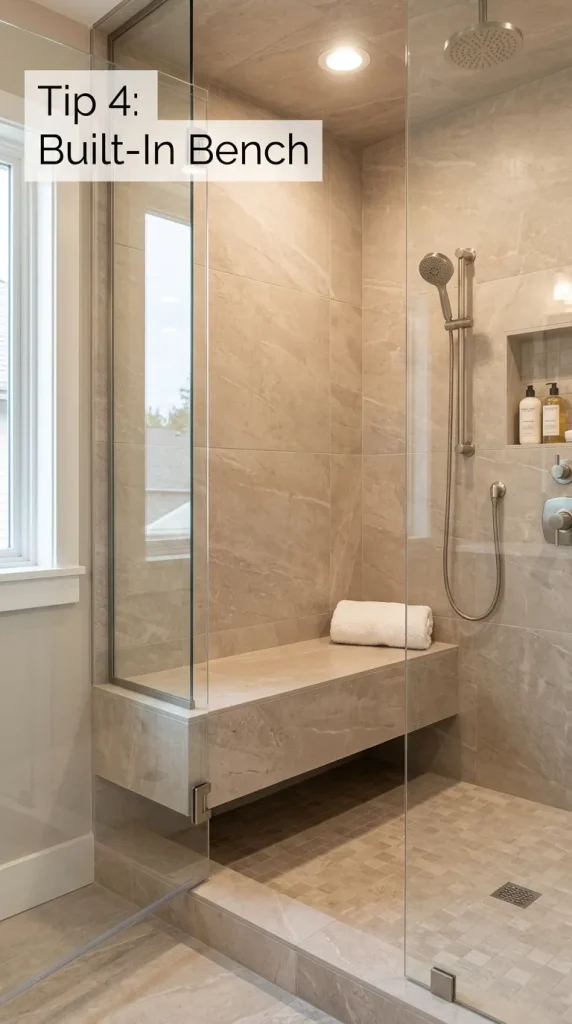
A walk-in shower with a bench can look high-end and feel practical.
For a rustic style, the bench can be tiled in stone-look porcelain, warm neutral tile, or the same tile as the shower wall. A floating bench can feel lighter in a small bathroom. A full built-in bench feels more solid and works well in a larger master bathroom.
The mistake is making the bench too chunky. In a small rustic shower, a heavy bench can eat up floor space and make the shower feel tight.
Keep the bench simple. Let the tile or stone texture do the work.
If you are planning the shower for long-term comfort, think about a bench, handheld shower, slip-conscious floor, and properly installed grab bars. These details can still look warm and rustic when the finishes match the rest of the bathroom.
5. Use a Niche Instead of Cluttered Shower Shelves
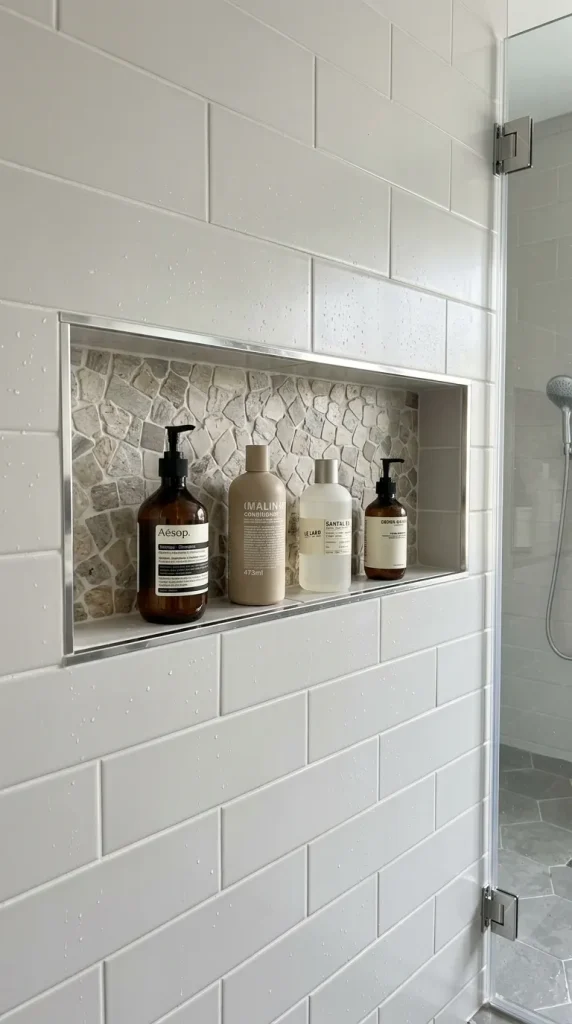
Rustic showers can get messy fast if every bottle sits on the floor or hangs from a metal caddy.
A built-in niche keeps shampoo, soap, and daily products contained. It also looks cleaner than bulky corner shelves.
For a rustic shower niche, use a different tile inside the niche to create a small design moment. You could use pebble tile, wood-look tile, handmade-look tile, or a darker stone accent. Just do not make every detail a feature.
The niche should feel intentional, not busy.
Place it where it is easy to reach but not the first thing you see if the products are colorful. A side wall often works better than the main feature wall.
6. Choose Warm Metal Fixtures
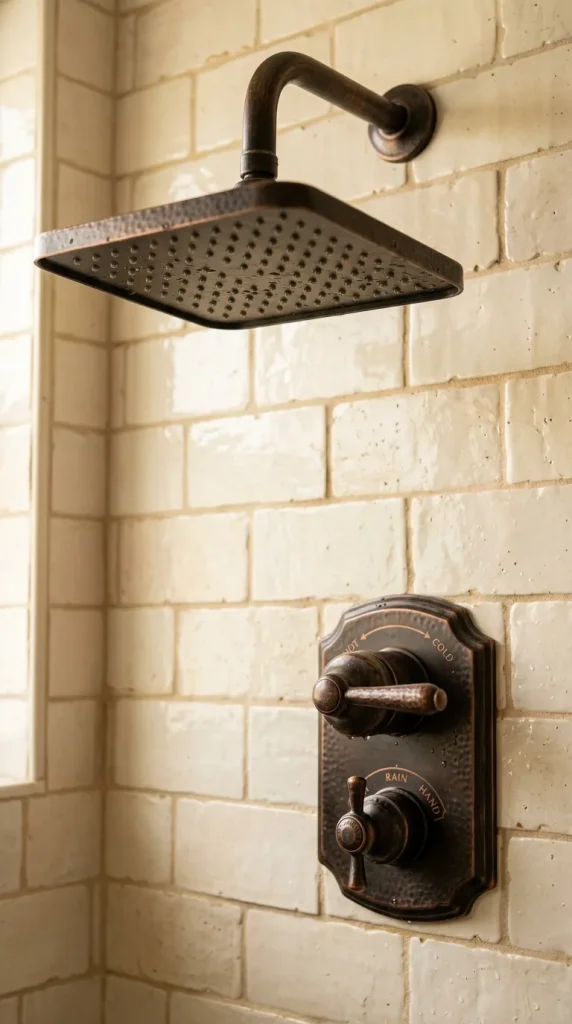
Chrome can work in rustic bathrooms, but warmer metals usually fit the style better.
Matte black, oil-rubbed bronze, aged brass, brushed nickel, and dark gunmetal all pair well with rustic tile. Matte black feels more modern farmhouse. Bronze feels warmer and more traditional. Brushed brass adds a softer, slightly elevated look.
Do not mix too many finishes in a small bathroom. One main fixture finish is usually enough. If you use matte black for the shower head, keep the drain, door hardware, towel hooks, and nearby lighting close in tone.
Rustic walk in shower ideas look more polished when the metal finishes feel deliberate.
7. Keep Doorless Rustic Showers Open but Controlled
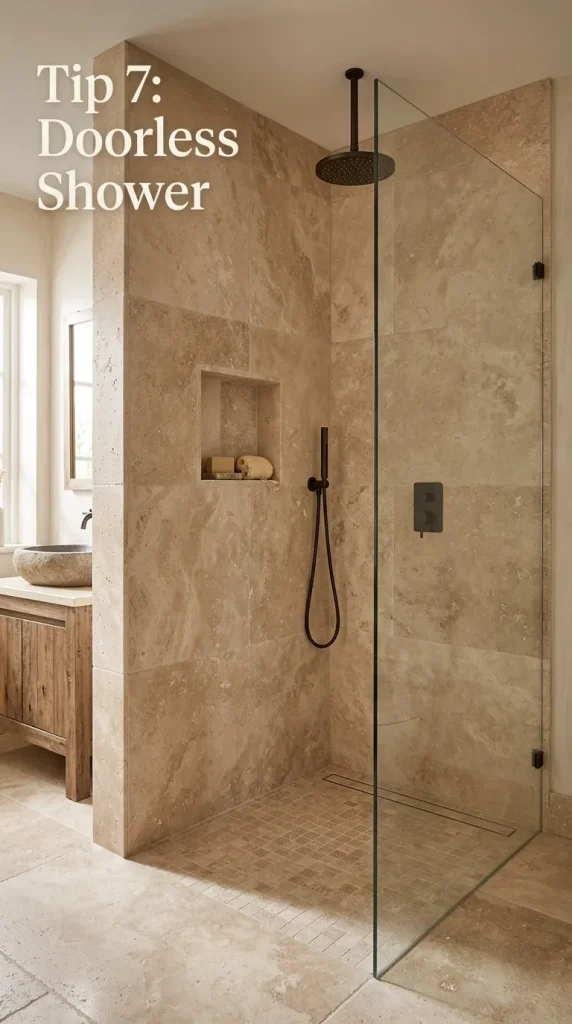
A doorless walk-in shower can look beautiful in a rustic bathroom, especially with stone tile, a half wall, or a glass panel.
But doorless does not mean careless. Water still needs to stay inside the shower area. The shower head direction, floor slope, drain placement, and opening width all matter.
In small bathrooms, a half wall with glass above can be more practical than a fully open shower. It gives the rustic style some structure and helps control splash.
If the bathroom is cold, think twice before going fully doorless. Open showers can feel draftier, especially in winter or in bathrooms with poor heating.
A doorless rustic shower works best when the layout is planned around water movement, not just the photo.
8. Use White Tile to Keep Rustic Details Fresh
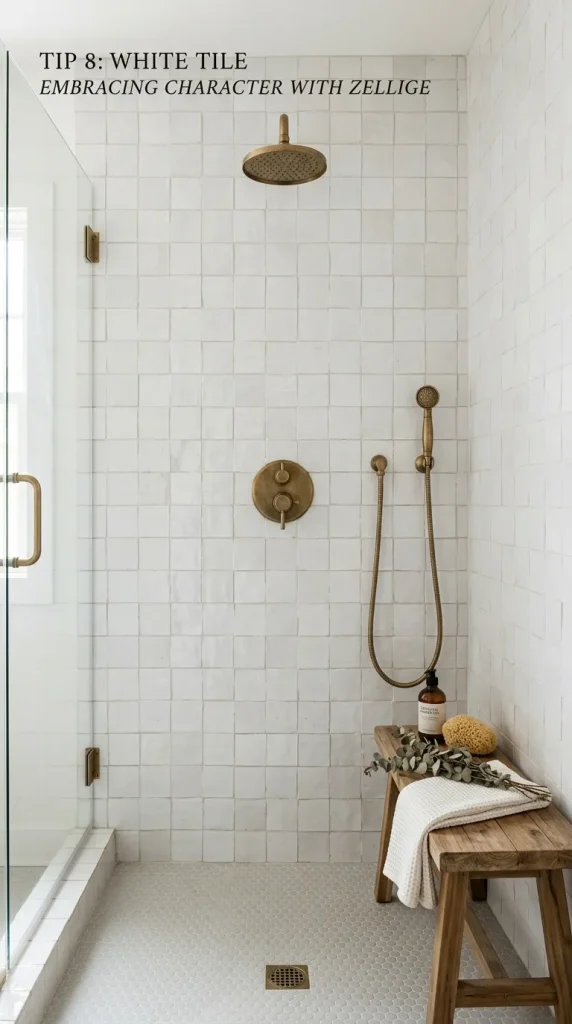
Rustic does not have to mean dark.
White subway tile, handmade-look white tile, zellige-style tile, or warm ivory tile can make a rustic shower feel fresh and bright. Then you can add rustic character through the floor, fixtures, bench, or niche.
This is a smart choice for small bathrooms. White tile keeps the shower open, while stone, wood-look tile, or bronze hardware adds warmth.
The danger is choosing tile that is too flat and perfect. A slightly uneven, handmade-looking surface often works better for rustic style than a glossy, perfectly smooth wall tile.
White tile plus natural texture is one of the safest rustic walk in shower ideas for small bathrooms.
9. Try a Half Wall for Privacy and Texture
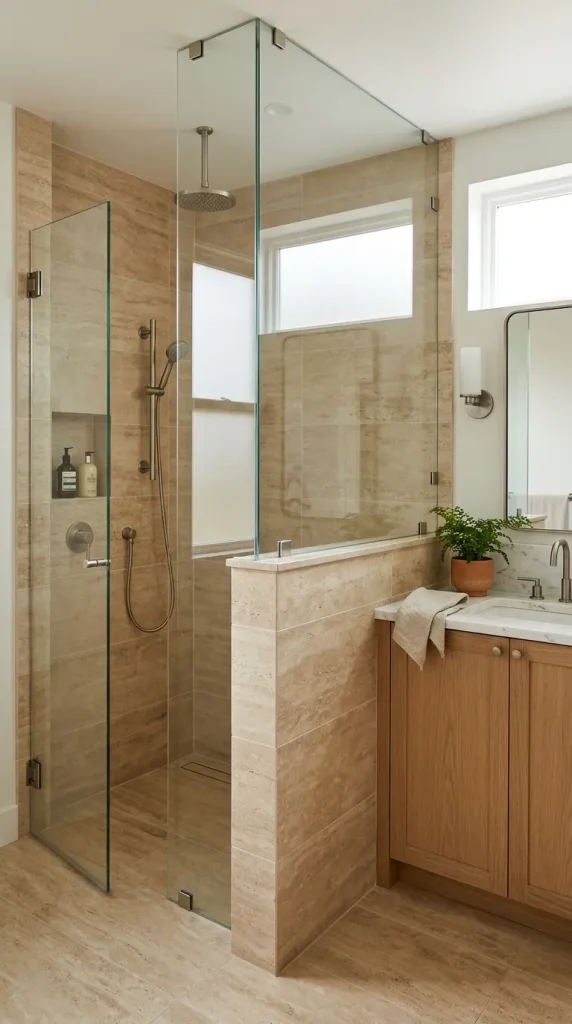
A half wall can make a walk-in shower feel more built-in.
It gives privacy, helps control water, and creates a place to add rustic texture. You can tile the half wall in stone, wood-look porcelain, or the same warm neutral tile used on the shower walls.
A half wall also works well when you want a doorless shower but still need some separation from the toilet or vanity.
Do not make the wall too thick or too dark in a small bathroom. A heavy stone half wall can feel like a barrier. A lighter tiled half wall with glass above often feels more open.
10. Add Warm Lighting Around the Shower
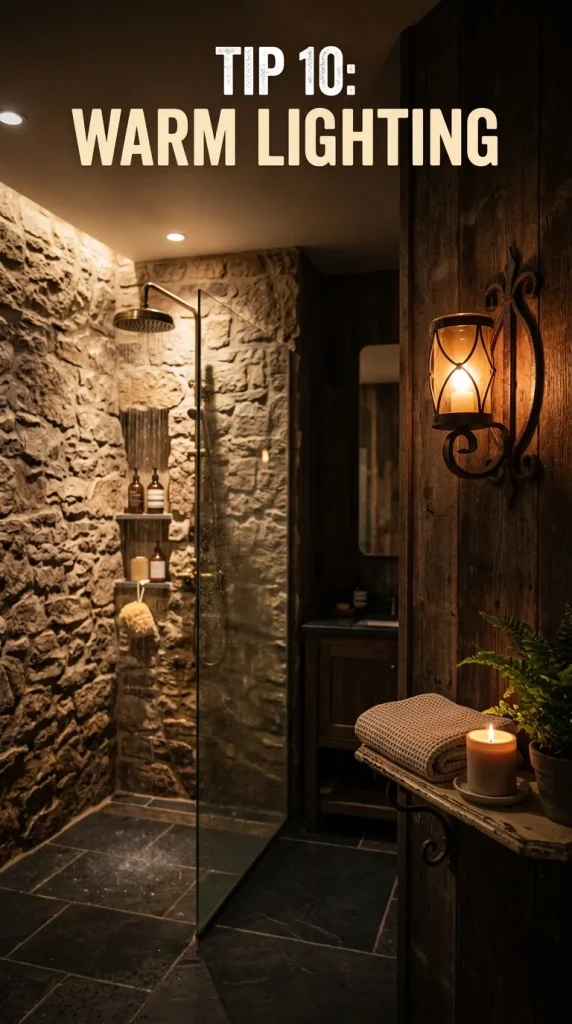
Lighting matters more in rustic bathrooms because textured materials can cast shadows.
If the shower is too dim, stone and dark tile may look muddy instead of beautiful. Recessed shower-rated lighting, a nearby wall sconce outside the wet zone, or warm ambient bathroom lighting can make the materials look softer.
For fixture inspiration outside the wet shower area, these wall sconce light fixtures ideas can help you choose lighting that feels warm and decorative without making the bathroom feel crowded.
You can also look at these indoor wall mounted light fixture ideas if the bathroom needs lighting near a vanity wall, towel area, or dry-zone accent wall.
For the shower itself, use fixtures rated for wet or damp locations as required by the fixture location and local code. A walk-in shower also needs planning around layout, materials, controls, seating, and durable finishes, not only style; this Better Homes & Gardens walk-in shower planning guide is a useful external reference.
11. Mix Rustic With Modern Lines
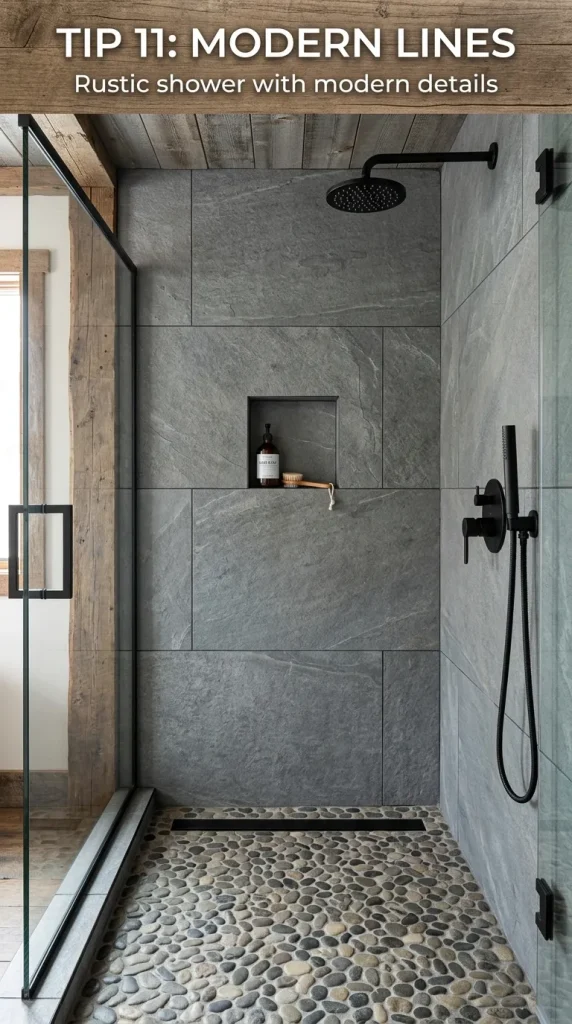
A rustic shower can still feel modern.
In fact, modern lines often make rustic materials look better. Simple glass, clean edges, a linear drain, large-format stone-look tile, and matte black fixtures can keep the space from feeling old-fashioned.
This works well for modern farmhouse walk in shower ideas. Use rustic texture, but keep the layout clean. White walls, black fixtures, a wood-look accent, and one stone detail can feel warm without looking themed.
Avoid adding too many farmhouse signs, distressed finishes, or decorative extras. The shower itself should carry the style through material and shape.
12. Soften the Bathroom Outside the Wet Zone
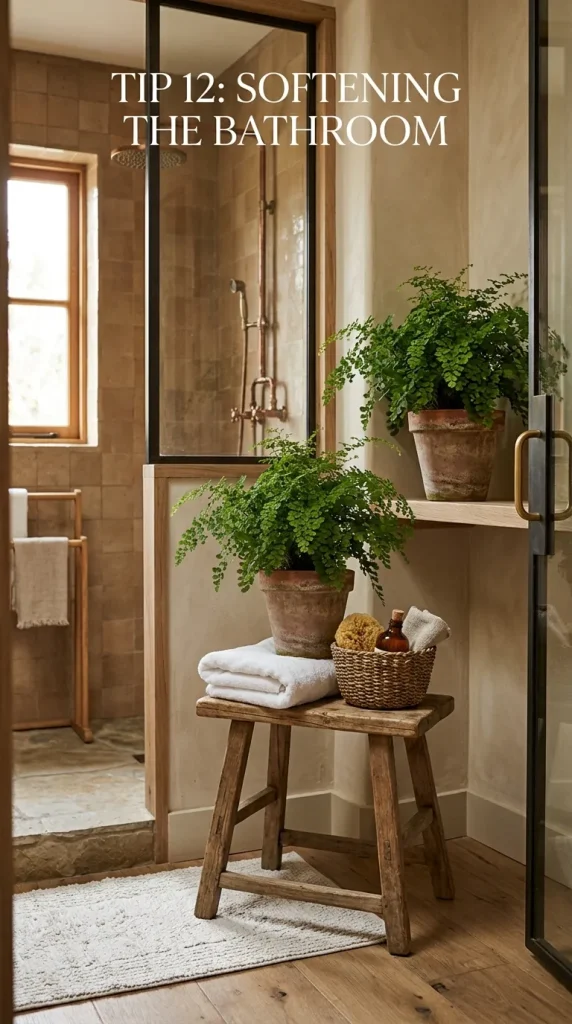
A rustic walk-in shower should not feel disconnected from the rest of the bathroom.
The area outside the shower matters too: towels, hooks, baskets, stools, wall lights, trays, and plants can make the whole bathroom feel warmer. These home decor items can help you style the dry areas without overfilling the room.
Plants can also soften rustic bathrooms, especially if the shower has a lot of stone or tile. Keep them outside the direct wet zone unless the plant and placement truly make sense. These bathroom plant decor ideas can help you choose a calmer green accent for the room.
This section matters because rustic style can become hard and heavy if every surface is tile, stone, or glass. A towel, basket, plant, or small wood stool can soften the whole space.
13. Avoid Rustic Shower Mistakes
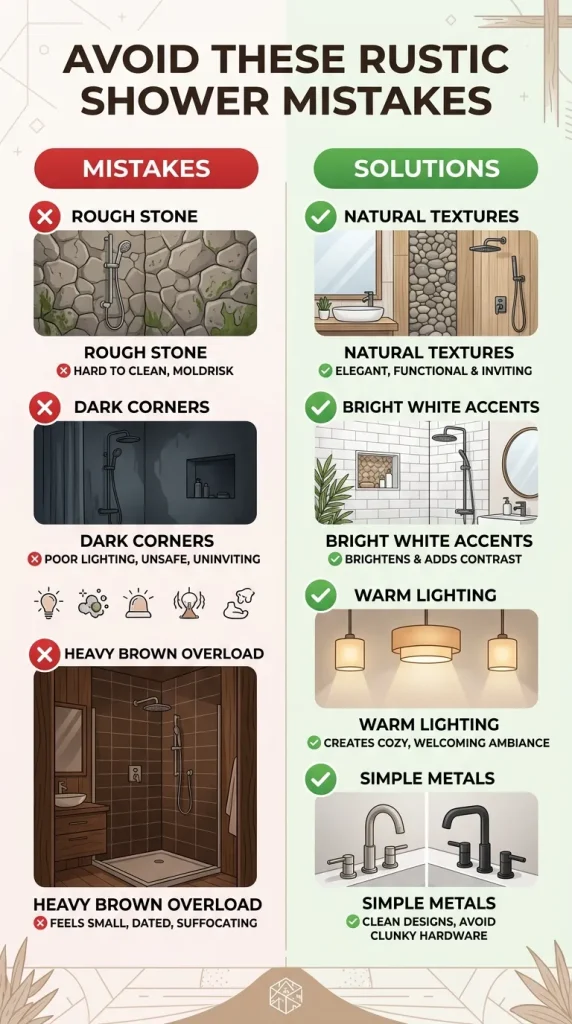
The biggest mistake is confusing rustic with rough.
A rustic shower still needs good waterproofing, smart drainage, slip-conscious flooring, comfortable lighting, and easy cleaning. Rough stone, deep grout lines, dark corners, and too many mixed materials can make the shower look busy and become harder to maintain.
Another mistake is making everything brown. Wood-look tile, bronze fixtures, beige stone, tan walls, and brown flooring can become heavy fast. Add white, cream, soft gray, or glass to keep the room fresh.
Also be careful with trend pieces. A rustic shower should age well. Natural textures, warm neutrals, simple metal finishes, and practical storage will last longer than overly themed decor.
If you add tall bathroom storage, shelves, or cabinets near the shower, secure furniture properly where needed. The official Anchor It furniture safety guide is a useful resource for preventing furniture tip-over hazards.
Final Advice
Rustic walk in shower ideas work best when the design feels warm, useful, and restrained.
Choose one or two natural materials, then give them room to breathe. Stone, pebble, wood-look tile, bronze fixtures, white tile, glass, and warm lighting can all work together, but they should not all fight for attention.
For a small bathroom, keep the palette lighter and use rustic texture as an accent. For a master bathroom, you can go richer with stone, a bench, a half wall, or a larger shower layout. And for any bathroom, think about comfort first: drainage, cleaning, lighting, storage, and safety matter as much as the tile.
Rustic should feel natural.
Not overdone.
FAQs
What are the best rustic walk in shower ideas for small bathrooms?
The best rustic walk in shower ideas for small bathrooms use one strong natural feature, such as a pebble floor, stone niche, wood-look tile wall, or bronze fixture finish. Keep the rest of the shower lighter so the space does not feel cramped.
What tile works best for a rustic walk-in shower?
Stone-look porcelain, travertine-look tile, slate-look tile, handmade-look subway tile, pebble mosaic, and wood-look porcelain all work well for a rustic walk-in shower. Choose matte or textured finishes instead of shiny tile.
Can a rustic walk-in shower be doorless?
Yes, a rustic walk-in shower can be doorless if the layout controls water properly. A half wall, glass panel, correct floor slope, and smart shower head placement can help reduce splash.
Are pebble floors good for walk-in showers?
Pebble floors can look beautiful in rustic walk-in showers, but flatter pebble mosaics are usually more comfortable and easier to live with. Installation, drainage, and grout quality matter a lot.
How do you make a rustic shower look modern?
Use rustic materials with cleaner lines. Pair stone or wood-look tile with clear glass, matte black fixtures, large-format tile, simple niches, and warm lighting.
What colors work best in a rustic walk-in shower?
Warm white, cream, beige, taupe, soft gray, slate, charcoal, bronze, natural stone, and wood tones all work well. Avoid making every surface dark brown, because the shower may feel heavy.
Should a rustic walk-in shower have a bench?
A bench is useful if the shower has enough space. It can add comfort and a more custom look, but in a small shower, a corner bench or floating bench may work better than a full built-in seat.
How do I keep a rustic shower from looking dated?
Keep the layout simple, use natural-looking materials, avoid too many themed accessories, and balance rustic texture with clean glass, warm lighting, and fresh neutral tile.