

A gazebo can transform an ordinary backyard into a more functional and enjoyable part of the home, but the best designs are not chosen only because they look beautiful.
Many homeowners start with inspiration images and focus on appearance first. Later, practical problems appear: the gazebo is positioned too far from the house, the seating feels cramped, the materials require too much upkeep, or the space is uncomfortable during changing weather.
The solution is to approach a modern gazebo like an outdoor room.
A successful gazebo should support the way you actually live — whether that means outdoor dining, relaxing with family, entertaining guests, enjoying a quiet garden corner or creating a shaded retreat.
Modern outdoor structures increasingly focus on creating spaces that feel like extensions of indoor living areas, with attention given to comfort, lighting, adaptable weather protection and the connection between architecture and landscape.
This guide explores 18 modern gazebo ideas with practical considerations to help you choose a design that works for your home, garden and lifestyle.
Why Modern Gazebos Are Becoming Outdoor Rooms
The modern gazebo has moved beyond being simply a shaded garden structure.
Today, homeowners often want outdoor spaces that function like additional living areas.
A successful gazebo considers:
- how people move through the space;
- how furniture fits;
- how weather affects comfort;
- how the structure connects with the home;
- how often the area will actually be used.
The most important question is:
What role should this gazebo play in your everyday life?
A dining-focused gazebo requires different planning from a quiet reading retreat or an entertainment space.
Before choosing materials or features, decide whether your priority is:
- hosting guests;
- relaxing;
- creating privacy;
- extending outdoor use into cooler months;
- improving the connection between indoors and outdoors.
A gazebo becomes valuable when it solves a real lifestyle need.
1. Minimalist Flat-Roof Gazebo
A flat-roof gazebo is one of the strongest choices for a contemporary outdoor space because it creates a clean architectural appearance.
This style works well with homes featuring:
- simple exterior finishes;
- large windows;
- modern landscaping;
- strong geometric forms.
The appeal comes from:
- clean horizontal lines;
- minimal decoration;
- simple proportions;
- a calm visual presence.
However, minimalist design requires careful planning.
A structure that is too large or visually heavy can overwhelm a smaller garden.
Before building, consider:
- roof height;
- support thickness;
- surrounding planting;
- views from inside the home.
The goal is not creating a separate outdoor building.
It is creating a structure that feels naturally connected to the property.
2. Warm Timber Gazebo Design
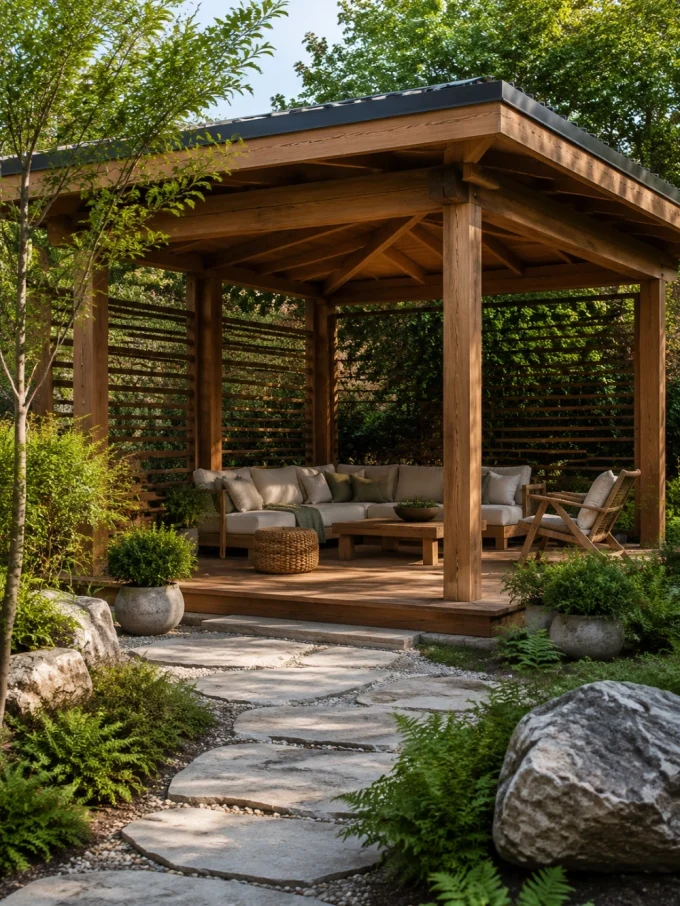
Timber remains a popular choice for homeowners who want a modern gazebo with natural warmth.
Contemporary timber designs usually avoid overly decorative details and instead focus on:
- straight beams;
- simple construction;
- natural textures;
- balanced proportions.
Timber works especially well with:
- gardens full of greenery;
- stone pathways;
- natural landscaping;
- outdoor furniture made from organic materials.
The main trade-off is maintenance.
Depending on the timber and finish, homeowners may need to consider:
- cleaning;
- sealing;
- staining;
- weather protection.
Timber is a good choice for people who appreciate materials that develop character over time.
3. Low-Maintenance Aluminium Gazebo
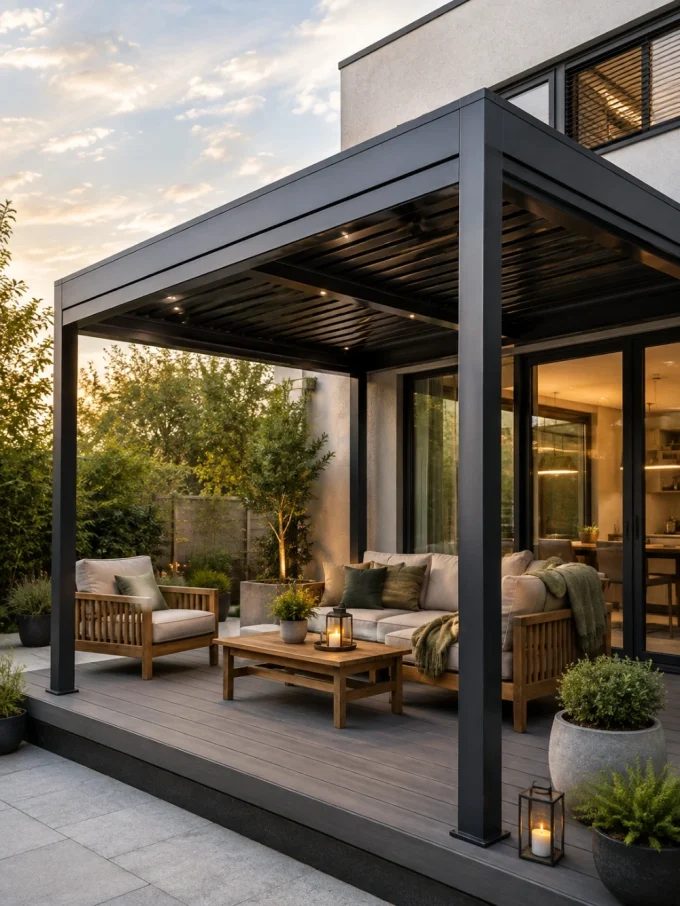
An aluminium gazebo can provide a sleek modern appearance while reducing maintenance demands.
Benefits include:
- clean contemporary lines;
- resistance to weather exposure;
- lighter maintenance requirements;
- suitability for minimalist designs.
Aluminium often works well for:
- modern patios;
- urban gardens;
- homes with contemporary architecture.
The challenge is making the space feel warm.
A metal structure can be balanced with:
- timber furniture;
- outdoor cushions;
- planting;
- warm lighting.
The strongest modern designs combine precise architecture with comfortable details.
4. Flexible Louvred Roof Gazebo
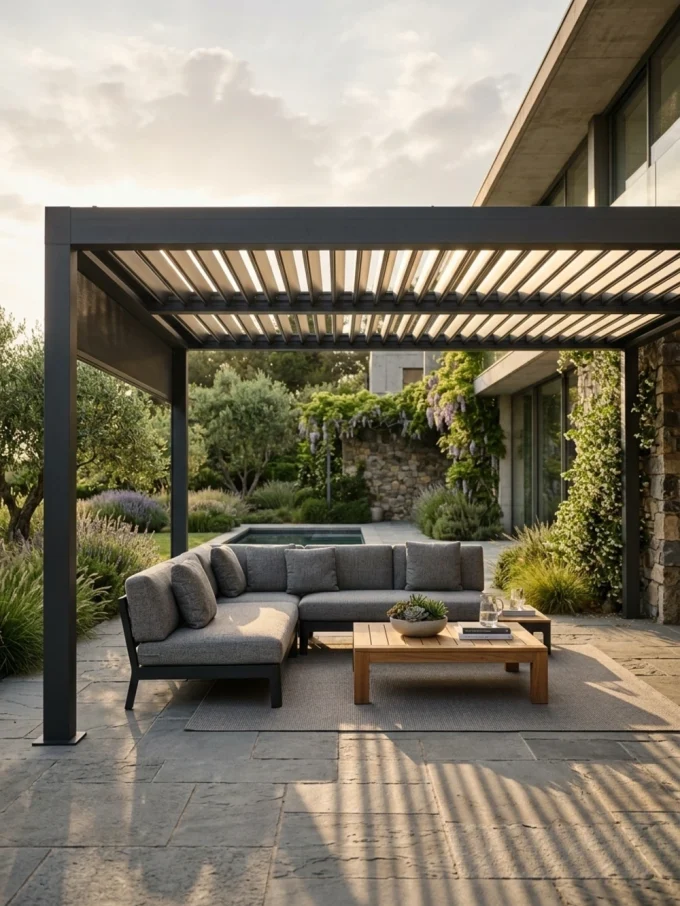
A louvred roof gazebo provides greater control over outdoor comfort.
Adjustable roof sections can help manage:
- direct sunlight;
- shade;
- airflow;
- changing weather.
These systems are increasingly popular because they help outdoor spaces become more adaptable throughout the year.
A louvred roof may be useful when:
- afternoon sun makes outdoor areas uncomfortable;
- the space is used frequently;
- flexibility is more important than a fixed roof.
Before choosing this option, consider:
- installation complexity;
- drainage;
- maintenance access;
- whether the feature solves a genuine problem.
The best outdoor upgrades improve everyday usability.
5. Outdoor Living Room Gazebo
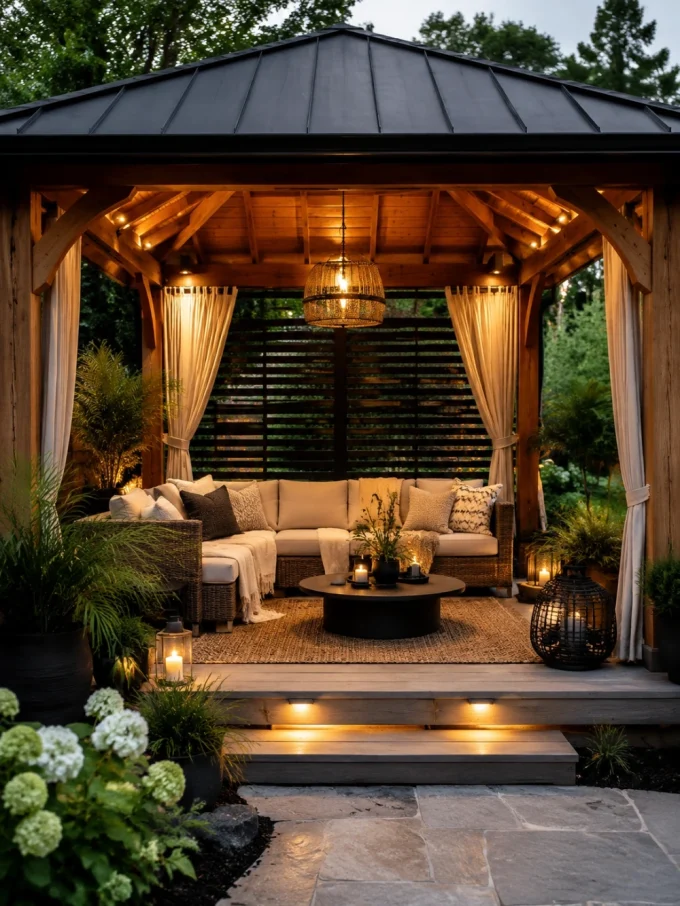
One of the most effective modern gazebo ideas is treating the structure like an outdoor living room.
Instead of focusing only on the roof and frame, plan the experience.
Consider:
- comfortable seating;
- side tables;
- lighting;
- outdoor textiles;
- relaxed furniture placement.
The goal is creating a place where people naturally want to stay.
The same principles used in interior design apply outdoors:
- balance;
- proportion;
- comfort;
- atmosphere.
For readers interested in creating welcoming living areas, DecoralCove’s cozy modern living room ideas explores similar comfort and layout principles.
6. Modern Dining Gazebo
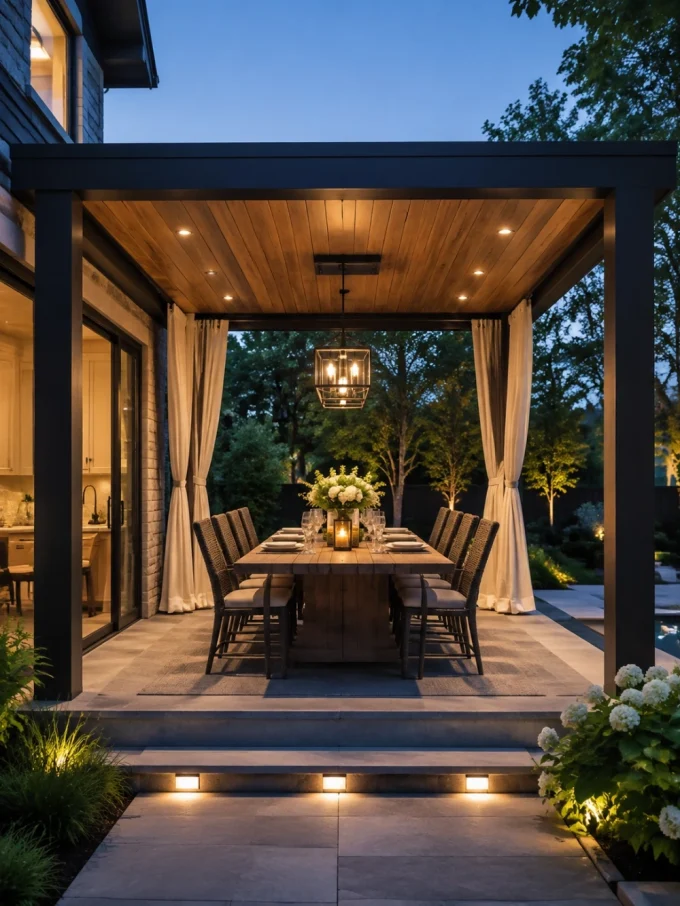
A gazebo designed for dining can become one of the most useful outdoor additions.
However, the table should not be the only measurement considered.
A comfortable dining gazebo also needs space for:
- pulling chairs out;
- walking around guests;
- serving food;
- moving comfortably.
Think about:
- how many people you normally host;
- how food reaches the area;
- whether lighting supports evening meals.
A dining gazebo works best when it feels like a natural extension of the kitchen or indoor dining area.
For more ideas about creating intentional eating spaces, see DecoralCove’s best breakfast nook ideas.
7. Gazebo With Fire Feature
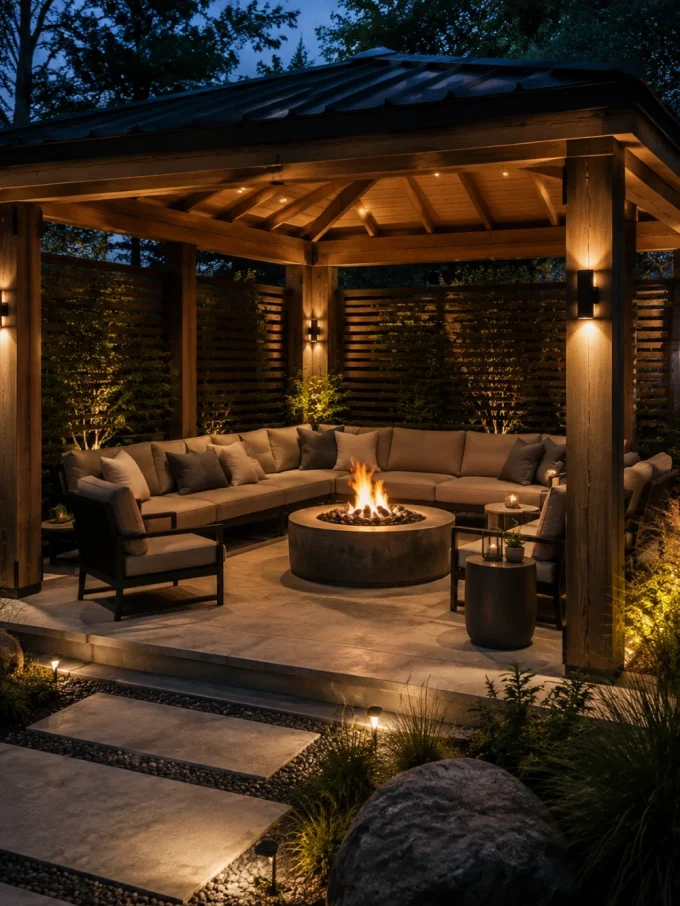
Adding warmth can extend outdoor use beyond summer evenings.
Popular combinations include:
- gazebo with fire pit;
- outdoor fireplace seating;
- heated lounge areas.
A fire feature should be planned carefully.
Consider:
- ventilation;
- safe positioning;
- surrounding materials;
- seating arrangement.
The purpose is not adding a dramatic feature.
The purpose is creating a comfortable gathering point.
For outdoor gathering inspiration, DecoralCove’s modern backyard fire pit ideas offers additional design direction.
8. Small Garden Gazebo
A smaller gazebo can be just as valuable as a large one when the design is carefully planned.
Compact gazebos work well for:
- morning coffee;
- reading;
- small dining areas;
- quiet retreats.
The biggest mistake is choosing a structure that overwhelms the available space.
Helpful approaches include:
- slim frames;
- multifunction furniture;
- open designs;
- built-in seating.
A smaller gazebo that is used regularly often provides more value than a larger structure that rarely gets used.
9. Modern Poolside Gazebo
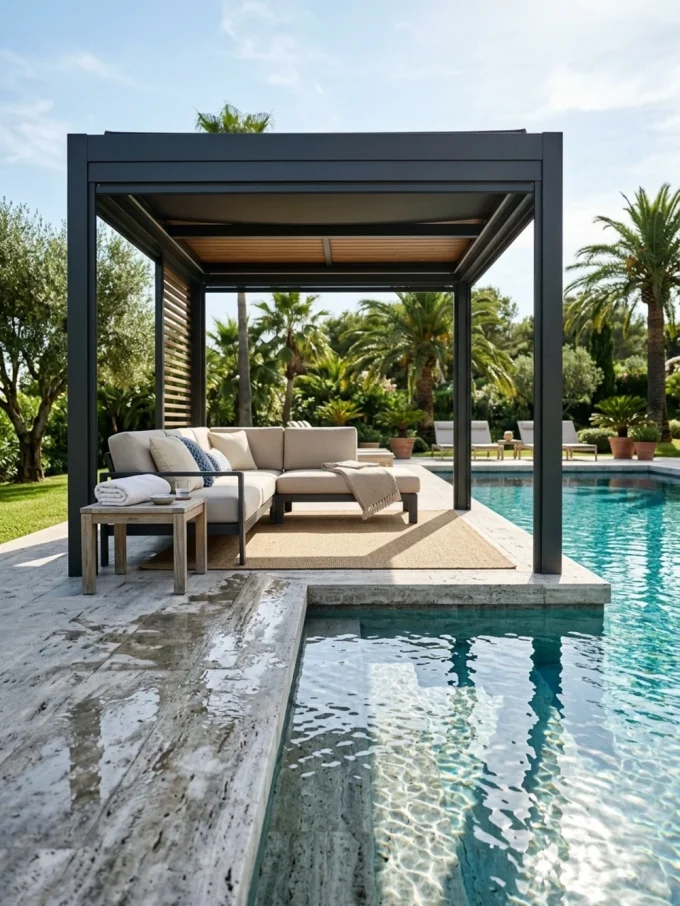
A poolside gazebo can create a dedicated relaxation zone while improving the overall flow of an outdoor area.
The modern approach is not simply placing a structure beside the pool. It is creating a comfortable transition between:
- swimming;
- relaxing;
- entertaining;
- shade.
A poolside gazebo can work as:
- a lounge area after swimming;
- a shaded seating zone;
- a place for outdoor drinks;
- a quiet escape from direct sunlight.
When planning this type of gazebo, consider materials carefully.
Pool environments expose structures and furniture to:
- moisture;
- cleaning products;
- frequent temperature changes.
Durable finishes and easy-care materials are usually more practical.
Furniture should also support the environment with:
- weather-resistant fabrics;
- easy-clean surfaces;
- comfortable seating.
The best poolside gazebos feel integrated into the landscape rather than added as an afterthought. Contemporary outdoor designs often combine gazebos with pools, outdoor kitchens, fire features and lounge areas to create complete outdoor living zones.
10. Privacy-Focused Gazebo Design
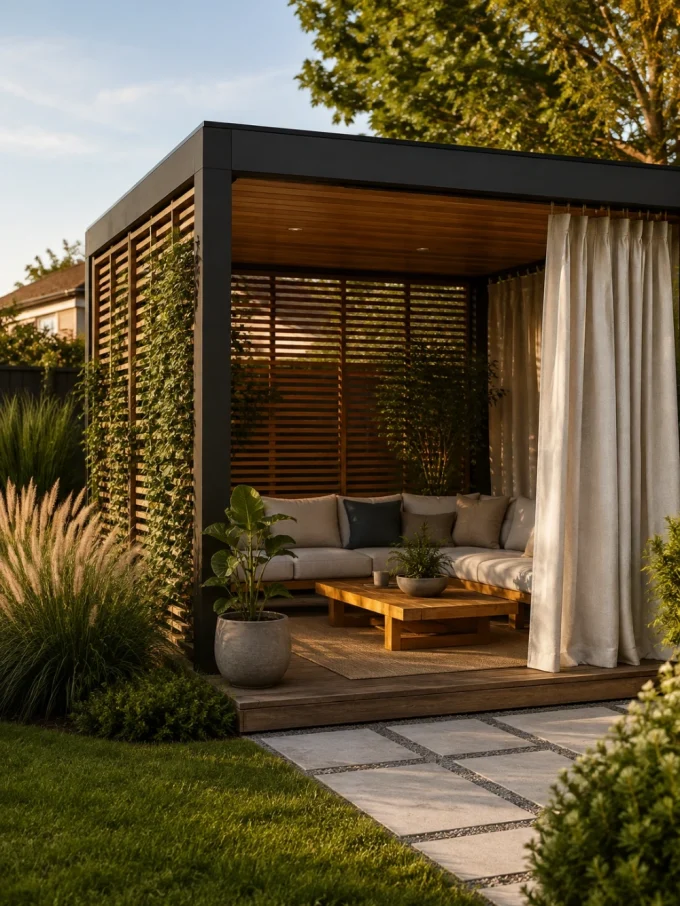
An outdoor space can look beautiful and still feel uncomfortable if it lacks privacy.
Privacy is one of the most important factors affecting whether homeowners actually use a gazebo regularly.
Modern privacy solutions include:
- timber slatted panels;
- outdoor curtains;
- decorative screens;
- climbing plants;
- carefully positioned landscaping.
The goal is not creating a completely enclosed room.
The goal is creating comfort while maintaining the connection with the outdoors.
Consider the specific privacy problem:
If neighbours overlook the garden
A vertical screen or planting layer may solve the issue.
If wind is the problem
A partial side panel may provide better comfort.
If the space feels exposed
Soft boundaries such as curtains or greenery can make the area feel more intimate.
A successful gazebo balances openness with a sense of retreat.
11. Plant-Integrated Garden Gazebo
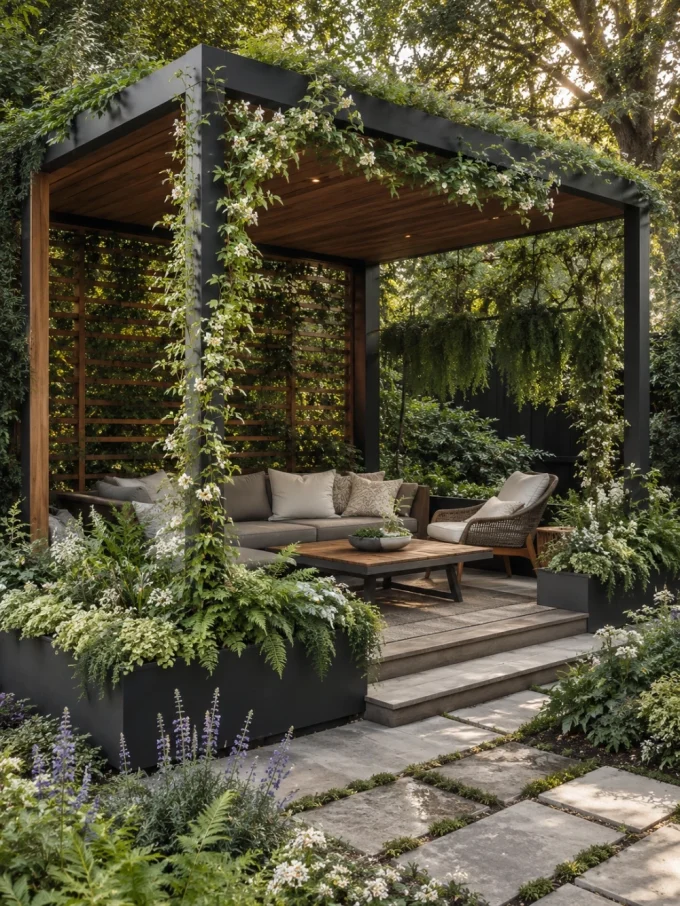
Modern architecture can sometimes feel too structured when surrounded only by hard surfaces.
Plants help soften the appearance of a gazebo and make it feel connected to the garden.
Useful approaches include:
Climbing Plants
Climbers can gradually blend the structure into the landscape.
Consider:
- growth speed;
- maintenance requirements;
- support needs.
Surrounding Plant Beds
Planting around the gazebo creates a stronger relationship between the structure and the garden.
Container Planting
Useful when:
- flexibility is important;
- permanent planting is not possible;
- seasonal changes are desired.
The aim is not hiding the gazebo.
The aim is creating balance between built structure and natural elements.
12. Lighting-Focused Gazebo Design
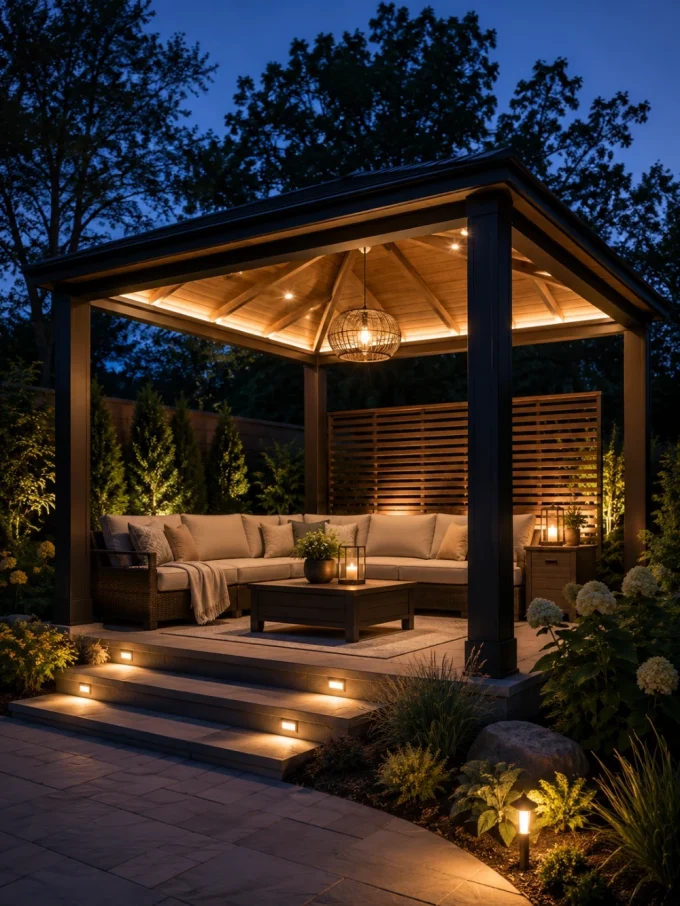
Lighting can completely change how a gazebo feels after sunset.
Without proper lighting, even a beautiful outdoor room may become unused in the evening.
A practical lighting plan combines different layers.
Ambient Lighting
Creates overall atmosphere.
Examples:
- recessed lights;
- ceiling fixtures;
- soft illumination.
Task Lighting
Supports activities such as:
- outdoor dining;
- reading;
- cooking;
- conversation.
Accent Lighting
Highlights:
- plants;
- pathways;
- architectural details.
Lighting should be planned with the structure rather than added at the end.
Outdoor wall lighting and layered illumination can help extend the usability of exterior spaces after dark. DecoralCove’s outdoor wall-mounted light fixtures ideas can support additional lighting inspiration.
13. Outdoor Kitchen Gazebo
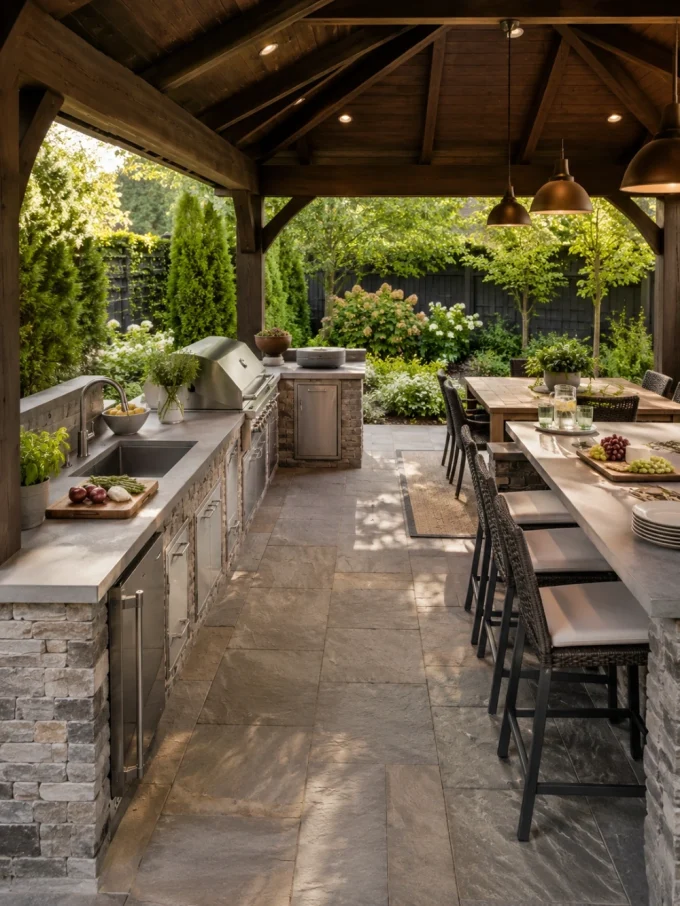
For homeowners who enjoy entertaining, an outdoor kitchen gazebo can become the centre of backyard activity.
However, the design should follow the workflow of cooking and hosting.
Consider:
- preparation space;
- cooking position;
- serving area;
- seating placement;
- storage.
A common mistake is adding too many features without considering movement.
A successful outdoor kitchen allows people to:
- prepare food comfortably;
- interact with guests;
- move easily around the space.
Depending on the household, the right solution may be simple:
- a cooking area;
- a dining table;
- lighting;
- comfortable seating.
More elaborate designs may include:
- built-in storage;
- outdoor appliances;
- entertainment features.
The best design matches how the space will actually be used.
14. Japandi-Inspired Gazebo Retreat
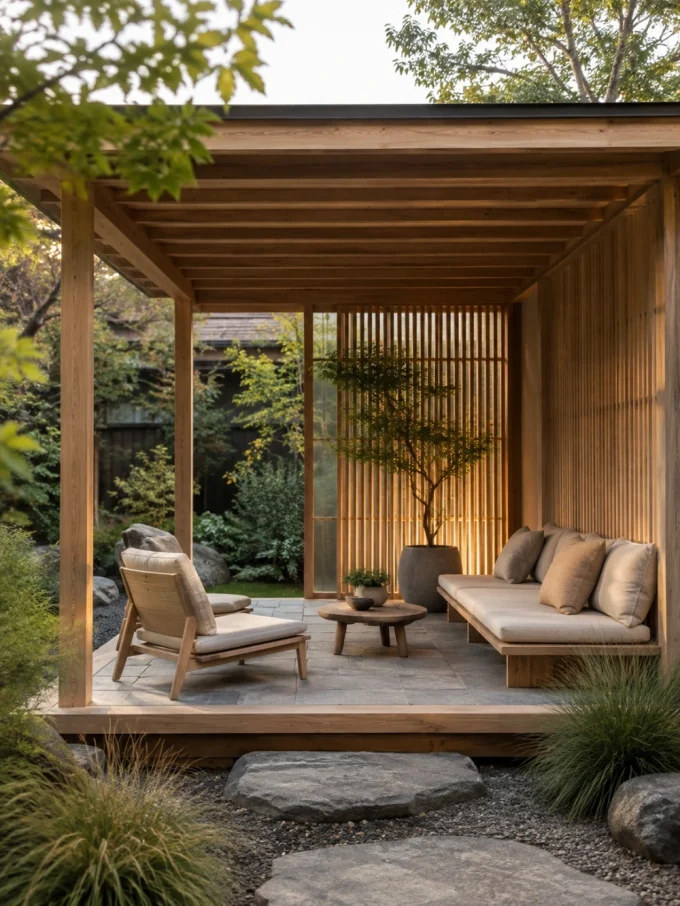
A Japandi-inspired gazebo combines Japanese simplicity with Scandinavian warmth.
This style works well for homeowners who want a calm outdoor retreat rather than a highly decorated entertaining space.
Key characteristics include:
- natural materials;
- simple furniture;
- neutral colours;
- soft lighting;
- uncluttered layouts.
The focus is on creating a feeling of calm.
Useful additions include:
- timber elements;
- natural stone;
- minimal seating;
- carefully chosen plants.
A Japandi gazebo works best when every element has a purpose.
Avoid filling the space with unnecessary decoration.
The beauty comes from restraint.
15. Contemporary Glass and Steel Gazebo
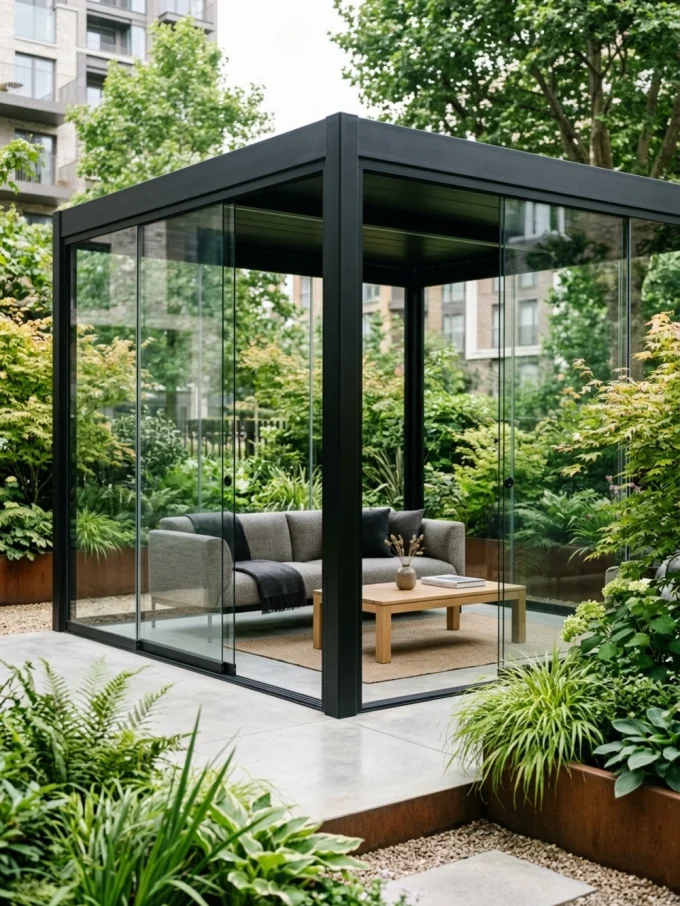
A glass and steel gazebo creates a strong architectural statement.
This style can work well with:
- modern homes;
- urban gardens;
- properties with strong geometric architecture.
Benefits include:
- visual openness;
- connection with outdoor views;
- contemporary appearance.
However, glass requires practical thinking.
Consider:
- privacy;
- glare;
- cleaning;
- temperature control.
A completely transparent structure may look impressive but may not always feel comfortable.
The strongest designs balance openness with practical living needs.
16. Four-Season Weather-Protected Gazebo
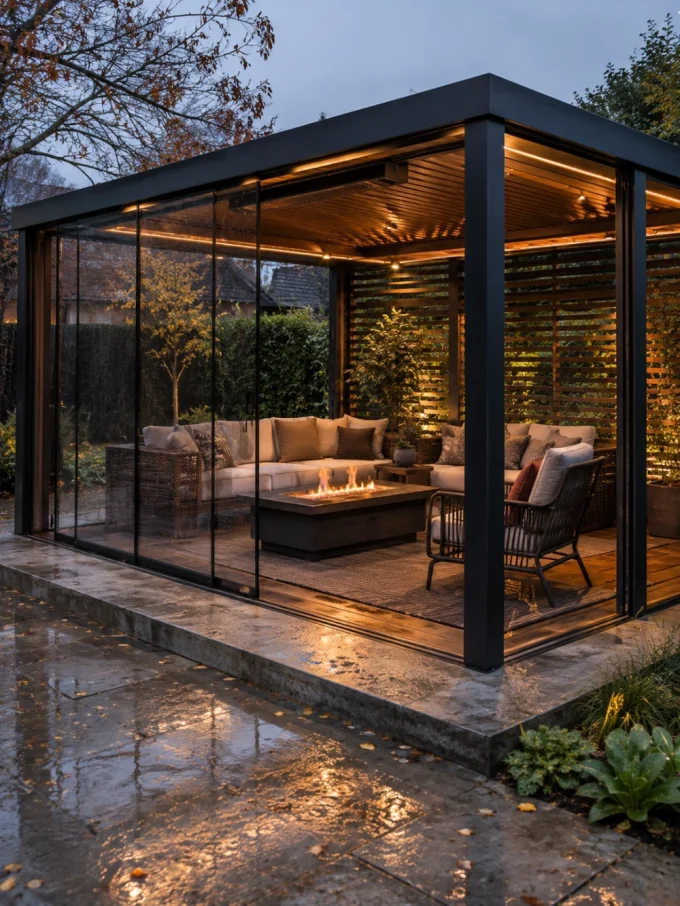
A modern gazebo can become much more valuable when designed for use beyond summer.
A four-season approach considers:
- changing temperatures;
- rainfall;
- wind;
- evening comfort.
Useful features may include:
- weather-resistant furniture;
- adjustable shade;
- heating options;
- stronger weather protection;
- suitable lighting.
The goal is not necessarily creating an enclosed outdoor room.
The goal is extending the months when the space feels comfortable.
Before adding features, consider the climate and actual needs of your household.
17. Compact Patio Gazebo
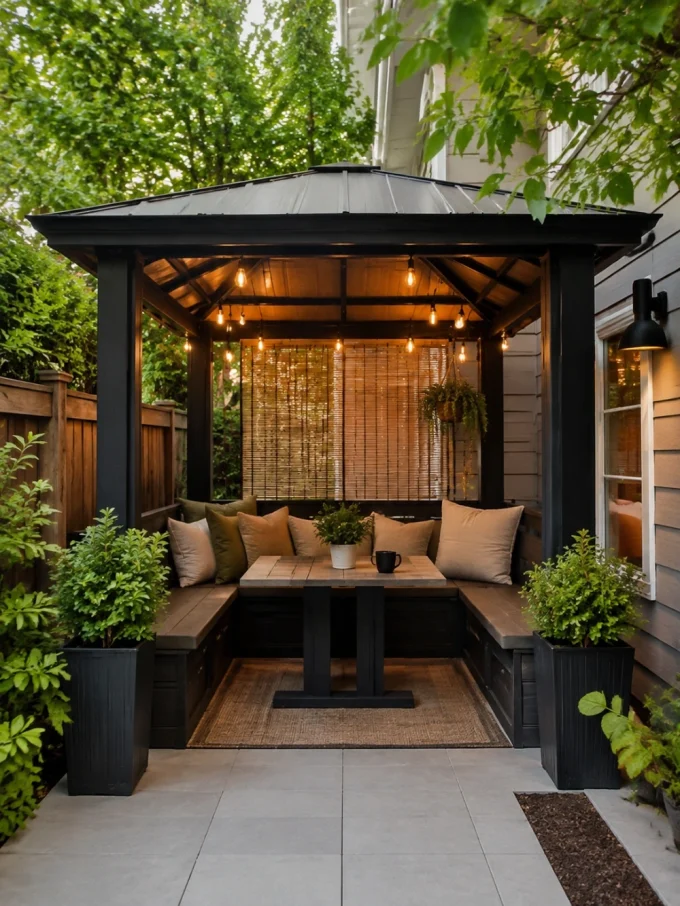
A compact patio gazebo can create a valuable outdoor zone even when space is limited.
It can provide a place for:
- morning coffee;
- relaxing;
- small meals;
- reading;
- quiet breaks.
Small spaces require careful planning.
Helpful choices include:
- slim structural designs;
- multifunction furniture;
- open layouts;
- built-in seating.
Avoid making the gazebo feel oversized compared with the patio.
The best small gazebo designs create comfort without overwhelming the available area.
18. Architecture-Matched Gazebo Design
One of the most effective modern gazebo ideas is creating a structure that feels connected to the home.
The gazebo should relate to:
- exterior colours;
- materials;
- architectural lines;
- surrounding landscape.
Examples:
A home with dark window frames may suit a dark aluminium gazebo.
A natural home may work better with timber.
A minimalist property may benefit from a simple geometric structure.
The goal is visual harmony.
A gazebo should feel like it belongs to the property rather than appearing as a separate addition.
Connecting outdoor structures with indoor architecture is a common approach in successful outdoor living designs because it creates a stronger sense of flow between spaces.
Final Thoughts
The best modern gazebo ideas are not simply the most impressive designs.
They are the ones that improve the way you use your outdoor space.
Before choosing a gazebo, consider:
- how you want to use it;
- where it should be positioned;
- which materials match your lifestyle;
- what maintenance you can manage;
- how it connects with your home.
A modern gazebo should feel like an extension of your living space — a place where everyday moments happen naturally.
The most successful outdoor rooms are created through thoughtful planning, not by adding the most features.
What makes a gazebo look modern?
A modern gazebo usually focuses on simplicity, clean structure and a strong connection with the surrounding home and landscape.
Modern designs often include:
- clean lines;
- simple geometric forms;
- minimal decoration;
- quality materials;
- integrated features such as lighting or adjustable roof systems.
The goal is not creating a complicated structure.
A modern gazebo works because the proportions, materials and details feel intentional.
It should complement the architecture of the home rather than compete with it.
Reader-Facing FAQ Answers
What is the best material for a modern gazebo?
The best material depends on the appearance you want and how much maintenance you are comfortable managing.
Aluminium
Aluminium suits homeowners who want:
- low maintenance;
- clean modern styling;
- a contemporary appearance.
It works especially well for minimalist designs.
Timber
Timber is a good choice when you want:
- natural warmth;
- connection with the garden;
- organic texture.
The trade-off is that timber may require more ongoing care.
Steel
Steel can work well for:
- larger structures;
- stronger architectural designs;
- industrial-inspired outdoor spaces.
The right choice depends on balancing appearance, maintenance and long-term practicality.
How large should a modern gazebo be?
The ideal size depends on how the gazebo will be used.
A dining gazebo needs space for:
- the table;
- chairs;
- movement around guests;
- serving food.
A lounge gazebo needs room for:
- seating;
- side tables;
- comfortable circulation.
Avoid choosing a gazebo size based only on available garden space.
Think about the activities that need to happen inside it.
A well-planned smaller gazebo can feel more comfortable than a large structure with poor proportions.
Can a modern gazebo work in a small garden?
Yes. A modern gazebo can work well in a smaller garden when the design is carefully scaled.
Helpful approaches include:
- choosing a compact structure;
- using multifunction furniture;
- keeping the design visually open;
- avoiding oversized roofs or heavy frames.
Small gardens often benefit from simplicity.
The aim should be creating a useful outdoor room rather than filling every available area.
How can I make a gazebo usable at night?
A gazebo becomes more functional after sunset when lighting and comfort are considered during planning.
Useful additions include:
Layered Lighting
Combine:
- ambient lighting for atmosphere;
- task lighting for activities;
- accent lighting for plants and architecture.
Comfortable Seating
Choose furniture that supports longer use and suits outdoor conditions.
Seasonal Comfort
Depending on the climate, features such as suitable heating solutions may help extend outdoor use.
The goal is creating a space that feels welcoming after dark, not simply adding decorative ligh