

A backyard fire pit can easily become the most-used part of an outdoor space, but the strongest modern designs do more than place a fire feature in the middle of several chairs. The shape of the patio, surrounding materials, seating layout, lighting, landscaping, and connection to the house all determine whether the area feels intentionally designed or like an accessory added after everything else was finished.
Modern fire pit spaces tend to work because they simplify those decisions. Clean geometry, restrained material palettes, integrated seating, generous circulation, and controlled landscaping create a calm backdrop around the fire. Concrete, stone, dark metal, timber, gravel, and large-format paving are especially useful because they introduce texture without making the area visually busy.
The right design also depends on how you plan to use the backyard. A couple may prefer a compact fire bowl beside two lounge chairs, while a household that regularly entertains may benefit from a larger paved conversation zone with permanent seating. Small yards can use corners and changes in level efficiently, while larger landscapes can turn the fire pit into a destination away from the house.
These modern backyard fire pit ideas explore those different possibilities while keeping safety and everyday usability central. Any actual fire feature should be appropriately listed or professionally designed, installed according to manufacturer requirements and local rules, and positioned with the required clearances from structures, vegetation, furnishings, and combustible materials.
1. Center a Round Fire Pit in a Circular Seating Area
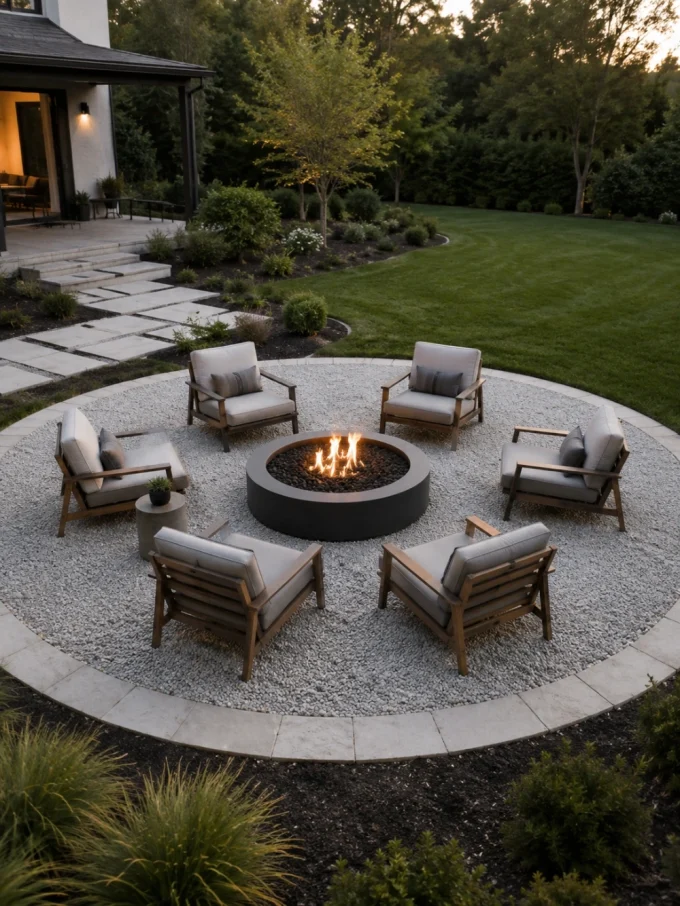
A circular arrangement is one of the most natural ways to create a conversation zone because every seat faces both the fire and the other people using the space. Instead of allowing chairs to form an uneven ring on the lawn, define the entire area with a circular patio or clearly shaped gravel zone.
Keep the material palette simple. A dark metal or smooth concrete fire feature can sit against pale stone paving, while low-profile lounge chairs introduce warmth through timber or outdoor upholstery. The contrast between a round fire pit and the surrounding landscape gives the area enough visual identity without requiring additional ornament.
Allow comfortable circulation around the seating rather than pushing chairs against the perimeter. The exact spacing and required fire clearances depend on the particular product and local requirements, so establish those practical limits before finalizing the patio dimensions.
2. Use a Rectangular Fire Table for a Clean Architectural Look
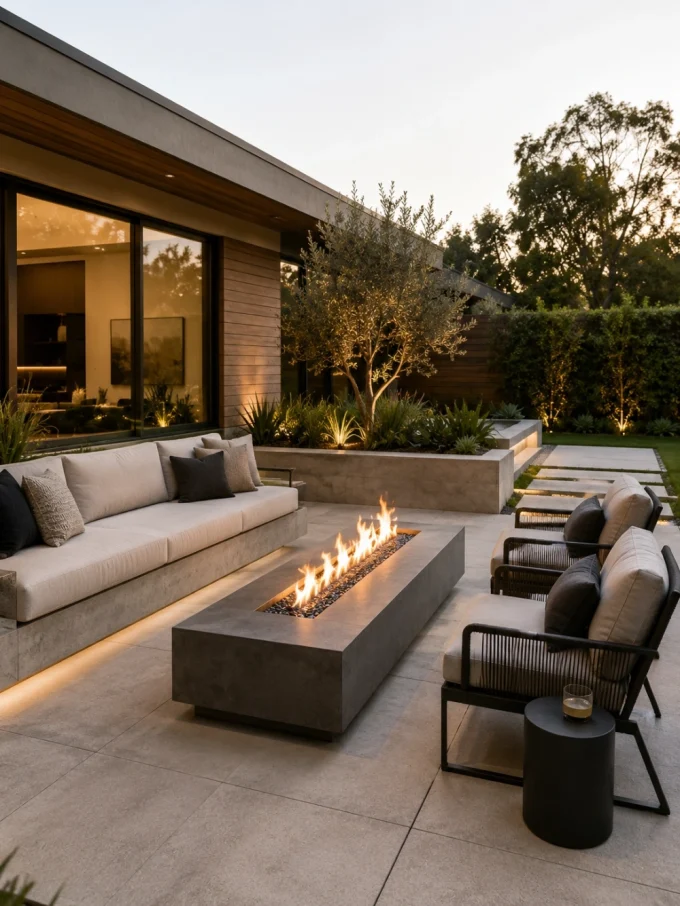
A rectangular fire table works especially well beside contemporary architecture because its long horizontal shape echoes windows, decks, benches, and paving joints. It can also organize seating more formally than a circular fire pit.
Place a sofa or built-in bench along one long side and two lounge chairs opposite it. This creates a layout similar to an outdoor living room while leaving the ends relatively open for movement. Concrete, stone-look finishes, or dark metal reinforce the modern character.
Avoid choosing a fire table based only on its appearance. Consider how people will move around it, where drinks or accessories can be placed safely, and whether the proportions suit the furniture. A very long unit can dominate a compact patio, while a small table may look lost in a wide entertainment area.
3. Sink the Fire Pit Into a Lower Conversation Zone
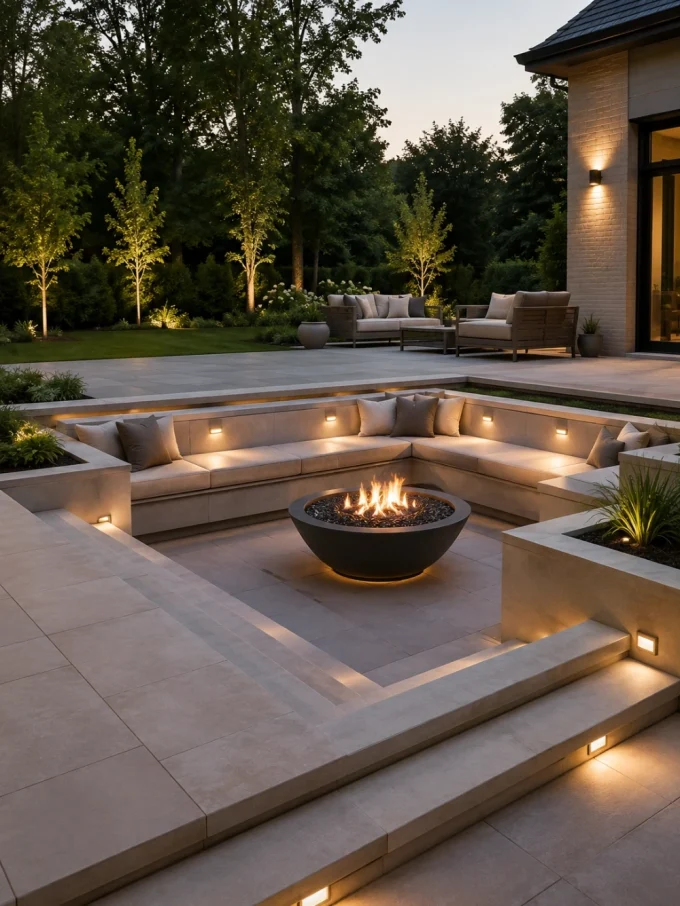
A sunken fire pit area can give a large backyard a stronger sense of destination. Dropping the seating zone slightly below the surrounding patio creates enclosure without requiring high walls or dense screening.
Keep the geometry disciplined. Broad steps, built-in benches, large paving units, and one central fire feature can make the area feel architectural rather than theme-driven. Use cushions and planting to soften the hard surfaces instead of adding many small decorative objects.
The change in level makes planning more important. Drainage, safe steps, visibility after dark, retaining elements, and code compliance should be resolved professionally before treating the area as a decorating project. Good lighting is particularly important around level changes; ideas from these outdoor wall-mounted light fixtures can also help when planning illumination near adjacent exterior walls.
4. Surround a Concrete Fire Bowl With Low Lounge Chairs
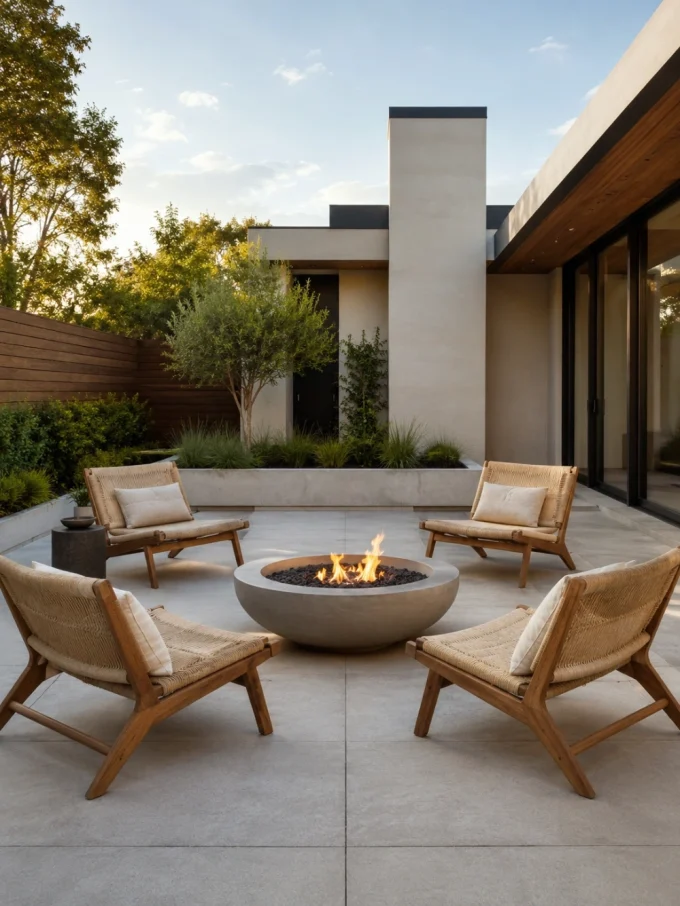
A simple concrete fire bowl is useful when you want the fire feature to feel sculptural without becoming ornate. The curved shape softens patios dominated by straight architectural lines while the concrete finish keeps the overall appearance contemporary.
Surround it with four low lounge chairs rather than a full outdoor sofa set. Timber frames, woven outdoor seats, or restrained neutral upholstery introduce enough warmth to prevent the arrangement from feeling too severe. Leave the surrounding patio relatively uncluttered so the bowl remains the center of the composition.
Concrete-like finishes can be visually substantial, so scale matters. A large bowl needs enough open space around it to feel deliberate. In a small backyard, choose a more compact listed fire feature rather than shrinking circulation just to accommodate an oversized centerpiece.
5. Build the Seating Into a Modern Retaining Wall
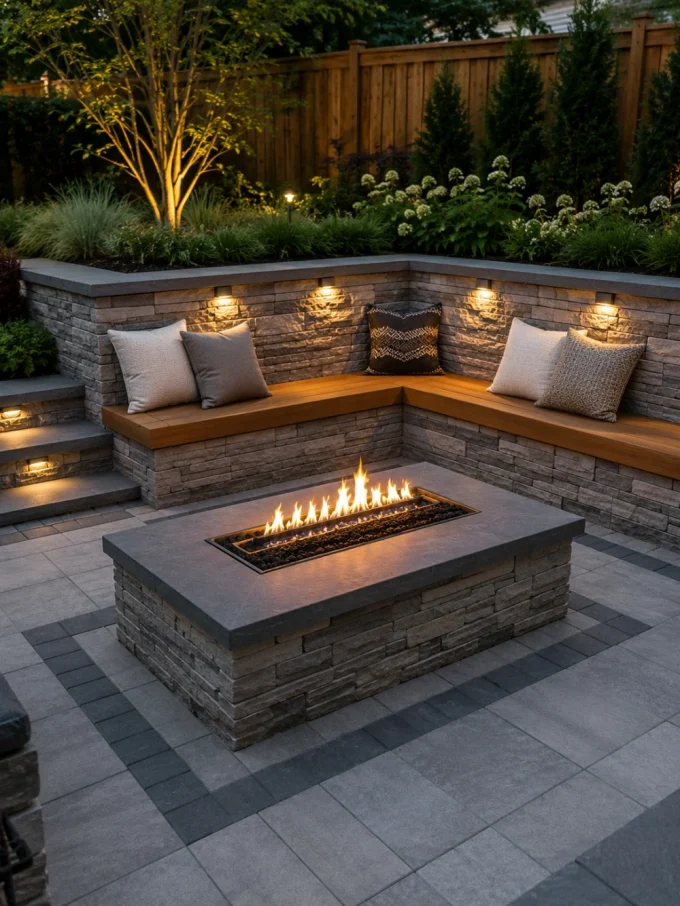
When a yard already requires a retaining wall or raised planting bed, that structure can sometimes help define the fire pit zone. A broad wall or purpose-designed built-in bench creates permanent seating and reduces the number of loose chairs needed.
The strongest version uses repeated materials. For example, the retaining wall, fire feature surround, and paving might share the same stone family while timber seat tops provide contrast. Repetition makes the area feel professionally composed rather than assembled from unrelated products.
Built-in seating is less flexible than movable furniture, so test the intended layout before committing. Consider comfortable seating positions, access routes, drainage, heat exposure, and manufacturer-required clearances. Structural and fire-related construction should be handled according to applicable professional and local requirements rather than improvised around an existing wall.
6. Pair Dark Pavers With Warm Timber Seating
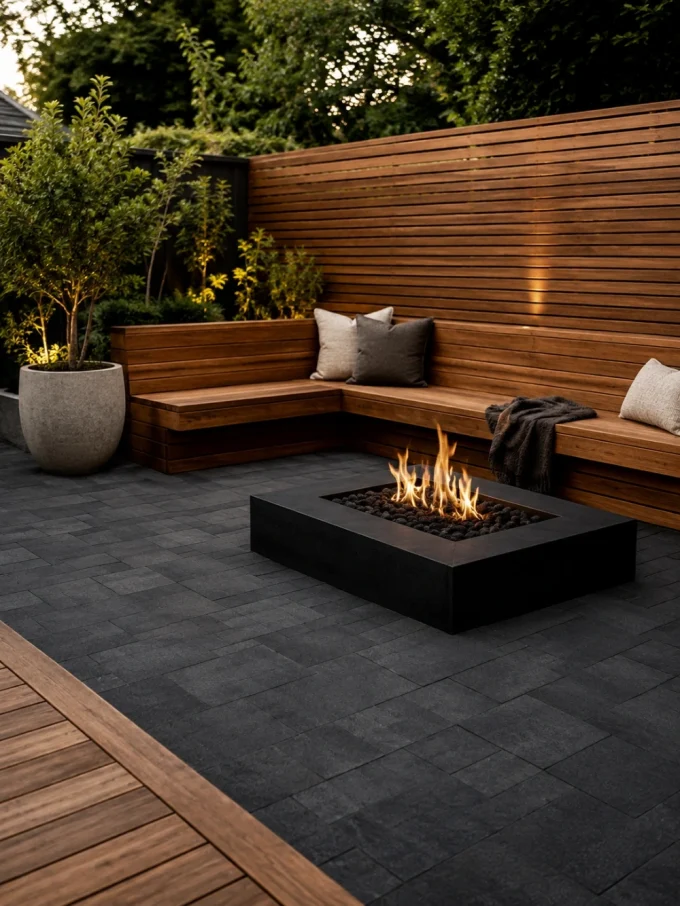
Modern backyard design does not have to mean an entirely gray space. Dark paving combined with natural-looking timber produces a stronger balance between architectural structure and warmth.
Use charcoal or deep gray pavers as the base, then introduce timber through chairs, bench tops, privacy screens, or a nearby deck. A simple black fire feature can almost disappear against the darker ground, allowing the timber and flames to become the more noticeable elements.
Limit the number of additional finishes. Mixing black paving, pale stone, several wood tones, patterned tile, and brightly colored furniture can weaken the clarity that makes this combination effective. This is similar to the broader principle behind successful home decor tips: a smaller number of repeated materials usually creates a more coherent result than adding detail to every available surface.
7. Create a Minimal Gravel Fire Pit Courtyard
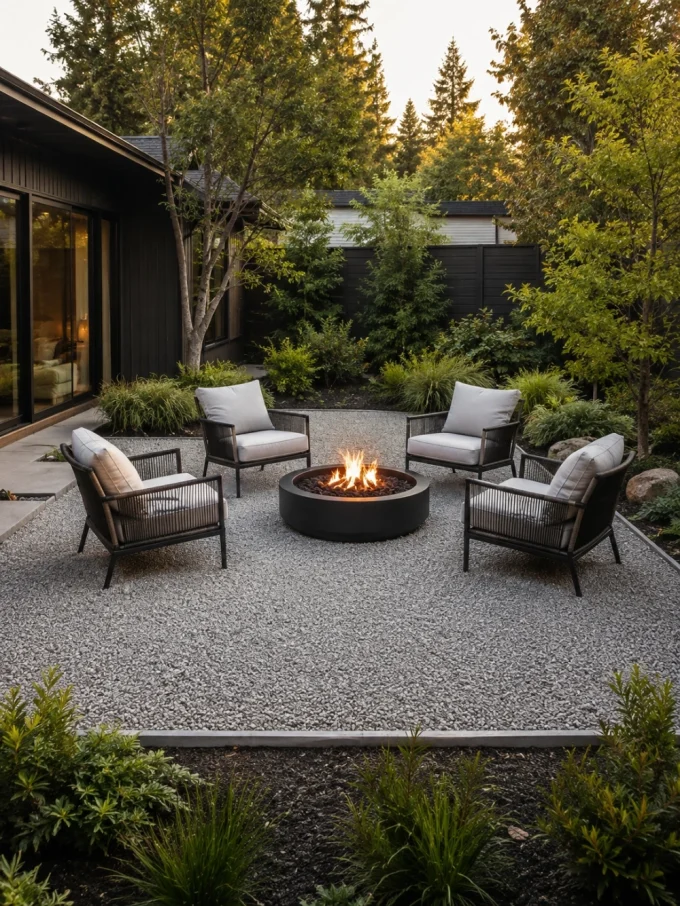
A fire pit area does not require an elaborate hardscape to feel modern. A clearly contained gravel courtyard can create a relaxed but structured destination when its perimeter and furniture placement are carefully planned.
Choose one gravel tone and repeat it across the whole zone rather than creating decorative bands or multiple stone colors. Add a simple metal or concrete-style fire feature and four to six chairs with uncomplicated silhouettes. Larger plants around the perimeter provide softness without cluttering the usable area.
Gravel is not equally practical for every household or accessibility requirement. It can move under furniture and may be less convenient for some users than a firm paved surface. If accessibility or frequent furniture movement matters, consider incorporating an appropriate stable surface rather than choosing gravel purely for its appearance.
8. Add a Linear Fire Feature Along a Patio Edge
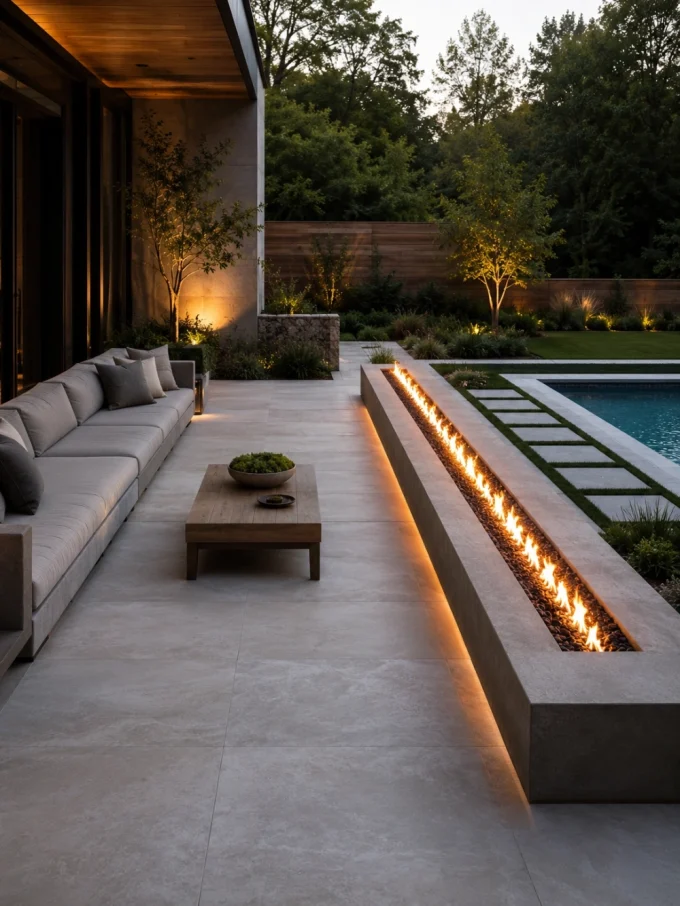
A linear fire feature can work as a visual boundary between two outdoor zones. Instead of putting the fire in the center, position an appropriately designed installation along the edge of a seating space so the patio remains more open.
This approach is particularly effective beside a pool, lawn, or lower garden because the fire creates a horizontal focal line without interrupting circulation through the center. Pair it with a long sofa or built-in bench to reinforce the geometry.
Edge placement should never be treated as purely visual. The feature must maintain all required distances from furniture, structures, landscaping, traffic areas, and other site elements. Poolside and elevated installations introduce additional design considerations, so professional planning is particularly valuable.
9. Turn an Empty Backyard Corner Into a Fire Pit Nook
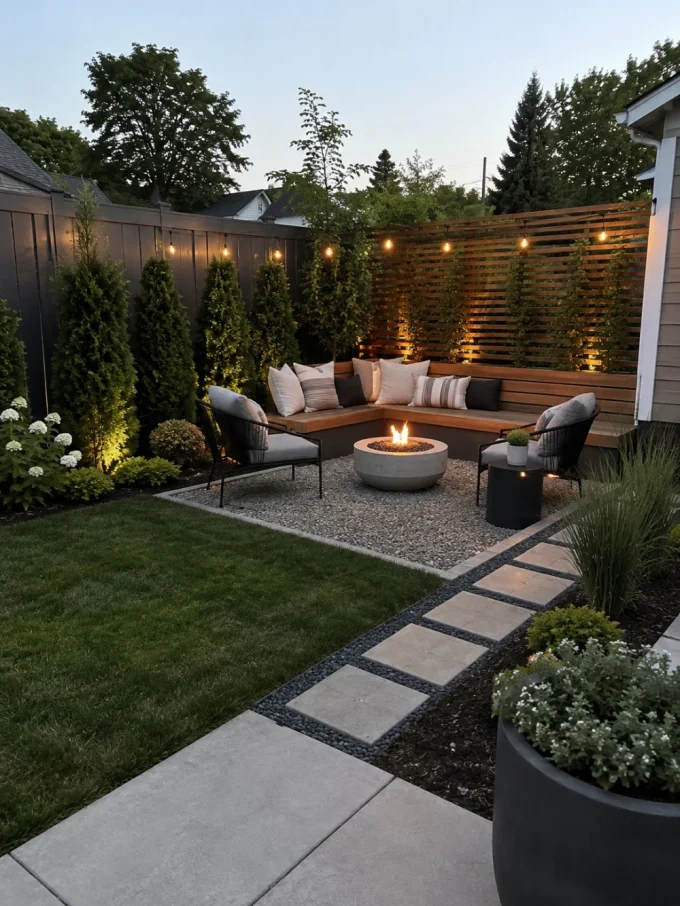
A fire pit does not need to occupy the center of the yard. A neglected corner can become a more intimate conversation area, leaving the primary lawn or patio available for dining and everyday activity.
Use an L-shaped bench, two chairs, or a combination of fixed and movable seating to respond to the corner geometry. A small paved or gravel base visually separates the nook from surrounding planting. Taller shrubs or a slatted screen behind the seating can increase privacy.
Do not fill the corner so tightly that access becomes awkward. A useful fire pit nook needs a clear entrance and adequate space around the fire feature. Also consider wind patterns, vegetation, structures, and all manufacturer or code-required clearances before selecting the final location.
10. Create an Indoor-Outdoor Living Room Around the Fire
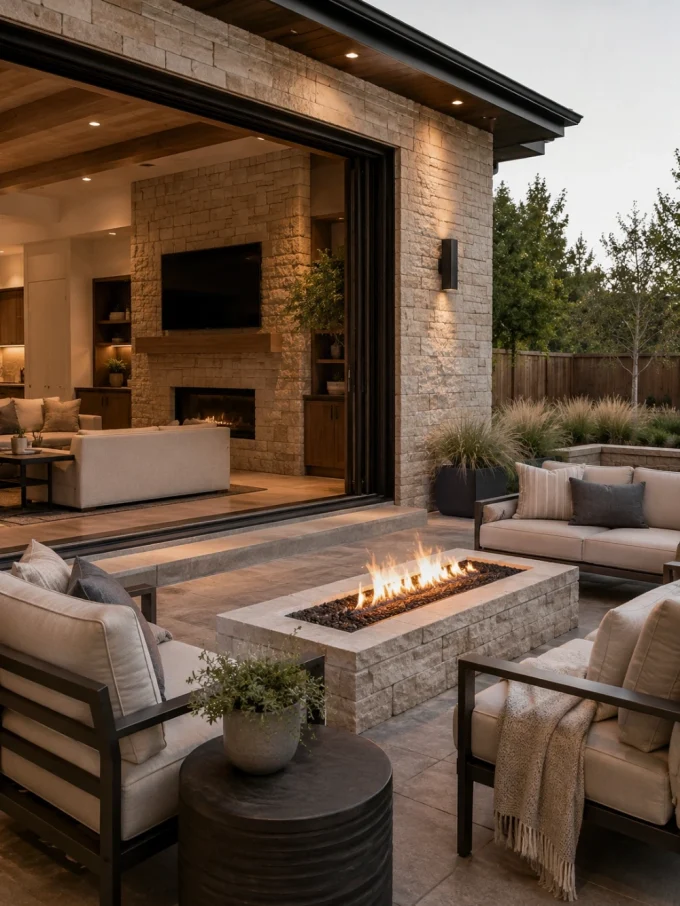
If the backyard connects directly to a living area or kitchen, treat the fire pit patio as an extension of the interior rather than as a completely separate decorating project.
Repeat one or two interior cues outdoors. That could mean similar furniture proportions, a related neutral palette, dark metal accents, or stone that visually connects with the home’s architecture. Large doors or broad openings make the relationship even stronger, similar to the flow principles used in an open kitchen design.
Do not attempt to copy the interior exactly. Outdoor spaces need materials suited to weather, easier circulation, and more visual breathing room. The relationship should come from proportion, palette, and repeated finishes rather than bringing indoor-only furnishings outside.
11. Use a Black-and-White Palette for a Crisp Modern Patio
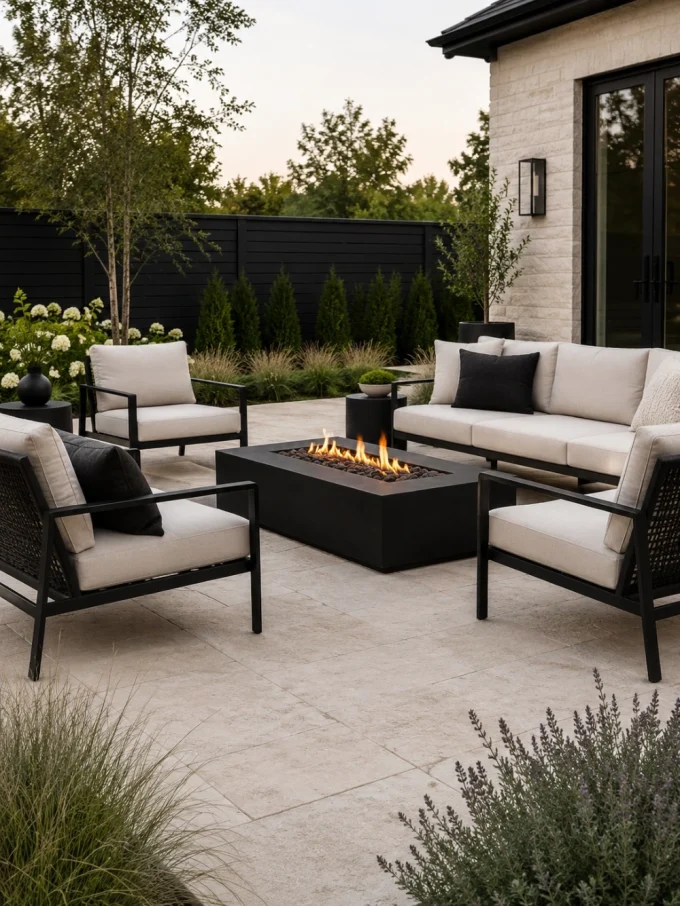
A monochrome fire pit zone can look remarkably sophisticated when texture does the work that color normally would. Think pale stone paving, black metal chairs, a dark fire feature, and off-white outdoor upholstery.
Varying materials prevents the combination from becoming flat. Smooth metal, woven upholstery, textured stone, and soft planting all reflect light differently, creating depth even when the palette remains restrained. The same principle helps small black-and-white living rooms avoid feeling visually one-dimensional.
Pure white upholstery near an actively used outdoor fire area may require more maintenance than warmer neutrals. Off-white, taupe, or light gray can provide a similar visual effect while being more forgiving in a frequently used backyard.
12. Frame the Fire Pit With Oversized Planters
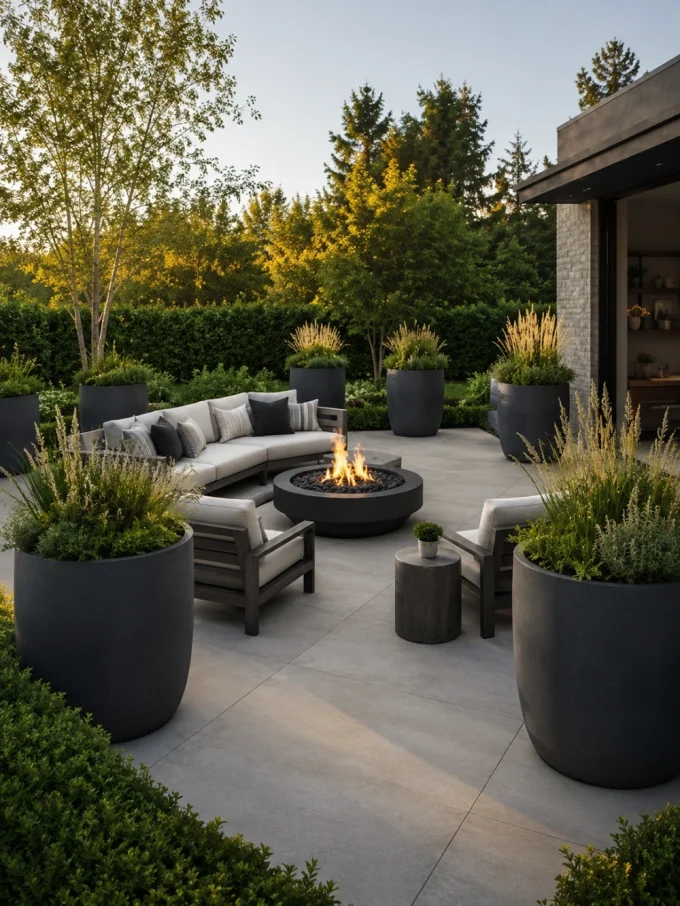
Large containers can make a fire pit patio feel integrated into the landscape without allowing plants to crowd the central seating zone.
Position substantial planters around the outside perimeter rather than immediately beside the fire feature. Use architectural plants, soft grasses, or compact shrubs suited to your local growing conditions. Repeating the same container material in several places creates stronger visual rhythm than using a different pot at every point.
Plant selection and placement have practical limits near fire. Maintain all required clearances and avoid treating vegetation as harmless simply because it is living or green; plants can dry, grow, and change seasonally. Keep the actual fire zone appropriately separated according to installation and local safety requirements.
13. Add a Slatted Privacy Screen Behind the Seating
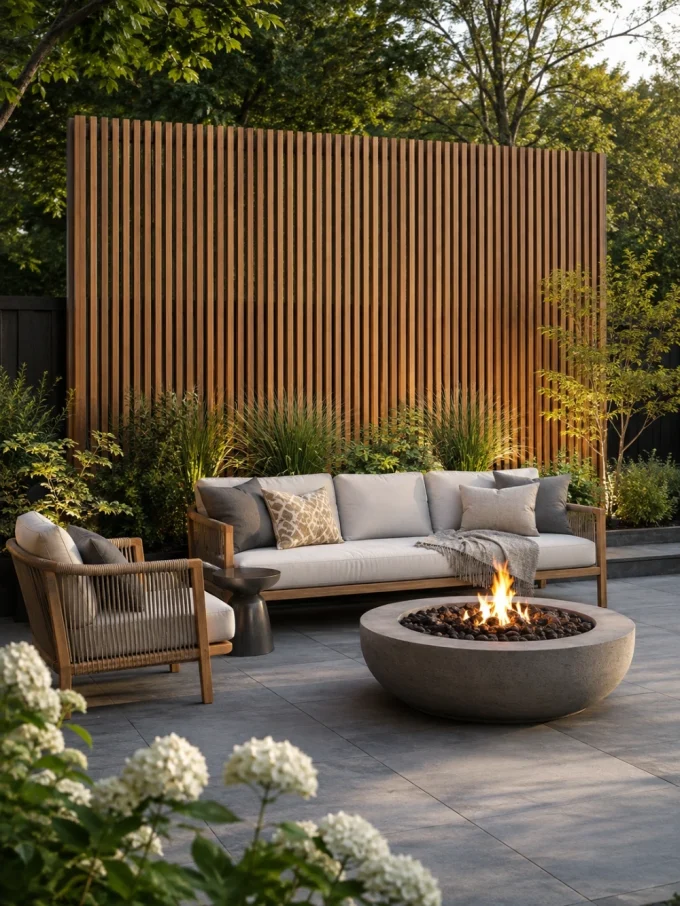
A timber or wood-look slatted screen can turn an exposed fire pit area into a more comfortable outdoor room. Vertical slats introduce height while the repeated lines maintain the orderly appearance associated with modern landscaping.
Position the screen as the background to the seating rather than surrounding the entire patio. That gives the arrangement a focal direction while keeping other sides open to the garden. Add planting at the base to soften the junction between screen and paving.
The screen itself must be located appropriately in relation to the fire feature. Required clearances vary by installation, materials, and local regulations, so do not use a decorative concept image as evidence that a particular placement is safe.
14. Make the Fire Pit Part of a Textured Feature Wall
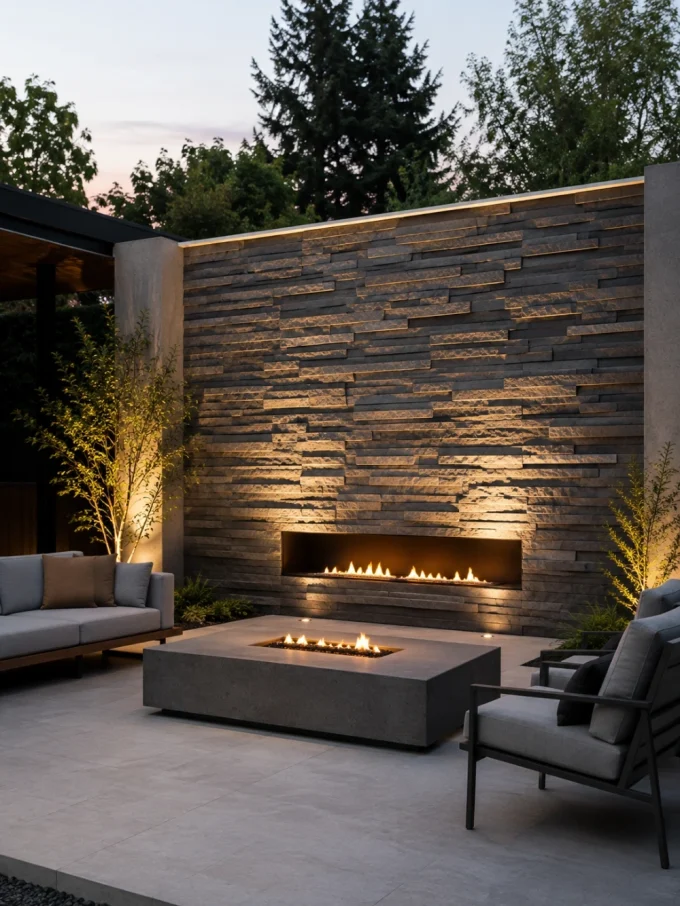
A large backyard can sometimes support a strong architectural backdrop behind the fire pit area. Stone cladding, textured masonry, ribbed surfaces, or patterned concrete can establish a focal wall without relying on outdoor artwork.
Keep the remainder of the palette quiet when the wall has significant texture. A simple sofa, smooth paving, and restrained landscaping allow shadows across the feature surface to become part of the design. If you are exploring surface treatments more generally, these wall texture design ideas offer additional inspiration for using texture as a focal element.
Any wall near a fire installation needs appropriate materials, construction, clearance, and professional planning. The decorative concept should follow those requirements rather than determining them.
15. Combine the Fire Pit With a Modern Dining Terrace
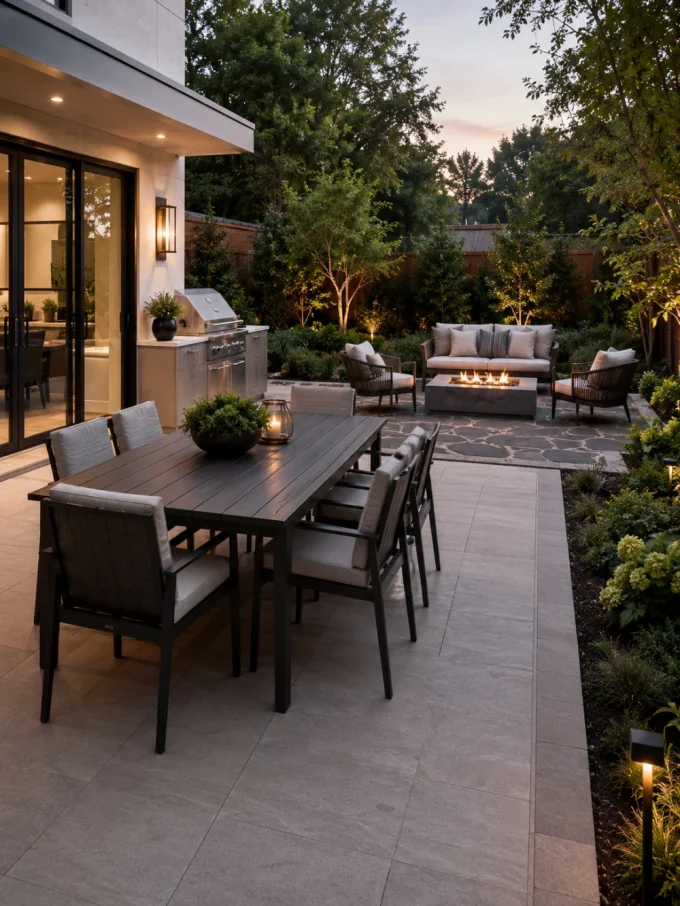
When space is limited, a single backyard terrace can support both dining and fire-side lounging if the two functions have distinct zones.
Place the dining table closer to the house or outdoor kitchen, then position the fire seating farther toward the garden. Different furniture orientations or a subtle change in paving can define the areas without building physical walls between them.
The mistake is trying to fit two full-size outdoor rooms where only one comfortably belongs. Prioritize the activity you use most and make the secondary zone more compact. Adequate circulation and all required fire-feature clearances should remain intact even when every square foot feels valuable.
16. Use Layered Lighting Instead of One Bright Floodlight
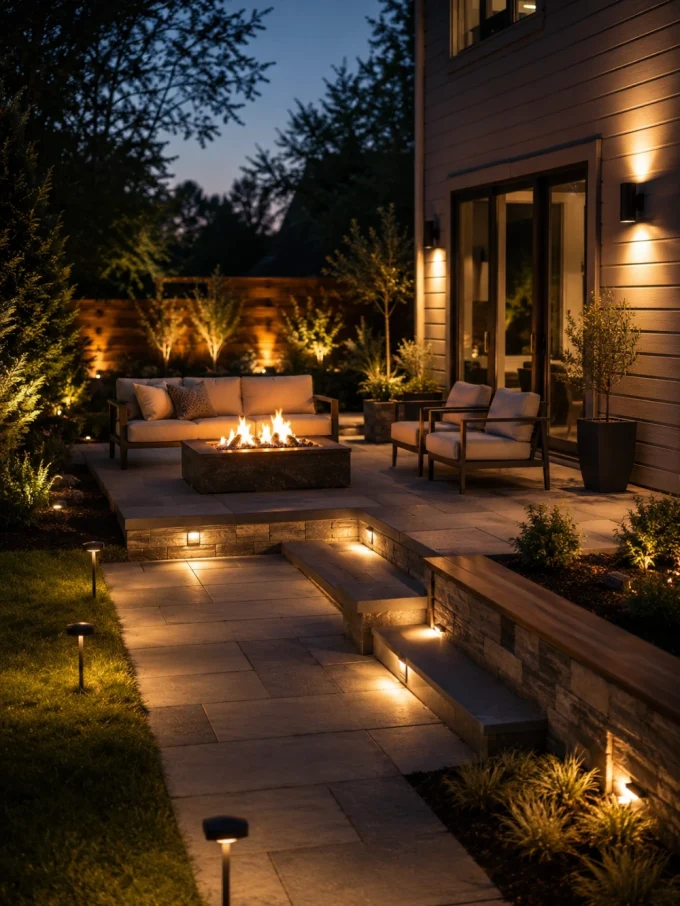
A fire provides visual warmth, but it should not be expected to illuminate an entire backyard safely. Modern fire pit areas benefit from layered lighting that makes paths, steps, seating edges, and surrounding architecture easier to navigate.
Combine appropriate pathway or landscape lighting with wall-mounted fixtures where the house borders the patio. The aim is contrast rather than uniform brightness: circulation areas should remain visible while planting and background zones can stay softer.
Avoid placing decorative lights where they create glare directly into seated users’ eyes. Exterior fixtures should be suitable for the location and installed appropriately. The ideas in this guide to outdoor wall-mounted light fixtures can help when coordinating the fire pit with the home’s exterior lighting.
17. Keep a Small Backyard Fire Pit Zone Deliberately Simple
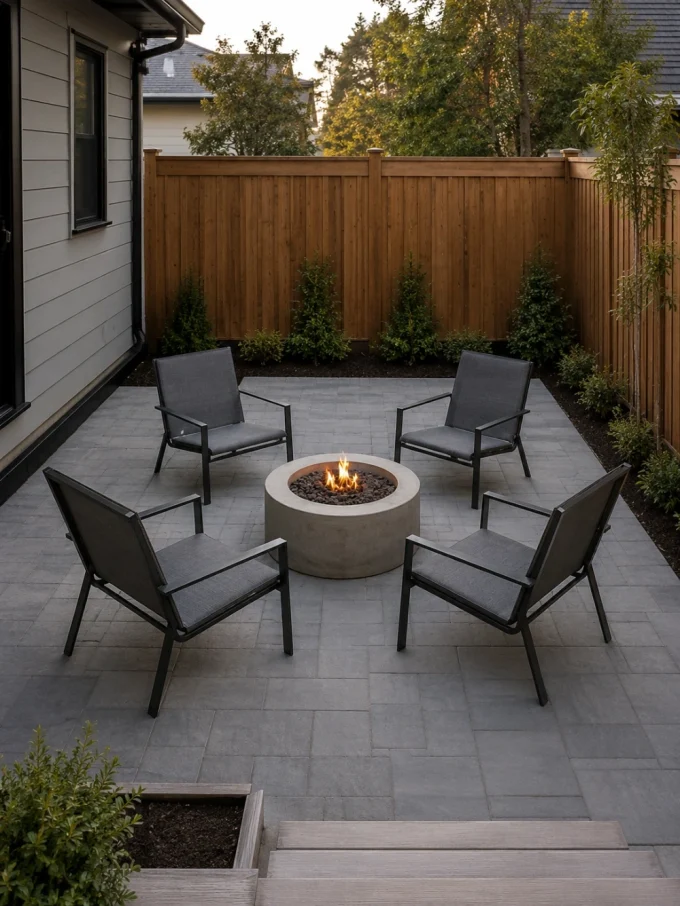
Small yards often become less functional because homeowners try to recreate large backyard inspiration at reduced scale. A better approach is to simplify the composition.
Use one compact fire feature, three or four appropriately placed chairs, one paving material, and restrained perimeter planting. A round layout can help in square spaces, while a narrow rectangular fire feature may suit a long patio where furniture already follows the house.
Editing is more important than decoration here. Side tables, planters, lanterns, stools, cushions, and sculptures all consume usable or visual space. Many common home decor mistakes—especially overcrowding and poor scale—translate directly to small outdoor rooms.
18. Let the Fire Pit Become the Backyard’s Only Major Focal Point
One of the most modern approaches is also one of the simplest: resist the urge to give every part of the backyard its own statement feature.
If the fire pit is intended to be the focal point, keep nearby paving, fencing, furniture, and accessories subordinate. A sculptural concrete bowl against restrained landscaping or a linear dark fire feature surrounded by warm timber seating can create enough interest without additional statues, signs, patterned surfaces, and decorative structures.
This approach also makes future changes easier. Cushions can be replaced, planting can evolve, and furniture can move while the underlying composition stays coherent. Modern design often succeeds through hierarchy rather than quantity—the eye understands immediately where to look and how the space is meant to be used.
Planning a Modern Backyard Fire Pit That Actually Works
Choose the location before choosing the style. The safest and most practical location depends on the property, nearby structures and vegetation, circulation, wind exposure, the specific fire feature, manufacturer instructions, and local requirements. Resolve those constraints before designing the furniture arrangement around an unsuitable spot.
Design the entire seating zone, not just the fire feature. Patio size, furniture depth, access routes, lighting, landscaping, and views matter as much as the appearance of the fire pit itself. A striking feature squeezed into a poorly planned patio will still produce a poor outdoor room.
Keep the material palette controlled. Two or three dominant materials are usually enough. Stone plus timber and dark metal, for example, creates more cohesion than mixing several unrelated pavers, woods, metals, tiles, and decorative finishes.
Provide lighting independently of the fire. Paths, steps, entrances, and changes in level should remain understandable after dark whether or not the fire feature is operating.
Treat safety requirements as design constraints, not finishing details. Use an appropriately listed or professionally designed fire feature, follow its installation and operating requirements, maintain required clearances, and comply with local rules. Keep children and pets appropriately supervised around an operating fire feature and ensure the area can be shut down or extinguished as specified for the installation.
Final Thoughts
The best modern backyard fire pit ideas are not necessarily the most expensive or elaborate. What makes them effective is a clear relationship between the fire feature, seating, paving, landscaping, lighting, and architecture of the home.
For a smaller backyard, a compact fire bowl with three or four chairs and simple paving may be enough. Larger spaces can support sunken conversation areas, built-in benches, architectural walls, or linear features, but additional size also increases the importance of circulation and planning.
Choose the layout first, keep the palette restrained, and allow one feature to dominate instead of asking every surface to make a statement. Most importantly, select and locate the actual fire feature according to manufacturer guidance, professional recommendations where appropriate, and applicable local requirements. That produces an outdoor space that feels modern not only because of how it looks, but because of how comfortably and sensibly it works.