
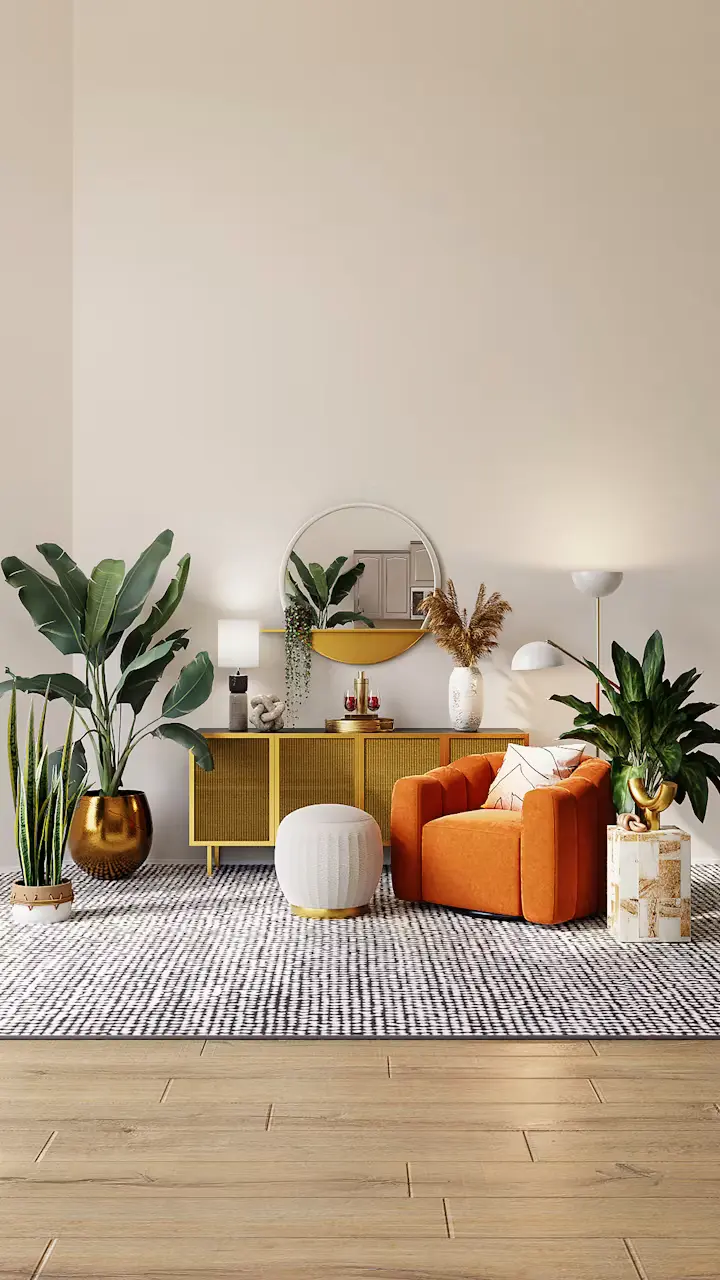
Flat painted walls are easy to maintain, but they do not always give a room the depth or personality it needs. Texture can introduce movement, soften an empty wall, highlight architecture, and make a simple color palette feel more complete.
These wall texture design ideas include subtle plaster finishes, dimensional panels, wood treatments, concrete effects, painted textures, and affordable DIY options. You will also learn where each finish works best, how lighting changes its appearance, and which textures may create unnecessary maintenance.
The right choice depends on more than style. Room size, moisture, natural light, furniture, cleaning needs, and the condition of the existing wall all matter. Start with one carefully selected surface rather than texturing every wall. A single feature wall is often enough to create character without making the room feel busy.
1. Choose Texture According to the Room
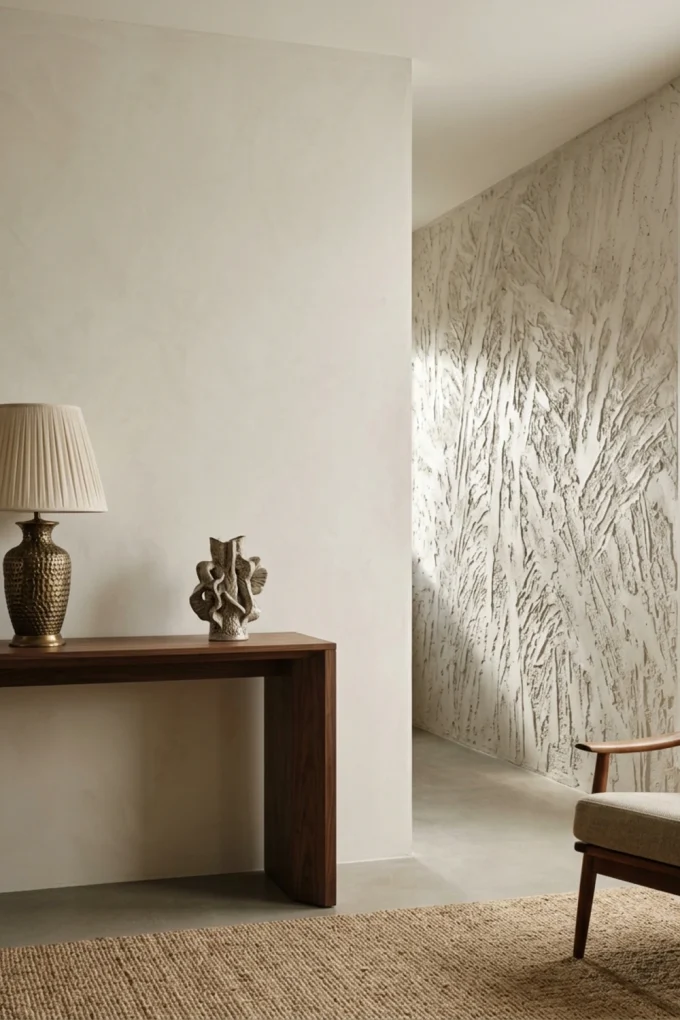
Before exploring materials, decide what the wall needs to accomplish.
Use subtle finishes when you want the room to feel calm and spacious. Choose deeper grooves, slats, or raised panels when the wall needs to become a clear focal point.
Consider:
- How much daylight reaches the wall
- Whether people regularly touch the surface
- How easily the finish can be cleaned
- Whether furniture will hide most of the design
- How difficult it will be to repair later
- Whether the room already has several patterns
A heavily textured wall beside patterned curtains, a bold rug, and detailed furniture can overwhelm a small room. In contrast, a quiet plaster finish can add depth without competing with the decor.
Designer Tip: Test the finish on a large sample board and observe it during the morning, afternoon, and evening. Texture changes significantly as light moves across it.
Suggested image ALT: Wall texture design ideas tested in natural and artificial light
2. Use Soft Plaster for a Calm, Natural Finish
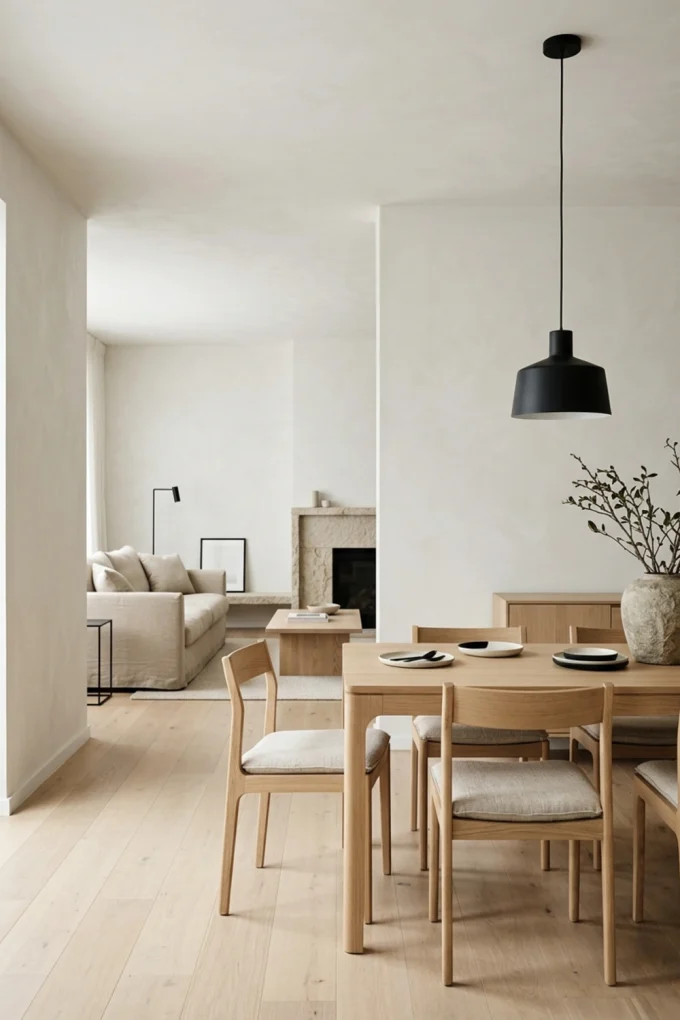
Soft plaster is one of the most versatile interior textured wall ideas because it adds movement without creating harsh shadows.
A hand-applied finish in warm white, sand, beige, clay, or pale gray works well in bedrooms, living rooms, dining areas, and quiet entryways. The gentle variation can make a neutral room feel layered rather than unfinished.
This treatment works especially well with:
- Linen upholstery
- Light oak furniture
- Handmade ceramics
- Natural stone
- Simple black lighting
- Muted rugs
Plaster finishes can be more difficult to patch than ordinary paint. Use them on walls that are unlikely to be damaged by chairs, toys, or frequent furniture movement.
Suggested image ALT: Soft plaster wall texture design ideas in a neutral living room
3. Create Depth With a Color-Washed Finish
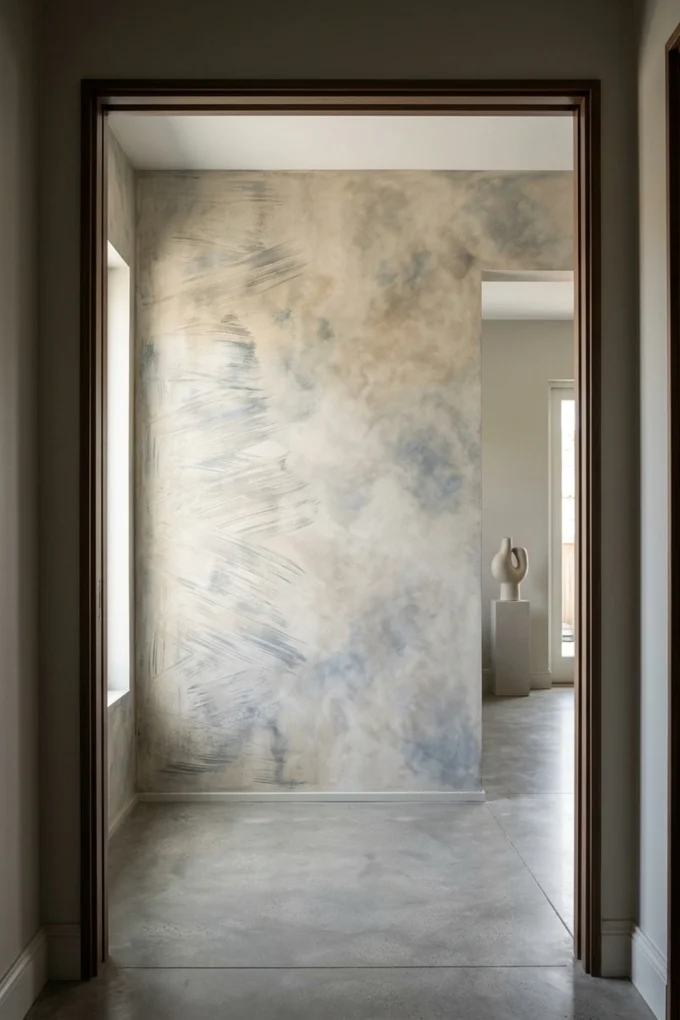
A color wash uses translucent layers to produce soft tonal variation. It suits homeowners who want faux wall texture ideas without installing panels or applying a thick coating.
The effect can feel cloudy, aged, or softly mineral depending on the color and application method. Benjamin Moore notes that brushes produce a more visible textured effect, while sponges or soft cloths create a gentler, diffused finish.
Choose two closely related tones rather than strongly contrasting colors. Warm beige over cream feels subtle, while deep blue over pale gray creates more visible movement.
Practice on a sample before working on the final wall. Uneven pressure can create dark patches that look accidental rather than artistic.
Suggested image ALT: Faux wall texture ideas using a soft blue color wash
4. Try a Concrete-Inspired Wall
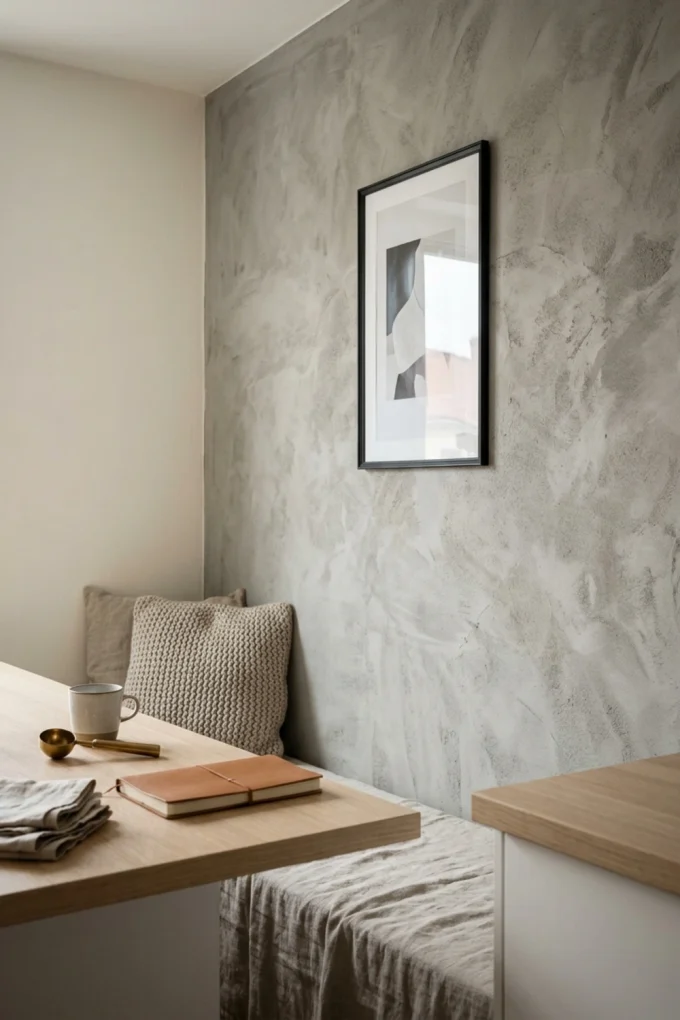
A concrete-look finish gives a room an architectural, contemporary character without requiring a solid concrete wall.
Use it behind a television, fireplace, bed, or console table. The finish works best when balanced with warm materials such as timber, leather, wool, linen, or brass.
A pale concrete effect can suit a compact modern home. Dark charcoal versions need stronger daylight and more visual warmth. Avoid using the same heavy gray treatment on every wall, especially in a small or north-facing room.
For a softer result, choose a finish with gentle tonal variation rather than dramatic trowel marks.
Designer Tip: Repeat the gray tone in one or two smaller details, such as a vase, cushion, or picture frame. This helps the feature wall feel connected to the room.
Suggested image ALT: Concrete wall texture design ideas behind a modern media unit
5. Apply Texture With Drywall Mud
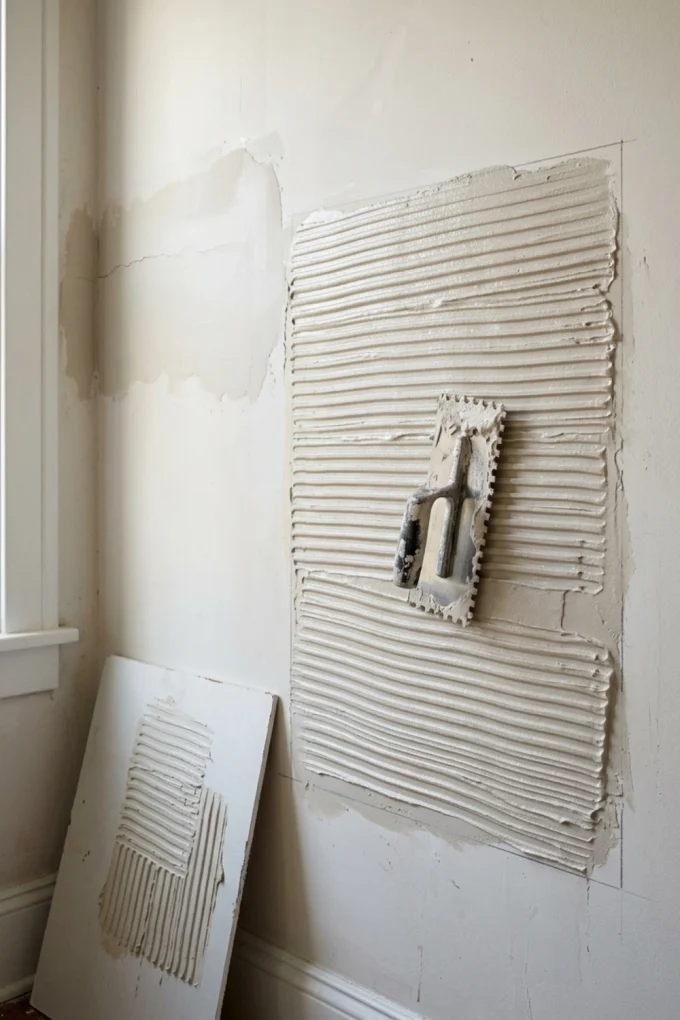
Wall texture with drywall mud ideas range from delicate trowel movement to combed lines and more visible stomp-brush patterns.
Drywall compound can be shaped with a trowel, brush, roller, sponge, or notched tool. This Old House describes comb texture as a DIY method that uses a toothed trowel and drywall compound to create repeated lines and patterns.
The main risk is inconsistency. A pattern that looks manageable on a sample may become difficult to repeat across a full wall.
For a cleaner result:
- Repair cracks and loose material first.
- Practice the technique on spare drywall.
- Work in manageable sections.
- Maintain similar pressure and direction.
- Allow the compound to dry fully before priming.
- Use a matte or low-sheen finish to soften small irregularities.
Texture can disguise minor surface variation, but it should not be used to cover active cracks, moisture damage, or unstable plaster.
Suggested image ALT: Wall texture with drywall mud ideas using a curved trowel pattern
6. Use a Roll-On Finish for an Accessible DIY Project
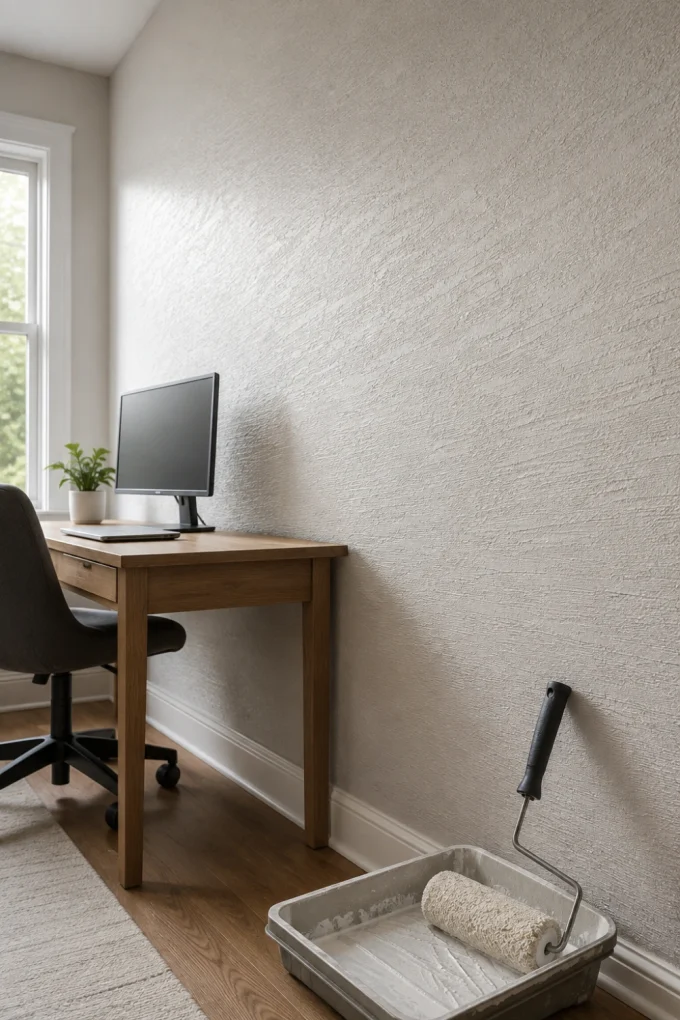
Wall texture ideas with roll-on texture are suitable for homeowners who want more depth than ordinary paint but do not want to create an elaborate hand-troweled design.
A texture roller can create a repeated pattern, while a standard roller can apply a textured coating evenly. The result depends on the roller profile, coating thickness, wall condition, and pressure.
Work continuously across the wall so partially dried sections do not create obvious edges. Keep the application restrained in small rooms because a strong repeated pattern can make the surface feel visually crowded.
Roll-on texture is practical for a utility room, casual family space, or simple feature wall. It may look less refined in a formal room unless the pattern is subtle and professionally applied.
Suggested image ALT: Wall texture ideas with roll-on texture in a small home office
7. Add Dimension With 3D Panels
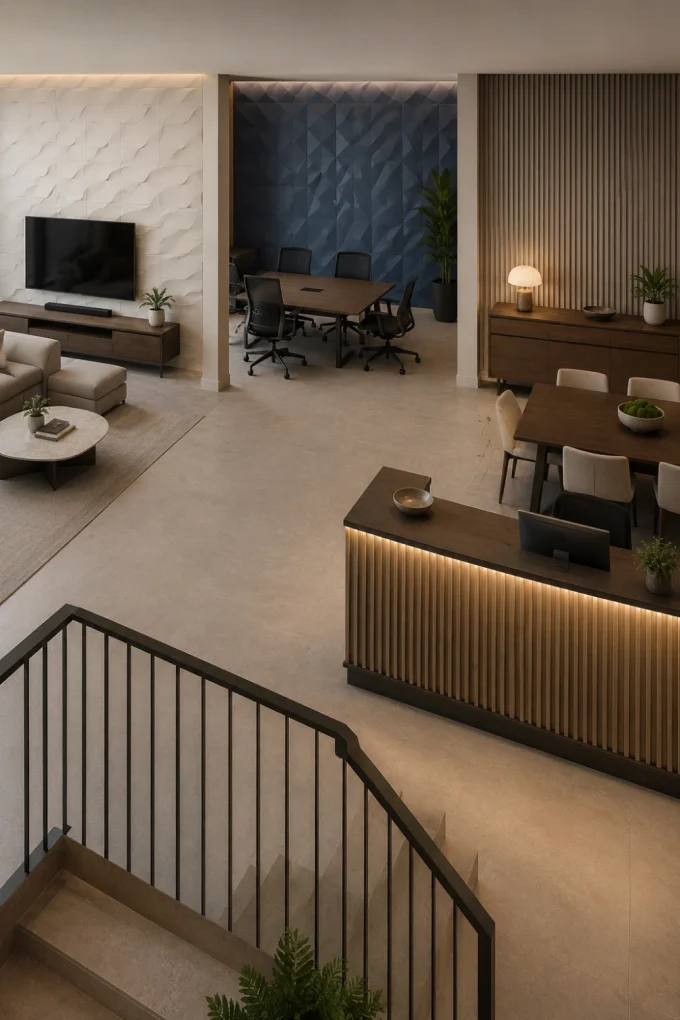
3D wall texture ideas create immediate depth through raised geometric, curved, fluted, or wave-like surfaces.
Use panels behind:
- A living room television
- A dining room sideboard
- A reception desk
- A bed
- An office meeting table
- A staircase landing
Paintable panels offer more flexibility because they can match the wall or create a contrasting feature. However, deep patterns collect more dust and can be difficult to clean behind furniture.
Select a quiet pattern for small rooms. Large waves and bold geometric reliefs usually need enough viewing distance to look balanced.
Do not cover several unrelated walls with different 3D patterns. One carefully placed installation will usually have more impact.
Suggested image ALT: 3D wall texture ideas with fluted panels behind a console
8. Introduce Warmth With Wood
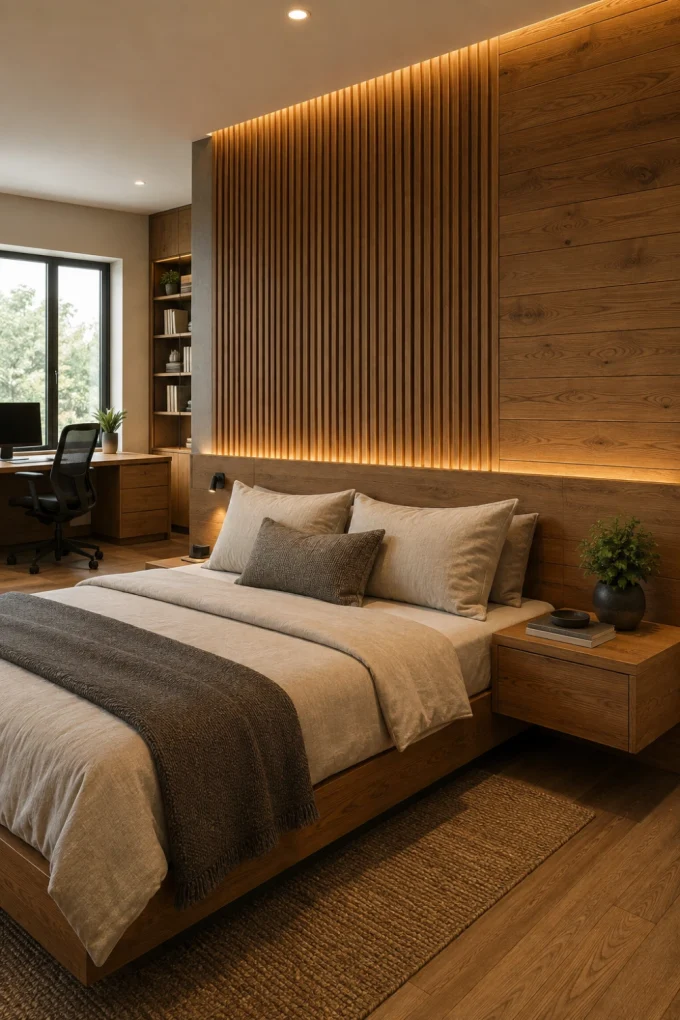
Wood wall texture ideas can make a modern room feel warmer and more comfortable.
Vertical slats create height and rhythm. Horizontal boards can make a narrow wall feel wider, while irregular reclaimed timber produces a rustic appearance.
Good locations include:
- Behind a bed
- Around a media unit
- Along a staircase
- Behind a dining bench
- In a quiet office
- On an entryway feature wall
For a modern look, use evenly spaced oak or walnut slats with a simple backing. For a rustic room, use wider boards with natural grain variation.
Do not combine too many competing wood tones. If the floor, table, cabinetry, and feature wall are all different, the room can feel unplanned. Repeat one dominant tone and allow the other finishes to remain quieter.
Internal inspiration: Pair a wood feature wall with a balanced furniture layout using these best home decor tips.
Suggested image ALT: Wood wall texture ideas with vertical oak slats in a modern room
9. Use Paneling for Architectural Character
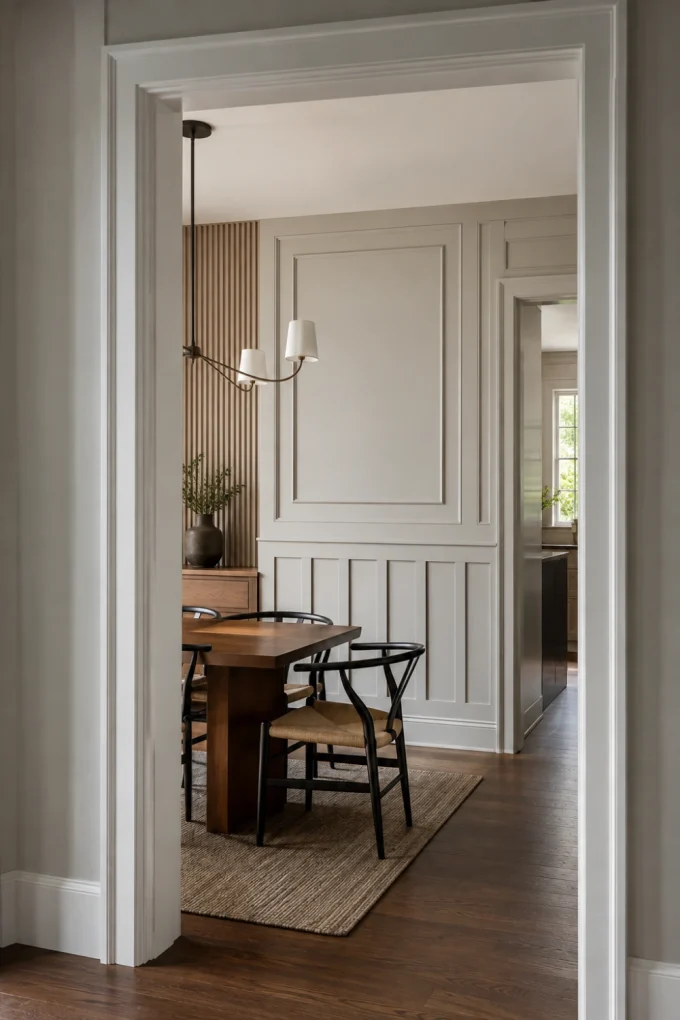
Wall texture ideas with paneling can add structure even when the room has little original architectural detail.
Possible treatments include:
- Picture-frame molding
- Board and batten
- Beadboard
- Fluted panels
- Shaker-style grids
- Half-wall paneling
- Narrow vertical battens
Paneling is especially useful in hallways, dining rooms, bedrooms, and behind built-in seating. It can also protect the lower part of a wall from light everyday contact.
Keep the spacing proportional to the room. Very small boxes can look busy on a wide wall, while oversized frames may feel awkward around doors and windows.
For less predictable layouts, explore these unusual wainscoting ideas.
Designer Tip: Plan molding around outlets, switches, radiators, and furniture before cutting any material.
Suggested image ALT: Wall texture design ideas using modern picture-frame paneling
10. Make a Living Room Wall Feel Intentional
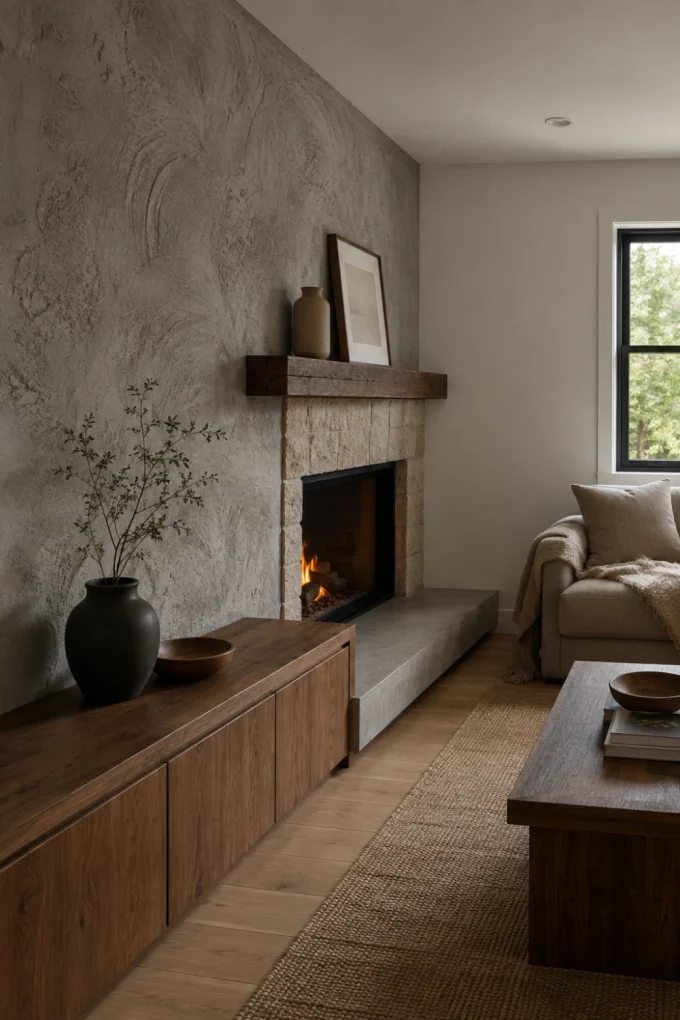
Living room wall texture ideas should support the main purpose of the space rather than compete with the television, fireplace, artwork, and seating.
A media wall benefits from quiet fluting, narrow wood slats, or a subtle concrete finish. A fireplace wall can handle a stronger stone, plaster, or paneled treatment because it is already a natural focal point.
Living room textured wall paint ideas work best on a wall that receives side lighting. Light passing across the surface makes the variation visible without requiring an extreme pattern.
In a small room, use one textured wall and keep the remaining surfaces simple. A restrained palette can make the finish feel sophisticated rather than crowded. These small black and white living room ideas show how limited colors can still produce a strong design.
Suggested image ALT: Living room wall texture ideas with subtle fluting behind the television
11. Give the Bedroom a Softer Focal Point
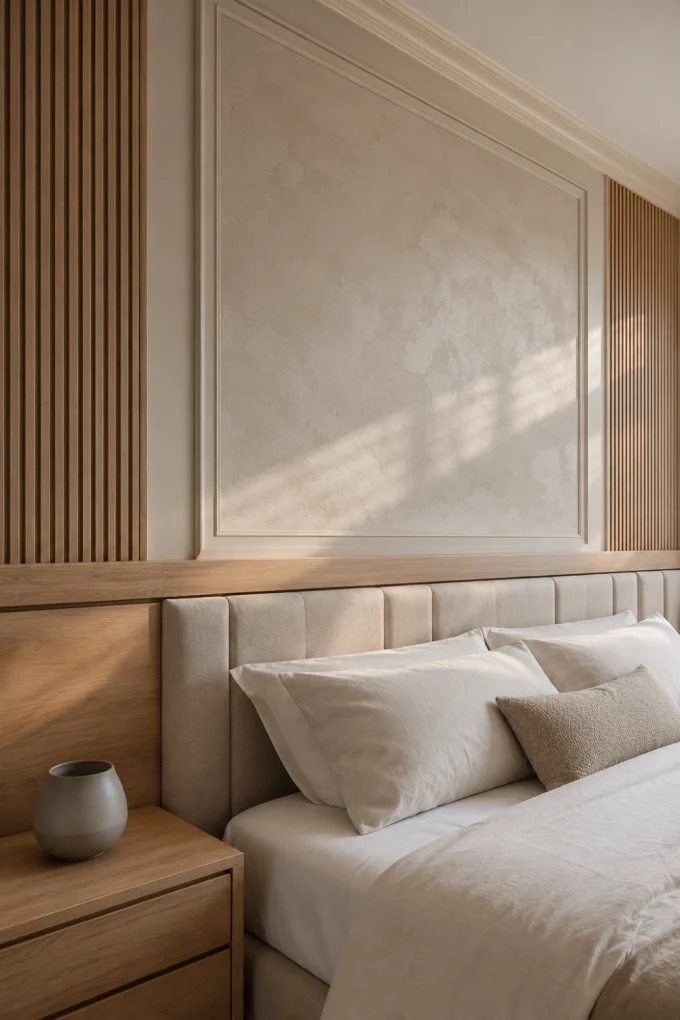
The strongest bedroom wall texture design ideas create interest behind the bed without making the room feel restless.
Suitable options include:
- Soft lime or plaster effects
- Upholstered panels
- Painted molding
- Light wood slats
- Grasscloth-style coverings
- Shallow fluted panels
Avoid deep, rough materials directly beside narrow walkways where clothing or bedding may catch on the surface.
For a small bedroom, paint the texture and surrounding walls in similar tones. This allows shadows to reveal the design without breaking the room into several strong sections.
Coordinate the wall with practical storage rather than treating it as a separate decoration. These modern wardrobe design ideas can help you create a more connected bedroom scheme.
A mirror can also reflect side lighting across the textured surface. See these contemporary bedroom mirror decor ideas for balanced placement.
Suggested image ALT: Bedroom wall texture design ideas with upholstered panels behind the bed
12. Select Bathroom Texture Carefully
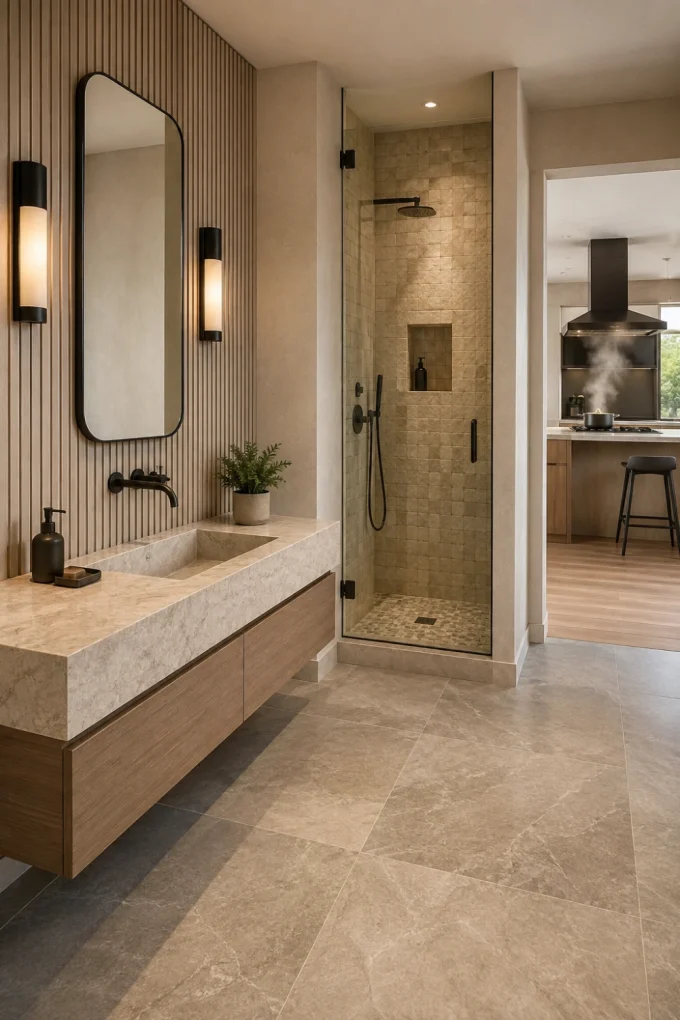
Textured bathroom wall ideas must account for humidity, splashes, cleaning, and ventilation.
Use washable, moisture-appropriate materials in wet areas. Deep porous texture is usually better suited to a dry vanity wall than the inside of a shower. Around a bath or basin, avoid grooves that trap dust, soap residue, or moisture.
Practical bathroom options include:
- Fluted moisture-resistant panels
- Textured tiles
- Sealed plaster finishes
- Stone-look surfaces
- Subtle waterproof wall coverings
Texture can also form a calm background for greenery. These bathroom plant decor ideas can help you select plants and placements that complement the wall rather than hide it.
Designer Tip: Confirm the manufacturer’s wet-area rating before placing any decorative panel close to a shower, bath, or sink.
Suggested image ALT: Textured bathroom wall ideas behind a floating vanity
13. Bring Texture Into Kitchens and Dining Areas
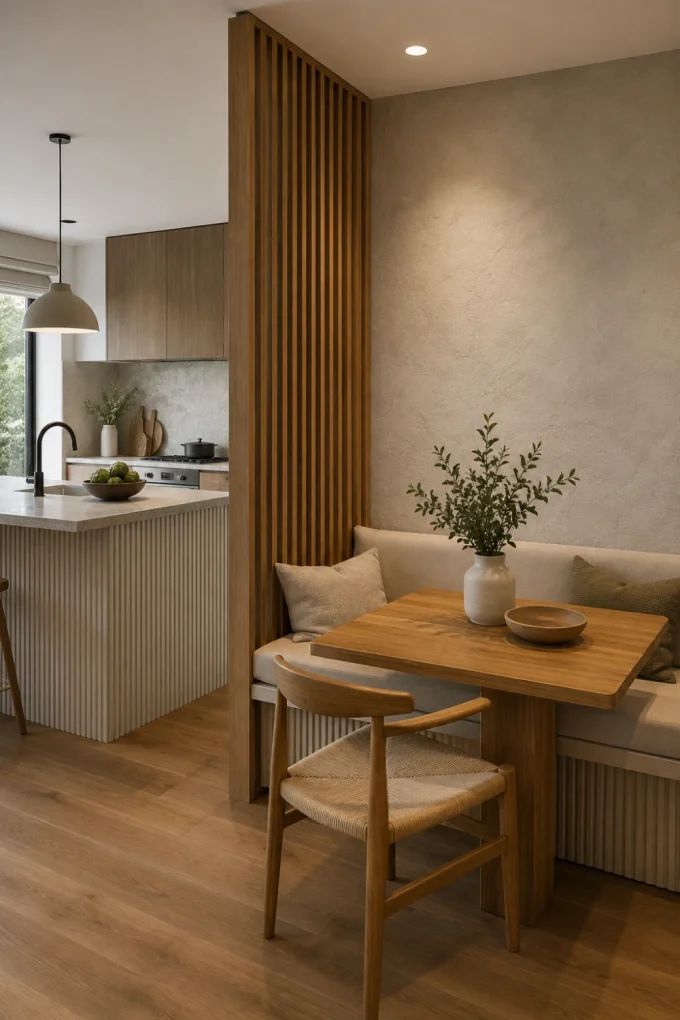
Kitchen texture should be easy to clean and should not interfere with cabinetry, appliances, or food preparation.
Kitchen island wall ideas with textured walls can include vertical timber battens, reeded panels, tile, or painted molding on the outward-facing side of the island. Keep heavily grooved finishes away from areas regularly exposed to grease and splashes.
In an open kitchen, repeat one finish from the cabinets, floor, or dining furniture so the textured surface feels connected. These open kitchen design ideas provide useful guidance for maintaining flow between zones.
Textured wall ideas for a dining room can be more decorative. Consider picture-frame molding, grasscloth-style covering, plaster, or a dark fluted wall behind a sideboard.
A breakfast corner can use a quieter treatment behind built-in seating. Review these best breakfast nook ideas for practical bench, table, and wall combinations.
Suggested image ALT: Wall texture design ideas for an open kitchen and dining space
14. Improve Hallways, Staircases, and Offices
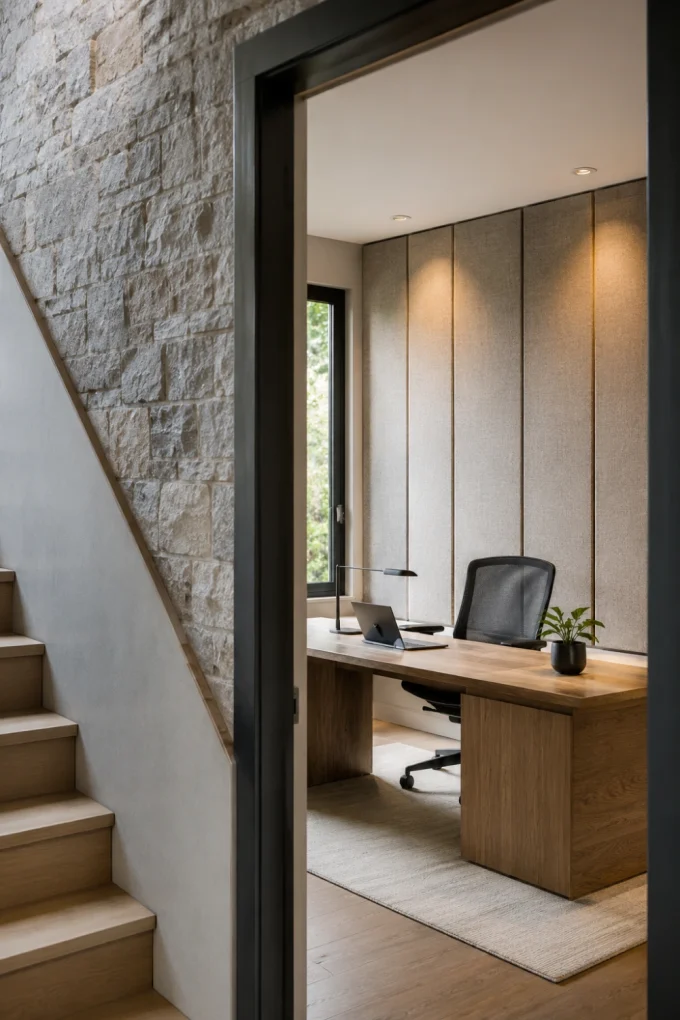
Narrow transitional spaces often need character, but deep texture can make them difficult to clean.
For a hallway, choose shallow paneling, smooth plaster, or controlled brush movement. Place rough stone or deep 3D panels away from shoulder height in tight walkways.
These stunning hallway ideas can help you balance wall details with lighting, flooring, and furniture.
A staircase wall can support vertical battens or molding that follows the rise of the steps. For lower-level spaces, these basement staircase ideas for a finished look offer relevant layout inspiration.
In an office, use texture behind the desk or meeting table rather than on every wall. Subtle acoustic panels can add depth while making the workspace feel more finished. See these office interior design ideas for coordinated furniture and lighting choices.
Suggested image ALT: Interior textured wall ideas along a modern staircase
15. Use Color to Strengthen the Texture
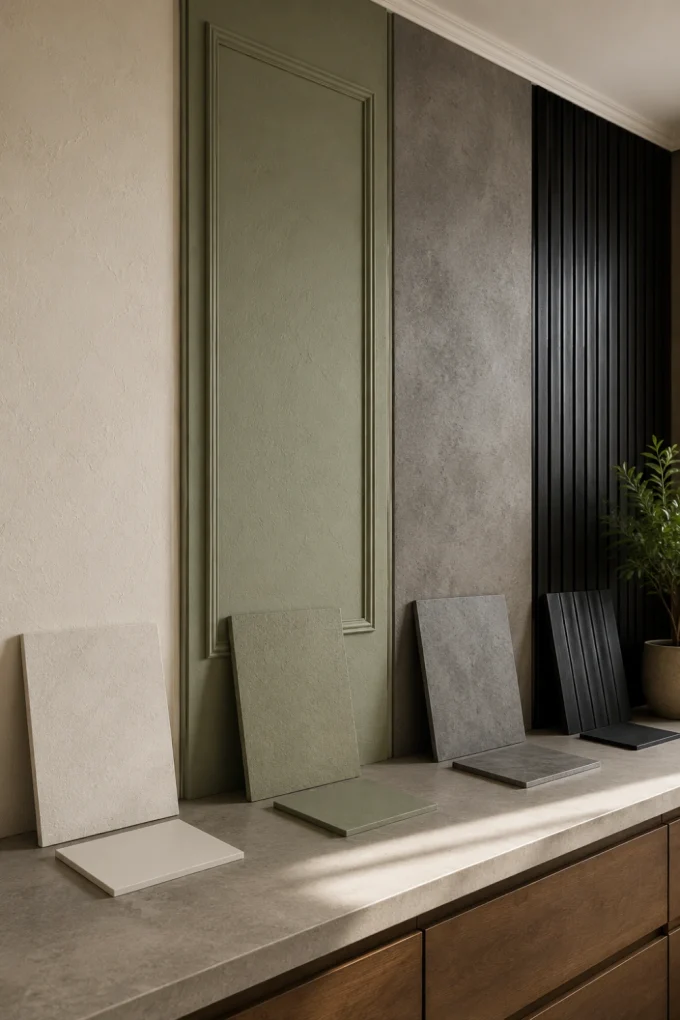
Textured wall paint color ideas should account for the shadows created by the surface.
Light colors reveal texture softly. Dark colors create stronger shadows and a more dramatic result. Mid-tone earthy colors often provide the best balance between visibility and comfort.
Consider these combinations:
- Warm white with soft plaster
- Clay with hand-troweled movement
- Sage green with picture-frame molding
- Deep blue with narrow fluting
- Charcoal with concrete texture
- Muted purple with smooth lime-style variation
- Black with vertical timber slats
Black texture wall design ideas work best when the room has sufficient daylight, warm materials, and lighter surrounding walls. Without balance, a large black textured surface can make a small room feel enclosed.
For a more expressive feature, these purple paint color ideas can help you distinguish muted, warm, and cool purples.
Always sample the color directly on the textured material. Grooves and raised areas can make it appear darker than it does on a flat paint card.
Suggested image ALT: Textured wall paint color ideas using muted purple plaster
16. Light the Surface From the Side
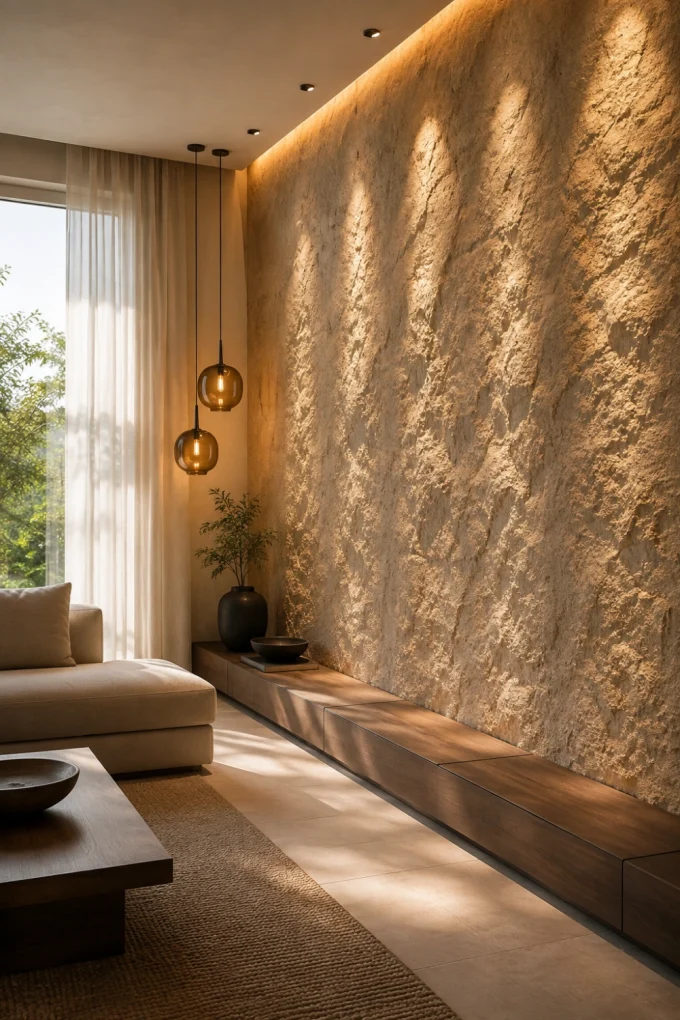
Lighting textured walls is as important as selecting the material.
Front-facing light can flatten the design. Light placed above, below, or beside the surface creates small shadows that reveal its depth.
Useful lighting textured walls design ideas include:
- Ceiling spotlights positioned near the wall
- Wall washers
- Picture lights
- Up-and-down sconces
- Concealed LED strips
- Pendant lights placed slightly to one side
Avoid placing very bright lights close to an uneven DIY surface. Strong grazing light can reveal every ridge, patch, and repair.
Use dimmable lighting when possible so the feature can feel bright during the day and softer in the evening. Explore these wall sconce light fixture ideas for decorative options, or review indoor wall-mounted light fixture ideas for broader placement guidance.
Suggested image ALT: Lighting textured walls design ideas with warm wall-washing sconces
17. Try Affordable DIY Texture on a Small Surface
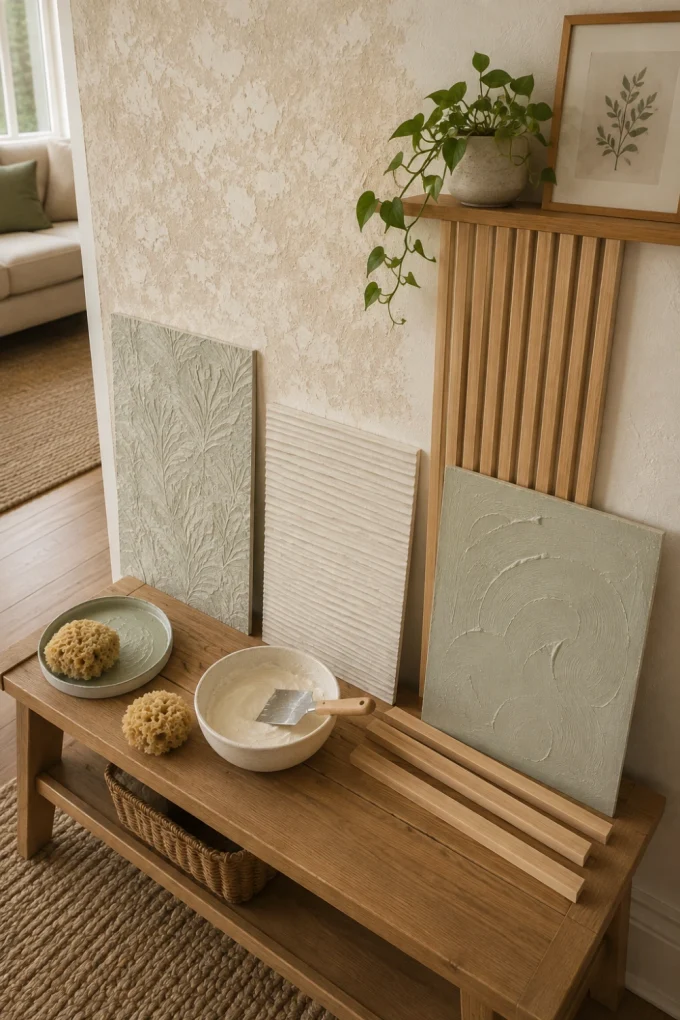
Cheap texture wall ideas are most successful when the project is limited to one manageable wall or architectural section.
Simple DIY texture wall ideas include:
- Applying painted battens in a basic grid
- Using a sponge for soft paint variation
- Creating shallow comb lines in compound
- Adding removable textured wallpaper
- Installing lightweight paintable panels
- Applying a simple color wash
- Reusing clean wood strips for a small feature
This Old House recommends natural sea sponges for sponge painting because their irregular surface helps create a varied, more artisanal pattern.
Creative paint wall texture ideas are inexpensive, but technique matters. Always prepare the wall, test the finish, and complete one section before purchasing materials for an entire room.
DIY textured wall painting ideas should also remain repairable. Complicated effects can be difficult to reproduce when a future patch is needed.
Suggested image ALT: Cheap texture wall ideas created with a natural sponge and paint
18. Choose Durable Texture for Exterior Walls
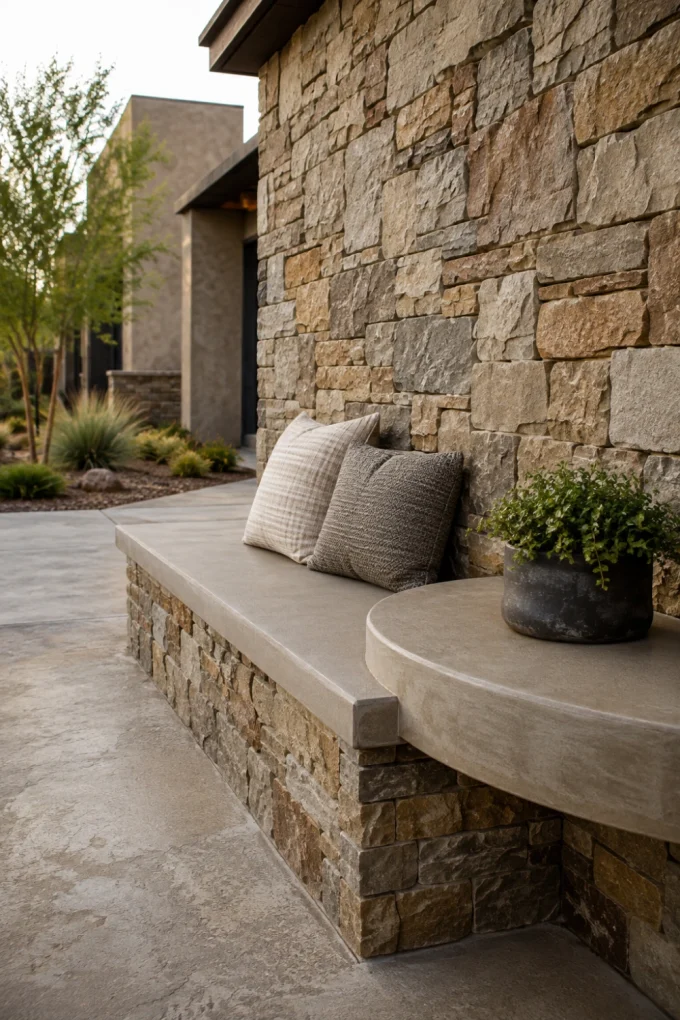
Exterior wall texture design ideas must respond to weather, water exposure, movement, dirt, and the building material underneath.
Common exterior effects include:
- Textured masonry coatings
- Stucco
- Render
- Stone cladding
- Brick
- Timber screening
- Board-formed concrete effects
- Exterior-rated panels
Use deeper texture where the wall has enough distance to be appreciated. Near entrances and narrow paths, smoother surfaces are easier to clean and less likely to catch clothing.
Outdoor wall texture ideas should relate to the architecture. A heavily rustic finish may look out of place on a clean contemporary facade, while an ultra-smooth finish may feel disconnected from a traditional stone home.
Do not apply a decorative coating over unresolved dampness, cracks, or loose material. Exterior movement and water problems need proper repair before finishing.
Suggested image ALT: Exterior wall texture design ideas using light textured render and timber
19. Know When to Cover, Repair, or Remove Existing Texture
Ideas for covering textured walls include skim coating, installing paneling, applying suitable wall covering, or adding new drywall over a badly damaged surface.
The correct option depends on:
- How deep the existing texture is
- Whether it is firmly attached
- The age of the surface
- The condition of the wall underneath
- Available room depth
- The finish you want afterward
Paint ideas over textured plaster walls can refresh a stable surface, but paint will not remove the pattern. A new color may actually make the texture more visible because light reflects differently across it.
When exploring ideas for painting textured walls, use the correct roller. Benjamin Moore recommends thicker roller sleeves for rougher textured surfaces because they can reach recessed areas more effectively.
Patch repairs also need care. A repaired area may require the surrounding pattern to be recreated with a roller, sponge, or spray texture so it does not remain visibly smooth.
Suggested image ALT: Ideas for covering textured walls with smooth modern paneling
20. Avoid Common Wall Texture Mistakes
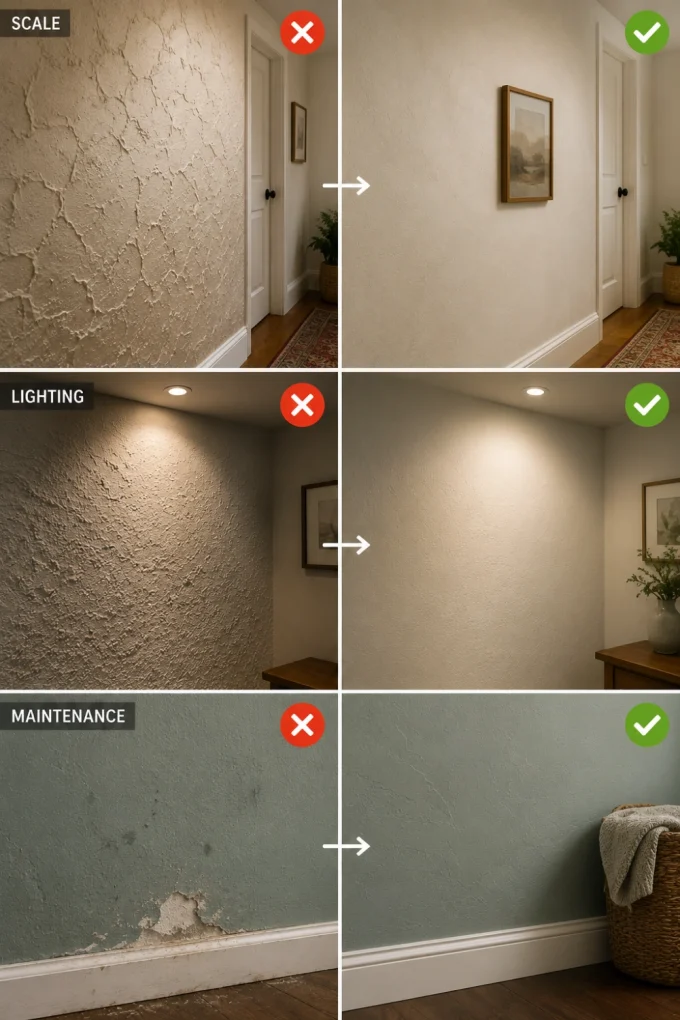
A strong finish can still fail when scale, lighting, or maintenance is ignored.
Texturing Every Wall
Too much texture reduces the impact of each surface and can make a room feel restless.
Skipping Surface Preparation
Loose paint, moisture damage, cracks, and unstable plaster must be addressed first.
Choosing a Pattern That Is Too Deep
Deep grooves collect more dust and make future repairs harder.
Ignoring Furniture Placement
Do not install expensive texture where a wardrobe, television, headboard, or cabinet will hide most of it.
Using the Wrong Finish in Wet Areas
Confirm that panels, coatings, adhesives, and sealers are appropriate for the location.
Forgetting Future Removal
Some finishes are easy to repaint. Others may require sanding, skim coating, or replacing part of the wall.
Relying on Texture to Hide Serious Damage
Texture may soften minor visual irregularities, but it cannot fix active cracks, leaks, or movement.
Designer Tip: Begin with a removable or easily repaintable treatment when you are uncertain about living with a highly textured surface.
How to Select the Best Wall Texture Design Ideas
The best wall texture design ideas support the room instead of becoming an isolated decoration.
Use plaster or a soft paint effect when you want quiet depth. Choose wood or paneling for warmth and structure. Install 3D panels when the room needs a strong focal point, and use durable, moisture-appropriate materials in kitchens, bathrooms, and outdoor areas.
Before committing:
- Photograph the wall in daylight.
- Measure visible space after furniture is placed.
- Create or order a large sample.
- Test the sample beside flooring and fabrics.
- View it under the planned lighting.
- Estimate installation and future repair costs.
- Confirm cleaning and moisture requirements.
This small testing process is more reliable than selecting a finish from a tightly cropped inspiration photo.
Conclusion
Thoughtful wall texture design ideas can make plain rooms feel warmer, deeper, and more intentional. The right finish may be as simple as painted molding or as dramatic as a timber-slatted media wall.
The most successful choice fits the room’s size, lighting, purpose, and maintenance needs. Use strong texture selectively, prepare the surface properly, and balance raised patterns with simpler furniture and colors.
Start with one focal wall or a large sample rather than committing to an entire room. A restrained finish that works with the architecture will usually remain appealing longer than an elaborate treatment chosen only because it is currently fashionable.
Frequently Asked Questions
Which wall texture is best for a modern home?
Wall texture ideas for modern homes include soft plaster, concrete-inspired finishes, narrow wood slats, fluted panels, and simple picture-frame molding. Choose one controlled pattern and combine it with clean furniture and a limited color palette. Avoid using several unrelated textures in the same room.
Can wall texture hide an uneven surface?
Light texture can reduce the visibility of minor surface variation, but it cannot fix loose plaster, moisture problems, deep cracks, or movement. Repair the cause of the damage before applying a decorative finish.
What is the easiest wall texture to do yourself?
A soft sponge-painted finish, simple color wash, shallow roller texture, or basic painted batten design is usually more manageable than detailed plaster work. Test the technique on a board before applying it to the wall.
Are textured walls difficult to clean?
Deep grooves, rough plaster, and intricate 3D panels collect more dust than flat walls. Shallow texture and sealed finishes are easier to maintain. Avoid highly absorbent or deeply grooved materials in cooking, bathing, and high-contact areas.
Can you paint directly over a textured wall?
You can repaint a stable, clean textured wall, but the existing pattern will remain. Use a roller sleeve suitable for the depth of the texture, work paint into recessed areas, and inspect the surface from several angles for missed spots.
Should every wall in a room have texture?
Usually not. One main surface is often enough to create depth. Texturing every wall may make a small or already decorated room feel crowded. Subtle plaster is an exception because it can sometimes be used throughout a room without producing a strong repeated pattern.
What color shows wall texture most clearly?
Mid-tone and dark colors create stronger shadows, making raised patterns more visible. Light colors reveal texture more softly. The best choice depends on the room size, daylight, and desired mood, so test the color on the actual textured material before deciding.