

A well-decorated home is not simply a collection of attractive furniture and accessories. The rooms also need to support everyday life, feel comfortable, and connect naturally with one another.
The best home decor tips begin with practical questions. How will the room be used? Is the furniture the right size? Is there enough light? Do the colors work with the flooring and other permanent finishes? Does every object deserve the space it occupies?
You do not need to renovate your whole home or replace everything you own. Editing clutter, rearranging furniture, improving lighting, using a properly sized rug, or repeating one color across several rooms can make a noticeable difference.
This guide will help you decorate with more confidence, avoid expensive mistakes, and create rooms that feel personal, balanced, and useful.
1. Decide How the Room Needs to Function
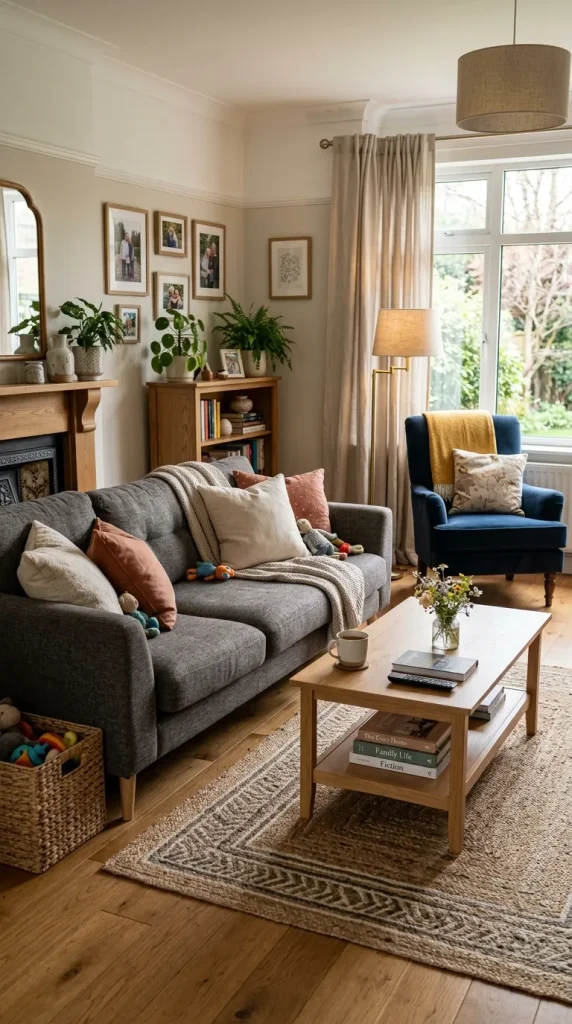
Start with what happens in the room rather than how you want it to look in a photograph.
A living room used for television, children, pets, and casual evenings needs a different arrangement from a formal sitting room used mainly for guests. A bedroom may also need to support dressing, reading, storage, or occasional work.
List the room’s three most important functions. For example:
- Watching television
- Hosting four to six people
- Reading comfortably
- Storing toys
- Working from home
- Getting dressed
- Eating family meals
Use those activities to decide where the largest furniture should go.
A comfortable chair should have adequate light and a nearby surface. A dining area needs enough space to move chairs. A family room needs storage where people naturally use it.
Designer Tip: Observe how people already walk through the room. Keep that route clear instead of forcing them around a coffee table, chair, or storage basket.
Mistake to Avoid: Designing around a photograph that shows a different room size, window placement, or lifestyle.
2. Edit the Room Before Buying Anything New
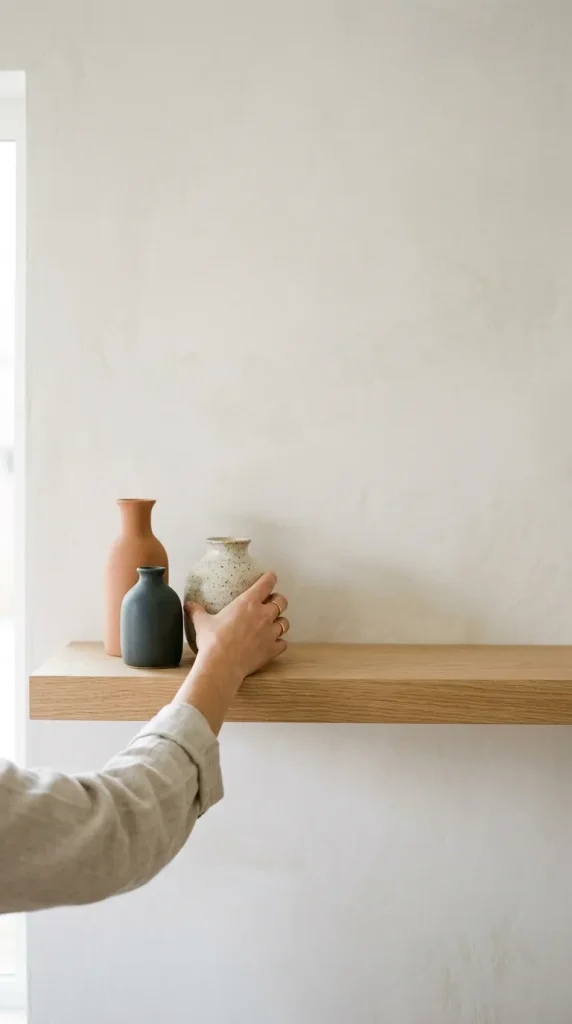
Many rooms do not need more decor. They need clearer surfaces and fewer competing objects.
Remove accessories from shelves, tables, and mantels. Put back only the pieces that are useful, meaningful, or visually strong.
Group similar items instead of spreading them around the room. A collection of small ceramics looks more intentional on one shelf than scattered across five surfaces.
Also check for items that belong somewhere else:
- Unopened mail
- Chargers and cables
- Children’s toys
- Extra blankets
- Remote controls
- Shoes and bags
- Products left on bathroom counters
Use trays, baskets, drawers, and closed cabinets to contain daily clutter. This collection of practical home decor items can help you identify accessories that also provide storage, lighting, or useful surface organization.
Budget Tip: Shop your own home first. A lamp, mirror, vase, or chair may work better in another room.
3. Choose a Style Direction Instead of a Strict Theme
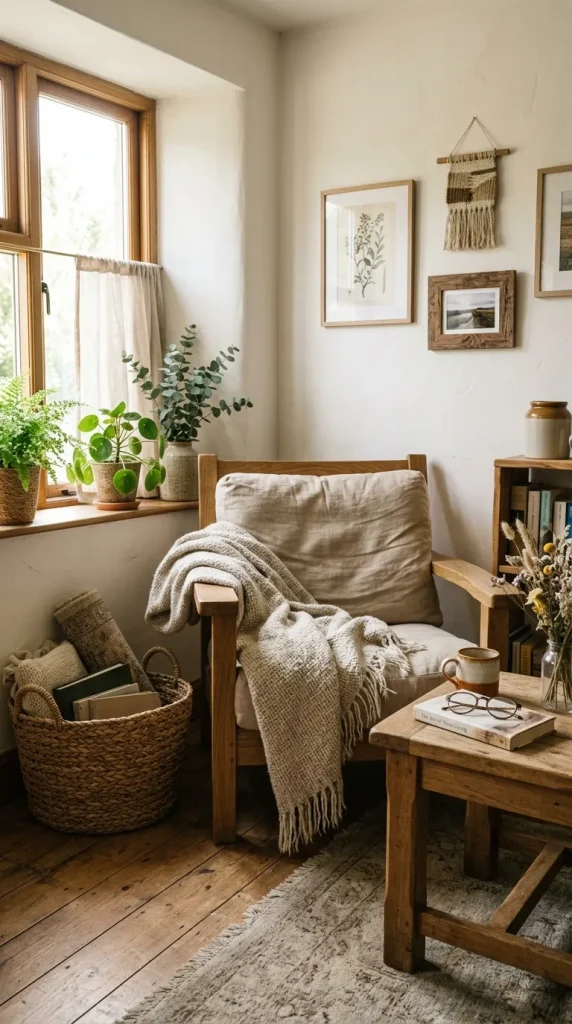
A clear style direction helps you make decisions, but a rigid theme can make the home feel staged.
Rather than deciding that every object must be farmhouse, coastal, modern, or traditional, choose three or four descriptive words.
For example:
- Warm, natural, relaxed
- Clean, graphic, comfortable
- Collected, colorful, traditional
- Calm, minimal, textured
- Rustic, practical, welcoming
Use these words when evaluating furniture, colors, art, and accessories.
A warm and natural room might include oak, linen, woven baskets, soft white walls, and muted green accents. A clean and graphic room might use black, white, straight lines, and one warm wood tone.
You can mix furniture from different periods when the pieces share a connection. Similar colors, shapes, materials, or visual weight can make old and new furniture work together.
Designer Tip: Save inspiration images, then identify the repeated details. The useful information is not the room label but the colors, materials, shapes, and atmosphere you consistently prefer.
4. Build a Practical Color Palette
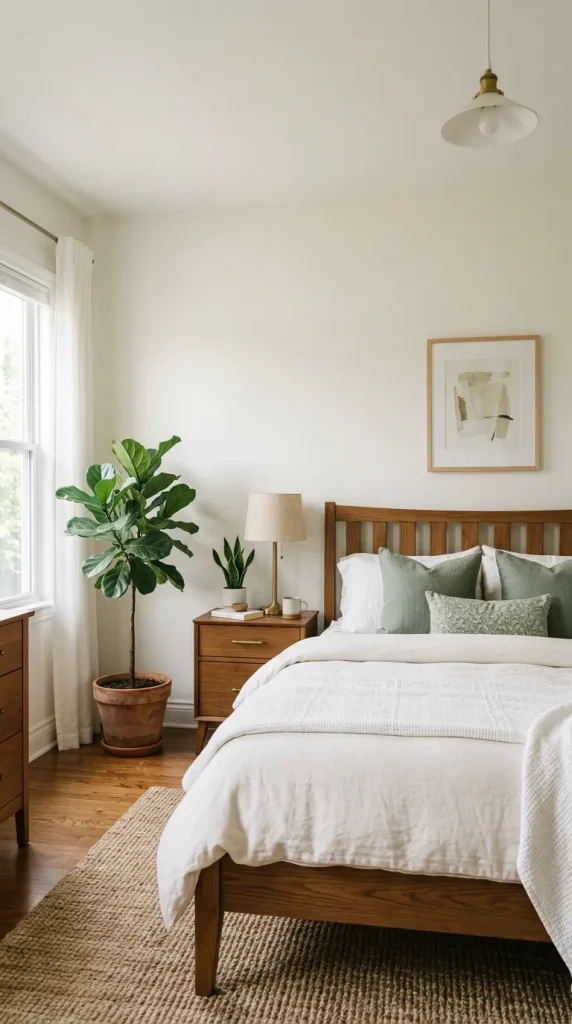
Choose colors after considering the flooring, cabinets, countertops, large furniture, and natural light.
These fixed elements contain undertones that affect how paint and textiles appear. A cool gray wall may look disconnected beside warm beige flooring, while a soft cream may relate more naturally.
The 60-30-10 color guideline is a useful starting point:
- About 60% dominant color
- About 30% secondary color
- About 10% accent color
The percentages are not a mathematical requirement. They simply help prevent every color from competing equally. House Beautiful’s May 12, 2026 guide describes the formula as a flexible starting point rather than a strict design law.
For example, a living room could combine:
- Warm white walls and curtains
- Medium-brown upholstery and wood
- Small accents of muted green
For stronger contrast, black can be used in lighting, frames, hardware, or small furniture. These small black and white living room ideas show how a limited palette can still feel layered instead of cold.
If you prefer a more expressive color, explore these purple paint color ideas before committing to an entire room. Deep purple may feel enclosed in a dark, compact room, while muted plum, lavender, or gray-purple can be easier to balance.
Designer Tip: Test large paint samples on more than one wall. Review them in morning light, afternoon light, and artificial evening light.
Mistake to Avoid: Choosing paint from a small chip without comparing it with the room’s permanent finishes.
5. Measure the Room and Plan Furniture Scale
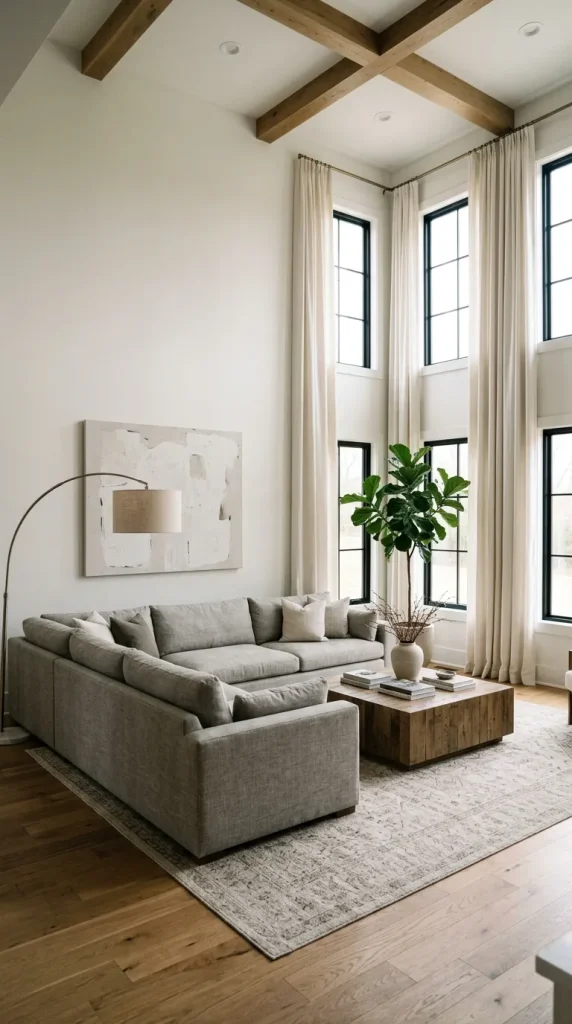
A beautiful sofa can still be the wrong sofa if it blocks movement or overwhelms the room.
Measure:
- Room length and width
- Doors and walkways
- Window positions
- Ceiling height
- Existing furniture
- Available wall space
- Delivery entrances and stairways
Use painter’s tape to mark a proposed sofa, table, bed, or rug on the floor. This helps you understand how much space the item will occupy.
In a small room, do not automatically buy several miniature pieces. One appropriately sized sofa and a flexible side chair may provide more comfort than a collection of undersized furniture.
Large rooms also need suitable scale. Tiny artwork, short curtains, and narrow rugs can make a spacious room feel unfinished.
Designer Tip: Compare furniture to the architecture. A tall ceiling may need taller curtains, a larger light fixture, or more substantial artwork.
6. Create One Clear Focal Point
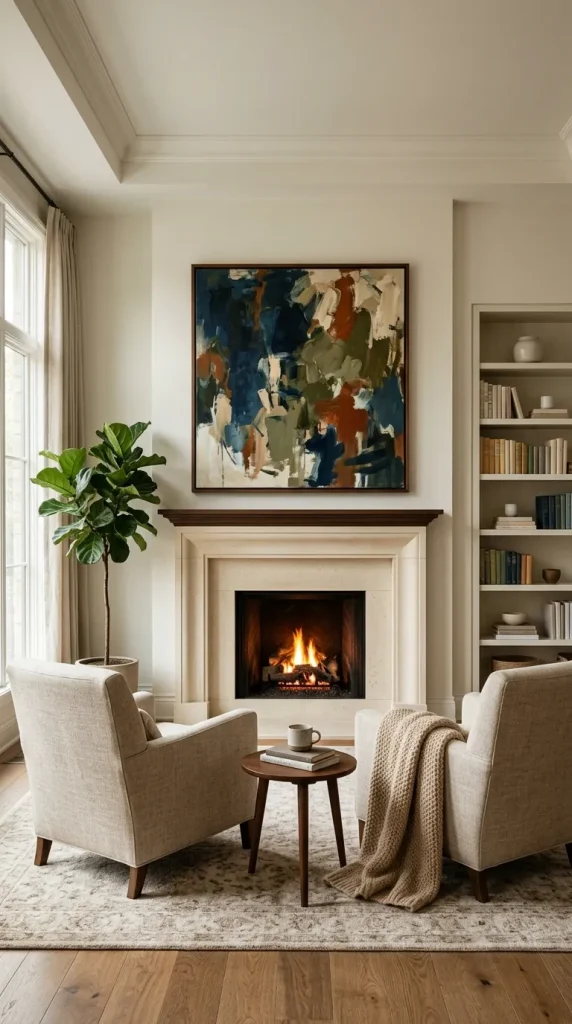
A focal point gives the room visual direction.
It may already exist:
- Fireplace
- Large window
- Architectural arch
- Built-in shelves
- Bed
- Dining table
- Statement artwork
When the room has no architectural focal point, create one using a large mirror, headboard, artwork, wallpaper, or distinctive light fixture.
Arrange the main furniture to acknowledge the focal point. Seating may face a fireplace, window, or conversation area. A bedroom can center on the bed and headboard.
Avoid placing several dramatic features beside one another. A strong wallpaper, bold gallery wall, patterned sofa, colorful rug, and oversized light may all compete when used in the same sight line.
Budget Tip: One large secondhand frame or textile can create more impact than many small wall decorations.
7. Arrange Furniture for Conversation and Movement
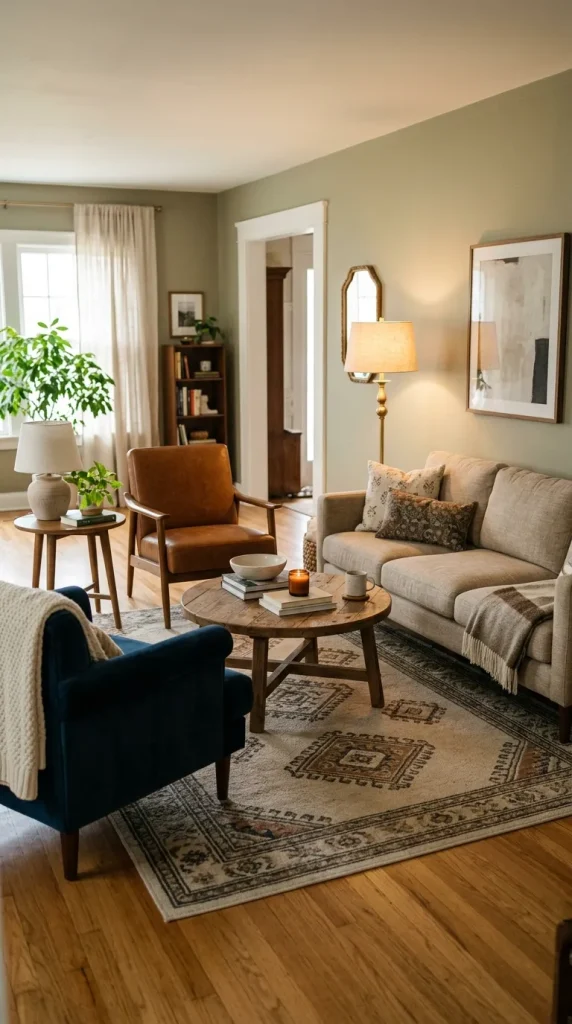
Furniture should relate to other furniture rather than only to the walls.
In a living room, bring seating close enough for comfortable conversation. Side tables should be reachable, and lamps should support the seats beside them.
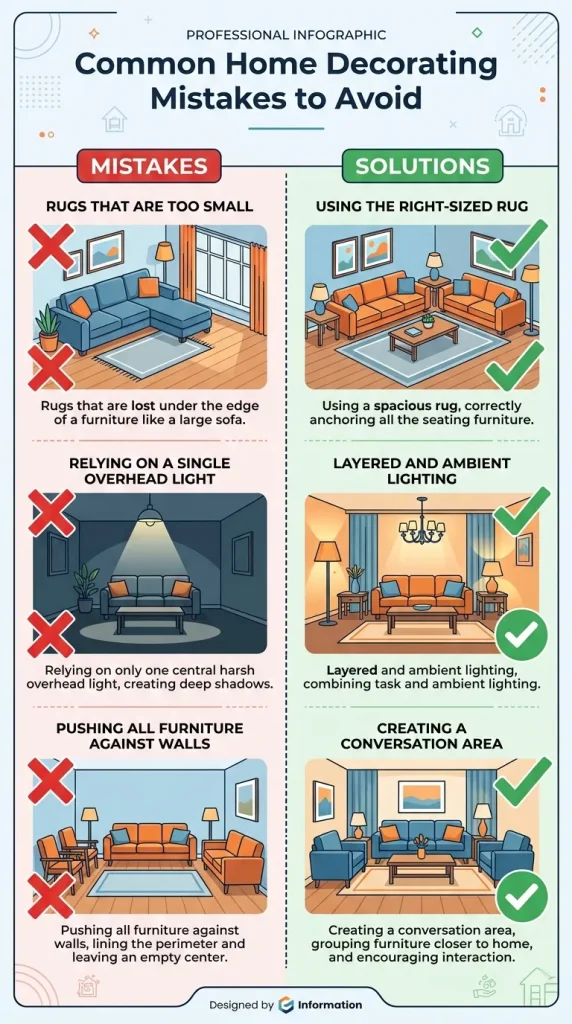
Do not push every piece against the perimeter simply to expose more floor. In many rooms, moving a sofa slightly away from the wall creates a more intentional arrangement.
Use furniture to define zones in an open-plan home. A rug, console, sofa back, pendant light, or change in furniture direction can separate a dining area from a living space without building a wall.
Keep the primary pathway clear. Decorative furniture should not require people to turn sideways or repeatedly walk around obstacles.
Designer Tip: Photograph the arrangement from the doorway. The image can reveal imbalance and blocked paths that are less obvious while standing inside the room.
8. Layer Lighting Instead of Relying on One Fixture
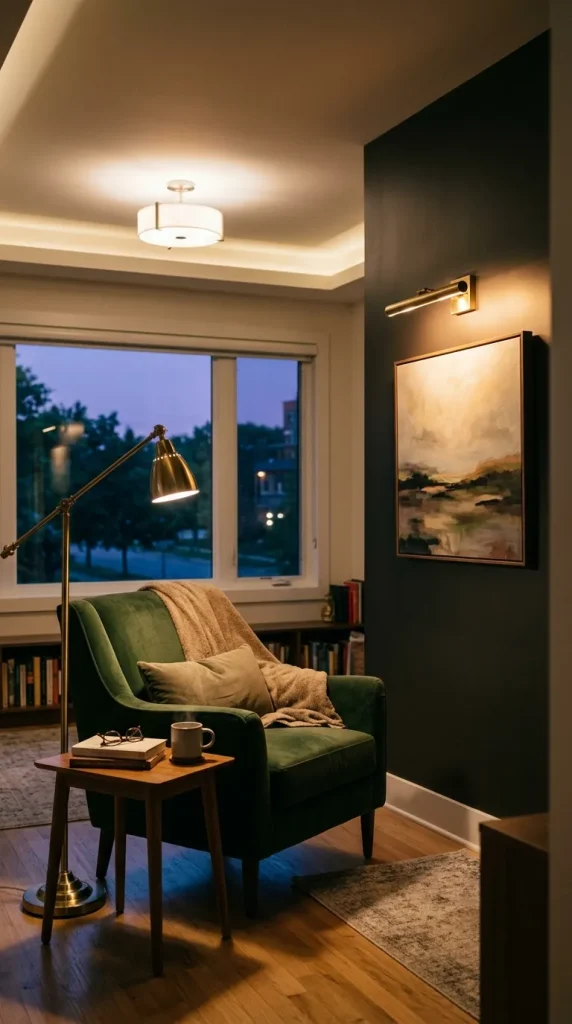
A single ceiling fixture usually provides visibility but not comfort, depth, or atmosphere.
Use three lighting layers where practical:
- Ambient lighting for general illumination
- Task lighting for reading, cooking, dressing, or working
- Accent lighting for art, architectural details, or mood
A living room might use a ceiling fixture, a floor lamp beside the sofa, and a small lamp on a console. A bedroom might combine an overhead fixture, bedside lights, and soft wardrobe lighting.
Wall-mounted lighting can save valuable surface and floor space. Review these wall sconce light fixture ideas for bedsides, reading corners, hallways, and living-room walls.
These indoor wall-mounted light fixture ideas can also help when a room lacks space for a floor or table lamp.
Keep bulb temperatures reasonably consistent within fixtures used together. A very cool ceiling light beside a warm table lamp can make the room feel visually uneven.
Designer Tip: Place light where an activity happens, not merely where an electrical outlet is convenient.
9. Use Rugs, Curtains, and Artwork at the Right Scale
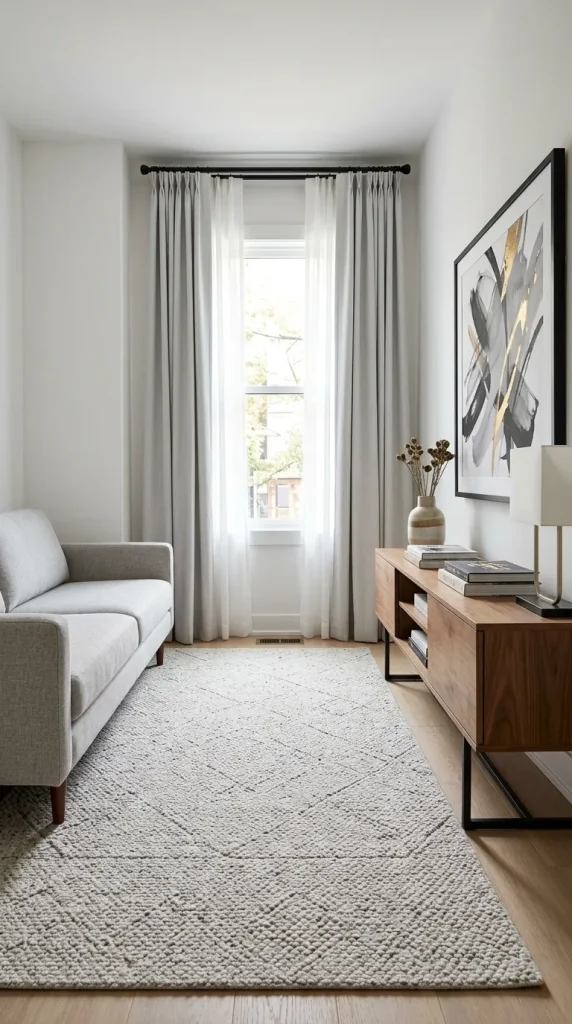
Finishing layers often look wrong because they are too small.
Rugs
In a living room, the rug should normally reach beneath at least the front legs of the main seating. A small rug floating between furniture can make the arrangement look disconnected.
In a dining room, the chairs should remain on the rug when pulled away from the table.
Curtains
Mounting curtain rods above the window and extending them beyond the frame can make the opening feel larger. Ensure the curtains remain full enough to look substantial when closed.
Artwork
Small art can look lost above a wide sofa, bed, or console. Use one larger piece or arrange several smaller works as a unified group.
Artwork should relate to the furniture below it. The wall and furnishing should read as one composition rather than two unrelated elements.
Mistake to Avoid: Buying a rug or artwork because the price is attractive without checking its actual dimensions.
10. Mix Textures, Materials, and Finishes
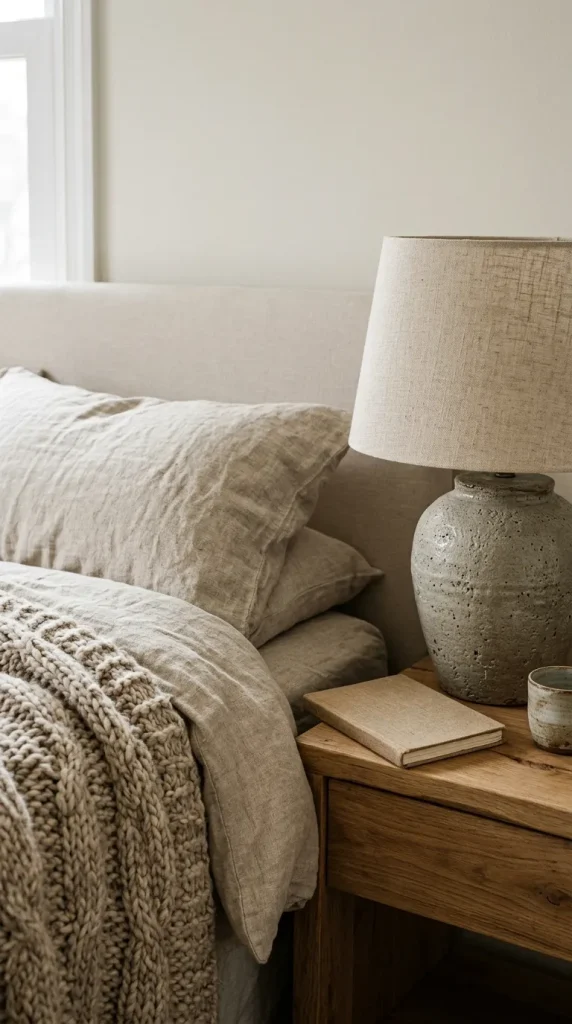
A neutral room needs texture to prevent it from feeling flat.
Combine a limited range of materials such as:
- Linen or cotton
- Wool
- Natural wood
- Ceramic
- Woven fiber
- Metal
- Glass
- Stone
A bedroom with white bedding becomes more interesting when it includes a padded headboard, linen curtains, wood nightstands, a wool rug, and ceramic lamps.
Repeat major materials so they feel intentional. If you use matte black lighting, repeat black in a frame, handle, or small table. If the room contains warm oak, echo it in another visible area.
Avoid introducing too many unrelated finishes. Several wood tones can work together, but they usually need a shared undertone or repeated placement.
Designer Tip: Photograph the room in black and white. If it still looks layered, the textures and values are doing useful work.
11. Mix Patterns Through Color and Scale
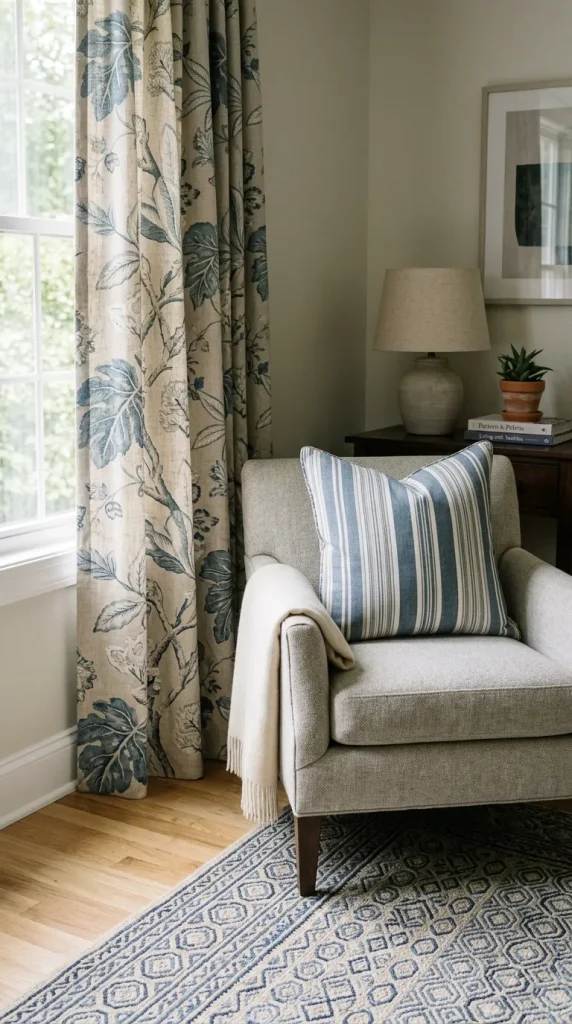
Patterns do not need to match, but they should have a relationship.
Start with one leading pattern on a rug, curtain, wallpaper, or chair. Add a medium-scale supporting pattern and a smaller, quieter design.
For example:
- Large botanical curtain
- Medium striped pillow
- Small geometric accent
Repeat at least one color across the patterns. This helps different designs feel connected.
Include solid-colored areas so the eye has somewhere to rest. Plain upholstery, walls, or curtains can balance a strongly patterned rug or wallpaper.
Mistake to Avoid: Using several patterns with the same scale and visual intensity. They will compete rather than create depth.
12. Style Accessories in Intentional Groups
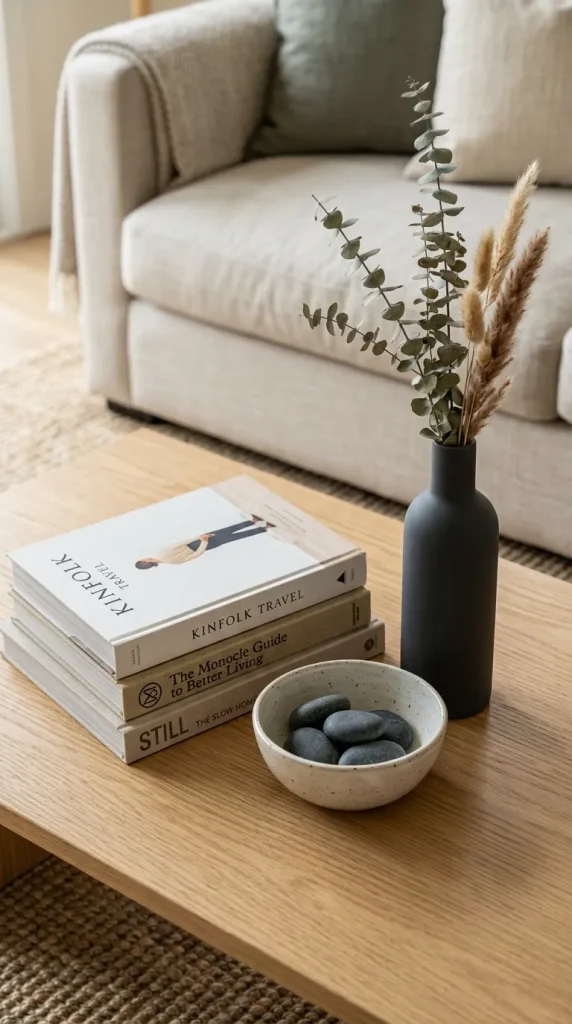
Accessories should finish a room, not cover every surface.
The 3-5-7 rule suggests styling objects in odd-numbered groups. It works well on coffee tables, shelves, mantels, consoles, and dressers.
The objects should vary in:
- Height
- Shape
- Texture
- Material
- Visual weight
For example, style a coffee table with a book stack, a low bowl, and a taller vase. Place smaller objects on a tray so they read as one group rather than loose clutter.
Livingetc’s May 31, 2025 explanation notes that odd-numbered groupings can create visual interest and intentional asymmetry, although formal rooms may still benefit from symmetry.
Leave part of the surface empty. Negative space makes the chosen objects look more important.
Budget Tip: Rearrange accessories you already own before purchasing another vase, candle, or decorative bowl.
13. Improve Small Rooms With Storage, Mirrors, and Visual Continuity
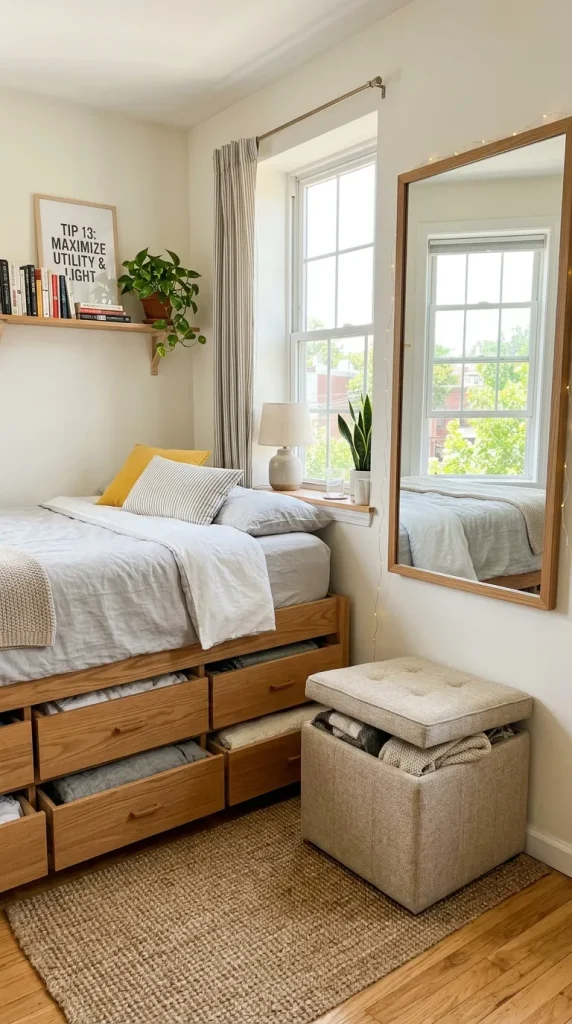
The best home decor tips for small spaces focus on clear movement and useful furniture.
Choose pieces that solve more than one problem:
- Storage ottomans
- Beds with drawers
- Nesting tables
- Benches with storage
- Wall-mounted shelves
- Desks with closed cabinets
- Console tables with drawers
A well-planned wardrobe can reduce visible clutter and free other furniture from storage duties. These modern wardrobe design ideas include options for small bedrooms, sliding doors, mirrors, drawers, and internal compartments.
Mirrors can brighten a room when positioned to reflect daylight or an attractive view. They should not automatically be placed opposite clutter, an exposed television, or a dark corner.
For bedroom-specific inspiration, these contemporary bedroom mirror decor ideas show how mirrors can work above dressers, beside beds, or as part of a practical dressing area.
Keep the palette and major materials consistent. Too many small color and finish changes visually divide an already limited room.
Designer Tip: Use vertical wall space before adding more furniture to the floor.
14. Add Natural Elements Without Creating Maintenance Problems
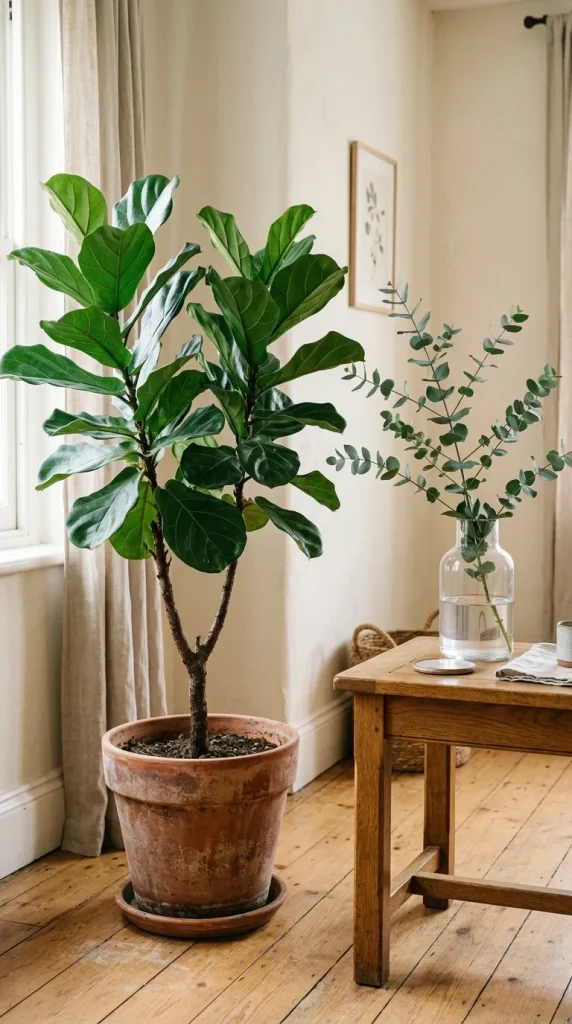
Plants, flowers, wood, stone, and woven materials can soften hard surfaces and make a room feel more relaxed.
Choose plants according to the room’s actual conditions. Consider natural light, humidity, temperature, pets, and the amount of care you can provide.
Bathrooms with suitable light and humidity can support certain plants, but a windowless room may need a realistic artificial alternative. These bathroom plant decor ideas offer placement inspiration for shelves, counters, tubs, and hanging displays.
Fresh or dried flowers can add seasonal color without changing the whole room. Use these flower home decor ideas for dining tables, entryways, bedrooms, and small arrangements.
Avoid placing a tiny plant in a large empty corner. Use a suitably scaled floor plant, a raised planter, or a grouped arrangement.
Budget Tip: Cut branches or foliage from your own garden where appropriate and safe. A simple branch in a tall vase can create more impact than several small artificial arrangements.
15. Make a Home Look More Expensive on a Realistic Budget
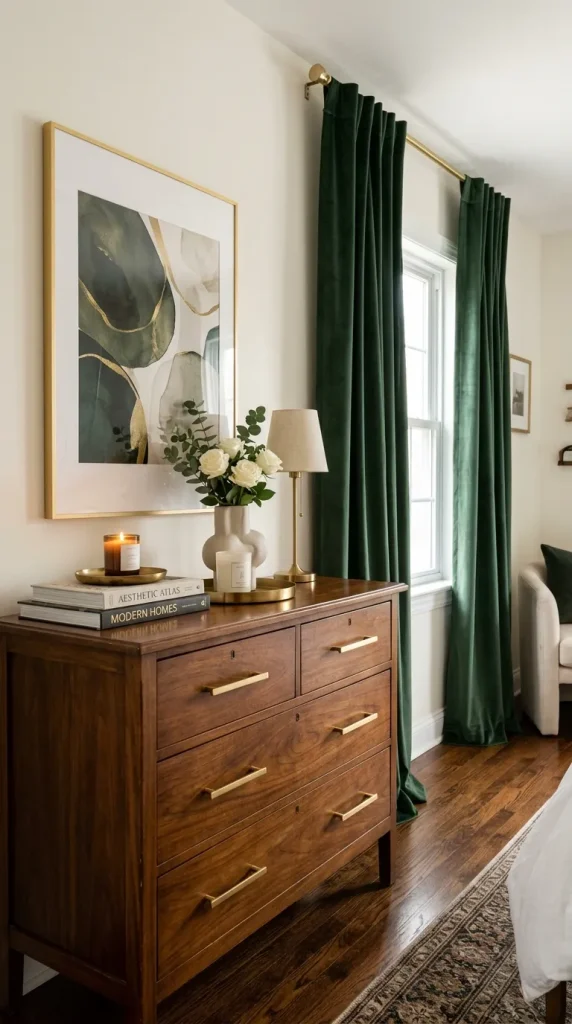
An expensive-looking room is usually coordinated, well maintained, and properly scaled.
Start with improvements that affect the whole space:
- Repair chipped paint
- Replace broken handles
- Hide visible cables
- Improve lampshades
- Use fuller curtain panels
- Hang curtains correctly
- Replace undersized artwork
- Use matching or coordinated frames
- Repeat metal finishes
- Remove excess accessories
Secondhand stores are useful for solid wood furniture, lamps, mirrors, frames, baskets, and ceramic objects. Evaluate the shape and material rather than the current finish.
Avoid buying many inexpensive accessories simply because the room feels empty. One substantial lamp, mirror, piece of art, or rug often produces a better result.
Renters can focus on removable wallpaper, plug-in lighting, fabric, art, mirrors, and freestanding storage. Keep the original fittings safely stored if they need to be reinstalled later.
Designer Tip: Spend first on items that affect comfort and daily use. Save on objects that are mainly decorative and easy to replace.
16. Create Flow Through Entryways, Hallways, and Stairs
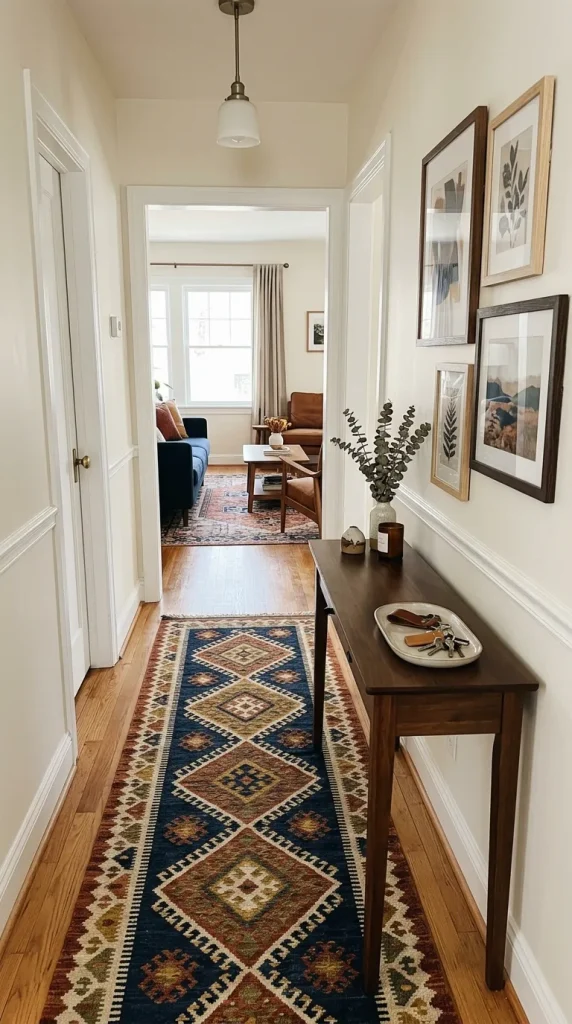
Transition areas influence how the entire home feels.
Repeat a few details from one room to another:
- Trim color
- Wood tone
- Metal finish
- Frame style
- Accent color
- Rug material
- Lighting shape
An entryway should introduce the home’s overall character. A practical arrangement may include a mirror, a narrow table, a tray, and closed or contained storage. These entryway console table ideas show how to combine style with a useful landing area.
Hallways need visual interest without obstructing movement. Use a runner, framed artwork, wall-mounted lighting, or a narrow shelf. Explore these stunning hallway ideas for narrow, long, small, and dark passageways.
Stairs are also part of the home’s visual flow. Paint, lighting, wall art, runners, railings, and trim can help them feel connected to the rooms above and below. These basement staircase ideas provide options for making a previously unfinished route feel intentional.
Mistake to Avoid: Treating halls and stairs as storage overflow. Passage spaces still need safe, clear movement.
17. Choose Timeless Foundations and Flexible Accessories
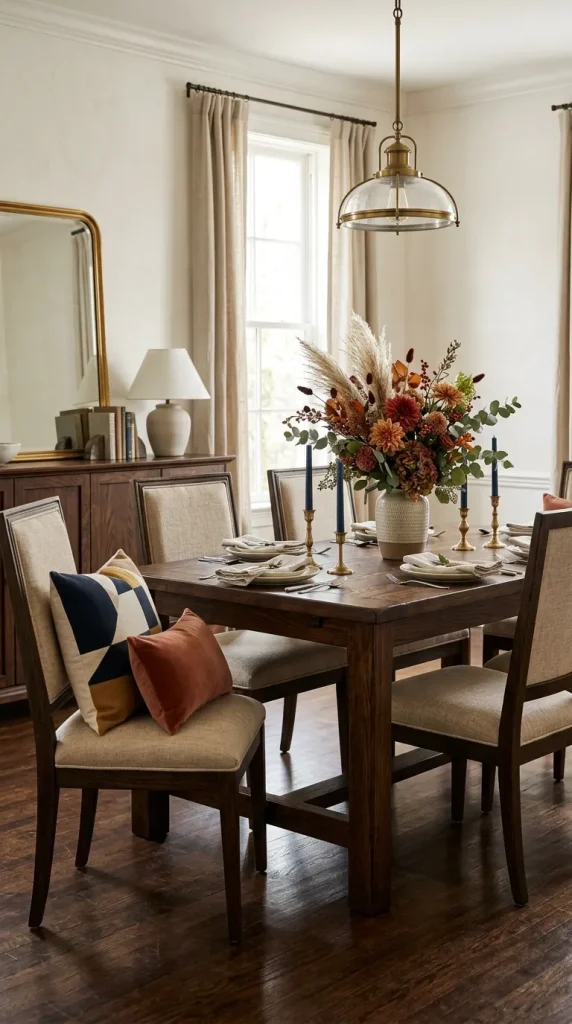
Furniture, flooring, cabinetry, and built-in features are expensive to replace. Choose these items according to your long-term needs rather than a short-lived social-media trend.
Timeless does not require a beige or colorless home. A deep green sofa, dark wood table, or patterned chair can remain useful when the shape, material, and color genuinely suit your taste.
Use flexible accessories for trend-led changes:
- Pillows
- Throws
- Art prints
- Vases
- Lampshades
- Table linens
- Small painted areas
- Removable wallpaper
Change one or two layers at a time. A room can feel refreshed through a new textile color, seasonal branch arrangement, or relocated artwork without replacing the foundation.
Designer Tip: Before buying a trendy piece, ask whether you would still like its shape and material if you stopped seeing it online.
18. Apply the Best Home Decor Tips Room by Room
Living Room
Begin with seating, conversation, and circulation. Use a rug large enough to connect the furniture, provide a reachable table for each main seat, and include more than one light source.
Limit decorative pillows to a number that still allows people to sit comfortably.
Bedroom
The bed should usually be the main focal point. Use balanced lighting, practical bedside storage, and bedding with layered but manageable texture.
A dedicated dressing area can reduce morning clutter. These dressing table ideas include options for mirrors, lighting, storage, and compact bedrooms.
Bathroom
Improve visible details before planning an expensive remodel. Coordinated towels, better lighting, a useful mirror, contained toiletries, and a small natural element can make the room feel more finished.
For a larger renovation, these rustic walk-in shower ideas show how stone, tile, wood-inspired finishes, and practical storage can be combined.
Home Office
Place the desk according to glare, natural light, and the required background for video calls. Include task lighting and closed storage for paperwork and cables.
These office interior design ideas provide inspiration for modern, small, professional, and home-office environments.
Kitchen
Keep frequently used items accessible without covering every counter. Group coffee equipment, mugs, and supplies in one defined area rather than spreading them around the kitchen.
These coffee station ideas include compact counters, cabinets, carts, shelves, and built-in beverage areas.
Outdoor Areas
Use lighting to improve both safety and atmosphere. Position fixtures according to entrances, steps, seating, and pathways rather than spacing them only for symmetry.
These outdoor wall-mounted light fixture ideas offer inspiration for porches, patios, garages, doors, and exterior walls.
Common Home Decorating Mistakes to Avoid
Buying Without Measuring
Product photographs rarely show how large an item will feel in your room.
Using a Rug That Is Too Small
The rug should connect the furniture rather than sit alone between it.
Matching Everything
Matching sets can make a room feel flat. Mix compatible pieces instead.
Using Only Overhead Lighting
Add lamps, task lighting, or wall lighting for comfort and depth.
Filling Every Surface
Empty space helps useful and meaningful objects stand out.
Ignoring Storage
A beautiful room will not remain organized if daily objects have nowhere to go.
Choosing Appearance Over Comfort
Test seating depth, table height, fabric feel, and maintenance requirements.
Following Trends Too Literally
Use trends as inspiration rather than instructions.
Ignoring Fixed Finishes
New paint and decor need to relate to the flooring, cabinets, countertops, and architectural details that will remain.
Decorating Every Room Independently
Repeat selected colors, materials, and finishes to create whole-home harmony. Homes & Gardens’ December 17, 2025 guide identifies balance, rhythm, emphasis, proportion and scale, and harmony as foundational principles that support functional, cohesive interiors.
A Two-Day Home Decor Refresh Plan
Day One: Edit and Rearrange
- Remove accessories from major surfaces.
- Take out objects that no longer support the room.
- Clear the main walking route.
- Test a different furniture arrangement.
- Move lamps beside the activities they support.
- Gather loose items into temporary categories.
- Photograph the room from each entrance.
Day Two: Add the Finishing Layers
- Return only the strongest accessories.
- Style objects in small, varied groups.
- Reposition artwork or mirrors.
- Add a throw or two useful pillows.
- Introduce one natural element.
- Hide cables and daily clutter.
- Replace or repair one visibly dated detail.
- Photograph the completed room and edit again.
Do not rush to fill every remaining gap. Live with the revised arrangement for several days before deciding what is genuinely missing.
Best Home Decor Tips: Final Thoughts
The best home decor tips help you make better decisions rather than encouraging you to buy more things.
Begin with function. Edit what you already own, measure before shopping, and choose a focused color and material direction. Arrange furniture for comfort and movement, use lighting in layers, and select rugs, curtains, and artwork at a scale that suits the room.
Add personality through meaningful objects, flowers, books, collected pieces, and colors you genuinely enjoy. Keep expensive foundations practical and use accessories for flexible updates.
A successful home does not need to look perfect or follow every decorating rule. It should feel comfortable, cohesive, useful, and recognizably yours.
Frequently Asked Questions
What Is the 3-5-7 Rule of Decorating?
The 3-5-7 rule suggests grouping decorative objects in odd numbers, particularly three, five, or seven. It can be used for shelves, coffee tables, mantels, pillows, artwork, and other small arrangements.
For the best result, vary the objects’ heights, shapes, sizes, and textures. Three identical candles in a straight line may still look rigid, while a book stack, low bowl, and taller vase create more movement. The rule is a styling aid rather than a requirement, and formal arrangements may look better with symmetry.
How Do I Improve My Home Decor?
Start by identifying the room’s main problem before shopping. It may be clutter, poor lighting, an awkward layout, an undersized rug, inconsistent colors, or a lack of storage.
Remove unnecessary accessories, rearrange the largest furniture, and clear the main walking route. Add light near reading and working areas, repeat a few colors or materials, and use one substantial decorative element instead of many small objects.
Work on one room at a time. This keeps decisions focused and prevents unrelated purchases from creating more visual clutter.
What Is the 3/4/5 Rule in Decoration?
The phrase “3/4/5 rule” is not a widely established interior decorating principle. It is often confused with the 3-5-7 styling rule, the rule of thirds, or the 60-30-10 color guideline.
Use the 3-5-7 rule when arranging accessories in odd-numbered groups. Use the rule of thirds to consider visual placement and balance. Use 60-30-10 as a flexible starting point for distributing a dominant, secondary, and accent color.
These are optional tools. A room’s function, scale, architecture, and personal style remain more important than following a formula exactly.
What Are the Seven Rules of Interior Design?
There is no single official list accepted by every designer. A practical seven-part framework includes:
- Balance
- Rhythm
- Emphasis
- Proportion and scale
- Harmony
- Contrast
- Unity
Balance controls visual weight. Rhythm repeats colors, shapes, or materials. Emphasis establishes a focal point. Proportion and scale help objects relate to one another. Harmony and unity connect the room, while contrast prevents it from feeling flat.
Treat these as flexible principles, not strict rules that remove personality from a home.