
A black and white living room can look sharp in the best way. Clean. Confident. A little expensive.
But in a small room, it can also go wrong quickly. Too much black can make the room feel heavy. Too much white can make it feel bare. Add a bulky sofa, a busy rug, cold lighting, or a few random decor pieces, and the whole space starts feeling more like a staged corner than a room you actually want to sit in.
The best Small Black and White Living Room Ideas are not about making everything perfectly black and perfectly white. They are about balance. A small room needs contrast, yes, but it also needs softness, texture, breathing space, and a few warm details so the palette feels livable.
This guide focuses on practical black and white living room ideas for apartments, narrow rooms, small family spaces, and modern homes where every furniture piece has to work hard.
Small Black and White Living Room Ideas Start With the Right Balance
Do not treat black and white like equal partners in a small room.
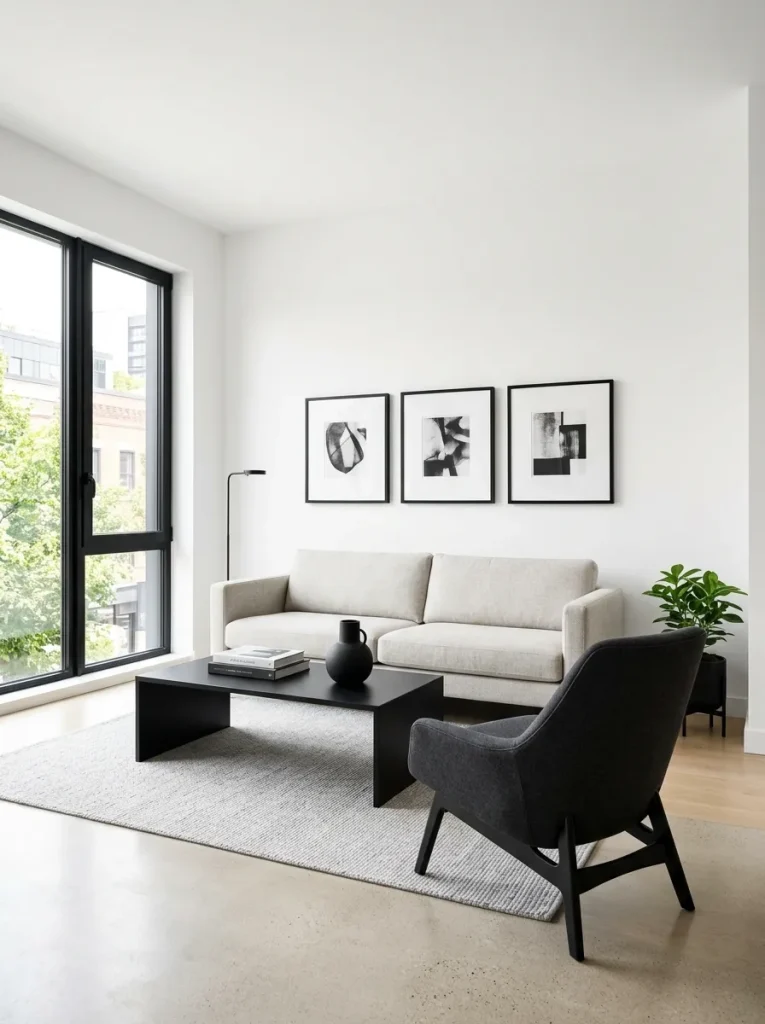
A 50/50 split often feels too harsh. The safer approach is to let white, warm white, or soft cream become the main background, then use black as the structure. Think white walls, black frames, a black coffee table, a patterned rug, and one darker accent chair.
That gives the room contrast without closing it in.
If your living room has poor natural light, use black more carefully. A black wall, black sofa, black curtains, and black rug together can make a compact space feel like a box. If the room gets strong daylight, you can go bolder with black furniture or a dark feature wall, but the rest of the room still needs lighter pieces to breathe.
A good small-room formula is simple: mostly light surfaces, a few black anchors, and enough texture to stop the room from looking flat.
Use a “70-20-10” Color Formula
One of the easiest ways to plan a small black and white living room is with a loose 70-20-10 formula.
Use about 70% light color, such as white, warm white, cream, or very pale gray. Use about 20% black through frames, furniture legs, lamps, a coffee table, shelves, or a patterned rug. Then use about 10% warmth or accent, such as wood, beige, brass, green plants, or soft gray.
It does not need to be exact. Nobody is measuring your pillows.
But the formula helps you avoid the two common mistakes: making the room too dark or making it too plain. For example, a white sofa, black side table, gray rug, wood coffee table, black curtain rod, and brass lamp can still feel like a black and white room, but it will be much easier to live with.
For small spaces, that 10% warmth matters more than people think.
Choose the Sofa Carefully
The sofa is the biggest visual decision in most small living rooms.
A black sofa can look sleek, especially in a modern apartment, but it needs the right shape. Slim arms, raised legs, clean lines, and a lower profile help it feel lighter. A chunky black sofa with wide arms can dominate a small room before you add anything else.
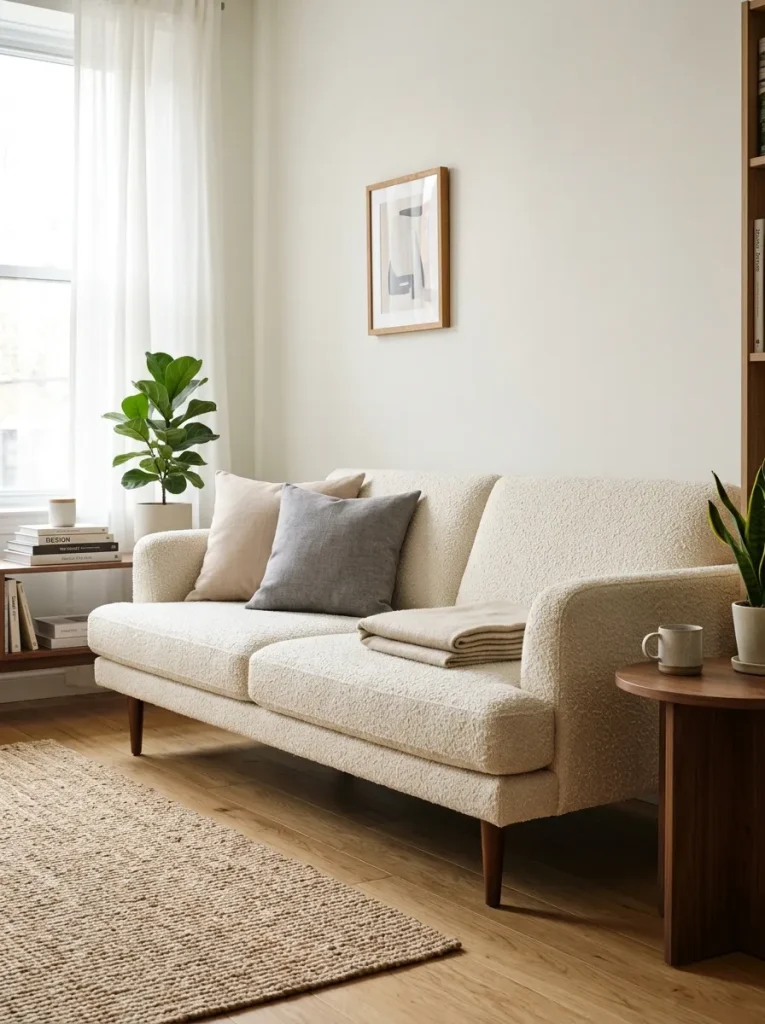
A white or cream sofa keeps the room bright, but the fabric matters. Flat white fabric can look stark. Linen, boucle, textured weave, or a soft slipcover makes the sofa feel more relaxed.
A gray sofa is often the easiest middle option. It works especially well for small black white and gray living room ideas because it softens the contrast and hides daily wear better than bright white.
Before buying, measure the walkway, the wall length, and the space between the sofa and coffee table. A sofa that technically fits can still feel wrong if you have to squeeze past it every day.
Let the Rug Set the Mood
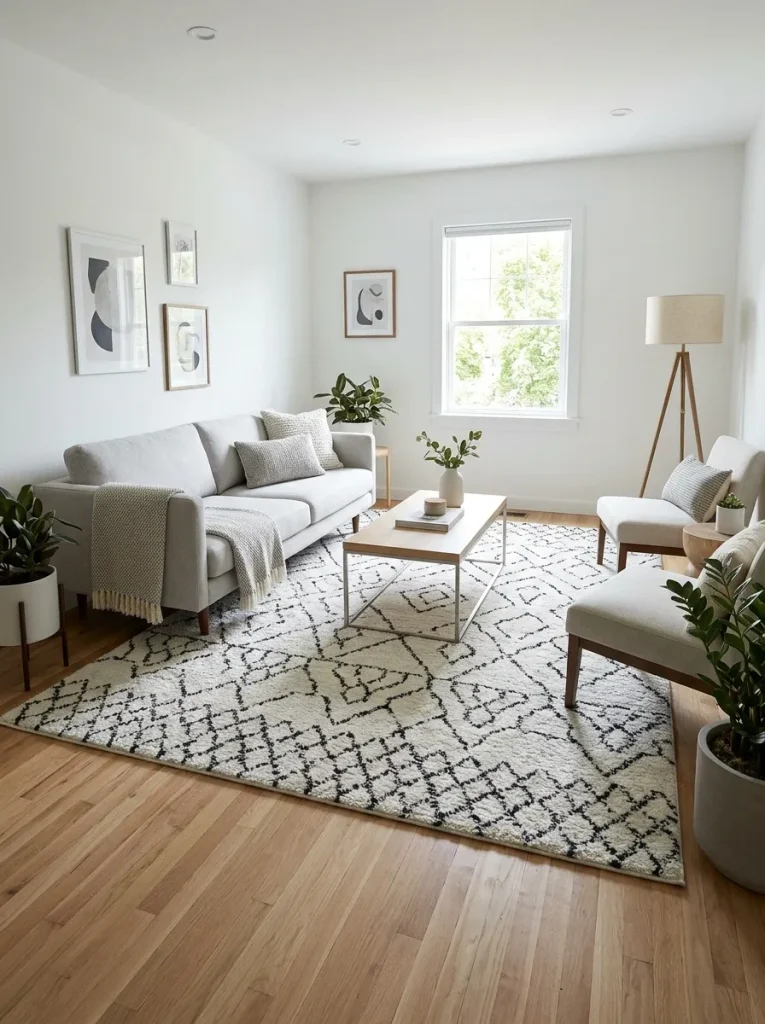
A black and white rug can do a lot of work in a small living room.
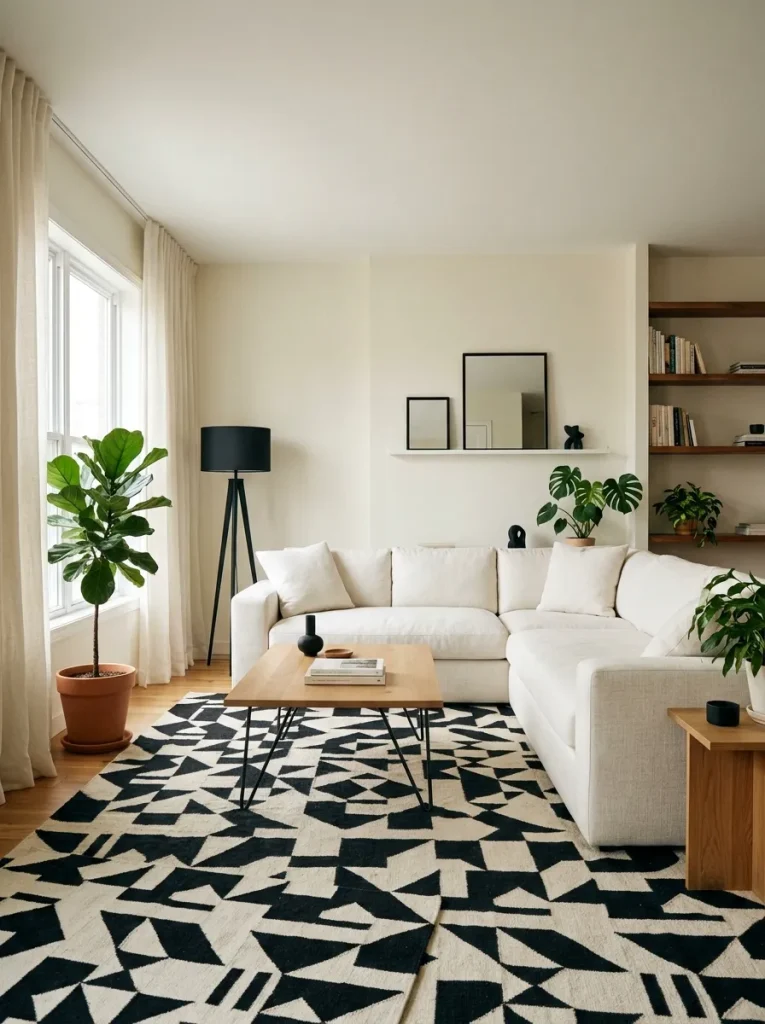
It can add pattern, define the seating area, and bring in contrast without painting walls or buying dark furniture. Stripes, checks, abstract patterns, Moroccan-style prints, and soft geometric rugs all work.
The mistake is choosing a pattern that is too tiny and busy. In a compact room, very small patterns can make the floor feel cluttered. A larger-scale pattern usually feels cleaner and more modern.
If the room already has black frames, patterned cushions, and busy shelves, choose a softer rug with cream, gray, or faded black. Not every black and white space needs strong contrast everywhere.
A rug is also a safer starting point than a black sofa. If you get tired of it, changing a rug is easier than replacing the main furniture.
Add Gray When the Room Feels Too Sharp
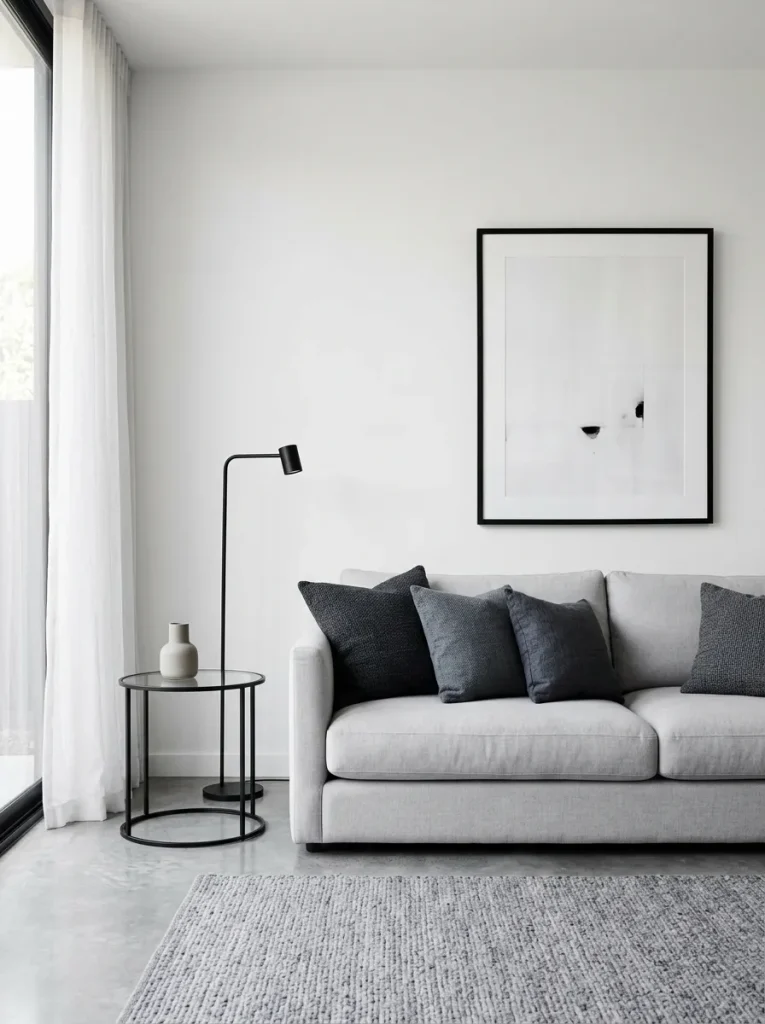
Black and white can feel crisp. Sometimes too crisp.
Gray gives the room a middle layer. A pale gray rug, charcoal pillow, soft gray sofa, or gray curtains can make the palette feel calmer and more comfortable.
This works especially well in modern black and white small living room ideas, where the clean lines can become a little cold. Gray breaks the contrast without adding a new color.
Use light gray if the room feels dark. Use charcoal only when you already have enough white, daylight, and warm texture. A charcoal sofa against a black media wall can look beautiful online, but in a small apartment, it may feel heavy unless the lighting is excellent.
Gray is not a boring choice here. It is often what makes black and white easier to live with.
Add Texture Before Adding More Decor
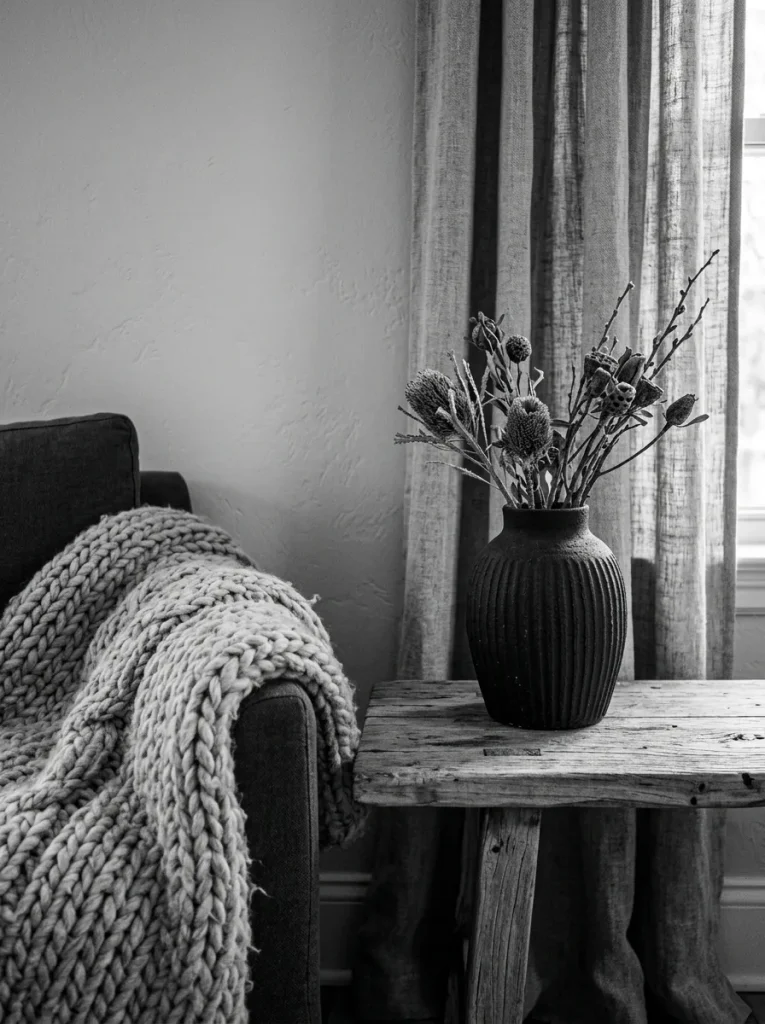
A black and white room needs texture more than extra accessories.
Without texture, the room can feel like a flat image: white wall, black table, white sofa, black frame. Technically styled, but not warm.
Use texture in places people notice and touch. A woven rug. Linen curtains. Boucle pillows. A chunky knit throw. A ribbed vase. A matte black lamp. A wood coffee table. A stone tray. Even one woven basket can soften the whole corner.
Simple home decor items like trays, bowls, lamps, vases, and framed prints can help the room feel finished, but they should have a purpose. A tray can organize the coffee table. A basket can hide blankets. A lamp can add warmth. That is better than adding five small objects just to fill space.
In a small living room, empty space is also decor.
Use Curtains to Make the Room Look Taller
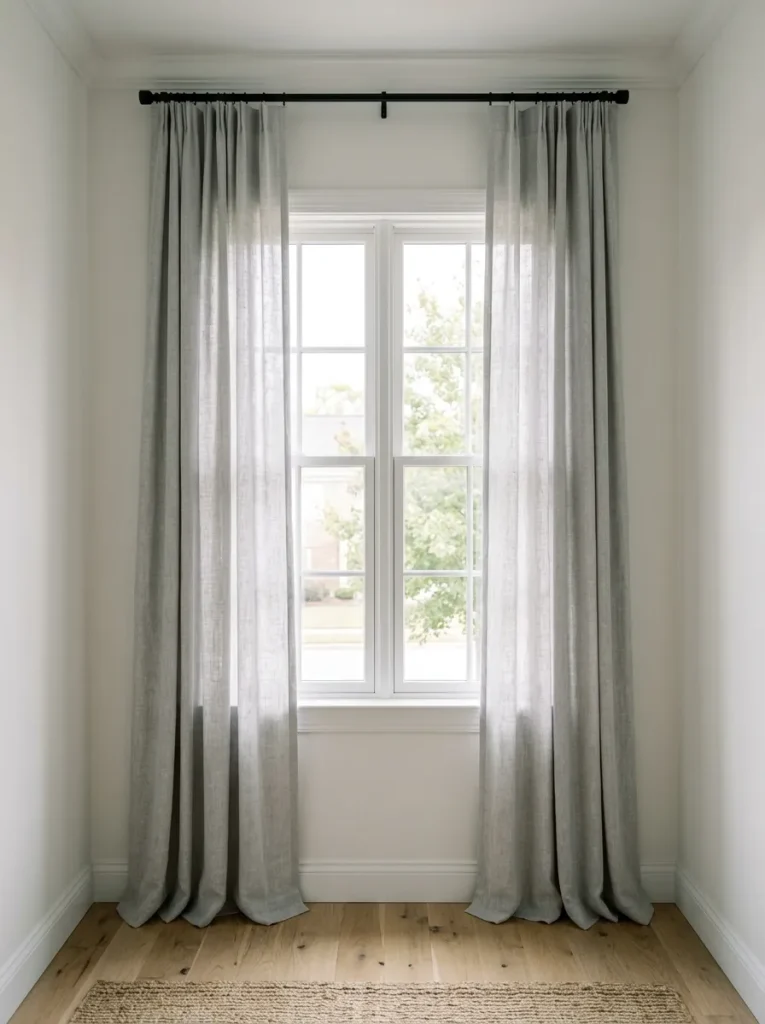
Curtains are underrated in small rooms.
Hang the rod higher than the window frame and let the curtains reach the floor. It pulls the eye upward and makes the wall feel taller.
White, cream, or light gray curtains keep the room airy. Black curtains can look dramatic, but in a small space they may feel heavy, especially if the fabric is thick. A black curtain rod with light curtains is often the best compromise.
Patterned black and white curtains can work, but only when the rug and wall decor are simple. If the room already has a patterned rug, plain curtains will usually look cleaner.
This is one of the easiest upgrades because it changes the height of the room visually without moving a single piece of furniture.
Keep Wall Decor Bold but Controlled
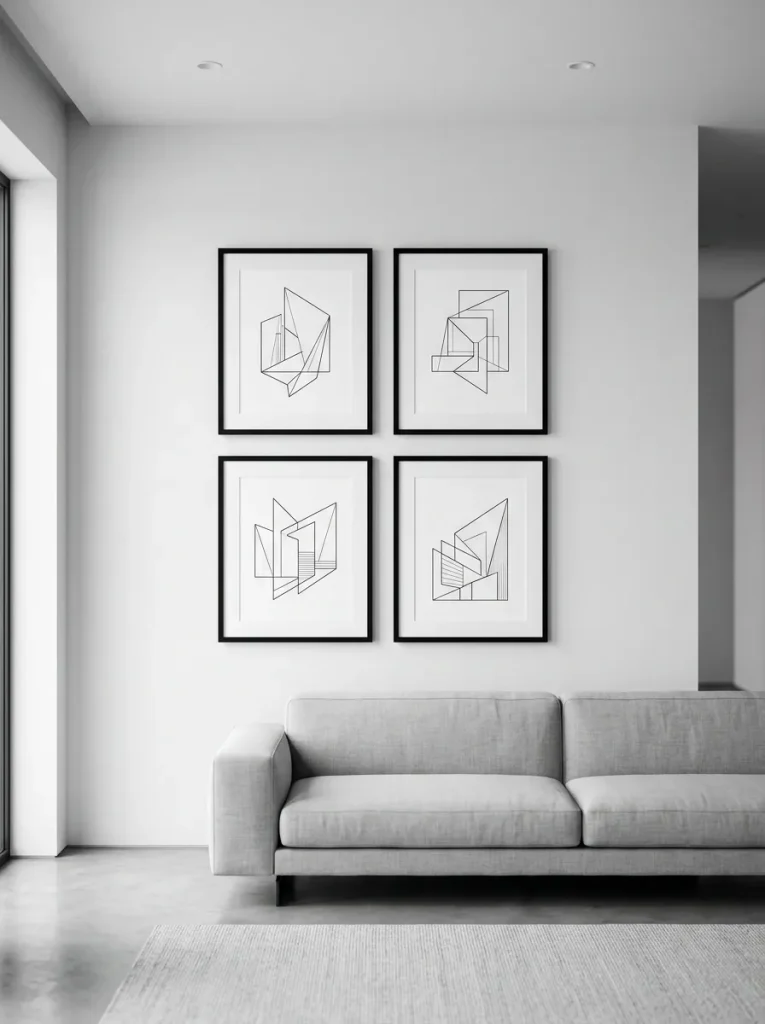
Black and white wall decor can make a small living room feel intentional.
Black frames on white walls are classic for a reason. They create structure without needing much color. You can use photography, abstract prints, line drawings, family photos, or one large artwork above the sofa.
The key is spacing. Tiny frames scattered randomly can make the wall look messy. A grid of four prints, two large frames, or one oversized piece usually feels stronger in a small room.
If the room feels too sharp, mix black frames with wood frames. If the space feels too plain, go bigger with the artwork instead of adding more small pieces.
For extra warmth around art or shelves, these indoor wall mounted light fixture ideas can help you add light without using floor space.
Use Warm Lighting, Not Cold White Light
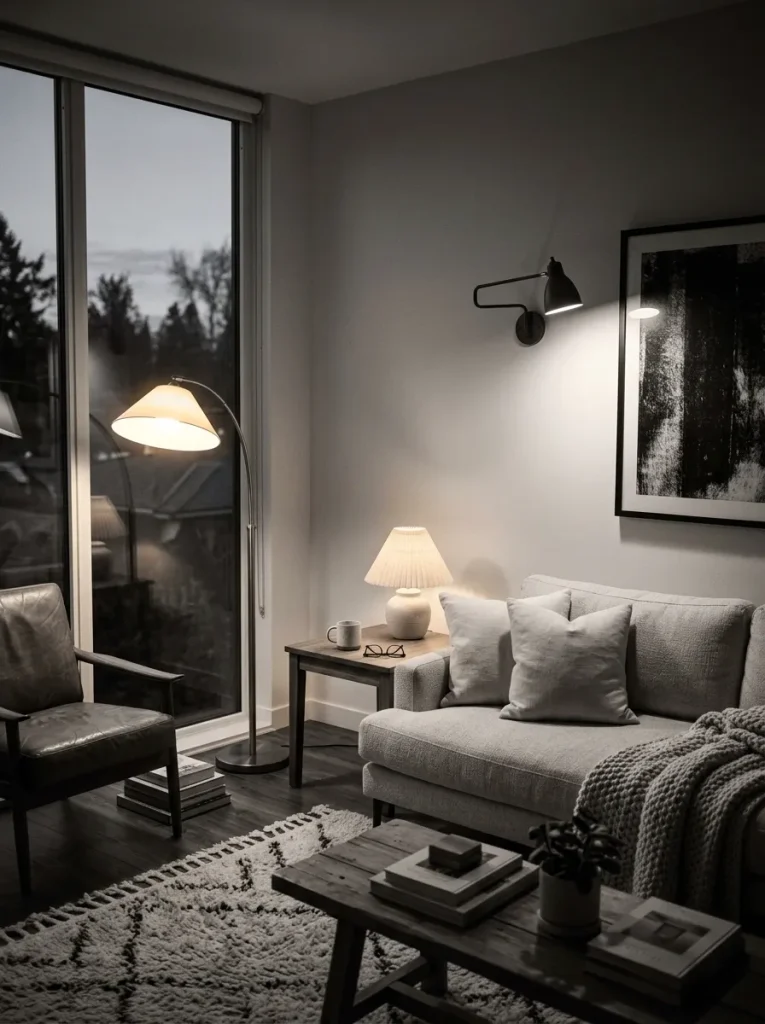
Lighting can make or break a black and white living room.
Cool daylight bulbs can make the room feel harsh, especially at night. Warm white or soft white lighting usually works better for living rooms because it makes black feel softer and white feel less sterile.
Use layers instead of one ceiling light. A floor lamp beside the sofa, a table lamp near a chair, a wall sconce near art, and maybe one small accent light can make the room feel cozy without adding clutter.
For bulb temperature guidance, this Better Homes & Gardens lighting guide is useful.
For fixture ideas, these wall sconce light fixtures ideas can help if you want a more polished look without crowding the floor.
Bring in Wood, Cream, or Beige
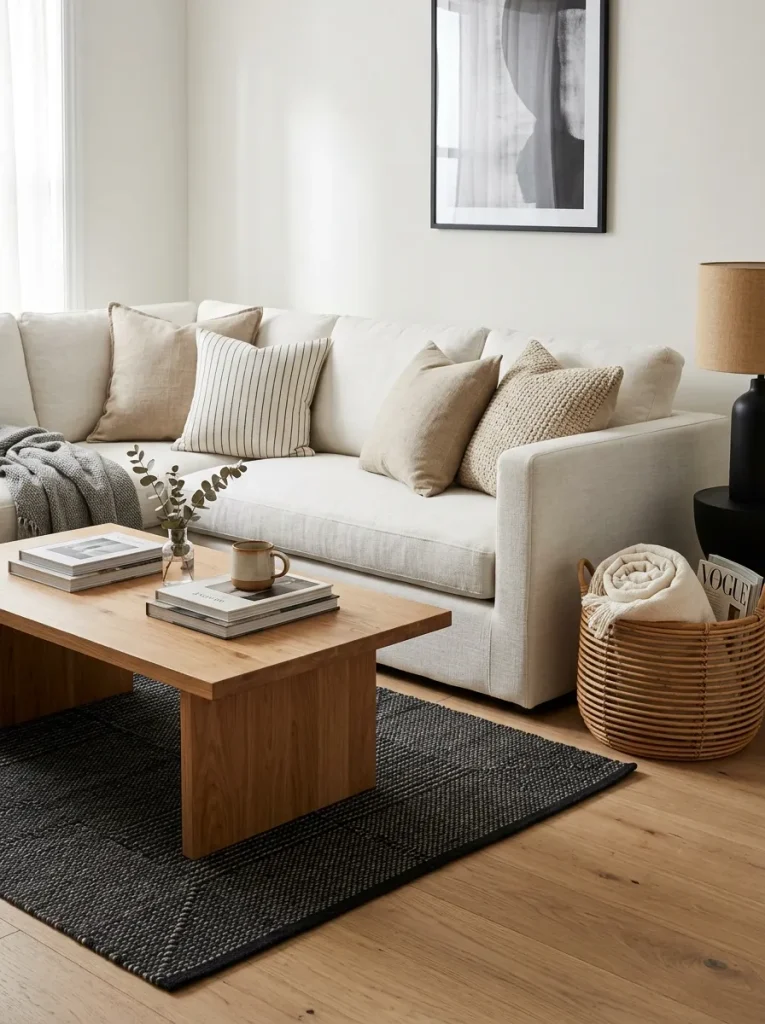
Pure black and pure white can feel a bit severe. Warm materials fix that.
A wood coffee table, cream curtains, beige pillows, tan leather stool, rattan basket, or warm brass lamp can soften the whole room while still keeping the black and white palette clear.
This is useful if you like black white and beige living room ideas or black white and wood living room ideas. The room still reads as black and white, but it feels less cold.
Repeat the warm material in two or three places. For example, use wood in the coffee table, picture frames, and chair legs. Or use brass in the lamp, tray, and curtain rod. Repetition makes the warmth feel intentional instead of random.
Use Gold as a Small Accent
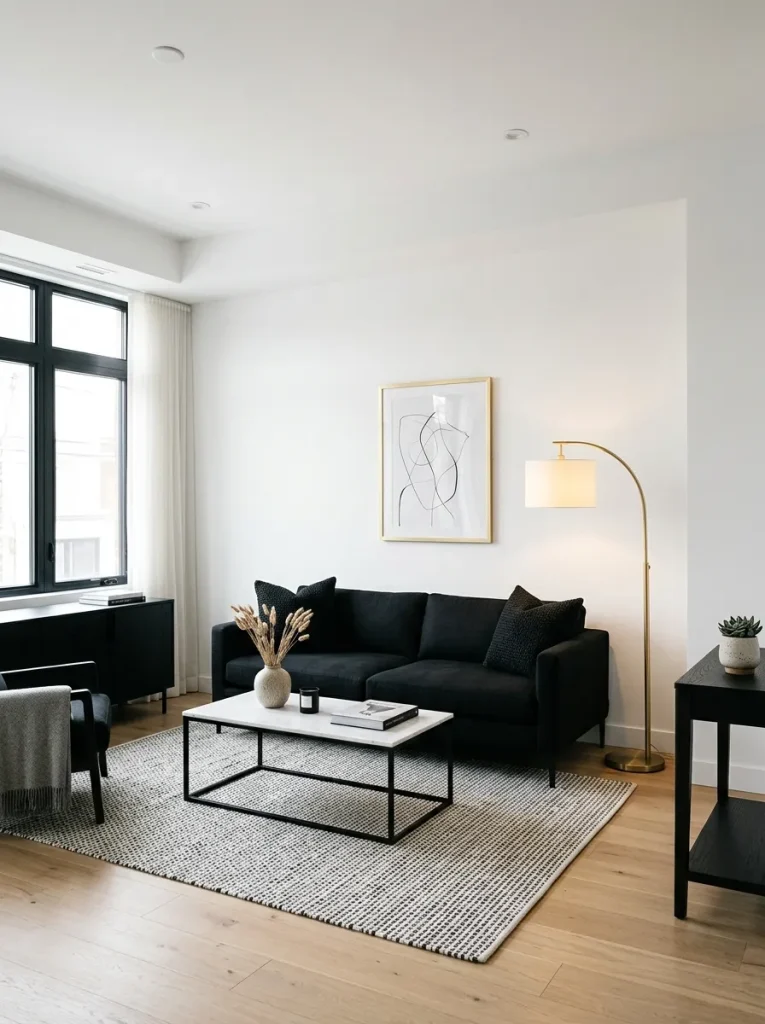
Black, white, and gold living room ideas can look elegant, but gold should be controlled.
A brass lamp, gold frame, small tray, curtain rod, or side table can add polish. Too many shiny gold pieces can make a small room look busy.
Matte brass is usually easier to use than bright yellow gold. It looks softer and pairs well with white walls, black accents, warm wood, and gray upholstery.
A good rule: let gold support the room, not become the theme. One or two gold details can make the space feel more expensive. Ten can make it feel overdecorated.
Make an Apartment Living Room Feel Less Boxy
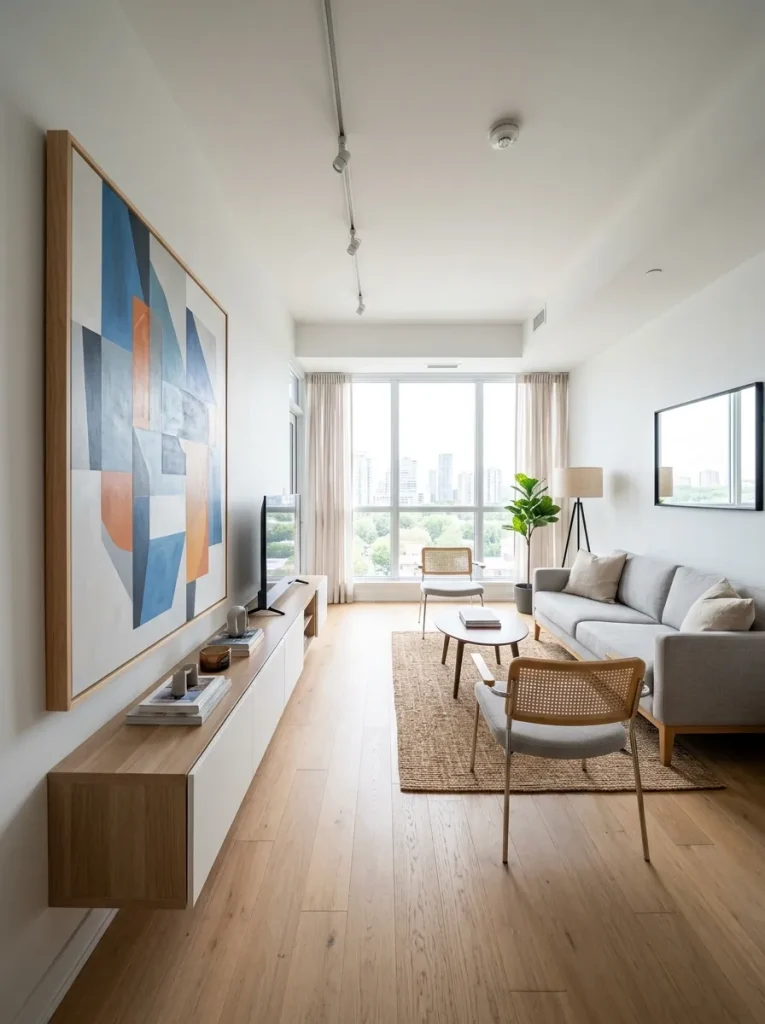
Black and white apartment living room ideas need a little extra care because many apartments have plain walls, low ceilings, and awkward layouts.
Start with one main wall. Usually, that means the sofa wall or TV wall. Add one strong feature there: a large artwork, clean gallery grid, slim shelf setup, or simple media unit. Then keep the rest lighter.
Avoid too many small furniture pieces. One sofa, one compact chair, one coffee table, and one slim side table may be enough. If the room is narrow, choose furniture with visible legs so the floor stays open.
A slim console behind the sofa or along a narrow wall can add storage without crowding the room. These entryway console table ideas can help you style a shallow surface so it looks useful, not empty.
If you use tall shelves or bookcases, especially in a home with children, check the Anchor It furniture safety guide for basic furniture anchoring guidance.
Connect the Living Room With Nearby Spaces
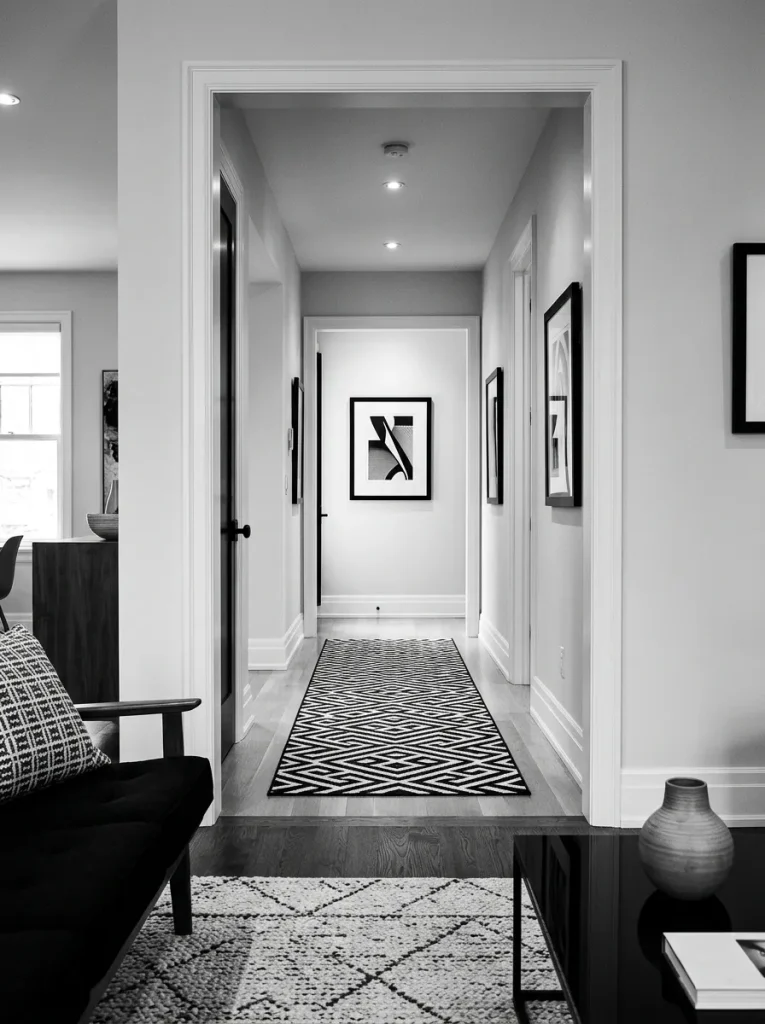
A small living room often opens into a hallway, entry, or dining corner. If the living room is black and white but the nearby space feels completely unrelated, the home can feel chopped up.
You do not need to repeat the whole palette everywhere. Just carry one or two details through. A black picture frame in the hallway. Warm white walls. A similar curtain tone. A matching sconce finish. A small runner with a little black in it.
If your living room opens directly from the hall, these stunning hallway ideas can help you keep the flow between spaces more polished.
This is a quiet detail, but it makes the room feel more designed.
Choose One Accent Color, Not Five
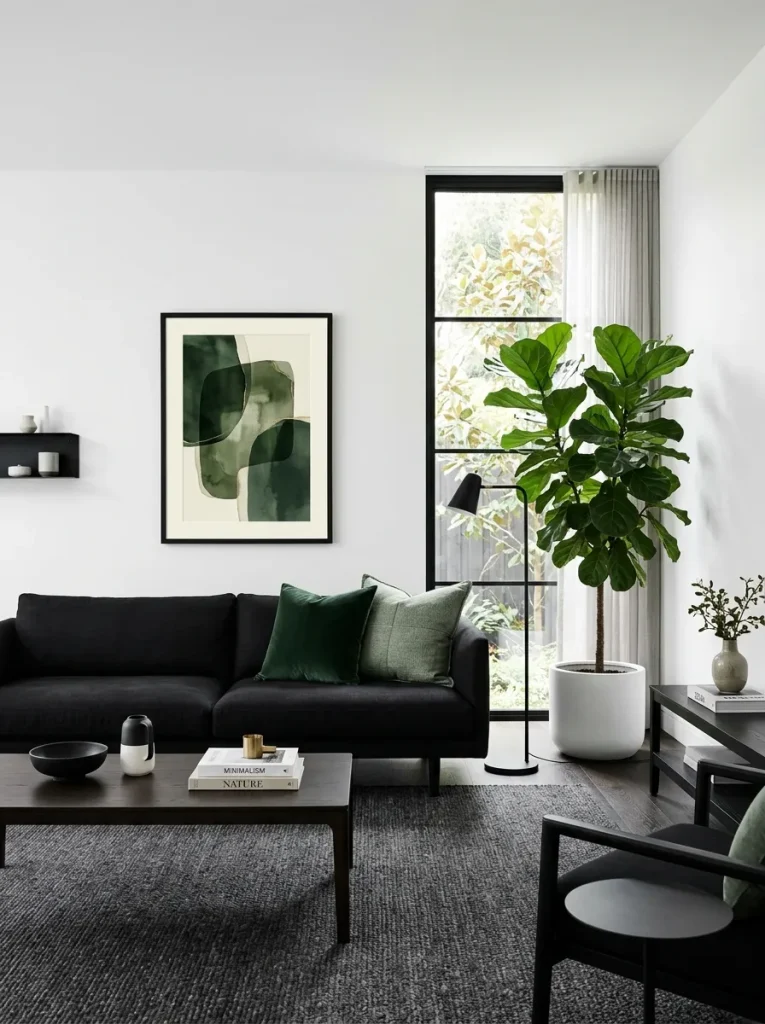
A black and white living room can stay neutral, but one accent color can help if the room feels too strict.
Green feels fresh. Blue feels calm. Beige feels soft. Gold feels polished. Red feels bold. Pink feels playful.
Choose one direction and repeat it lightly. For example, use green through a plant, a pillow, and a small artwork. Or use beige through curtains, cushions, and a woven basket.
The mistake is adding every accent color at once. Green plant, red pillow, blue vase, pink art, gold lamp, yellow throw — now the room is no longer black and white. It is confused.
Plants are the easiest accent because green looks natural with black and white. A small tree, trailing plant, or vase of branches can soften the palette without fighting it.
Avoid the Mistakes That Make Small Rooms Feel Heavy
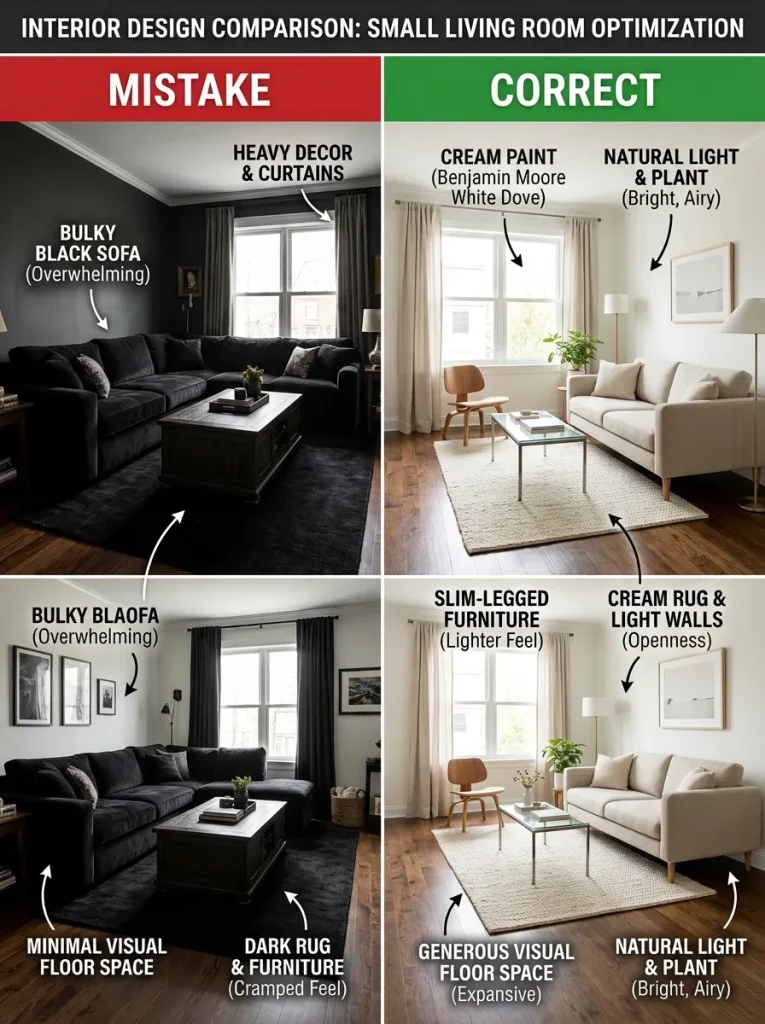
The biggest mistake is putting too much black at floor level.
A black sofa, black rug, black coffee table, black TV unit, and black curtains can pull the room downward. If the room is small, choose one or two dark anchors and let the rest breathe.
Another mistake is using only smooth surfaces. Glossy black table, flat white walls, shiny frames, and no fabric texture can make the room feel cold. Add softness through curtains, rugs, throws, pillows, and lampshades.
Scale matters too. A coffee table that is too wide, a sofa that blocks the walkway, or a TV unit that eats the wall will make the room feel smaller than the color palette ever could.
And do not make it too perfect. A black and white living room still needs signs of life: books, plants, photos, a blanket, a handmade bowl, something slightly imperfect.
That is what makes it feel like a room, not a display.
Final Advice
Small Black and White Living Room Ideas work best when the room feels balanced, not forced.
Use a light background, then add black through pieces that give the room structure: frames, lamps, rug pattern, furniture legs, coffee table, or one accent chair. Add gray if the contrast feels too sharp. Add wood, cream, beige, plants, or warm lighting if the room feels cold.
Most of all, edit. A small living room does not need a lot of decor. It needs the right choices: comfortable seating, a good rug, clean wall decor, warm lighting, and enough open space for the room to breathe.
That is what makes black and white feel stylish instead of stiff.
FAQs
What are the best Small Black and White Living Room Ideas for apartments?
The best Small Black and White Living Room Ideas for apartments include white or warm-white walls, slim black accents, a patterned rug, warm lighting, wall decor, and furniture with visible legs. This keeps the room bright while still giving it contrast.
How do you make a small black and white living room feel cozy?
Use warm lighting, textured pillows, a soft rug, wood accents, cream tones, curtains, plants, and personal wall decor. Avoid relying only on flat black and bright white surfaces.
What accent color works best with a black and white living room?
Green, beige, wood tones, gold, and blue all work well. For a small room, choose one accent color and repeat it lightly instead of mixing too many colors.
Is a black sofa good for a small living room?
A black sofa can work if it has a slim shape, raised legs, and enough light around it. Pair it with pale walls, a lighter rug, and warm lighting so it does not feel too heavy.
What rug works best in a black and white small living room?
A black and white rug with a larger-scale pattern usually works better than a tiny busy pattern. If the room already has strong wall decor, choose a softer rug with cream, gray, or faded black.
How do I decorate black and white living room walls?
Use black frames, abstract prints, photography, line art, shelves, mirrors, or one oversized artwork. Keep the layout clean so the wall feels styled, not cluttered.
Can I add gray to black and white living room ideas?
Yes, gray is one of the best additions to black and white living room ideas because it softens the contrast and makes the room feel more comfortable.
How can I make a small black and white living room look expensive?
Use controlled contrast, warm lighting, quality-looking textures, simple wall decor, a good rug, and one or two polished accents like brass, wood, or black-framed art.