

Purple can be beautiful on walls, but it is also one of those colors people get nervous about.
And honestly, that makes sense.
Choose the wrong purple, and a room can feel too dark, too sweet, too cold, or too dramatic for everyday life. A bright violet bedroom might look fun in one photo, but it can feel overwhelming when you wake up to it every morning. A deep plum living room can look rich and expensive, but without enough light, it may turn heavy fast.
The best purple paint color ideas are not about using purple everywhere. They are about choosing the right shade for the right room.
Soft lavender can calm a bedroom. Dusty mauve can make a living room feel grown-up. Deep plum can make a powder room feel dramatic. Purple-gray can add quiet color without shouting. Pink-purple combinations can feel playful, while purple with green, teal, blue, gray, or gold can completely change the mood.
This guide is for real homes, not just paint charts. We will look at bedrooms, bathrooms, living rooms, kitchens, kids’ rooms, accent walls, color pairings, lighting, and the mistakes that make purple paint harder to live with.
1. Start With the Mood Before Choosing Purple Paint
Before choosing a purple paint color, decide what you want the room to feel like.
That matters more than the shade name.
Light purple feels soft, airy, and gentle. It works well in bedrooms, nurseries, small rooms, and bathrooms where you want color without making the space feel dark.
Mauve feels warmer and more mature. It is one of the safest purple paint color ideas for adults because it sits between purple, pink, beige, and gray. It has color, but it does not feel loud.
Plum feels rich and dramatic. It works beautifully on an accent wall, in a powder room, behind a bed, or in a cozy reading corner.
Purple-gray feels subtle. It is a good choice if you want purple, but you do not want the room to scream “purple.”
Bright violet or grape purple is the hardest to use in interiors. It can work in kids’ rooms, playrooms, or small accents, but it usually feels too energetic for a full bedroom or living room.
The first rule is simple: choose the mood first, then choose the purple.
2. Use Soft Lavender for a Calm Bedroom
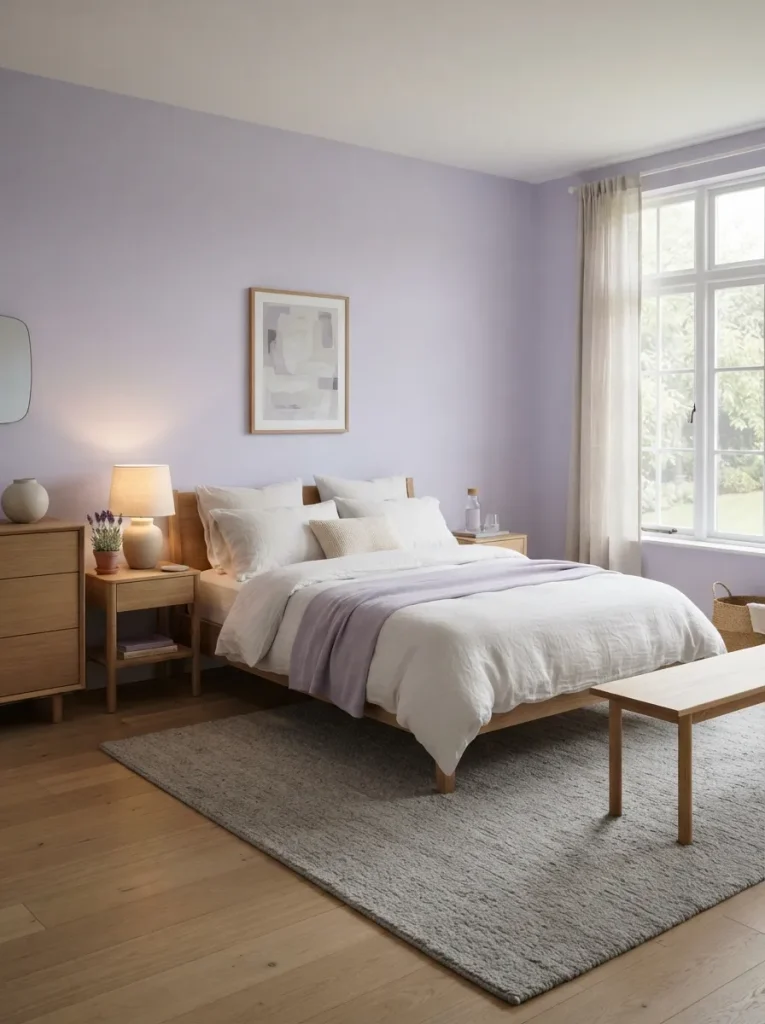
Soft lavender is one of the easiest purple paint ideas for bedrooms because it feels peaceful without being plain.
It works well with white bedding, cream curtains, light oak furniture, silver lamps, soft gray rugs, and simple wall art. In a bright bedroom, lavender can feel fresh and clean. In a darker bedroom, it can turn cooler, so choose a lavender with a slight warm undertone if the room does not get much natural light.
Lavender is especially good for bedrooms because it gives color without making the space feel busy. It has personality, but it still lets the room rest.
Avoid pairing lavender with too many pastel accessories. Lavender walls, pink bedding, mint decor, purple curtains, and floral everything can quickly feel childish. If you want the room to feel grown-up, use lavender with cream, wood, linen, black accents, or warm metal.
A good formula is: lavender walls, white bedding, warm wood nightstands, one black lamp, and a soft beige rug.
That keeps the room calm, not sugary.
3. Try Dusty Mauve for a Grown-Up Purple Bedroom
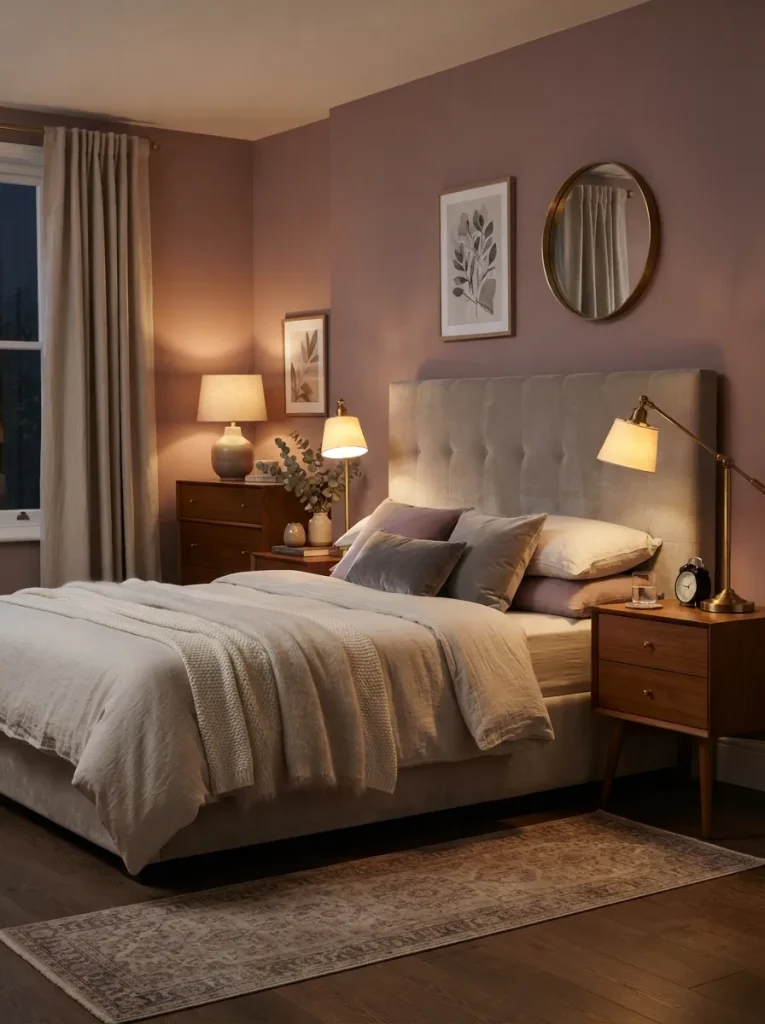
Mauve is one of the best purple bedroom paint ideas if you want something soft but mature.
It feels less playful than lavender and less dramatic than plum. That makes it easier to use on all four walls. A dusty mauve bedroom can feel warm, romantic, and quiet without becoming too pink.
Mauve works beautifully with cream bedding, beige rugs, brass lamps, warm wood furniture, black picture frames, and soft white curtains. It also pairs well with gray furniture because the purple warmth stops the room from feeling cold.
If your bedroom is small, use mauve behind the bed and keep the other walls warm white. If the room is larger and has good light, mauve can work on every wall.
The mistake is choosing a mauve that is too muddy. Some mauves can look brown or dull in weak light. Test it beside your bedding and flooring before painting the whole room.
4. Use Light Purple Paint in Small Rooms
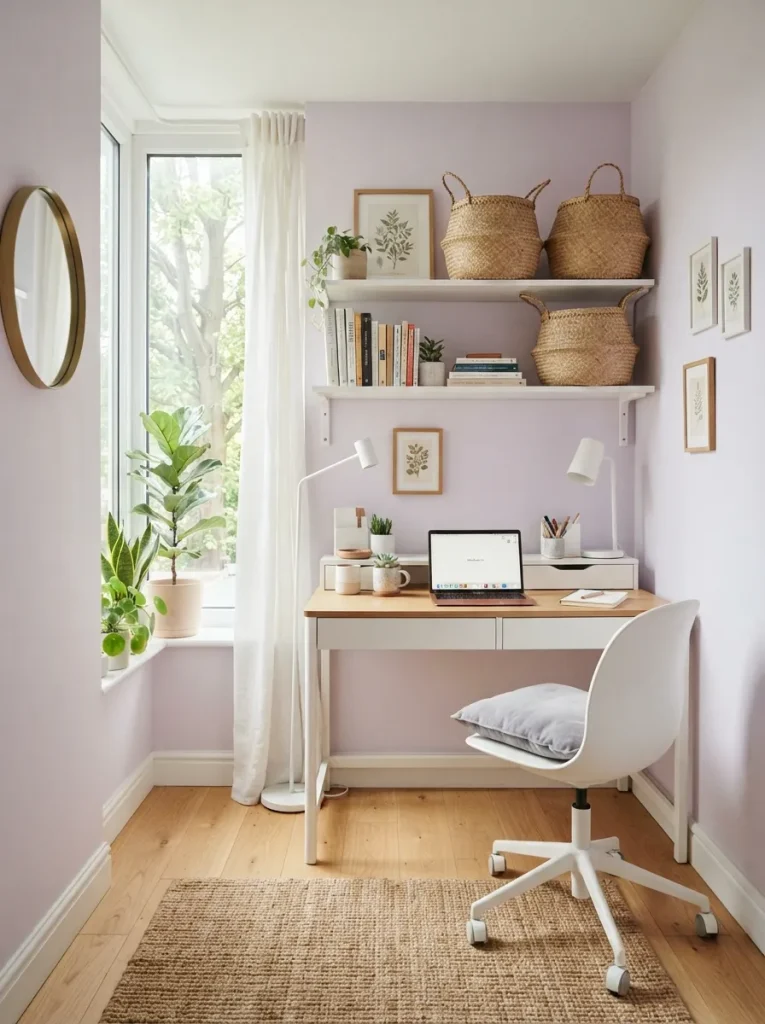
Light purple paint ideas are useful when you want color but still need the room to feel open.
Pale lilac, misty lavender, purple-tinted white, and soft violet can work in compact bedrooms, small offices, bathrooms, and nurseries. These shades add personality without taking over the room.
The undertone matters a lot. A blue-based light purple can feel cooler and more modern. A pink-based light purple feels warmer and sweeter. A gray-based light purple feels calmer and more adult.
For small rooms, keep the trim simple. White trim gives a clean look. Cream trim feels softer and warmer. Dark trim can look interesting, but it may make the room feel more enclosed.
Light purple looks best when it has texture around it: linen bedding, woven baskets, wood furniture, warm lighting, and soft curtains.
Without texture, pale purple can feel flat.
5. Use Purple and Gray for a Calm Bedroom
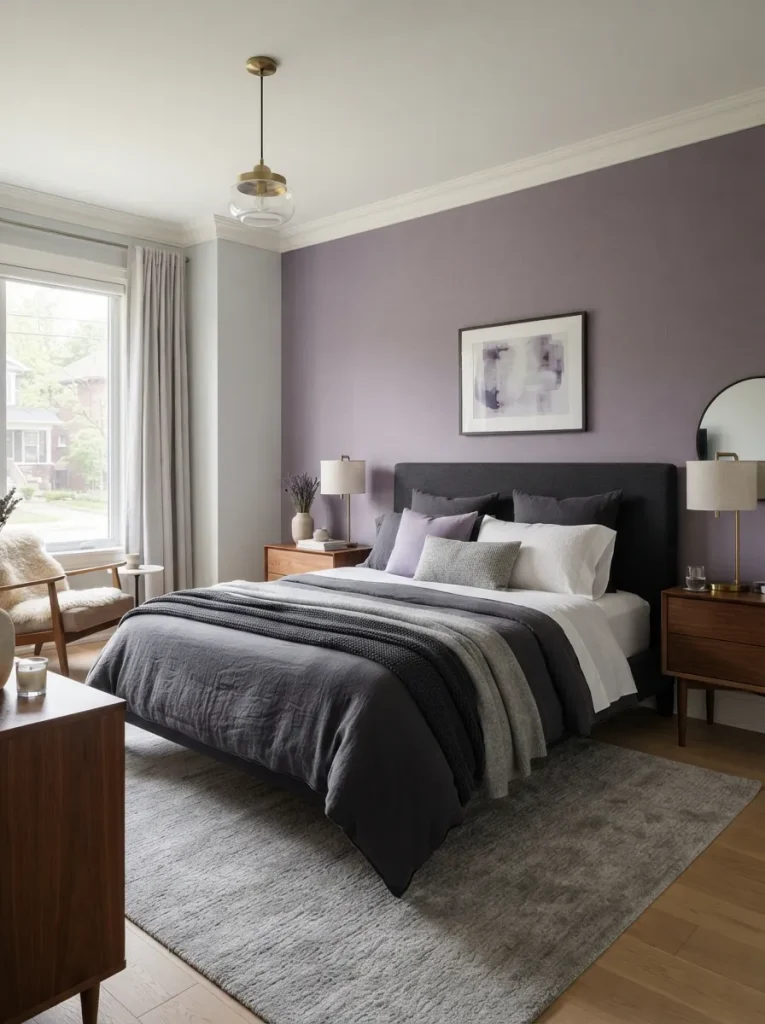
Purple and gray bedroom paint ideas can look elegant when the shades are balanced.
Gray helps purple feel quieter. Purple helps gray feel warmer. Together, they can create a bedroom that feels calm without looking boring.
Try a dusty purple wall behind the bed with pale gray bedding, charcoal lamps, and warm white trim. Or use light gray walls with a plum or mauve accent wall.
If the room already has gray carpet or gray furniture, purple can stop the space from feeling too cold. Mauve, violet-gray, and dusty lavender work especially well.
The biggest mistake is choosing a cold gray with a cold purple. That combination can feel dull, especially in rooms without good sunlight. Add cream, wood, brass, or warm lighting to soften the palette.
Purple and gray should feel layered, not flat.
6. Pair Pink and Purple Without Making It Too Sweet
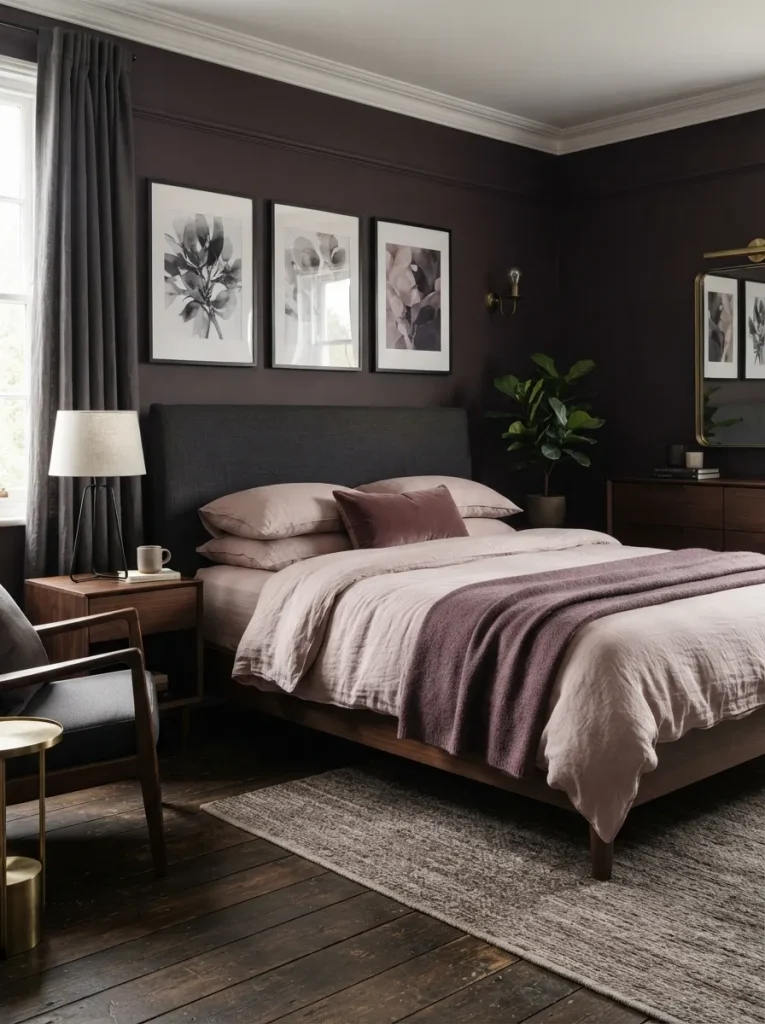
Pink and purple paint ideas can be pretty, playful, or romantic, but they need control.
For a child’s room, blush pink and lavender can feel soft and cheerful. For a teen room, dusty rose and mauve feel more grown-up. For an adult bedroom, plum with muted rose can feel rich and elegant.
One nice idea is to paint the lower half of the wall dusty pink and the upper half light purple, divided by trim. Another option is a purple accent wall with blush bedding and warm white walls.
Avoid bright pink and bright purple in equal amounts unless you want a very energetic room. It can become visually loud fast.
If you want pink and purple to feel more natural, bring in floral artwork, soft greenery, or botanical patterns. These flower home decor ideas can help the palette feel softer and less forced.
7. Use Blue and Purple for a Moody, Calm Room
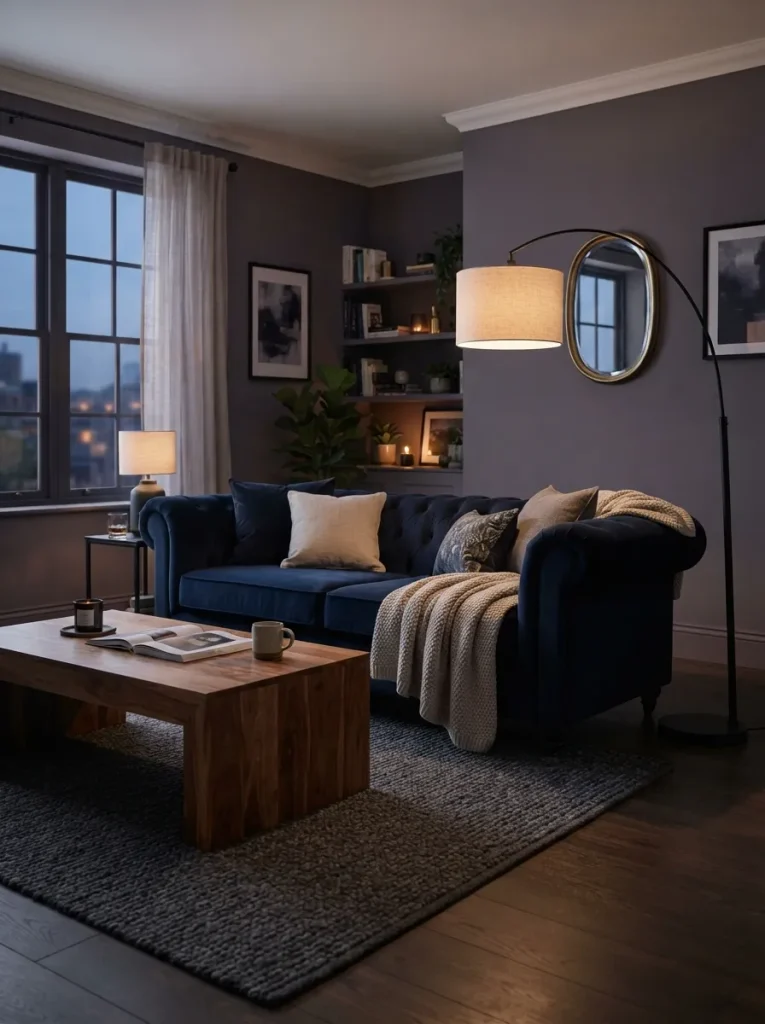
Blue and purple paint ideas work well when you want a room to feel calm, cool, and slightly moody.
The safest combinations are soft blue with lavender, slate blue with dusty violet, navy with plum, or blue-gray with mauve. Blue grounds purple, and purple gives blue more warmth and personality.
In a bedroom, try soft purple walls with navy bedding. In a bathroom, try a blue-gray vanity with lavender walls. In a living room, a navy sofa can look beautiful against muted purple-gray walls.
Be careful with royal blue and bright purple. Together, they can feel intense and hard to decorate around. If one color is bold, keep the other muted.
Blue and purple work best when the rest of the room is simple: white trim, warm wood, black accents, or brass lighting.
8. Try Purple and Teal for a Jewel-Tone Bedroom
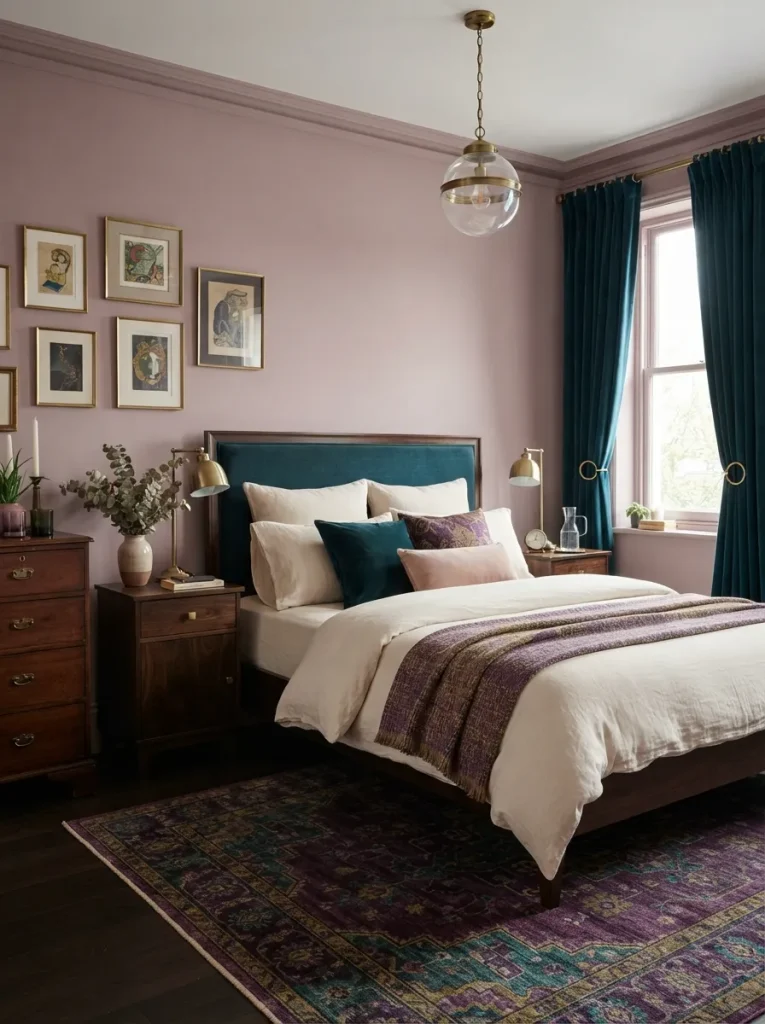
Purple and teal bedroom paint ideas can look beautiful, but one color needs to lead.
If both colors are strong, the room can become too busy. A better approach is to choose a soft purple wall color and use teal through bedding, curtains, a painted dresser, or artwork. Or choose a deep teal accent wall and use mauve or lavender in the rest of the room.
This combination can feel rich and cozy, especially with warm lamps, brass details, dark wood, or cream bedding.
Purple and teal can work well in teen rooms, guest bedrooms, creative spaces, or bold primary bedrooms. It is not the calmest combination, but it has personality.
If you want it to feel grown-up, avoid neon teal and bright grape purple. Choose dusty teal, muted plum, soft violet, or blue-green tones instead.
9. Use Purple and Green for a Fresh, Natural Look
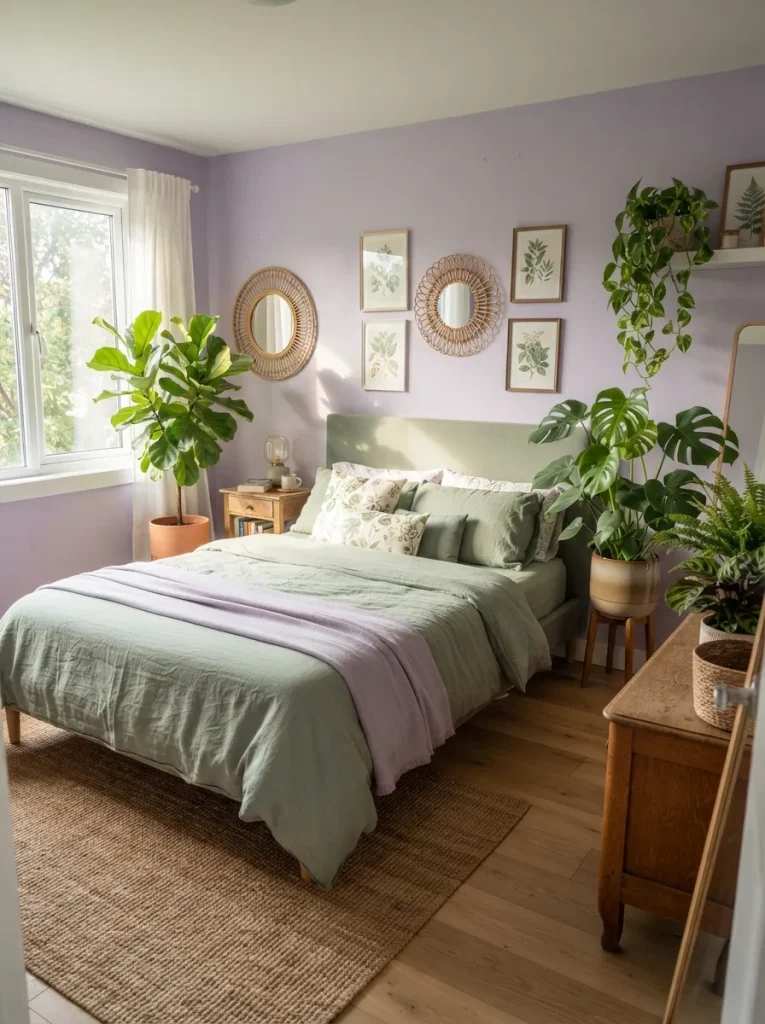
Purple and green are natural partners because they appear together in flowers, leaves, gardens, and botanical patterns.
Sage green with lavender feels calm and cottage-like. Olive green with plum feels deeper and more grounded. Mint with lilac can work in kids’ rooms, but it may feel too sweet for adult spaces.
This pairing works especially well when you use plants, floral prints, or natural materials. A lavender bedroom with sage green curtains can feel soft and peaceful. A plum accent wall with olive bedding can feel moody and stylish.
The key is muting one or both colors. Bright green and bright purple together can look cartoonish.
For a home decor look, choose sage, olive, moss, lavender, mauve, or plum. Add cream, wood, or brass to make the palette feel finished.
10. Make Dark Purple Work Without Overwhelming the Room
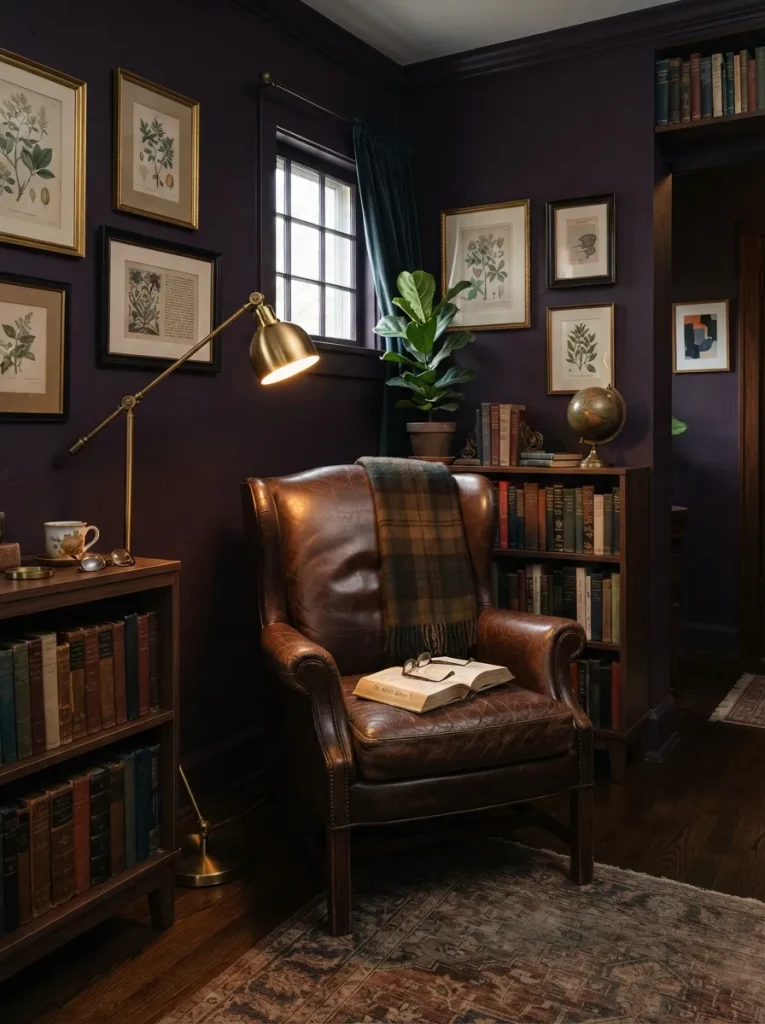
Dark purple paint ideas can look beautiful, but they need balance.
Plum, aubergine, blackberry, eggplant, and deep violet can make a room feel rich and dramatic. They work well behind a bed, around a fireplace, in a powder room, on a built-in cabinet, or in a small reading corner.
Dark purple is usually better as an accent than a full-room color unless the room has excellent lighting. If you paint every wall deep purple in a small dark room, the space may feel closed in.
Pair dark purple with warm white, cream, brass, black, walnut wood, stone, or soft beige. These materials keep the room from feeling too heavy.
A strong formula is: plum accent wall, warm white bedding, brass wall lights, black frames, and natural wood furniture.
That feels dramatic but still livable.
11. Use Purple Paint in the Living Room Carefully
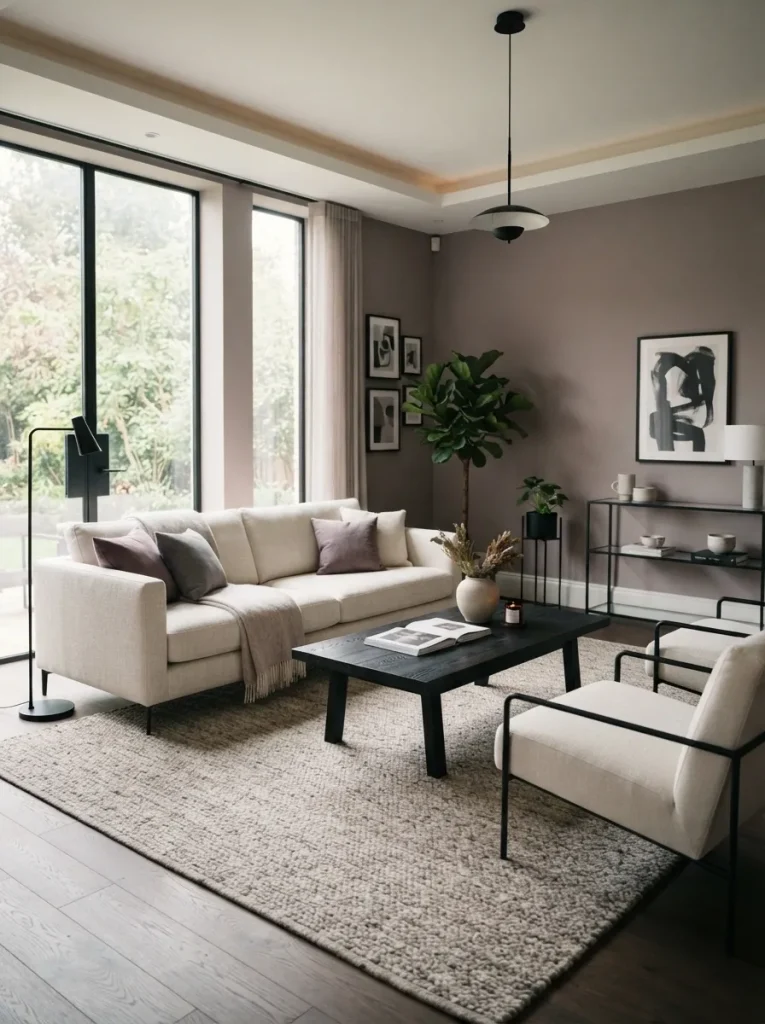
Purple paint ideas for living room spaces should usually be softer than bedroom shades.
Living rooms are shared spaces. They need to work with seating, rugs, lamps, curtains, artwork, and daily use. Bright purple walls can quickly feel tiring.
Better choices include mauve-gray, dusty violet, muted plum, purple-taupe, or soft lavender-gray. These shades bring color without taking over the room.
If your living room has cream or beige furniture, mauve can add warmth. If your living room has black accents, plum can feel dramatic. If your living room has gray furniture, lavender-gray can soften the space.
For stronger contrast, balance purple walls with simple furniture, clean lines, and controlled accents. Your small black and white living room ideas article can help readers understand how to handle contrast without making a room feel busy.
A purple living room should feel intentional, not like a bedroom color accidentally moved into the main space.
12. Use Purple Paint in the Bathroom
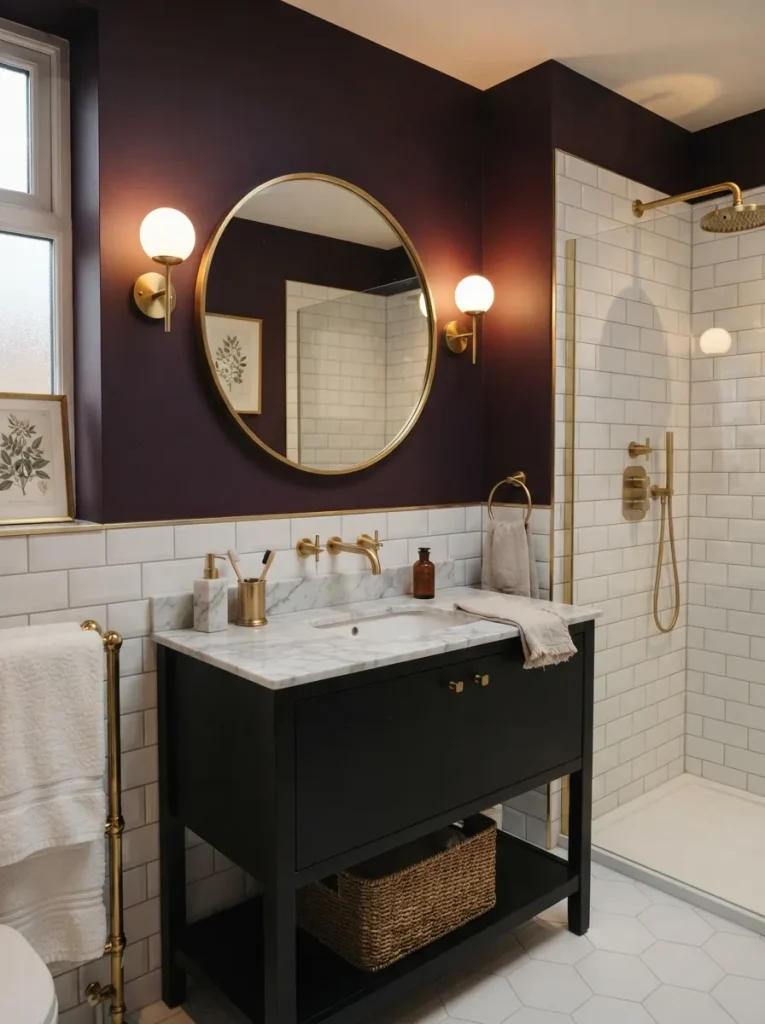
Purple paint bathroom ideas can work beautifully because bathrooms are smaller and easier to make dramatic.
Light lavender can make a bathroom feel fresh and gentle. Mauve can make it feel warmer. Deep plum can make a powder room feel moody and expensive, especially with brass or black fixtures.
Purple works best when the bathroom tile is simple. White tile, marble-look counters, black hardware, warm wood, and soft lighting all pair well with purple walls.
If the bathroom has no window, test the paint under the actual bathroom light. Purple can shift a lot under artificial lighting. A shade that looks soft in daylight may look gray, blue, or too dark at night.
For dry-zone styling, plants can soften purple walls and make the bathroom feel more natural. These bathroom plant decor ideas can help readers add greenery without making the room feel cluttered.
Use moisture-friendly paint and choose a finish that can handle cleaning.
13. Try Purple in the Kitchen as an Accent
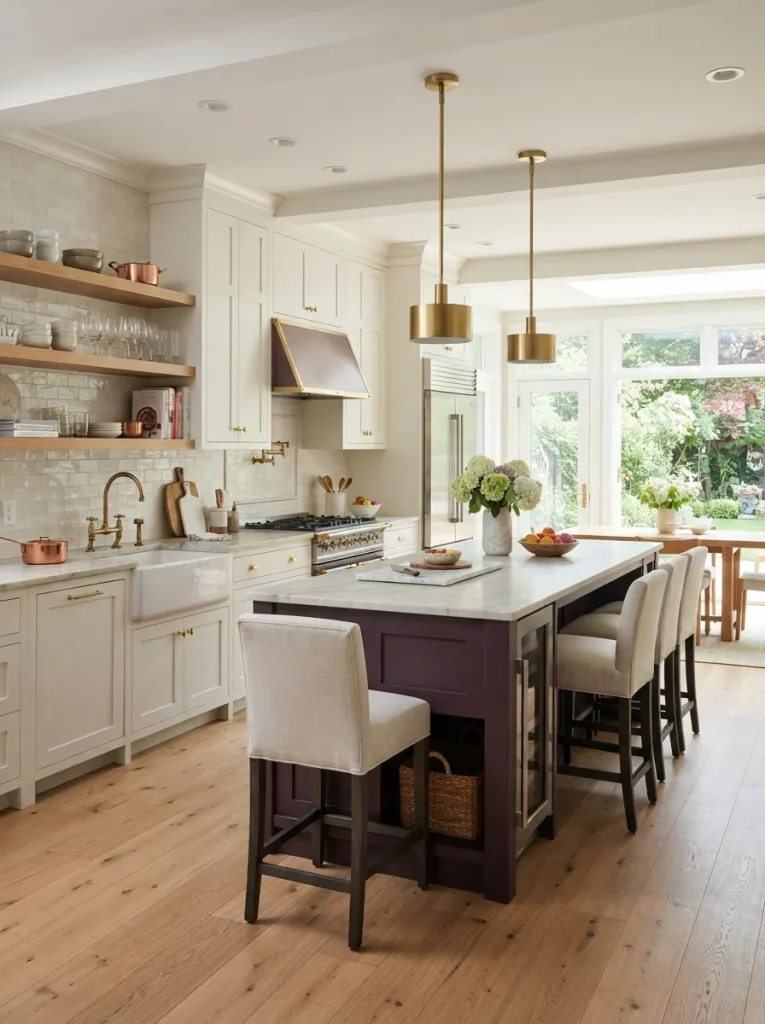
Purple kitchen paint ideas need a careful hand.
A full bright purple kitchen can feel too strong, but a controlled purple accent can look stylish. Try a plum island, a purple-gray pantry wall, a mauve breakfast nook, or soft violet on a small section of wall.
Purple works nicely with white cabinets, black hardware, brass lights, wood shelves, and stone counters. A deep plum island can look especially good in a kitchen with warm white walls and natural wood.
If your kitchen is small, avoid dark purple on every wall. Use it where it creates focus without shrinking the room.
Purple in kitchens should feel like a design choice, not a random color experiment. Keep the surrounding palette simple.
14. Use Purple in Girls’ Rooms Without Making It Too Themed
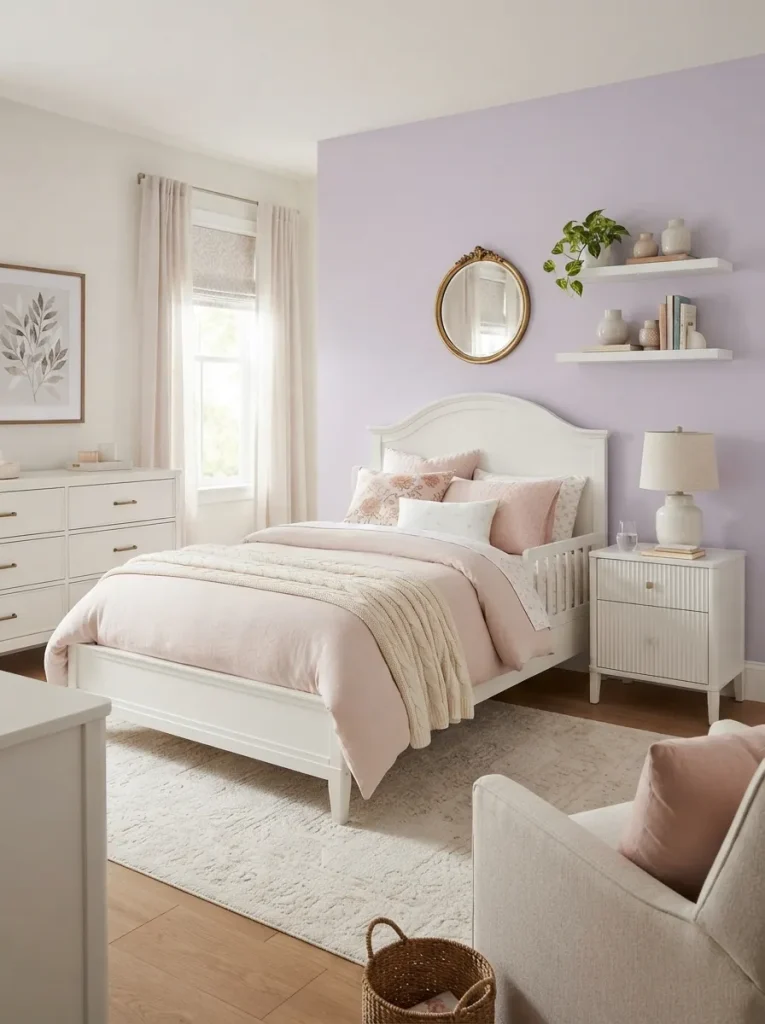
Purple girls’ room paint ideas do not need to be loud.
A pale lavender wall can grow with the room better than bright violet. Add white furniture, blush bedding, floral art, or a small gold mirror for a sweet but flexible look.
For older girls or teens, mauve, purple-gray, dusty violet, or plum can feel more mature. These shades are easier to update as the room changes.
Pink and purple can work well, but muted shades age better. Blush and lavender feel softer than hot pink and bright purple.
Avoid making every item purple. Purple walls, purple bedding, purple curtains, purple rug, and purple furniture can feel overwhelming. Let purple be the base, then add white, cream, wood, pink, or gold.
15. Use Purple in Kids’ Rooms With Flexibility
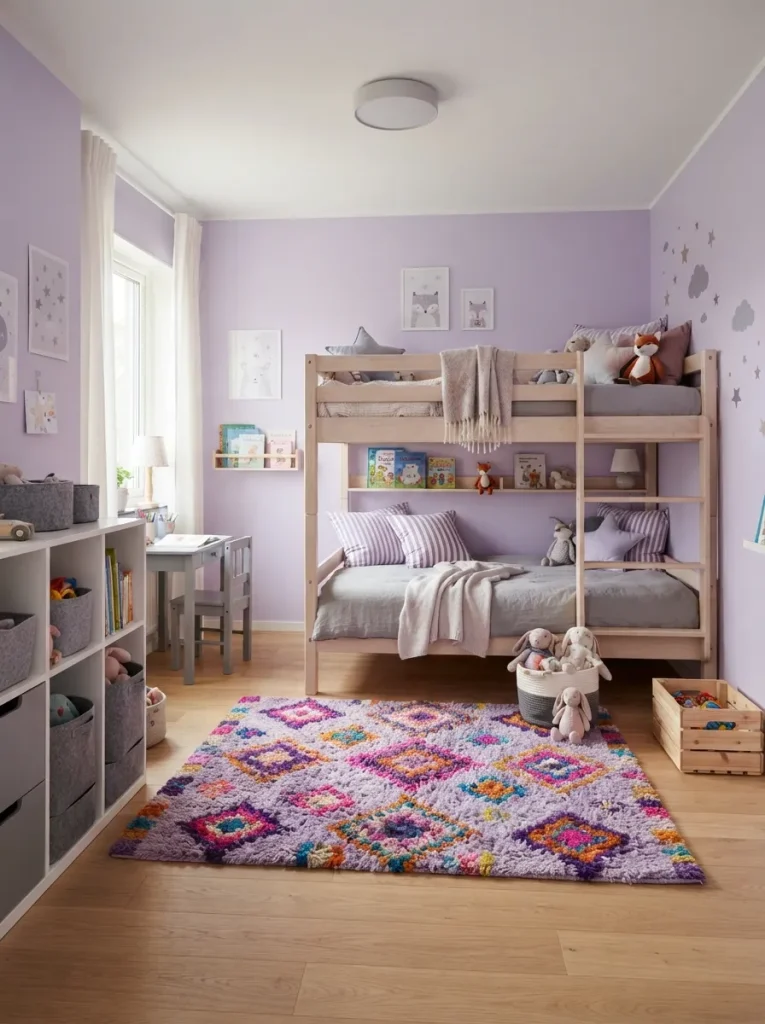
Purple kids’ room paint ideas should be fun but not impossible to live with.
Lilac, lavender, and soft violet are good choices for full walls. Brighter purple works better on one wall, a closet door, furniture, trim, or a reading nook.
If the room is shared, pair purple with gray, blue, sage green, white, or wood tones. That keeps the room from feeling too specific to one child’s taste.
Purple and teal can be playful. Purple and pink can be sweet. Purple and gray can be calmer. Purple and green can feel fresh.
The best kids’ room paint choices are flexible. Use calmer purple on the walls, then add stronger personality through bedding, art, rugs, and accessories.
16. Use Purple and Gold for a Richer Look
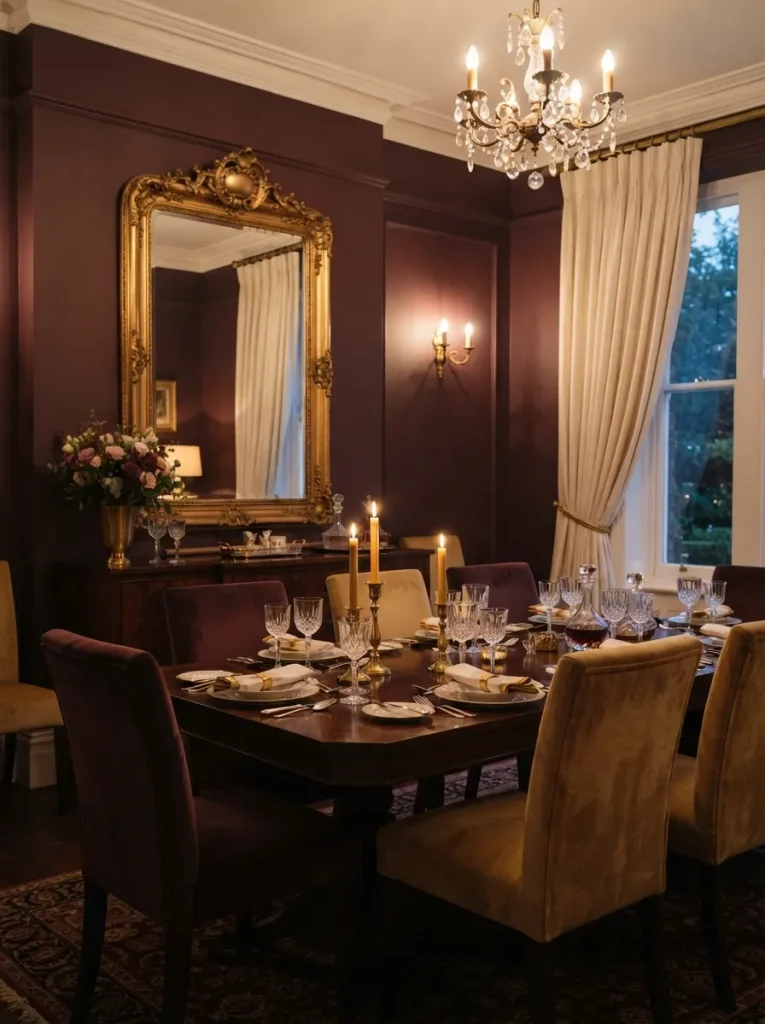
Purple and gold paint ideas can look beautiful, but gold should be used carefully.
Deep plum with aged brass feels elegant. Mauve with soft gold feels romantic. Lavender with pale gold can work in girls’ rooms, bedrooms, or bathrooms.
Use gold through mirrors, lamps, frames, knobs, trays, or light fixtures. Do not cover the room in shiny gold accents. Purple already has a strong presence, so gold should support the color, not compete with it.
For finishing pieces, these home decor items can help readers choose lamps, trays, vases, mirrors, and small accents that make a purple room feel complete.
A good purple-and-gold room still needs neutral balance. Add cream, white, beige, wood, or black so the space does not feel too glam or too heavy.
17. Test Purple Paint With Real Lighting Before You Commit
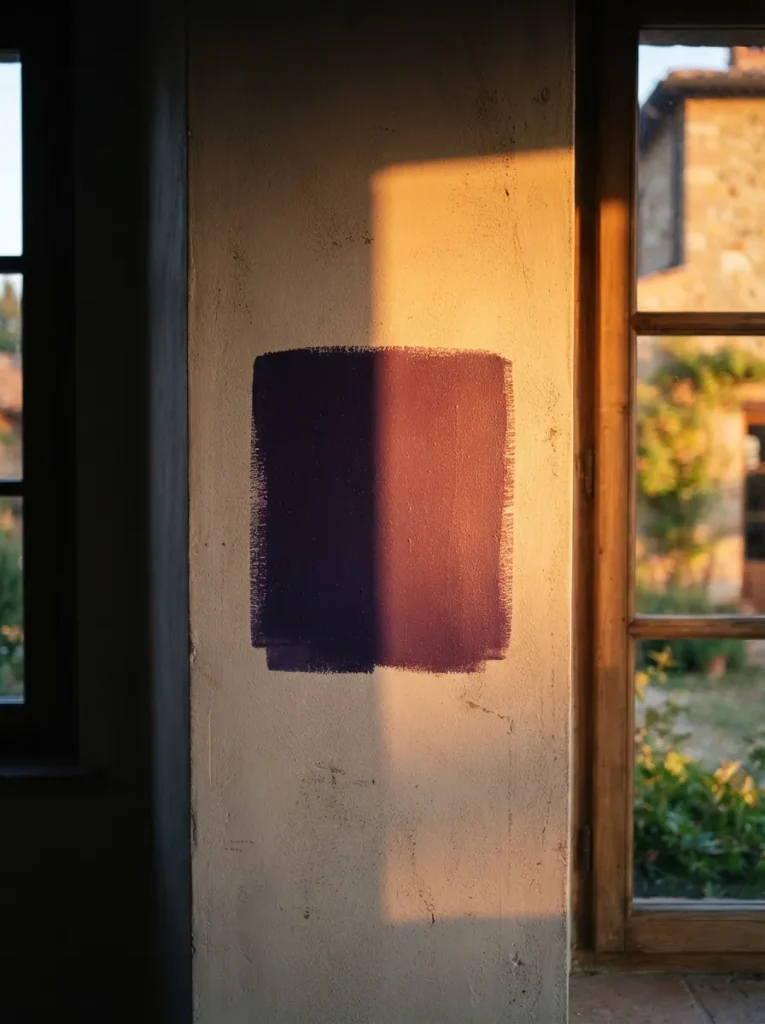
Lighting changes purple more than many other colors.
Warm bulbs can make purple feel softer and slightly pinker. Cool bulbs can make it look bluer, grayer, or colder. Natural daylight can shift the color throughout the day.
That is why purple should always be tested before painting the full room.
Paint a sample on the wall and look at it in the morning, afternoon, and evening. Check it beside your furniture, flooring, curtains, and trim. A purple that looks perfect on a paint card may look very different beside your real sofa or bedding.
Wall lights and warm lamps can make purple rooms feel softer at night. These wall sconce light fixtures ideas and indoor wall mounted light fixture ideas can help readers choose lighting that supports the wall color.
Also think about paint safety. Paints and similar products can release VOCs indoors, so follow the paint label, ventilate well, and give the room time to air out. The EPA’s guide to volatile organic compounds and indoor air quality is a useful reference if you want to understand why ventilation matters.
Final Advice
Purple paint color ideas work best when the shade matches the room’s light, size, and purpose.
Use lavender when you want softness. Use mauve when you want a grown-up bedroom or living room. Use plum when you want drama. Use purple-gray when you want color that still feels quiet. Use brighter purple only where energy makes sense, like kids’ rooms, playful accents, or small painted details.
Pair purple with white, cream, beige, gray, wood, sage green, teal, blue, blush pink, brass, gold, or black depending on the mood you want.
Most importantly, test first.
Purple is not a color to choose quickly from a screen. Paint a sample, live with it for a day or two, and check it under your real lighting. That one step can save you from repainting the whole room later.
FAQs
Is purple paint trendy right now?
Yes, purple paint is trendy right now, but the most stylish versions are softer and moodier shades like lavender, mauve, dusty violet, plum, and aubergine. Bright purple can still work in kids’ rooms or playful spaces, but for bedrooms, bathrooms, and living rooms, muted purple usually feels more current and easier to decorate around.
What colors go well with purple paint?
White, cream, beige, gray, sage green, navy blue, teal, blush pink, black, wood tones, brass, and gold all go well with purple paint. For a calm room, pair purple with cream, gray, or wood. For a bolder room, try purple with teal, navy, green, or gold.
What is the prettiest color of purple?
The prettiest purple paint color depends on the room, but lavender, mauve, plum, lilac, and dusty violet are usually the easiest to love in home interiors. Lavender feels soft and calming, mauve feels grown-up, and plum feels rich and dramatic.
What are the 9 shades of purple?
Nine popular shades of purple are lavender, lilac, mauve, violet, orchid, amethyst, plum, eggplant, and aubergine. For home paint, lavender and lilac work well in soft bedrooms, mauve and violet feel more mature, and plum, eggplant, or aubergine are best for accent walls or dramatic rooms.
What are the best purple paint color ideas for bedrooms?
The best purple paint color ideas for bedrooms include soft lavender, dusty mauve, purple-gray, light lilac, and deep plum accent walls. Softer shades are easier to live with, while darker purples work best as accents behind the bed.
What colors go well with purple paint in a bedroom?
Cream, white, soft gray, beige, sage green, blush pink, navy, warm wood, brass, and black all work well with purple bedroom paint. For a calm bedroom, use lavender with cream and wood. For a richer look, use plum with brass and warm white bedding.
Is purple a good wall color for a living room?
Purple can be a good wall color for a living room if the shade is muted. Mauve, dusty violet, purple-gray, and soft plum are easier to decorate around than bright purple. A strong purple living room needs neutral furniture, warm lighting, and simple accents.
What purple paint works best in a small room?
Light purple, pale lavender, lilac, and purple-tinted white usually work best in small rooms because they add color without making the space feel dark. If you want dark purple, use it on one accent wall instead of every wall.
Can I use purple paint in a bathroom?
Yes, purple paint can work beautifully in a bathroom. Light lavender feels fresh, mauve feels warm, and deep plum can look dramatic in a powder room. Use bathroom-friendly paint and test the shade under your lighting.
What is a grown-up purple paint color?
Mauve, plum, aubergine, muted violet, and purple-gray usually feel more grown-up than bright candy purple. Pair them with cream, wood, brass, black, or soft gray for a more mature look.
Are pink and purple paint ideas good for bedrooms?
Pink and purple paint ideas can work well in bedrooms when the shades are soft or muted. Blush pink with lavender feels gentle, while dusty rose with mauve feels more mature.
Should I paint all walls purple or just one accent wall?
Paint all walls purple if the shade is soft, muted, and the room has good light. Use one accent wall if the purple is dark, bright, or dramatic. Deep plum, eggplant, and aubergine usually work better as accent walls than full-room colors.