

A room can contain beautiful furniture, fresh paint, and carefully chosen accessories yet still feel strangely unfinished. The problem is often not what the room lacks. It may be one of several home decor mistakes to avoid before you spend more money.
A rug that is slightly too small can disconnect an entire seating area. Curtains hung too low can make the ceiling appear shorter. Even an attractive mirror can hurt the room when it reflects clutter instead of light.
These common mistakes are usually easier to fix than they first appear. This guide explains what may be making your rooms feel wrong, why it happens, and how to correct it through better scale, lighting, placement, and editing.
1. Buying Furniture Before Measuring the Room
Furniture can look perfectly proportioned in a showroom and completely overwhelm your home.
An oversized sectional may block walkways in a compact living room. A small sofa against a long wall can create the opposite problem, making the space feel empty and unfinished.
Before ordering anything, mark the furniture dimensions on the floor with painter’s tape. Open nearby doors, drawers, and cabinets. Walk through the proposed layout as you normally would.
Measure:
- The usable wall length
- Main walking routes
- Door and cabinet swings
- Distance between seating
- Available space around tables
- Radiators, vents, and outlets
Among the most expensive home decor mistakes to avoid, incorrect furniture scale often leads to difficult returns or living with a piece that never feels right.
For more help with proportion and room planning, explore these best home decor tips.
Designer Tip: Measure the furniture you already enjoy using. Its seat depth, height, and width can provide a practical reference when shopping.
2. Choosing a Rug That Is Too Small
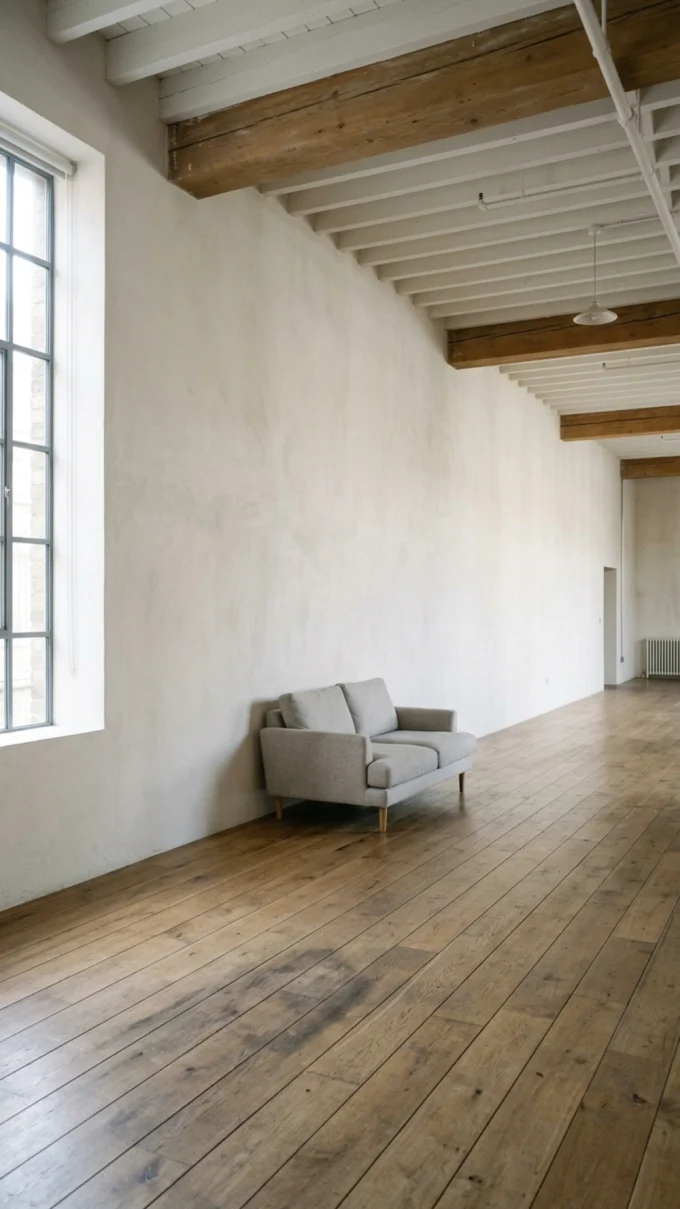
A small rug can make an otherwise attractive room feel disconnected.
In a living room, the rug should generally extend beneath at least the front legs of the sofa and main chairs. This visually connects the furniture and defines one complete seating area.
In a dining room, chairs should remain on the rug when pulled away from the table. A rug that only fits beneath the table can catch chair legs and become frustrating during everyday meals.
For a bedroom, choose a rug that extends beyond the sides and foot of the bed, or place runners where your feet naturally land.
If a properly sized decorative rug is too expensive, use an affordable natural-fiber rug as a base and layer a smaller patterned rug over it.
This is one of the easiest home decor mistakes to avoid because the correct rug size can improve the room without changing the furniture.
3. Relying on One Overhead Light
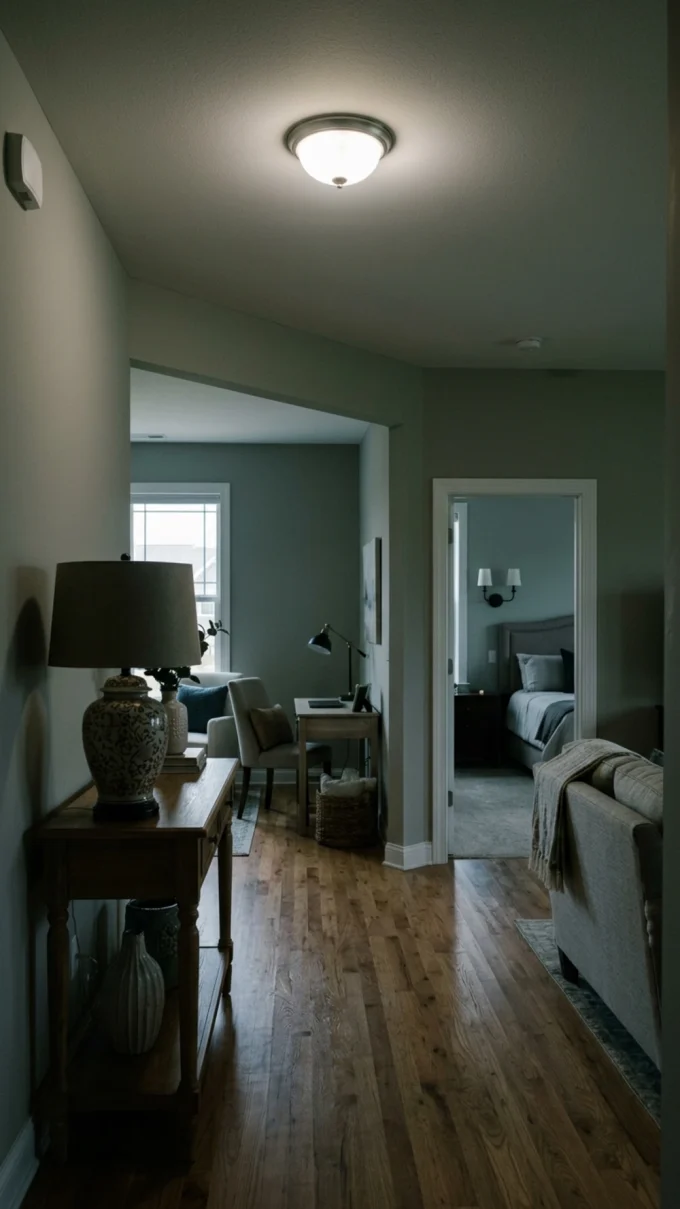
A single ceiling fixture may provide visibility, but it rarely creates a comfortable room.
Good lighting comes from several sources placed at different heights. Combine general ceiling lighting with floor lamps, table lamps, wall fixtures, or focused task lights.
A useful arrangement might include:
- A floor lamp beside a reading chair
- A table lamp on a console
- Wall lights beside a bed
- A task lamp on a desk
- Accent lighting near artwork or shelving
Use similar bulb temperatures in connected rooms. Mixing cold blue-white bulbs with very warm orange light can make the home feel inconsistent.
Poor lighting is one of the most noticeable home decor mistakes to avoid, especially during the evening when natural light disappears.
These wall sconce light fixture ideas and indoor wall-mounted light fixture ideas can help you plan more useful lighting.
Budget Fix: Replace mismatched bulbs before replacing fixtures. Consistent light temperature can transform the atmosphere for very little money.
4. Hanging Curtains Too Low or Too Short
Curtains placed directly above the window frame can visually shorten the wall.
Where the room and hardware allow, position the curtain rod higher and extend it beyond both sides of the window. This reveals more glass when the panels are open and makes the window appear wider.
Curtains should normally reach the floor or end deliberately at the windowsill. Panels that stop several inches above the floor often look like a measuring error.
Choose enough fabric to create gentle folds when the curtains are closed. Flat panels stretched tightly across a window can appear unfinished, even when the fabric is expensive.
Keep curtains safely away from:
- Radiators
- Floor vents
- Cooking surfaces
- Damp bathroom areas
- Frequently used doors
Incorrect curtain size is one of those home decor mistakes to avoid that can affect the apparent height and scale of an entire room.
5. Pushing Every Piece Against the Walls
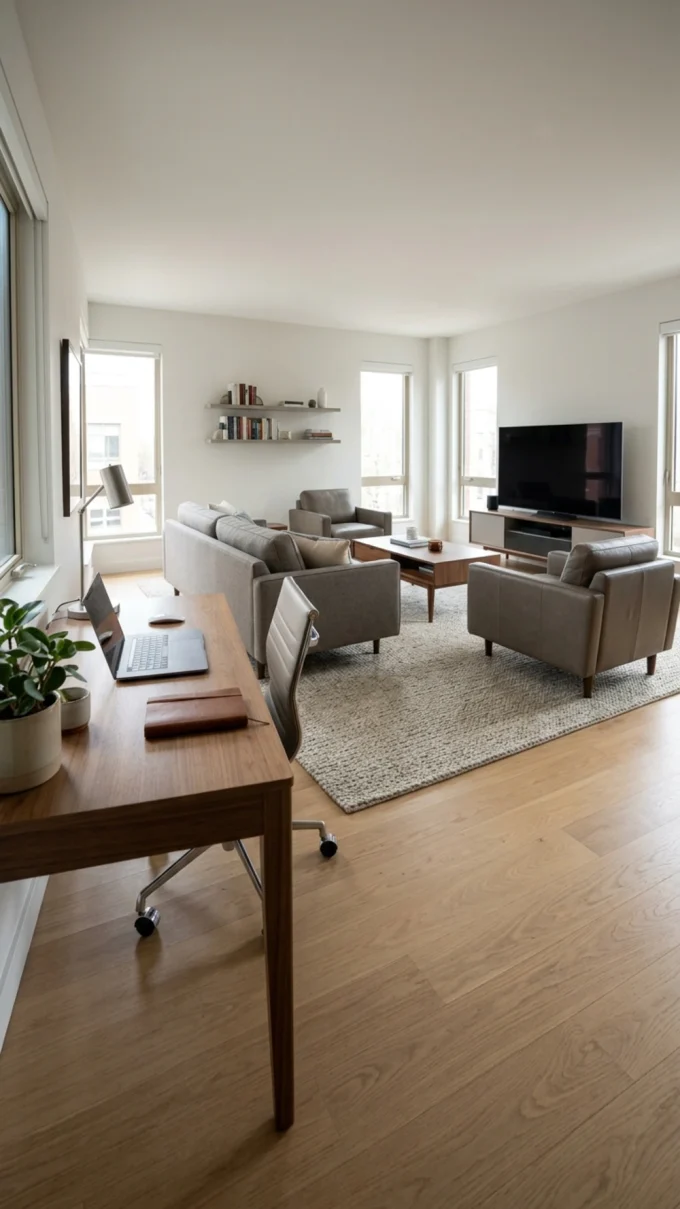
Many people push furniture outward because they believe an empty center makes the room feel larger. It can instead make the layout feel disconnected.
In a larger living room, move the sofa or chairs slightly inward and connect them with a rug. In a compact room, leaving even a small gap behind the sofa can add depth.
Arrange the furniture around the room’s main purpose:
- Conversation
- Television viewing
- Reading
- Entertaining
- Working from home
Seating should feel connected without blocking natural walkways.
If the room is small, use fewer pieces rather than lining every wall with narrow furniture. These small black and white living room ideas show how a limited palette and clear layout can make a compact room feel more controlled.
6. Hanging Artwork Too High
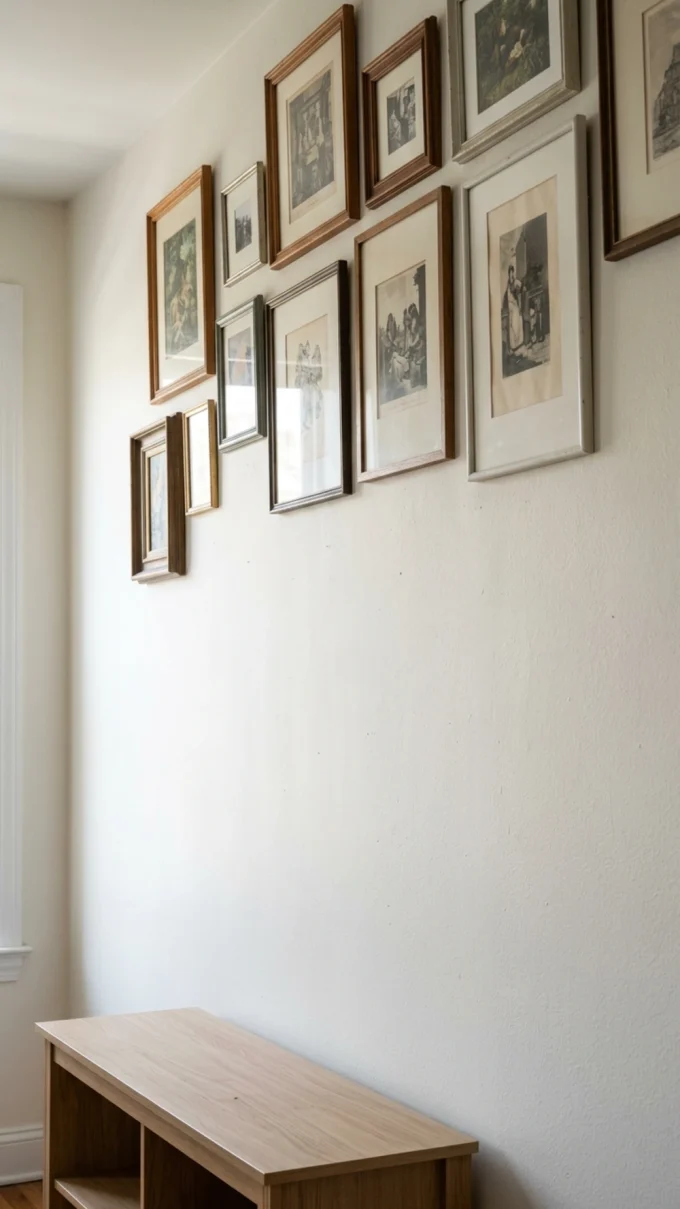
Artwork should feel connected to the furniture beneath it.
A small picture placed near the ceiling appears to float. Several frames with inconsistent spacing can make the wall feel restless rather than personal.
Before making holes, trace your frames onto paper and attach the templates to the wall. Step back and check their relationship with the sofa, bed, console, or sideboard.
One larger piece often creates more impact than several tiny decorations scattered across a wide wall.
In a rental, artwork can sometimes be leaned securely on a dresser, console, or picture ledge. These rental apartment decorating ideas include more reversible solutions.
Artwork placement belongs on any practical list of home decor mistakes to avoid because a small adjustment can improve balance immediately.
7. Matching Every Piece Too Closely
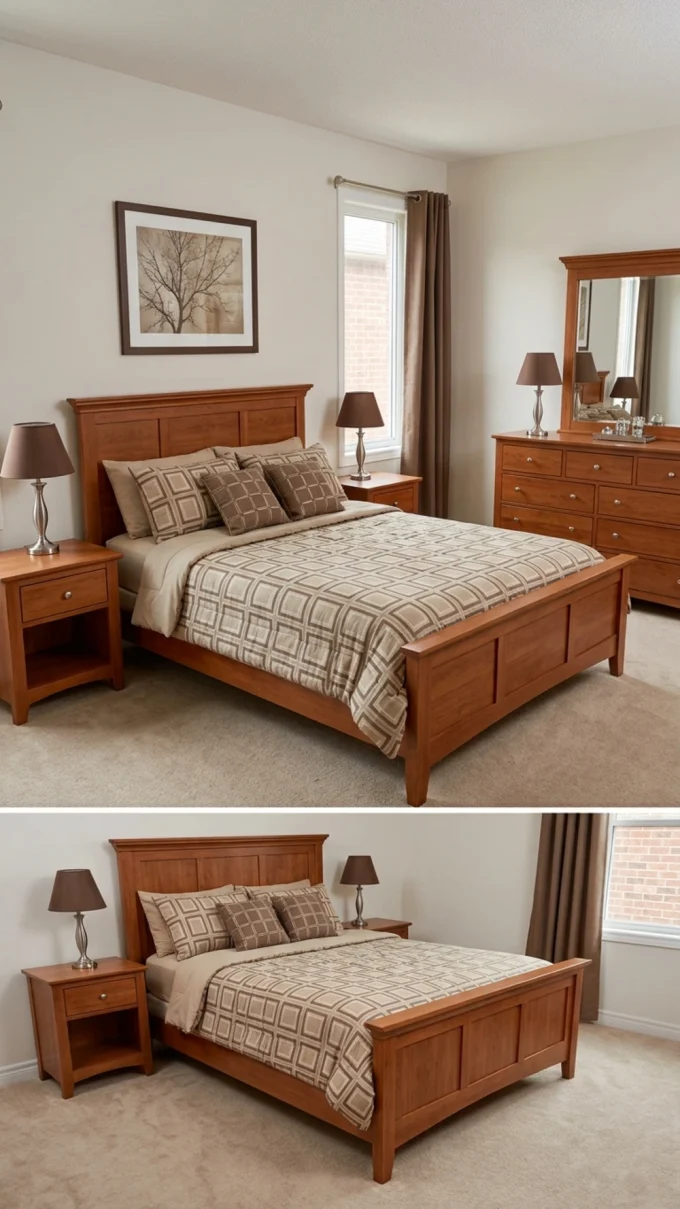
A complete matching furniture collection may look coordinated, but it can also make the room feel like a showroom.
Instead of matching everything exactly, repeat one or two connecting elements.
For example:
- Repeat black in a lamp, frame, and table base
- Use warm wood in the coffee table and shelving
- Carry one cushion color into the artwork
- Combine smooth upholstery with woven materials
- Mix a modern sofa with a vintage side table
The room should feel related, not identical.
Texture can also introduce variety without adding more colors. These wall texture design ideas show how paneling, plaster, wood, and subtle paint finishes can add character.
Designer Tip: Keep one repeated finish, then vary the shapes, ages, and textures around it.
8. Choosing Paint Before Furniture and Fabrics
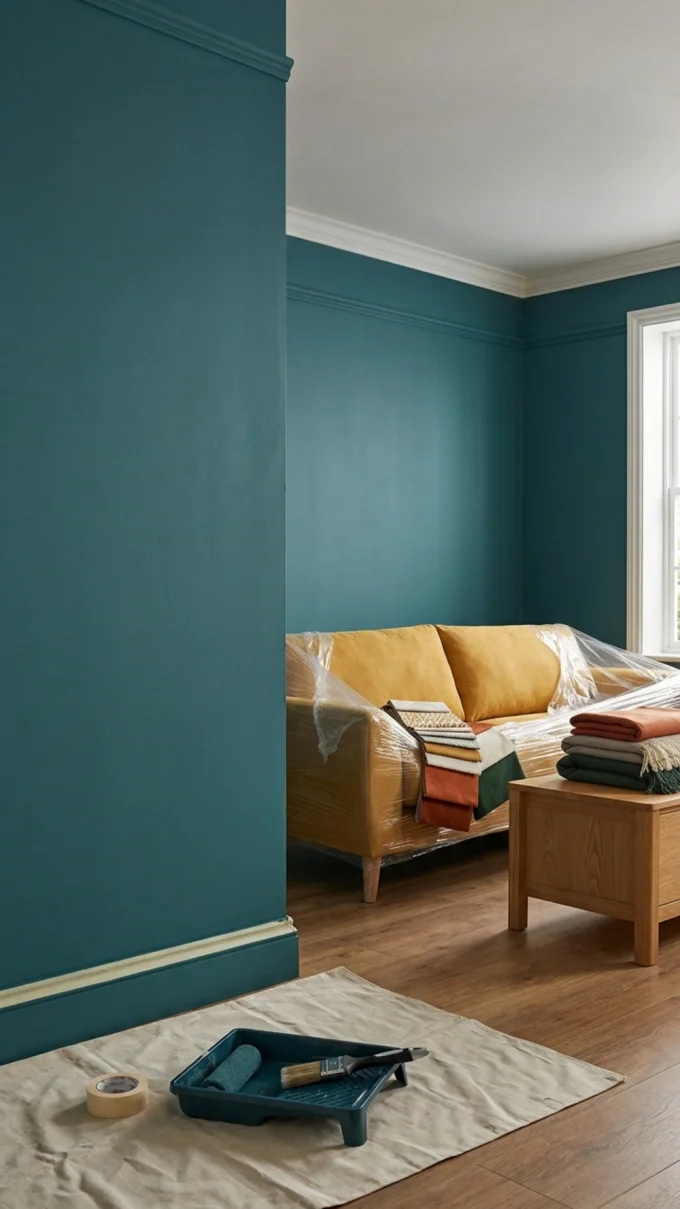
Paint comes in thousands of colors. Sofas, rugs, curtains, and flooring offer far fewer suitable options.
Choosing the wall color first can make it difficult to find furnishings that work with its exact undertone.
Select the largest or most expensive elements first:
- Flooring
- Main furniture
- Rug
- Curtains
- Upholstery
- Wall paint
Test paint on large movable boards rather than relying on a small paper card. Observe the samples in morning, afternoon, and evening light.
Warm and cool undertones can become more obvious beside wood, tile, and fabric.
For a stronger feature color, explore these purple paint color ideas.
Choosing paint too early is one of the home decor mistakes to avoid because repainting may be easier than replacing a sofa, but it still costs time and money.
9. Filling Every Surface With Accessories
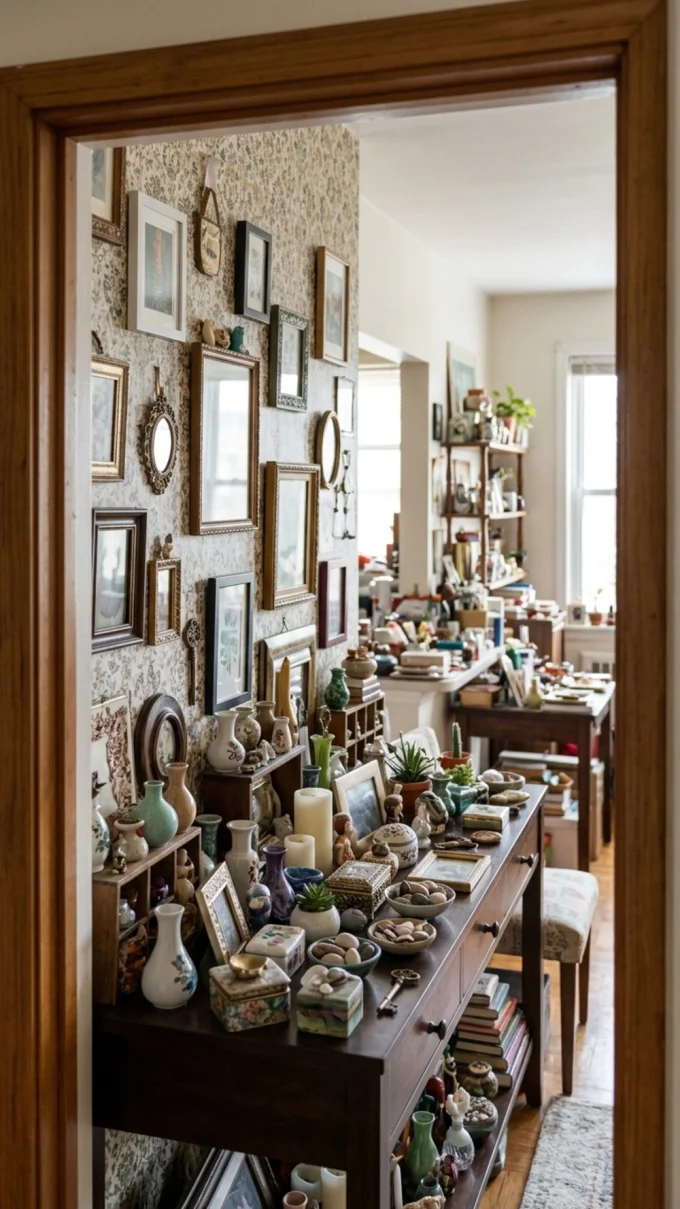
A collection of small decorations can create visual noise without giving the room a clear focal point.
Instead of spreading objects across every shelf, table, and windowsill, group a few pieces with different heights and shapes.
A balanced console might include:
- One lamp
- A short stack of books
- A bowl or sculptural object
- One plant or vase
Leave some space around each arrangement. Empty space helps the eye understand what matters.
When a room feels busy but still unfinished, removing items can be more effective than adding new ones.
Overdecorating is among the most common home decor mistakes to avoid because attractive objects lose their impact when they compete with too many neighbors.
These home decor items can help you choose accessories that have a clear purpose.
10. Placing Mirrors Where They Reflect Clutter
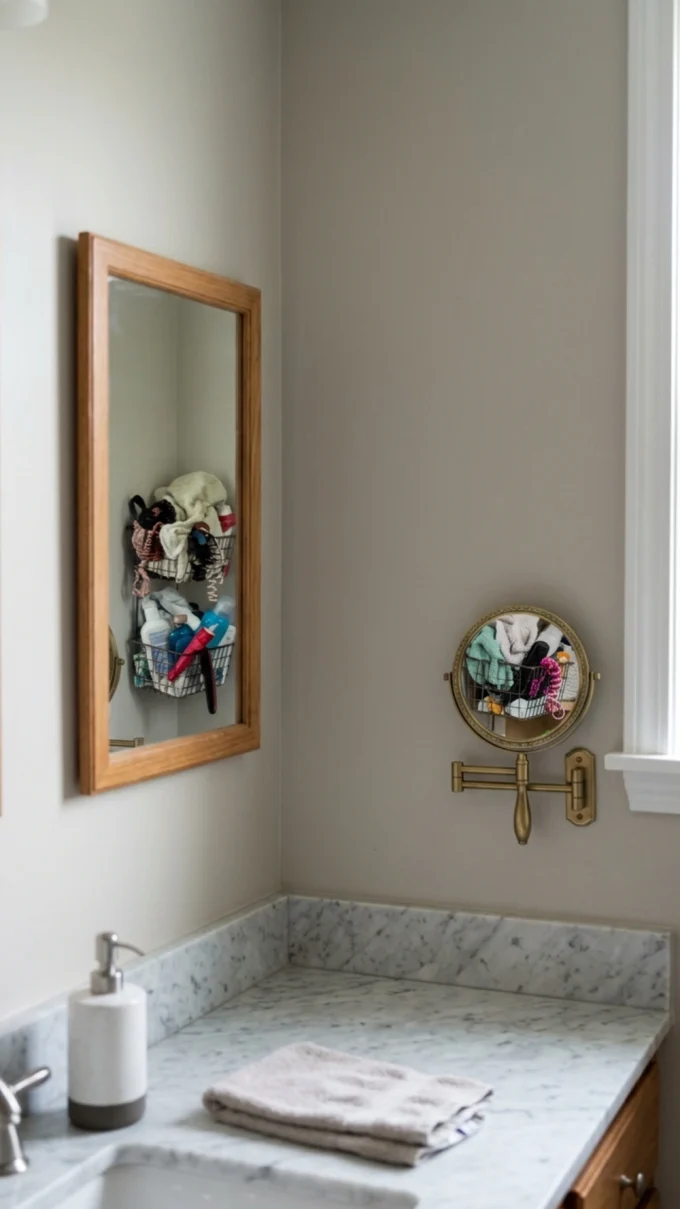
A mirror expands whatever it faces.
When it reflects a bright window, attractive artwork, or an open part of the room, it can increase light and depth. When it faces clutter, a bathroom door, or an unfinished corner, it repeats the problem.
Before hanging a mirror, stand in the proposed position and look at the opposite view.
Scale also matters. A tiny mirror can feel lost on a large wall, while an oversized one may overwhelm a narrow hallway.
These contemporary bedroom mirror decor ideas offer practical examples for combining reflection with furniture and lighting.
Designer Tip: Select the reflected view as carefully as you select the frame.
Poor mirror placement is one of the less obvious home decor mistakes to avoid, but it can affect what you notice every time you enter the room.
11. Ignoring Clear Walking Routes
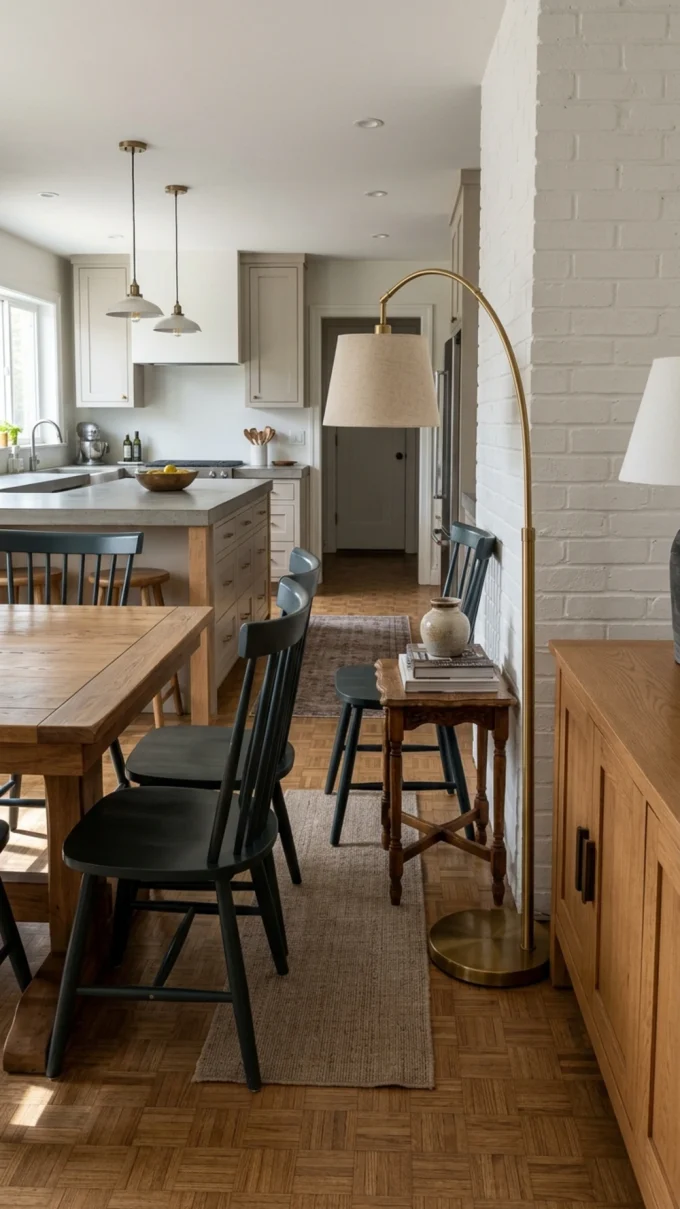
A room can look beautiful in a photograph and still be uncomfortable to use.
Furniture should not block doors, cabinets, main pathways, or access to windows. People should be able to enter, sit down, and move through the room without turning sideways around tables.
Watch for:
- Coffee tables placed too close to sofas
- Dining chairs blocking kitchen traffic
- Beds interfering with wardrobe doors
- Floor lamps placed in narrow routes
- Ottomans blocking entrances
- Stools left in working areas
Place the largest furniture first. Add smaller pieces only when they improve function.
Traffic flow is especially important in connected spaces. These open kitchen design ideas show how kitchens and living areas can relate without interrupting movement.
12. Making the Bedroom Difficult to Maintain
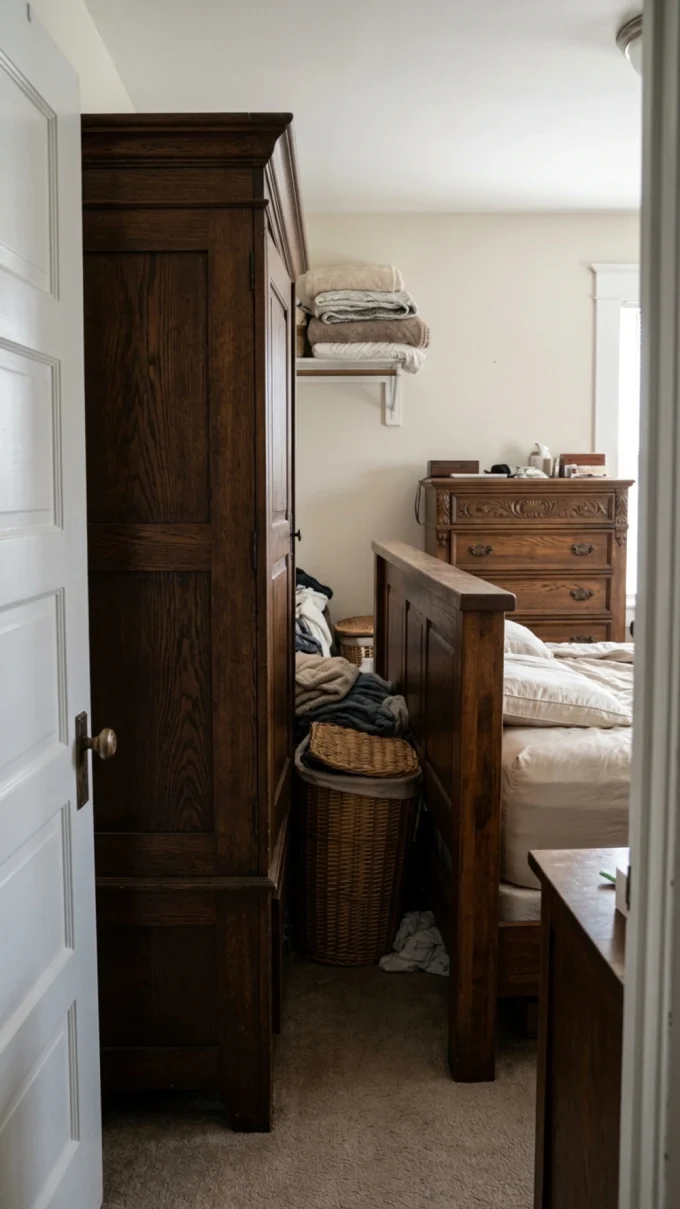
A bedroom should feel restful, not like a space that requires constant resetting.
Too many pillows, blankets, patterns, and decorative layers can make the bed look attractive but become inconvenient every evening.
Use the bed as the main focal point. Support it with practical bedside lighting, accessible storage, and a rug that relates to its size.
Bedroom decor mistakes often include:
- Bedside lamps at the wrong height
- Tables that sit far below the mattress
- Heavy furniture in narrow walkways
- Too many decorative pillows
- Poorly placed mirrors
- No accessible storage
These modern wardrobe design ideas can help you combine organization with a cleaner bedroom layout.
Budget Fix: Improve bedding before replacing furniture. A simple duvet, two larger pillows, and one throw can make the bed feel more complete.
13. Letting Kitchen Decor Take Over the Counters
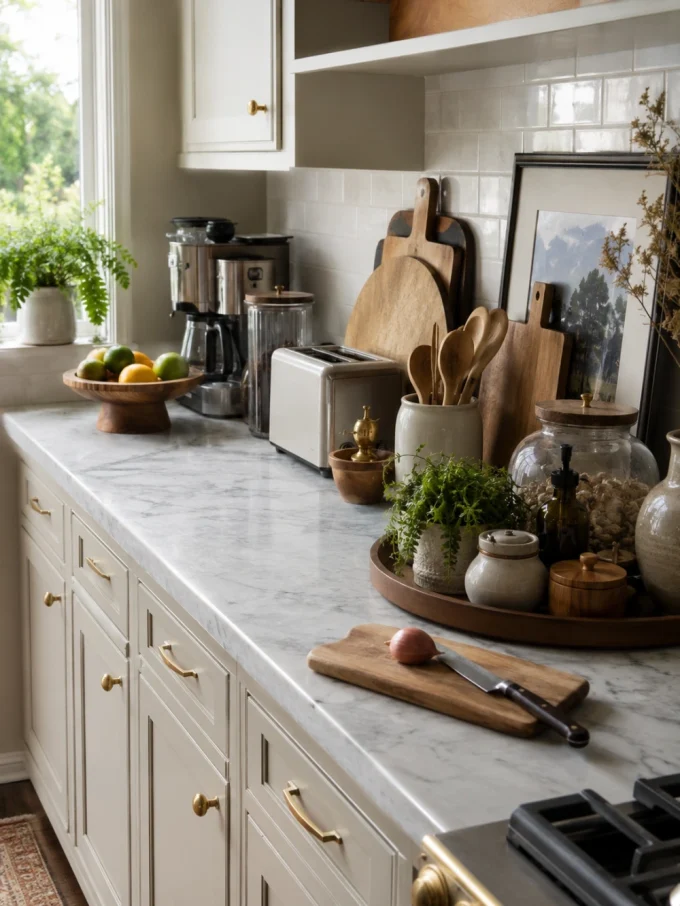
A kitchen should provide enough clear space for preparing food.
Signs, cutting boards, appliances, jars, trays, and plants can look attractive individually but become clutter when displayed together.
Keep daily essentials accessible and store occasional items elsewhere. Group small objects on a tray so the surface remains easy to clean.
Choose one or two decorative focal points:
- A bowl of fruit
- One suitable plant
- Attractive utensils
- A compact coffee station
- Framed art away from heat and moisture
These coffee station ideas show how to organize a practical beverage area without taking over the countertop.
Crowded worktops are among the most disruptive home decor mistakes to avoid because appearance begins to interfere with function.
14. Using Bathroom Decor That Cannot Handle Moisture
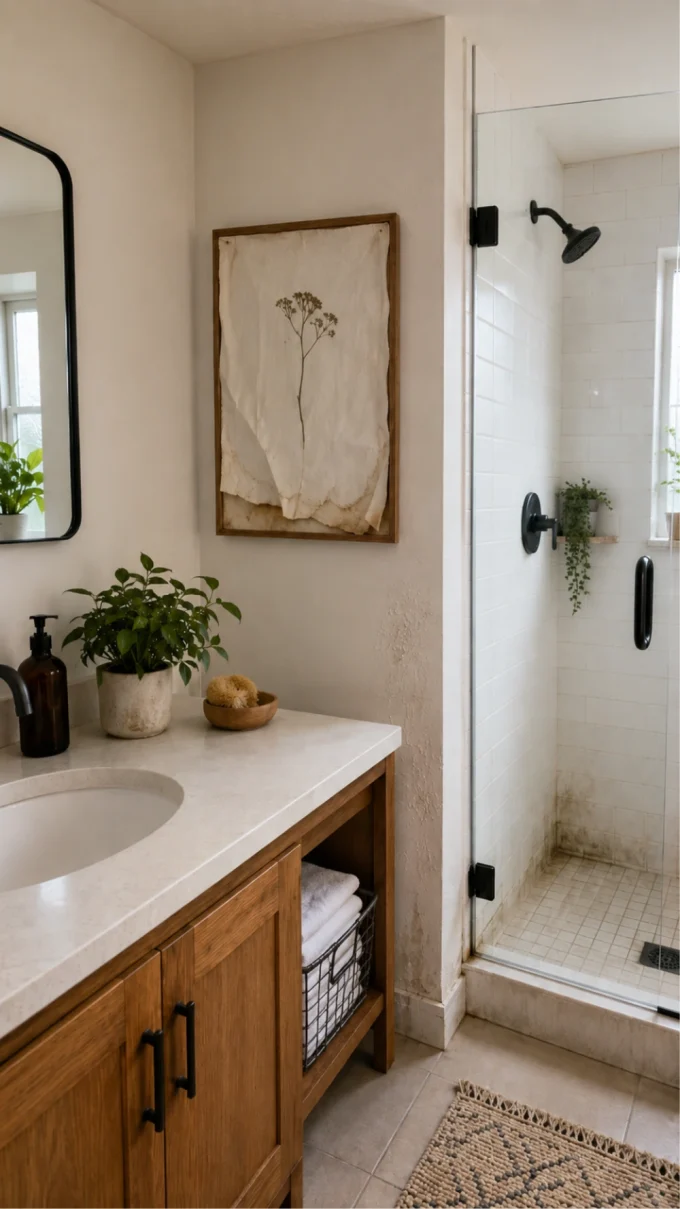
Bathroom accessories must tolerate humidity, water, and frequent cleaning.
Untreated wood, absorbent baskets, delicate paper art, and non-water-resistant finishes may deteriorate near a shower or sink.
Choose:
- Washable textiles
- Rust-resistant accessories
- Moisture-resistant storage
- Easy-to-clean surfaces
- Plants suited to the available light
Do not use decor to cover leaks, mold, damaged grout, or ventilation problems. These need proper repair.
In a small bathroom, a few larger accessories usually look calmer than many tiny containers.
These bathroom plant decor ideas can help you add greenery without overcrowding the space.
15. Forgetting the Hallway and Entryway
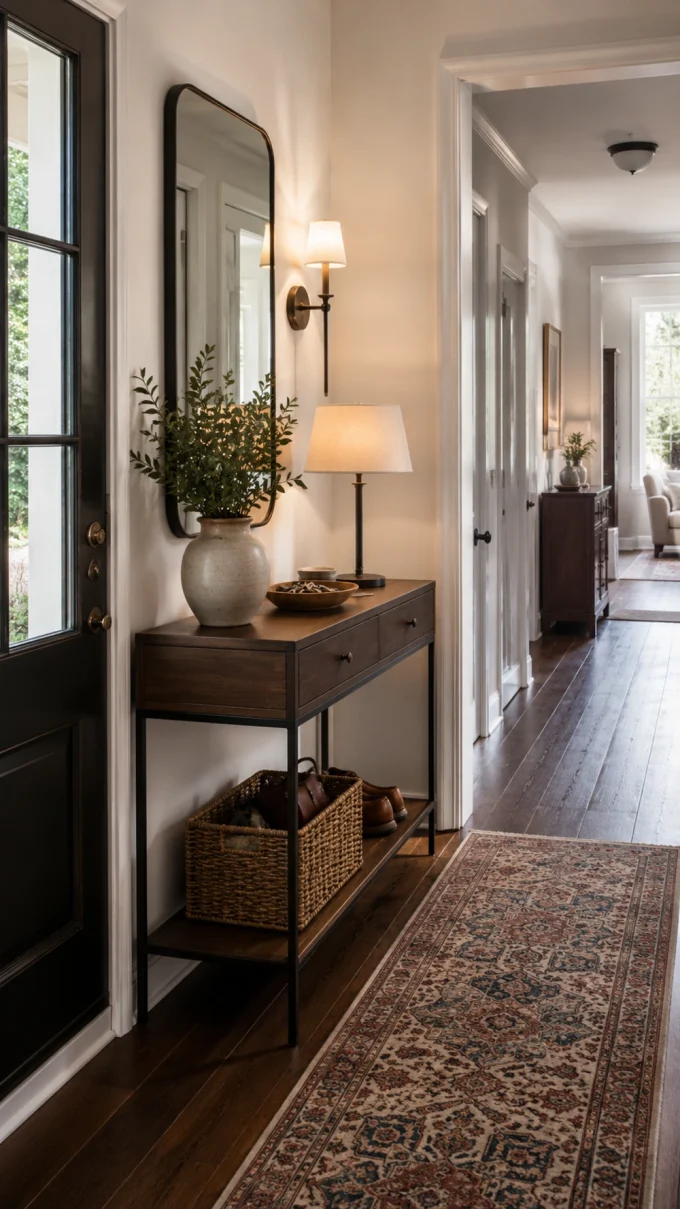
The entrance influences how the rest of the home feels.
A carefully decorated living room may still feel disconnected when the hallway and entry remain empty, cluttered, or poorly lit.
You do not need much furniture. A runner, mirror, wall light, artwork, or narrow console can provide enough character.
Prioritize:
- A clear walkway
- Practical lighting
- Storage for daily essentials
- A durable rug or mat
- One simple focal point
Avoid deep furniture that blocks doors or narrows movement.
These stunning hallway ideas and entryway console table ideas offer useful ways to improve overlooked transitional areas.
Forgetting the entrance is one of the home decor mistakes to avoid because it affects both first impressions and daily organization.
16. Filling a Small Room With Too Many Tiny Pieces
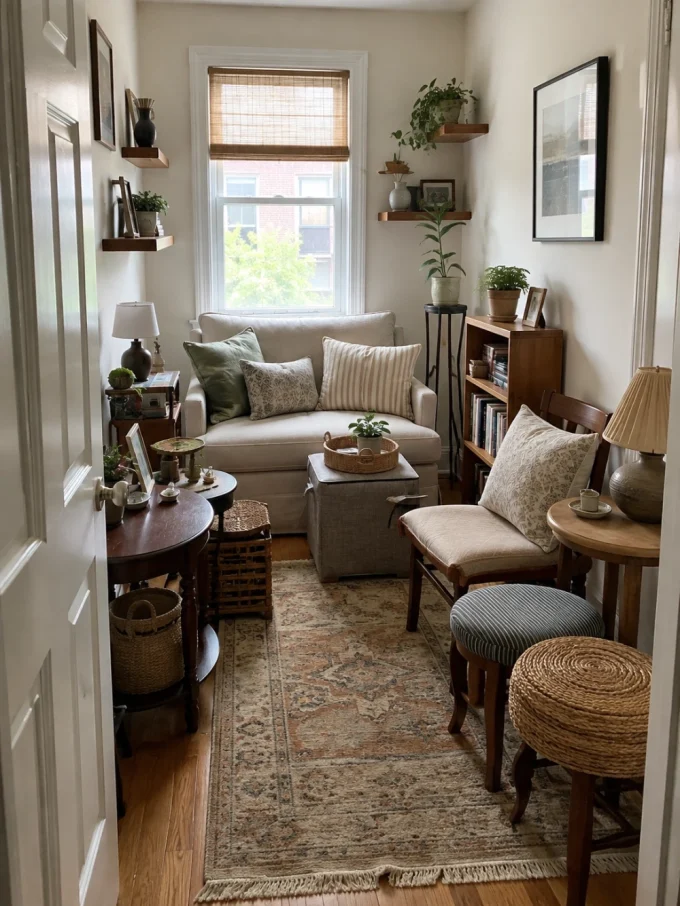
Small rooms do not always need small furniture everywhere.
A collection of miniature tables, stools, baskets, shelves, and chairs can create more visual clutter than one or two correctly scaled pieces.
Choose fewer items that perform several functions:
- A storage ottoman
- Nesting side tables
- A bed with drawers
- An extendable dining table
- A desk that works as a console
- A bench with hidden storage
Use vertical storage selectively. Covering every wall with shelves can make the room feel enclosed.
Leave some floor and wall space visible. A compact room needs quiet areas just as much as a large room.
Using too many undersized pieces is one of the most misunderstood home decor mistakes to avoid in apartments and small homes.
17. Buying More Decor Before Identifying the Problem
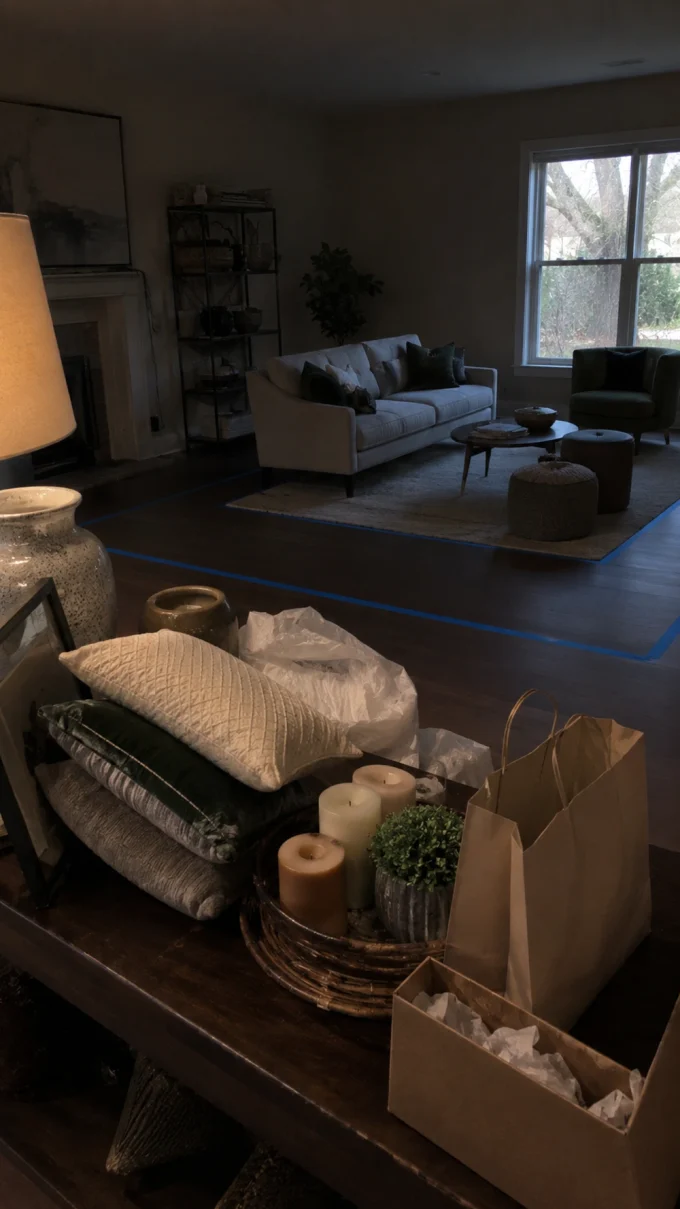
Shopping is not always the solution.
A dark room may need better lighting, not more accessories. An empty living room may need a stronger furniture arrangement, not another side table. A cluttered bedroom may need closed storage rather than additional baskets on display.
Before buying anything, photograph the room and write down what feels wrong.
Test a low-cost change:
- Move the furniture
- Remove extra accessories
- Borrow a lamp from another room
- Mark a larger rug with tape
- Rearrange the artwork
- Try a paint sample board
Only purchase something after the test confirms the need.
This is one of the most important home decor mistakes to avoid because unnecessary purchases can add expense without solving the real design problem.
How to Avoid Decorating Mistakes Before Spending Money
The best way to avoid decorating mistakes is to slow down before making permanent or expensive decisions.
Ask:
- Does this item solve a real problem?
- Is it the correct size?
- Will it block a walkway?
- Does it work with the existing colors?
- Is it easy to maintain?
- Do I already own something similar?
- Can it be returned?
- Am I choosing it because I like it or because it is trending?
Take photographs and measurements when shopping. Keep fabric, paint, and flooring samples together so you can compare their undertones.
Most home decor mistakes to avoid can be prevented through planning, testing, and editing rather than a larger budget.
Conclusion
The most damaging home decor mistakes to avoid are rarely dramatic. They are usually small decisions that affect the whole room: a rug that is too small, lighting that feels flat, curtains that shorten the walls, or accessories that create clutter instead of character.
Begin with function, scale, and movement. Then improve the lighting, color, texture, and decoration.
You do not need to replace everything at once. Moving furniture, removing unnecessary objects, adjusting the artwork, or changing the bulb temperature may solve the problem without a major purchase.
Learning which home decor mistakes to avoid helps you create rooms that look considered, feel comfortable, and continue working long after current trends have changed.
Frequently Asked Questions
What Are Home Decor Mistakes to Avoid?
The most important home decor mistakes to avoid include selecting furniture in the wrong scale, using undersized rugs, relying on one ceiling light, hanging artwork too high, and filling every surface with accessories. Blocked walkways, short curtains, badly placed mirrors, and matching every furniture piece can also make a room feel uncomfortable or unfinished.
How to Avoid Decorating Mistakes?
Measure the room and identify its main purpose before buying furniture. Mark furniture and rug dimensions with painter’s tape, test paint in different light, and keep walkways clear. Purchase the largest pieces first, then add smaller accessories. Taking a photograph can also reveal clutter and poor balance that may be harder to notice in person.
How Can You Avoid the Five Worst Entryway Decorating Mistakes?
Avoid blocking the doorway with deep furniture, leaving no storage for daily items, using a rug that catches beneath the door, relying on weak lighting, and overcrowding the walls. A practical entryway needs a clear route, useful storage, durable flooring, and one visual focal point. Use a narrow console, hooks, mirror, or small bench only when space permits.
What Happens When an Interior Decorator Makes a Mistake?
The result depends on when the mistake is discovered. Incorrect furniture measurements, paint colors, lighting positions, or material choices may lead to returns, delays, or additional installation costs. A professional decorator should explain the problem, present realistic solutions, and clarify responsibility for extra expenses. Homeowners can reduce risk by approving measurements, samples, layouts, and written costs before work begins.