

Most ceiling articles make the same mistake: they treat the ceiling like an empty surface waiting for decoration. The best modern ceiling ideas are not about adding random LED strips, oversized panels, or complicated shapes that compete with the rest of the room. They are about creating a quiet architectural decision that changes how the entire space feels. A well-designed ceiling controls light, improves proportions, and gives furniture and finishes a stronger backdrop. This guide focuses on ceiling designs that look impressive in photographs but still make sense when you live with them every day.
1. Build a Shadow-Gap Perimeter Into Your Modern Ceiling Design
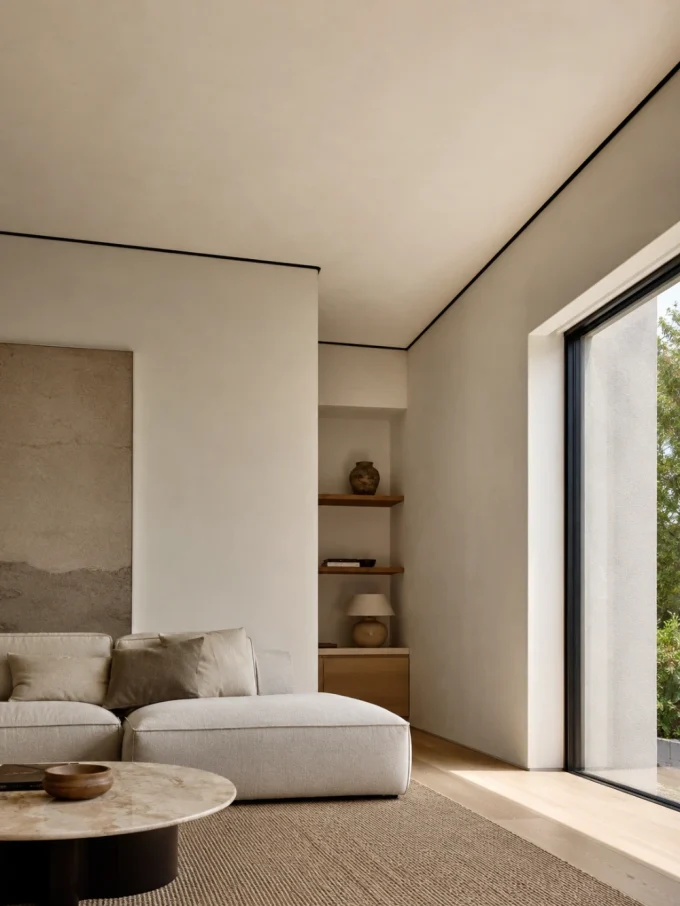
A shadow gap is one of the smallest ceiling details with one of the biggest visual payoffs. Instead of allowing plaster to meet the wall directly, a narrow recessed line creates separation and gives the ceiling a floating appearance.
The reason this detail works so well is because it removes visual clutter. Traditional cornices and decorative trims often announce where the wall ends and the ceiling begins. A shadow gap does the opposite; it lets the architecture disappear.
A gap between 10 and 20 millimetres is usually enough to create the effect without becoming a feature itself. The important part is accuracy. Uneven corners or inconsistent spacing will make an expensive idea look poorly executed.
This is the decision that changes everything in minimalist interiors. Precision becomes the decoration.
2. Use a Shallow Tray Ceiling Instead of an Overdesigned False Ceiling
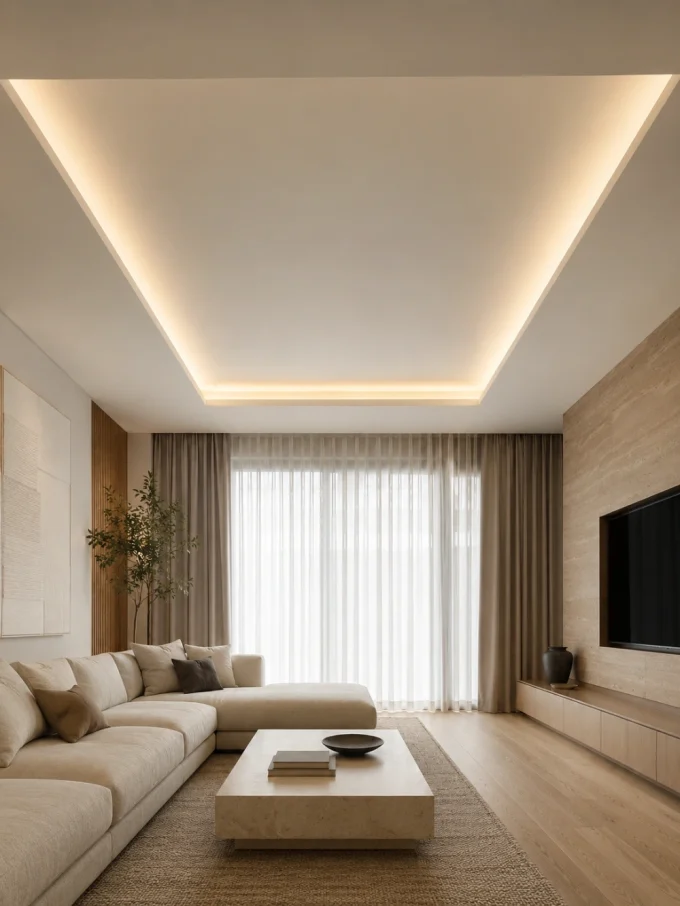
Tray ceilings have been around for decades, but the modern version is much calmer. Forget multiple layers, curved edges, and decorative borders everywhere. One clean recessed section is usually enough.
A shallow tray ceiling works because it creates depth without lowering the room visually. A drop of around 100 to 150 millimetres can create a noticeable architectural change while keeping the ceiling height comfortable.
If you add concealed lighting, hide the LED source completely. The goal is not to show a glowing strip around the room. The goal is to create soft indirect light that reveals the shape.
Many homeowners get this wrong by adding too many ceiling features at once. A tray ceiling, statement chandelier, multiple spotlights, and decorative panels are not four improvements. They are four competing ideas.
3. Add Timber Slats Across One Specific Ceiling Zone
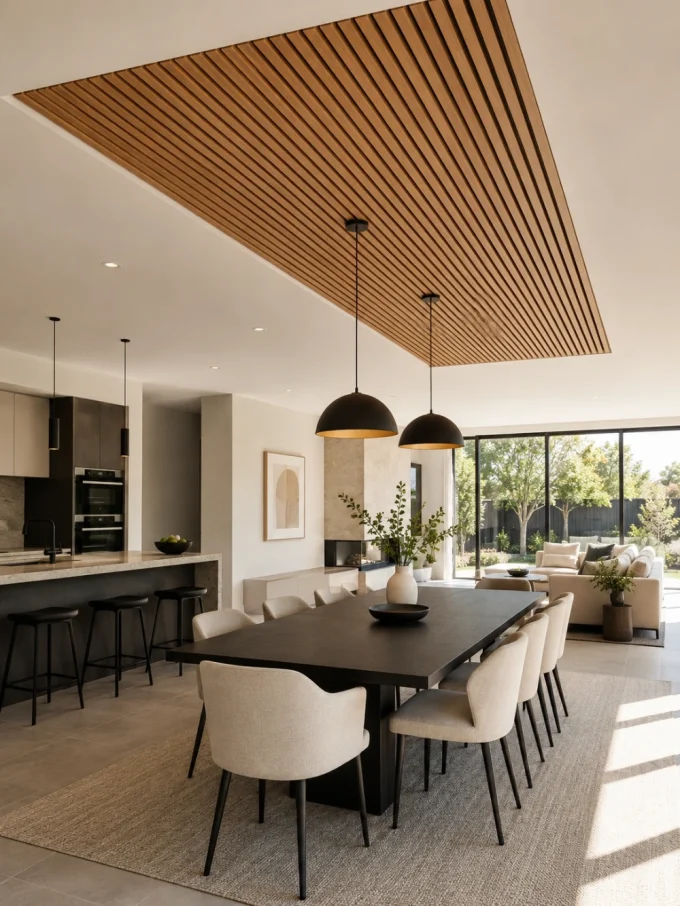
Timber ceilings instantly add warmth, but covering an entire ceiling with wood is not always the answer. The more sophisticated approach is using timber as a zoning tool.
Place timber slats above a dining area, kitchen island, entrance, or seating zone to visually define that part of the room. The ceiling starts explaining how the space is used without needing walls.
Slats around 30 to 50 millimetres wide with controlled spacing often create the cleanest modern look. Oak, walnut, and ash are popular choices because they bring natural texture without feeling heavy.
The mistake people make is repeating timber everywhere afterward. Timber ceiling, timber wall panels, timber furniture, and timber accessories can quickly become too much. Let the ceiling have its own moment.
4. Finish the Ceiling in Microcement for a Seamless Look
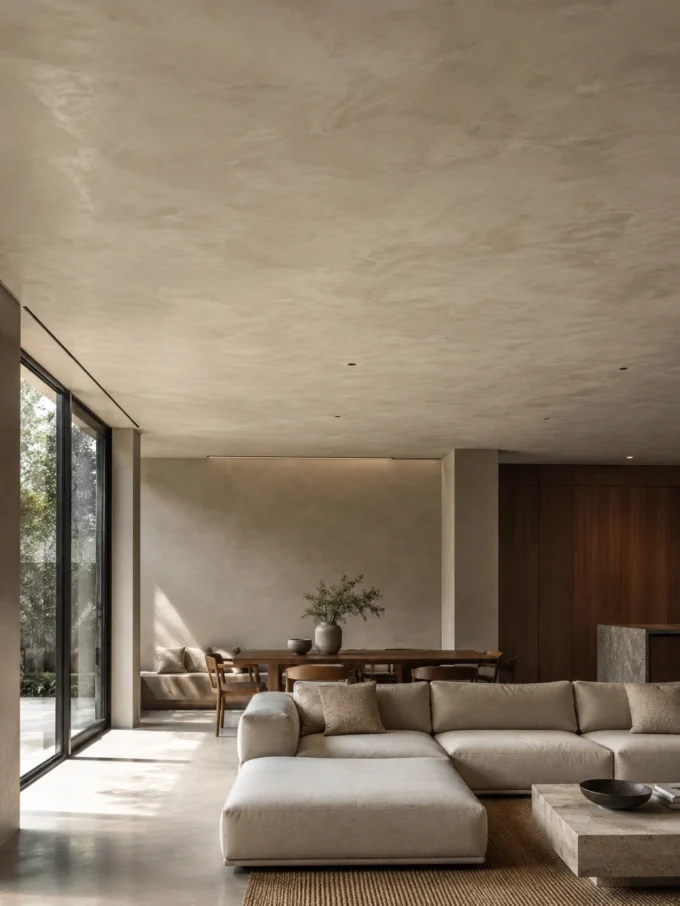
Microcement ceilings bring a soft architectural character that sits between polished concrete and plaster. The appeal comes from the subtle variation in the surface rather than a perfectly uniform finish.
This material works beautifully in modern homes because it creates texture without introducing obvious decoration. If you already collect wall texture design ideas, microcement offers a similar approach but on a larger horizontal surface.
The important detail is choosing the correct finish. Highly textured surfaces can become distracting when light hits them from different angles. A smoother application with slight movement usually feels more timeless.
Always test a sample before installation. A colour that looks warm on a small board can appear completely different across an entire ceiling.
5. Create a Clean Geometric Coffer Ceiling
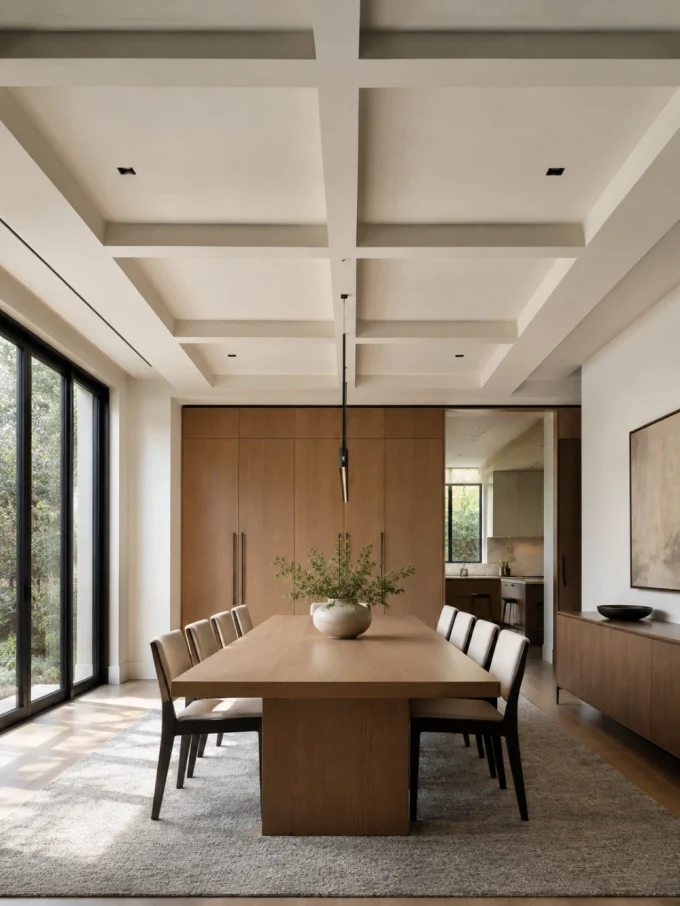
Coffered ceilings are often associated with traditional homes, but simplified versions work extremely well in modern interiors. The difference is restraint.
Instead of small decorative squares, create larger geometric sections with simple edges. The pattern should follow the room’s architecture rather than being forced into it.
A dining room with a rectangular table might benefit from ceiling lines that follow the table shape. A hallway might use longer rectangular sections to emphasize length.
Most people focus only on the pattern. The real success comes from alignment. When ceiling geometry connects with doors, windows, cabinetry, or furniture placement, it feels intentional.
6. Paint the Ceiling the Same Colour as the Walls
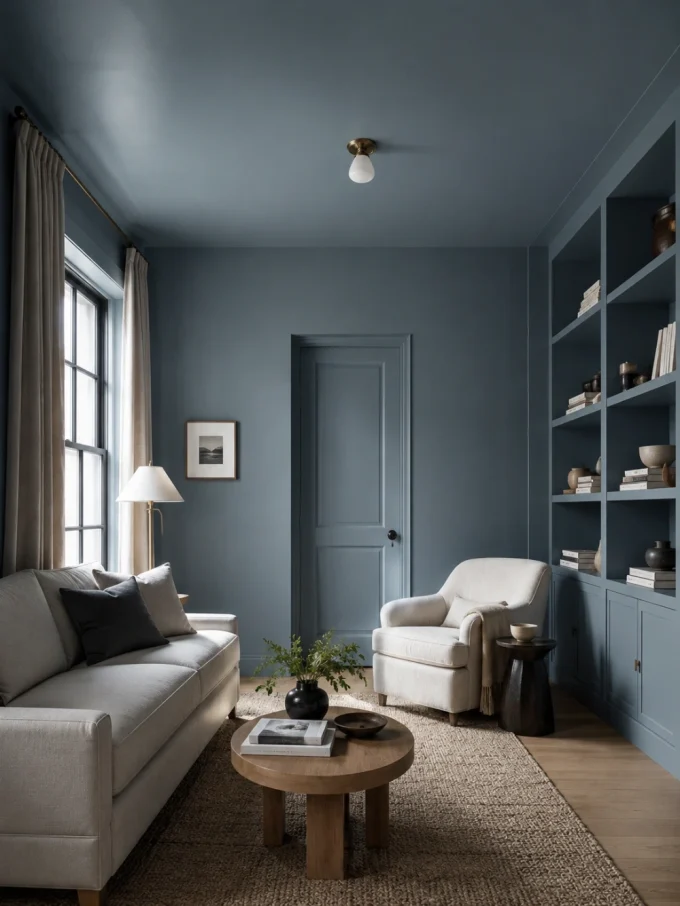
The white ceiling rule is one of the most outdated habits in interior design. Matching the ceiling colour with the walls can create a much more immersive and expensive feeling.
This technique works especially well with muted tones such as olive, beige, clay, dusty blue, and warm grey. Painting everything in one colour removes the hard visual break between surfaces and can make rooms feel taller.
Design experts often recommend colour continuity as a way to visually expand smaller rooms because it reduces harsh transitions between walls and ceilings.
For inspiration, exploring cool blue paint ideas can help when choosing softer ceiling colours that still feel modern.
Use a matte ceiling finish rather than anything overly reflective. The goal is depth, not shine.
7. Replace a Field of Spotlights With Linear Light Channels
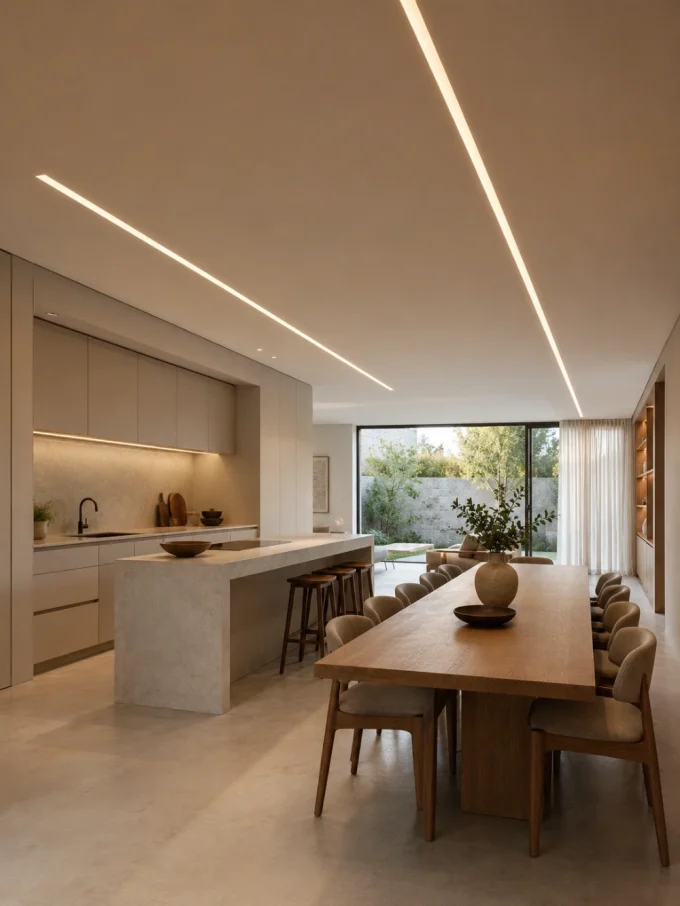
A ceiling filled with identical spotlights is one of the quickest ways to make a modern interior feel generic. Lighting should support the architecture, not make the ceiling look like a showroom display.
Linear light channels create a cleaner visual rhythm because they follow the shape of the room. They work well along kitchen cabinets, corridors, ceiling recesses, or above long dining tables where the light direction feels intentional.
A narrow profile between 20 and 40 millimetres can create a refined architectural line when installed flush with plaster. Keep the light source hidden so the room receives a soft glow rather than a visible strip.
Modern lighting works best when different sources have different purposes: ceiling lighting for general visibility, accent lighting for atmosphere, and decorative fixtures for personality.
If you are also planning indoor wall-mounted light fixture ideas, decide your ceiling lighting hierarchy first. Wall lights should complete the atmosphere, not compete with it.
8. Hide Curtain Tracks Inside the Ceiling
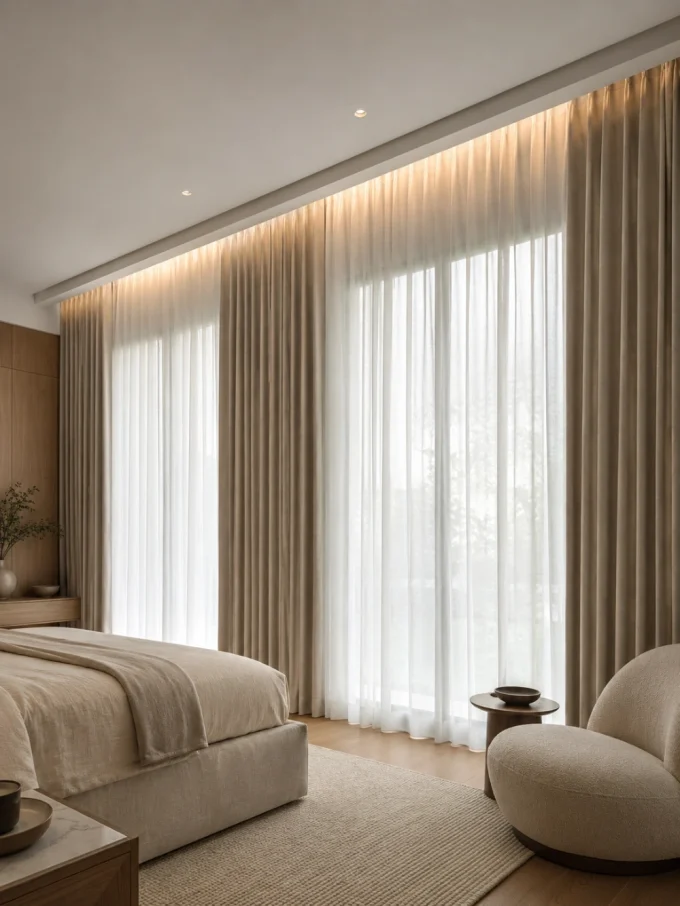
Beautiful curtains can lose their impact when the hardware becomes visible. A recessed ceiling curtain track creates a much cleaner connection between fabric and architecture.
Instead of seeing a rod or exposed rail, the curtain appears to emerge directly from the ceiling. The effect is especially powerful with full-height curtains because it visually stretches the wall upward.
The mistake many people make is creating a small recess only above the window. That often looks accidental. A continuous ceiling pocket across the entire wall usually feels more intentional.
Plan the depth according to the curtain system you choose. Thick fabrics, layered curtains, and motorised tracks require more space than simple panels.
Small architectural decisions like this are what separate a professionally designed room from one that only looks decorated.
9. Use Acoustic Felt as a Designed Ceiling Feature
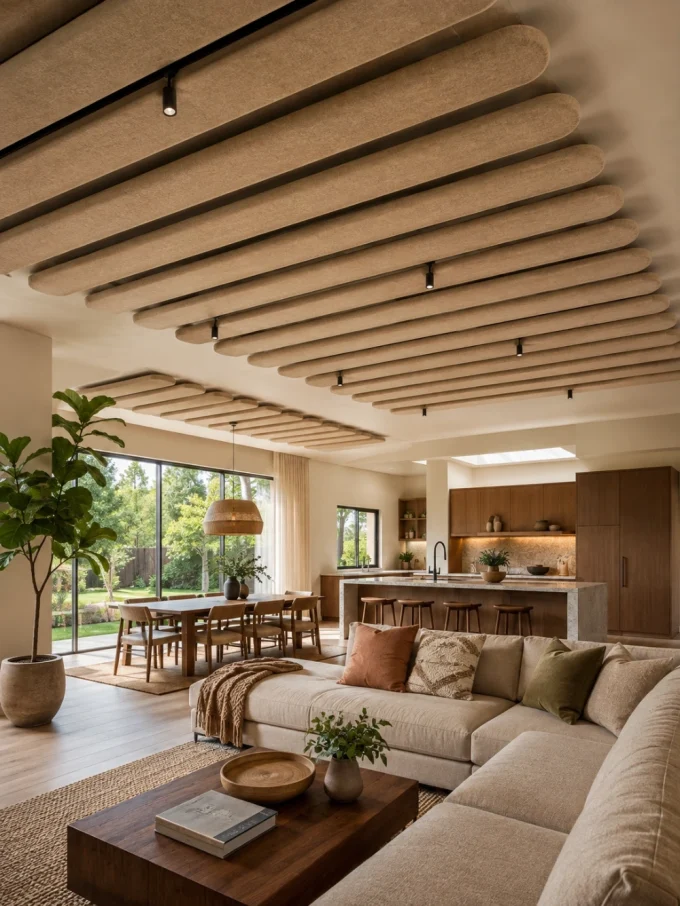
Acoustic ceilings are often treated as something purely functional, but they can become one of the most interesting visual elements in a room.
Large felt panels, floating acoustic rafts, or linear strips can soften sound while adding texture above. This is especially useful in open-plan homes where kitchens, dining areas, and living spaces share one large volume.
The key is avoiding the office look. Choose colours that belong to the interior palette rather than defaulting to industrial grey.
A well-planned acoustic ceiling should look intentional even when nobody knows it has a sound-control purpose. Good design often hides its practical benefits.
10. Create a Soft Curved Transition Between Wall and Ceiling
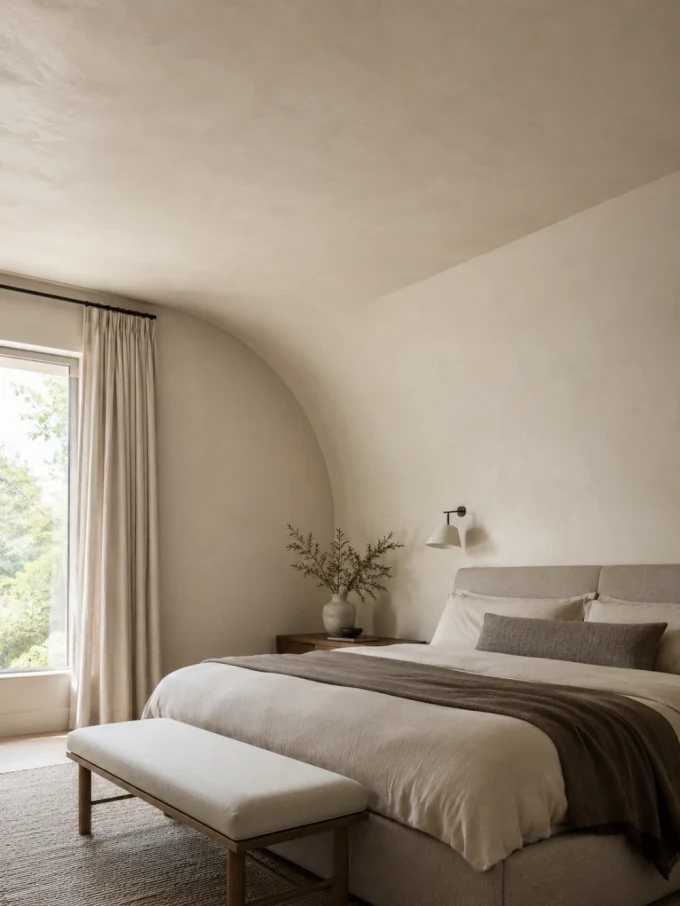
Sharp corners are not the only way to achieve a modern look. A curved plaster transition can make a room feel calm, continuous, and almost sculpted.
This approach works beautifully in bedrooms, hallways, and minimalist living spaces where the goal is softness rather than visual drama.
The curve needs enough size to feel architectural. A tiny rounded edge usually looks like a decorative trick. A broader radius creates a genuine change in the character of the room.
This is also one of the few ceiling details that can make a space feel more relaxing without adding colour, patterns, or extra objects.
11. Keep an Exposed Concrete Ceiling Carefully Edited
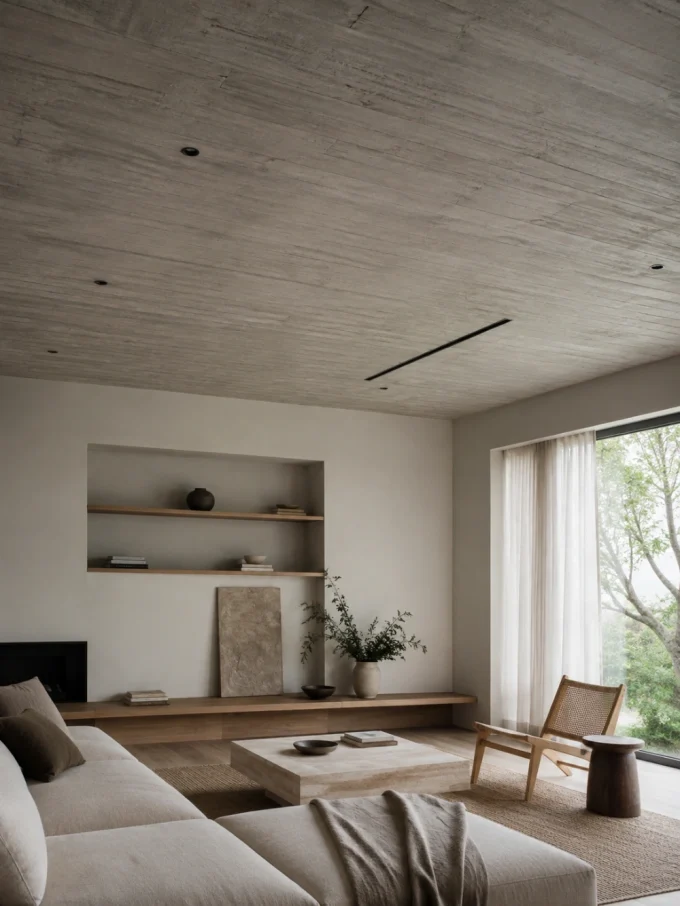
An exposed concrete ceiling can be stunning, but only when it looks intentional. Raw does not mean unfinished.
The strongest concrete ceilings control everything around them: lighting points, ventilation, electrical runs, and wall connections.
Random pipes and cables do not create an industrial aesthetic. They create visual noise.
If the concrete surface has attractive texture from the formwork, preserve it with an appropriate protective finish. The surrounding design should stay quieter so the material becomes the feature.
This approach works because it respects the original structure instead of covering it.
12. Float a Ceiling Island Above the Dining Table
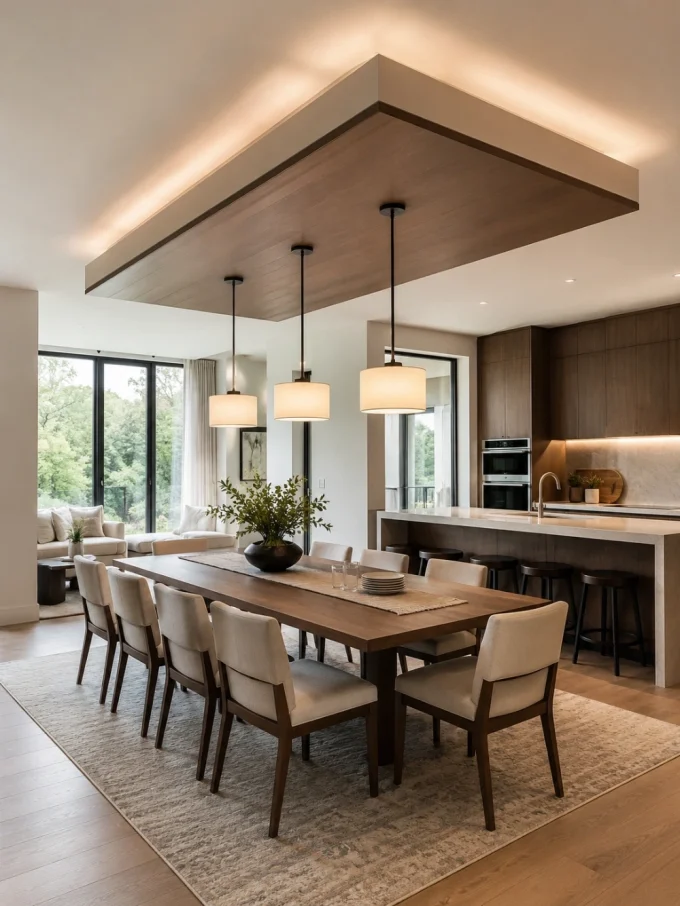
A ceiling island is one of the smartest ways to define an open-plan dining area without building walls.
Instead of separating the kitchen and dining area physically, create a visual boundary above the table. The ceiling starts telling people where the dining zone begins.
The island should follow the table proportions. Extending it around 200 to 300 millimetres beyond the tabletop on each side usually creates a balanced frame.
Pendant lights should sit comfortably within the composition. A hanging fixture approximately 70 to 80 centimetres above the table surface often creates a comfortable relationship between light and conversation.
This idea pairs naturally with open kitchen design ideas because both focus on creating zones without closing spaces.
13. Add a Thin Metal Inlay for a Custom Detail
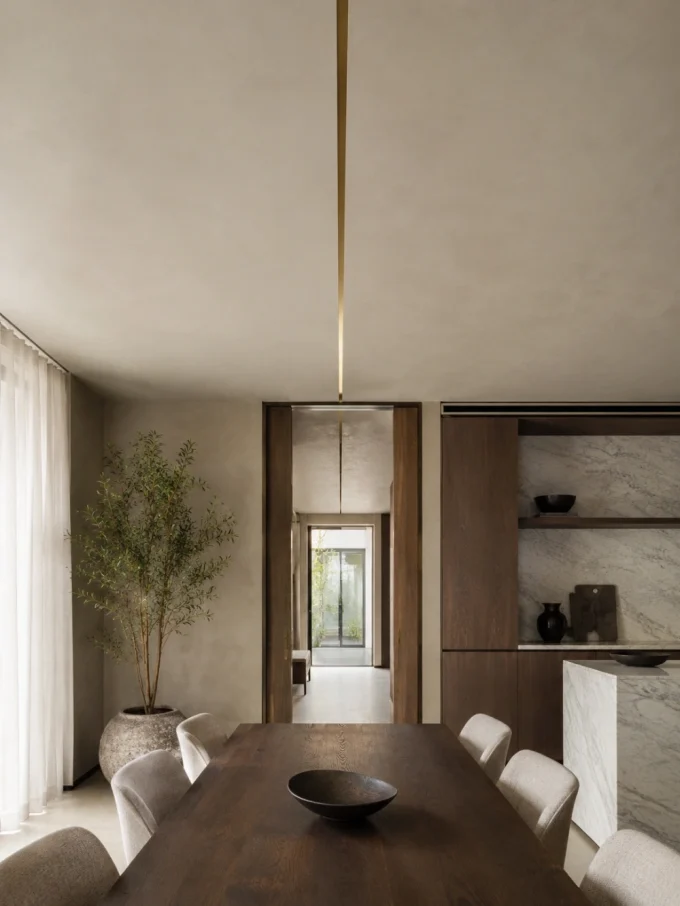
A narrow brass, bronze, or black metal line can completely change a plain plaster ceiling without making it decorative.
The secret is restraint. One perfectly positioned line can look custom and architectural. Multiple lines quickly become unnecessary decoration.
Use the inlay to connect existing elements: cabinet edges, lighting lines, door frames, or furniture placement.
A 10 to 20 millimetre strip is often enough to catch light without becoming the main attraction.
Luxury interiors are often remembered because of small details, not because every surface demands attention.
14. Choose Ribbed Plaster Instead of Traditional Ceiling Ornament
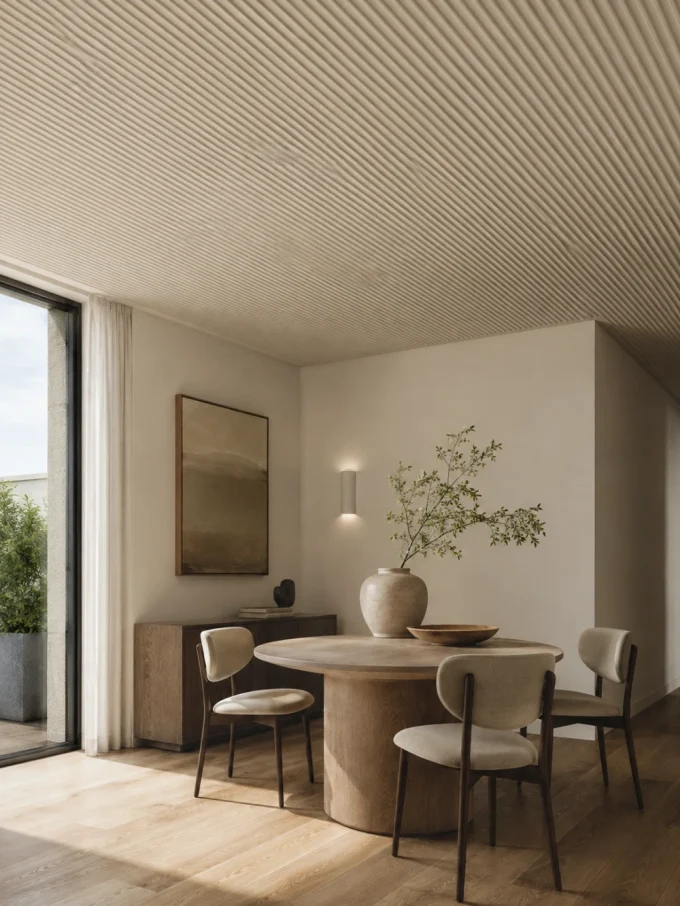
Ribbed plaster creates texture through repetition rather than decoration. It gives the ceiling movement while keeping the overall design modern.
The best applications use shallow grooves that create gentle shadows throughout the day. Deep grooves can become too dramatic and make the ceiling feel heavy.
Keep lighting and ventilation away from the textured area whenever possible. Interruptions break the visual flow.
This idea proves that texture does not need to be loud. Sometimes the most interesting surfaces are the quiet ones.
15. Design the Ceiling Around a Skylight
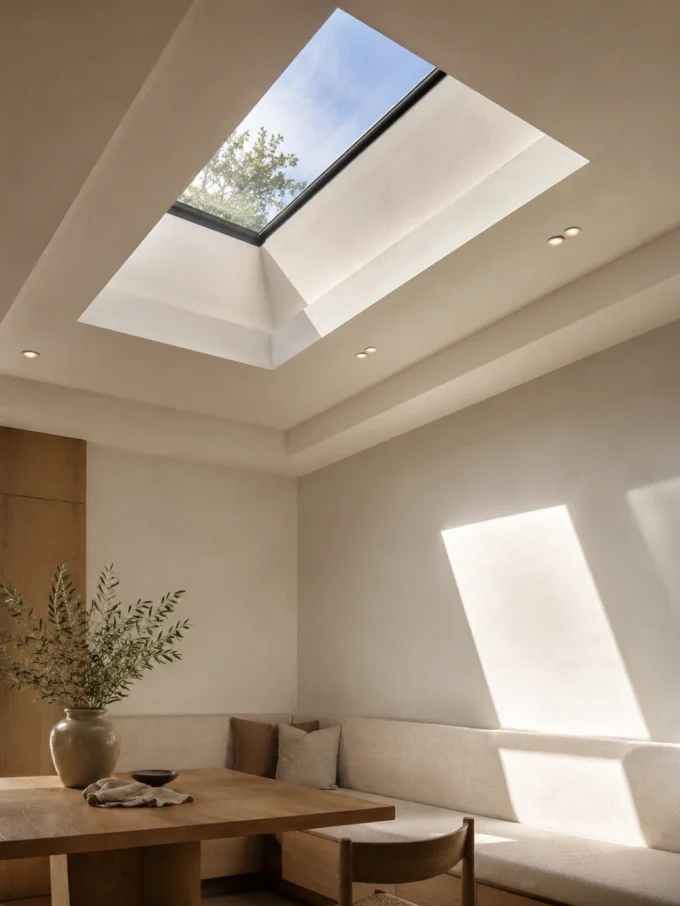
A skylight should be treated as part of the ceiling composition, not simply a hole bringing in sunlight.
The surrounding ceiling shape, reveal depth, and lighting placement should all support the opening.
A deeper reveal can create stronger shadows and architectural character, while a cleaner edge gives a minimal appearance.
The best skylight ceilings change throughout the day. Morning light, afternoon shadows, and evening tones become part of the design.
Unlike decorative features, natural light keeps creating something new.
16. Use a Dark Ceiling Only When the Room Supports It
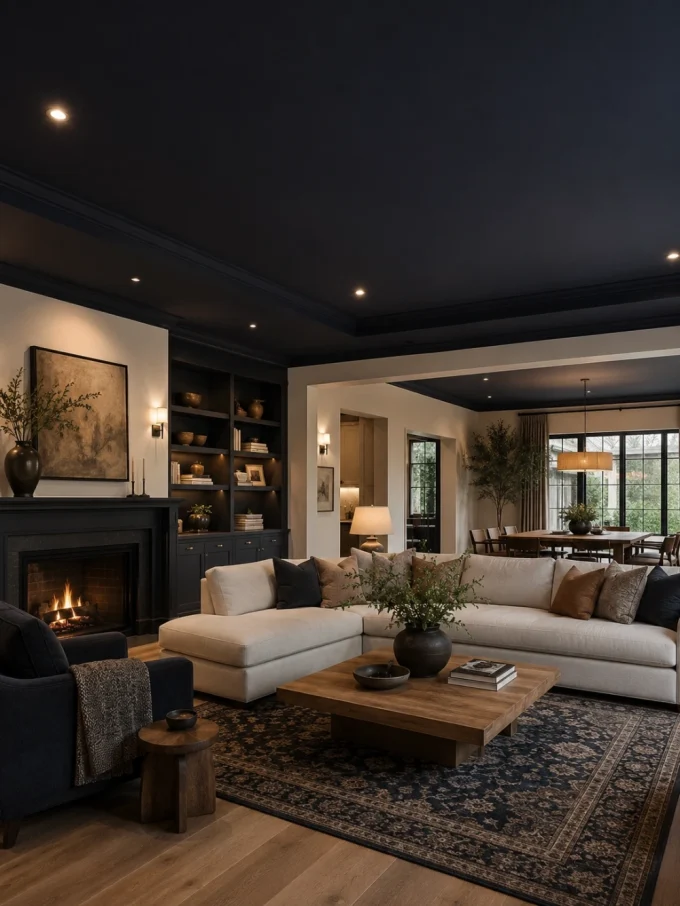
Dark ceilings are often presented as an easy way to create drama, but they require confidence.
A charcoal, deep green, navy, or chocolate ceiling can look incredible when the room has enough contrast and thoughtful lighting. It can make a large space feel intimate and sophisticated.
The mistake is using a dark ceiling without connecting it to anything else. Random dark paint above pale walls and bright lighting usually feels disconnected.
For more colour inspiration, explore cool blue paint ideas before choosing a ceiling shade.
A dark ceiling is not about making the room smaller. It is about controlling the atmosphere.
17. Wallpaper Only One Ceiling Section
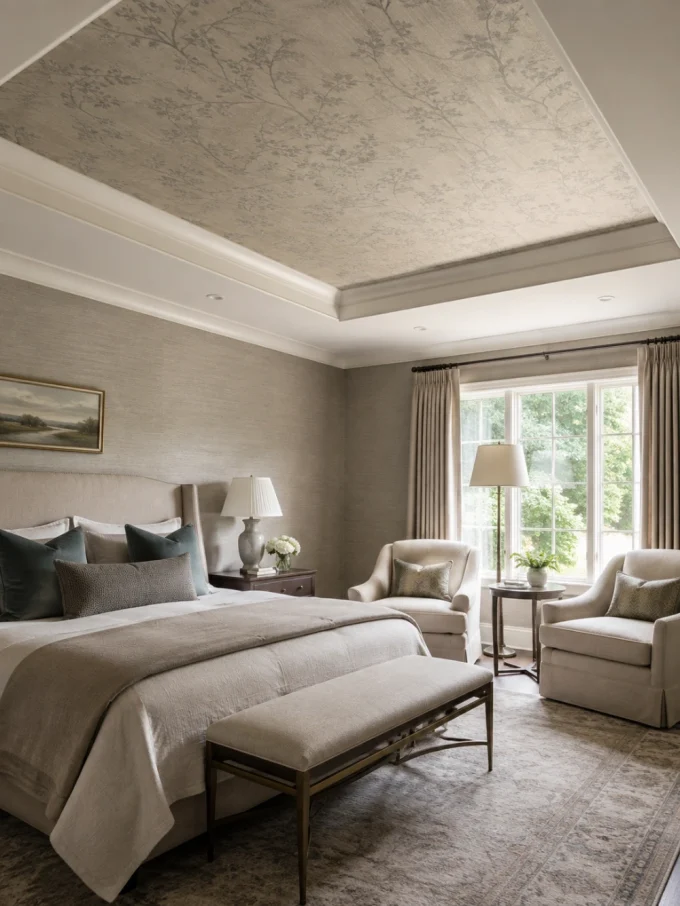
Ceiling wallpaper can be beautiful, but covering everything is usually too much.
A better approach is using wallpaper inside a tray ceiling, framed panel, or recessed area where the pattern feels intentional.
Grasscloth textures, subtle geometric patterns, and soft botanical designs work better than loud prints because ceilings are viewed differently from walls.
The surface preparation matters more than people expect. Any unevenness becomes obvious when light moves across the ceiling.
Use wallpaper like jewellery. A little can completely change the room.
18. Combine Flush Lighting With One Statement Fixture
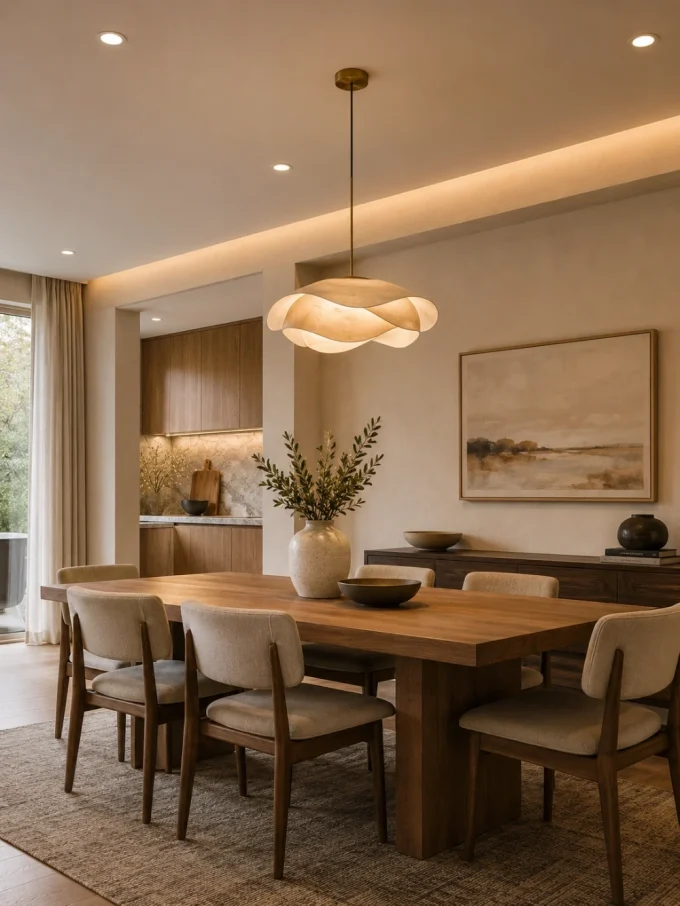
The best ceiling lighting rarely comes from one source alone. A combination of hidden ambient light and one noticeable fixture creates balance.
Use recessed or flush lighting for general illumination, then allow one pendant or sculptural light to create personality.
Layered lighting helps rooms feel more comfortable because different sources can support different activities and moods.
For additional inspiration, consider how wall sconce light fixture ideas can extend the lighting design beyond the ceiling.
The goal is not maximum brightness. The goal is giving every light source a reason to exist.
19. The Most Modern Ceiling Idea Might Be Doing Less
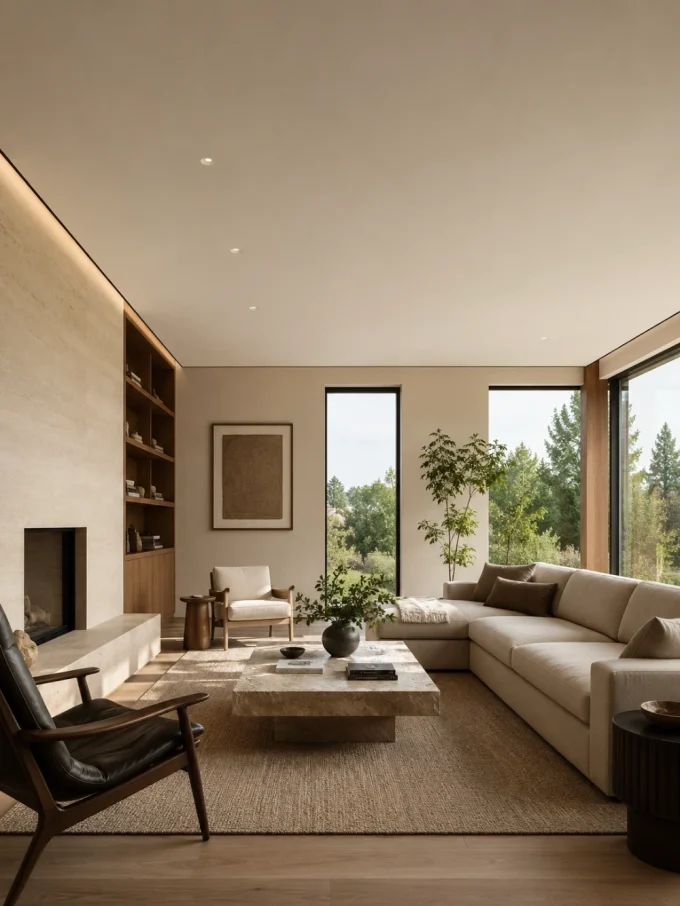
The final idea is the one many homeowners struggle with: knowing when to stop.
A perfectly finished flat ceiling with a clean shadow gap, thoughtful lighting, and excellent proportions can look more expensive than a complicated false ceiling filled with unnecessary details.
This connects with avoiding common home decor mistakes to avoid, especially when too many competing features weaken a room.
The ceiling does not always need to become the star. Sometimes the most impressive design choice is creating a background that allows everything else to look better.
Restraint is not a lack of creativity. It is often the result of better judgment.
Final Thoughts
Choosing between different modern ceiling ideas becomes much easier when you start with the room’s actual needs instead of copying a trend. Fix awkward proportions, improve lighting, and create better connections between surfaces before adding decorative elements. The strongest ceilings usually have one clear idea rather than five competing ones. Start with details that are difficult to change later, such as lighting positions, ceiling height, and architectural transitions. A ceiling does not need to announce itself to be memorable; sometimes the quietest fifth wall is the one people admire most.
Save these ceiling ideas for your next room renovation project.