

Vintage bathrooms have a quality that many newly designed spaces struggle to recreate: they feel considered. Traditional tile patterns, aged metals, curved porcelain fixtures, warm colors, and handcrafted details create a sense of history that makes a bathroom feel more personal.
However, designing a vintage bathroom is often approached from the wrong direction. Many homeowners begin by collecting old-fashioned elements—a clawfoot tub, antique mirror, floral wallpaper, or retro tile—without considering how those choices will work together in a real bathroom.
A beautiful vintage bathroom is not created by making everything look old. It is created by understanding which classic details provide character while still supporting modern needs such as storage, cleaning, lighting, comfort, and everyday functionality.
The best vintage bathroom ideas borrow the strongest design principles from the past and adapt them for today’s homes. A pedestal sink may create elegance but reduce storage. A delicate wallpaper pattern may add personality but require better ventilation. A traditional tile floor may look timeless but demand more grout maintenance.
This guide explores 18 vintage bathroom ideas through a practical lens—helping you choose details that create authentic charm while avoiding expensive design mistakes.
What Makes a Vintage Bathroom Feel Authentic?
Before choosing individual features, it helps to understand why certain bathrooms feel genuinely vintage while others feel like themed rooms.
A successful vintage bathroom usually combines three layers:
1. Architectural Character
These are the elements that establish the foundation:
- Traditional tile layouts
- Classic proportions
- Framed mirrors
- Detailed trim
- Vintage-inspired fixtures
These features create the feeling that the room belongs to a specific design era.
2. Functional Modern Improvements
A bathroom still needs to work today.
Modern updates can include:
- Efficient plumbing fixtures
- Hidden storage solutions
- Better ventilation
- Practical lighting
- Durable surfaces
The goal is not to recreate an inconvenient historical bathroom. The goal is to preserve the visual language while improving usability.
3. Controlled Nostalgia
The strongest vintage bathrooms usually avoid using every traditional element at once.
A room with:
- Antique lighting
- Patterned wallpaper
- Decorative tile
- Ornate furniture
- Vintage accessories
may quickly feel visually crowded.
Instead, choose a few strong vintage anchors and allow modern simplicity to support them.
1. Make a Clawfoot Tub the Vintage Centerpiece
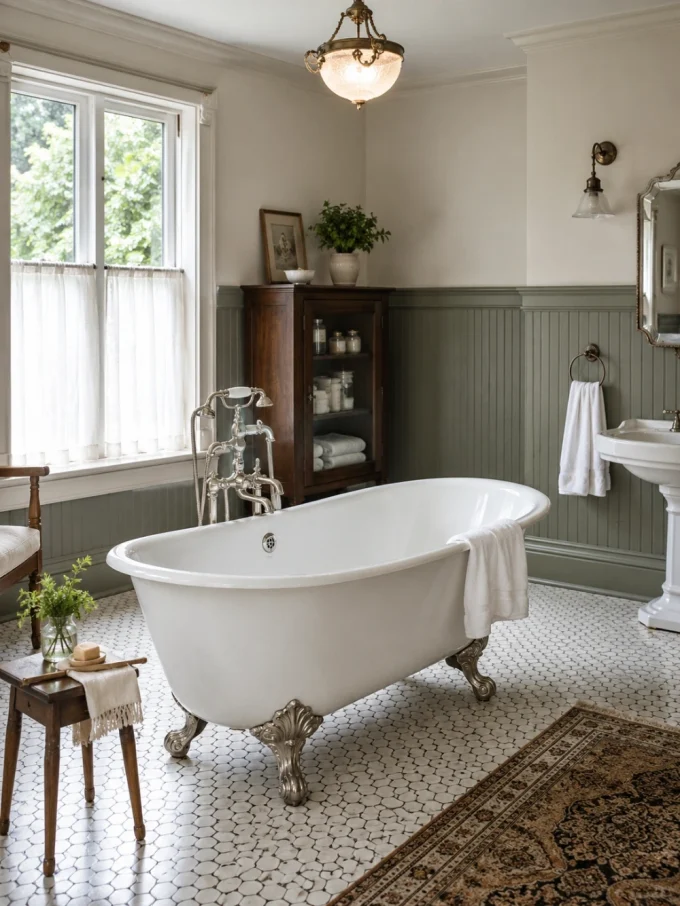
A clawfoot tub is one of the most recognizable vintage bathroom features. Its raised shape, curved profile, and exposed feet immediately create a traditional focal point.
Unlike a built-in bathtub that visually blends into the wall, a freestanding tub becomes a piece of furniture inside the bathroom.
Why It Works
The design impact comes from contrast:
- Porcelain against darker flooring
- Curved shapes against straight architectural lines
- Exposed plumbing against hidden modern fixtures
The tub creates a visual pause that gives the entire bathroom a more collected appearance.
Best For
A clawfoot tub works especially well in:
- Larger bathrooms
- Traditional homes
- Bathrooms with open floor space
- Homeowners who enjoy long baths
Consider Before Choosing
A freestanding tub requires more than just available space.
Think about:
- Cleaning access around the tub
- Where plumbing connections will sit
- Whether the bathroom layout allows comfortable movement
A tub that looks beautiful in a large photograph may feel inconvenient if it blocks circulation in a smaller room.
Avoid If
Consider another option if:
- The bathroom is extremely compact
- Storage is already limited
- You mainly prefer quick showers over baths
A vintage-inspired soaking tub may provide a similar feeling with easier daily use.
2. Use Black and White Checkerboard Flooring
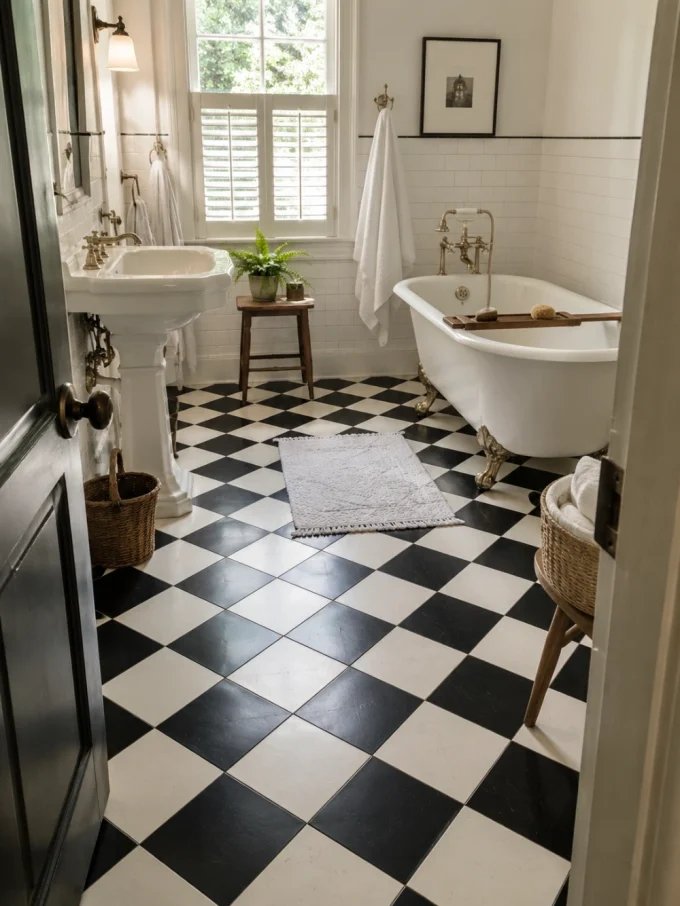
Black and white checkerboard floors have remained popular because they create instant visual structure without relying on trendy colors.
The pattern has appeared across many historical interiors because it balances simplicity with personality.
Why It Works
The repeating geometry creates a strong foundation for softer vintage details.
It pairs naturally with:
- White subway tile
- Painted vanities
- Brass hardware
- Traditional mirrors
Practical Considerations
Floor patterns influence how large a bathroom feels.
In smaller bathrooms:
- Smaller tiles can create detailed texture
- Larger patterns may become the dominant feature
The choice should support the room rather than compete with every other element.
Maintenance Note
More detailed tile layouts usually mean more grout lines.
Before choosing a highly patterned floor, consider:
- Cleaning routine
- Grout color
- Household traffic
A beautiful floor should still be practical after months of daily use.
3. Choose a Traditional Pedestal Sink
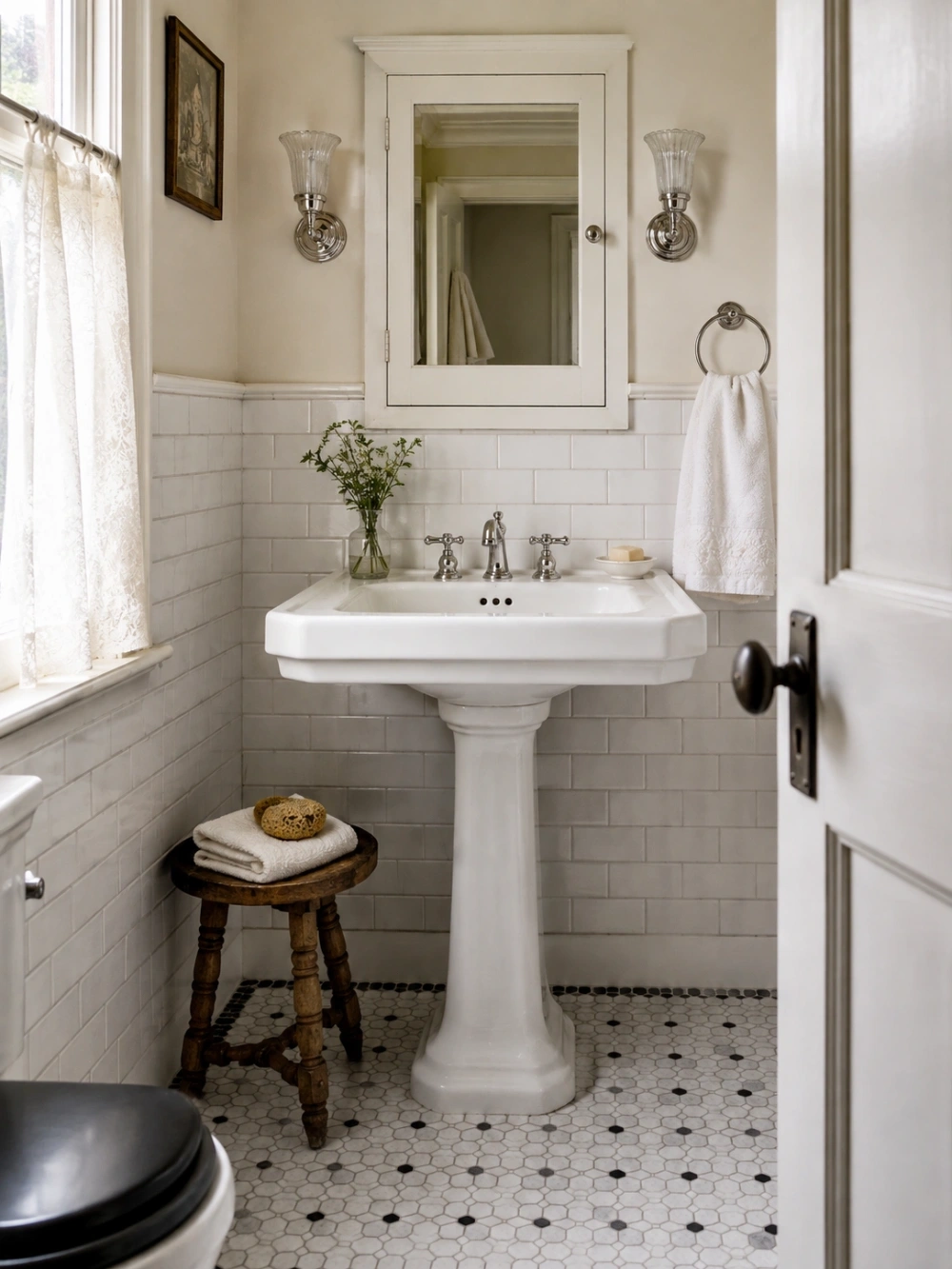
Pedestal sinks are one of the easiest ways to introduce vintage character, especially in smaller bathrooms.
Their open base keeps the room visually lighter compared with a bulky vanity.
Why It Works
Older bathrooms often relied on simple porcelain fixtures rather than large storage cabinets. A pedestal sink recreates that lighter visual style.
Best For
A pedestal sink is ideal for:
- Powder rooms
- Guest bathrooms
- Small spaces
- Minimalist vintage designs
The Trade-Off
The main disadvantage is storage.
Without cabinet space underneath, you need another solution for:
- Toiletries
- Towels
- Cleaning supplies
Possible additions include:
- Wall shelves
- Recessed cabinets
- Furniture-style storage pieces
Avoid If
Do not choose a pedestal sink simply because it looks attractive if this is your main family bathroom and storage is already a problem.
4. Add Soft Vintage Bathroom Colors
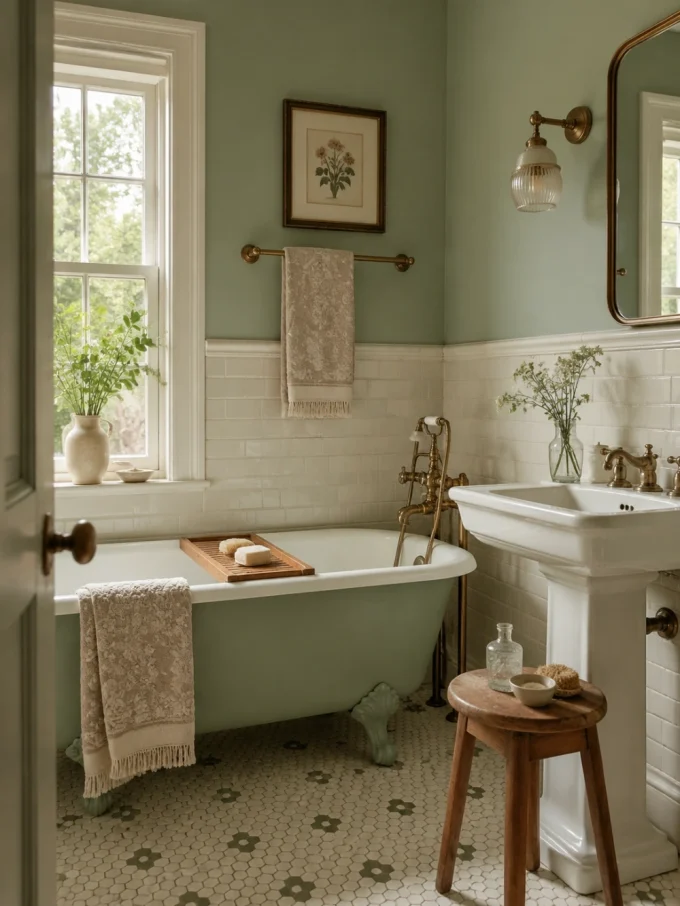
Color is one of the easiest ways to create vintage character without major renovation.
Traditional bathroom palettes often use colors that feel calm and slightly muted:
- Sage green
- Powder blue
- Warm cream
- Dusty rose
- Soft gray
Why It Works
Vintage colors often have lower visual intensity than modern statement shades. This creates a more relaxed atmosphere and allows architectural details to stand out.
Better Approach
Instead of turning the entire bathroom into one color theme, create balance.
Examples:
- Sage walls + white tile + brass fixtures
- Blue vanity + neutral walls + wood accents
- Cream walls + dark flooring + traditional lighting
Avoid If
Be careful with overly bright retro colors used across every surface. A color associated with a historical era can quickly make a bathroom feel like a time capsule rather than a timeless space.
5. Add Antique-Inspired Brass Fixtures
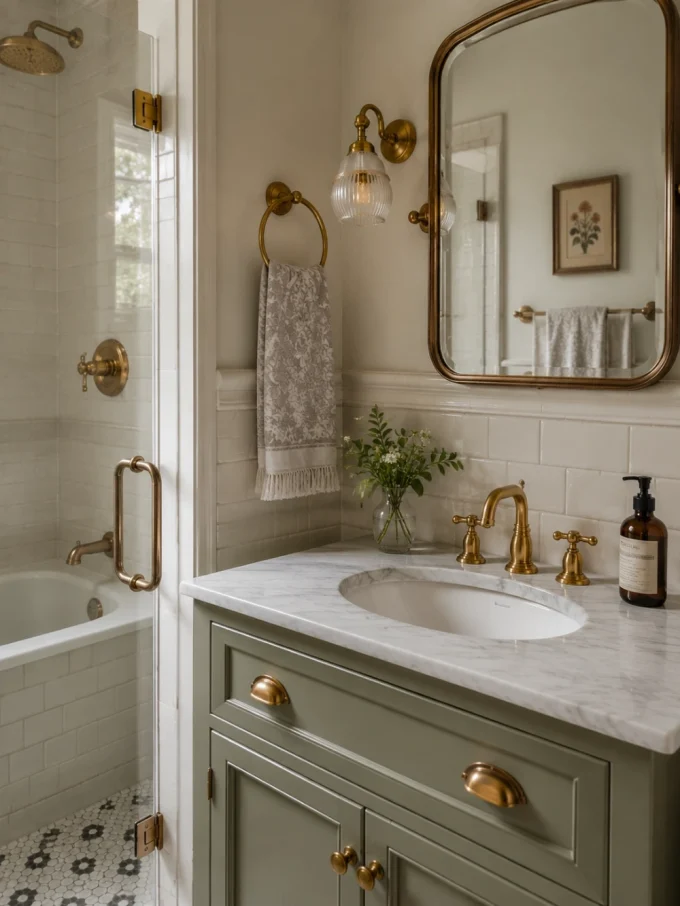
Small hardware changes can dramatically influence the style direction of a bathroom.
Replacing modern-looking fixtures with warmer finishes can introduce vintage character without requiring a full renovation.
Consider:
- Faucets
- Shower hardware
- Cabinet pulls
- Towel bars
- Light fixtures
Why It Works
Metal finishes act as visual connectors. Repeating a warm metal tone throughout the room helps separate modern elements from traditional ones.
Choosing the Right Finish
Different brass styles create different moods:
Polished Brass
- More formal
- Brighter appearance
Brushed Brass
- Softer
- Easier to blend
Aged Brass
- More historical
- Naturally weathered appearance
Consider Before Installing
Metal finishes require thought because replacing every fixture later can become expensive.
Choose a finish that works with your:
- Tile color
- Vanity style
- Lighting
- Mirror frame
6. Introduce Vintage Floral Wallpaper
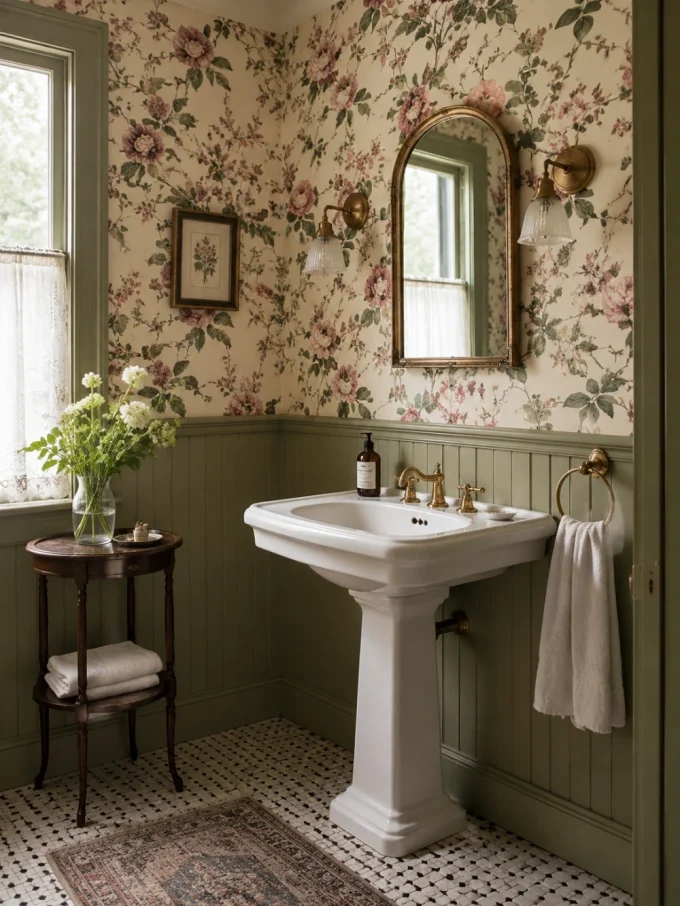
Wallpaper can add the pattern and softness often associated with historic bathrooms.
Floral prints, botanical designs, and traditional motifs can create a stronger vintage feeling than paint alone.
Why It Works
Bathrooms often contain many hard surfaces:
- Tile
- Porcelain
- Glass
- Metal
Wallpaper introduces visual softness and pattern.
Best Placement Options
For better durability, consider:
- Wallpaper above tile wainscoting
- Areas away from direct shower spray
- Well-ventilated bathrooms
Avoid If
Wallpaper may not be the right choice when:
- Ventilation is poor
- Moisture levels are high
- The bathroom lacks proper airflow
The most beautiful pattern is not worth choosing if maintenance becomes frustrating.
7. Use Subway Tile With Traditional Details
Subway tile is one of the most recognizable choices in vintage bathroom design because it combines simplicity with architectural character.
While plain white subway tile can create a clean backdrop, the details surrounding it determine whether the bathroom feels historic or generic.
Why It Works
Traditional bathrooms often relied on durable, practical surfaces. Subway tile reflects that philosophy because it provides:
- easy-to-clean walls
- a timeless pattern
- flexibility with different styles
The vintage feeling usually comes from the supporting choices rather than the tile itself.
Consider adding:
- contrasting grout
- decorative border tiles
- traditional trim pieces
- darker accent lines
- handmade-look finishes
Best For
Subway tile works well for:
- shower surrounds
- half walls
- full bathroom walls
- bathrooms needing a classic foundation
The Maintenance Decision
Grout choice matters more than many homeowners expect.
Dark grout can:
- emphasize the tile pattern
- create stronger contrast
However, lighter grout can:
- create a softer appearance
- require more frequent cleaning to maintain its original look
Choose based on the amount of maintenance you are comfortable with.
Avoid If
Avoid covering every surface with subway tile without adding contrast. Too much repetition can make the bathroom feel flat rather than historically detailed.
8. Choose a Furniture-Style Vanity
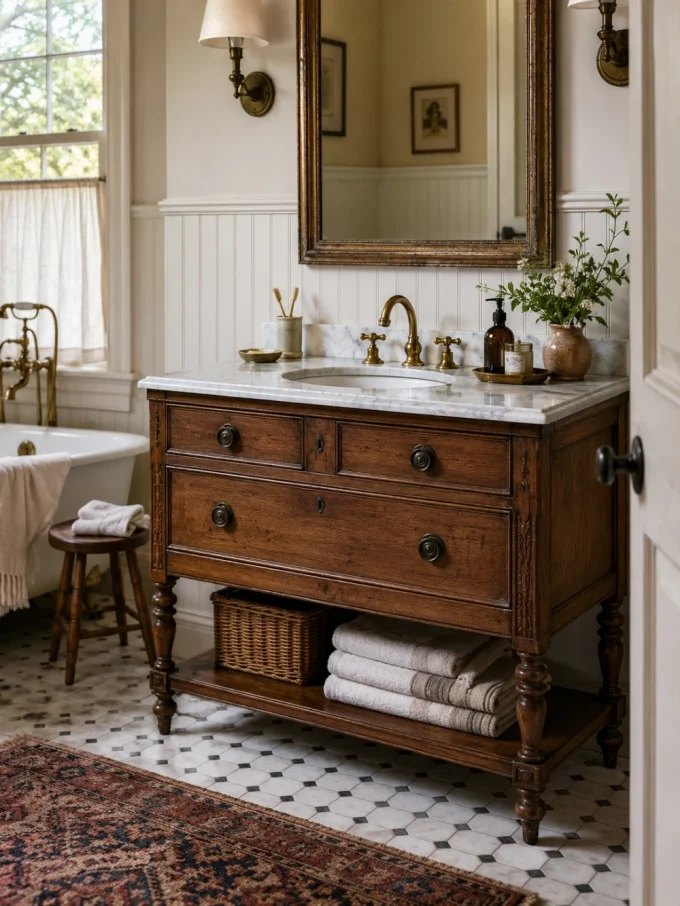
Traditional bathrooms often featured furniture-like pieces rather than the streamlined built-in cabinets common today.
A furniture-style vanity recreates that feeling while still providing modern storage.
Why It Works
The design introduces:
- visible craftsmanship
- framed doors
- decorative hardware
- painted finishes
- stronger visual presence
It helps a bathroom feel more like a designed room rather than a purely functional space.
Best Options
Vintage-inspired vanity styles include:
- painted wooden cabinets
- dresser-style conversions
- framed panel doors
- curved furniture details
The Practical Advantage
Unlike a pedestal sink, a vanity provides storage for:
- toiletries
- towels
- cleaning products
- daily essentials
This makes it a better choice for many family bathrooms.
Consider Before Choosing
More detailed furniture-style pieces usually require more cleaning.
Extra features such as:
- grooves
- legs
- decorative trim
can collect dust and moisture compared with simple cabinetry.
Avoid If
A highly ornate vanity may not suit:
- very small bathrooms
- minimalist homes
- homeowners who prefer low-maintenance surfaces
9. Add a Vintage-Inspired Bathroom Mirror
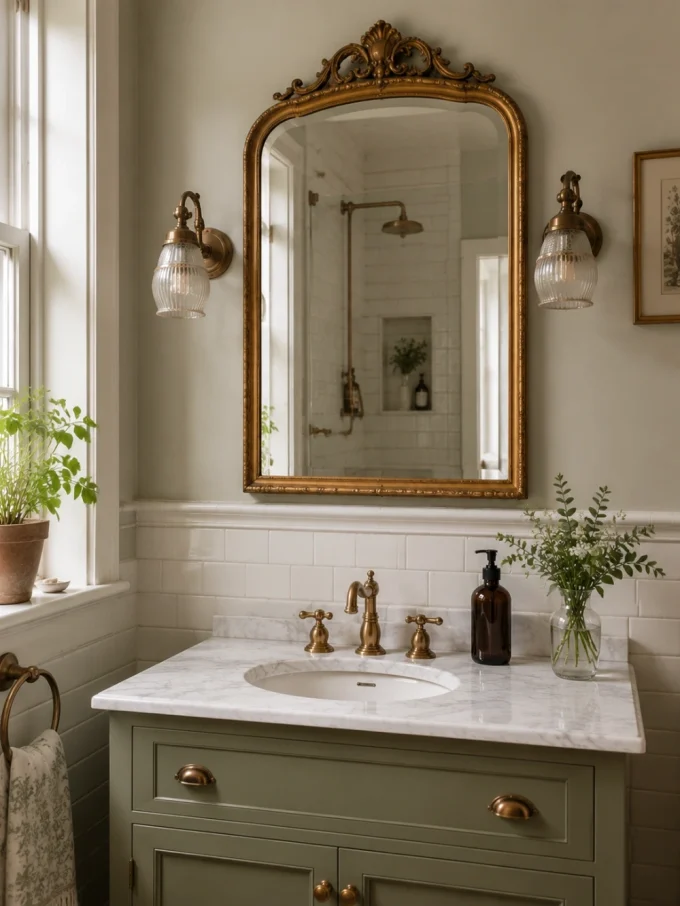
A mirror is often overlooked as a design feature, but it can influence the entire character of a bathroom.
Vintage mirrors create personality without requiring major construction changes.
Popular Vintage Mirror Styles
Consider:
- arched mirrors
- antique brass frames
- wooden frames
- beveled glass
- rounded silhouettes
Why It Works
Older interiors often used mirrors as decorative objects rather than only functional necessities.
A carefully chosen mirror can:
- soften hard tile surfaces
- reflect natural light
- create a stronger focal point
Practical Consideration
The mirror should still support daily use.
Before choosing an ornate style, check:
- reflection quality
- cleaning difficulty
- size compared with the vanity
A beautiful mirror that is too small can reduce functionality.
Best For
Vintage mirrors work especially well when paired with:
- pedestal sinks
- wall sconces
- traditional tile
- furniture-style vanities
10. Install Hexagon Floor Tiles
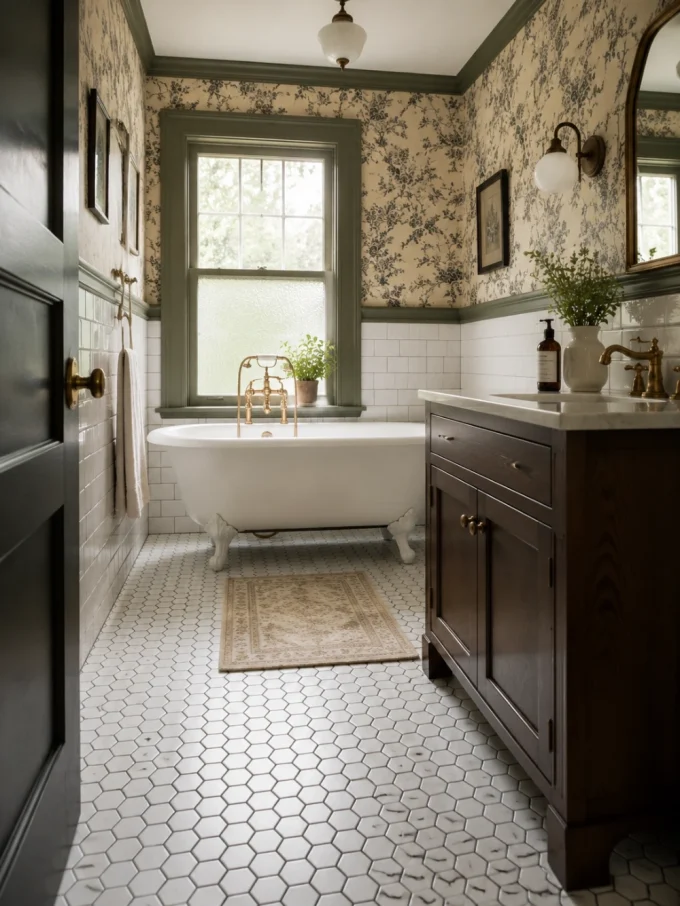
Hexagon tiles are another classic bathroom feature that continues to feel timeless because the pattern adds detail without requiring bold decoration.
They are especially effective when you want vintage character but prefer a quieter design.
Why It Works
The repeating geometric pattern creates visual texture while allowing other elements to stand out.
Hexagon floors pair well with:
- white fixtures
- painted walls
- brass hardware
- natural wood accents
Choosing the Right Scale
Tile size changes the feeling of the room.
Smaller Hexagon Tiles
- create a traditional appearance
- add more visual detail
- require more grout maintenance
Larger Hexagon Tiles
- feel cleaner and more contemporary
- reduce grout lines
- create a simpler look
Maintenance Consideration
Bathrooms with more grout require more cleaning attention.
Before installing, consider:
- grout color
- sealing requirements
- household traffic
Avoid If
A highly detailed floor may compete with other patterned features such as wallpaper or decorative shower tile.
11. Add Natural Wood Details for Warmth
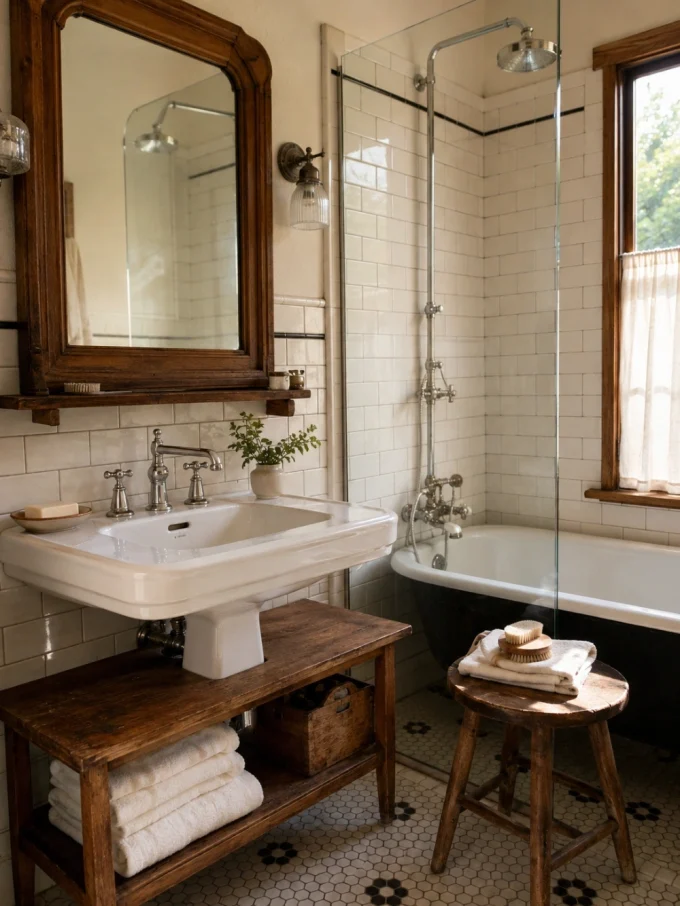
Vintage bathrooms often benefit from natural materials because they soften the harder surfaces commonly found in bathrooms.
Wood can balance:
- ceramic tile
- porcelain fixtures
- metal hardware
- glass surfaces
Ways to Introduce Wood
Consider:
- wooden vanity finishes
- floating shelves
- framed mirrors
- small furniture pieces
- decorative stools
Why It Works
Wood adds visual warmth and prevents the bathroom from feeling overly cold or clinical.
The texture of natural grain creates contrast against smooth bathroom materials.
Important Bathroom Consideration
Not every wood product performs the same in humid conditions.
Think about:
- moisture exposure
- ventilation
- finish quality
- cleaning routine
A beautiful wooden feature should be selected based on durability, not appearance alone.
Avoid If
Avoid adding untreated wood in areas exposed to regular water contact.
12. Use Traditional Lighting and Wall Sconces
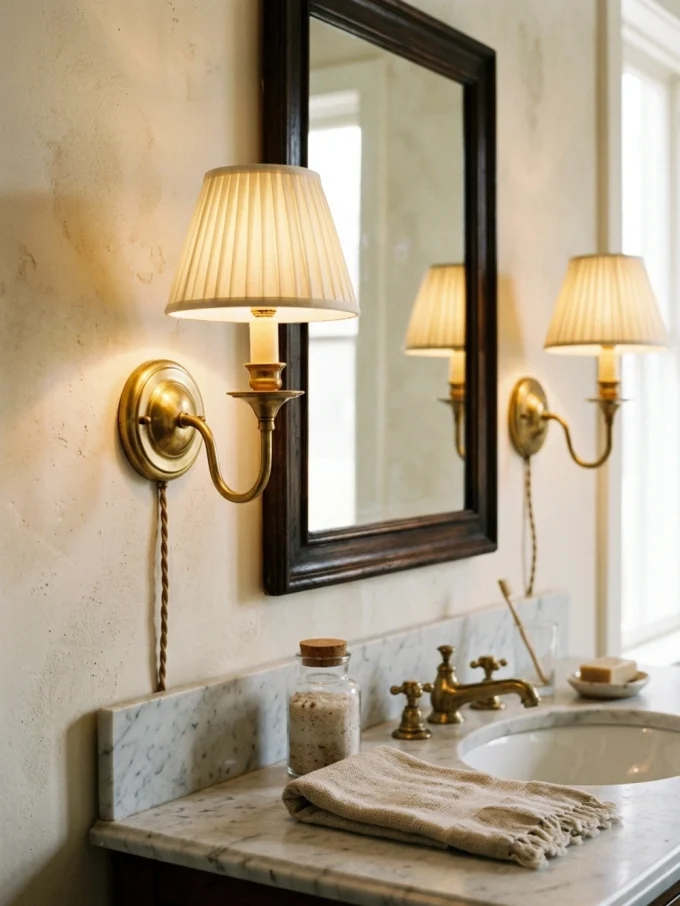
Lighting can determine whether a vintage bathroom feels authentic or simply decorated with vintage objects.
Many older bathrooms relied on softer, layered lighting rather than one bright overhead fixture.
Why It Works
Traditional lighting improves the room by adding:
- warmer illumination
- decorative detail
- better mirror lighting
- visual balance
Consider combining:
- wall sconces beside the mirror
- ceiling lighting for general brightness
- softer accent lighting where appropriate
Placement Matters
A beautiful fixture in the wrong position will not improve daily usability.
Good bathroom lighting should help with:
- shaving
- makeup application
- grooming
- nighttime movement
Vintage Lighting Styles to Consider
- globe fixtures
- brass sconces
- frosted glass shades
- traditional lantern-inspired designs
Avoid If
Avoid choosing fixtures only for appearance. A decorative light that creates shadows on the face can become frustrating over time.
Practical Vintage Bathroom Decisions Before Renovating
A vintage bathroom succeeds when the style choices match the realities of the room.
Before committing, consider these questions:
Does the Bathroom Have Enough Storage?
Beautiful traditional sinks and fixtures often reduce storage space.
Possible solutions:
- recessed cabinets
- wall shelving
- furniture-style storage
- mirrored cabinets
Will the Materials Handle Daily Use?
Vintage-inspired materials vary greatly in practicality.
Think about:
- cleaning frequency
- moisture exposure
- durability
- replacement difficulty
Is the Style Connected to the Home?
Vintage details usually feel more authentic when they relate to existing architecture.
Consider repeating:
- wood tones
- metal finishes
- trim details
- color relationships
A bathroom does not need to look like it belongs to another century. It should feel like a natural extension of the home.
13. Add Traditional Wainscoting for Architectural Character
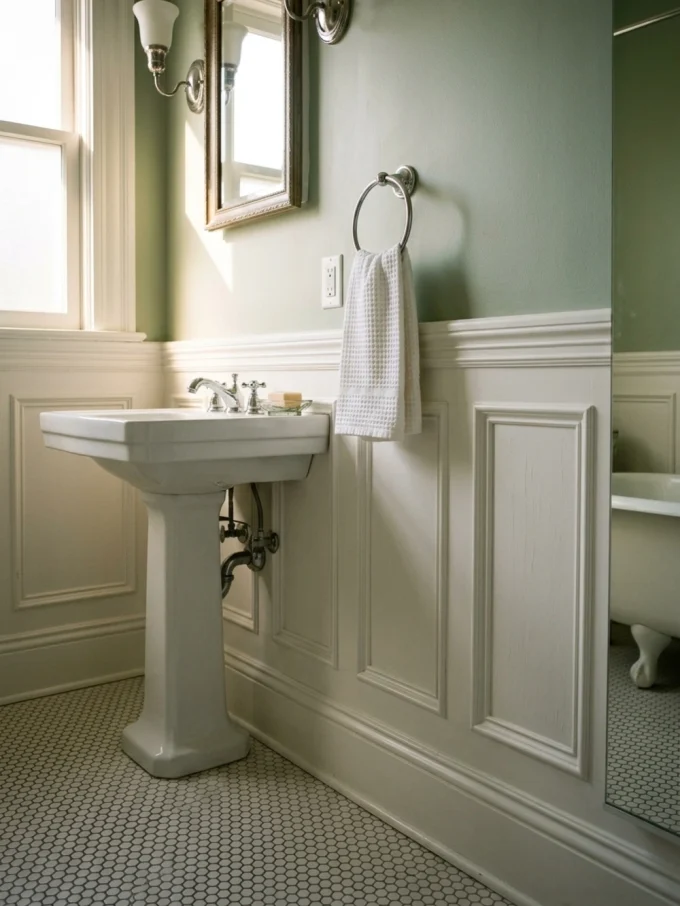
Wainscoting is one of the most effective ways to introduce vintage architectural detail without changing the entire bathroom layout.
Historically, wall paneling served both decorative and practical purposes by protecting lower wall surfaces. In modern bathrooms, it creates a layered appearance that makes simple walls feel more thoughtfully designed.
Why it works
Bathrooms often contain many smooth surfaces:
- tile
- glass
- porcelain
- painted walls
Wainscoting adds:
- depth
- shadow lines
- visual structure
- traditional craftsmanship
It also creates a natural transition between different materials.
Vintage-inspired options
Consider:
- painted wood panels
- beadboard-style walls
- raised panel details
- tile wainscoting
The right choice depends on the home’s architecture and maintenance expectations.
Best for
Wainscoting works especially well in:
- traditional homes
- cottage-style bathrooms
- powder rooms
- spaces needing architectural interest
Practical consideration
Bathrooms create challenging conditions because of moisture.
Before choosing wood-based panels, consider:
- ventilation quality
- water exposure
- paint durability
- installation quality
Tile alternatives can provide a similar visual effect with easier maintenance.
Avoid if
Avoid adding highly decorative wall paneling if the bathroom is already small and visually busy. Too many details can make a compact room feel crowded.
Related inspiration:
Unusual wainscoting ideas
14. Decorate With Vintage Bathroom Accessories
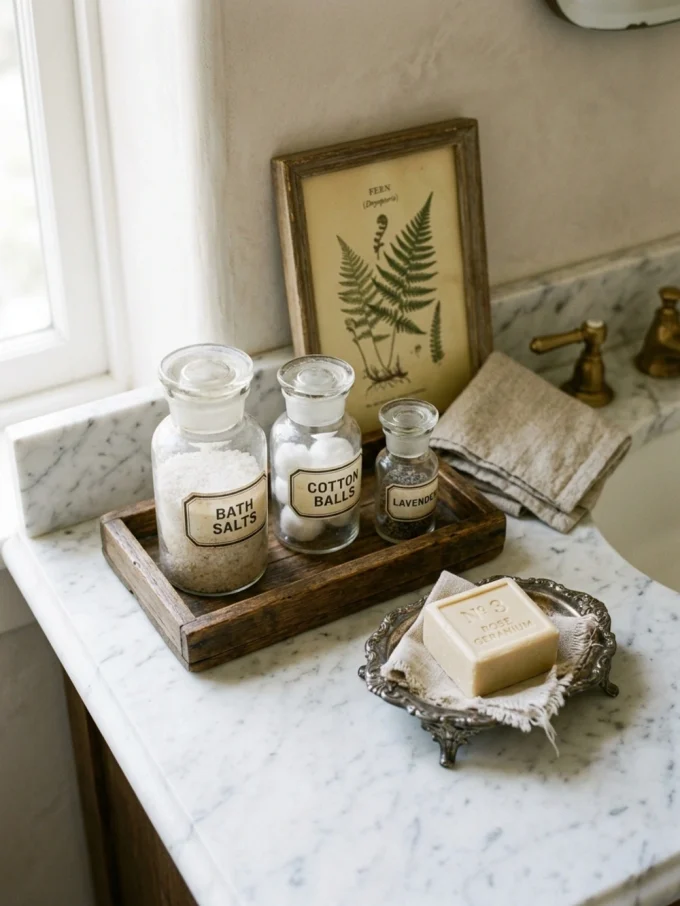
Accessories are one of the easiest ways to introduce vintage style without committing to a full renovation.
Small details can change the personality of a bathroom while remaining easy to update later.
Vintage accessory ideas
Consider:
- antique-style trays
- glass containers
- ceramic soap dishes
- framed botanical artwork
- vintage-inspired storage jars
- traditional towel holders
Why it works
Accessories add the finishing layer that makes a bathroom feel lived-in rather than newly assembled.
However, the goal is not to fill every surface.
A few carefully selected objects usually create more impact than many unrelated decorations.
Practical rule
Choose accessories that serve a purpose.
For example:
A decorative tray can organize daily products.
A framed print can soften an empty wall.
A ceramic container can hide small bathroom necessities.
This keeps the room attractive while maintaining function.
Avoid if
Avoid adding too many antique pieces in a bathroom with limited counter space. Decorative clutter quickly reduces the calm feeling that vintage design aims to create.
Related inspiration:
Home decor items
15. Use Heritage-Inspired Paint Colors
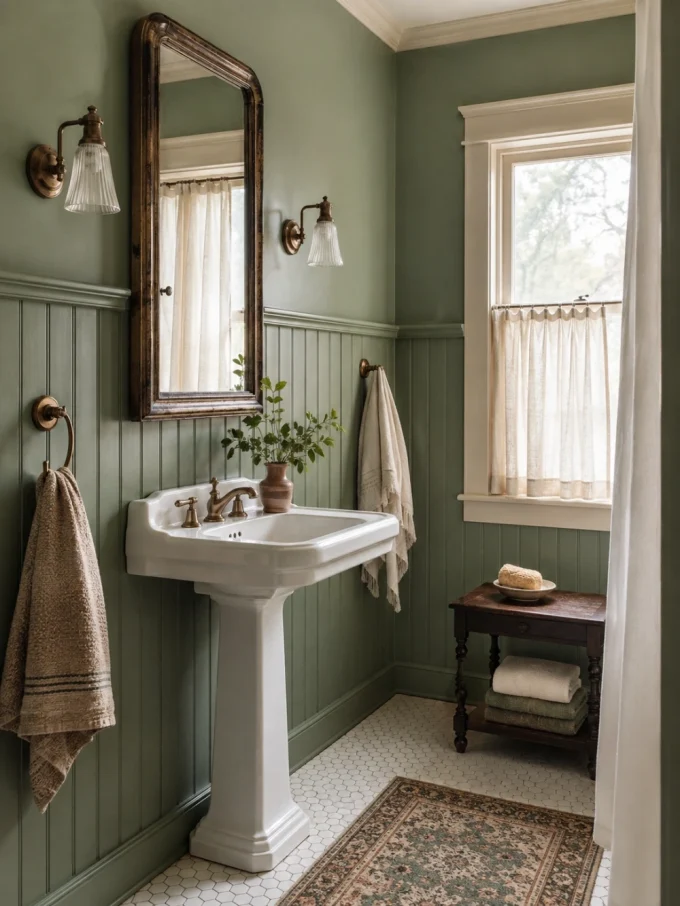
Paint is one of the most affordable ways to transform a bathroom into a vintage-inspired space.
Unlike permanent changes such as tile or plumbing fixtures, paint allows homeowners to experiment with different moods.
Vintage color directions
Popular choices include:
- deep navy
- muted green
- warm beige
- soft gray
- dusty rose
- earthy brown
Why it works
Traditional interiors often relied on colors with depth rather than extremely bright modern shades.
A carefully chosen paint color can highlight:
- trim details
- vintage fixtures
- tile patterns
- wood elements
How to avoid an outdated look
Balance stronger colors with lighter elements.
Examples:
- dark walls + white porcelain fixtures
- navy cabinetry + brass hardware
- muted green walls + natural wood
The contrast keeps the room sophisticated rather than themed.
Avoid if
Avoid selecting a historical color only because it belongs to a certain era. The color should also work with:
- available natural light
- bathroom size
- existing finishes
Related inspiration:
Luxury paint colors ideas
16. Combine Vintage Style With a Modern Walk-In Shower
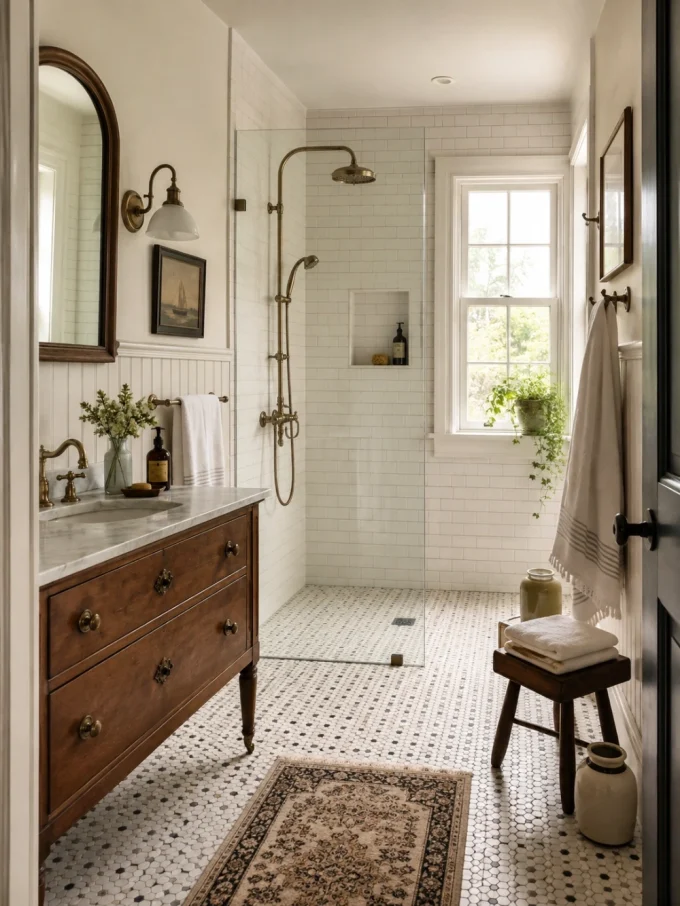
A vintage bathroom does not require a traditional bathtub-only layout.
Many homeowners prefer showers because they are easier for daily routines, and a well-designed shower can still support a classic aesthetic.
How to create the look
Combine modern shower functionality with vintage details:
- classic subway tile
- traditional metal fixtures
- framed glass
- patterned floor tile
- heritage-inspired colors
Why it works
The strongest vintage bathrooms are not historical replicas. They adapt traditional visual elements to modern lifestyles.
A walk-in shower can provide:
- easier access
- efficient use of space
- practical daily convenience
Consider before choosing
Pay attention to:
- waterproofing quality
- drainage design
- tile maintenance
- storage placement
A beautiful shower still needs to function well.
Avoid if
Avoid adding too many decorative shower details that increase cleaning difficulty without improving the experience.
Related inspiration:
Rustic walk-in shower ideas
17. Add Bathroom Plants With Vintage Styling
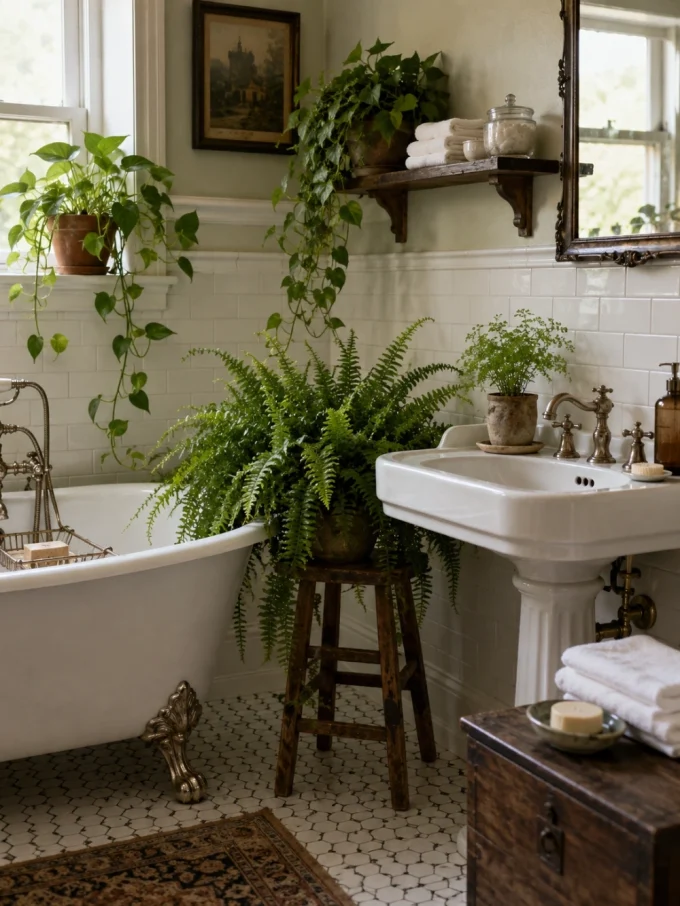
Plants may not be the first feature associated with vintage bathrooms, but they complement traditional spaces by adding softness and natural texture.
Older interiors often incorporated natural materials and greenery to make rooms feel more connected and comfortable.
Good vintage plant pairings
Consider:
- plants in ceramic pots
- hanging greenery
- vintage-style planters
- small shelf displays
Why it works
Plants introduce contrast against:
- tile
- metal
- porcelain
They help prevent a bathroom from feeling too hard or sterile.
Practical considerations
Choose plants based on the actual bathroom environment.
Consider:
- available natural light
- humidity
- watering needs
- available space
A plant should improve the room, not become another maintenance task.
Avoid if
Avoid placing plants in areas where they block movement, create cleaning difficulties, or struggle due to poor lighting.
Related inspiration:
Bathroom plant decor ideas
18. Create a Modern Vintage Bathroom Mix
The most successful vintage bathrooms usually do not belong completely to the past.
They combine historical character with modern practicality.
This approach is often more successful because it allows homeowners to enjoy:
- classic appearance
- easier maintenance
- improved storage
- better comfort
How to balance old and new
Pair vintage elements with modern solutions:
Vintage:
- clawfoot tub
- traditional tile
- brass fixtures
- framed mirror
Modern:
- hidden storage
- efficient lighting
- improved ventilation
- comfortable shower systems
Why it works
A bathroom should support everyday life first.
The purpose of vintage design is not to recreate inconvenience. It is to capture the qualities people admire:
- craftsmanship
- warmth
- detail
- personality
Avoid if
Avoid creating a bathroom where every item competes for attention. A successful vintage space needs visual hierarchy.
Choose a few memorable features and allow the rest of the room to support them.
Vintage Bathroom Mistakes to Avoid
1. Making Everything Look Antique
Too many vintage elements can make a bathroom feel like a display room.
A balanced approach usually works better:
- one statement fixture
- one strong pattern
- supporting traditional details
2. Ignoring Storage Needs
Many traditional fixtures were designed differently from modern bathrooms.
Before choosing:
- pedestal sinks
- open shelving
- decorative furniture
consider where daily items will go.
3. Choosing Style Over Maintenance
A material that looks beautiful but creates daily frustration is not a successful design choice.
Always consider:
- cleaning effort
- moisture exposure
- repair difficulty
- replacement cost
4. Mixing Too Many Historical Styles
A Victorian mirror, 1950s tile, farmhouse vanity, and Art Deco lighting may all be beautiful individually but confusing together.
Choose a consistent design direction.
Conclusion: Build a Vintage Bathroom That Works Today
A timeless vintage bathroom is not created by copying the past exactly. It is created by selecting the details that made older spaces memorable and adapting them for modern living.
The strongest designs combine:
- classic materials
- thoughtful colors
- practical layouts
- comfortable fixtures
- personal details
Before committing to any vintage feature, ask:
- Does it improve the room?
- Will it work with my daily routine?
- What maintenance does it create?
- Does it fit the scale of my bathroom?
The goal is not to create a bathroom that looks old.
The goal is to create a bathroom that feels established, intentional, and comfortable for years to come.
Frequently Asked Questions
What colors work best for a vintage bathroom?
Popular vintage bathroom colors include soft greens, muted blues, warm creams, dusty pinks, and deeper heritage-inspired shades. The best choice depends on lighting, room size, and existing materials.
How can I make my bathroom look vintage without renovating?
Start with smaller changes:
- vintage-style mirror
- traditional lighting
- new hardware
- classic accessories
- paint color changes
These updates can create a noticeable difference without replacing major fixtures.
Are vintage bathrooms practical for modern homes?
Yes. The most successful vintage bathrooms combine classic appearance with modern improvements such as better storage, efficient plumbing, improved ventilation, and practical lighting.
Is a clawfoot tub worth adding?
A clawfoot tub can create a strong vintage focal point, but it works best when the bathroom has enough space and the homeowner values bathing comfort. Smaller bathrooms may benefit from more practical alternatives.