

An earthy bathroom should feel warm, grounded, and connected to natural materials not like a room covered in beige with a few plants added at the end.
The strongest earthy bathrooms use several elements together: warm colors, visible material texture, wood, stone, softer lighting, and carefully chosen accessories. The result can be rustic, modern, minimalist, luxurious, or somewhere between. Natural bathroom design is increasingly built around this combination of material, texture, and tone rather than decoration alone.
These 19 earthy bathroom ideas focus on different ways to create that feeling while keeping the room practical. You’ll find options for small bathrooms, modern spaces, traditional rooms, rental-friendly updates, and bathrooms where a full renovation is not realistic.
1. Warm Up the Room With a Natural Stone Palette
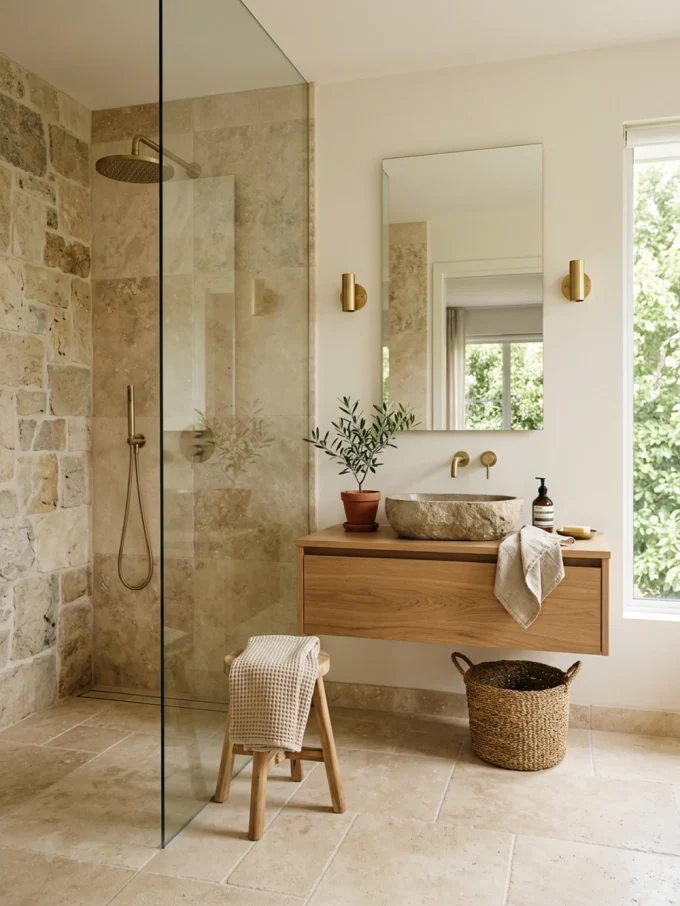
Natural stone immediately gives a bathroom an earthy foundation because its variation comes from the material itself rather than printed decoration.
Travertine, limestone, slate, marble with warmer veining, and stone-look porcelain can all work. The important part is choosing a stone tone that fits the rest of the room.
Creamy beige stone creates a lighter atmosphere, while taupe or brown-toned stone makes the bathroom feel deeper and moodier.
You do not need to cover every surface. A stone floor combined with a painted wall can be more balanced than stone tile from floor to ceiling.
If you use real natural stone, also consider sealing requirements, staining, cleaning, and the specific conditions of your bathroom. Porcelain that imitates stone can provide a similar visual direction with different maintenance demands.
2. Pair a Wood Vanity With Warm Neutral Walls
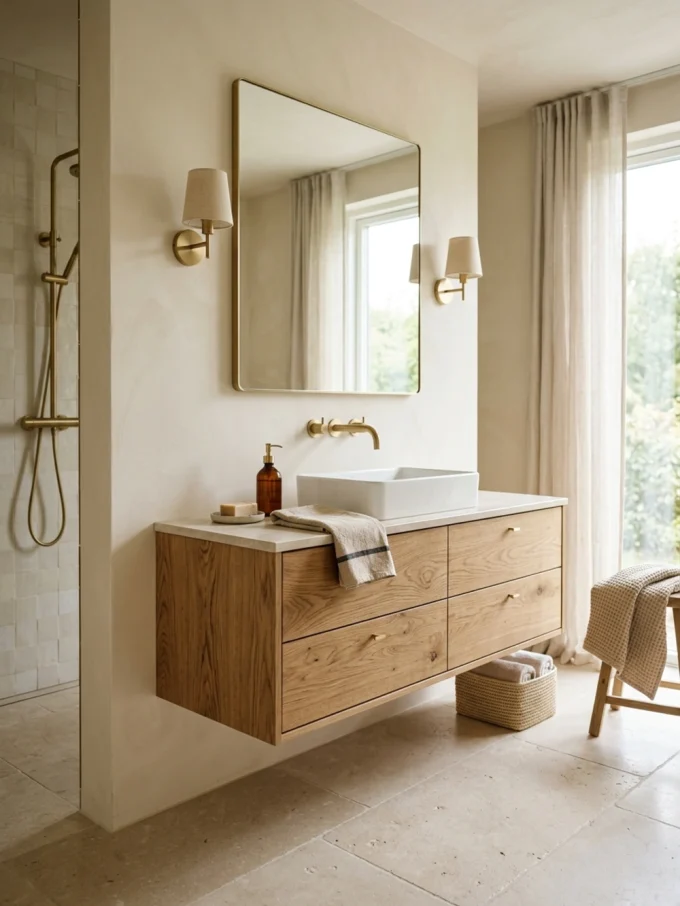
A wood vanity is one of the easiest ways to prevent an earthy bathroom from feeling cold.
Oak, walnut, teak, and other suitable wood finishes introduce visible grain and warmth. Pair the vanity with cream, mushroom, warm beige, taupe, or soft greige walls rather than stark white.
The contrast does not need to be dramatic.
A light oak vanity against a warm off-white wall creates a bright organic look, while walnut with a deeper beige or clay-toned wall creates a more intimate bathroom.
Wood and stone are particularly effective together because their textures contrast without competing. Natural-bathroom guidance similarly emphasizes wood and stone as complementary materials for creating warmth and depth.
3. Use Sage Green for a Soft Connection to Nature
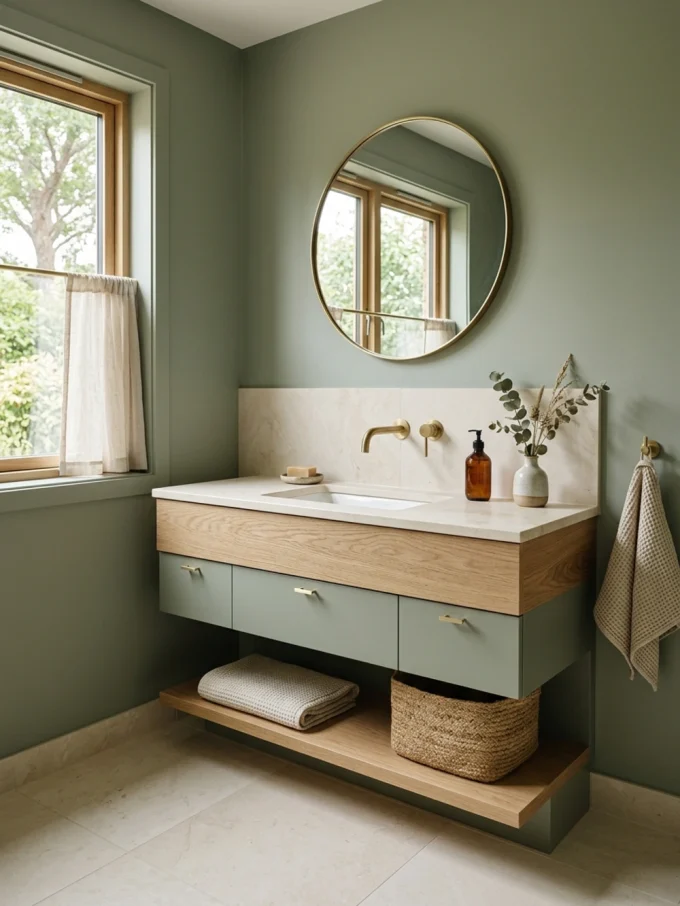
Sage green works when you want an earthy bathroom that still feels light and fresh.
Use it on:
- Painted walls
- Vanity cabinetry
- Shower tile
- Wainscoting
- Towels
- Small accessories
The key is choosing a muted green rather than a highly saturated emerald if your goal is a calm natural atmosphere.
Sage also pairs easily with warm white, oak, limestone, brass, and natural woven textures.
For a small bathroom, consider using sage on one major surface rather than every wall. This gives the color enough presence without making the room feel visually compressed.
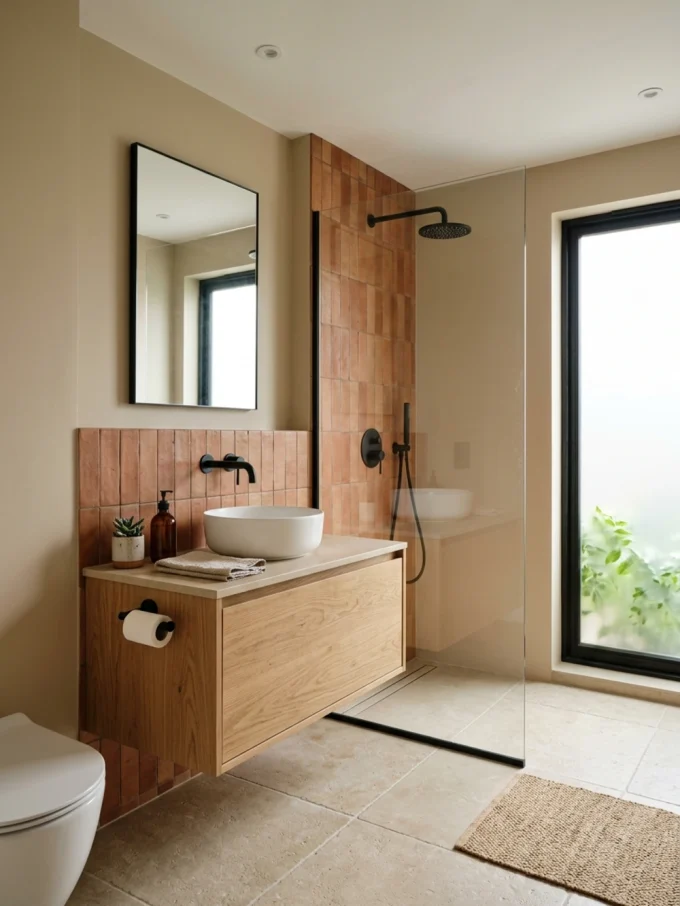
4. Bring in Terracotta Without Making the Bathroom Rustic
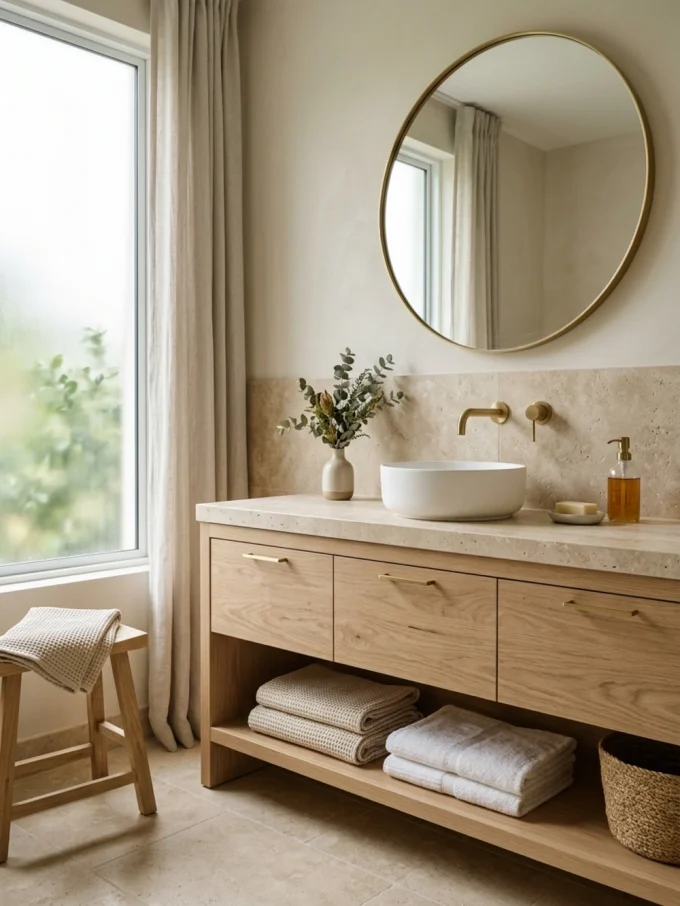
Terracotta introduces the warm, clay-like side of earthy design.
It can appear through floor tile, wall tile, a vanity color, towels, pottery, or small accessories.
A muted terracotta works especially well with cream, sand, olive, and warm wood. You can also use it as a small accent against a predominantly neutral bathroom.
If you are concerned that terracotta will make the room look too rustic, keep the surrounding forms contemporary. A flat-panel vanity, simple fixtures, clear glass shower, and clean lighting can make the color feel modern.
Terracotta and sage are also being used together in contemporary bathroom schemes, where earthy color is balanced with simple forms and modern finishes.
5. Create an Organic Look With a Wood and Stone Combination
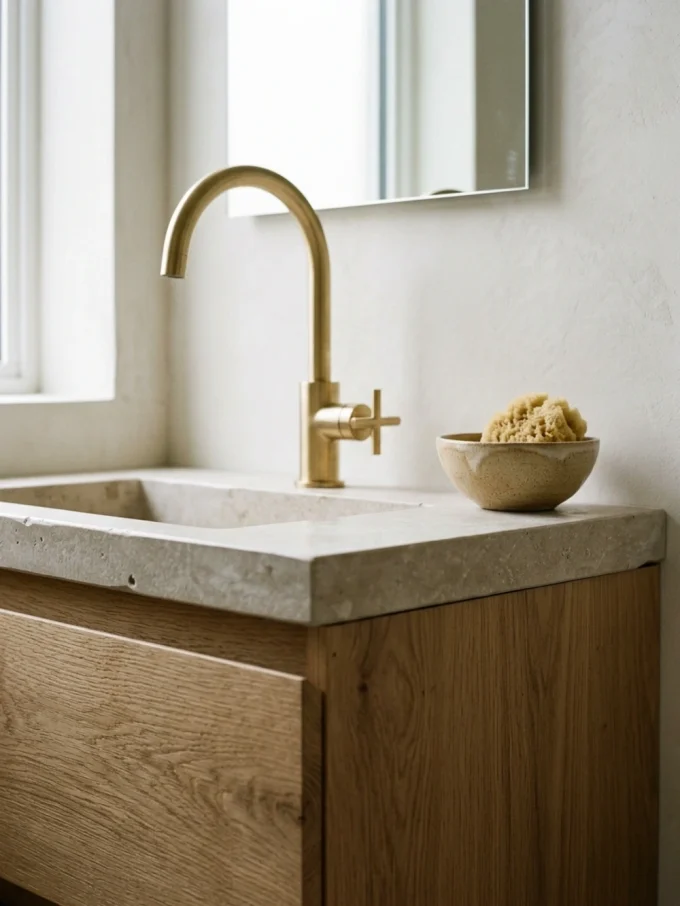
Instead of choosing one “earthy” material, build the room around a relationship between two or three.
A practical combination is:
Wood + stone + warm metal
For example, imagine an oak vanity, limestone-look porcelain, and brushed brass hardware.
The wood supplies warmth. The stone adds visual weight and texture. The metal provides a small amount of polish.
This approach works particularly well in modern bathrooms because it softens clean architectural lines without requiring rustic accessories.
Keep the number of competing finishes under control. Too many wood tones, tile patterns, metals, and colors can turn an organic bathroom into a collection of unrelated samples.
6. Use a Textured Wall Instead of More Decoration
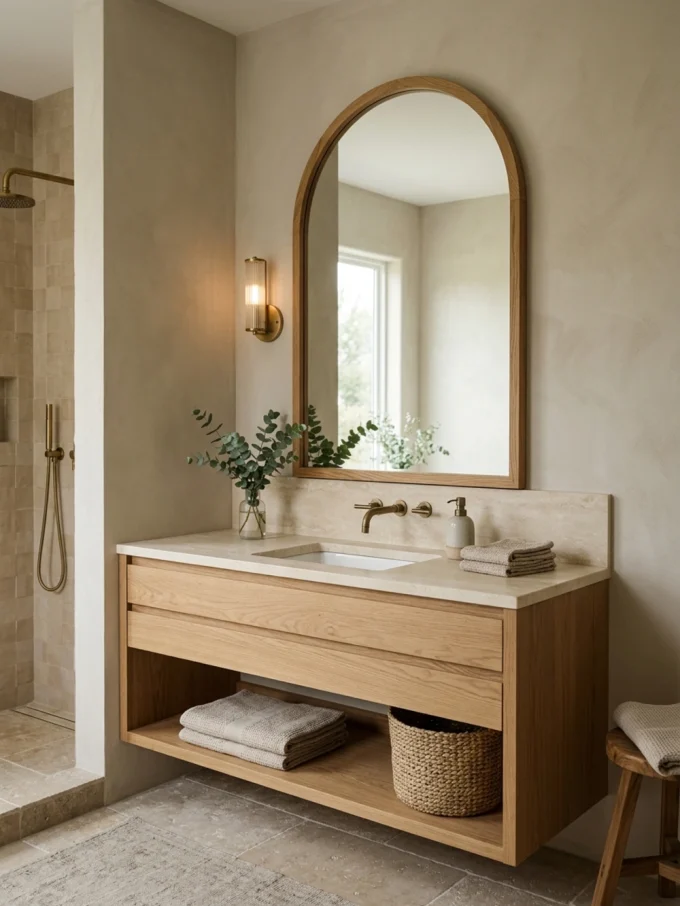
Earthy bathrooms benefit from texture because natural materials rarely look completely flat.
Instead of adding more accessories, introduce texture through:
- Handmade-look tile
- Limewash-style walls
- Fluted surfaces
- Ribbed tile
- Subtle plaster texture
- Tumbled stone
- Natural wood grain
The goal is to give light something to interact with.
A textured wall behind a vanity can become the room’s main decorative feature without requiring artwork or shelves.
If you like this approach, our wall texture design ideas can provide additional ways to build visual depth.
Just remember that bathroom walls are exposed to moisture. Choose finishes appropriate for the specific area, especially around showers and tubs.
7. Choose an Arched Mirror to Soften Hard Lines
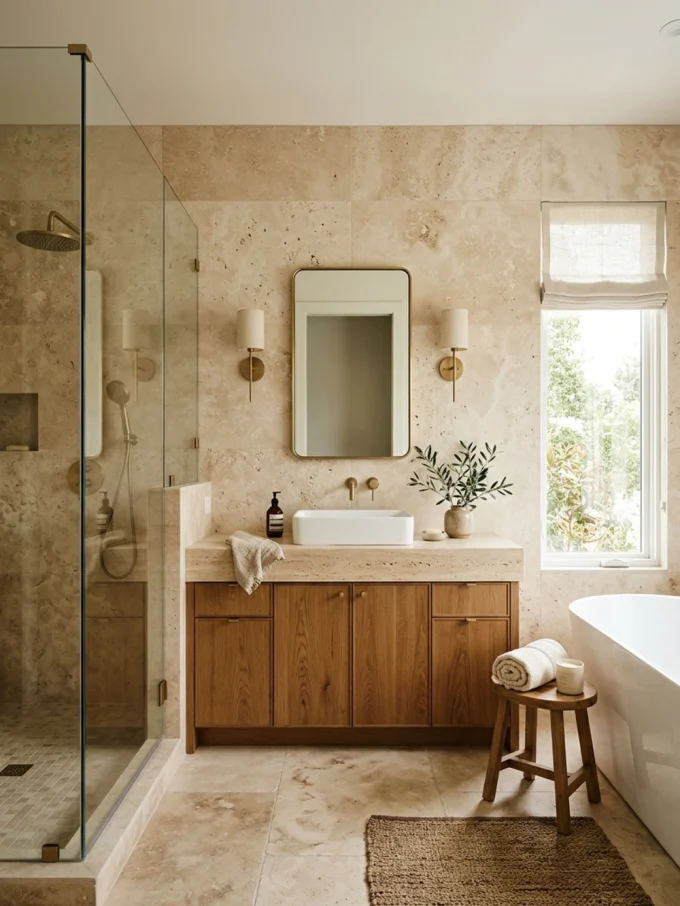
Bathrooms naturally contain many straight lines: tile joints, vanities, counters, cabinets, shower glass, and wall edges.
An arched mirror introduces a softer shape without changing the layout.
A wood-framed arch works particularly well in an earthy bathroom because it combines two natural-looking elements in one feature.
For a more polished scheme, choose an aged brass or bronze frame. For a minimalist bathroom, a frameless arch keeps the shape visible without introducing another strong finish.
The mirror should still be sized around the vanity and wall rather than chosen solely for its shape.
Our guide to beautiful arch mirror ideas covers additional ways to choose the right size, frame, and placement.
8. Build a Warm Neutral Bathroom Around Travertine
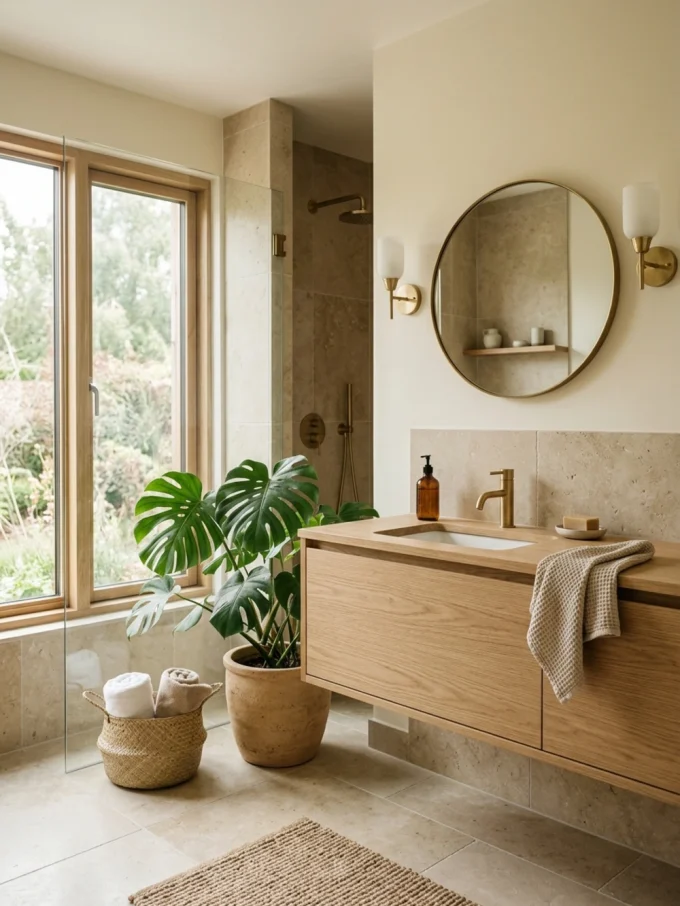
Travertine has a naturally earthy appearance because its surface contains variation, warm mineral tones, and irregular visual movement.
Use it for:
- Vanity countertops
- Shower walls
- Flooring
- A backsplash
- A feature wall
You can combine travertine with oak, warm white paint, brushed brass, or bronze.
The main challenge is avoiding a room where every surface has exactly the same beige tone.
Let the materials vary slightly. A warm stone with creamy walls and darker wood creates much more depth than matching beige everywhere.
Also consider whether you want real travertine or a porcelain alternative. The visual goal can be similar, but maintenance, installation, and water exposure requirements differ.
9. Add Greenery Where the Bathroom Actually Supports It
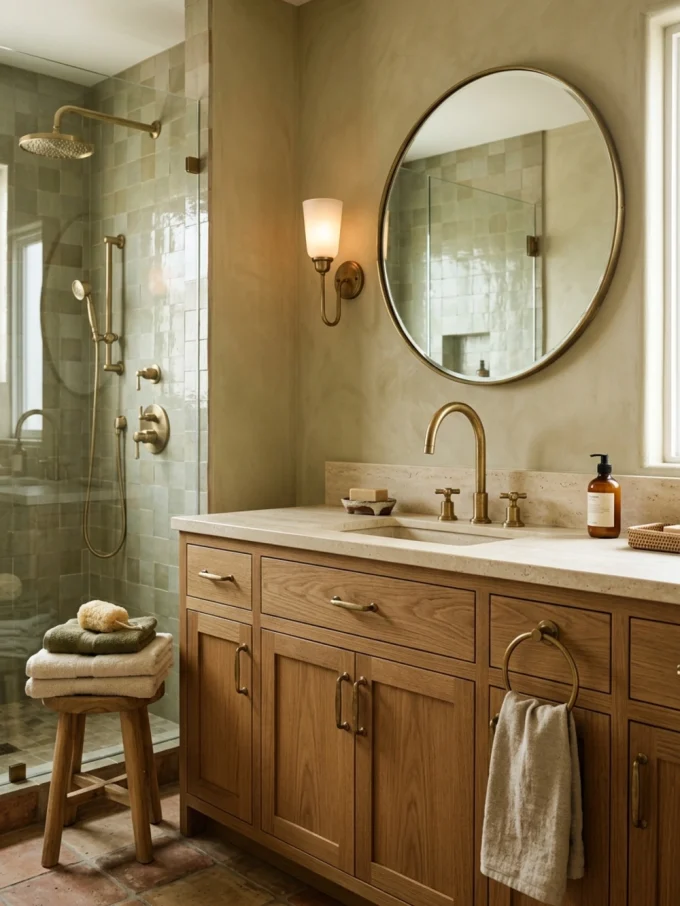
Plants are useful in earthy bathrooms, but they should be treated as living elements rather than mandatory decoration.
A bathroom with suitable natural light and humidity can support plants that tolerate those conditions. In darker bathrooms, choose carefully or use another natural element rather than adding a struggling plant simply for appearance.
Place greenery near:
- A window
- The bathtub
- A vanity corner
- An open shelf
- A shower area where conditions suit the plant
Avoid overcrowding the bathroom.
One substantial plant can contribute more to the room than six small pots scattered across every available surface.
For more inspiration, explore our bathroom plant decor ideas.
10. Use Aged Brass for Warmth Instead of Bright Chrome
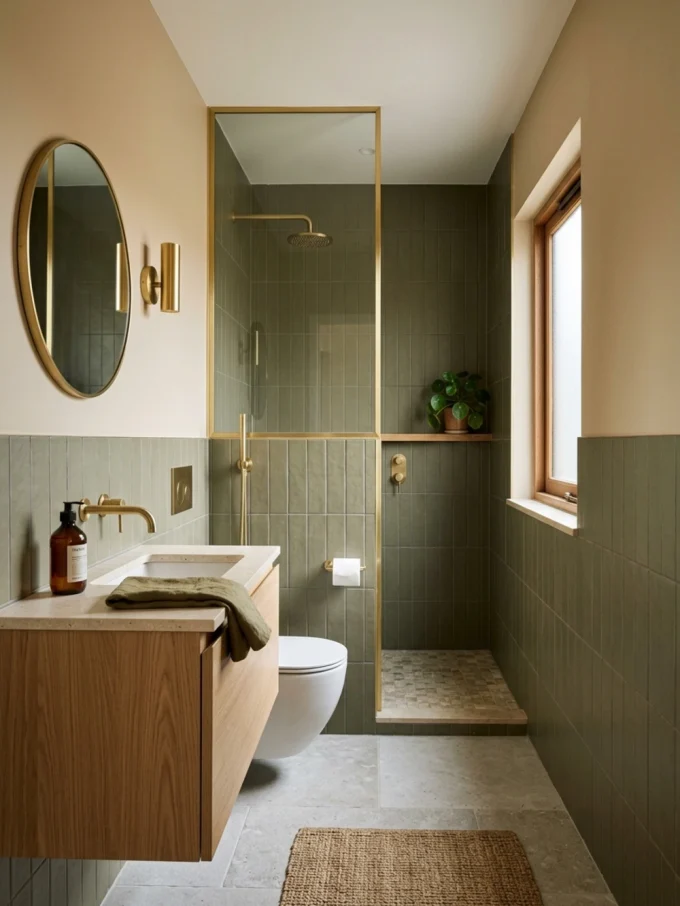
Metal finishes have a surprisingly large effect on whether an earthy bathroom feels warm or clinical.
Aged brass, brushed brass, bronze, and similar warm finishes generally sit comfortably alongside wood, stone, clay, and earthy paint colors.
That does not mean every fixture has to be brass.
You can use warm metal through:
- Faucets
- Shower hardware
- Cabinet handles
- Mirror frames
- Sconces
- Towel rails
The finish should also make sense with the rest of the home. If your bathroom connects directly to another room with black hardware, suddenly introducing several unrelated metallic finishes may make the transition feel less cohesive.
Green and warm brass remain a particularly effective bathroom combination because the green provides a natural color foundation while the metal adds warmth and polish.
11. Make a Small Bathroom Feel Earthy With Color Blocking
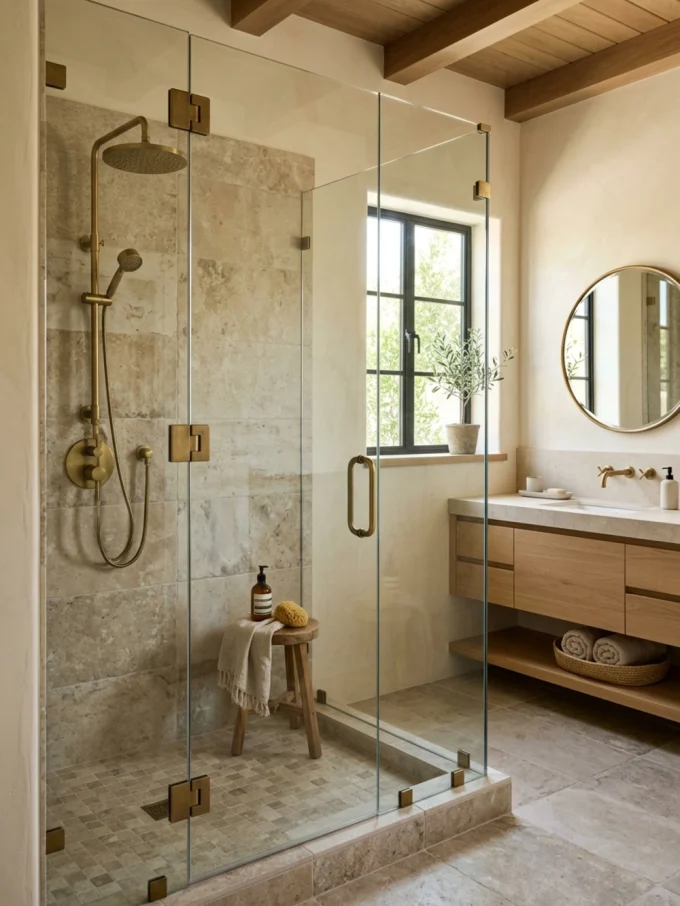
You do not need expensive materials to create an earthy atmosphere in a small bathroom.
Try dividing the room into simple visual zones.
For example:
- Warm beige on the upper wall
- Olive or clay tile below
- Light wood vanity
- Warm metal fixtures
This gives the room structure without requiring several decorative objects.
In a small bathroom, large-scale visual decisions are usually more effective than adding lots of small accessories.
Keep the palette limited to two or three main tones and let texture provide the variation.
12. Use a Rustic Walk-In Shower Without Overdoing the Theme
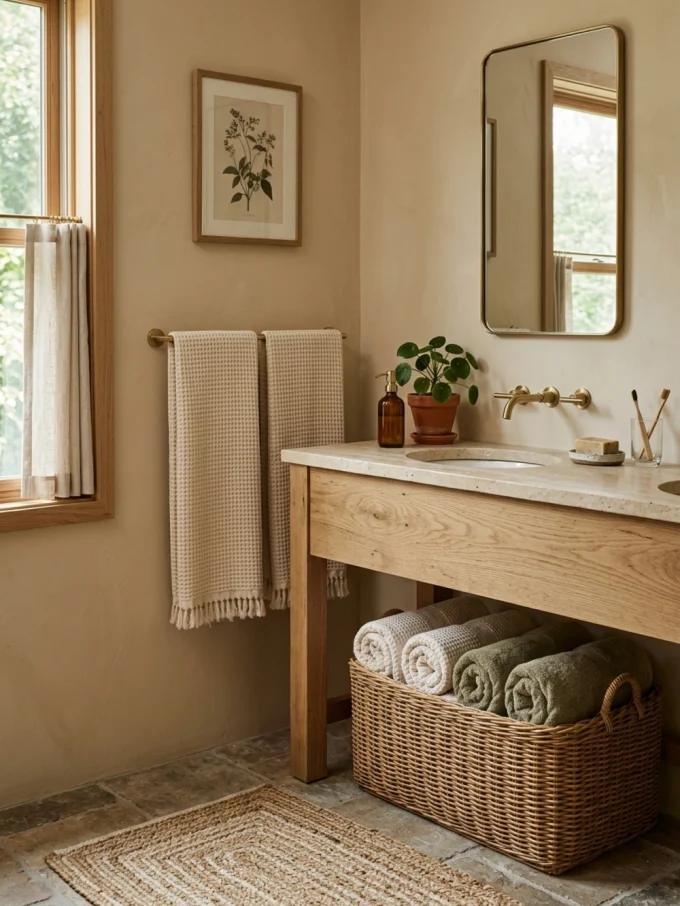
A walk-in shower can become the main earthy feature of the bathroom when its materials are chosen carefully.
Consider stone-look tile, handmade-style ceramic, warm grout, wood-look accents outside direct water exposure, and aged metal fixtures.
The important distinction is between earthy and themed rustic.
You do not need reclaimed wood everywhere, heavy farmhouse accessories, or multiple distressed finishes.
One strong material—such as stone-look tile—can establish the direction while modern glass and clean fixtures keep the bathroom current.
If you want a more rustic version of this approach, see our rustic walk-in shower ideas.
13. Add Softness With Natural Textiles
Bathrooms can become visually hard because so many surfaces are ceramic, glass, stone, and metal.
Textiles provide an easy counterbalance.
Use:
- Cotton towels
- Linen-look curtains where appropriate
- Woven baskets
- Textured bath mats
- Natural-fiber accessories
Choose colors that connect with the room rather than introducing a completely new palette.
For example, cream towels can soften a terracotta bathroom, while muted olive towels can connect a sage-green scheme to the rest of the room.
Keep textiles away from areas where they will remain constantly wet.
Earthy design should still be easy to live with.
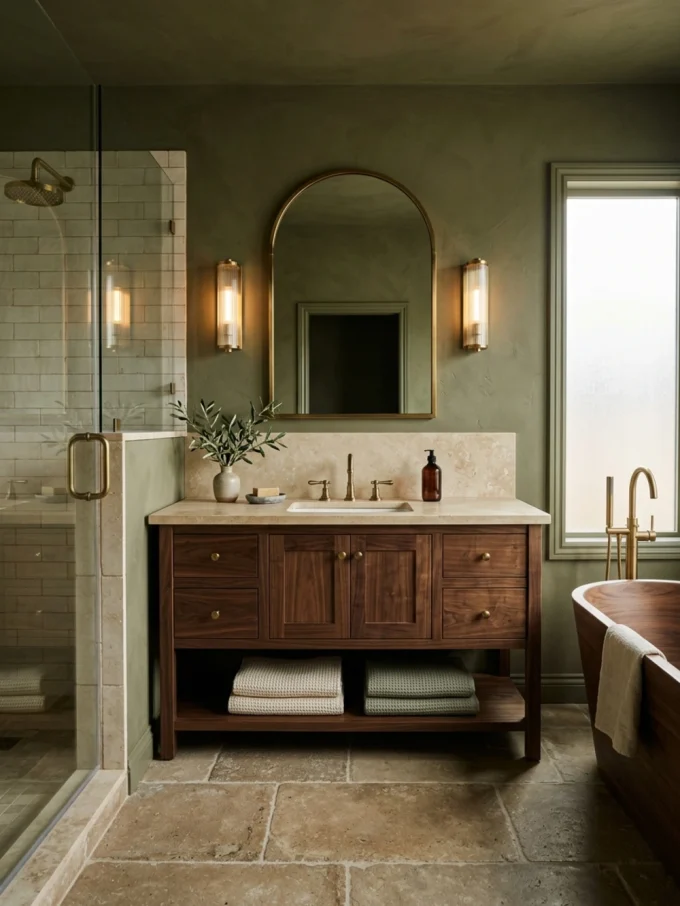
14. Create a Moody Earthy Bathroom With Olive or Forest Green
Earthy does not have to mean pale.
Deep olive, moss, forest green, and other muted nature-inspired colors can create a dramatic bathroom while maintaining the connection to the outdoors.
Use the darker color on cabinetry, tile, or walls, then balance it with warm stone, wood, or cream.
Lighting becomes particularly important here.
A dark bathroom with only one overhead light can feel flat and gloomy. Layer the lighting around the vanity and other areas so the room remains functional while still feeling atmospheric.
If you want to explore other bathroom color directions, our navy blue bathroom ideas offer another example of using a deeper color without letting the room become visually heavy.
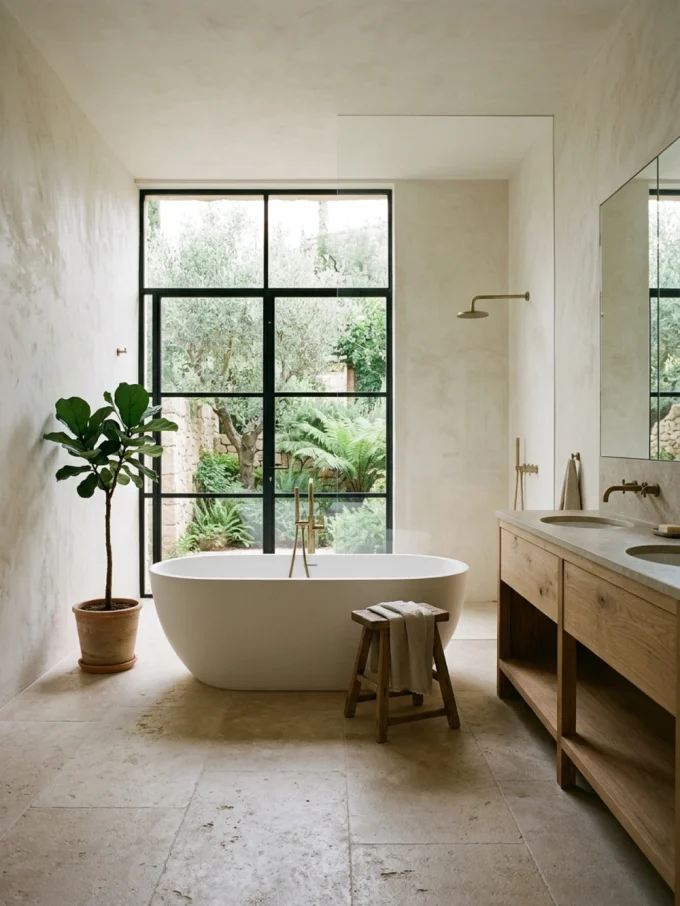
15. Use a Freestanding Tub as the Organic Focal Point
A freestanding tub can give a larger earthy bathroom a clear center.
Instead of surrounding it with excessive decoration, let the materials do the work.
A white or warm-toned tub against stone, plaster-style walls, wood, or a muted earthy color can feel calm without looking overly styled.
Add only what the layout actually needs:
- A small stool
- Bath linens
- A plant where conditions allow
- One understated piece of decor
The empty space around the tub matters. A freestanding tub squeezed between too many fixtures loses much of its visual impact.
16. Combine Earthy Colors With Modern Fixtures
One of the best ways to keep an earthy bathroom from looking dated is to combine organic colors with contemporary shapes.
For example:
Warm beige walls + oak vanity + simple black faucet
or
Terracotta tile + cream stone + minimal brass fixtures
or
Olive cabinetry + warm white walls + clean chrome hardware
The contrast creates tension in a good way.
Natural colors do not require rustic furniture. A modern vanity or minimalist shower can actually make the earthy materials feel more intentional.
This balance is especially useful if you want an organic modern bathroom rather than a traditional rustic one.
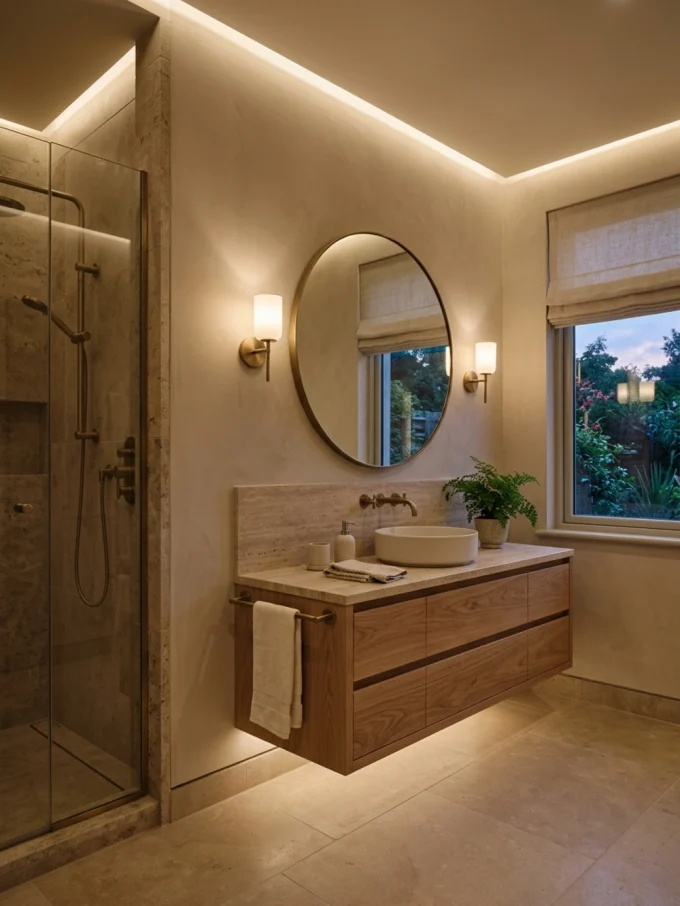
17. Use Warm Lighting to Bring Out the Materials
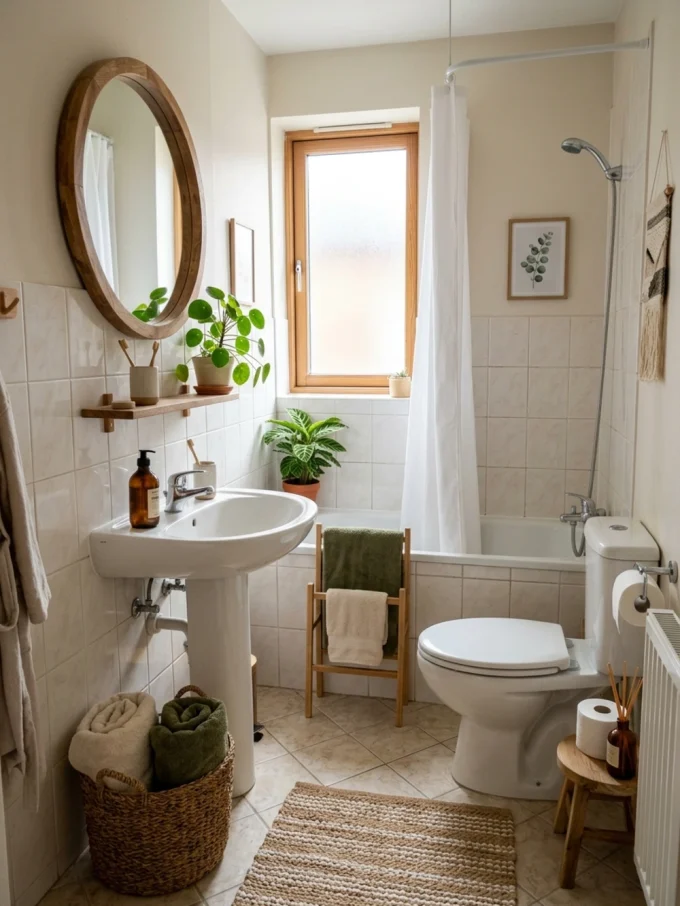
Lighting can completely change how an earthy bathroom reads.
Warm, layered lighting helps reveal the depth of wood, stone, clay, and textured walls. Natural-bathroom guidance also emphasizes the relationship between earthy tones and warm, controllable lighting.
Use a combination of:
- Vanity lighting
- Wall sconces
- Ceiling lighting
- Shower lighting where appropriate
- Natural daylight
Do not make every light extremely warm if the bathroom needs accurate task lighting.
The vanity is especially important because grooming requires useful illumination. Decorative warmth should not come at the expense of visibility.
For fixture inspiration, see our wall sconce light fixtures ideas and indoor wall-mounted light fixture ideas.
18. Make a Rental Bathroom Feel More Natural Without Renovating
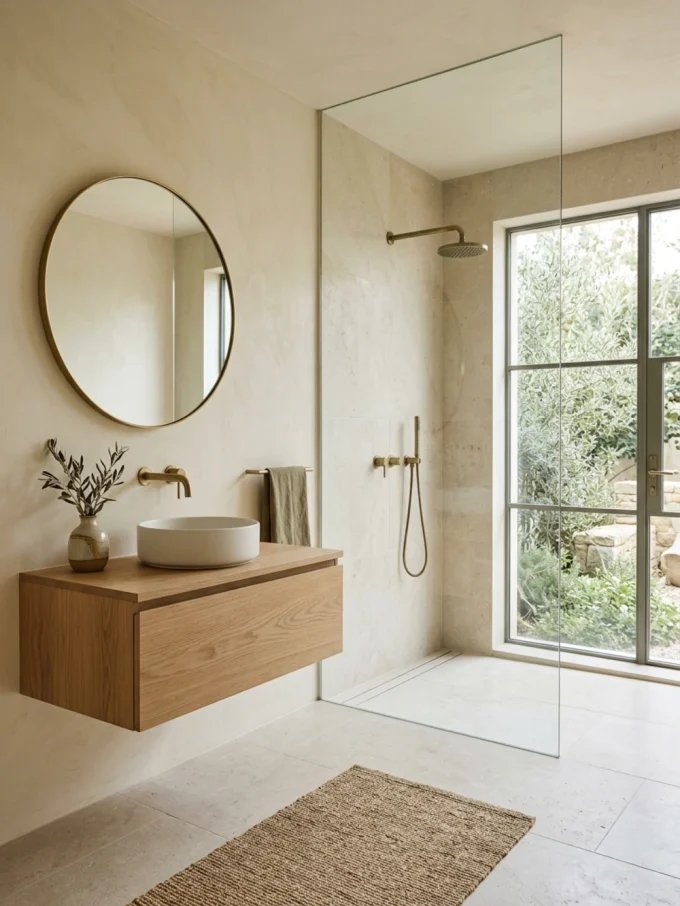
You can create an earthy bathroom without replacing the tile.
Start with reversible changes:
- Warm-toned towels
- A wooden or wood-look accessory
- Woven storage
- Earthy artwork where permitted
- A framed mirror
- A natural-colored bath mat
- Plants suited to the available light
- Warm decorative lighting where fixtures allow
The goal is to change the visual temperature of the room rather than hide every existing surface.
If the bathroom has cold gray tile, for example, adding warm beige textiles and wood tones can create contrast rather than trying to make the gray disappear.
For more renter-friendly strategies, see our rental apartment decorating ideas.
19. Keep the Palette Simple and Let Natural Materials Lead
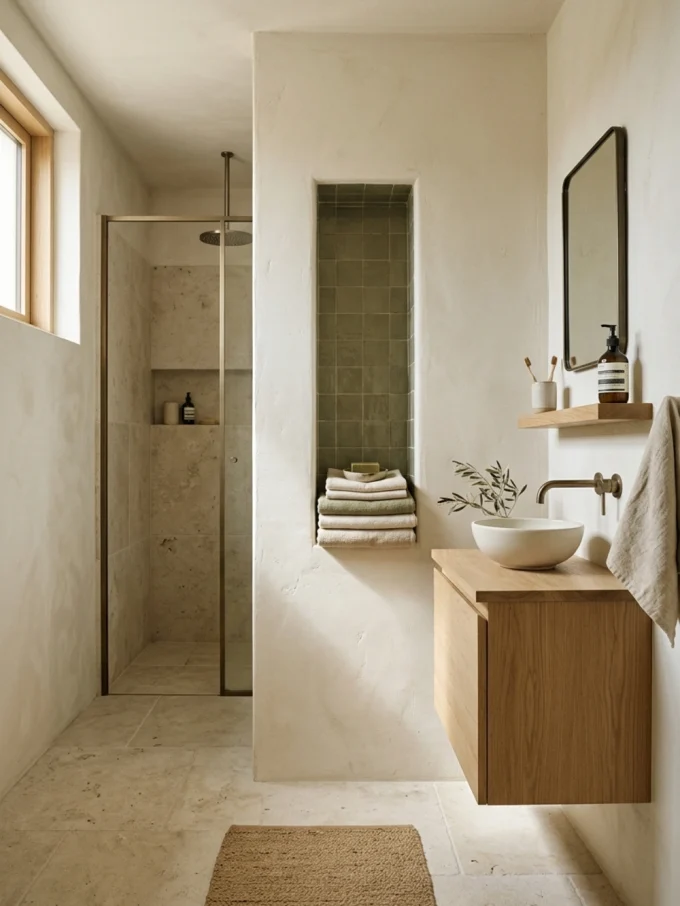
The most convincing earthy bathrooms often use fewer colors than expected.
Choose a base such as warm white, cream, beige, taupe, or soft clay. Then introduce one or two nature-inspired colors and let the materials create the rest of the variation.
For example:
Cream + oak + stone + muted olive
or
Warm beige + walnut + travertine + aged brass
or
Soft clay + warm white + oak + bronze
This prevents the bathroom from becoming a collection of unrelated “natural” objects.
The materials should look as though they belong together before the accessories are added.
How to Choose an Earthy Bathroom Color Palette
Start with the permanent elements first.
If you already have flooring, countertops, or tile, use those materials as the foundation rather than choosing paint independently.
Warm neutrals
Cream, sand, beige, taupe, mushroom, oatmeal, and warm greige create an easy base.
Earthy greens
Sage, olive, moss, and muted forest green bring the strongest connection to vegetation.
Clay tones
Terracotta, rust, muted cinnamon, and warm ochre add depth.
Natural browns
Oak, walnut, teak, and other wood tones can provide warmth without requiring brown paint.
The most successful combinations usually mix color temperature and texture, rather than relying on one “earthy” shade across the entire room. Current natural-bathroom guidance similarly emphasizes layering wood, stone, and soft neutrals instead of relying on decoration alone.
How to Make an Earthy Bathroom Feel Modern
An earthy bathroom can become overly rustic if every element references traditional or handmade design.
To keep it contemporary:
- Use cleaner cabinet profiles.
- Limit the number of decorative objects.
- Pair natural materials with simple fixtures.
- Use large-format stone-look tile where appropriate.
- Choose one dominant texture instead of several competing ones.
- Keep hardware consistent.
- Use lighting as part of the architecture rather than an afterthought.
You can also combine an earthy palette with contemporary details such as frameless shower glass, floating vanities, simple mirrors, or restrained black hardware.
The contrast is what makes the room feel current.
Common Earthy Bathroom Mistakes to Avoid
Using Beige Everywhere
A bathroom can be warm without being entirely beige.
Use texture, wood grain, stone variation, muted green, clay tones, or darker accents to create separation.
Adding Plants as a Substitute for Natural Materials
A few plants cannot make an otherwise cold bathroom feel organic.
Start with the larger elements—color, flooring, vanity, walls, and lighting—then use greenery as a finishing layer.
Choosing Wood Without Considering Moisture
Not every wood product is suitable for every bathroom location.
Use finishes and materials appropriate for humidity and direct water exposure, particularly around showers and tubs.
Mixing Too Many Earthy Colors
Terracotta, olive, mustard, brown, beige, rust, cream, and sage can all be earthy—but using them together without hierarchy can make the room feel muddy.
Choose a dominant color, a supporting color, and a small accent.
Making Everything Rustic
Stone and wood do not automatically require farmhouse or rustic styling.
Pair natural materials with contemporary fixtures if you want the room to feel cleaner and more current.
Forgetting Practical Maintenance
Natural-looking materials still have to survive daily bathroom use.
Think about:
- Water exposure
- Grout cleaning
- Stone sealing
- Splash zones
- Ventilation
- Moisture around wood
- Slip resistance
- Cleaning products
A beautiful material that is difficult to maintain may not be the best choice for your household.
For broader guidance, our home decor mistakes to avoid is also useful when reviewing the overall design before committing to changes.
Frequently Asked Questions
What colors make a bathroom look earthy?
Warm neutrals such as beige, cream, taupe, sand, and mushroom work well with muted greens, terracotta, clay, and natural brown tones. The best palette usually combines several related shades rather than relying on one color.
How can I make a bathroom feel earthy without remodeling?
Start with reversible elements such as towels, bath mats, storage baskets, mirrors, plants, accessories, and warmer lighting. A wood-toned vanity or earthy paint can make a larger difference if those changes are possible.
What materials are best for an earthy bathroom?
Wood, natural stone, stone-look porcelain, textured ceramic, clay-inspired finishes, woven materials, and warm metals are strong choices. The right material depends on where it will be used and how much moisture and maintenance it must handle.
Can an earthy bathroom look luxurious?
Yes. Combine natural materials with refined details such as carefully selected stone, a well-proportioned vanity, warm metal fixtures, layered lighting, and restrained styling. Luxury comes from the quality and relationship of the elements rather than simply adding expensive finishes.
Are earthy bathrooms only suitable for large spaces?
No. Small bathrooms can benefit from earthy colors and materials. In compact rooms, keep the palette controlled and use texture strategically so the space feels warm without becoming visually crowded.
Final Thoughts
The best earthy bathroom ideas do not depend on turning the room into a rustic retreat.
They work by making deliberate choices about color, material, texture, lighting, and proportion. Warm stone can soften a modern bathroom. Oak can make a white vanity wall feel less clinical. Sage can bring in a natural color without becoming overpowering. Terracotta can add warmth, while aged brass can give an otherwise simple space a more finished appearance.
Most importantly, choose the materials around how the bathroom is actually used. A family bathroom needs different priorities from a guest powder room, and a rental needs different solutions from a full renovation.
Start with the permanent elements, choose a restrained earthy palette, introduce natural texture, and then add decorative details only where they improve the room.
That approach creates an earthy bathroom that feels natural because of its materials and decisions, not because it has been filled with predictable nature-themed accessories.