
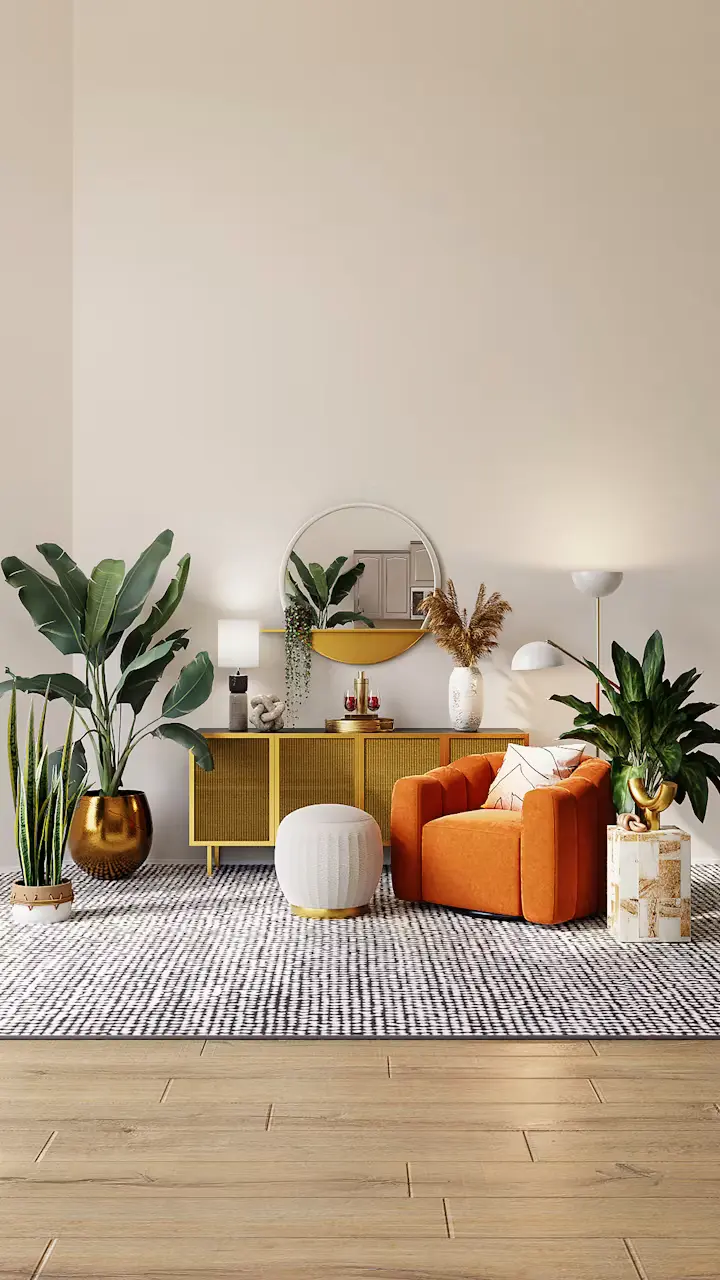
DIY floating shelves can turn an empty wall into useful storage or a design feature, but the best results come from more than attaching a wooden board and adding decorations. The right floating shelf depends on your room size, wall type, material choice, storage needs, and how you actually use the space.
Many floating shelf articles focus on only one side of the project. Some show beautiful rooms but do not explain how to recreate the look. Others provide building instructions but ignore whether the finished shelf will suit the home’s design. Successful floating shelves require both: a strong foundation and thoughtful interior planning.
This guide explores 18 DIY floating shelf ideas designed for real homes, from small apartments and rental spaces to kitchens, offices, bathrooms, and feature walls. Each idea focuses on why it works, where it fits best, and what to consider before building.
Before Building DIY Floating Shelves, Decide What They Need to Do
Before choosing wood, brackets, or a shelf style, decide the job your shelf needs to perform.
A shelf used only for displaying artwork has different requirements from one holding books, kitchenware, or everyday items.
Decorative Display Shelves
If your goal is visual improvement, focus on:
- proportion
- finish quality
- spacing
- relationship with surrounding furniture
A decorative shelf usually works better with fewer carefully chosen objects rather than being filled completely.
Storage Floating Shelves
If the shelf needs to hold useful items, consider:
- intended weight
- support method
- wall construction
- accessibility
DIY floating shelves often use concealed support systems such as cleats, rods, or hidden brackets to maintain the floating appearance.
Small-Space Floating Shelves
Floating shelves are especially valuable in compact homes because they use vertical space instead of taking floor area.
However, smaller rooms need better proportion. A shelf that is too deep or visually heavy can make a room feel crowded.
18 DIY Floating Shelf Ideas
1. Built-In Floating Shelves Around a TV Wall
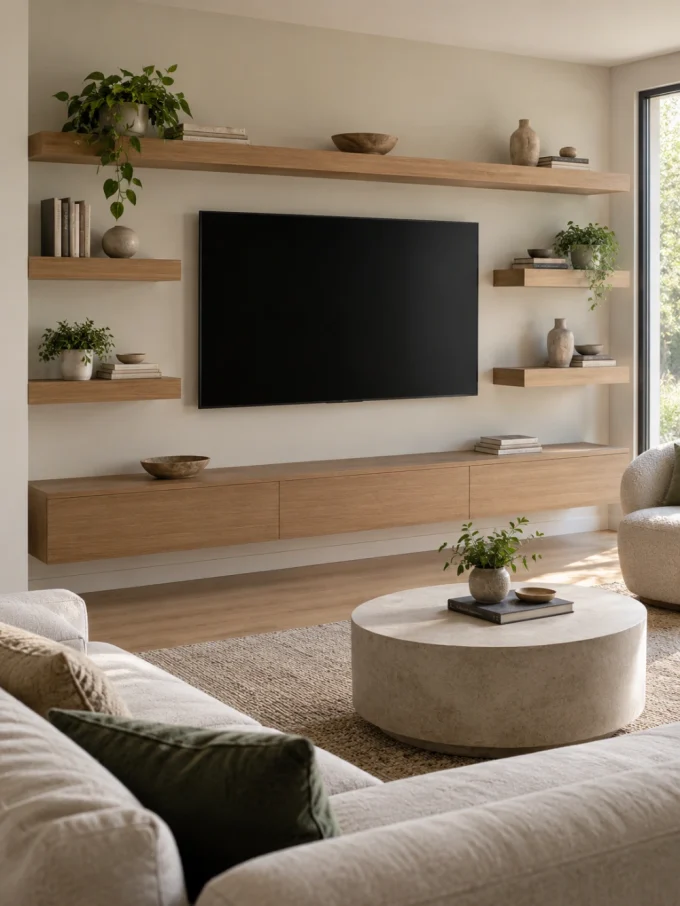
A TV wall is one of the strongest places to use floating shelves because the television often becomes the natural focal point of a living room.
Instead of treating shelves as separate decorations, design them as part of the entire wall composition.
Why This Idea Works
Floating shelves around a TV can create:
- visual balance
- display space
- architectural interest
- a built-in appearance
This approach is especially useful when you want the look of custom cabinetry without committing to a full media wall renovation.
Design Considerations
Before installing shelves around a TV, consider:
- shelf length compared with the television
- spacing between shelves
- cable management
- relationship with seating
A common mistake is using shelves that are too small compared with the TV, making the wall feel disconnected.
Best For
- modern living rooms
- minimalist interiors
- apartments
- feature walls
Related guide: Beautiful TV Wall Ideas
2. Thick Wood Floating Shelves for a Warm Interior
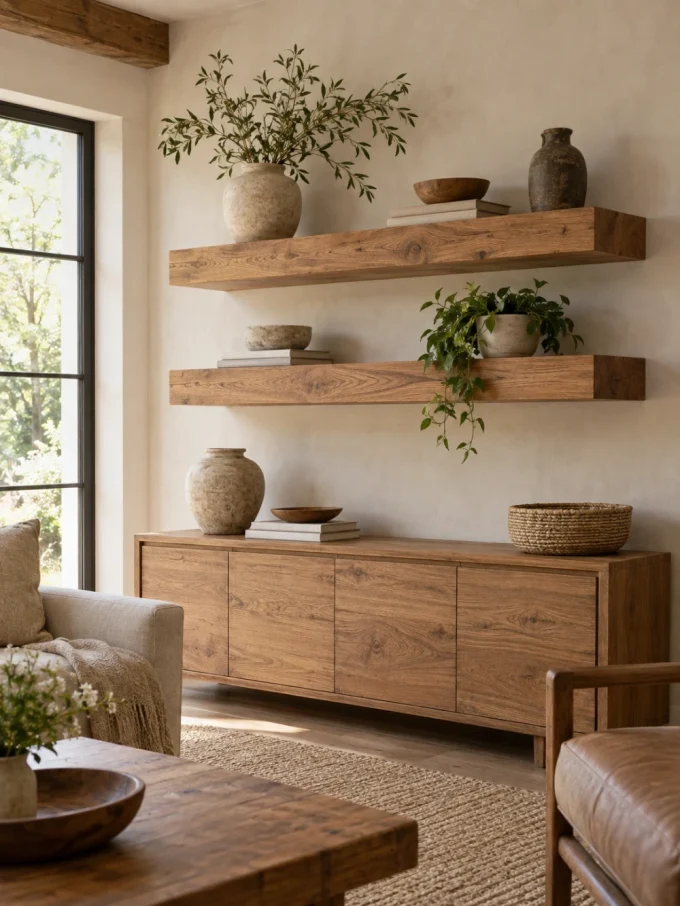
Thick wooden floating shelves create more visual weight than slim minimalist shelves and can make a room feel warmer and more custom.
They work especially well when a space needs natural texture.
Why This Idea Works
Natural wood adds:
- warmth
- character
- visible grain
- handcrafted feeling
A thick shelf can function almost like a piece of furniture attached to the wall.
Design Considerations
Chunky wood shelves work best when balanced with:
- larger furniture
- neutral walls
- natural materials
- simple styling
Avoid oversized shelves in small rooms because they can dominate the space.
Best For
- rustic interiors
- organic modern homes
- farmhouse-inspired rooms
- warm minimalist spaces
3. Minimal Floating Shelves for Small Apartments
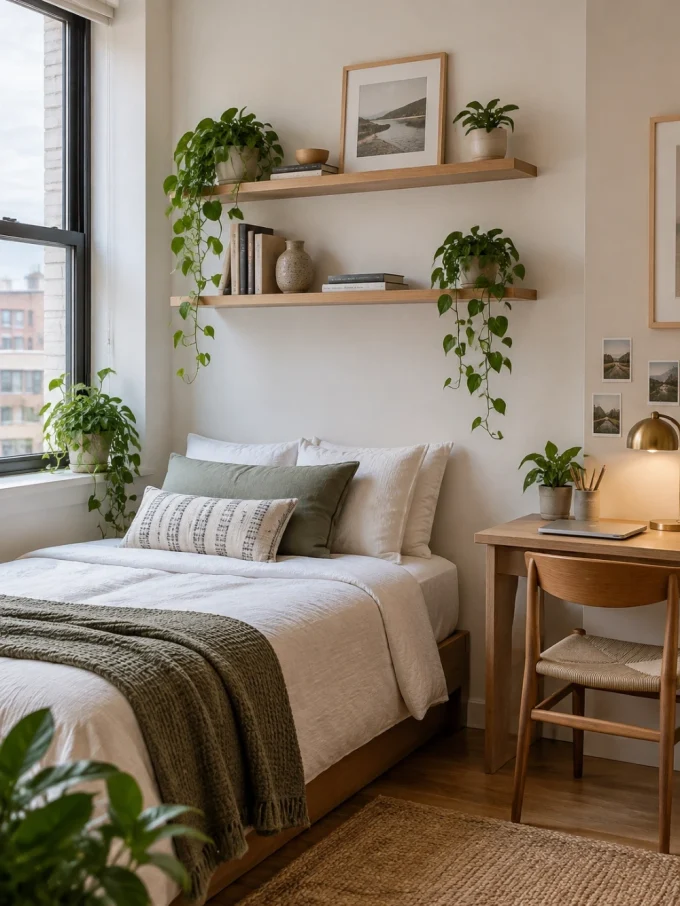
Floating shelves are one of the most effective storage solutions for small homes because they add function without taking away valuable floor space.
However, small rooms require more planning than simply installing more shelves. The goal is not to maximize storage at any cost; it is to create useful space while keeping the room visually open.
Why This Idea Works
In apartments and compact homes, traditional cabinets or bulky furniture can make rooms feel smaller.
Floating shelves help by adding:
- vertical storage
- display space
- organization without floor clutter
- personality to blank walls
They work especially well in:
- studio apartments
- small bedrooms
- narrow living rooms
- compact workspaces
Design Considerations
Choose a lighter visual profile: Slimmer shelves often work better than very deep, heavy shelves because they maintain a sense of openness.
Avoid filling every inch: A shelf overloaded with objects can create the same clutter problem as oversized furniture.
Match the wall when needed: A shelf painted close to the wall color can feel more integrated, while contrasting wood can become a stronger feature.
Styling Approach
A small-space floating shelf works best with controlled styling:
- one taller object
- one textured piece
- a few books
- some empty space
The empty areas are important because they prevent the shelf from becoming visually heavy.
Best For
- renters
- studio apartments
- small bedrooms
- minimalist interiors
Related guide: Studio Apartment Decor Ideas
4. Kitchen Floating Shelves Instead of Upper Cabinets
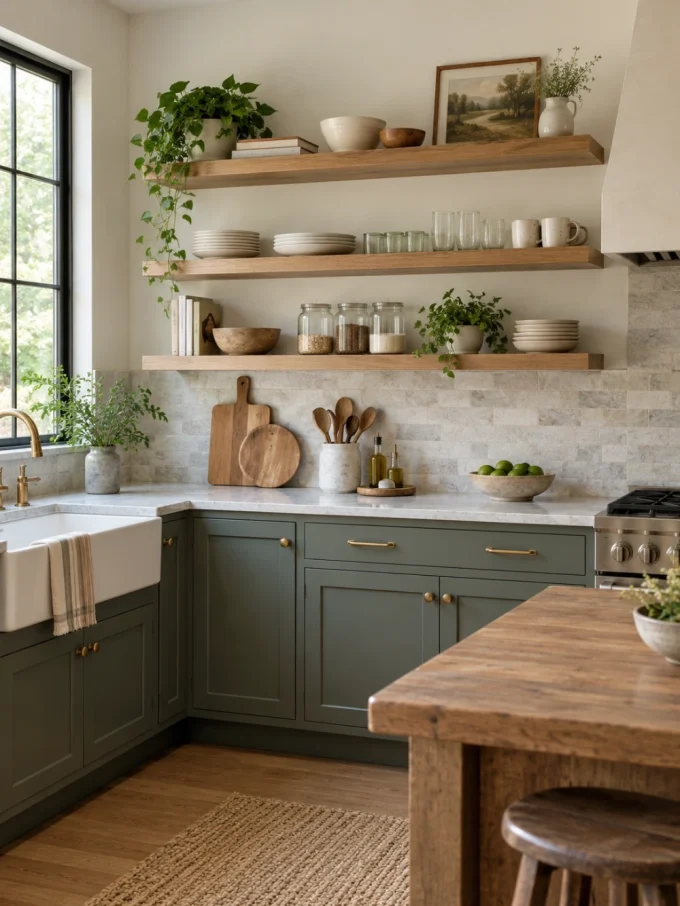
Kitchen floating shelves are popular because they create a more open and relaxed appearance than traditional upper cabinets.
But this idea is not only about appearance. It changes how you store and maintain everyday items.
Why This Idea Works
Replacing some upper cabinets with floating shelves can make a kitchen feel:
- brighter
- less enclosed
- more personalized
- easier to style
They are especially useful when you want frequently used items within reach.
What Works Well on Kitchen Shelves
Good choices include:
- everyday plates
- matching glasses
- bowls
- cookbooks
- attractive containers
- small plants
The strongest designs usually combine practical items with a few decorative pieces.
Real-Home Considerations
Are you comfortable seeing everything?
Unlike closed cabinets, shelves display your organization habits.
Are you willing to maintain them?
Kitchen shelves may collect:
- dust
- cooking residue
- moisture
Items may require more frequent cleaning.
Does your kitchen actually need open storage?
A beautiful shelf system is not always better if you need hidden storage for many items.
Best For
- open kitchens
- minimalist kitchens
- homes with attractive dishware
- homeowners who prefer accessible storage
Related guide: Open Kitchen Design Ideas
5. Reclaimed Wood Floating Shelves for Character and Texture
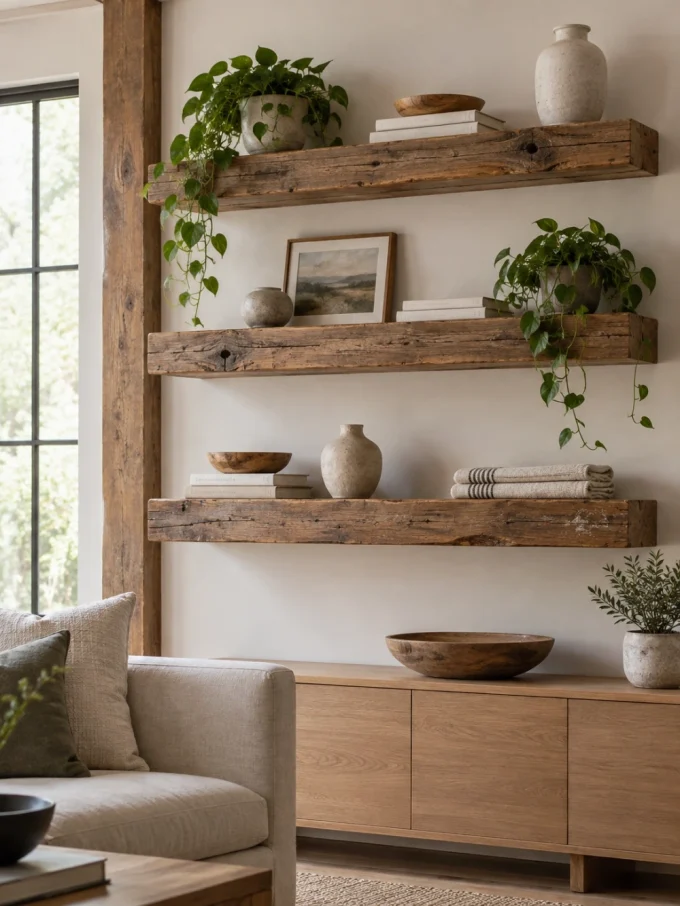
Reclaimed wood floating shelves add warmth and personality because the material itself becomes part of the design.
The appeal comes from natural variation, not simply using old wood.
Why This Idea Works
Reclaimed wood introduces:
- unique grain patterns
- natural imperfections
- rustic character
- handmade appearance
It can prevent modern spaces from feeling too clean or flat.
Design Considerations
The surrounding room determines whether reclaimed wood feels intentional.
It works well with:
- neutral walls
- modern furniture
- natural fabrics
- simple lighting
A common mistake is combining too many rustic elements, which can make the room feel themed instead of designed.
Material Preparation Matters
Before using reclaimed wood, consider:
- surface condition
- finishing requirements
- where it will be installed
A material that works well in a dry living room may require additional consideration in humid areas.
Best For
- rustic interiors
- farmhouse-inspired homes
- organic modern spaces
- homes needing natural texture
Related guide: Gorgeous Upcycled Furniture Ideas
6. Hidden Bracket Floating Shelves for a Clean Modern Look
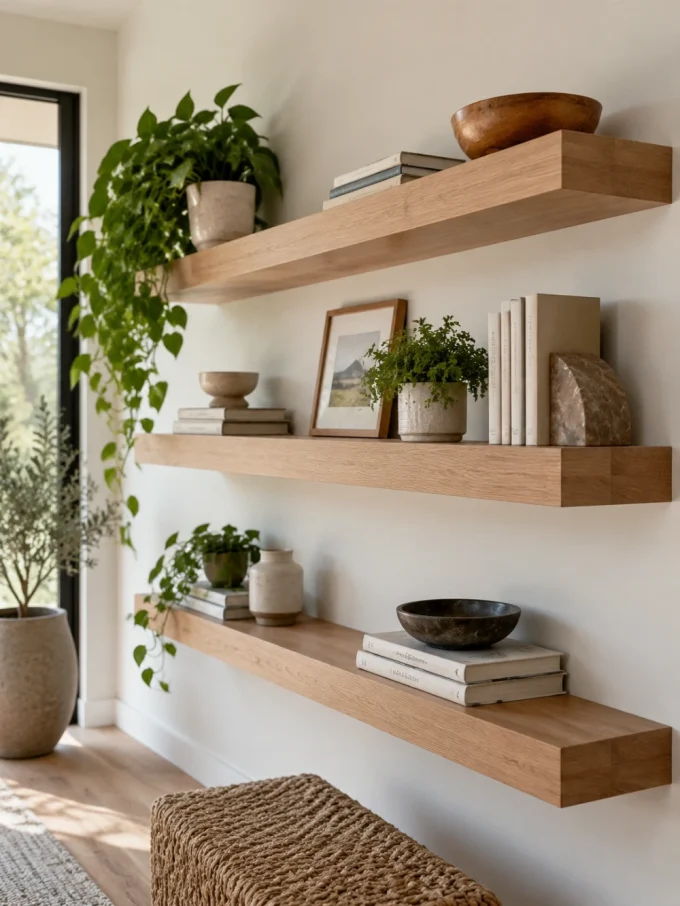
The defining feature of floating shelves is the absence of visible support. Hidden bracket systems create that clean, uninterrupted appearance.
Why This Idea Works
Hidden support creates:
- cleaner lines
- minimalist appearance
- a built-in feeling
- less visual distraction
This makes the style popular in modern and contemporary interiors.
How Floating Shelves Actually Stay Up
A floating shelf usually depends on a concealed support system such as:
- a wall cleat
- hidden bracket
- internal rods
The visible shelf is only part of the system; the support behind it determines whether the design is appropriate for the intended use.
Design Considerations
Before choosing this style, consider:
- shelf size
- wall construction
- intended weight
- installation method
A small decorative shelf and a shelf holding books should not be planned the same way.
Best For
- modern interiors
- minimalist rooms
- feature walls
- clean architectural designs
7. Floating Coffee Station Shelves for a Functional Corner
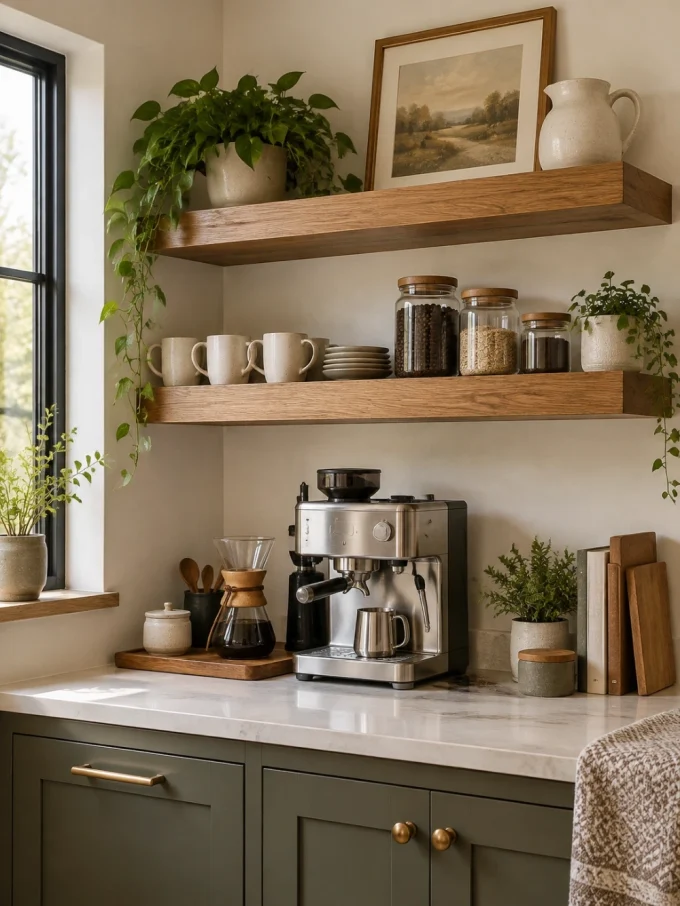
A coffee station is one of the easiest places to use DIY floating shelves because it combines everyday function with decorative styling.
Instead of adding another cabinet or bulky storage unit, floating shelves can transform an unused kitchen corner or wall into a dedicated beverage area.
Why This Idea Works
Coffee stations naturally need vertical organization.
Floating shelves can hold:
- mugs
- coffee jars
- tea containers
- small accessories
- decorative pieces
This creates a dedicated zone where everything feels intentional rather than scattered across the countertop.
Design Considerations
The best coffee shelves support your daily routine.
Keep frequently used items:
- easy to reach
- grouped together
- simple to clean
Avoid turning the shelf into a purely decorative display that reduces practical workspace.
Styling Approach
Functional Items
- matching mugs
- coffee containers
- trays
Decorative Elements
- small plant
- artwork
- ceramic pieces
Visual Space
Leave some empty areas so the shelf does not feel crowded.
Best For
- small kitchens
- breakfast corners
- apartments
- home coffee lovers
Related guide: Coffee Station Ideas
8. Bathroom Floating Shelves for Smart Storage
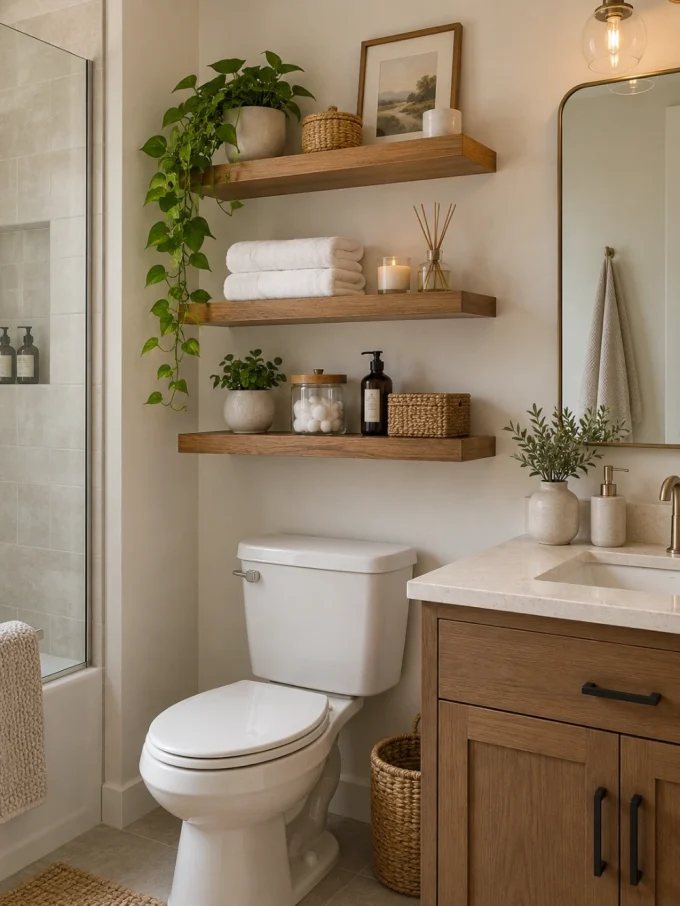
Bathroom floating shelves can solve storage problems while adding warmth to spaces that often feel cold or purely functional.
However, bathrooms require more careful material and placement decisions because moisture changes how materials perform.
Why This Idea Works
Bathrooms often have limited storage, especially in smaller homes.
Floating shelves can provide space for:
- towels
- toiletries
- candles
- plants
- decorative containers
They can also make an empty bathroom wall feel more complete.
Real-Home Considerations
Moisture Exposure
Materials and finishes should be suitable for the environment.
Cleaning
Open shelves require regular maintenance because bathrooms collect:
- dust
- moisture
- product residue
Placement
Avoid installing shelves where they interfere with:
- movement
- shower access
- cleaning areas
Best Locations
Good placements include:
- above the toilet
- beside the vanity
- on empty walls away from direct water exposure
Best For
- small bathrooms
- minimalist bathrooms
- spa-inspired spaces
- homes needing extra storage
Related guide: Serene Japandi Bathroom Ideas
9. Entryway Floating Shelves for Narrow Spaces
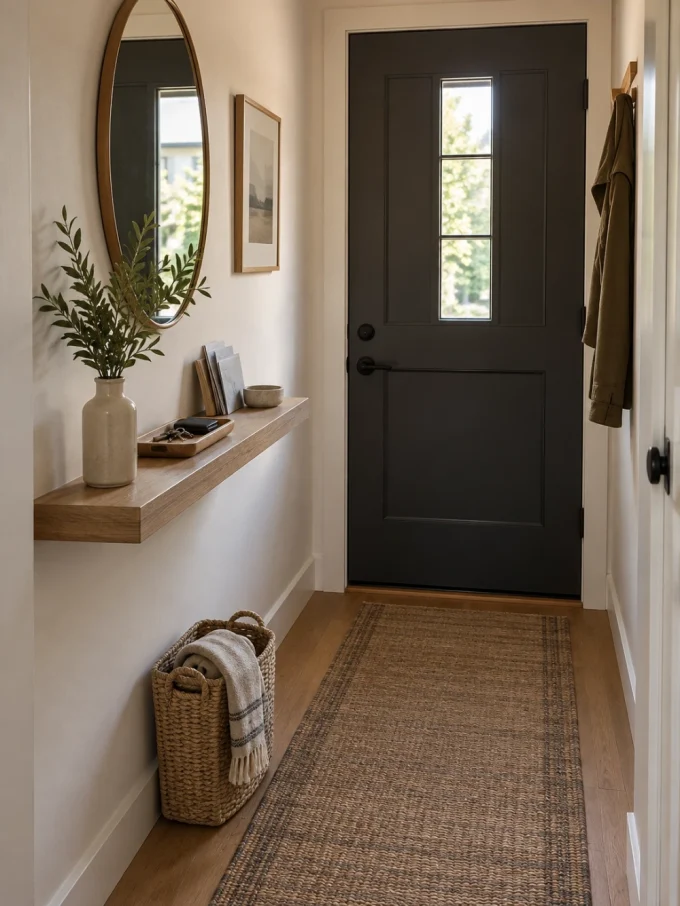
Many entryways are too small for traditional console tables. Floating shelves provide a lighter alternative while still creating a useful arrival zone.
Why This Idea Works
A well-designed entryway shelf gives everyday items a dedicated place:
- keys
- wallet
- small accessories
- decorative objects
It helps prevent the entrance from becoming a random drop zone.
Design Considerations
The biggest mistake in an entryway is ignoring circulation.
Before installing, consider:
- door movement
- walking clearance
- shelf height
- nearby furniture
A shelf should improve the entrance, not make it feel tighter.
Styling Approach
A practical entry shelf can include:
- a small tray for keys
- artwork above
- a mirror nearby
- a basket underneath if space allows
The goal is a simple transition zone between outside and inside.
Best For
- apartments
- narrow hallways
- small homes
- minimalist entrances
Related guide: 15 Stunning Entryway Console Table Ideas That Fit Any Home
10. Floating Bookshelves With Hidden Support
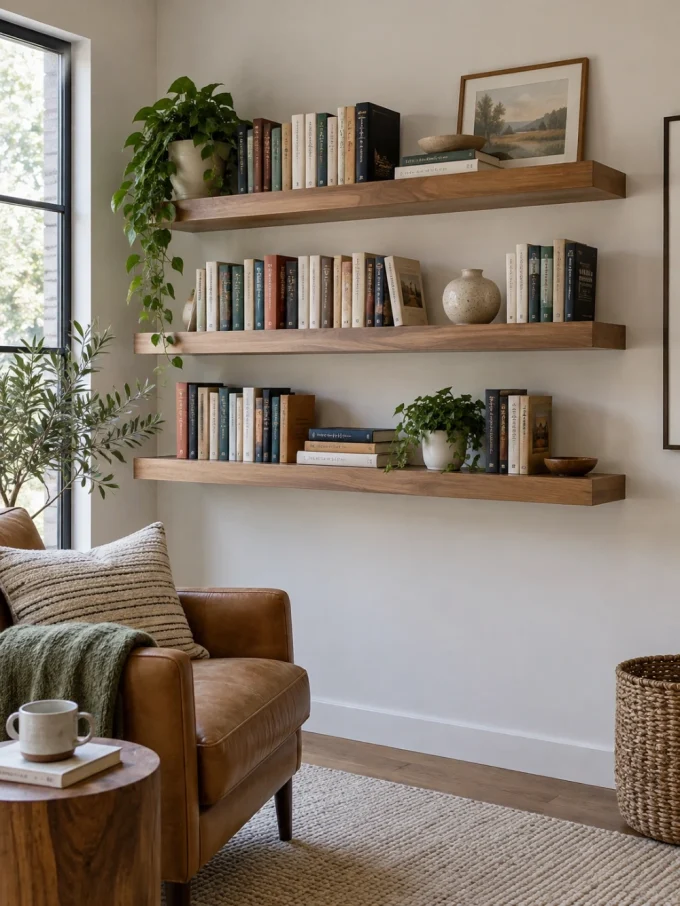
Floating bookshelves create a clean, modern way to display books, but they require more planning than decorative shelves.
Books are heavier than many styling objects, so support and structure become more important.
Why This Idea Works
Books naturally add:
- color
- texture
- personality
- visual depth
A floating bookshelf can become both storage and a design feature.
Design Considerations
Before creating a floating bookshelf, consider:
- shelf length
- wall construction
- support system
- number of books
- accessibility
A shelf designed for a few decorative books is different from one intended for a personal library.
Styling Approach
Avoid filling every shelf completely.
A stronger arrangement combines:
- vertical books
- horizontal stacks
- artwork
- small objects
- empty areas
This creates a more balanced and intentional display.
Best For
- home offices
- reading corners
- living rooms
- creative spaces
Related guide: 15 Stunning Office Interior Design Ideas
11. DIY Corner Floating Shelves for Awkward Spaces
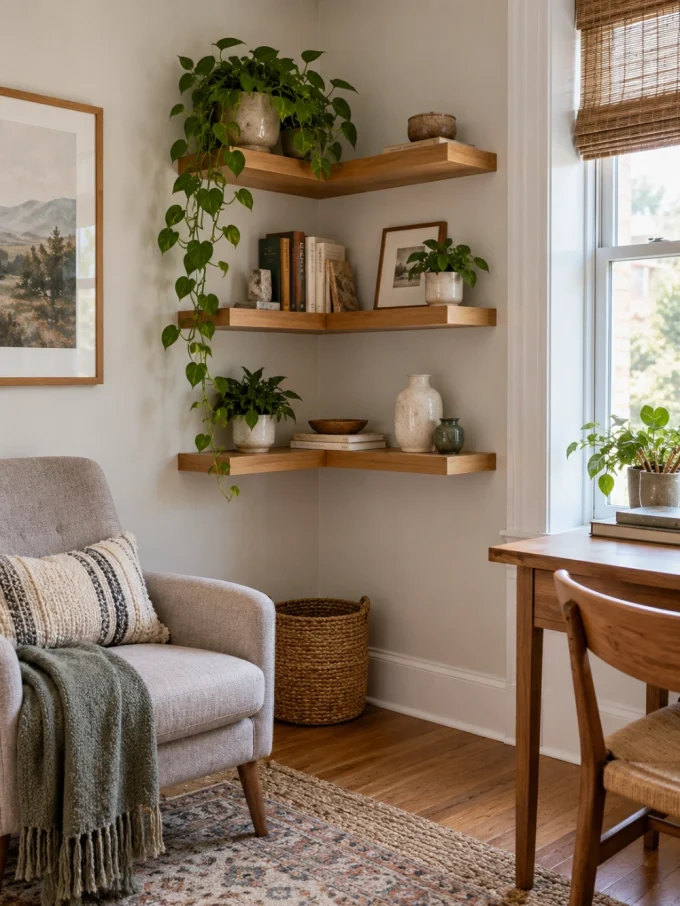
Corners are often wasted areas in a home, but DIY corner floating shelves can transform these overlooked spaces into useful storage or decorative features.
Instead of treating corners as leftover space, they can become intentional parts of the room design.
Why This Idea Works
Corner shelves are valuable because they:
- use unused wall space
- add storage without taking floor area
- create visual interest in empty corners
They work especially well in:
- small bathrooms
- kitchens
- reading areas
- compact offices
Design Considerations
Corner shelves require careful proportion.
A shelf that extends too far can make a corner feel crowded, while a shelf that is too small may appear accidental.
Consider:
- nearby furniture placement
- walking paths
- shelf depth
- wall color contrast
The goal is to make the corner feel designed, not simply filled.
Styling Approach
Corner shelves work well with:
- trailing plants
- small artwork
- ceramics
- books
- collected objects
Because corners naturally attract attention, avoid overcrowding them.
Best For
- small homes
- apartments
- unused corners
- rooms needing additional storage
12. LED Floating Shelves for a Modern Feature Wall
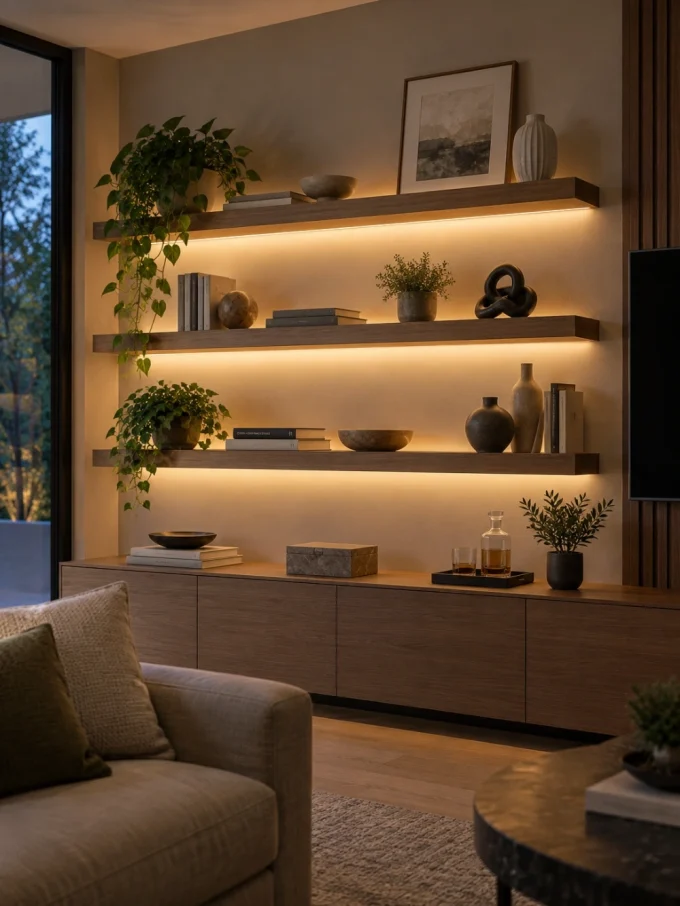
Adding lighting underneath floating shelves can turn a simple storage solution into an architectural feature.
However, lighting should enhance the shelf rather than become the main attraction.
Why This Idea Works
Integrated lighting can add:
- depth
- warmth
- evening atmosphere
- focus on displayed objects
It is especially effective in modern interiors where subtle lighting is part of the overall design.
Design Considerations
Plan the lighting before building the shelves.
Consider:
- cable access
- power location
- light temperature
- placement of the LED strip
A common mistake is adding overly bright lighting that creates glare instead of highlighting the shelf.
Best Applications
LED floating shelves work well for:
- TV walls
- display areas
- home bars
- bedrooms
- offices
Related guide: Wall Sconce Light Fixtures Ideas
13. Floor-to-Ceiling Floating Shelf Wall
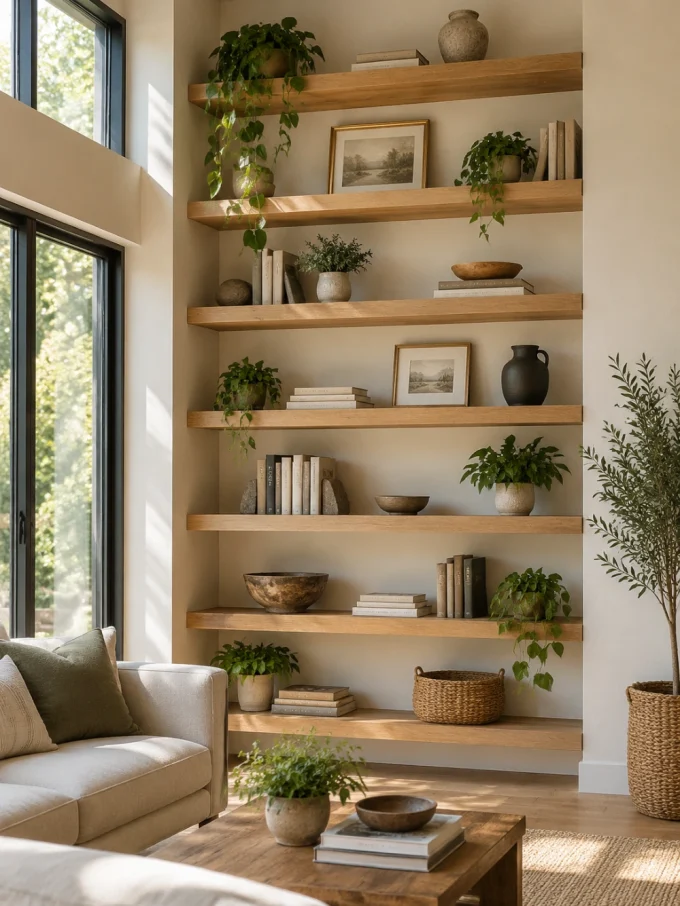
A full-height floating shelf wall creates the visual impact of custom built-ins while maintaining a lighter and more open appearance.
This approach works best when you need both storage and a strong design feature.
Why This Idea Works
Using vertical wall space allows you to create:
- book storage
- display areas
- architectural structure
- a focal point
Instead of adding several separate shelves around the room, one coordinated wall can create a stronger visual connection.
Design Considerations
Large shelf walls need more planning than individual shelves.
Shelf Rhythm
Avoid making every shelf identical.
A mix of:
- open areas
- different object heights
- varied arrangements
creates a more natural look.
Visual Weight
A full wall of shelving can become overwhelming if every section is filled.
Empty space is important.
Best For
- large living rooms
- home libraries
- dining areas
- open-plan spaces
14. Floating Shelves Above a Desk for a Functional Workspace
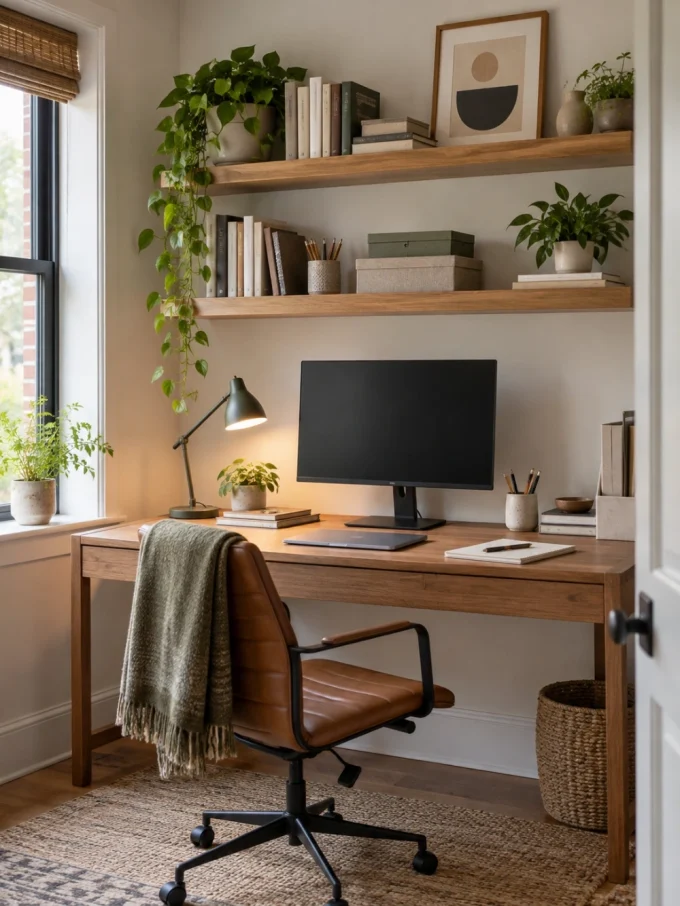
Floating shelves above a desk combine organization and decoration, making them useful for home offices and small work areas.
They provide storage without taking away valuable floor space.
Why This Idea Works
A desk area often needs:
- books
- stationery storage
- reference materials
- decorative elements
Floating shelves keep these items accessible while maintaining a cleaner workspace.
Design Considerations
The shelf placement should support comfortable working.
Consider:
- monitor height
- lighting
- eye level
- frequently used items
A shelf placed incorrectly can make the workspace feel cramped or distracting.
Styling Approach
A productive workspace usually benefits from a calmer arrangement.
Use:
- organized books
- small plants
- simple artwork
- storage containers
Avoid excessive decoration that reduces focus.
Best For
- home offices
- study corners
- creative workspaces
- small apartments
Related guide: 15 Stunning Office Interior Design Ideas
15. Japandi Floating Shelves for a Calm Minimalist Home
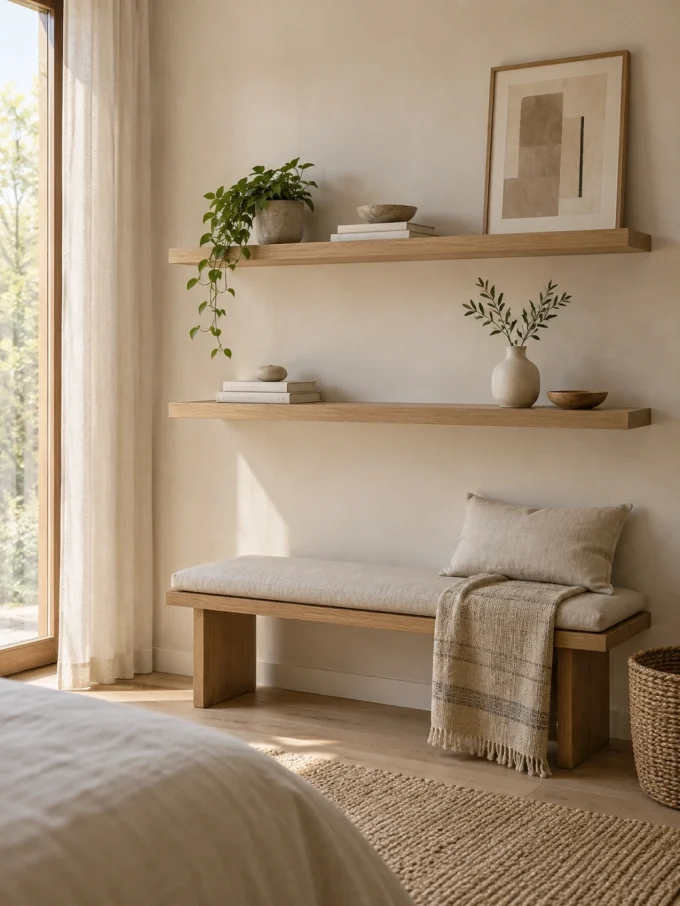
Japandi floating shelves focus on simplicity, natural materials, and intentional styling.
Instead of filling shelves with many objects, this approach uses fewer pieces with stronger visual purpose.
The goal is not maximum display. It is creating a calm wall feature that supports the overall feeling of the room.
Why This Idea Works
Japandi design combines:
- natural wood tones
- simple shapes
- handmade objects
- soft textures
- visual balance
Floating shelves fit this style because they provide display space without adding bulky furniture.
Design Considerations
Choose materials and objects that create a relaxed atmosphere.
Good choices:
- light or medium wood finishes
- ceramic pieces
- linen textures
- natural fibers
- neutral artwork
Avoid mixing too many styles or colors because it can remove the calm, minimal feeling.
Styling Approach
A balanced Japandi floating shelf may include:
- one ceramic vase
- a small plant
- stacked books
- handmade objects
- intentional empty space
The empty areas are part of the design.
Best For
- bedrooms
- living rooms
- reading corners
- minimalist homes
Related guide: Cozy Japandi Bedroom Ideas
16. Rental-Friendly Floating Shelves Without Major Wall Changes
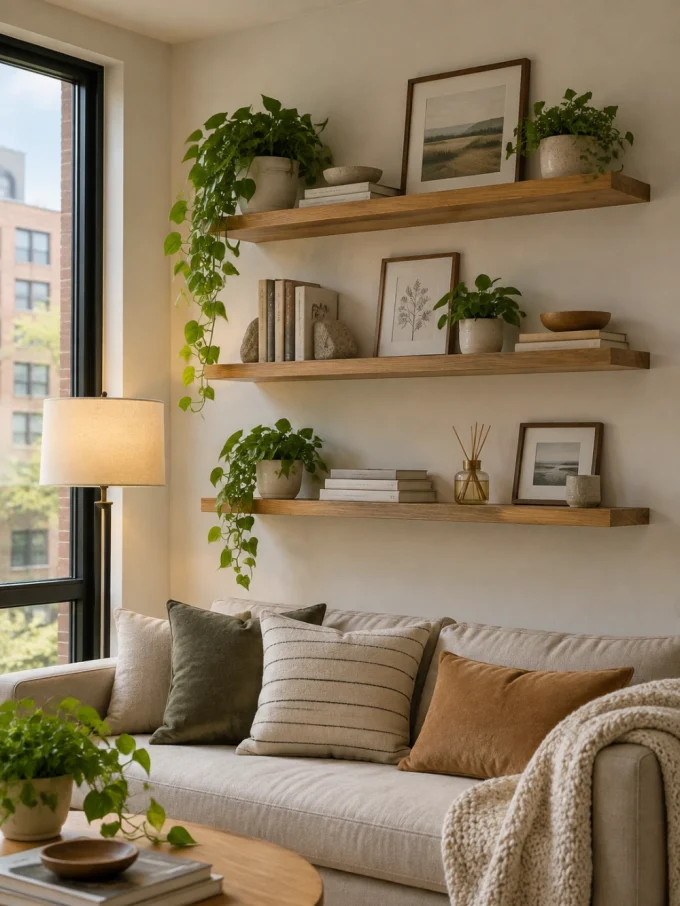
Renters often want the look of floating shelves but need solutions that respect temporary living situations.
The challenge is finding the right balance between personalization and reversibility.
Why This Idea Works
Floating shelves can improve rental homes by adding:
- vertical storage
- personality
- organization
- wall decoration
without requiring a complete renovation.
Design Considerations
Before installing shelves in a rental property, consider:
- lease restrictions
- wall condition
- removal process
- shelf weight
Not every floating shelf system is suitable for every rental situation.
Better Rental Applications
Use floating shelves for:
- lightweight décor
- artwork
- small plants
- decorative storage
Avoid creating a heavy storage system unless the installation method is appropriate and permitted.
Best For
- apartments
- temporary homes
- renters
- small spaces
Related guide: Rental Apartment Decorating Ideas
17. Black Floating Shelves for Modern Contrast
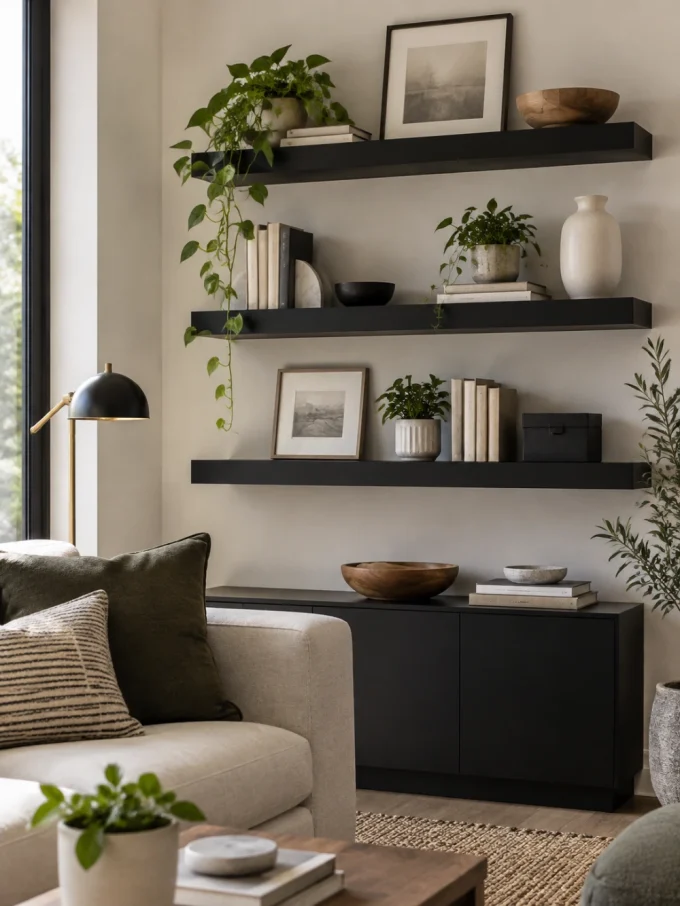
Black floating shelves create a strong visual statement and can make a simple wall feel more architectural.
However, darker shelves require more careful styling because they naturally attract attention.
Why This Idea Works
Black shelves can add:
- contrast
- sophistication
- modern character
- gallery-style appearance
They work especially well against lighter walls where the shelf becomes a defined feature.
Design Considerations
Black shelves work best when:
- the wall provides enough contrast
- surrounding furniture supports the darker tone
- decorative objects are controlled
A common mistake is combining too many dark elements, which can make the room feel visually heavy.
Styling Approach
Good combinations include:
- white ceramics
- green plants
- warm wood objects
- neutral artwork
The contrast allows lighter objects to stand out.
Best For
- contemporary interiors
- modern offices
- minimalist rooms
- feature walls
18. Budget DIY Floating Shelves Using Affordable Materials
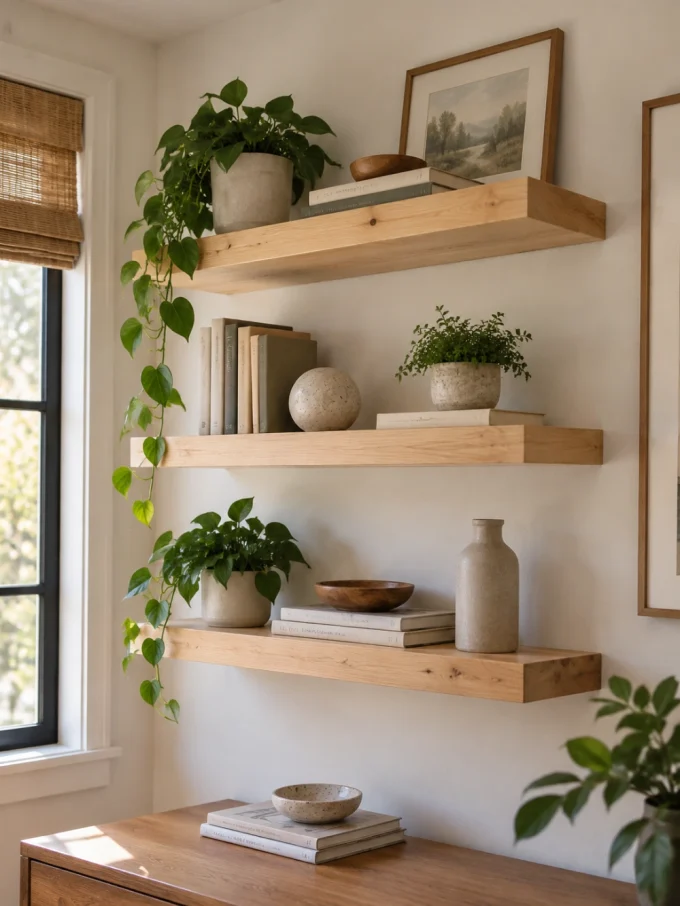
A beautiful floating shelf does not always require expensive materials.
The final appearance often depends more on proportions, finishing, and installation quality. A simple shelf with a refined finish can look more custom than an expensive shelf with poor design choices.
Why This Idea Works
Budget materials allow homeowners to customize:
- shelf size
- color
- finish
- placement
Common options include:
- pine boards
- plywood
- painted MDF
- laminated boards
Design Considerations
Spend effort where people notice the difference.
Edge Finishing
Clean edges make affordable materials appear more refined.
Surface Finish
A smooth, well-finished surface improves the overall appearance.
Correct Scale
A correctly sized simple shelf usually looks better than an oversized complicated design.
Best For
- first DIY projects
- affordable makeovers
- temporary homes
- homeowners testing a design idea
Floating Shelf Materials Compared: Choosing the Right Option
The material you choose affects the shelf’s:
- appearance
- cost
- maintenance
- durability expectations
- suitability for different rooms
There is no single “best” material for every floating shelf project.
| Material | Appearance | Best For | Consider Before Choosing |
|---|---|---|---|
| Solid Wood | Natural grain, premium feel | Statement shelves, living rooms, bedrooms | Higher cost and heavier construction |
| Plywood | Flexible and customizable | DIY projects and modern designs | Requires quality edge finishing |
| MDF | Smooth painted surface | Contemporary painted shelves | Less suitable for moisture-prone areas |
| Reclaimed Wood | Unique texture and character | Rustic and organic interiors | Needs preparation and finishing |
Solid Wood Floating Shelves
Best when the goal is:
- natural beauty
- visible grain
- long-lasting appearance
They work especially well when the shelf itself is meant to become a design feature.
Plywood Floating Shelves
Plywood is popular for DIY projects because it offers flexibility and can be customized.
It works well when:
- building custom dimensions
- creating modern designs
- applying a painted finish
MDF Floating Shelves
MDF provides a smooth surface, making it useful for painted shelves where the material itself is not meant to be visible.
However, room conditions should always be considered before choosing materials.
Reclaimed Wood Floating Shelves
Reclaimed wood provides character that new materials cannot easily copy.
The key is preparation and balance. The material should add personality without making the entire room feel themed.
How to Make DIY Floating Shelves Look Expensive
A floating shelf does not look premium because it uses expensive materials alone. The difference usually comes from proportion, finishing, placement, and styling decisions.
A simple DIY shelf can look custom when it feels connected to the room instead of appearing like an object randomly attached to the wall.
1. Choose the Right Shelf Proportion
One of the biggest differences between an expensive-looking shelf and an average DIY shelf is scale.
A shelf should relate to:
- wall size
- furniture below it
- ceiling height
- objects displayed on it
Too Small: A shelf that is too short for a large wall can look accidental. For example, a large empty wall above a sofa with tiny shelves may make the room feel unfinished.
Too Large: A very deep shelf in a narrow room can make the space feel crowded. The shelf should support the room, not compete with it.
2. Invest in the Finish Quality
Even affordable materials can look refined when the finishing is done carefully.
Important details include:
Smooth Edges: Rough edges immediately make a DIY project feel unfinished.
Consistent Surface: A clean stain, paint finish, or properly treated wood surface creates a more intentional appearance.
Matching Existing Materials: A shelf looks more integrated when it connects with:
- flooring tones
- furniture finishes
- wall colors
- nearby decorative elements
3. Use Styling Principles Instead of Filling Space
A common mistake is treating floating shelves like storage containers.
High-quality shelf styling usually uses:
Height Variation: Combine tall, medium, and smaller objects to create movement.
Texture Variation: Mix wood, ceramic, glass, plants, and textiles. Different textures prevent the shelf from looking flat.
Negative Space: Empty areas are important. A shelf filled from one end to the other often looks cluttered instead of curated.
4. Connect Shelves With the Room Design
The best floating shelves feel like they belong there.
Living Room
Connect shelves with:
- artwork
- sofa color
- lighting
- coffee table styling
Related guide: Coffee Table Styling Ideas
Bedroom
Connect shelves with:
- bedding colors
- bedside lighting
- wall finishes
Modern Spaces
Use:
- clean lines
- fewer objects
- consistent materials
5. Use Lighting Carefully
Lighting can make floating shelves feel more architectural.
Good lighting:
- highlights objects
- creates depth
- adds warmth
Poor lighting:
- creates glare
- becomes distracting
- makes the shelf feel artificial
Lighting should support the shelf design, not replace it.
Floating Shelf Mistakes That Make DIY Projects Look Cheap
Understanding what goes wrong is often more useful than copying successful examples.
Mistake 1: Choosing Style Before Function
A shelf may look beautiful online but fail in your home.
Before choosing a design, ask:
- What will I place here?
- How often will I use it?
- How much maintenance is acceptable?
- Is this decorative or functional?
A kitchen shelf and a bedroom display shelf should not be planned the same way.
Mistake 2: Ignoring Wall and Installation Conditions
The floating appearance depends on the hidden support system.
Important considerations:
- wall construction
- shelf size
- intended use
- installation method
A decorative shelf and a shelf holding heavy items require different planning.
Mistake 3: Incorrect Shelf Height
Shelf placement affects how comfortable and balanced the room feels.
Common problems include:
- shelves too close to furniture
- shelves too high to use
- uneven spacing between multiple shelves
The correct placement depends on the room, furniture, and purpose.
Mistake 4: Overcrowding the Shelves
More objects do not automatically create better design.
Overfilled shelves can make a room feel:
- busy
- smaller
- less organized
A better approach is to choose fewer items with more visual impact.
Mistake 5: Copying Inspiration Photos Without Adapting Them
A Pinterest image may show:
- larger rooms
- different ceiling heights
- professional styling
- hidden construction details
The same arrangement may not work in your home.
Always adjust for:
- room size
- lighting
- furniture placement
- lifestyle needs
Mistake 6: Choosing Materials Only by Appearance
A material should match the environment.
Kitchen
Need:
- easier cleaning
- suitable finish
Bathroom
Need:
- moisture awareness
Living Room
Can prioritize:
- appearance
- texture
- character
The most beautiful material is not always the most practical choice.
Are DIY Floating Shelves Worth Making?
DIY floating shelves can be a valuable home improvement when they solve a real problem: adding storage, improving organization, or creating a custom-looking design feature without the cost of built-in cabinetry.
However, the decision should depend on your goals, skills, available time, and the role the shelf needs to play in your home.
1. Complete Design Control
One of the biggest benefits of DIY shelves is customization.
You can choose:
- exact dimensions
- material
- finish
- color
- placement
This is especially useful when standard shelves do not fit your wall, furniture layout, or design style.
2. Better Use of Difficult Spaces
DIY allows you to create solutions for areas that are difficult to furnish with ready-made products.
Examples:
- narrow walls
- empty corners
- small apartments
- unusual layouts
A custom shelf can fit the exact space instead of forcing the room to adapt to standard furniture.
3. Potential Cost Savings
DIY shelves can cost less than custom storage solutions, especially for simple designs.
However, the real cost includes:
- materials
- tools
- finishing supplies
- time
- installation effort
A budget project can become expensive if mistakes require rebuilding.
When DIY Floating Shelves May Not Be the Best Choice
DIY is not always the right solution.
Consider professional help when:
- shelves need to support very heavy loads
- installation involves complicated wall conditions
- the project requires built-in cabinetry
- electrical or structural changes are involved
The goal is not simply to build something yourself. The goal is to create a shelf solution that works safely and fits your home.
Frequently Asked Questions About DIY Floating Shelves
1. Are DIY floating shelves strong enough for books and heavy items?
DIY floating shelves can support different levels of weight depending on the shelf design, support system, wall construction, and installation method.
A shelf intended for decorative objects should not automatically be used for heavy books or storage items.
Before placing heavy objects, consider:
- how the shelf is supported
- what type of wall it is installed on
- the shelf size
- the intended use
Planning the support system before building is more important than choosing a design based only on appearance.
2. What wood is best for DIY floating shelves?
The best material depends on the look you want, your budget, and where the shelf will be installed.
Solid Wood
Best for:
- natural grain
- premium appearance
- statement shelves
Plywood
Best for:
- flexible DIY projects
- custom sizes
- modern designs
MDF
Best for:
- smooth painted finishes
- contemporary interiors
Reclaimed Wood
Best for:
- rustic character
- organic interiors
The right material is the one that matches your room and intended use.
3. How deep should DIY floating shelves be?
There is no single shelf depth that works for every situation.
The right depth depends on:
- what items you will store
- available wall space
- room circulation
- visual balance
A decorative shelf for artwork requires different planning from a kitchen shelf or bookshelf.
Choose dimensions based on the purpose of the shelf, not only on inspiration images.
4. Can floating shelves work in rental homes?
Floating shelves can work in rental homes when the installation method matches the rental conditions and the amount of permanence allowed.
Before installing, consider:
- lease requirements
- wall repairs
- shelf weight
- removal process
For renters, lightweight displays and flexible solutions are often more practical than heavy storage installations.
Related guide: Rental Apartment Decorating Ideas
5. How do you style floating shelves without making them cluttered?
The easiest way to create a balanced floating shelf is to treat it like a designed composition rather than a storage surface.
Use:
- different heights
- mixed textures
- repeated colors
- intentional empty space
A successful shelf usually combines practical items with decorative pieces instead of filling every available area.
Final Thoughts
DIY floating shelves can do much more than fill an empty wall. When you choose the right material, support system, proportions, placement, and styling approach, they can provide useful storage while making a room feel more intentional and custom.
The best DIY floating shelf idea is not necessarily the most complicated one. A simple wood shelf can work beautifully in one home, while a full shelf wall, hidden-bracket design, or illuminated display may make more sense in another.
Start with what the shelf needs to accomplish, then choose the design around your space and lifestyle. That approach will help you create floating shelves that look good today and continue to work well as your home evolves.