

An old money living room is rarely impressive because of one expensive object. The most convincing spaces feel established because every element appears intentional: the furniture has comfortable proportions, the materials age gracefully, the lighting creates depth, and the room reflects a history rather than a shopping trip.
Many homeowners approach the old money aesthetic by searching for antique furniture, luxury-looking accessories, or traditional décor pieces. While those elements can help, they are not the foundation of the style. A room filled with expensive-looking items can still feel artificial if it lacks balance, character, and a connection between materials.
The better approach is to design the room like it has evolved over time.
This guide explores 18 old money living room ideas through a practical lens: what creates the look, where each approach works, what mistakes to avoid, and which upgrades deliver the strongest visual impact without unnecessary spending.
What Makes a Living Room Feel Old Money?
Before choosing furniture or decorations, understand the design principles behind the style.
A successful old money living room usually combines five elements:
1. Architectural Character
Traditional rooms often gain their personality from the structure itself.
Examples include:
- Built-in shelving
- Fireplace surrounds
- Wall molding
- Wood flooring
- Detailed ceilings
- Classic proportions
These features create a sense of permanence because they appear connected to the home rather than added as decoration.
For homes without original architectural details, smaller interventions such as painted paneling, upgraded lighting, or carefully selected furniture can introduce similar visual weight.
2. Natural Materials That Improve With Age
Old money interiors rely heavily on materials that develop character.
Common choices include:
- Solid wood
- Linen
- Wool
- Leather
- Stone
- Brass
- Natural fibers
The reason these materials work is not simply because they look expensive. They create visible texture and change gradually over time.
A wooden table gains patina. Leather develops softness. Brass loses its showroom shine. These changes make the room feel lived-in.
3. A Collected Rather Than Perfect Appearance
A common mistake is buying every item from the same collection.
Old money rooms usually feel assembled.
Combine:
- A modern sofa with an antique side table
- Contemporary lighting with traditional artwork
- Vintage accessories with practical storage
The result feels personal rather than staged.
4. Restrained Color
Old money interiors typically avoid short-lived color trends.
Reliable choices include:
- Deep navy
- Forest green
- Warm cream
- Soft gray
- Brown
- Burgundy
- Muted blue
A room does not need to be dark to feel sophisticated. The key is using colors with depth rather than relying on overly bright or temporary shades.
For additional inspiration, explore these cool blue paint ideas.
5. Comfort Comes Before Display
A room should look elegant because it functions well.
A true old money living room still needs:
- Comfortable seating
- Easy movement
- Useful lighting
- Surfaces for everyday objects
- Space for conversation
A beautiful room that nobody wants to use will always feel artificial.
1. Create a Library-Inspired Living Room With Built-In Shelving
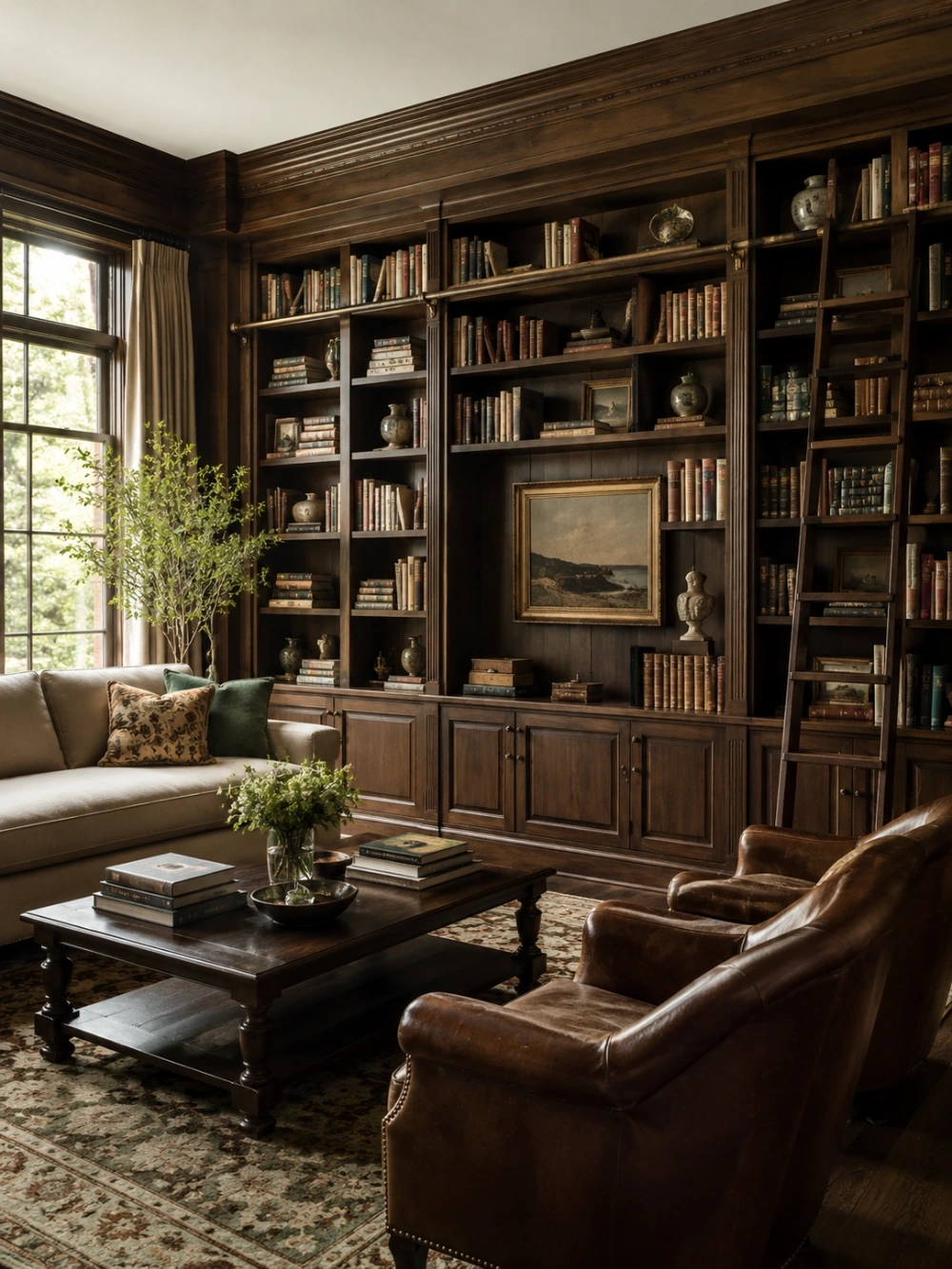
One of the strongest old money references is the traditional library.
Built-in shelves immediately introduce a feeling of history because they transform storage into architecture.
Instead of treating bookshelves as simple furniture, use them as part of the room’s identity.
Why this works
Shelving adds:
- Vertical height
- Visual depth
- Storage
- A place for personal collections
Books, artwork, ceramics, photographs, and inherited objects create the impression that the room has developed naturally over many years.
Best suited for
- Large blank walls
- Homes needing storage
- Reading areas
- Traditional or transitional homes
Avoid if
The shelves are filled only with decorative objects purchased at once. Empty-looking displays often create a showroom effect.
Practical approach
If custom built-ins are outside the budget, consider:
- Freestanding bookcases painted to match walls
- Adding trim around existing shelving
- Styling shelves with a mix of books and personal objects
The goal is not to imitate a historic mansion. It is to create visual evidence of a life being lived.
2. Use a Heritage Color Palette
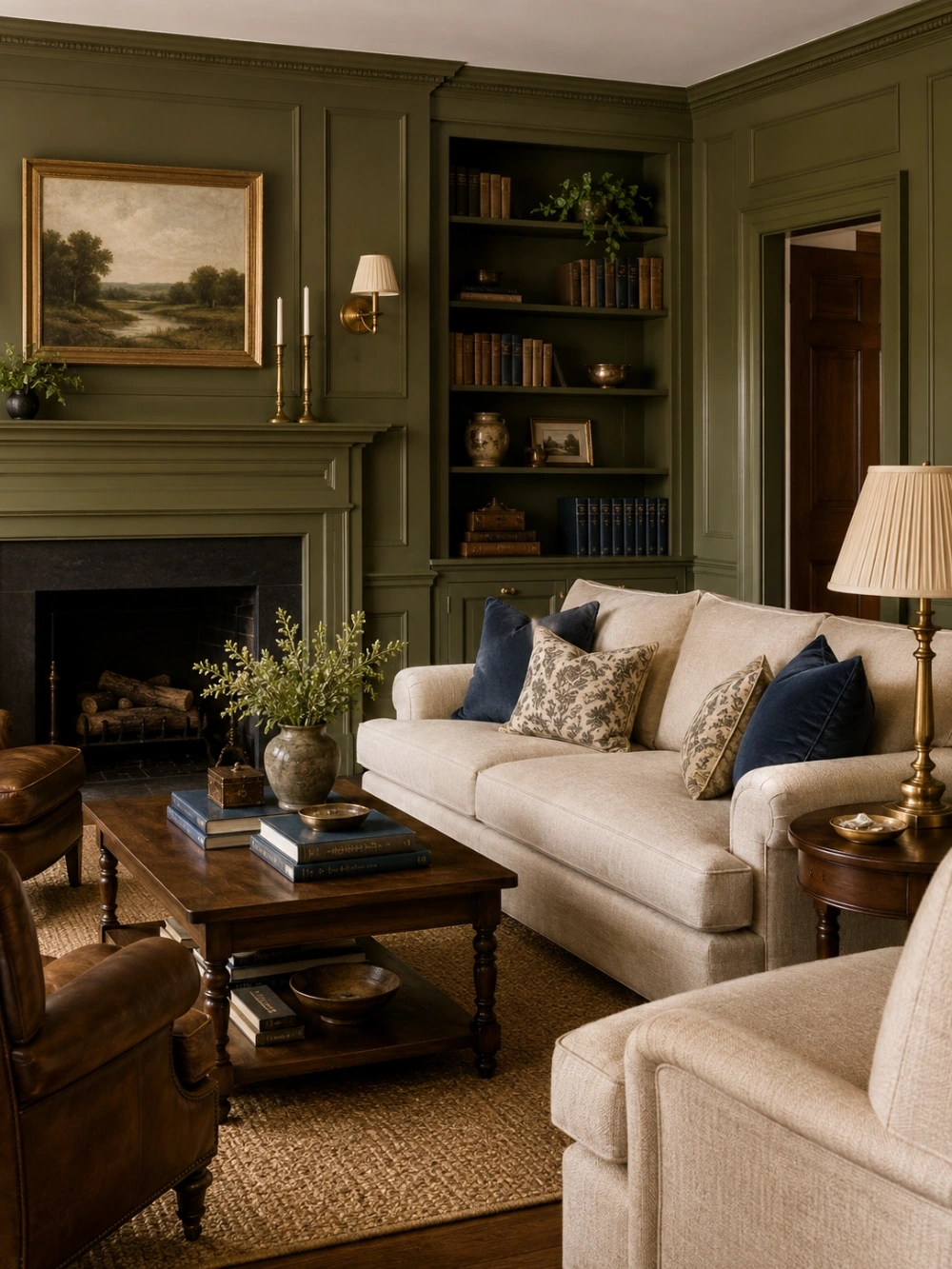
Color is one of the easiest ways to shift a living room toward an old money aesthetic.
The strongest palettes usually contain colors that feel established rather than fashionable.
Consider:
- Olive green walls with warm wood
- Navy accents with cream upholstery
- Soft gray-blue with brass details
- Rich brown leather with neutral fabrics
Why it works
Deep colors create visual stability. They allow furniture, artwork, and materials to stand out without competing.
The trade-off
Dark colors can reduce the feeling of space in rooms with limited natural light.
Before committing:
- Test paint samples during morning and evening
- Observe how artificial lighting changes the color
- Consider using deeper tones on accent walls instead of every surface
3. Add Traditional Wall Treatments
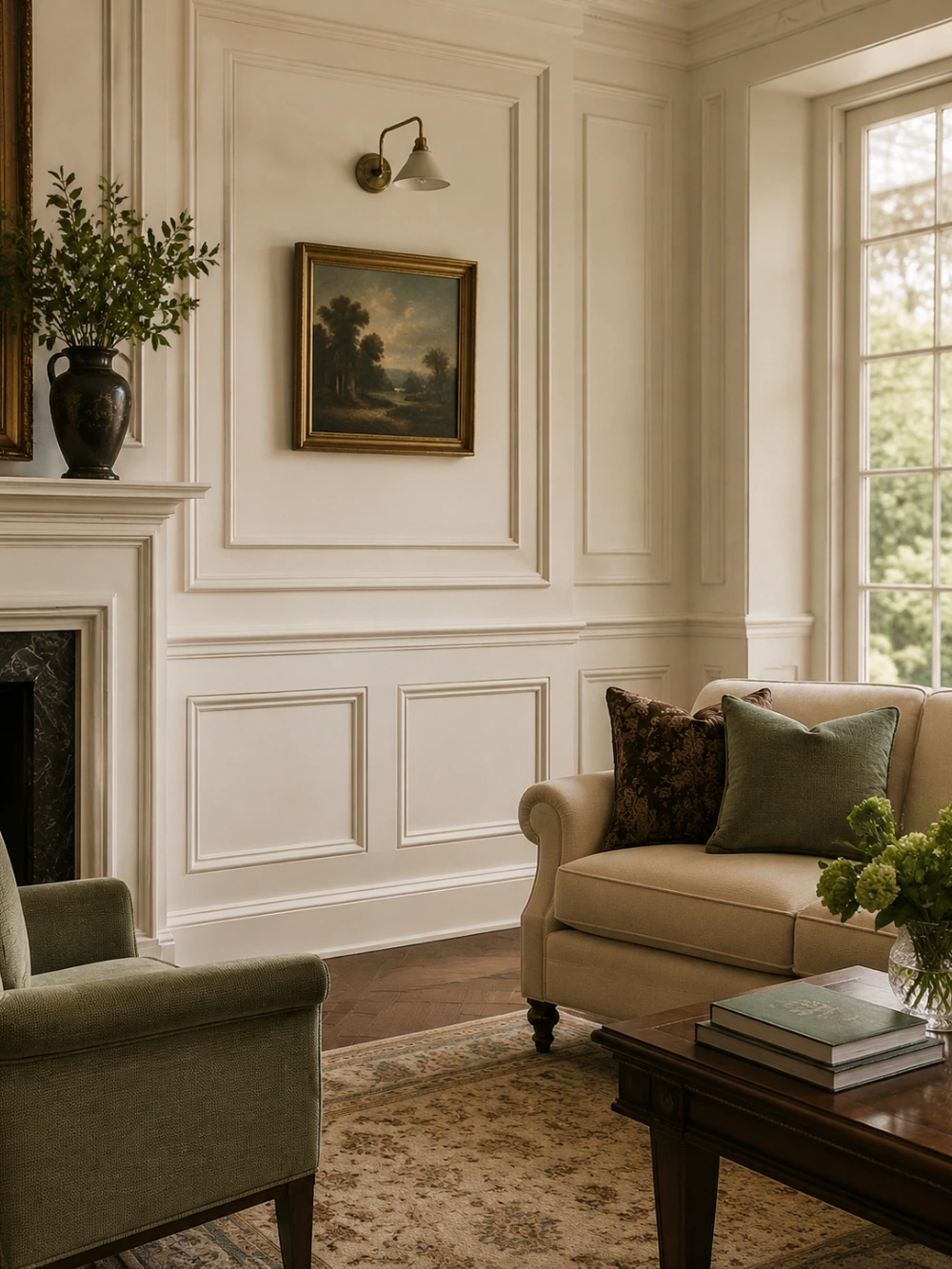
Walls often determine whether a room feels temporary or established.
Classic wall treatments include:
- Picture-frame molding
- Raised panels
- Wainscoting
- Decorative trim
Explore additional inspiration with these unusual wainscoting ideas.
Why it works
Paneling creates structure. It gives plain walls rhythm and makes furniture appear more intentional.
Budget consideration
Full custom carpentry can become expensive.
Lower-cost alternatives include:
- Painted molding designs
- MDF panel systems
- Wallpaper with architectural patterns
Avoid
Adding wall details that conflict with the home’s architecture. A highly formal treatment may feel disconnected in a simple modern apartment.
4. Make the Fireplace the Room’s Anchor
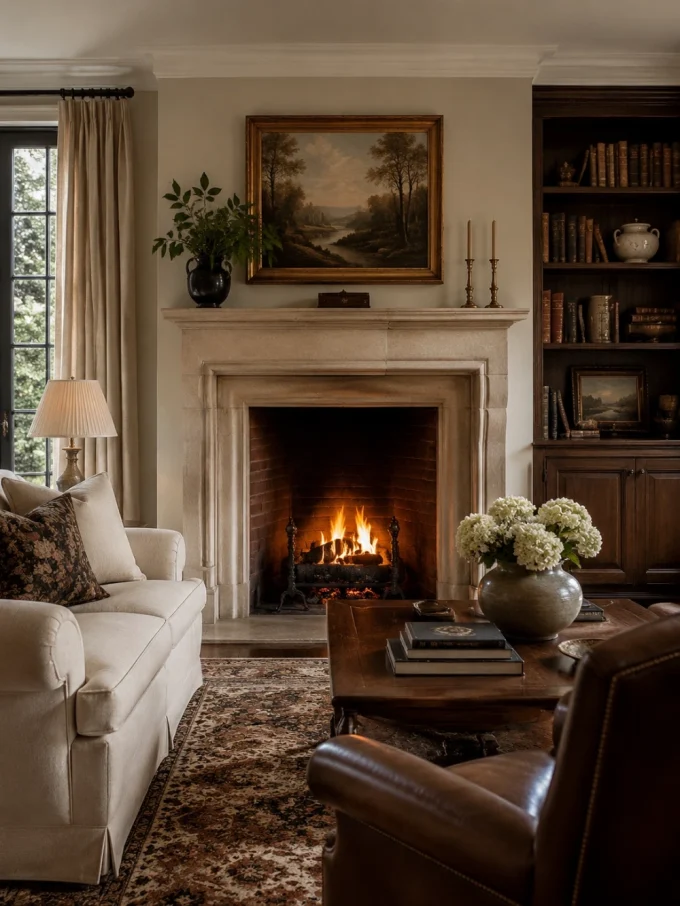
A fireplace naturally supports the old money aesthetic because it creates a traditional gathering point.
Classic choices include:
- Stone surrounds
- Marble details
- Wooden mantels
- Traditional proportions
Modern homes can still achieve the feeling with cleaner fireplace designs. Explore these modern fireplace ideas.
Why it works
The fireplace provides a visual center, allowing furniture placement to feel intentional.
Consider before investing
Ask:
- Does the room already have a natural focal point?
- Will furniture face the fireplace comfortably?
- Does installation require structural changes?
- Are heating needs part of the decision?
A fireplace should improve how the room works, not simply provide a decorative feature.
The most convincing old money rooms rarely look like they belong to one period.
Instead, they combine generations.
A practical combination:
- Modern comfortable sofa
- Antique wooden table
- Vintage lamp
- Contemporary rug
- Traditional artwork
Why this works
The contrast creates the feeling of a home that has evolved.
Common mistake
Buying a complete “old money” furniture set.
Matching everything often removes the personality that makes the style convincing.
5. Mix Antique Pieces With Modern Comfort
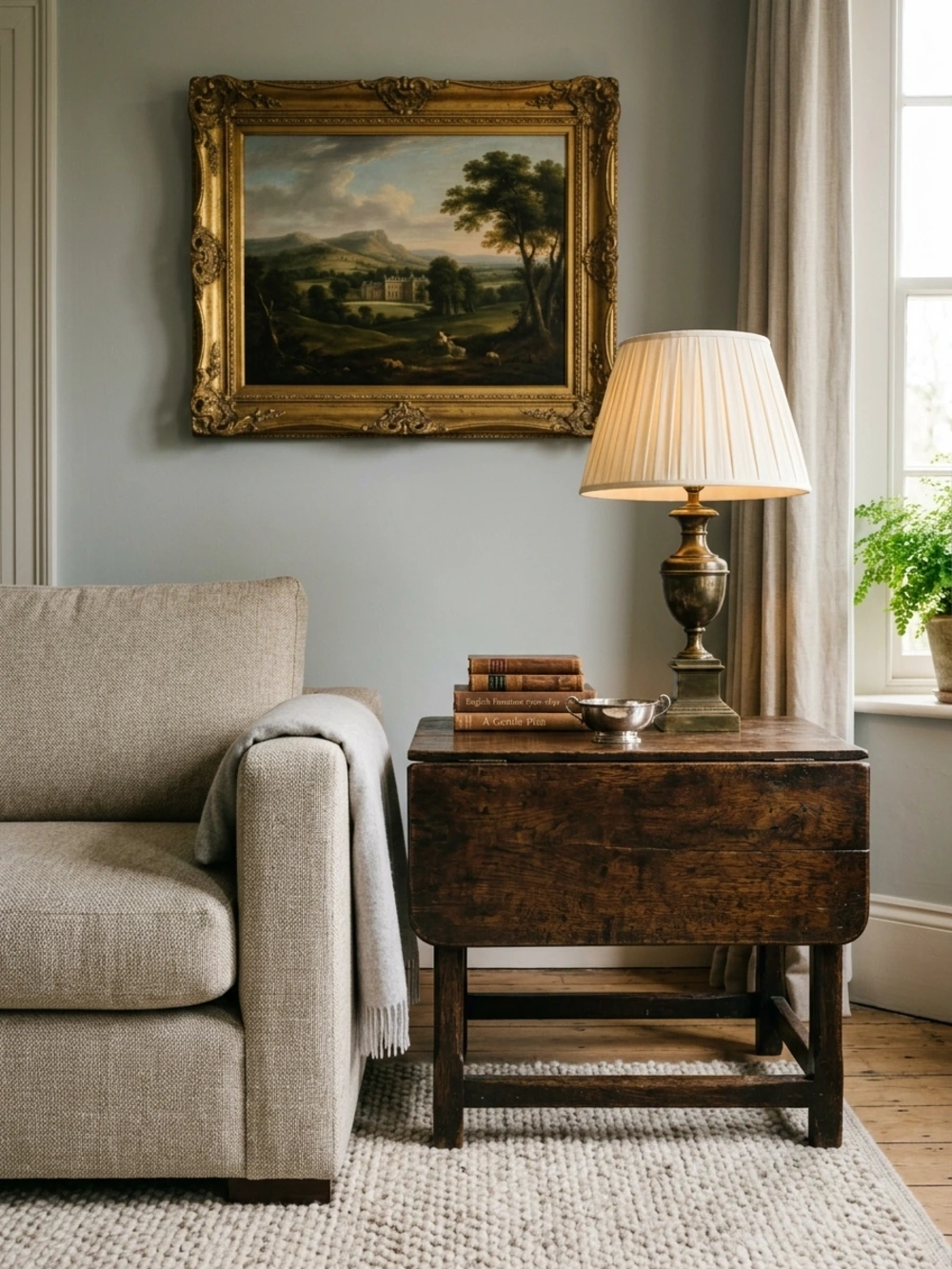
The most convincing old money rooms rarely look like they belong to one period.
Instead, they combine generations.
A practical combination:
- Modern comfortable sofa
- Antique wooden table
- Vintage lamp
- Contemporary rug
- Traditional artwork
Why this works
The contrast creates the feeling of a home that has evolved.
Common mistake
Buying a complete “old money” furniture set.
Matching everything often removes the personality that makes the style convinc
6. Choose Upholstered Furniture That Prioritizes Longevity
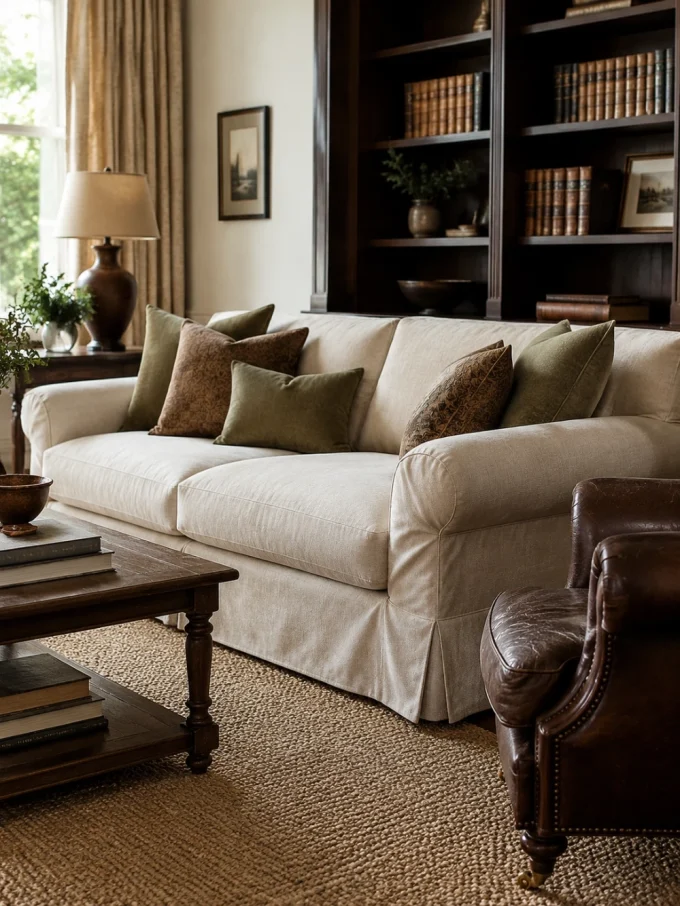
Furniture is where old money style becomes practical.
The best pieces are not always the most decorative. They are the ones people naturally use.
Look for:
- Deep seating
- Durable fabric
- Classic silhouettes
- Quality construction
Good options include:
- Linen sofas
- Leather club chairs
- Wool upholstery
- Velvet accent seating
Spend here, save elsewhere
A quality sofa can remain useful for many years. Decorative accessories are easier to replace.
Avoid furniture that looks impressive online but feels uncomfortable in daily life.
7. Layer Lighting Instead of Relying on One Ceiling Fixture
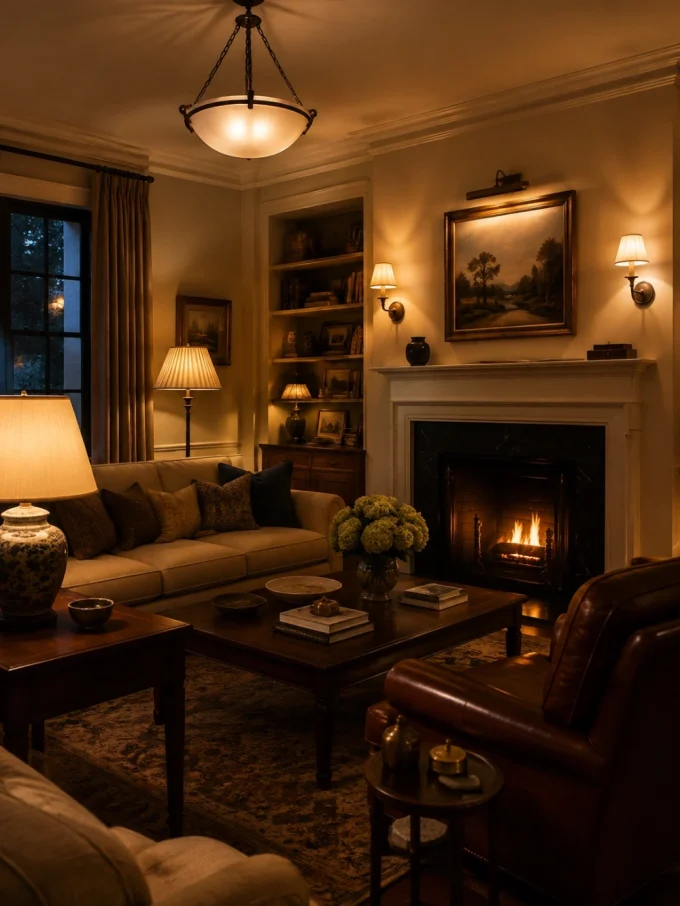
Lighting is one of the biggest differences between a room that feels thoughtfully designed and one that feels unfinished.
Old money living rooms rarely depend on a single bright overhead light. Instead, they use multiple sources at different heights to create warmth, shadows, and visual depth.
Consider combining:
- Wall sconces
- Table lamps
- Floor lamps
- Fireplace lighting
- Soft ceiling fixtures
Explore more inspiration with these indoor wall mounted light fixture ideas and wall sconce light fixtures ideas.
Why it works
Traditional interiors depend heavily on atmosphere. Multiple lighting layers highlight artwork, furniture textures, and architectural details without making the room feel overly bright.
A linen sofa, wooden table, or textured wall treatment looks completely different under soft side lighting compared with a single overhead bulb.
Best approach
Create three lighting layers:
Ambient lighting
Provides overall room illumination.
Examples:
- Ceiling fixtures
- Chandeliers
- Recessed lighting
Task lighting
Supports specific activities.
Examples:
- Reading lamps
- Desk lamps
- Side table lighting
Accent lighting
Creates depth.
Examples:
- Picture lights
- Wall sconces
- Shelf lighting
Avoid
Overly decorative lighting that becomes the only statement in the room. The fixture should support the design, not overpower it.
8. Introduce Natural Wood Elements
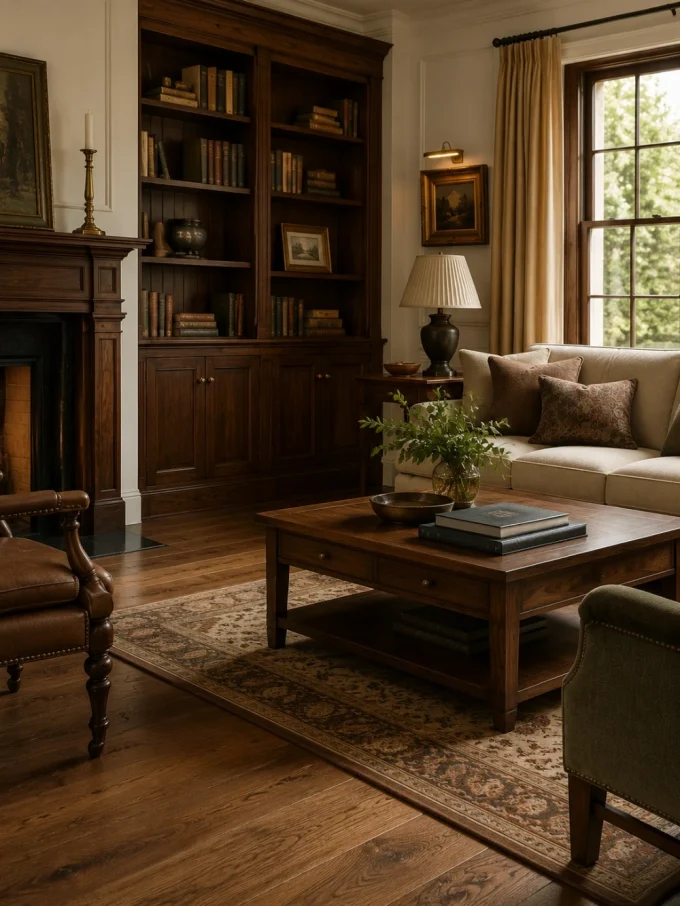
Wood is one of the strongest materials associated with old money interiors because it gains character instead of becoming outdated.
Good choices include:
- Walnut furniture
- Oak flooring
- Wooden cabinetry
- Antique side tables
- Dark-stained accents
Why it works
Wood adds:
- Warmth
- Texture
- Visual weight
- Natural variation
Unlike many synthetic finishes, quality wood often becomes more attractive as it develops subtle aging.
The trade-off
Too much dark wood can make a living room feel heavy.
Balance darker pieces with:
- Light upholstery
- Natural fabrics
- Reflective surfaces
- Warm lighting
Best use
Instead of filling the room with matching wood furniture, choose one or two important pieces:
- A statement coffee table
- A vintage cabinet
- A classic side table
A few strong materials usually create more impact than many average ones.
9. Display Artwork That Feels Personal
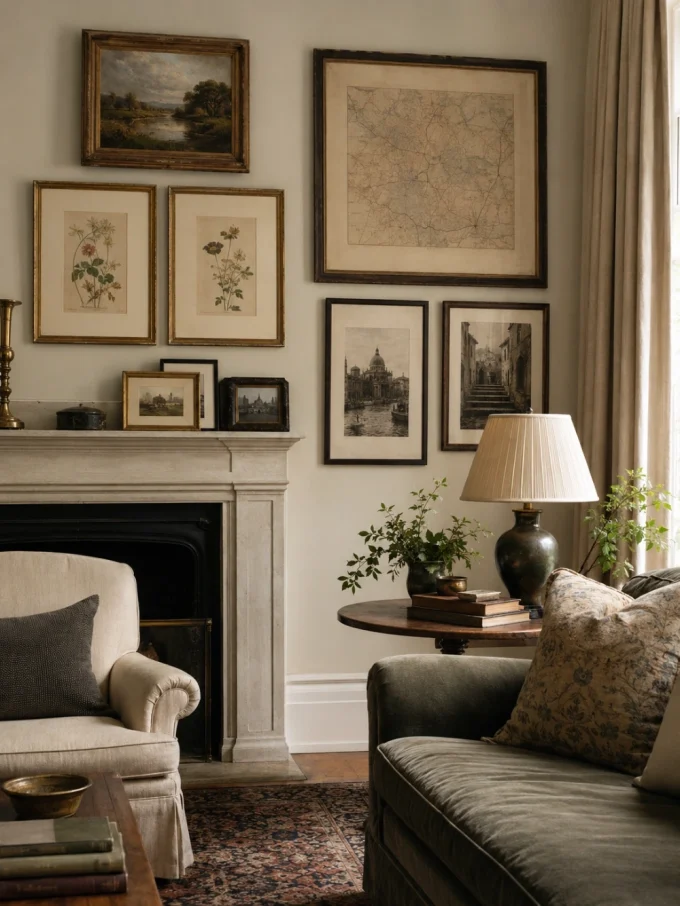
Artwork is where an old money living room gains personality.
The goal is not to make the walls look expensive. The goal is to make them look meaningful.
Consider:
- Landscape paintings
- Portraits
- Botanical prints
- Vintage maps
- Black-and-white photography
- Family photographs
Why it works
Personal artwork suggests the room has history.
A perfectly coordinated set of decorative prints often feels temporary because it lacks connection.
Styling approach
Mix:
- Different frame finishes
- Different artwork sizes
- Old and new pieces
A slightly imperfect arrangement usually feels more authentic than a perfectly symmetrical display.
10. Create an Elegant TV Wall Without Losing Character
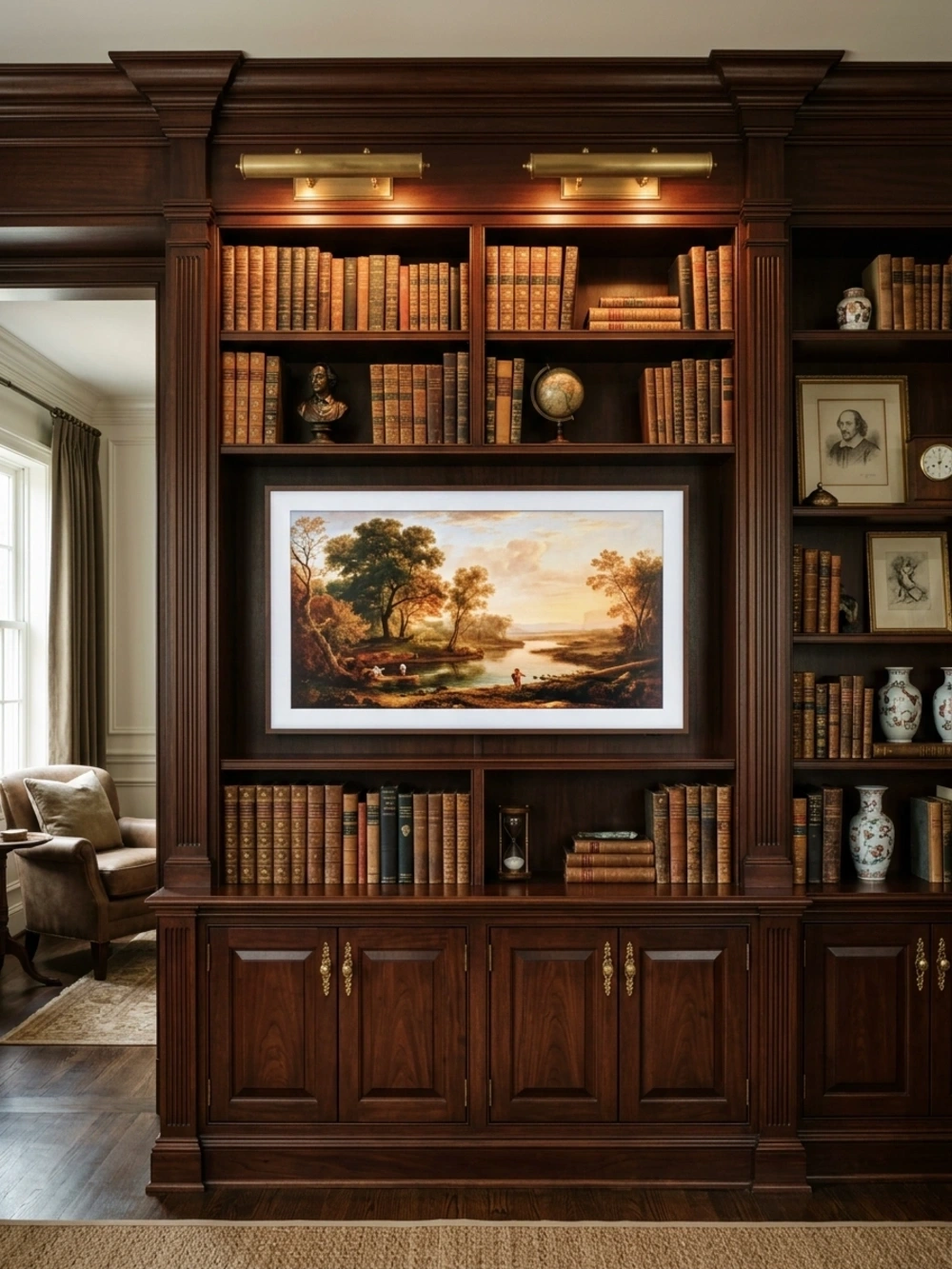
Modern homes still need entertainment spaces, but televisions can challenge traditional design.
A large black screen can quickly become the visual focus of the room.
The solution is not always hiding the television. It is integrating it.
Explore these beautiful TV wall ideas for inspiration.
Better approaches include:
- Built-in shelving around the television
- Dark painted backgrounds
- Framed television systems
- Balanced artwork placement
- Cabinet storage below
Why it works
The television becomes part of a larger composition instead of dominating the room.
Avoid
Creating an oversized media wall that removes the living room’s conversational feeling.
The room should still feel complete when the screen is turned off.
11. Layer Textiles for Quiet Luxury
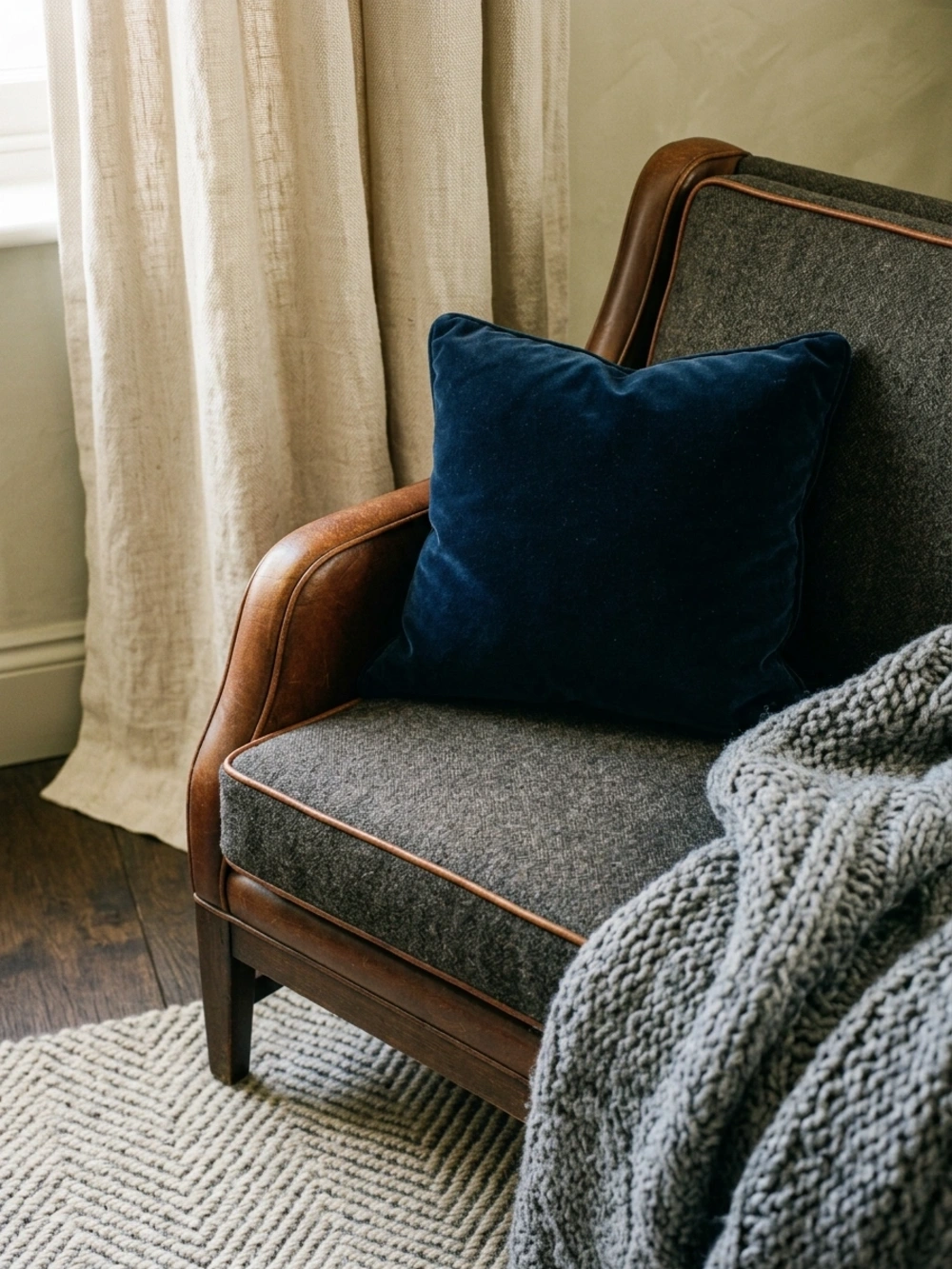
Old money rooms rarely rely on decoration alone. Much of their richness comes from texture.
Combine:
- Linen curtains
- Wool rugs
- Velvet cushions
- Leather accents
- Cotton throws
Why it works
Texture creates visual interest without requiring bright colors or excessive accessories.
A neutral room becomes more sophisticated when materials contrast:
- Smooth leather beside woven fabric
- Soft upholstery beside aged wood
- Matte textiles beside subtle metal details
Budget strategy
Textiles are one of the easiest ways to improve a room without major renovation.
A high-quality rug or better curtains can change how the entire space feels.
12. Arrange Furniture Around Conversation
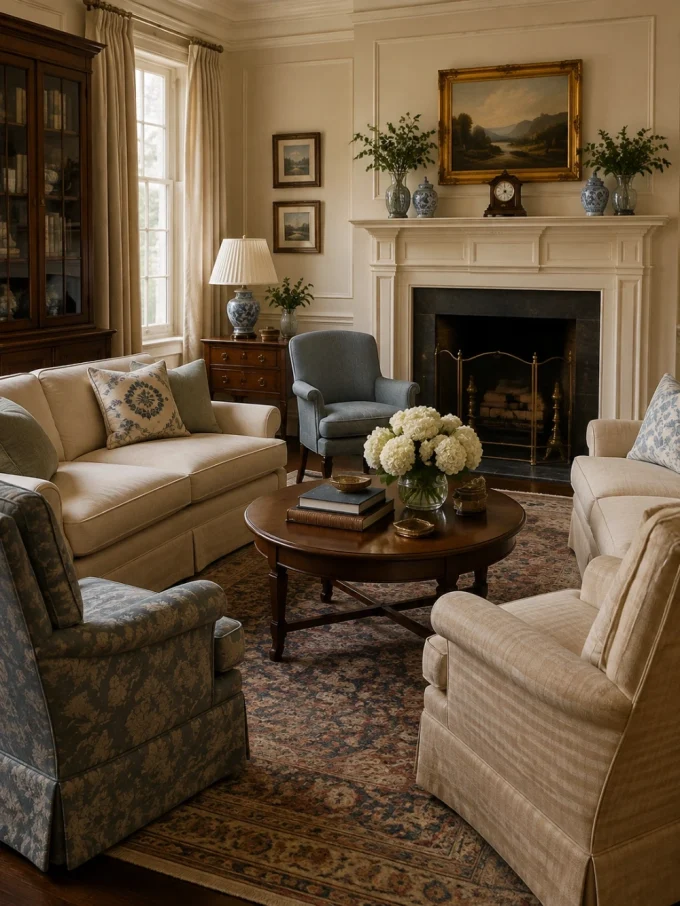
An old money living room is designed for people, not just photographs.
Furniture should encourage:
- Conversation
- Reading
- Relaxing
- Hosting guests
Better layouts include:
- Chairs facing a sofa
- Seating around a coffee table
- Furniture arranged around a fireplace
- Clear walking paths
Common mistake
Pushing every piece against the wall.
This often creates an empty center and makes the room feel less intentional.
Before buying furniture
Use a simple test:
- Mark furniture footprints with painter’s tape.
- Walk through the room normally.
- Check door openings and pathways.
- Adjust before committing.
A beautiful piece that blocks circulation is the wrong choice.
13. Use a Traditional Rug as the Foundation
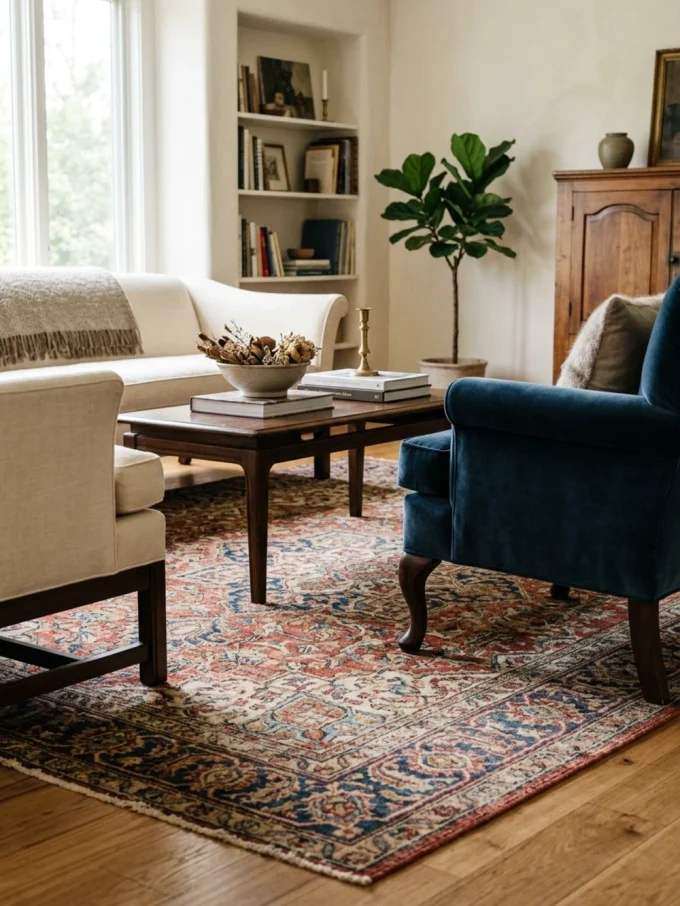
A rug can make a living room feel established because it visually connects separate furniture pieces.
Good options include:
- Persian-inspired rugs
- Wool designs
- Vintage patterns
- Muted traditional colors
Why it works
The rug creates a foundation for the room.
Without one, furniture can appear disconnected.
Choosing correctly
Consider:
- Room size
- Furniture arrangement
- Pattern scale
- Maintenance needs
A busy pattern may hide wear well but can overwhelm a small room.
A simple texture may create elegance without competing with artwork.
14. Add Aged Brass and Classic Metal Details
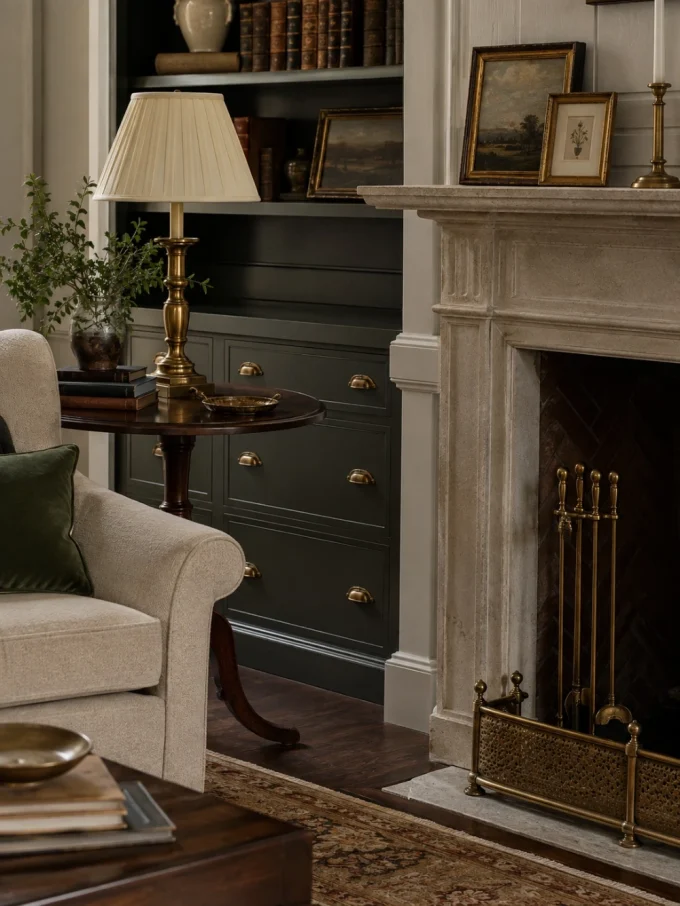
Metal accents can introduce refinement, but restraint matters.
Useful applications:
- Brass lamp bases
- Bronze hardware
- Antique-style picture frames
- Fireplace accessories
Why it works
Old money style depends more on patina than shine.
Materials that appear slightly aged often feel more authentic than perfectly polished finishes.
Avoid
Using gold-colored finishes everywhere.
Too much metallic decoration can shift the room from timeless to theatrical.
15. Combine Old Money Style With Modern Japandi Simplicity
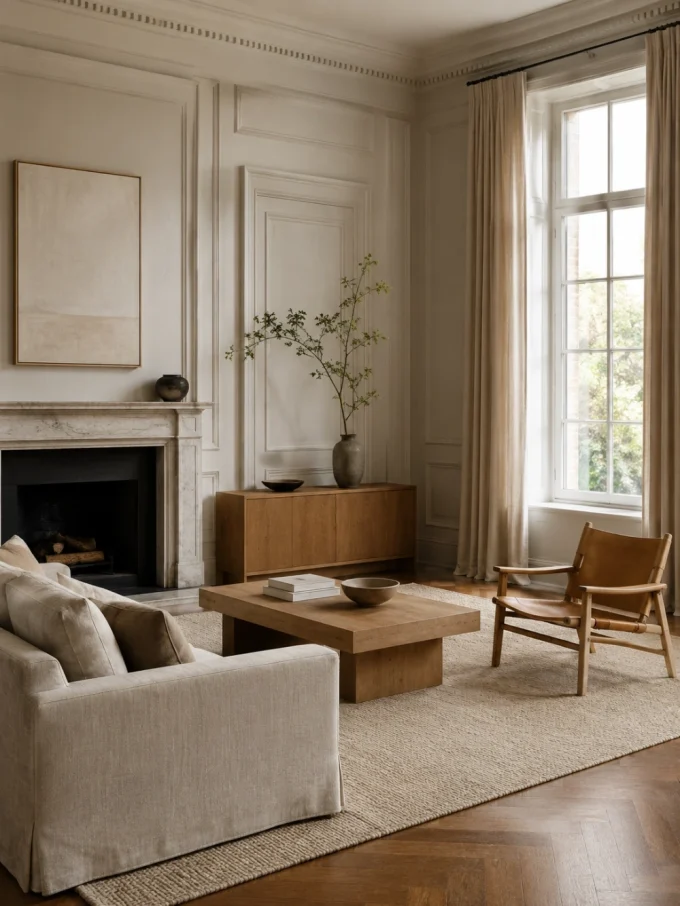
Some homeowners like the warmth of traditional interiors but prefer cleaner spaces.
A modern interpretation combines:
- Natural wood
- Simple furniture
- Neutral colors
- Minimal decoration
- Quality materials
This connects with ideas found in cozy Japandi bedroom ideas.
Why it works
Both styles value:
- Craftsmanship
- Natural materials
- Calm environments
- Intentional choices
Best for
- Modern homes
- Smaller living rooms
- Minimalist preferences
Avoid
Removing too much personality. A minimalist room still needs texture, artwork, and meaningful objects.
16. Add Ceiling Details for Architectural Depth
The ceiling is often ignored when homeowners redesign a living room, but traditional interiors frequently use it as another layer of character.
An old money living room does not rely only on furniture and accessories. The architecture itself contributes to the feeling of permanence.
Consider:
- Coffered ceilings
- Decorative molding
- Ceiling medallions
- Subtle ceiling paint changes
- Traditional light fixture details
Explore more inspiration with these modern ceiling ideas.
Why it works
A detailed ceiling changes how the entire room is perceived. It adds structure above eye level and makes the space feel more complete.
This is especially effective in rooms with:
- High ceilings
- Period architecture
- Large windows
- Formal proportions
The trade-off
Ceiling upgrades vary widely in cost and permanence.
Lower commitment
- Paint changes
- Decorative wallpaper
- Simple trim additions
Higher commitment
- Custom millwork
- Structural ceiling alterations
- Integrated lighting systems
Avoid
Adding elaborate ceiling details that conflict with the home’s existing style. A formal ceiling treatment can look disconnected in a simple contemporary apartment.
17. Create an Old Money Living Room in a Rental Home
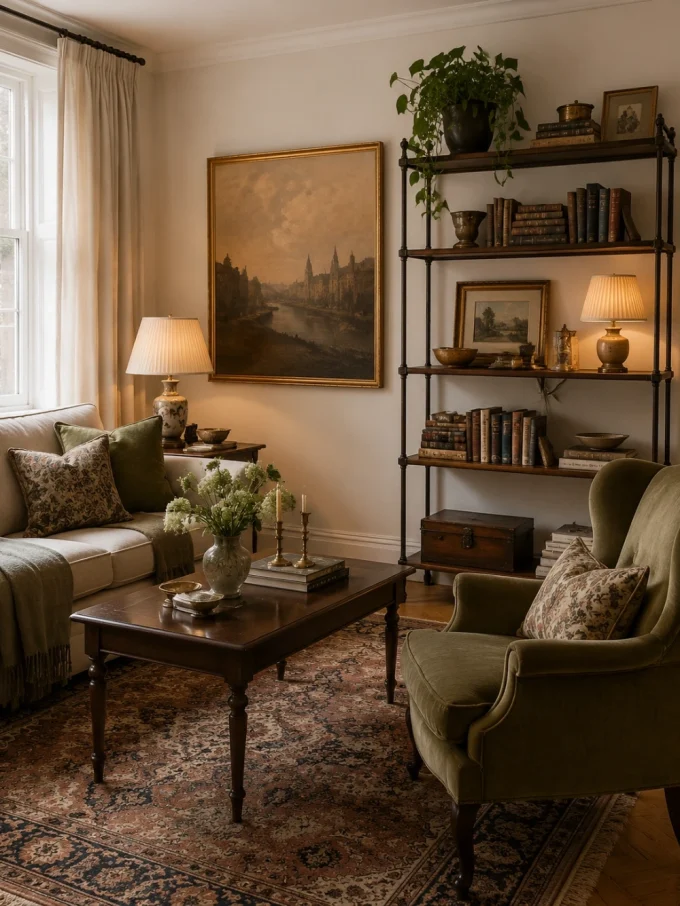
A timeless living room does not require ownership.
Renters can achieve the old money feeling by focusing on elements that are portable and reversible.
Good rental-friendly upgrades include:
- Quality lamps
- Vintage furniture
- Large artwork
- Rugs
- Decorative textiles
- Freestanding shelving
Explore more renter-friendly approaches with these rental apartment decorating ideas.
Where to spend money
Prioritize items you can take with you:
Worth investing in
- Sofa
- Lighting
- Rug
- Artwork
- Accent chairs
Be careful with
- Permanent wall changes
- Expensive built-ins
- Custom renovations
Why it works
Old money style is less about the building itself and more about the feeling created through layers.
A rental apartment can still feel established when furniture, materials, and objects are chosen carefully.
18. Add Personal Objects That Tell a Story
The final layer of an old money living room is individuality.
Without personal details, even beautiful rooms can feel like staged showrooms.
Include:
- Travel books
- Family photographs
- Collected ceramics
- Vintage finds
- Handmade objects
- Meaningful souvenirs
For handmade accent inspiration, explore these air dry clay ideas.
Why it works
The old money aesthetic is built around continuity. Objects should suggest a connection to people, places, and memories.
Avoid
Filling every surface.
A few meaningful pieces create more impact than many decorative items competing for attention.
Old Money Living Room Mistakes to Avoid
Creating this style is often less about adding more and more. It is about avoiding decisions that make the room feel temporary.
Mistake 1: Buying a Complete Matching Furniture Set
A coordinated furniture collection may seem easy, but it often removes personality.
Why it fails
Old money interiors usually look collected over time.
A room where every item matches perfectly can feel like a showroom.
Better approach
Combine:
- Different furniture periods
- Various textures
- Contrasting materials
- Personal objects
Mistake 2: Confusing Expensive With Timeless
A high price tag does not automatically create elegance.
A poorly proportioned designer piece can feel less sophisticated than a well-chosen vintage item.
Prioritize:
- Craftsmanship
- Comfort
- Material quality
- Longevity
Mistake 3: Making the Room Too Formal
Traditional style does not mean uncomfortable.
A successful old money living room should still support everyday life.
Ask:
- Can people relax here?
- Is seating comfortable?
- Are surfaces practical?
- Does the layout support conversation?
Mistake 4: Overusing Decorative Luxury Details
Too many:
- Gold accents
- Crystal accessories
- Oversized mirrors
- Artificial antique pieces
can make the room feel themed.
The goal is quiet confidence, not visual proof of wealth.
Mistake 5: Ignoring Modern Needs
A timeless room still needs to work today.
Consider:
- Television placement
- Charging needs
- Storage
- Lighting controls
- Comfortable seating
Classic design succeeds when it adapts to real life.
How to Create an Old Money Living Room on Different Budgets
You do not need a large renovation budget to create this aesthetic.
The key is choosing upgrades with the highest visual impact.
Lower Budget Approach
Focus on changes that improve atmosphere.
Best investments:
- Paint color
- Secondhand furniture
- Lamps
- Artwork
- Curtains
- Textiles
A carefully chosen vintage table or lamp can create more character than many inexpensive decorations.
Medium Budget Approach
This is where the room can gain stronger architectural and material upgrades.
Consider:
- Quality sofa
- Better rug
- Wall molding
- Custom-looking curtains
- Improved lighting
Spend on pieces that affect how the room feels every day.
Higher Budget Approach
For larger investments, prioritize permanent improvements.
Examples:
- Built-in shelving
- Fireplace upgrades
- Architectural restoration
- Custom cabinetry
- Premium flooring
Value question
Before spending more, ask:
“Will this improve how the room functions for years, or only make it look different today?”
Final Thoughts: The Real Secret Behind Old Money Living Rooms
The most convincing old money living rooms are not created by copying a luxury image.
They work because they combine:
- Strong architecture
- Natural materials
- Comfortable furniture
- Layered lighting
- Personal history
- Thoughtful restraint
The style feels expensive because it feels considered.
Whether your home is traditional, modern, small, rented, or newly built, the same principle applies:
Choose fewer things, choose better, and allow the room to develop character over time.
FAQ: Old Money Living Room Ideas
What colors make a living room look old money?
Timeless old money palettes usually include deep greens, navy, warm creams, muted blues, brown tones, and other colors with natural depth.
Does an old money living room need antique furniture?
No. Antique pieces can help, but the style depends more on balance, quality materials, proportions, and a collected appearance.
Can a small living room have an old money style?
Yes. Smaller rooms can use the same principles through lighting, color, textiles, artwork, and carefully selected furniture.
How do you make a living room look expensive without spending a lot?
Focus on high-impact changes:
- Better lighting
- Quality textiles
- Thoughtful artwork
- A cohesive color palette
- Secondhand furniture with character
Is old money style the same as traditional interior design?
They overlap, but old money style focuses more on timelessness, restraint, and personal history rather than formal decoration alone.