
A rustic dining room is not created by simply adding farmhouse signs, distressed furniture, or decorative vintage objects. The strongest rustic interiors work because they feel connected to natural materials, comfortable proportions, and everyday life.
A dining room should do more than look beautiful in photographs. It needs to support real moments: family meals, conversations, celebrations, homework, coffee in the morning, and gatherings with friends.
The challenge is creating warmth without making the room feel outdated or overly themed.
The most successful rustic dining rooms balance:
- Natural textures
- Durable materials
- Comfortable furniture
- Thoughtful lighting
- Authentic imperfections
- Modern functionality
Article thesis: For homeowners seeking a rustic dining room, the most timeless results come from selecting honest materials, practical layouts, and aged textures that create character naturally—not from adding decorative farmhouse elements without purpose.
This guide explores 18 rustic dining room ideas through a practical design lens, including what works, where each approach fits, what to avoid, and how to create the look at different budgets.
Rustic Dining Room Ideas: What Makes the Style Work?
Rustic design is often misunderstood as “old-fashioned.” In reality, rustic style is about creating a connection between the home and natural materials.
A successful rustic dining room usually includes:
Natural Materials
Common choices include:
- Solid wood
- Stone
- Brick
- Linen
- Leather
- Woven materials
- Aged metals
These materials add texture and improve with time.
A wooden table develops character. Linen becomes softer. Metal finishes gain patina.
Visible Craftsmanship
Rustic spaces celebrate how things are made.
Look for:
- Wood grain
- Handcrafted details
- Natural edges
- Traditional joinery
- Handmade accessories
The goal is not perfection. Small variations often create authenticity.
Comfortable Imperfection
A rustic dining room should not feel like a showroom.
The style works because it allows:
- Mixed chairs
- A slightly worn table
- Vintage accessories
- Handmade objects
- Natural variations
A room with too many perfectly coordinated pieces often loses the relaxed quality that defines rustic design.
Warm Lighting
Lighting determines whether rustic materials feel inviting or heavy.
Consider:
- Pendant lights
- Wall sconces
- Candles
- Table lamps
- Soft ambient lighting
For additional lighting inspiration, explore these wall sconce light fixtures ideas.
1. Choose a Solid Wood Dining Table as the Foundation
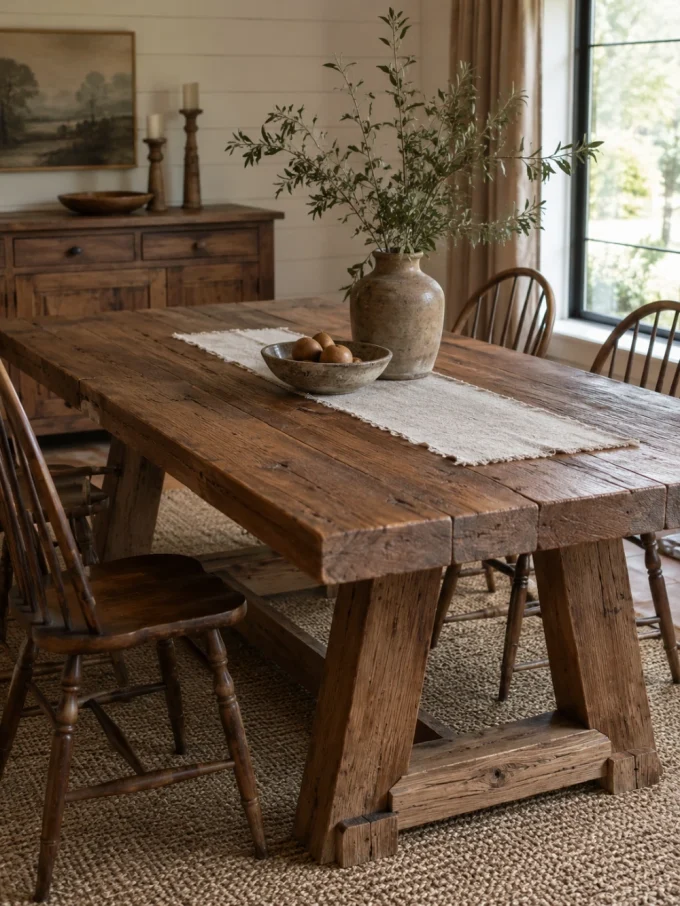
The dining table is usually the most important piece in a rustic dining room.
A quality wood table creates immediate warmth because it provides natural texture and visual weight.
Popular options include:
- Oak
- Walnut
- Pine
- Reclaimed wood
- Live-edge timber
Why It Works
Wood creates a direct connection to nature and gives the room a sense of permanence.
Unlike trend-based furniture, a well-made wooden table can adapt as your style changes.
Best For
- Family homes
- Entertaining spaces
- Open-plan kitchens
- Traditional interiors
Consider Before Buying
Think about:
- Daily use
- Maintenance
- Room size
- Chair clearance
- Finish durability
A beautiful oversized table can make a smaller dining room difficult to move through.
Test Before Committing
Use painter’s tape to mark the table footprint on the floor.
Include:
- Chair positions
- Walking paths
- Door swings
This gives a more realistic sense of how the room will function.
2. Combine Rustic Wood With Modern Elements
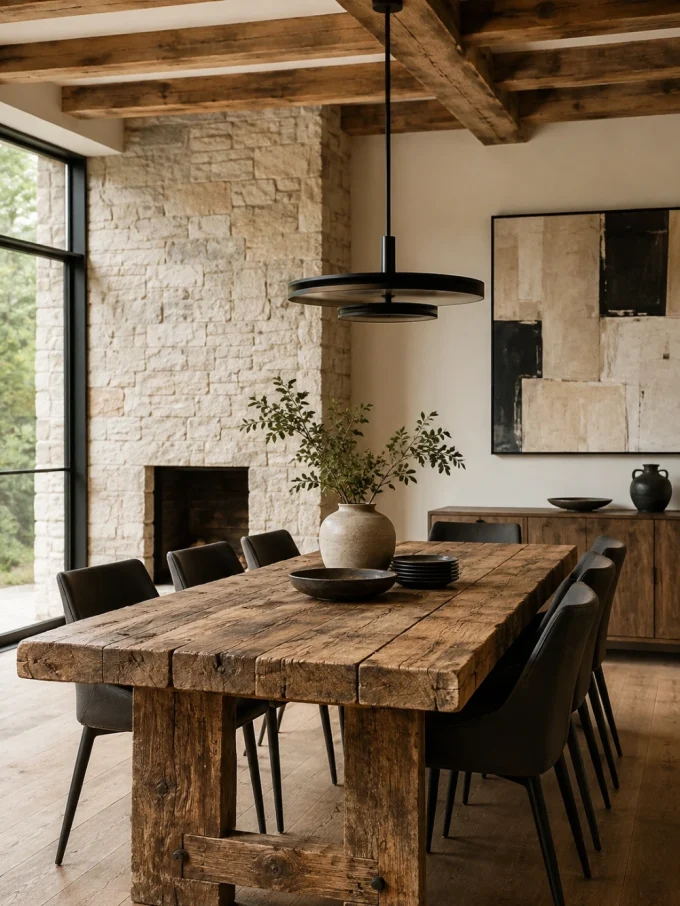
Rustic dining rooms do not need to look like historic farmhouses.
A modern rustic approach combines natural materials with cleaner design choices.
Examples:
- Reclaimed wood table + modern chairs
- Timber beams + minimalist lighting
- Stone surfaces + contemporary artwork
Why It Works
The contrast prevents rustic design from becoming predictable.
Natural materials provide warmth while modern elements keep the room current.
Best For
- New-build homes
- Open-plan spaces
- Homeowners who like both traditional and contemporary styles
This balance is similar to the approach used in timeless spaces such as old money living room ideas, where quality and restraint matter more than decoration.
3. Add Exposed Beams or Wood Ceiling Details
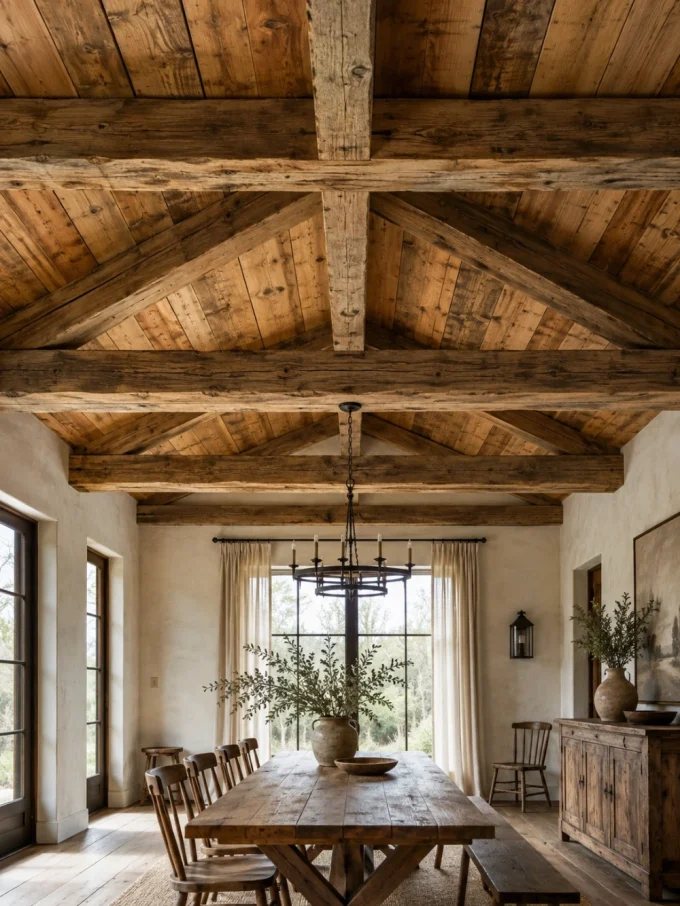
Ceilings are often overlooked, but they can dramatically influence rustic character.
Options include:
- Exposed structural beams
- Decorative timber beams
- Wood panel ceilings
- Natural ceiling finishes
Why It Works
Ceiling details add architectural depth and make the dining area feel intentional.
They are especially effective in:
- Country homes
- Larger dining spaces
- Rooms with high ceilings
The Trade-Off
Heavy timber elements can visually lower a room.
Balance darker wood ceilings with:
- Lighter walls
- Large windows
- Reflective surfaces
- Soft lighting
4. Create a Rustic Dining Room Around a Fireplace
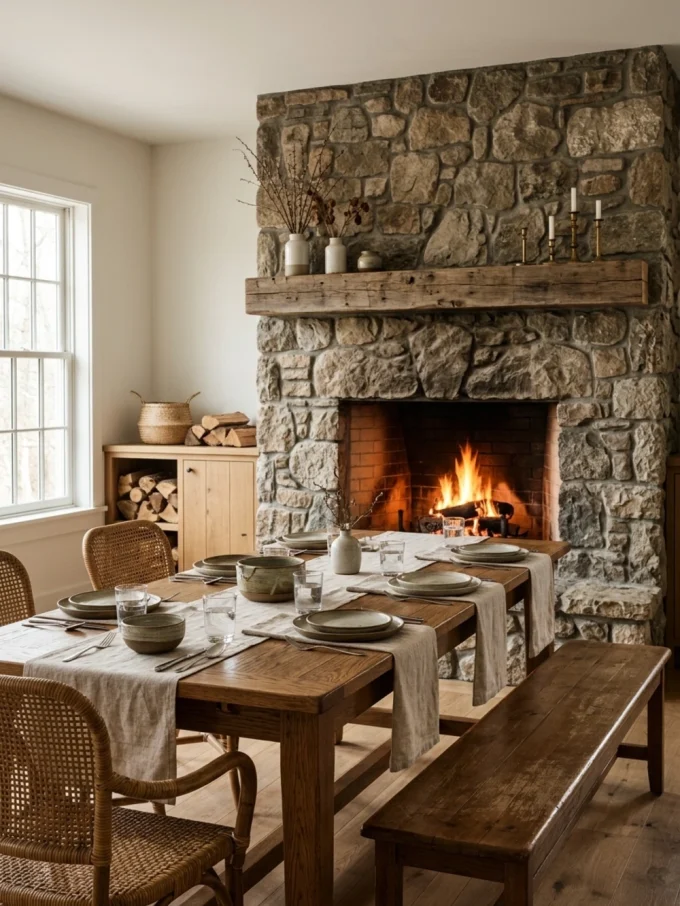
A fireplace naturally supports rustic design because it creates warmth and a gathering point.
Classic options include:
- Stone fireplaces
- Brick surrounds
- Wood-burning styles
- Modern rustic fireplace designs
For more inspiration, explore these modern fireplace ideas.
Why It Works
A fireplace gives the dining room a natural anchor and strengthens the connection between architecture and comfort.
Best Suited For
- Large dining rooms
- Open living-dining spaces
- Homes with traditional features
Avoid
Adding a fireplace only for appearance if it disrupts circulation or requires impractical renovation.
The feature should improve how the room is used.
5. Use Natural Linen and Textured Fabrics
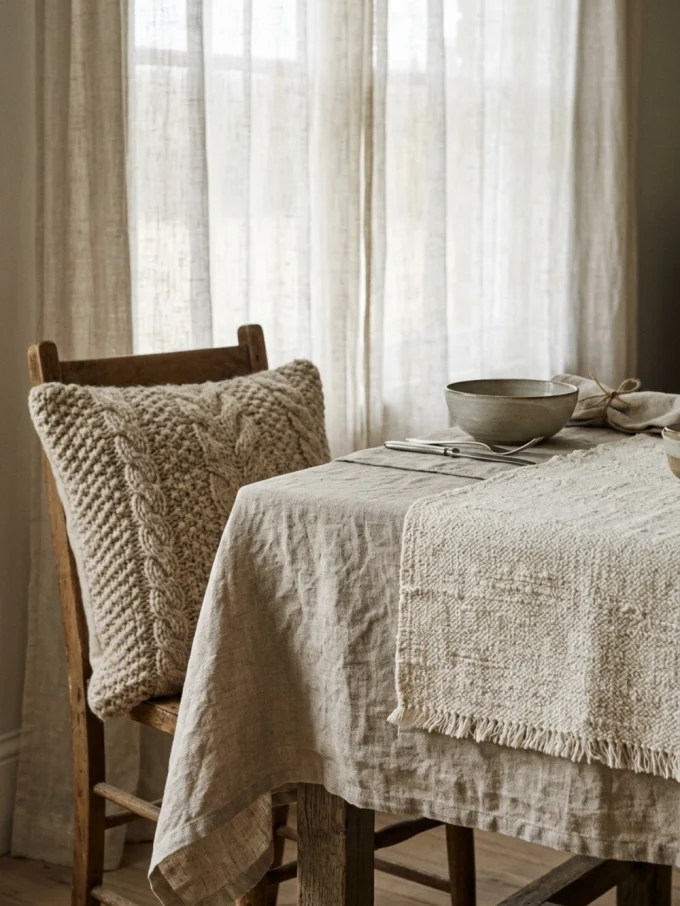
Rustic dining rooms often feel warm because of texture rather than decoration.
Useful additions include:
- Linen curtains
- Cotton table runners
- Wool rugs
- Woven cushions
- Natural fiber accents
Why It Works
Soft materials balance the hardness of:
- Wood
- Stone
- Metal
This prevents the room from feeling cold.
Maintenance Consideration
Dining rooms experience spills and daily wear.
Choose fabrics based on:
- Cleaning needs
- Household habits
- Children or pets
- Frequency of use
Beautiful materials should still work in real life.
6. Mix Dining Chairs for a Collected Look
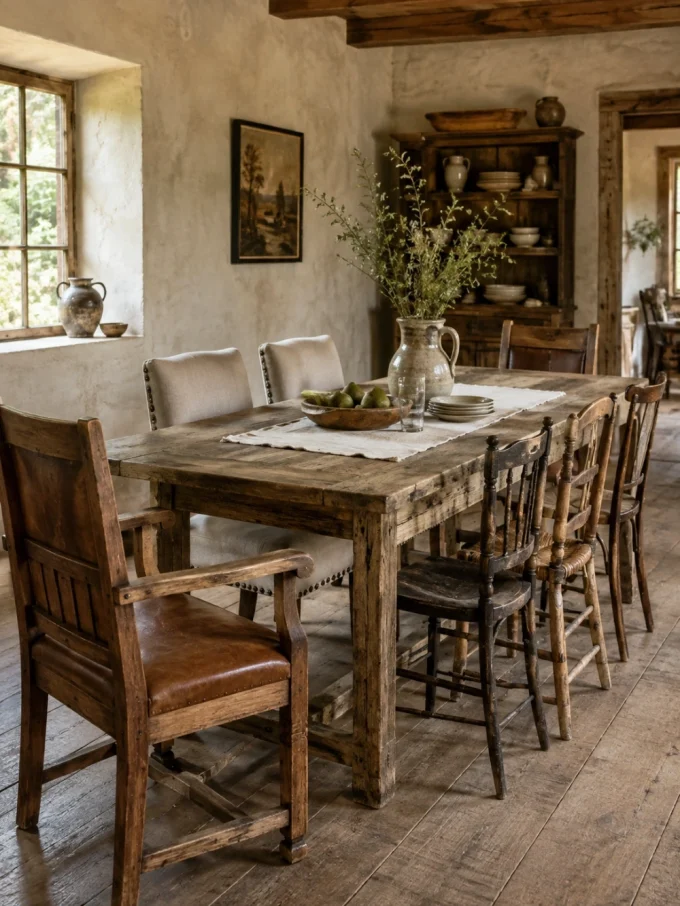
Matching dining chairs are not the only option.
Rustic interiors often benefit from a more collected approach.
Try:
- Wooden chairs at the ends
- Upholstered side chairs
- Vintage chairs mixed together
- Bench seating
Why It Works
Different pieces create the feeling that the room developed over time.
The Trade-Off
Too much variation can make the room feel random.
Keep one connection between chairs:
- Similar color
- Similar material
- Similar shape
The goal is intentional variety, not visual clutter.
7. Add Rustic Pendant Lighting Above the Dining Table
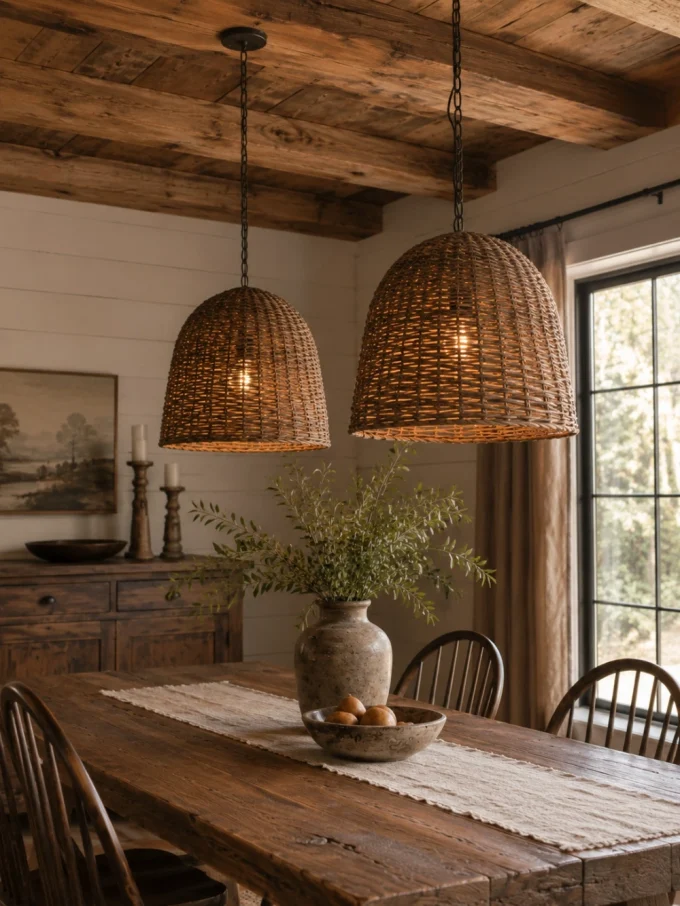
The lighting above the dining table has a major influence on how the entire room feels.
In rustic dining rooms, the pendant fixture is not only functional. It becomes part of the room’s architecture.
Consider:
- Woven pendant lights
- Aged metal fixtures
- Black iron chandeliers
- Wooden statement lights
- Glass lantern-style pendants
Why It Works
A dining table is naturally a focal point. A well-chosen fixture creates a visual center while adding warmth after sunset.
The best rustic lighting creates atmosphere without making the room feel like a themed restaurant.
Practical Considerations
Before choosing a fixture, consider:
- Table size
- Ceiling height
- Light direction
- Cleaning access
- Bulb warmth
A large pendant can overwhelm a small dining area, while a tiny fixture may disappear above a long table.
8. Add Stone, Brick, or Textured Walls
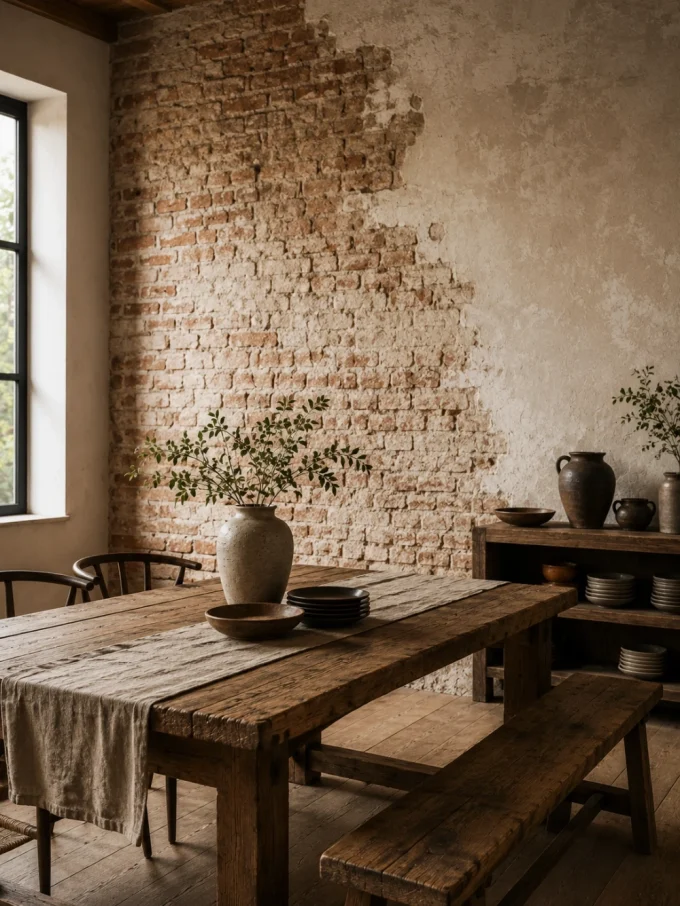
Rustic dining rooms often benefit from surfaces that add natural variation.
Options include:
- Exposed brick
- Stone walls
- Limewash finishes
- Textured plaster
- Wood wall panels
Explore more wall inspiration with these wall texture design ideas.
Why It Works
Texture creates depth without relying on excessive decoration.
A plain wall can feel warmer when it has:
- Shadow variation
- Natural imperfections
- Visible material character
Best For
- Feature walls
- Fireplace areas
- Dining zones connected to kitchens
Avoid
Adding fake rustic finishes that imitate age without adding real character.
A simple painted wall with quality lighting often feels more authentic than artificial distressed surfaces.
9. Create a Rustic Open-Plan Dining Area
Many modern homes combine kitchens, dining spaces, and living areas.
Rustic design works particularly well in open layouts because natural materials help define separate zones.
Consider:
- A wooden dining table between kitchen and living areas
- Pendant lighting above the dining zone
- A rug underneath the table
- Matching natural materials throughout
For related layout inspiration, explore these open kitchen design ideas.
Why It Works
The dining area becomes a transition point between spaces.
The table provides:
- A gathering location
- A visual anchor
- A connection between cooking and social areas
Common Mistake
Using rustic furniture in an otherwise ultra-modern space without repeating any materials.
Add connection through:
- Wood tones
- Metal finishes
- Color palette
- Lighting style
10. Use Earth-Tone Colors for a Natural Atmosphere
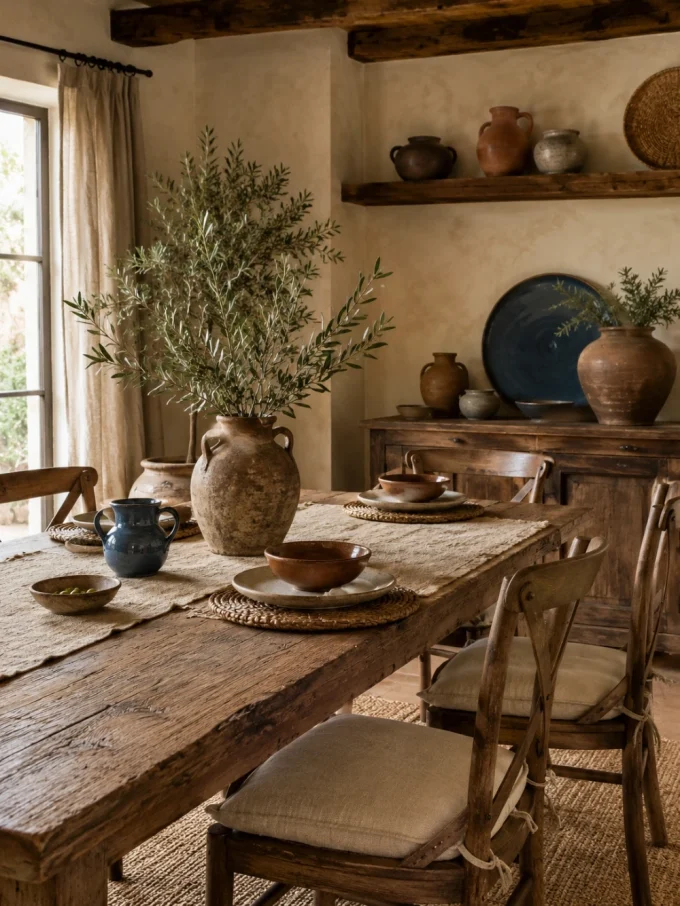
Rustic dining rooms usually rely on colors found in nature.
Popular choices include:
- Warm white
- Beige
- Clay
- Olive green
- Brown
- Soft gray
- Deep blue
Why It Works
Natural colors allow wood, stone, and textiles to become the focus.
They also age better than highly saturated trend colors.
For additional color inspiration, explore these purple paint color ideas for unexpected earthy accents.
The Trade-Off
A completely neutral room can feel flat.
Add contrast through:
- Dark wood
- Black metal
- Artwork
- Plants
- Textured fabrics
11. Add a Rustic Sideboard or Vintage Cabinet
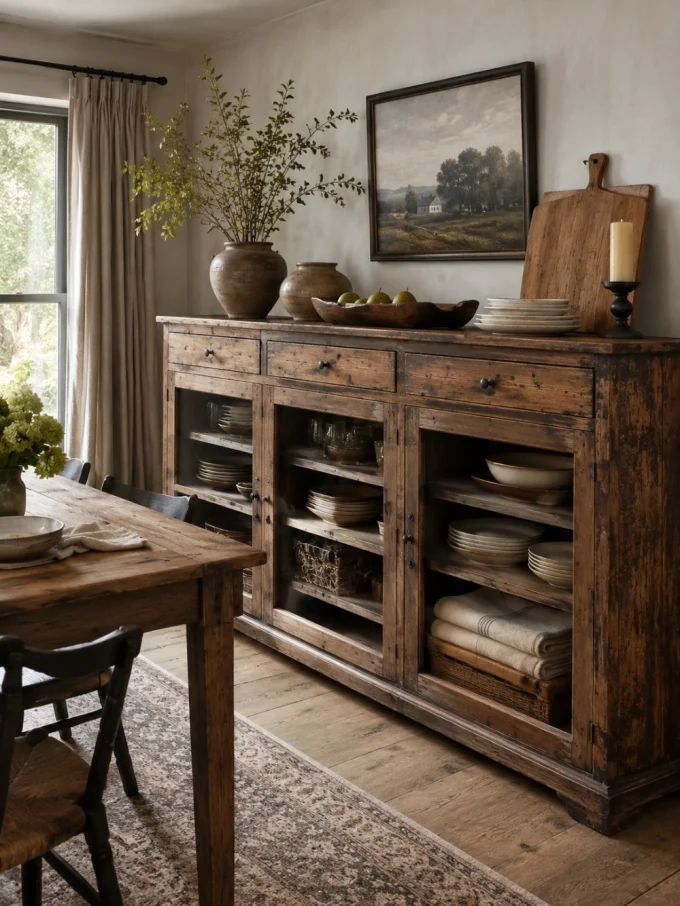
Storage furniture can add both function and character.
Useful pieces include:
- Antique cabinets
- Wooden sideboards
- Vintage hutches
- Open shelving units
Why It Works
A dining room needs practical storage for:
- Dinnerware
- Table linens
- Serving pieces
- Glassware
A rustic cabinet can provide storage while reinforcing the style.
Before Buying
Check:
- Depth
- Door clearance
- Wall space
- Household storage needs
A beautiful cabinet that blocks movement creates more problems than value.
12. Include Handmade and Personal Decor
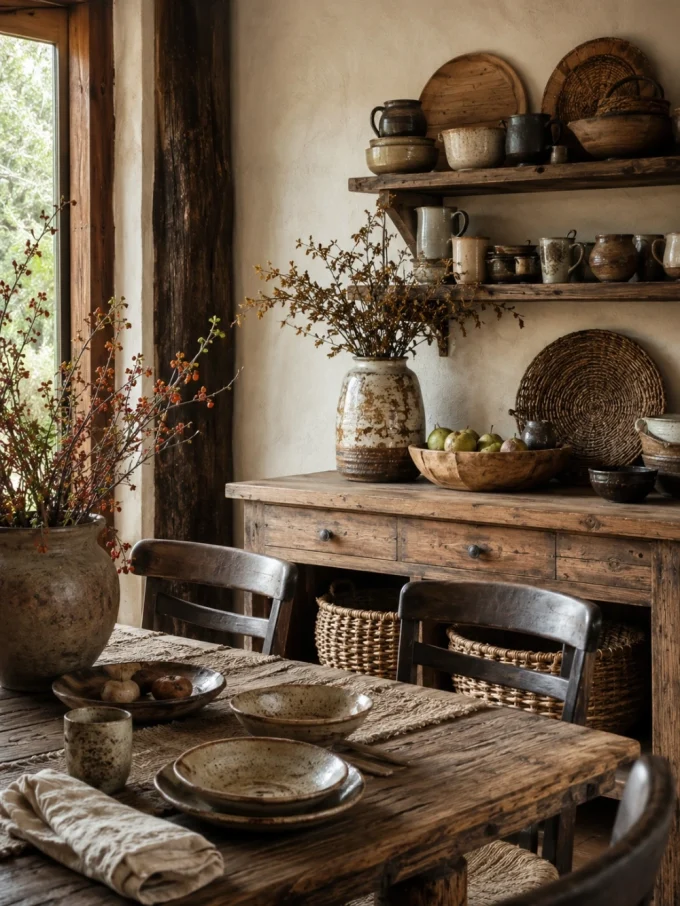
Rustic interiors become convincing when they include objects with character.
Ideas include:
- Handmade ceramics
- Woven baskets
- Vintage pottery
- Family photographs
- Natural arrangements
For handmade inspiration, explore these air dry clay ideas.
Why It Works
Handmade pieces introduce small variations that mass-produced decorations often lack.
The goal is not filling every surface. It is choosing objects that feel connected to the home.
13. Design a Small Rustic Dining Room Carefully
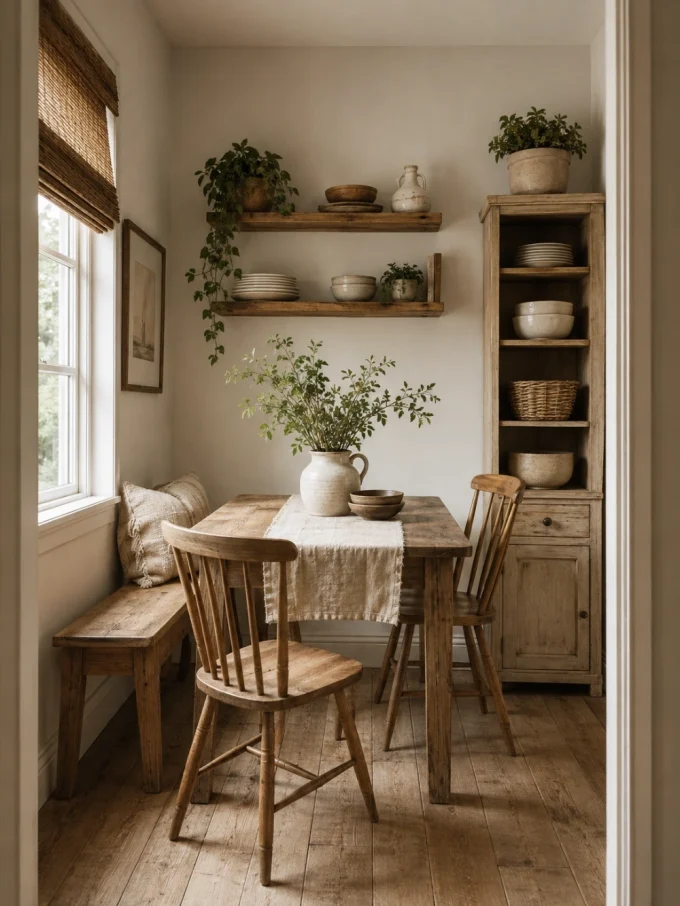
Rustic style is often associated with large country homes, but the principles work in smaller spaces too.
The key is controlling scale.
Choose:
- A properly sized table
- Slimmer chairs
- Vertical storage
- Light colors
- Flexible furniture
Explore more compact-space inspiration with these tiny bedroom ideas for small-space principles that also apply to dining areas.
Small-Room Strategy
Prioritize:
- Comfortable seating
- Good lighting
- One strong material feature
- Less decoration
A small rustic dining room usually benefits from restraint.
14. Add Rustic Seasonal Styling
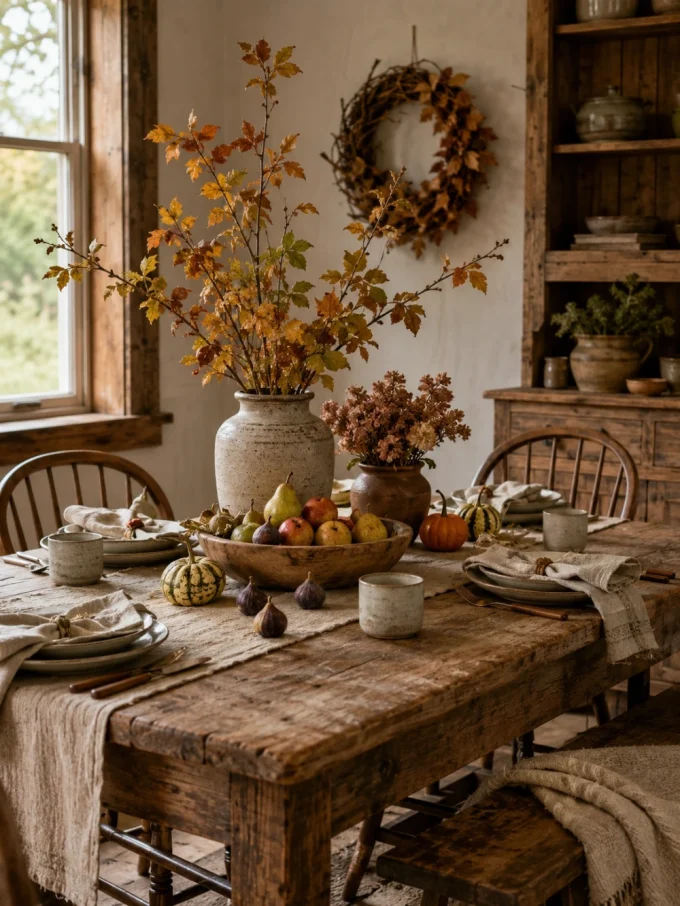
Rustic interiors naturally connect with seasonal changes.
Simple updates include:
- Fresh branches
- Dried flowers
- Linen table settings
- Seasonal fruits
- Natural wreaths
For seasonal inspiration, explore these autumn home decor trends.
Why It Works
Rustic design celebrates natural cycles rather than constant redesign.
Small seasonal changes can refresh the room without replacing major pieces.
Avoid
Adding too many themed decorations.
A rustic dining room should feel timeless throughout the year.
15. Create a Rustic Breakfast Nook Alternative
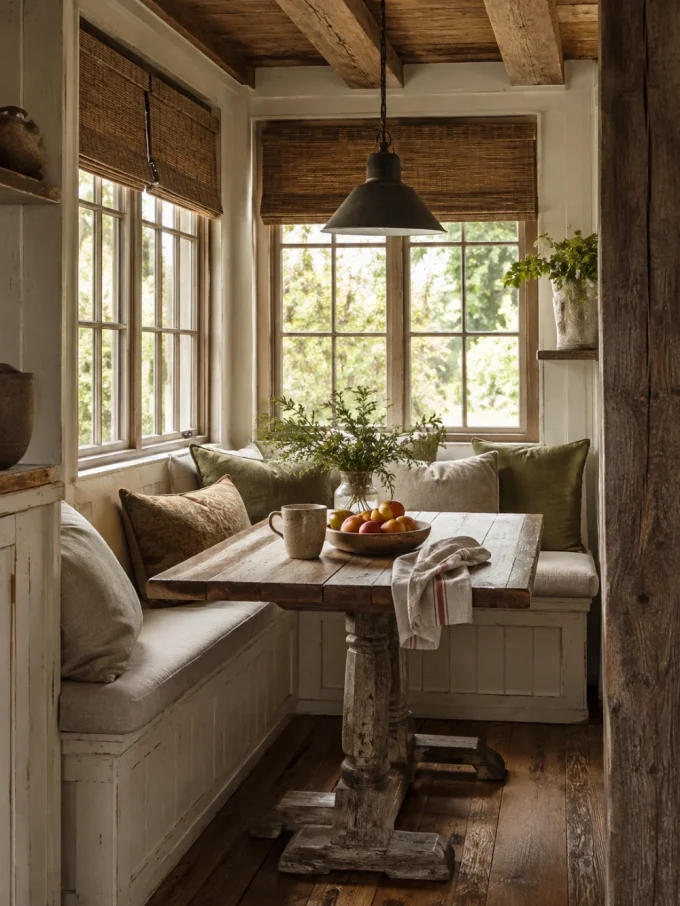
Not every home needs a formal dining room.
A rustic breakfast nook can provide a more casual gathering space.
Consider:
- Built-in benches
- Small wooden tables
- Window seating
- Soft cushions
Explore more ideas with these best breakfast nook ideas.
Best For
- Apartments
- Smaller homes
- Families wanting casual dining
Design Advantage
Breakfast nooks often use space more efficiently because seating can follow walls rather than requiring full table circulation on all sides.
16. Combine Rustic Style With Japandi Simplicity
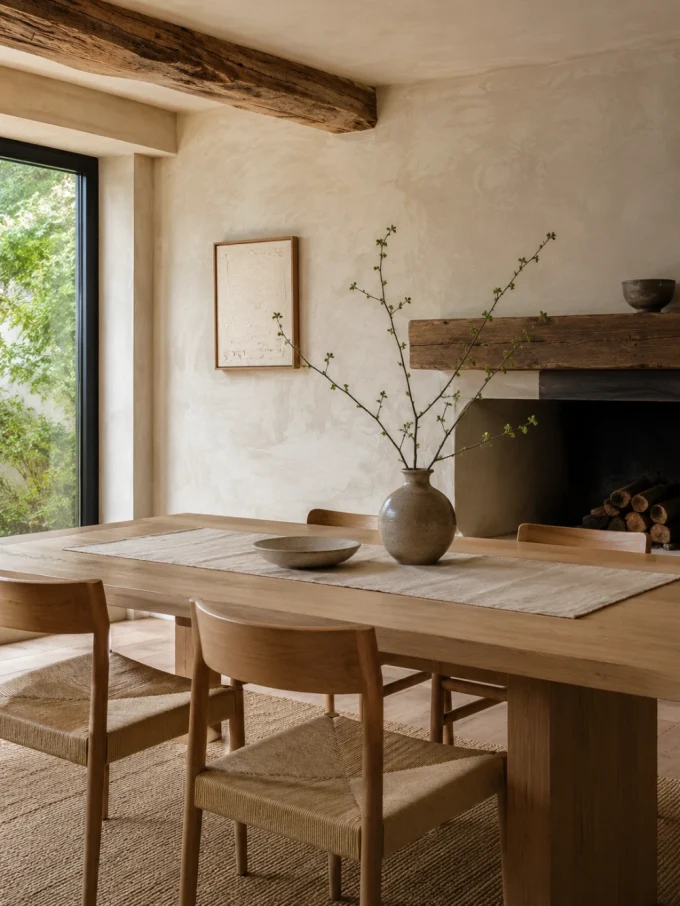
A modern rustic dining room can borrow from Japandi principles.
Combine:
- Light wood
- Simple furniture
- Natural textures
- Minimal decoration
- Calm colors
Explore related ideas through these cozy Japandi bedroom ideas.
Why It Works
Both styles value:
- Craftsmanship
- Function
- Natural materials
- Visual calm
Avoid
Removing too much warmth. A minimalist rustic room still needs texture and personality.
17. Create Rustic Outdoor Dining Inspiration Indoors
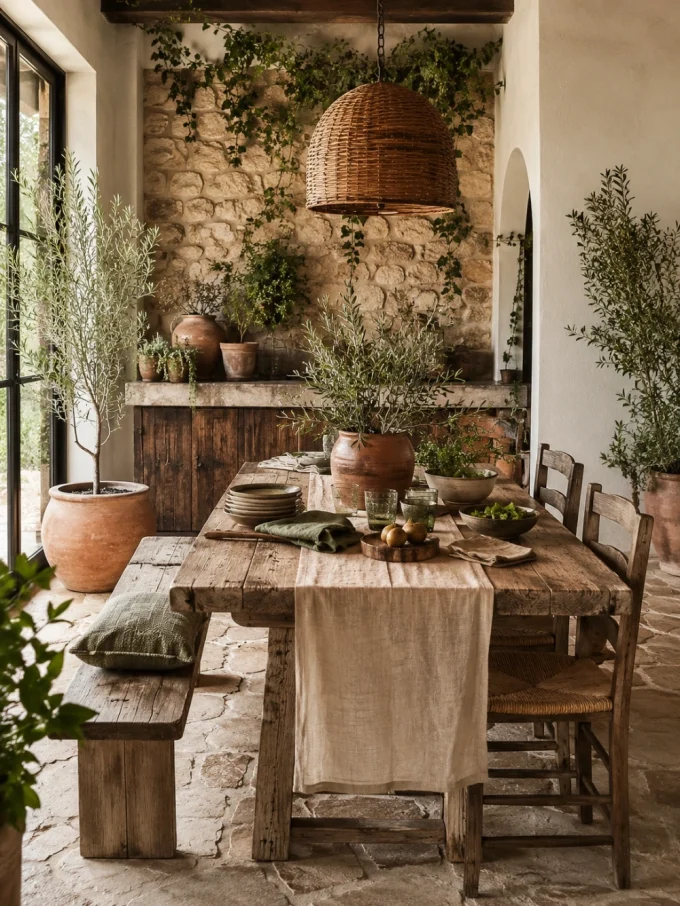
Rustic dining rooms often borrow from outdoor living.
Elements include:
- Natural wood
- Greenery
- Stone textures
- Earth-inspired colors
Outdoor spaces can also influence interior choices. Explore these modern gazebo ideas for ideas about natural materials and gathering spaces.
Why It Works
The connection between indoor and outdoor environments strengthens the relaxed feeling associated with rustic design.
18. Make the Dining Room Feel Collected Over Time
The final layer of rustic design is personality.
A convincing rustic dining room often contains:
- Pieces from different periods
- Family objects
- Vintage finds
- Handmade details
- Everyday items
Why It Works
A room feels authentic when it looks like it belongs to people.
The goal is not to recreate a farmhouse from a magazine. It is to create a dining room with warmth, memory, and function.
Rustic Dining Room Mistakes to Avoid
Rustic design works best when it feels natural and functional. Many unsuccessful rustic dining rooms fail because they focus on decoration instead of the underlying design principles.
The goal is not to make the room look older. It is to make it feel more connected, comfortable, and enduring.
Mistake 1: Adding Too Many Farmhouse Decorations
One of the easiest ways to weaken a rustic dining room is adding too many themed accessories.
Examples:
- Oversized signs
- Artificially distressed objects
- Repeated farmhouse phrases
- Excessive vintage replicas
Why It Fails
Rustic style is based on materials and atmosphere, not decorations that announce the theme.
A reclaimed wood table naturally communicates rustic character. A room full of farmhouse accessories can feel temporary.
Better Approach
Invest in:
- Better furniture
- Natural textiles
- Quality lighting
- Authentic materials
Mistake 2: Choosing Appearance Over Comfort
A dining room needs to function every day.
A beautiful rustic table is not successful if:
- Chairs are uncomfortable
- Seating is too limited
- The table is difficult to maintain
- Movement feels restricted
Better Approach
Before buying, test the chair height and sit at the table.
Imagine:
- Family meals
- Long conversations
- Holiday gatherings
- Everyday use
The most successful rustic dining rooms feel welcoming because they work well.
Mistake 3: Using Too Many Distressed Finishes
Rustic does not mean everything should look aged.
Too many distressed surfaces can create visual noise.
Avoid combining:
- Artificially aged wood
- Fake antique finishes
- Multiple competing textures
Better Approach
Choose one or two character-rich elements.
For example:
- Reclaimed table + simple chairs
- Stone wall + modern lighting
- Vintage cabinet + clean flooring
Contrast creates balance.
Mistake 4: Ignoring Lighting Quality
Even beautiful rustic materials can feel dull under poor lighting.
Common problems:
- One bright ceiling light
- Cool white bulbs
- No layered lighting
Better Approach
Combine:
- Pendant lighting above the table
- Wall sconces
- Soft ambient sources
- Natural daylight
Lighting should reveal textures rather than flatten them.
Mistake 5: Choosing the Wrong Furniture Scale
A rustic dining table often has visual weight.
That can become a problem in smaller rooms.
Before purchasing, consider:
- Table length
- Chair movement
- Walkways
- Door openings
- Nearby furniture
A smaller table with the right proportions will usually feel better than an oversized statement piece.
Rustic Dining Room Materials Comparison
Choosing the right materials determines whether a rustic dining room feels authentic and practical.
Wood Options
| Material | Strengths | Considerations |
|---|---|---|
| Reclaimed wood | Unique character, visible history | May require more care and sourcing |
| Solid oak | Durable, timeless appearance | Higher investment |
| Pine | Affordable, warm appearance | Softer and easier to mark |
| Walnut | Rich color and premium feel | Higher cost |
Reclaimed Wood vs. New Wood
Reclaimed Wood
Best for:
- Character-focused rooms
- Historic homes
- Statement dining tables
Advantages:
- Unique grain patterns
- Natural imperfections
- Strong visual personality
Consider:
- Availability
- Surface maintenance
- Consistency
New Solid Wood
Best for:
- Long-term furniture investment
- Families needing durability
- Flexible interiors
Advantages:
- Predictable construction
- Easier sourcing
- Multiple finish options
Consider:
- May require aging through styling and surrounding materials
Rustic Fabric Choices
Linen
Advantages:
- Natural texture
- Relaxed appearance
- Breathable
Consider:
- Wrinkles easily
Best for:
- Curtains
- Cushions
- Casual dining settings
Leather
Advantages:
- Durable
- Develops character
- Easy to maintain
Consider:
- Higher initial cost
Best for:
- Dining chairs
- Accent seating
Synthetic Fabrics
Advantages:
- Affordable
- Easy cleaning
- Practical for families
Consider:
- May lack natural variation
Best for:
- High-use dining spaces where maintenance matters
How to Create a Rustic Dining Room on Different Budgets
A rustic dining room does not require a complete renovation.
The biggest improvements usually come from choosing the right priorities.
Budget-Friendly Rustic Dining Room
Focus on:
- Paint color
- Lighting upgrades
- Secondhand furniture
- Natural textiles
- Artwork
- Plants
Affordable improvements:
- Replace harsh lighting
- Add a textured rug
- Introduce wooden accessories
- Use linen table textiles
Mid-Range Rustic Dining Room
Consider investing in:
- Quality dining table
- Better chairs
- Pendant lighting
- Wall treatments
- Storage furniture
This is where the room begins to feel intentionally designed.
Higher-End Rustic Dining Room
Higher investments may include:
- Custom wood furniture
- Stone features
- Built-in cabinetry
- Architectural upgrades
- Premium flooring
Before spending more, ask:
“Does this improve how the dining room is used, or only how it photographs?”
Rustic Dining Room Layout Guide
A beautiful dining room still needs comfortable movement.
Think about:
Dining Table Placement
The table should:
- Fit the room proportionally
- Allow chair movement
- Avoid blocking pathways
Lighting Placement
Pendant lights should visually connect with the table rather than simply hang in the center of the ceiling.
Storage Placement
Cabinets and sideboards should support the room without reducing circulation.
Three Tests Before Buying Rustic Dining Furniture
Test 1: Tape the Floor Layout
Mark:
- Table footprint
- Chair positions
- Walking paths
This reveals scale problems before purchase.
Test 2: Bring Material Samples Home
View:
- Wood samples
- Fabric swatches
- Paint colors
under:
- Morning light
- Evening lighting
- Artificial light
Test 3: Consider Real Maintenance
Ask:
- Can this surface handle daily meals?
- Is cleaning realistic?
- Will the material age well?
A rustic dining room should become better through use, not harder to maintain.
Final Thoughts
The best rustic dining rooms are not created by copying a farmhouse image.
They succeed because they combine:
- Honest materials
- Comfortable furniture
- Warm lighting
- Practical layouts
- Personal details
Rustic design is ultimately about creating a room that feels connected to everyday life.
Whether your home is modern, traditional, small, or open-plan, the same principle applies:
Choose materials that age well, furniture that people want to use, and details that tell a story.
Frequently Asked Questions About Rustic Dining Rooms
What Colors Work Best for a Rustic Dining Room?
The most successful rustic dining rooms usually use colors inspired by nature.
Popular choices include:
- Warm white
- Beige
- Taupe
- Olive green
- Clay tones
- Brown
- Soft gray
- Muted blue
The goal is not creating a dark room. It is creating a palette that supports natural materials like wood, stone, and woven fabrics.
How Do You Make a Rustic Dining Room Look Modern?
A modern rustic dining room combines traditional materials with cleaner design choices.
Try:
- A reclaimed wood table with contemporary chairs
- Rustic textures with simple lighting
- Natural materials with minimal decoration
- Traditional furniture with modern artwork
The balance prevents the room from feeling outdated.
Does Rustic Style Require a Farmhouse?
No. Rustic design works in many homes, including:
- Apartments
- Modern houses
- Suburban homes
- Open-plan interiors
The style depends more on materials, textures, and atmosphere than the age or location of the property.
What Type of Dining Table Is Best for Rustic Style?
Solid wood tables are usually the strongest choice because they provide natural texture and durability.
Good options include:
- Oak
- Walnut
- Reclaimed wood
- Pine
The best choice depends on:
- Budget
- Maintenance expectations
- Room size
- Desired character
How Can I Create a Rustic Dining Room on a Small Budget?
Focus on high-impact changes:
- Improve lighting
- Add natural textiles
- Use secondhand furniture
- Introduce wood accents
- Choose a warm paint color