

The most useful autumn home decor trends for 2026 are not asking you to replace your house for three months. They are changing how rooms handle color, texture, light, pattern, and personality as evenings grow darker and life gradually moves indoors.
Current fall collections are leaning into richer reds, chocolate brown, rust, green, powder blue, tactile fabrics, heritage pattern, darker furniture, and warmer metals. Wider 2026 interiors are moving in the same direction: less sterile perfection, more layered comfort, vintage character, craftsmanship, and materials that reveal texture or age.
That does not mean your home needs all 19 ideas.
The better approach is to find the two or three that solve something your rooms actually need.
1. Burgundy and Oxblood Lead Autumn Home Decor Trends
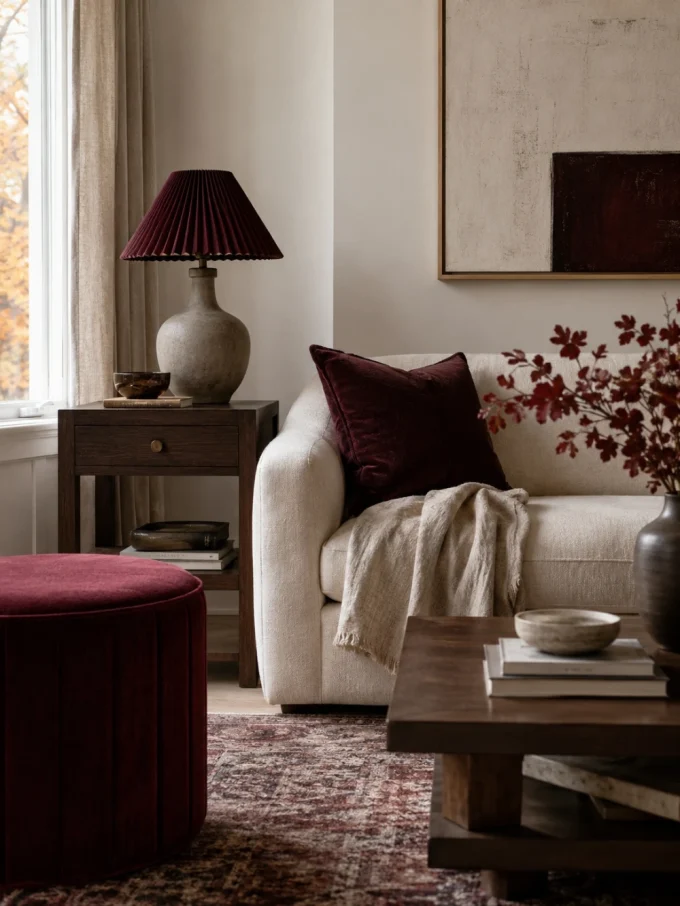
Burgundy and oxblood have the depth that makes red particularly convincing in autumn 2026. Current fall color reporting places oxblood and richer reds among the season’s stronger directions, while several autumn homeware collections are also leaning heavily into burgundy.
The appeal is not simply seasonal association.
Deep red gives pale or mid-tone rooms an anchor. It can make cream upholstery feel warmer, strengthen walnut furniture, and bring more weight to an otherwise quiet neutral scheme.
You do not need a burgundy sofa.
Start with:
- one cushion;
- a lampshade;
- an upholstered stool;
- a rug containing wine-red tones;
- a ceramic piece;
- or a small painted cabinet.
A room already containing dark timber, brown upholstery, and limited daylight needs more caution. Burgundy added everywhere can push it from intimate to oppressive.
Use pale linen, stone, glass, warm white, or a cooler accent to break the density.
That adaptability gives burgundy better staying power than obviously seasonal red accessories.
2. Chocolate Brown Is Becoming a Serious Neutral
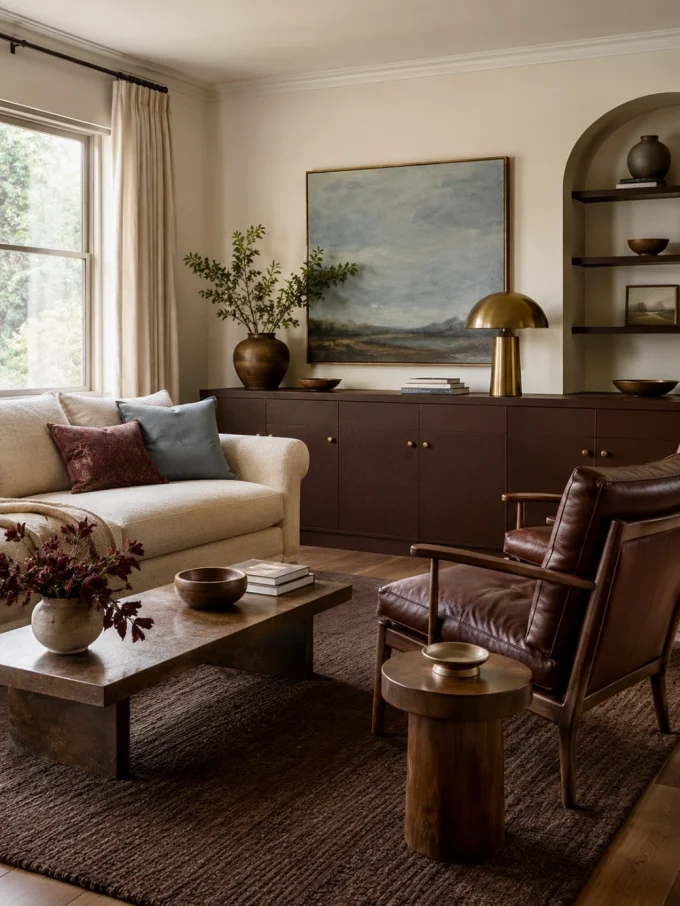
Chocolate brown is one of the clearest fall 2026 color signals. Designers quoted by Homes & Gardens describe it as a natural progression from years of lighter beige and warmer neutral palettes.
The important shift is treating brown as a neutral rather than a novelty.
A chocolate wool rug, brown-painted cabinet, leather chair, dark frame, or timber side table can ground colors that might otherwise feel disconnected.
Brown works particularly well with:
- pale blue;
- cream;
- rust;
- burgundy;
- green;
- aged brass;
- and natural timber.
The trade-off is visual weight.
A small room with brown walls, dark floors, heavy curtains, and bulky furniture may lose too much contrast. A lighter ceiling, cream upholstery, pale artwork, or reflective lamp can give the eye somewhere to rest.
For rooms where brown appears through furniture rather than paint, DecoralCove’s cozy modern living room ideas offer useful examples of building warmth through several materials instead of one dark surface.
3. Rust, Caramel, and Deep Green Are Outlasting Pumpkin Orange
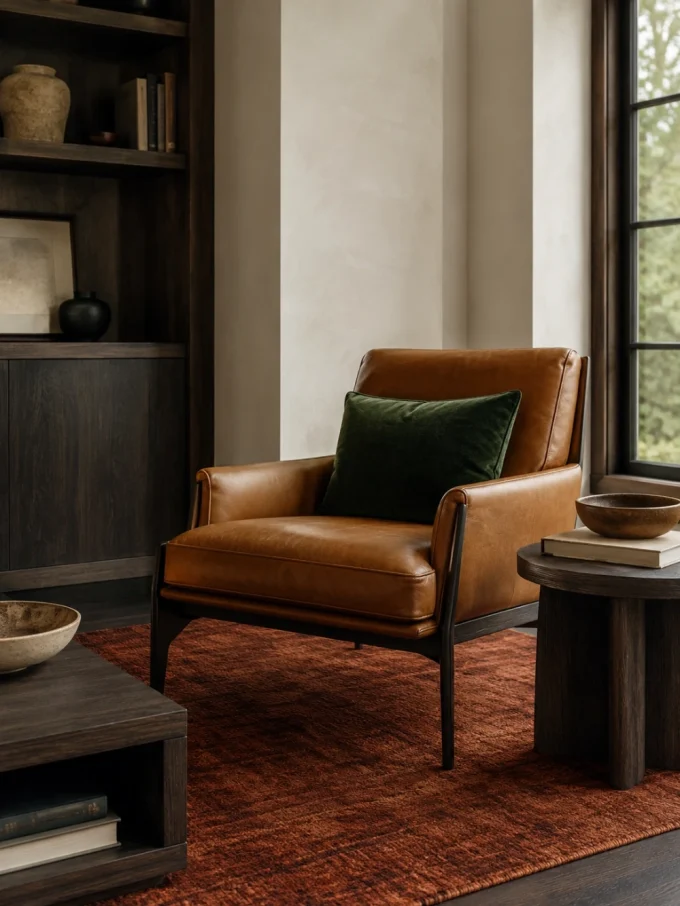
Rust, caramel, and deeper greens are appearing repeatedly across autumn 2026 collections alongside burgundy and brown.
They work because they suggest autumn without becoming seasonal props.
A caramel leather chair still works in spring.
A deep green cushion can stay all year.
A rust wool rug is not dependent on October.
That makes these colors easier to justify than an entire collection of items decorated with leaves.
Try two rather than all three.
For example:
Cream + rust + dark green gives a neutral room richer contrast.
Caramel + blue + dark timber feels warmer without becoming obviously seasonal.
Rust + burgundy + pale stone works where the room already has strong architectural restraint.
Avoid stacking every expected fall color together. Rust, mustard, orange, brown, burgundy, and forest green in one small room can become visually costume-like.
Autumn does not need every autumn color.
4. Powder Blue and Lilac Are Making Fall Palettes Less Predictable
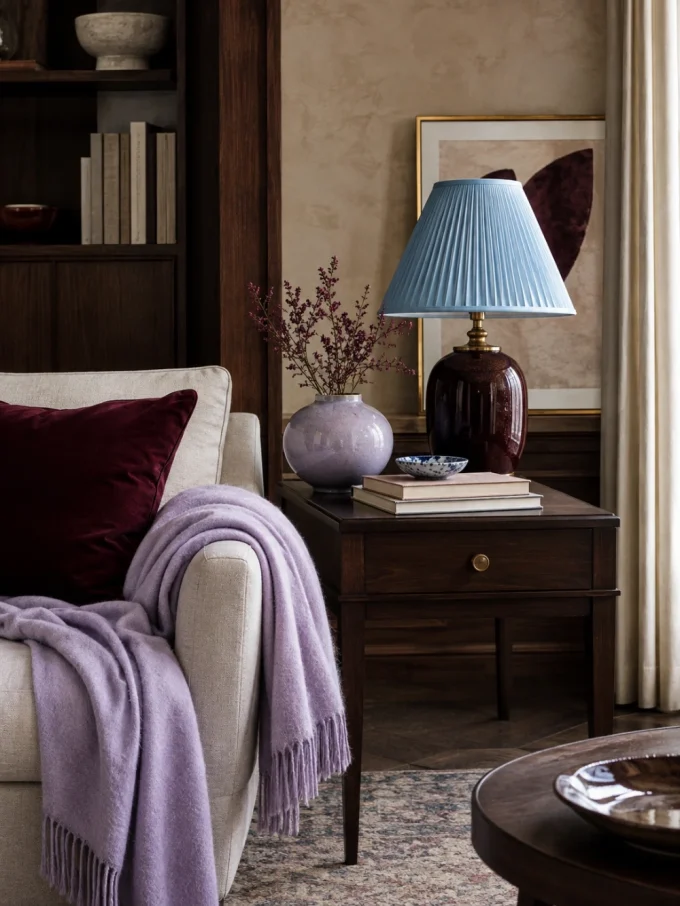
Perhaps the most interesting shift is the arrival of colors that traditionally read as spring.
Powder blue appears across autumn 2026 homeware collections, often combined with burgundy, while Better Homes & Gardens recently highlighted lilac as an unexpected fall color gaining attention.
The reason these combinations feel fresh is contrast.
A pale blue lampshade against dark walnut feels cooler and lighter.
Lilac beside oxblood creates a less predictable relationship than cream beside oxblood.
Neither requires you to repaint an entire room.
Try the trend with:
- a cushion;
- lamp;
- vase;
- table linen;
- framed print;
- or blanket.
Readers considering a larger commitment can compare DecoralCove’s cool blue paint ideas and purple paint color ideas.
For a trend this unexpected, reversible pieces are sensible. If you still love the pairing well after autumn, then consider paint or upholstery.
5. Dusty Yellow and Ochre Are Bringing Light Into Darker Palettes
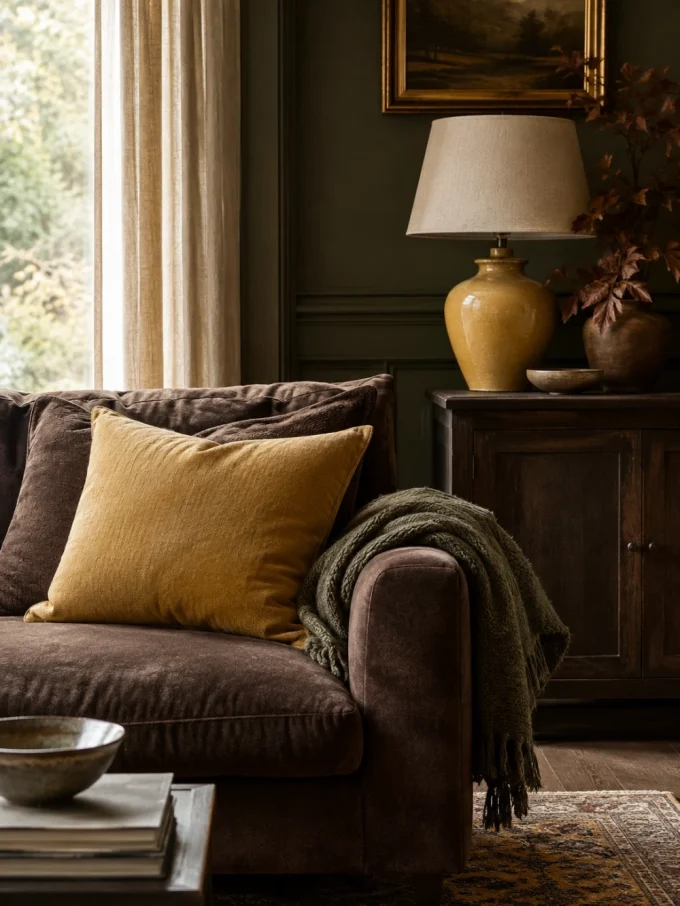
Not every autumn room needs to become deeper and moodier.
Current fall 2026 color reporting includes dusty yellow, harvest-gold territory, and richer yellows alongside brown, red, green, and blue.
Yellow is particularly useful when a seasonal palette becomes too dense.
A muted ochre cushion can interrupt a brown sofa.
A yellow ceramic lamp can brighten dark timber.
A warm gold thread inside a rug can connect several autumn shades without introducing another large block of color.
The key word is muted.
A highly saturated yellow may become the loudest object in the room. Dustier yellows integrate more easily with wood, cream, burgundy, olive, and aged metals.
Use it as illumination in the palette rather than another heavy layer.
6. Layered Comfort Is Replacing Formulaic “Cozy”
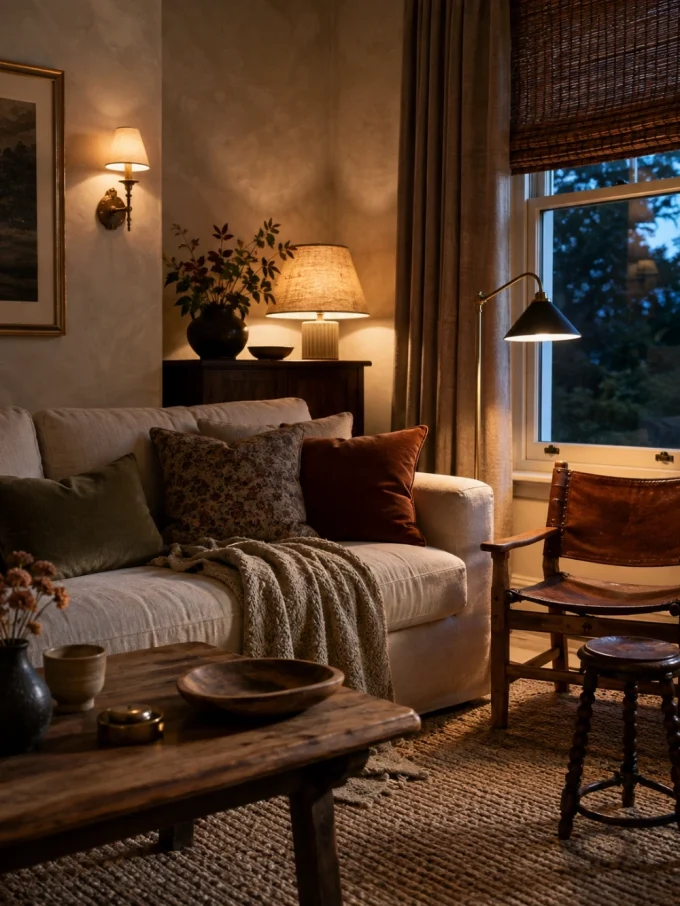
Adding three fluffy cushions is not the same as creating comfort.
One of the clearest emerging 2026 directions is what designers are calling layered comfort: different tactile materials, rugs, wall texture, old and new pieces, varied furniture, and multiple light sources working together without tipping into uncontrolled maximalism.
This suits autumn naturally.
Think:
linen sofa
- wool rug
- velvet cushion
- woven shade
- timber table
- substantial curtains
- several lamps.
Each material handles light differently, which becomes more noticeable after sunset.
The trade-off is maintenance.
A house with children, pets, or heavy daily use may not benefit from five delicate textiles and a deep-pile rug simply because they photograph well.
Choose layers that can survive the household.
DecoralCove’s cozy Japandi bedroom ideas show a quieter way to create warmth without filling the room.
7. Heritage Florals, Checks, and Patchwork Are Adding Pattern Back
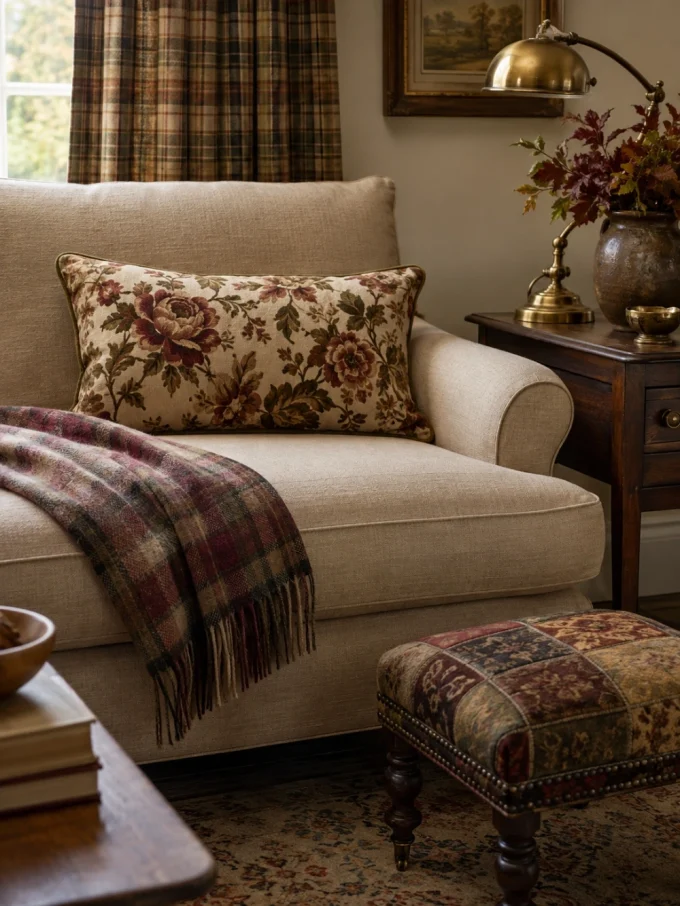
Current fall collections are leaning toward a heritage mood through florals, checks, patchwork, traditional motifs, and older-looking textiles. Pottery Barn’s fall 2026 arrivals, for example, include checks, printed textiles, velvet fringe, leather, and antique-inspired decorative accents.
Pattern is useful because it adds information without necessarily adding another physical object.
A plain beige sofa does not always need more accessories. Sometimes one floral lumbar cushion introduces enough movement.
Useful autumn applications include:
- plaid curtains;
- floral cushions;
- a check throw;
- patterned table linen;
- patchwork bedding;
- or one upholstered stool.
Watch pattern density.
A small-scale floral, checked rug, striped curtains, and highly patterned wallpaper can all be attractive separately and exhausting together.
Choose a lead pattern and let the others support it.
8. Tassels, Fringe, and Decorative Trims Are Becoming Details Again
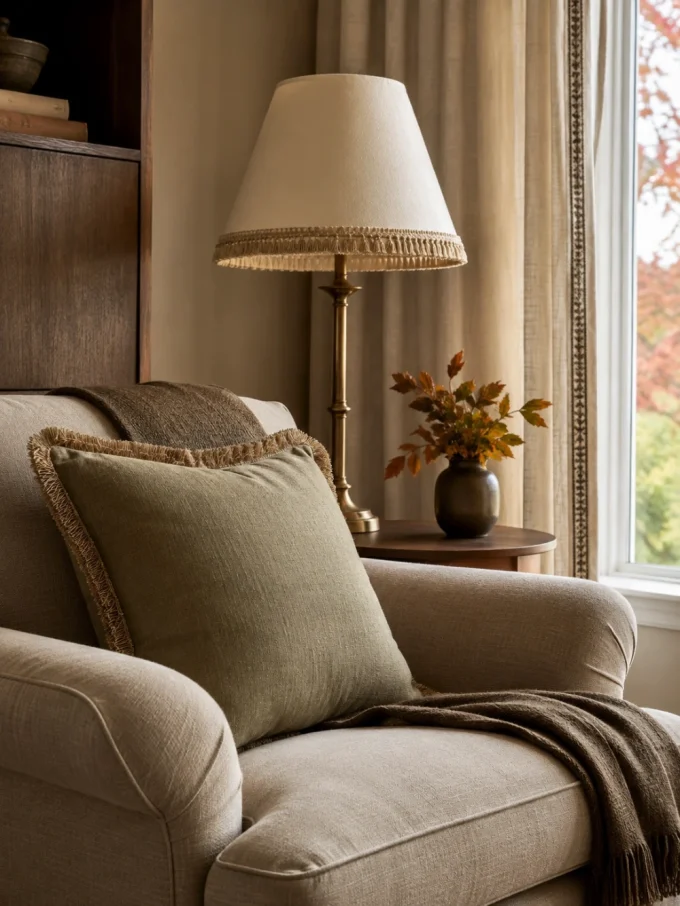
Vogue identifies tassels and trims among the notable interior directions shaping 2026, while current fall ranges are also showing fringed and tactile details.
This is a small trend with a useful advantage: it can change how a room feels without requiring expensive furniture.
A narrow fringe on a cushion introduces movement.
A tassel edge adds shadow along a lampshade.
Trim can make a plain curtain or upholstered piece feel less anonymous.
The danger is adding decorative edging everywhere.
Fringe on the sofa, curtains, lampshades, throws, ottoman, and cushions can quickly shift from detail to costume.
Use it where the edge of an object benefits from emphasis.
If you prefer handmade textile character rather than ready-made trim, DecoralCove’s DIY macrame wall hanging ideas offer another way to bring fiber and visible handwork into a room.
9. Dark Wood Is Giving Autumn Rooms More Visual Weight
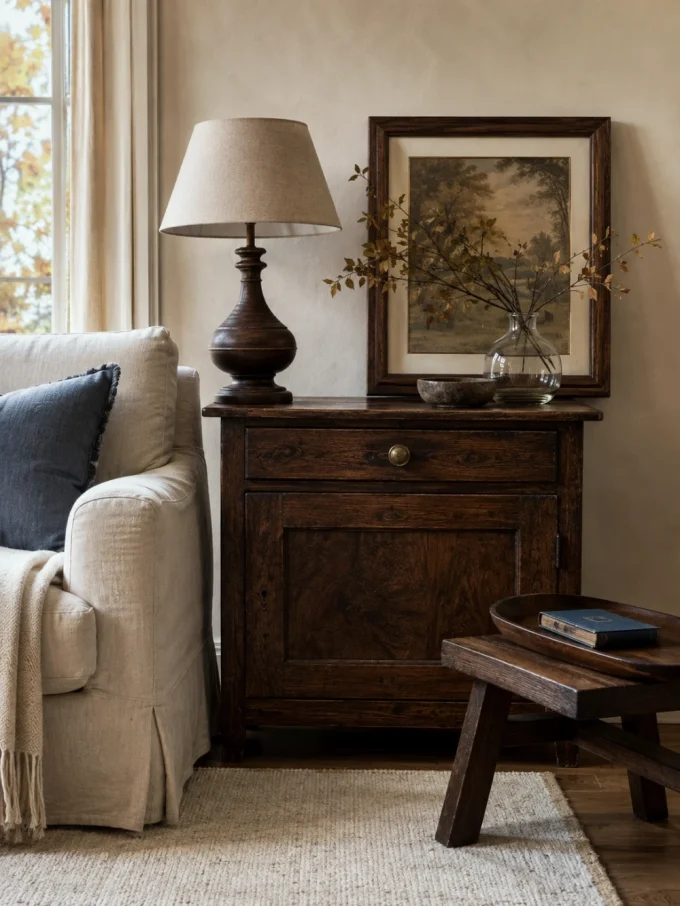
Dark woods such as walnut and aged oak remain a broader 2026 interior direction and fit naturally with autumn’s richer palette. Current trend reporting consistently points toward darker, aged, and more characterful woods rather than uniformly pale finishes.
You do not need to replace the dining table.
A smaller intervention may be enough:
- walnut frames;
- a vintage side table;
- dark wood lamp base;
- timber stool;
- bedside table;
- or tray.
The grain does much of the decorative work.
Aged timber also avoids the perfectly uniform appearance of mass-matched furniture.
Dark wood carries more visual weight, however. If the floor, cabinetry, and furniture are all dark, add contrast rather than another walnut object.
Cream linen, pale plaster, glass, blue, or lighter artwork can keep the room from becoming dense.
10. Patina Is Becoming More Valuable Than Perfection
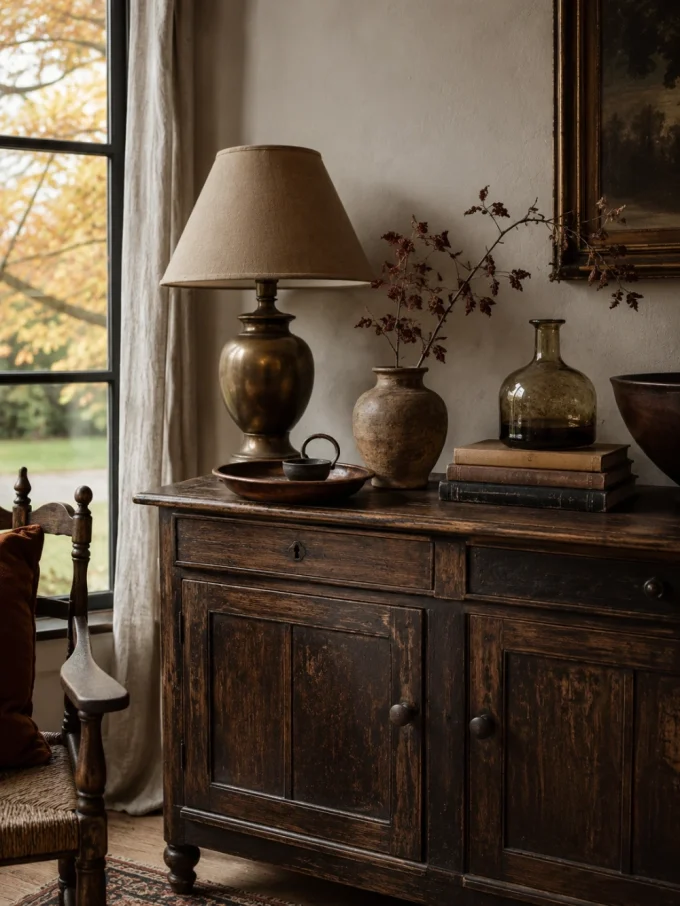
Related to the return of darker wood is a broader appreciation for materials that age visibly.
Vintage trend coverage for 2026 highlights aged wood, metal, glassware, furniture from different periods, and objects that feel collected rather than newly coordinated.
More recent reporting also points to increasing appreciation for naturally changing brass, bronze, and copper finishes rather than insisting that every surface remain pristine.
This does not mean damaged equals desirable.
A loose chair joint is still a loose chair joint.
A stained surface may still need restoration.
The useful distinction is between deterioration and character.
Softened edges, slight color variation, aged brass, worn timber, and older glass can introduce irregularity that a completely new room may lack.
Autumn is a particularly natural setting for those finishes because warmer light exaggerates grain, tarnish, and surface variation.
11. Vintage and Mixed-Era Rooms Are Replacing Matching Sets
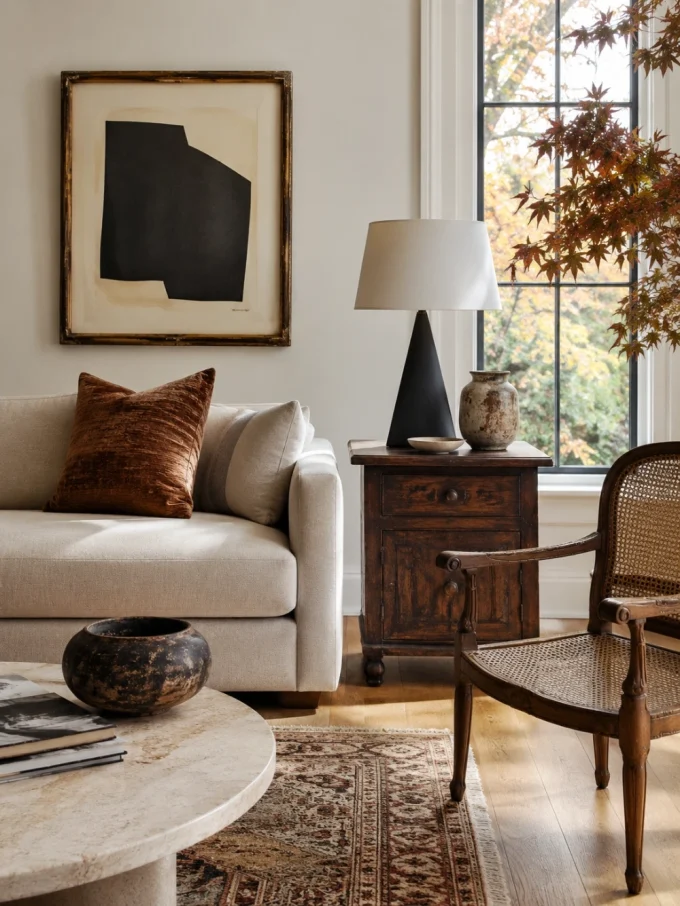
The wider 2026 movement toward lived-in interiors continues to favor rooms that combine objects from different periods rather than perfectly matched furniture packages.
This is one of the most useful trends to adopt slowly.
Keep the modern sofa.
Add an older side table.
Place a new print inside a thrifted frame.
Use an inherited chair beside a contemporary lamp.
Display an older ceramic piece instead of buying a set of matching seasonal objects.
The room gains contrast because pieces do not all share the same age, finish, or manufacturing language.
Do not buy random old objects simply because vintage is fashionable.
A piece still needs a job, appropriate scale, and a condition you can live with.
One meaningful older object usually contributes more than a shelf full of imitation antiques.
12. Rugs Are Becoming More Textural, Vintage, and Layered
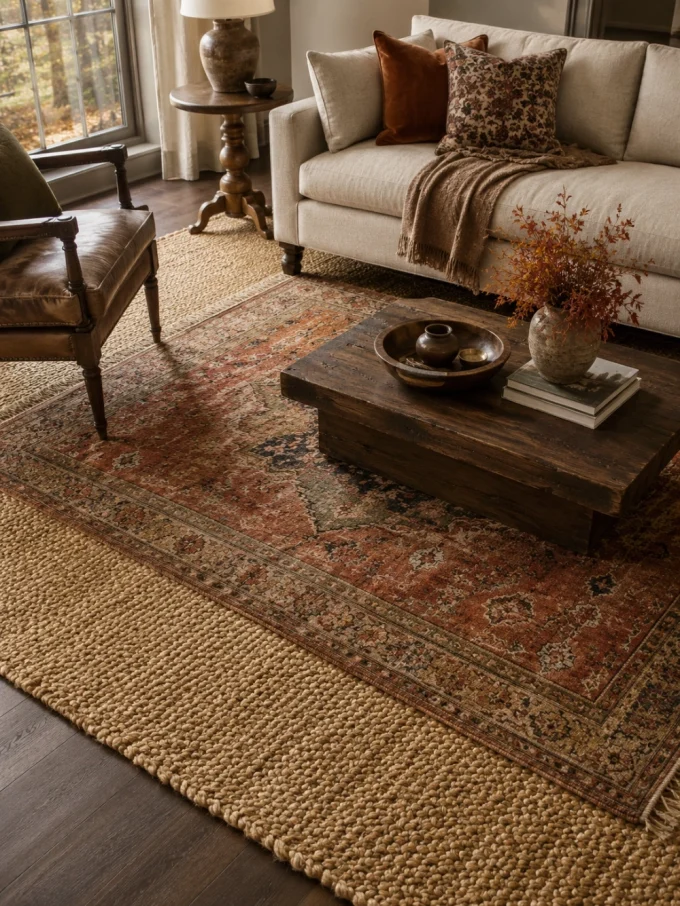
Rug trends for 2026 emphasize vintage character, hand-knotted construction, natural fibers, texture, layering, and designs with more individuality than flat generic neutrals.
Autumn gives rugs more work to do.
They add softness underfoot, absorb some room echo, introduce color and pattern, and visually connect furniture.
Layering can work particularly well where a smaller vintage rug sits over a larger natural-fiber base.
But there is a real practical limitation.
Layered rugs create more edges. That can be frustrating around doors, dining chairs, robot vacuums, children, or anyone with mobility concerns.
A single correctly scaled rug is better than fashionable layering that makes the room annoying.
Choose the floor treatment for the household first.
13. Wallpaper and Textured Walls Are Creating Atmosphere Before Furniture Arrives
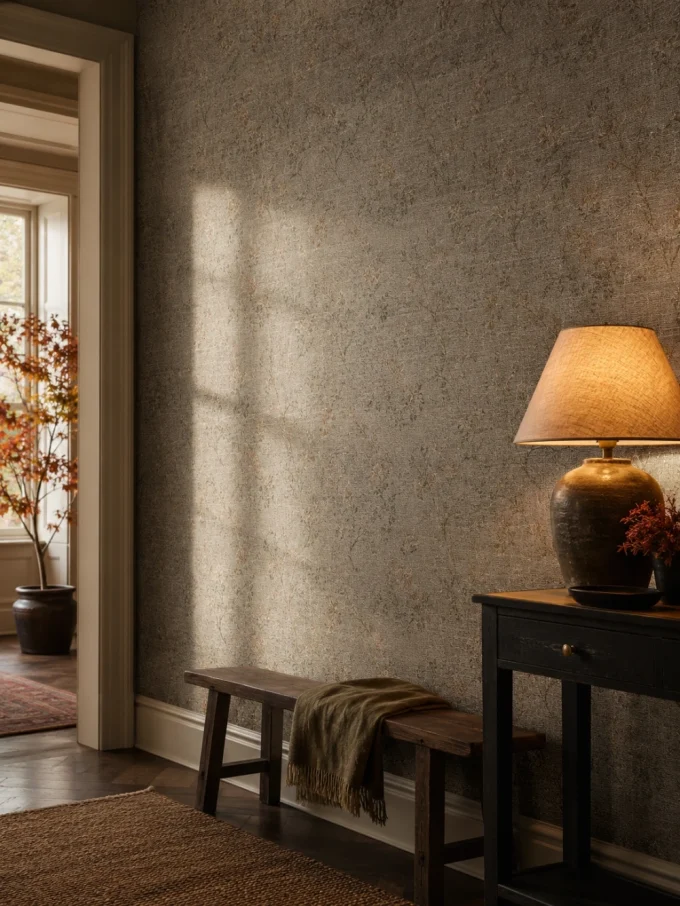
Wallpaper is becoming more tactile and atmospheric in 2026, with designers emphasizing grasscloth, subtle texture, heritage motifs, softened color, and surfaces that create depth rather than behaving like flat decoration.
That makes it particularly effective in autumn.
Lower-angle daylight and evening lamps exaggerate texture. A wall surface that appears quiet at noon may develop much more depth after sunset.
Consider:
- grasscloth;
- restrained florals;
- smaller heritage motifs;
- textured wallpaper;
- layered tonal designs;
- or a carefully chosen stripe.
This is a more permanent commitment than a throw.
Before installing it, consider wall condition, moisture, room size, pattern repetition, and how much other decoration already exists.
DecoralCove’s wall texture design ideas provide broader alternatives if you want depth without relying solely on pattern.
14. Millwork and Decorative Ceilings Are Moving Interest Into the Architecture
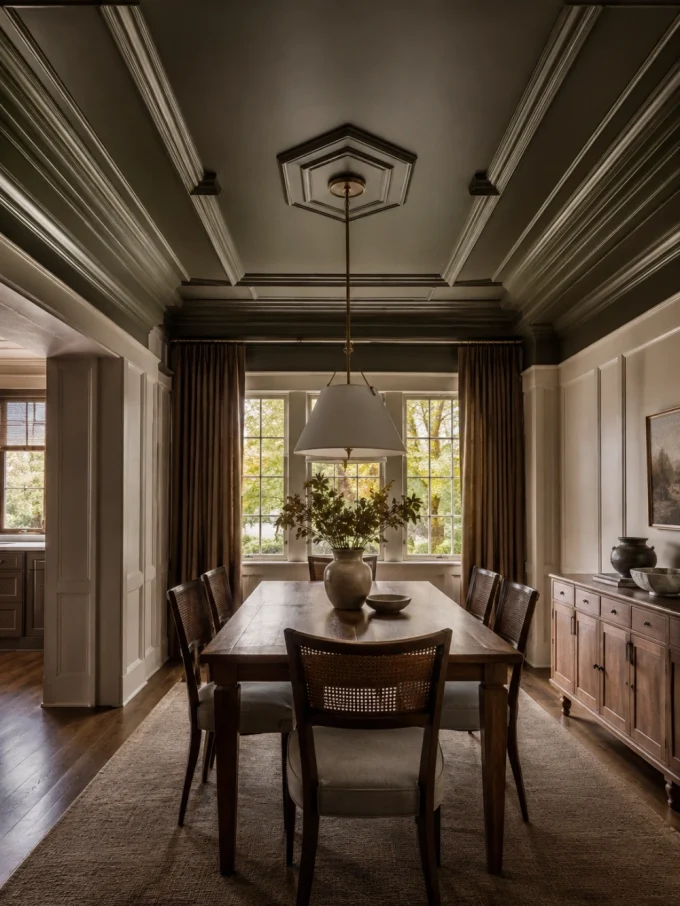
The current shift toward personality is not stopping at furniture.
Design coverage in 2026 continues to emphasize millwork, architectural detailing, and previously ignored surfaces such as ceilings. Designers have specifically pointed toward painted or wallpapered ceilings as an underused way to add character.
For autumn, a ceiling can deepen the mood without covering another wall with accessories.
A dining room might support:
- a darker ceiling;
- subtle wallpaper overhead;
- painted beams;
- molding;
- or stronger trim.
This is not a seasonal DIY decision to make impulsively.
A dark ceiling changes perceived height. Detailed trim creates cleaning and painting work. Wallpaper overhead is substantially more involved than changing cushions.
Treat architectural trends as long-term decisions.
Explore DecoralCove’s modern ceiling ideas and unusual wainscoting ideas before deciding which surface deserves the detail.
15. Layered Lighting Is Becoming the Real Autumn Mood Setter
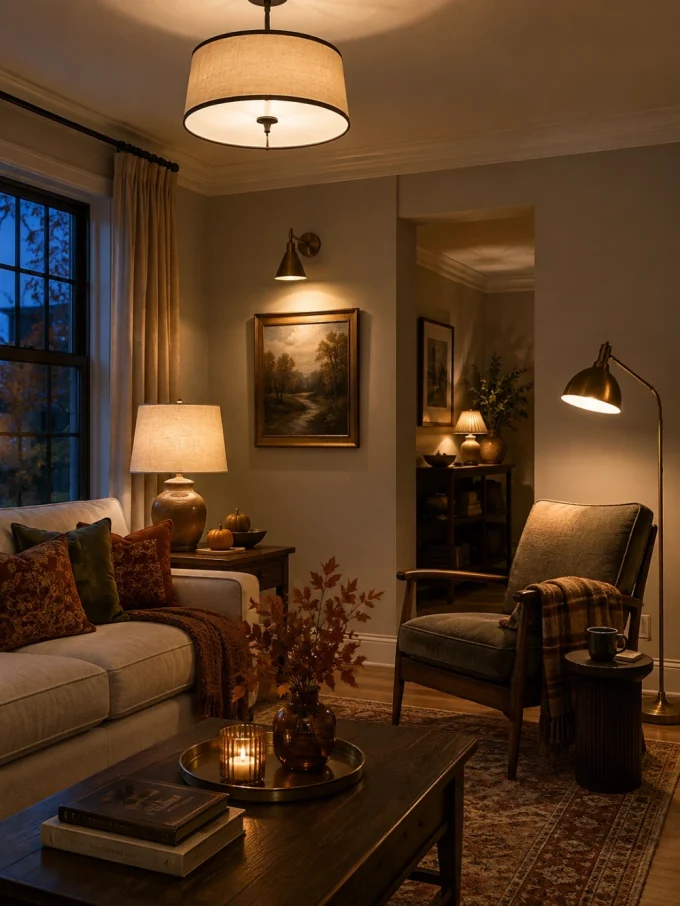
Autumn decorating becomes much more convincing when the lighting changes with the season.
Current 2026 coverage repeatedly emphasizes multiple lighting sources rather than depending on a single overhead fixture, while fall collections are introducing more expressive sconces, table lamps, and floor lamps in moody finishes.
Think in levels:
- ceiling light for general visibility;
- table lamp beside seating;
- floor lamp near a reading chair;
- wall sconce near artwork;
- small shelf or console lamp.
The result is not simply “cozier.” It gives different parts of the room different jobs after dark.
Do not make every lamp dim.
Reading, cooking, stairs, and cleaning still need adequate illumination.
For wall-based options, see DecoralCove’s wall sconce light fixture ideas and indoor wall-mounted light fixture ideas.
16. Silver Is Joining Brass Instead of Replacing It
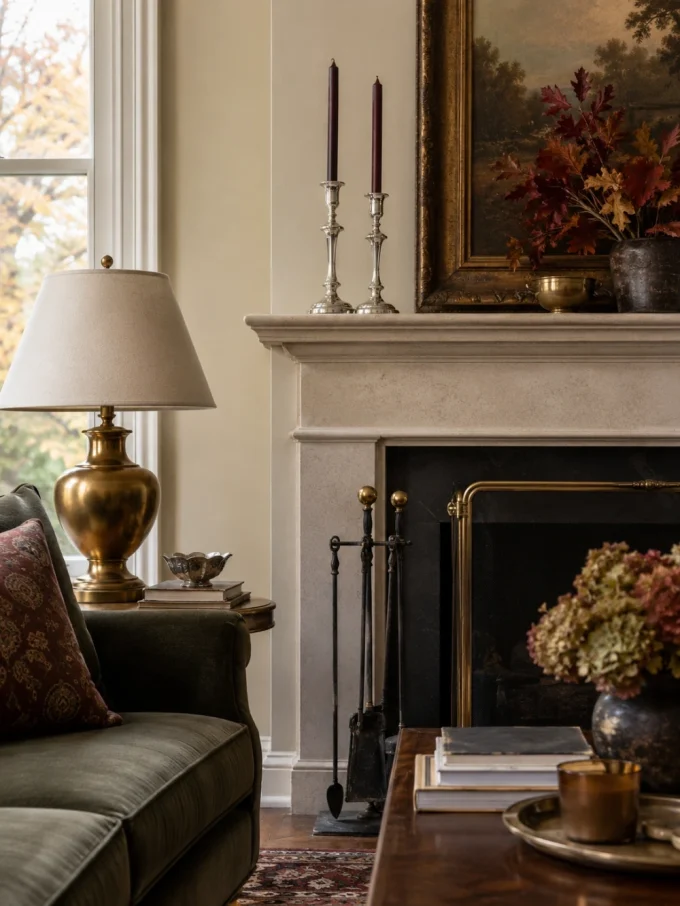
Warm brass still works beautifully with autumn colors, but silver is re-entering interiors as a softer metallic counterpoint.
Shea McGee’s 2026 trend commentary specifically notes increasing use of silver alongside continued interest in unlacquered and antique brass.
That does not mean replacing every brass handle.
Mixed metals can make a room feel less formulaic when there is enough repetition to look deliberate.
For example:
- silver candlesticks;
- brass lamp;
- dark iron fireplace tools;
- aged bronze frame.
Keep one metal dominant and let another appear in smaller amounts.
This is easier than trying to make every metallic finish in the room identical.
Autumn color helps because burgundy, blue, brown, cream, and dark green can all sit comfortably between warmer and cooler metals.
17. Glossy Lacquer Is Cutting Through Autumn’s Matte Textures
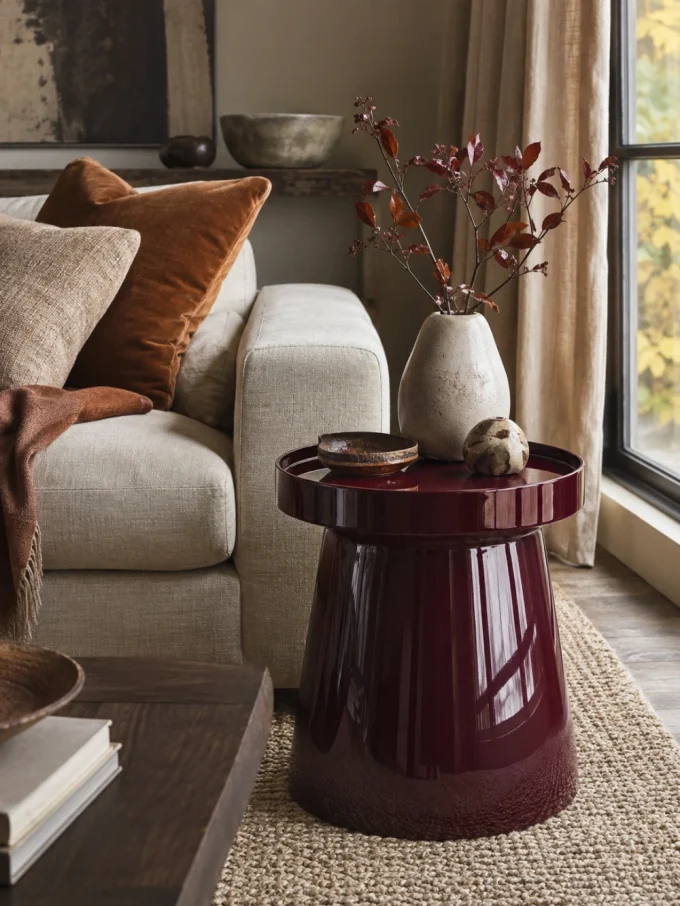
Autumn rooms can become overwhelmingly matte: wool rug, linen sofa, rough timber, textured walls, stone, and ceramic.
Gloss creates relief.
Current 2026 coverage shows renewed interest in lacquer because of its ability to reflect light and intensify color, particularly in more expressive interiors.
Start small.
A lacquered tray, side table, frame, cabinet, or lamp can introduce one reflective surface against softer materials.
Deep plum, burgundy, green, or even pale mauve can be particularly striking in a room dominated by fabric and wood.
There is a maintenance and installation trade-off.
High gloss reveals imperfections far more readily than matte finishes, and large lacquered walls or ceilings require excellent preparation.
For most homes, a movable object is the safer way to test the trend.
18. Handcrafted and Artisan Pieces Are Carrying More of the Personality
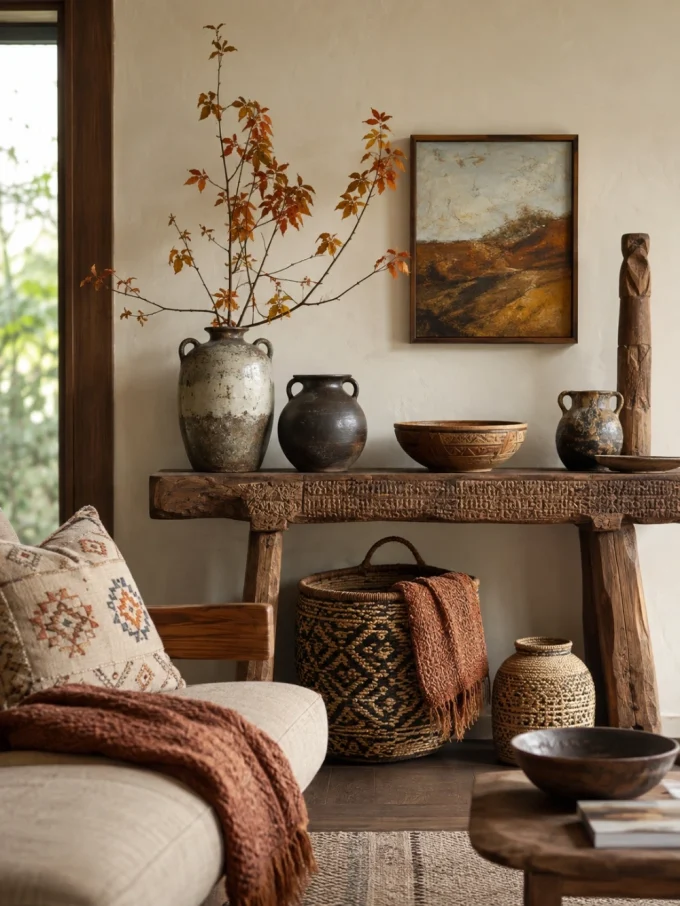
The larger direction of 2026 interiors is toward character, craftsmanship, natural materials, and objects that feel less interchangeable. Vogue’s trend coverage emphasizes organic and imaginative interiors, while other current designer reporting continues to favor handmade detailing and personal objects over generic decoration.
Autumn is a good time to use this selectively because tactile surfaces become more noticeable indoors.
Consider:
- handmade ceramics;
- carved timber;
- woven baskets;
- hand-thrown bowls;
- stitched textiles;
- small original artwork;
- or objects you make yourself.
DecoralCove’s air-dry clay ideas can be useful if you want a handmade decorative object without buying another mass-produced seasonal accessory.
But handmade should not become another label to collect.
A poorly made object is not automatically valuable because it is imperfect.
Choose pieces whose material, shape, or function genuinely earns a place in the room.
19. Autumn Tablescapes Are Becoming More Collected and Less Disposable
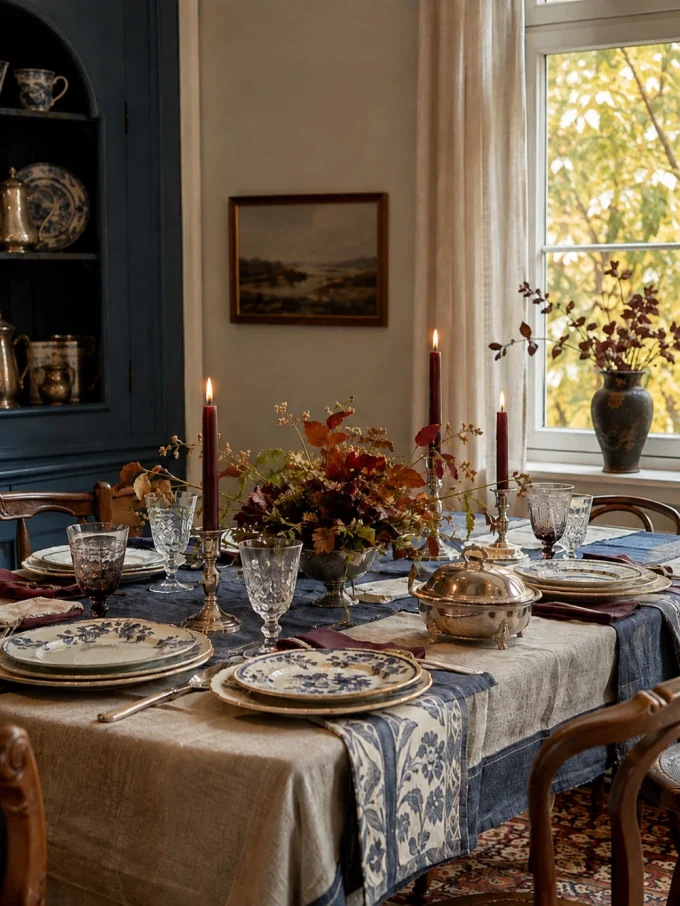
Decorating the dining table is receiving renewed attention in 2026. Shea McGee has identified more elaborate, tradition-rooted tablescapes as a notable direction, using silver, linens, blue, vintage-inspired serving pieces, and botanical tableware rather than matching disposable seasonal sets.
That approach translates particularly well into autumn.
Try:
- linen rather than paper;
- mismatched older glassware;
- silver or aged-metal serving pieces;
- seasonal flowers;
- a restrained branch arrangement;
- ceramic plates;
- burgundy candles;
- or one patterned tablecloth.
The dining table should still function.
A centerpiece so tall that guests cannot see one another is unsuccessful regardless of how good it looks.
If the table is used for homework, work, or breakfast every day, keep the arrangement easy to move.
DecoralCove’s flower home decor ideas can help with botanical arrangements, while best breakfast nook ideas offers broader inspiration for smaller everyday dining areas.
Final Thoughts
The best autumn 2026 trends are not the ones that require the biggest seasonal shopping trip.
Chocolate brown, darker wood, layered lighting, useful rugs, vintage furniture, better textiles, craftsmanship, and walls with genuine texture can remain valuable long after fall.
Burgundy, lilac, powder blue, fringe, lacquer, or an elaborate tablescape are easier places to experiment. Test them with a cushion, lamp, bowl, tray, table linen, or small piece before turning them into a permanent room decision.
Most importantly, look at what changes in your home when autumn actually arrives.
Perhaps the living room becomes dark too early.
Fix the lighting.
Perhaps everyone starts using the sofa more.
Improve the textile layer.
Perhaps coats and wet shoes overwhelm the entrance.
Solve the storage before styling it. DecoralCove’s chic narrow hallway decor ideas and stunning hallway ideas can help where the seasonal problem begins at the door.
Perhaps the fireplace becomes the visual center of the room again.
Give it enough space to do that rather than covering the mantel with dozens of seasonal objects; these modern fireplace ideas can help establish the year-round composition first.
And if autumn means spending more evenings outside around warmth, DecoralCove’s modern backyard fire pit ideas extend the same idea beyond the living room.
A house does not need to advertise autumn.
It should simply feel better suited to living in it.
Frequently Asked Questions
What are the biggest autumn home decor trends for 2026?
The clearest directions include richer browns and reds, burgundy, oxblood, rust, deep green, unexpected blue and lilac, layered textiles, heritage pattern, vintage furniture, darker wood, textured walls, expressive lighting, mixed metals, and more personal or handcrafted decor. Current autumn collections and wider 2026 design reporting support this movement toward richer, more layered interiors.
What autumn decor colors are trending in 2026?
Chocolate brown, oxblood, burgundy, rust, caramel, dark green, dusty yellow, and blue are among the strongest current fall signals. Lilac is also appearing as a less traditional seasonal option.
How can I decorate for autumn without pumpkins?
Change texture, light, and color instead of relying on seasonal symbols. A wool rug, velvet cushion, dark wood side table, warmer lamp, rust textile, vintage ceramic, or seasonal botanical arrangement can shift the room toward autumn without a single pumpkin.
Which autumn decor trends have the best staying power?
Dark wood, vintage furniture, layered lighting, quality rugs, natural materials, handmade pieces, useful textiles, and well-considered wall finishes have broader relevance beyond autumn. They are part of wider 2026 interior movements rather than one short seasonal product cycle.
How can renters use autumn decor trends?
Prioritize removable layers: rugs, cushion covers, blankets, lamps, artwork, table linens, ceramics, flowers, and portable storage. DecoralCove’s rental apartment decorating ideas cover more reversible strategies. Check your rental agreement before painting, drilling, wallpapering, or changing fixed lighting.
When should I start decorating for autumn?
There is no design requirement to begin on a particular date. A more natural approach is to change the home when your routine changes—when evenings become darker, additional bedding becomes useful, outdoor shoes become messier, or you begin spending more time indoors.