
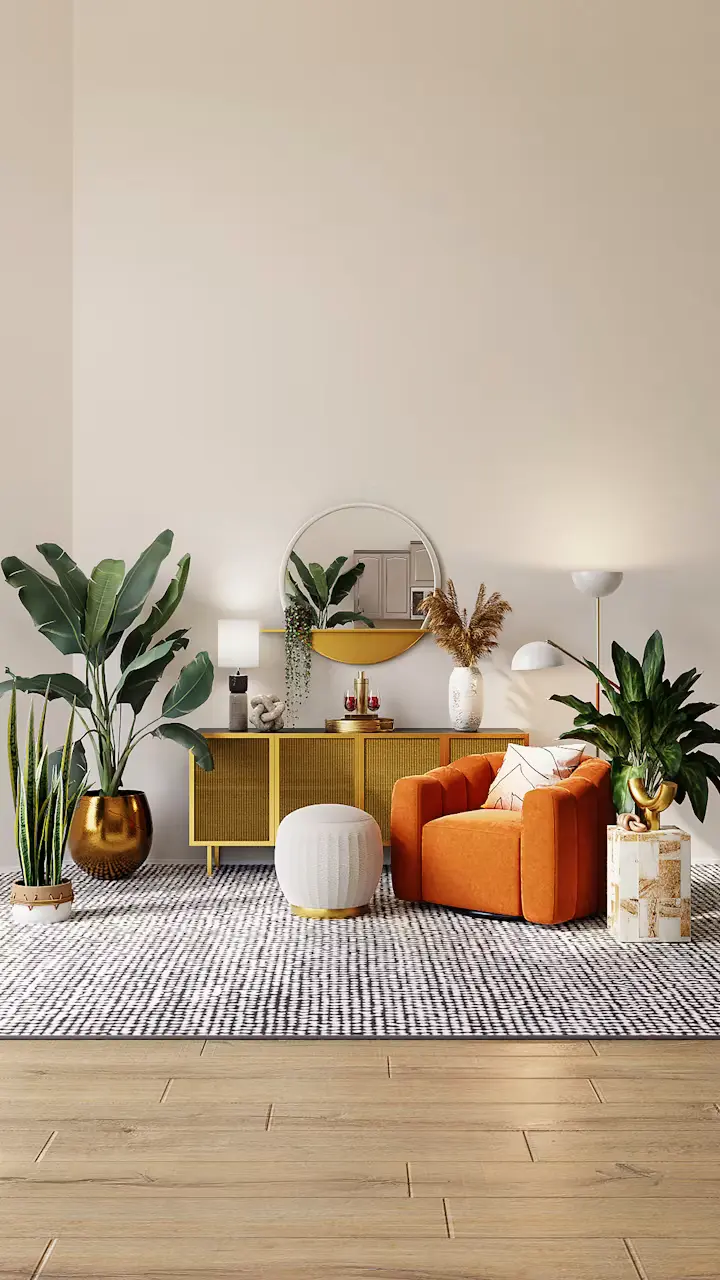
A blank wall behind the bed can make an otherwise well-furnished bedroom feel unfinished, but turning it into a random dark accent wall does not necessarily solve the problem. The wrong pattern can overpower a small room, heavy paneling can compete with the headboard, and a dramatic treatment can look strangely disconnected from everything around it.
The better solution is to decide what the wall needs to do. It might need to anchor the bed, add architectural depth, soften the room, improve an awkward proportion, integrate lighting, or bring enough character that fewer decorative objects are necessary.
These 17 unique bedroom feature wall ideas approach the wall in different ways—from paint and wallpaper to wood, fabric, storage, mirrors, lighting, and renter-friendly treatments—so you can choose one that works with the actual bedroom rather than simply copying a striking photograph.
1. Let Unique Bedroom Feature Wall Ideas Start With the Right Wall
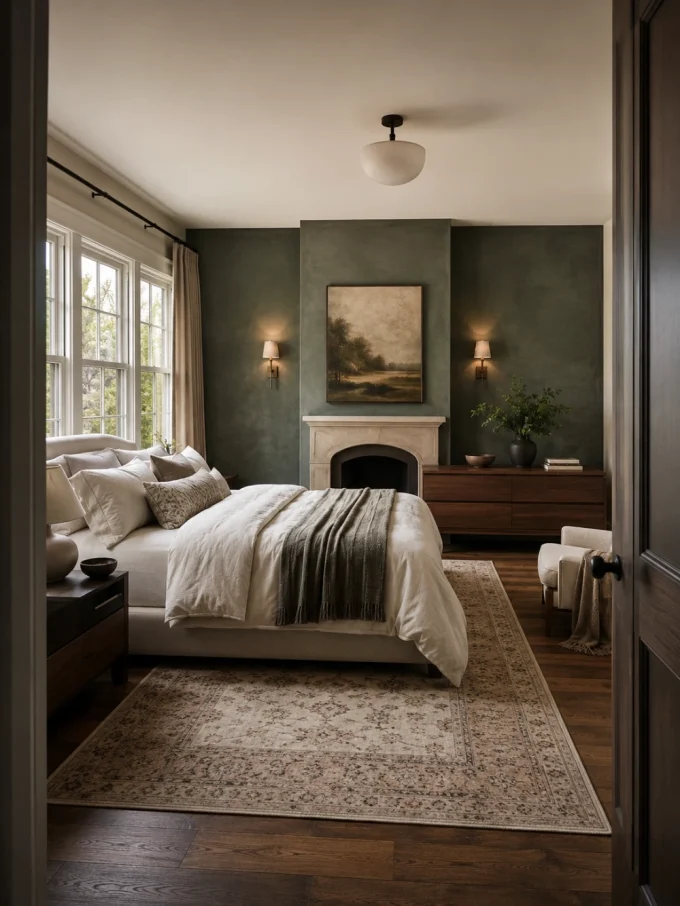
The wall behind the headboard is usually the obvious candidate, but “usually” is not the same as “always.”
Stand at the bedroom entrance first.
Where does the eye naturally travel?
If the bed is the largest object and faces the doorway, emphasizing its wall often strengthens the room immediately. Architectural Digest’s bedroom accent-wall guidance similarly notes that the wall behind the bed commonly makes sense because of the bed’s visual importance, while another wall may sometimes offer the better view or focal point.
But consider another wall when:
- the bed sits beneath several windows;
- built-in wardrobes dominate the headboard wall;
- an architectural chimney breast already creates a natural feature elsewhere;
- or the wall opposite the bed is what you actually see while resting.
A feature wall should clarify the room’s hierarchy.
If you need to keep turning around to understand why that particular wall is different, it may be the wrong wall.
2. Paint Architecture Onto a Wall That Has None
A plain painted rectangle is the simplest feature wall.
It is also the easiest to make look arbitrary.
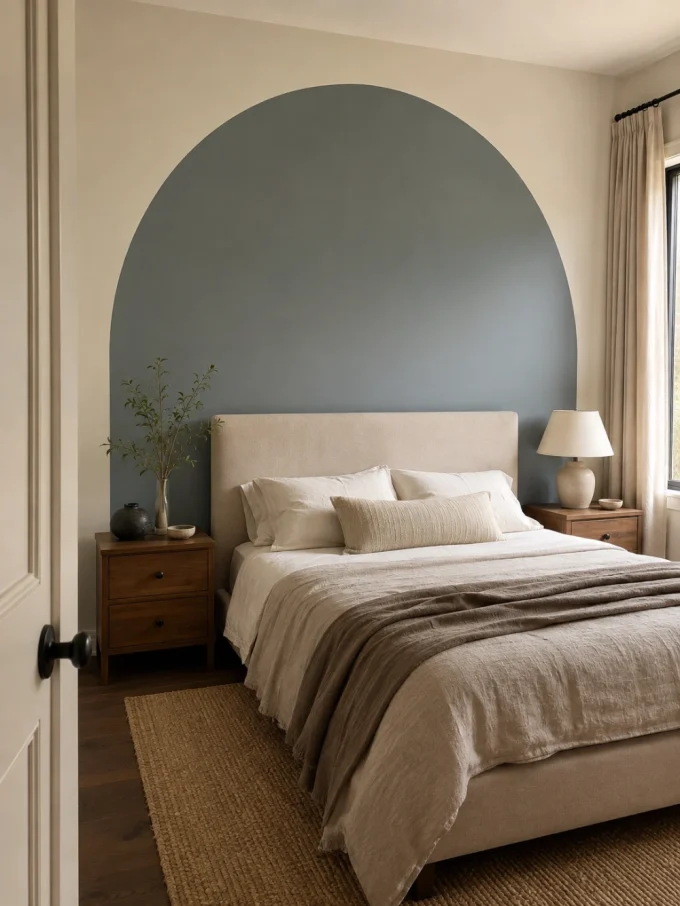
Instead of changing the entire wall to another color, use paint to create a deliberate architectural shape.
You could paint:
- a wide vertical field behind the bed;
- a full-width horizontal band aligned with the headboard;
- an oversized arch;
- two balanced blocks behind the bedside tables;
- or a geometric composition that responds to an awkward ceiling line.
The shape should relate to something physical in the room.
If the painted area is slightly wider than the bed and bedside tables together, it can visually bind those separate pieces into one composition.
If it ends randomly behind one lamp and cuts through another, it will expose the lack of planning.
Recent 2026 paint coverage also shows designers using paint to simulate architectural depth and delineation rather than treating color only as flat wall decoration.
If color is the main mechanism you want to explore, DecoralCove’s cool blue paint ideas and purple paint color ideas offer broader palette directions.
3. Let the Feature Color Escape the Single Wall
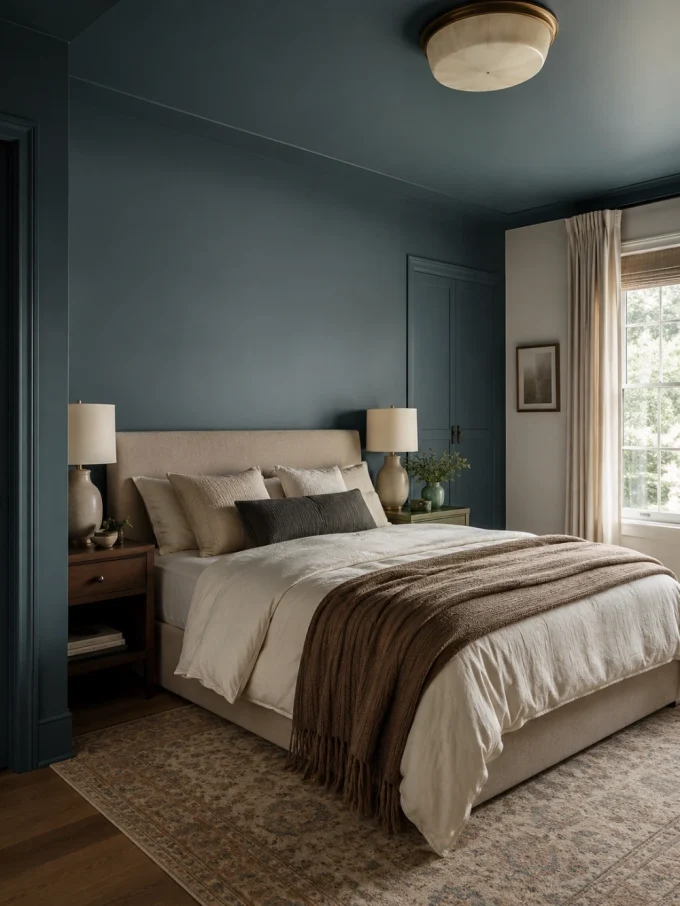
There is one reason some accent walls look dated: the color stops so abruptly at the corners that it feels pasted onto the room.
You do not always need to keep it trapped there.
Consider carrying the color:
- a short distance onto adjoining walls;
- onto the ceiling;
- across trim;
- around the headboard niche;
- or through the doors and wardrobes on the same plane.
This moves the design away from “one dark wall plus three pale walls” and toward a more integrated composition.
Current 2026 bedroom coverage is particularly interested in color-drenched rooms, where walls, trim, and sometimes ceilings share one saturated family to create a more immersive effect.
That does not mean every bedroom should be color drenched.
A room with limited daylight and several dark furnishings may benefit from stronger contrast rather than more saturation.
Use expansion when the single-wall boundary is the problem—not because wrapping a color around the room is currently fashionable.
DecoralCove’s modern ceiling ideas are useful if the treatment genuinely needs to continue overhead.
4. Choose Wallpaper for Scale, Not Just Pattern
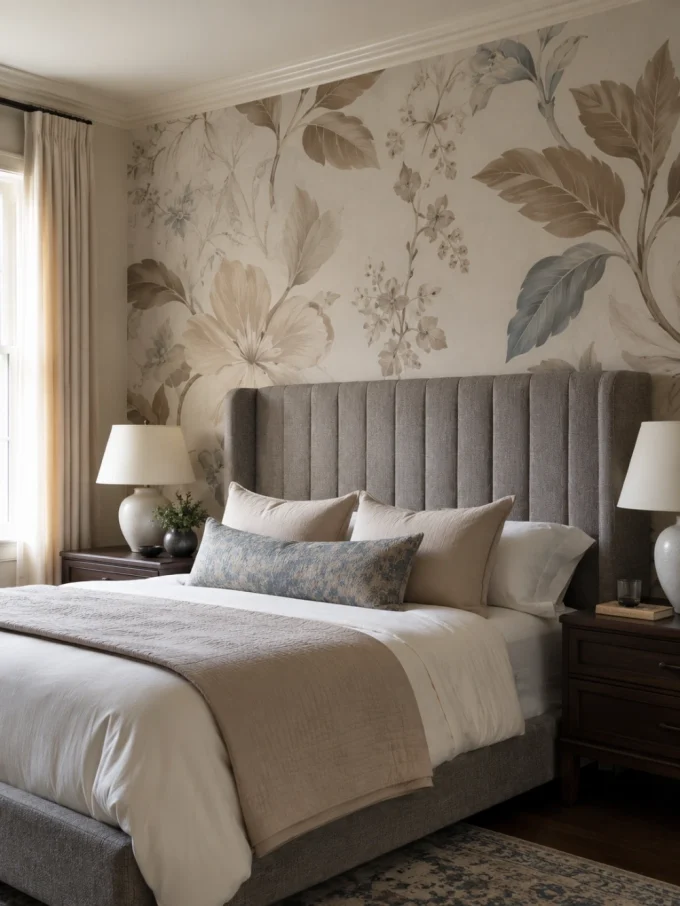
Wallpaper can give a feature wall far more information than paint: rhythm, imagery, texture, line, and several colors can arrive in one surface.
That is also why it can go wrong quickly.
Before choosing the print, look at the bed.
A large upholstered headboard already occupies significant visual space. Dense small-scale wallpaper behind it may create so many edges that the two compete.
A simpler bed can support a stronger pattern.
Consider:
- oversized botanicals;
- restrained stripes;
- abstract motifs;
- soft geometrics;
- heritage florals;
- or textured papers where surface matters more than obvious pattern.
Good Housekeeping’s current bedroom accent-wall coverage continues to show wallpaper as a major route to a statement wall, while Architectural Digest also includes it among the most established bedroom treatments.
Do not buy wallpaper from a close-up product photograph alone.
View a large sample from approximately the distance at which you will see it from the bed.
Pattern scale changes dramatically when it covers an entire wall.
5. Use a Mural as the Artwork, Not the Background for More Artwork
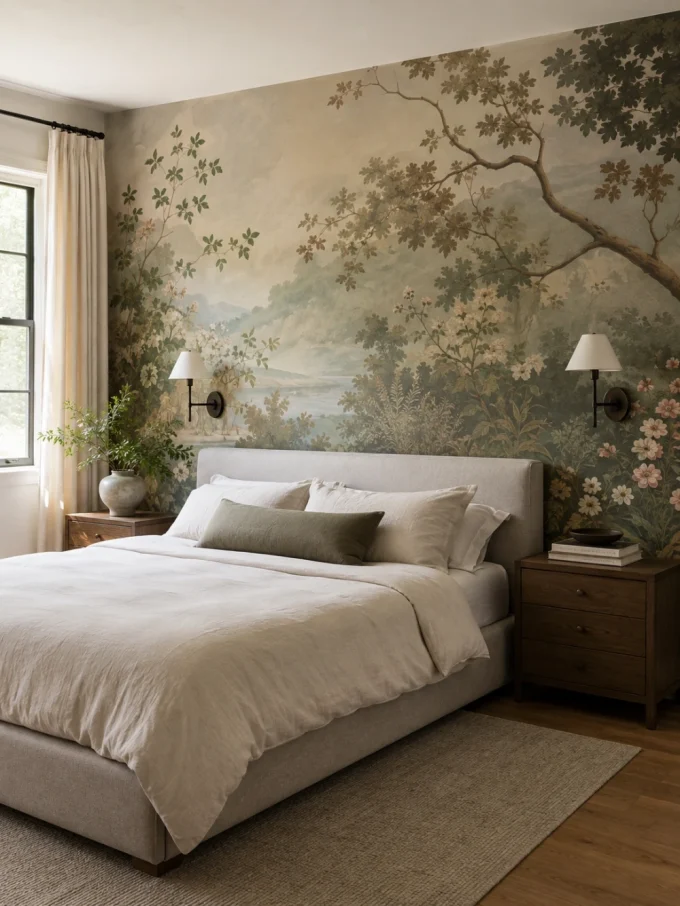
A mural can turn one wall into the main visual event.
That means it usually does not need much help.
A landscape, abstract wash, botanical scene, hand-painted design, or photographic mural can replace the need for multiple frames over the bed.
The practical question is where the most important part of the image falls.
A beautiful mural with its focal detail directly behind a tall headboard may waste the composition.
Before ordering or painting one, map:
- the headboard height;
- bedside furniture;
- sconces;
- switches;
- and any part of the image that should remain visible.
Keep the rest of the room comparatively controlled.
The mural already provides color variation and movement.
Adding a patterned rug, heavily patterned bedding, gallery wall, and bold curtains may leave the eye nowhere quiet to rest.
6. Build an Upholstered Wall When the Room Needs Softness
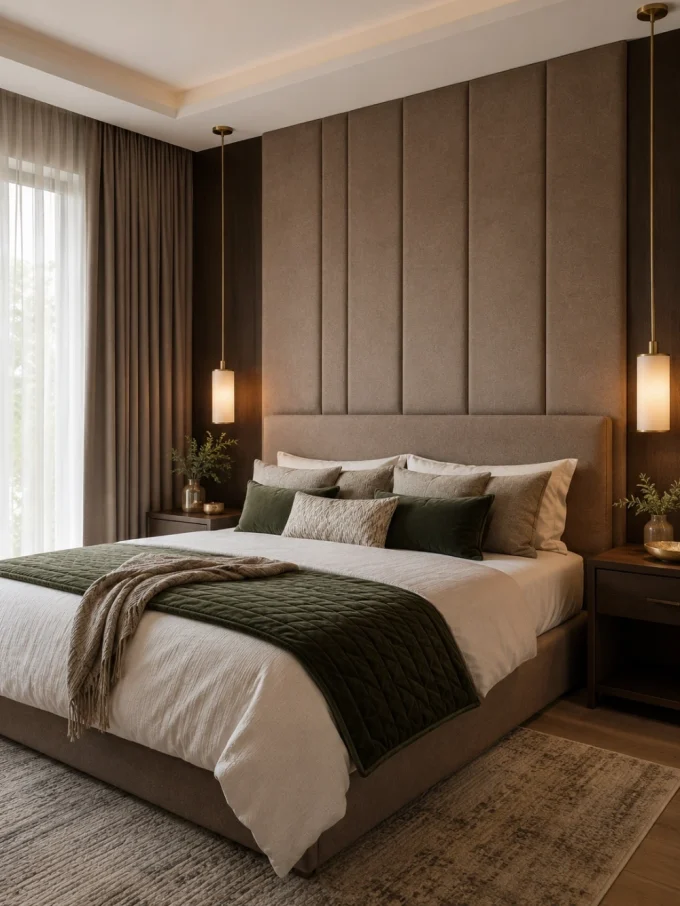
A feature wall does not have to be a hard surface.
Upholstered panels can extend the visual language of a headboard across more of the wall, creating physical depth and a much softer transition behind the bed.
Current 2026 bedroom design coverage is giving more attention to upholstered walls, padded panels, and fabric-covered surfaces as bedrooms move toward tactile, cocooning materials.
Possible treatments include:
- vertical upholstered panels;
- one broad padded rectangle;
- channel upholstery;
- fabric-covered framed sections;
- or a headboard that continues almost to the ceiling.
The strongest version usually relates directly to the bed rather than covering the wall for its own sake.
There are practical trade-offs.
Fabric collects dust differently from painted walls and may be less convenient in households with pets, young children, or anyone who wants very low-maintenance surfaces.
Choose fabric and construction with cleaning in mind.
A tactile wall should make the bedroom easier to enjoy, not create a surface you are afraid to touch.
7. Use Wood for Grain Instead of Another Flat Color
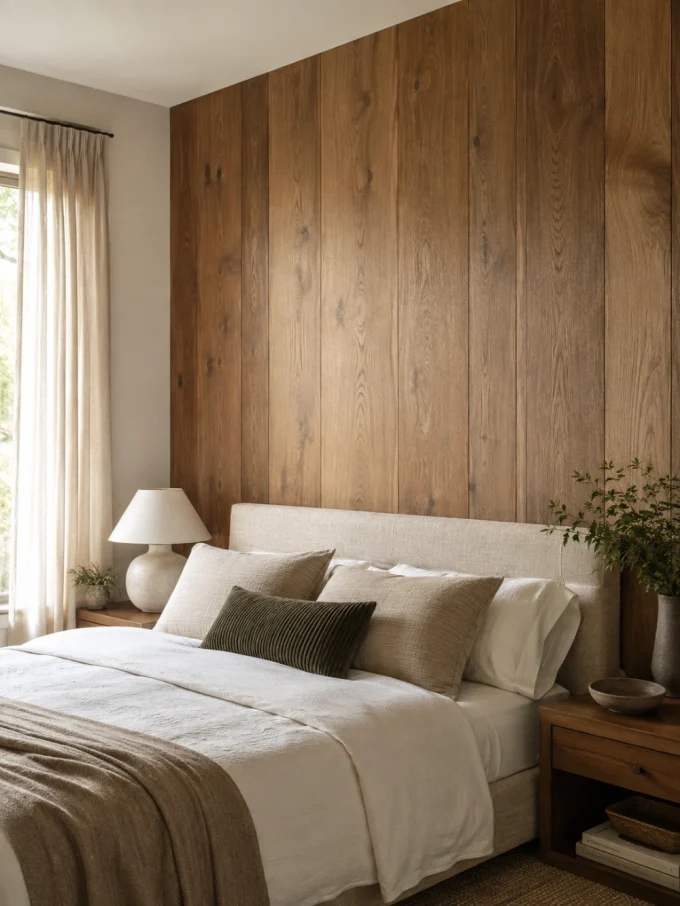
A painted feature wall changes hue.
Wood changes much more.
Grain, joints, direction, tonal variation, and shadow all become part of the surface.
That makes timber particularly useful in a bedroom filled with smooth plaster walls, simple furniture, and plain textiles.
Possible approaches include:
- wide timber panels;
- narrow vertical slats;
- veneered wall panels;
- horizontal boards;
- or wood used only across the width of the bed.
Direction matters.
Vertical lines can emphasize height.
Horizontal boards reinforce width.
Narrow slats create more visual rhythm than broad uninterrupted panels.
Be cautious with very busy slatted walls behind a bed that already has a highly detailed headboard.
Both elements may try to occupy the same role.
Wood also carries more visual weight than pale paint, especially in darker species.
Balance it with lighter bedding, quiet curtains, or restrained furniture where necessary.
8. Use Wall Molding to Give a Plain Bedroom Better Proportion
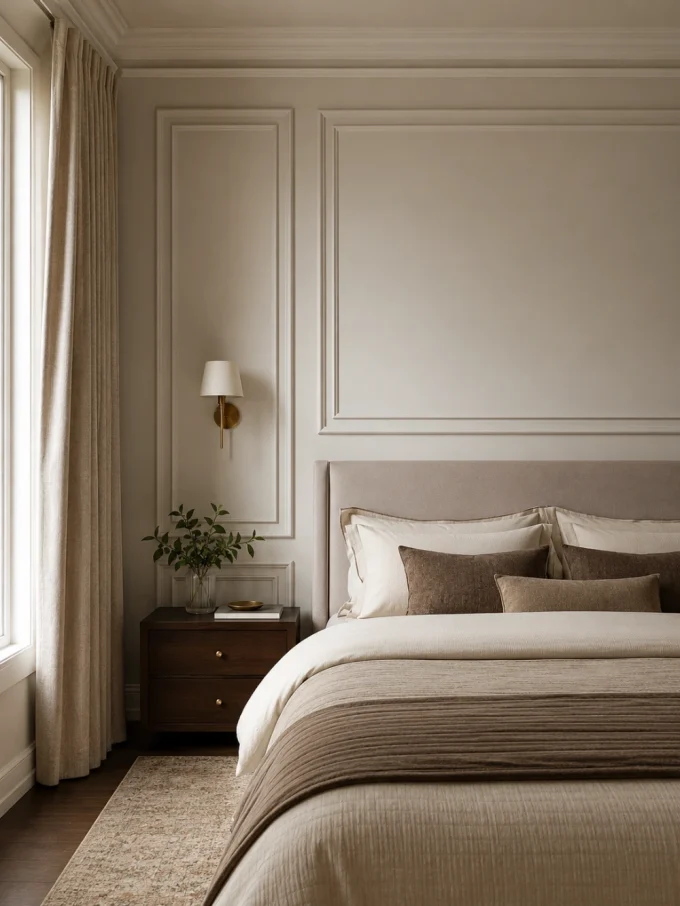
Molding is useful when the problem is not lack of color but lack of architecture.
A few well-proportioned panels can give a completely flat wall enough structure that it barely needs decoration.
Consider:
- large rectangular frames behind the bed;
- one wide central panel with narrower side panels;
- asymmetrical molding responding to an off-center bed;
- or paneling that continues around bedside lighting.
Scale it to the furniture.
Tiny molding boxes behind a king-size bed can look decorative rather than architectural.
Larger divisions usually relate more convincingly to larger furniture.
Color also changes the result.
Painting molding and wall the same shade emphasizes shadow.
Contrasting molding emphasizes the lines themselves.
For more approaches to applied wall detail, DecoralCove’s unusual wainscoting ideas provide useful references.
9. Use a Limewash-Like or Plaster-Look Finish for Quieter Depth
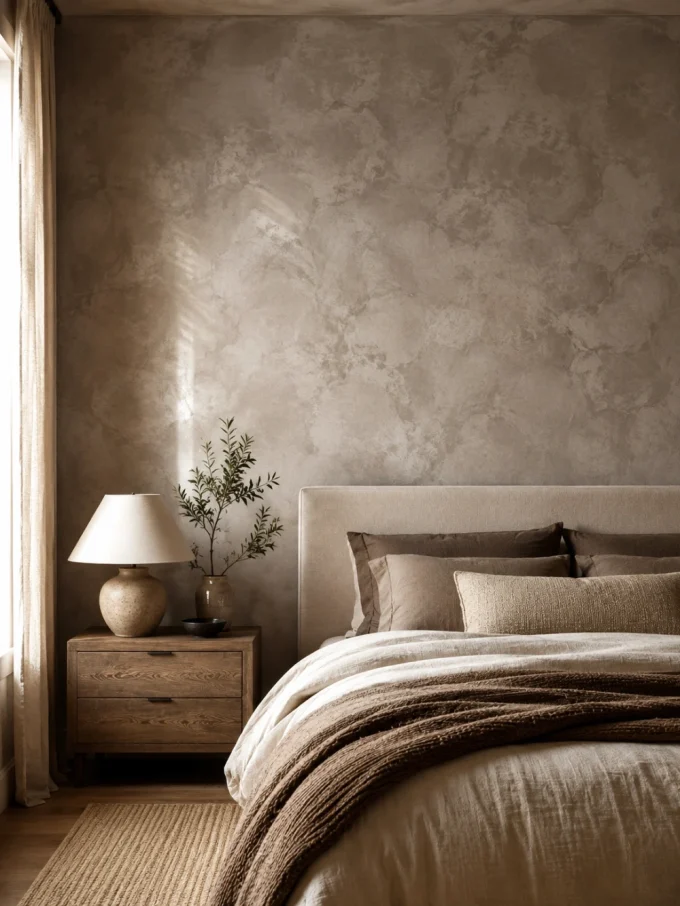
A feature wall does not need a visible pattern.
Sometimes tonal movement is enough.
Limewash-style, plaster-look, mineral, or layered painted finishes can create subtle variation so the wall changes with daylight and bedside lamps rather than reading as one flat field.
Recent 2026 bedroom coverage is increasingly interested in tactile and mineral-looking surfaces as alternatives to conventional painted accent walls.
This works particularly well in bedrooms where you want the wall to feel calm but not blank.
Texture should suit the rest of the room.
A heavily mottled wall behind strongly grained timber, patterned bedding, and several pieces of artwork may become another competing layer.
A simpler bedroom can let the finish carry more of the visual interest.
DecoralCove’s wall texture design ideas explore other ways to add depth without covering the wall in objects.
10. Turn a Wardrobe Wall Into the Feature Instead of Fighting It
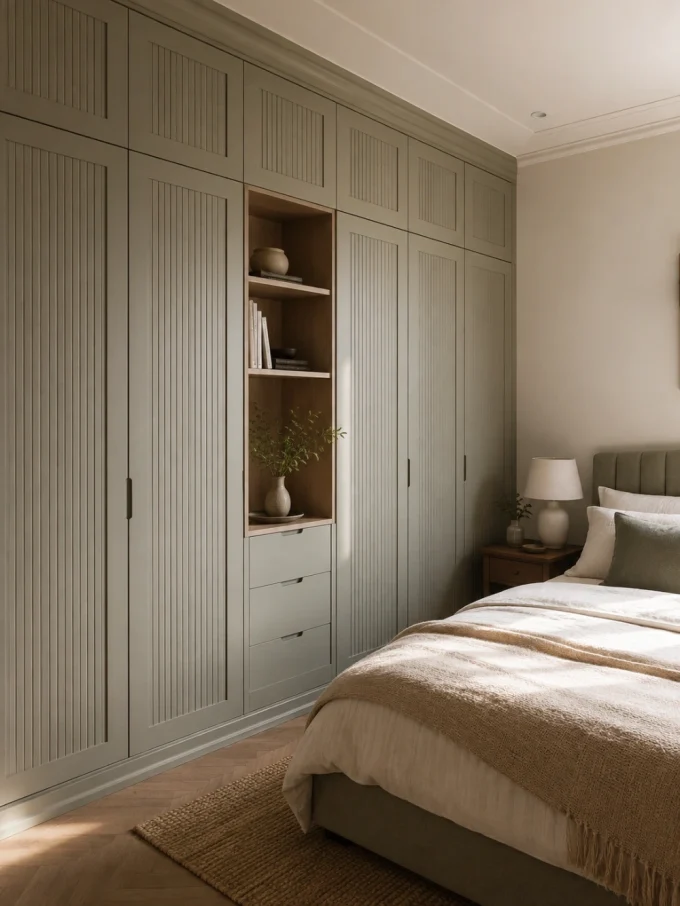
Sometimes the most substantial bedroom wall is already occupied by storage.
Do not automatically treat that as a problem.
Built-in wardrobes can become the feature through:
- color;
- timber;
- fluted fronts;
- framed doors;
- integrated open niches;
- hardware;
- or a continuous finish that makes several cabinets read as one architectural plane.
This can be more successful than creating a second competing feature behind the bed.
If wardrobes occupy most of one side of a small bedroom, giving them a calm, intentional finish may make the entire space feel more resolved.
You can also visually connect them to the headboard wall by repeating one color or material rather than matching everything exactly.
For bedroom storage directions, DecoralCove’s modern wardrobe design ideas provide a natural next step.
The practical benefit is significant: the room gains a strong visual surface without sacrificing storage for decoration.
11. Use Floor-to-Ceiling Curtains as a Soft Feature Wall
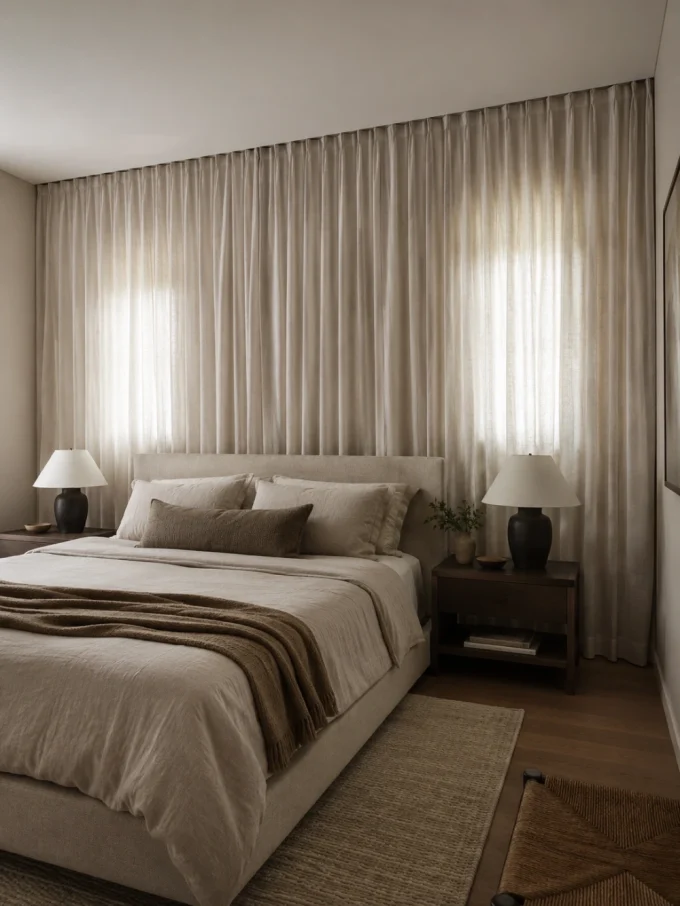
Curtains do not have to cover only the width of a window.
Where the architecture allows it, taking drapery across a larger portion—or nearly all—of a wall can soften the bedroom and disguise awkward window proportions.
Architectural Digest’s bedroom accent-wall coverage includes floor-to-ceiling drapery among ways to create a wall-scale statement.
This works because fabric creates:
- vertical rhythm;
- folds;
- softness;
- and a large area of color or texture.
It can be particularly useful when two small windows make the headboard wall feel fragmented.
Instead of highlighting each window separately, a continuous curtain treatment can help the wall read as one composition.
The trade-off is fabric volume.
A very small bedroom may feel physically crowded by heavy, deep folds.
Choose fullness and material according to the scale of the room rather than assuming more fabric always looks more luxurious.
12. Let One Oversized Artwork Carry the Wall
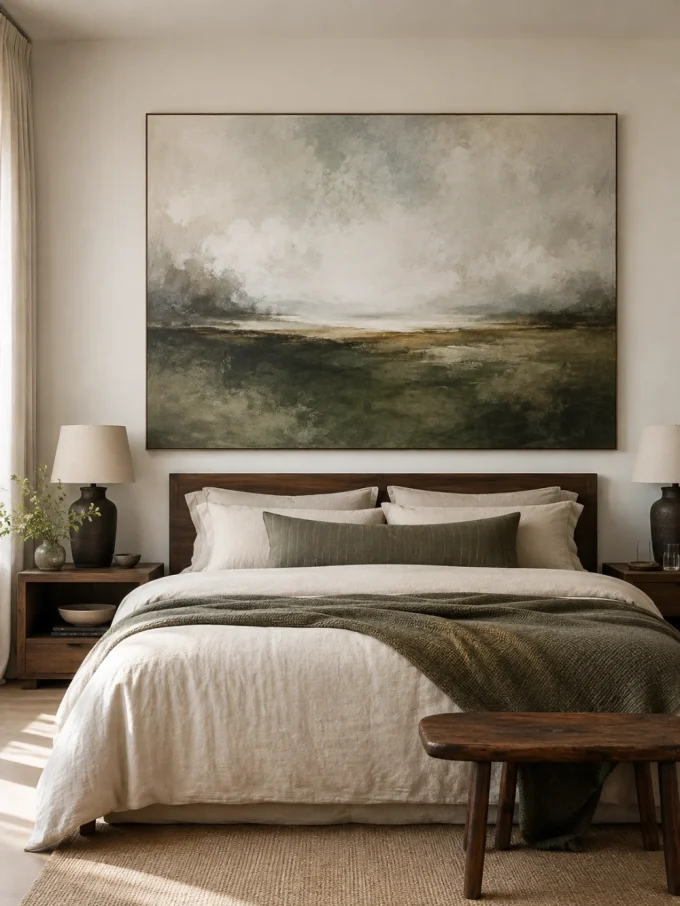
A feature wall does not have to involve construction.
One appropriately scaled artwork can provide enough visual weight to make a plain wall feel intentional.
The key is appropriately scaled.
A small frame centered above a wide headboard may look stranded.
A much larger artwork—or a pair or triptych that reads as one composition—can relate more convincingly to the width of the bed.
Do not force the artwork to match every bedding color.
A more useful relationship might come through:
- temperature;
- contrast;
- line;
- subject;
- or one repeated accent color.
Leave enough negative space around the piece.
The wall does not become more interesting because every remaining patch receives another frame.
This approach is especially useful for readers who want impact without wallpaper, woodwork, or permanent installation.
13. Use Mirrors Only When the Reflection Earns the Space
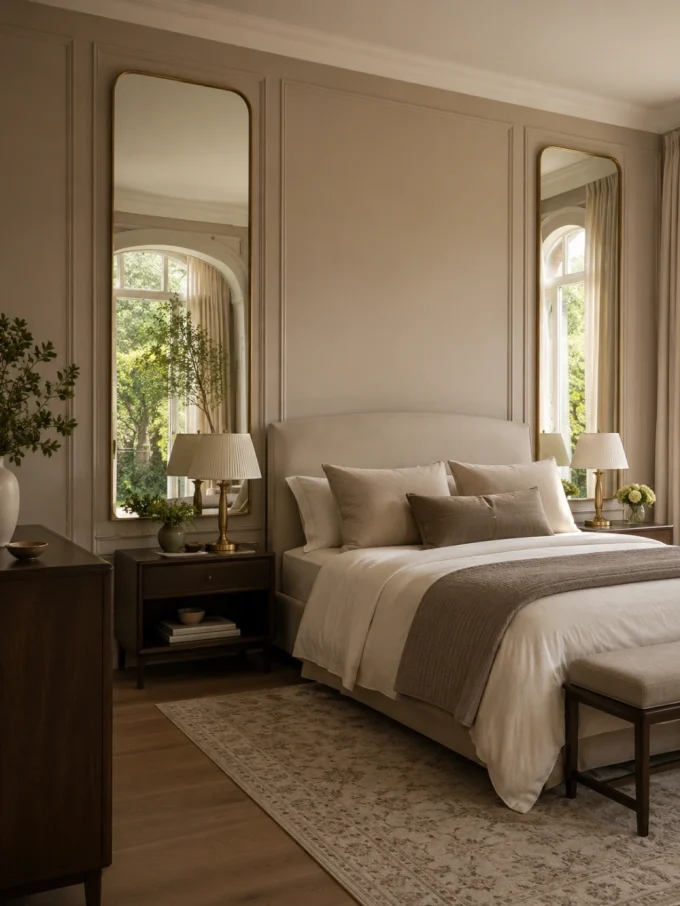
A mirror can make a bedroom feature wall more active because the image changes as you move through the room.
But the mirror reflects whatever sits opposite it.
Before hanging one, stand at the proposed location and look across the bedroom.
Will it repeat:
- a window;
- an attractive architectural detail;
- calm bedding;
- or a cluttered wardrobe and open doorway?
That reflected view becomes part of the feature.
A pair of tall mirrors beside the bed can create symmetry and work with bedside tables.
A single sculptural mirror may be stronger on an adjacent wall.
Multiple small mirrors can become visually restless in a room already filled with reflective metal, glass, and lighting.
DecoralCove’s contemporary bedroom mirror decor ideas offer more focused approaches.
Use reflection because it improves the room, not simply because mirrors are another way to fill wall space.
14. Design the Wall and Bedside Lighting as One Composition
Wall lighting becomes more convincing when it is planned as part of the feature instead of screwed onto the surface afterward.
A sconce can align with:
- molding panels;
- timber slats;
- the edge of the headboard;
- a wallpaper motif;
- or an upholstered panel.
That alignment creates order.
For example, two sconces floating randomly inside panel molding may weaken the geometry. Positioning each one deliberately within a panel can make both the light and the molding feel purposeful.
Light also reveals wall texture.
A grazing beam across plaster or timber creates different shadows from a lamp shining directly outward.
Do not sacrifice task lighting for a decorative effect.
If you read in bed, the light still needs to function comfortably.
DecoralCove’s wall sconce light fixture ideas and indoor wall-mounted light fixture ideas offer more lighting-specific inspiration.
Hardwired changes should be handled appropriately for the electrical work involved.
15. Use Textile Art When You Want Texture Without Building a Wall
A large textile can provide many of the qualities people want from a feature wall:
- softness;
- color;
- pattern;
- visible fiber;
- and substantial scale.
It can also be easier to change than timber, molding, or wallpaper.
Possible choices include:
- a tapestry;
- woven wall hanging;
- framed fabric;
- quilt;
- fiber artwork;
- or macramé used at a scale appropriate to the bed.
The main mistake is using something too small.
A tiny textile above a wide headboard becomes an accessory rather than a wall-defining element.
The second issue is dust.
Complex woven surfaces require more maintenance than smooth paint or framed artwork.
If handmade fiber work suits the room, DecoralCove’s DIY macrame wall hanging ideas offer ideas for creating rather than buying a decorative textile.
16. Keep the Feature Wall Simpler in a Tiny Bedroom
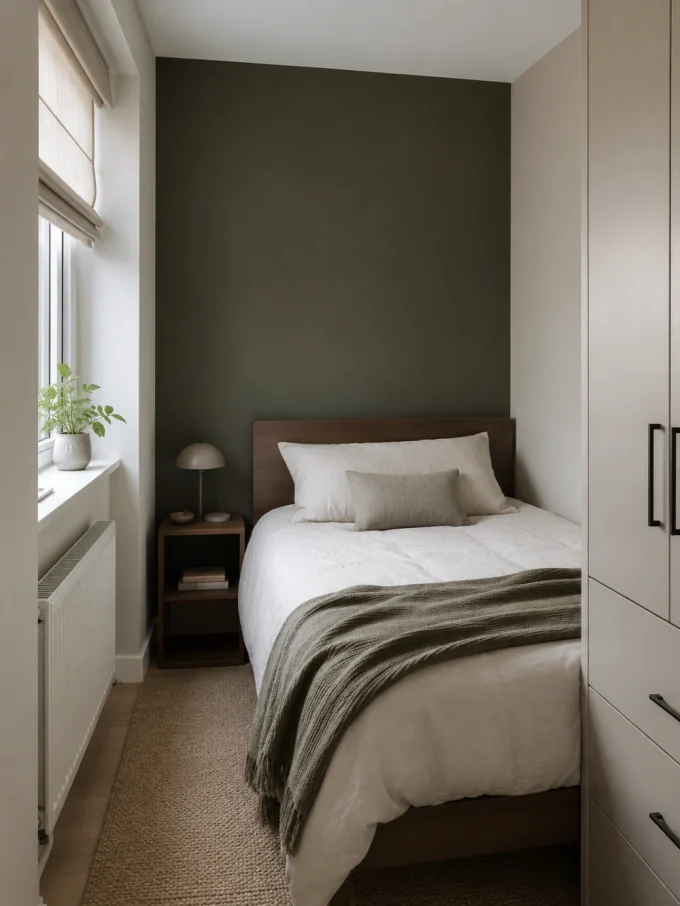
A tiny bedroom does not need a tiny idea.
It needs a controlled one.
A dark wall can work.
Wallpaper can work.
Paneling can work.
The problem begins when the wall treatment competes with storage, bedding, curtains, art, and furniture in a room where everything is already close together.
Choose one clear mechanism.
For example:
Paint + simple bedding
or
Wallpaper + restrained furniture
or
Molding + one color
rather than combining all three.
Think about visual depth too.
Deep slats, projecting shelves, padded panels, and bulky wall decor physically move the wall closer to the bed.
That may matter in a bedroom where circulation is already tight.
DecoralCove’s tiny bedroom ideas are useful if the wall is only one part of a larger space-planning problem.
Small rooms often benefit from stronger editing, not weaker design.
17. Give Renters a Feature Wall They Can Actually Undo
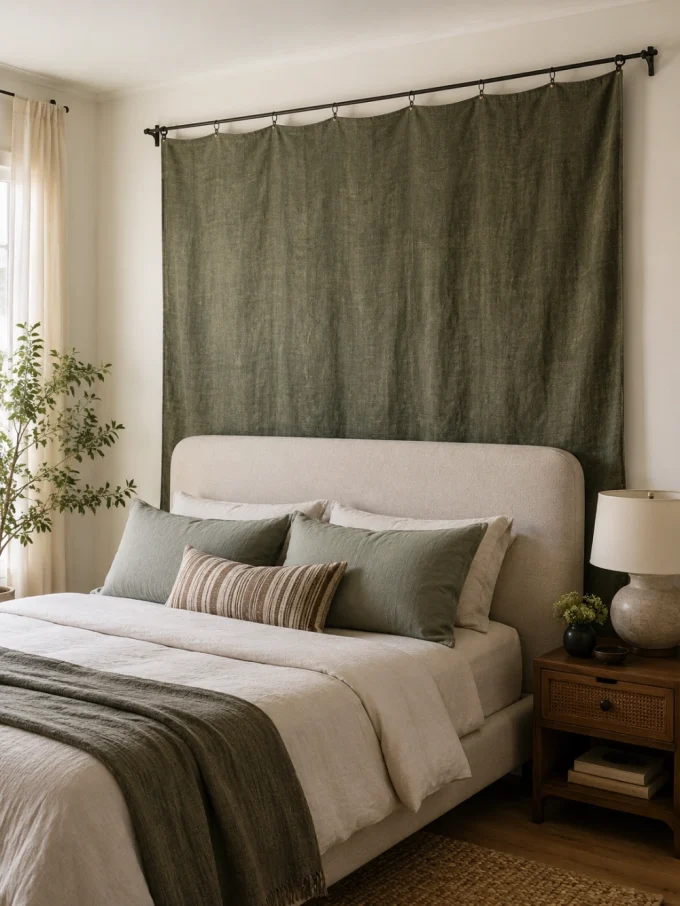
A renter-friendly feature wall should still look deliberate.
“Temporary” does not have to mean scattering several small removable stickers across a wall.
Think at wall scale.
Depending on the surface, product instructions, and rental agreement, reversible options may include:
- removable wallpaper;
- a large textile;
- oversized framed art;
- a freestanding headboard;
- curtains;
- removable painted-effect panels that do not alter the wall itself;
- or a large decorative screen positioned behind the bed.
The strongest temporary treatments create one substantial visual move rather than dozens of small temporary ones.
If you use peel-and-stick products, follow the manufacturer’s surface and removal guidance rather than assuming every painted wall will respond identically.
DecoralCove’s rental apartment decorating ideas provide additional reversible approaches.
A renter-friendly design succeeds when you would still choose it even if permanence were not the issue.
Final Thoughts
A feature wall earns its place when it solves something the bedroom actually needs.
If the room feels architecturally flat, molding, timber, or paint-defined structure may help.
If it feels hard, fabric, curtains, or textile art can introduce softness.
If the bed looks visually lost, one broad treatment behind it can create an anchor.
If storage already dominates the bedroom, turning the wardrobe wall into the feature may be more useful than creating another decorative surface.
And if the room already contains patterned bedding, strong furniture, art, drapery, and attractive architecture, you may not need a feature wall at all.
That last decision matters.
A blank surface can provide the negative space that lets everything else register.
Before adding another layer, look at the bedroom from the doorway and from the bed itself. Decide what the eye should notice first, what should remain quiet, and whether the proposed feature makes that hierarchy clearer.
If it does, build around that idea.
If it only makes one wall louder, reconsider it.
DecoralCove’s home decor mistakes to avoid is a useful next read when a room has good individual pieces but still feels visually unsettled.
Frequently Asked Questions
Which wall should be the feature wall in a bedroom?
The wall behind the bed is often the strongest choice because the bed usually carries the most visual weight, but it is not a universal rule. A chimney breast, wardrobe wall, wall opposite the bed, or wall with stronger architecture may provide the more convincing focal point.
Are bedroom feature walls outdated?
Not inherently. Current design opinion is mixed: some designers still use deliberate single-wall treatments, while others prefer color drenching or more integrated schemes because an isolated accent wall can look disconnected.
The useful question is whether the wall improves the room’s composition, not whether the category itself is currently fashionable.
What is the easiest bedroom feature wall to change later?
Paint and large-scale artwork are generally among the easiest approaches to reconsider. Wallpaper, molding, timber cladding, integrated lighting, and built-in upholstered treatments require progressively more commitment depending on their construction.
What feature wall works best in a small bedroom?
Usually one with clear visual hierarchy and limited physical projection. Paint, restrained wallpaper, shallow molding, or one large artwork can add character without moving the usable wall surface noticeably closer to the bed.
Can the wardrobe wall be the bedroom feature wall?
Yes. If wardrobes already occupy a large visual area, treating their doors, niches, hardware, or finish intentionally can turn necessary storage into part of the architecture rather than allowing it to compete with a separate accent wall.
Should a bedroom feature wall match the bedding?
It should relate to the bedding, but it does not need to match it exactly. Repeating one undertone, material, line, or small accent color is often enough. Exact matching across wallpaper, bedding, curtains, and furniture can make the scheme feel overly coordinated.